TTC Service Changes Effective January 3, 2016 (Updated)

Updated December 8, 2015 at 12:30 pm: I checked with the TTC about the termination of both the 509 Harbourfront and 511 Bathurst routes at Fleet Loop rather than simply running one route between Bathurst and Union Stations. Here is the reply from TTC Service Planning:

We considered running a 511 (Bathurst Stn-Union Stn) service but ruled it out for two main reasons. Firstly, stop usage on Fleet west of Bathurst has greatly increased in the last year, and serving these stops only with the shuttle bus would introduce a transfer or longer walk for too many people. Secondly, because of the road configuration and traffic patterns, it is not possible to have a northbound stop for through 511 cars on Bathurst at Lake Shore. The nearest stop would be the existing 509 stop on Bathurst farside of Queens Quay. This adds to the walking distance for customers heading to Fleet Street, and requires customers to cross an inhospitable intersection.

The original article follows below:

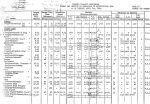
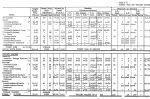
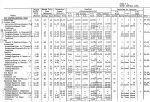
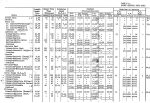
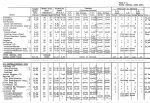
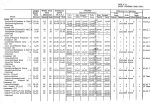
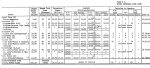
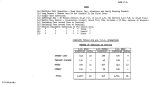
The new year brings changes to some routes, mainly on the streetcar system, to deal with the shortage of new Flexitys and a construction project while improving service on 501 Queen, 502 Downtowner and 503 Kingston Road to better reflect actual conditions.

2016.01.03 Service Changes

Continue reading

TTC 2016 Operating Budget

On November 23, 2015, the TTC Board will consider its operating budget for 2016 including issues of fares and possible service improvements. The version of the budget before the Board was approved at the TTC’s Budget Committee meeting of November 9, 2015 with some amendments from the original staff proposal. The only recommendation related to fares was that the price of a Metropasses be frozen in 2016, but no other specifics. (I have already commented on the motions passed by the Committee in a previous article.)

The matter is complicated by the fact that the actual subsidy that will be made available to the TTC by City Council will not be set until early in 2016, and the TTC will compete with other agencies for available money.

(The 2016-2025 Capital Budget is also on the November 23 agenda, but it has not changed from the version discussed at Budget Committee.)

Although the Operating Budget report is long, it is better organized than the previous version with more detail, rather than depending on whatever questions might arise from a long PowerPoint slide deck and the skill (or lack thereof) of the presenter.

This budget is always a balancing act between competing forces and interests:

  • A political imperative to “keep taxes down” and limit the growth of the TTC’s call on City subsidies from the property tax base. This often manifests itself in calls for “efficiency” year after year in the hopes that the TTC can do more with less funding in constant dollar terms.
  • A political will to keep riders happy with benefits such as controlling growth in, or even freezing fares while providing more and better service. This includes targeted fare changes to benefit groups who are perceived to be more deserving of support through lower fares.
  • Annual increases in the cost of labour, materials and utilities.
  • The cost of additional service to handle demand from a larger population and a shift to transit from other modes.

In 2015, Council approved an extra $95-million for a number of improvements to service, elimination of the fare for children, and a capital-from-current purchase of 50 new buses to be used for new express routes in 2016. This increase only covered the part-year cost of the changes, many of which came into effect only in recent months, and additional subsidy will be needed in 2016 for the full 12-month cost. Additional improvements are on the table as part of the 2016 budget, and some of these were approved in the Budget Committee. The bottom line here is that improving transit has an ongoing cost and is not something to be done on a one year “feel good” program followed by a return to penny-pinching. Indeed, even that $95m might not have come to the TTC had Council been aware of unexpected costs from changes in Provincial funding arrangements for other programs that came to light after the extra transit money was announced by Mayor Tory and TTC Chair Josh Colle.

Continue reading

TTC Budget Meeting: November 9, 2015 (Updated)

Updated November 10, 2015 at 6:00 pm:

The Budget Committee meeting was not the best-organized or well-informed of TTC meetings thanks to a combination of factors. It was held in the boardroom at TTC headquarters which is no longer configured suitably for such events and cannot handle a large presence by the media who were out in force anticipating a story about 2016 fares. Almost all of the material was presented by one person who, unfortunately, trusted to memory rather too often and got the odd fact wrong as the meeting wore on. Moreover, there simply was too much material to absorb in the manner it was presented.

Committee members, for their part, tended to view the situation through their personal lenses of which hobbyhorse needed attention. This did not necessarily make for a broad view of TTC issues, and many erroneous assumptions, often uncorrected, crept into the debate.

We will go through this and much more all over again at the November 23, 2015 meeting of the full Board when we can also expect a very long parade of deputations on the subject of fares.

The entire exercise of having a Budget Committee has been useful, up to a point, in that some Commissioners have been exposed to the gory details, but they remain confused, and we have yet to see an actual philosophical discussion of just what the TTC should be as a basis for the budgets for 2016 and beyond.

The following motions were approved by the Committee:

Continue reading

TTC Service Changes Effective November 22 and December 20, 2015

There are few service changes planned for the remainder of the year.

Leslie Barns is scheduled to open on November 22, and operation of the low-floor Flexity fleet will transfer to that location. This will trigger some rearrangement of route allocations between Russell and Roncesvalles Carhouses, and the temporary storage of cars at Exhibition Loop will end.

Off peak schedule changes on 504 King will remove some of the excess running time in the schedules and improve service on weekdays.

“Run as directed” buses will be added to 501 Queen during peak periods to be used as needed to fill gaps in service. This is a temporary arrangement pending a major rewrite of the Queen schedules for January 2016 that will see some streetcars transferred from 504 King to 501 Queen, and more buses added to the 504 peak service.

Weekend schedules on 165 Weston Road North and 96 Wilson are substantially revised to implement the 10-minute network (this was done for weekdays in the October schedules), to reduce crowding during some periods, and to extend all day service to the 96F Thistledown branch.

Just before Christmas, the tunnel liner replacement project on the Yonge line north of Eglinton will be finished, and all late evening service will run through to Finch. The last day for the Eglinton turnback will be Friday, December 18.

New Year’s Eve will see the usual extended service throughout the system. The TTC has not yet announced whether free transit service will be provided that evening.

2015.11.22 Service Changes

TTC Proposes Major Changes to Bus Fleet Plans (Updated)

Updated October 29, 2015 at 7:00 pm: Additional material based on the presentation and debate at the TTC Board meeting has been added at the end of this article.

At its meeting on October 28, 2015, the TTC Board will receive a presentation about bus fleet and garage planning. This combines many threads that have been discussed separately in the past into one overview and co-ordinated long-range planning, something missing from Board-level debates at the TTC for many years.

Four important changes in the TTC’s fleet planning lead to one common goal: an increase in bus reliability.

  • Steady-state procurement. TTC bus purchase quantities fluctuated wildly over past decades. In the late 1960s, there was a major system expansion into the suburbs concurrent with the subway extensions to Kennedy and Kipling, and later north to Finch. This produced a big spike in bus purchases which echoed through the system every 18 years or so as this generation of vehicles (and its successors) came due for replacement. Other ebbs and flows arose from political decisions such as service increases beyond “typical” requirements, or service freezes imposed through declining standards. This plays havoc with maintenance planning and with the City’s capital plans.
  • Increase the spare ratio. Historically, transit spare ratios have been set at about 12% (even lower values can be found decades ago on the TTC), but this only worked when vehicles were considerably simpler than they are today. It is worth noting that the PCC streetcar was designed from the outset to be a low-maintenance vehicle with roughly a monthly trip into the shops for preventative maintenance. The onset of vehicles with much more complex technology, and especially with technology at the “bleeding edge” of implementation, did nothing to improve transit maintenance costs. Higher spare ratios also require more capital to be tied up in buses under repair. Higher failure rates affect service.
  • Early retirement of the hybrid bus fleet. The hybrids were one of those nice “green” ideas where the technology simply did not perform as expected, but for a time government policy forced the TTC into buying nothing else. The fleet is less reliable than the diesels it supplanted, and the extra capital cost is not offset by lower operating cost.
  • Re-align diesel bus overhaul schedule. Various subsystems on a bus go through major overhauls or replacement on a planned cycle through the vehicle’s life. The schedule for this work will be adjusted to better match needs and to fit well with a planned 18-year bus lifespan. Equally important will be a change in the approach to routine maintenance with a shift from “fix on fail” that accounts for 80% of work today to a proactive, preventative replacement of parts before their expected in service failure disrupts service.

An additional issue still under study is the question of just how long a bus should stay in service. The 18-year span typical in Toronto (and previously in many other cities) arose from a combination of vehicle quality (the GM New Looks lasted forever) and of limited subsidy funding. However, a longer lifespan demands that transit systems have the capability to perform major overhauls that will keep a bus running that long, and this is not practical for smaller systems. Long ago, the USA standard dropped to 12 years as the funding cycle for federal subsidies to bus purchases. A still unanswered question is whether this should be Toronto’s policy.

Finally, there is the matter of garage space for a fleet that will continue to grow before the combined effect of subway and LRT line openings will see a drop in total fleet requirements.

Continue reading

TTC Service Changes Effective October 11, 2015

The October 2015 schedule changes continue the implementation of new Service Standards on many routes.

New or revised Blue Night Services will operate on:

  • 300 Bloor-Danforth (extended to Kennedy Station)
  • 335 Jane to Jane Station (revised south end destination)
  • 302 Kingston Road – McCowan to Bingham Loop (Victoria Park & Kingston Road)
  • 352 Lawrence West from Pearson Airport to Sunnybrook Hospital
  • 312 St. Clair – Junction (extended to Dundas West Station)
  • 353 Steeles (extended to Staines Road)

One major change is related to construction activity: Coxwell Station bus loop will close to allow construction of the new elevators making this site accessible. While the work is in progress, the 70 O’Connor and 22 Coxwell routes will be joined into one service.

2015.10.11 Service Changes

TTC Budget 2016: Confused Priorities Make For A Confusing Budget (Part II)

In my first article reviewing the TTC’s budget updates of September 15, 2015, I looked at the Capital Budget for 2016 and the ten-year plan out to 2025. This installment looks at the Operating Budget including proposals for fare increases and service improvements.

The reports discussed here are:

Updated September 21, 2015 at 10:05 pm:

The TTC has responded to questions I posed to clarify some issues raised by this article regarding: ridership, revenues and costs for Pan Am Games operation; treatment of capital-from-current related to bus purchases in 2015 and 2016; contract service changes for York Region; and diesel fuel hedging savings. See the end of the article for details.

Continue reading

TTC Service Changes Effective September 6, 2015

September 2015 brings a long list of service changes that will begin the restoration and expansion of TTC service promised earlier this year. A few changes were slipped through in earlier schedules, but the bulk of the changes will come now. These include:

  • The “Ten Minute Network”: Scheduling a network of major routes so that they will always operate at least every 10 minutes (except for overnight service). For most affected routes, this only means adding a bit of service around the edges (notably weekend evenings), but for a few, this is a major change.
  • The “All Day Every Day” services: In the early Ford/Stintz days, service was hacked away on routes with less ridership, although the actual dollar savings were small. Much of what was cut has now been restored.
  • Reduced off-peak crowding: Off peak crowding standards on routes with frequent service have been restored to Ridership Growth Strategy (a David Miller era initiative) levels triggering service improvements on many routes.
  • Expanded and restructured Blue Night network: Some new routes, and the restructuring of others, will take place over the September and October schedule changes (see my previous article for details).

Concurrently, the basic service levels move back from “summer” to “winter” levels, and all of the remaining temporary changes for the Pan Am Games end.

Seasonal services also end including:

  • Weekday service on 101 Downsview Park
  • Weekend service into High Park by 30 Lambton
  • Weekday evening service to Cherry Beach by 172 Cherry
  • Extended hours to the Zoo on 86 Scarborough and 85 Sheppard East

The “temporary” extra service and running time added to 510 Spadina and 509 Harbourfront for the reconstruction of Queens Quay has been left in place.

Although the Front Street reconstruction has finished, the TTC has not yet decided whether or how to recombine 72 Pape with 172 Cherry.

Some routes, notably 506 Carlton and 505 Dundas, are getting new schedules with extra running time to match actual conditions on the route in the hope that this will reduce short turns and improve reliability.

The new crowding standards for off-peak surface routes are based on a seated load regardless of the scheduled headway. Previously, routes operating every 10 minutes or better used the seated load plus 25% as the standard. This made the busiest routes operate with near-peak period standards most of the time.

Note that these standards are based on the average load over the peak hour at the peak point. Individual vehicles will vary with more or fewer riders, but the intent is to design service at this level.

201509_CrowdingStandards

The table linked below details the changes for September. It does not include the list of summer service cuts that are to be reversed (see June 2015 changes for the list).

Updated August 11, 2015 at 11:30 am: A service cut on 75 Sherbourne that was part of the June changes was inadvertently carried over into the original version of this table. It has been deleted.

Updated August 23, 2015 at 9:30 pm: The number of vehicles for the 315 Evans night bus has been corrected from 1 to 2.

2015.09.06_ServiceChanges

Blue Night Service Expansion: Fall 2015

The overnight “Blue Night” network will see many changes and additions this fall. These will be rolled out in two waves: first with the September/October schedules on Labour Day weekend, and the remainder with the October/November schedules at Thanksgiving.

This is part of a more extensive expansion of service beginning in September that relates to the Ten Minute Network, All Day Every Day service, and improved crowding standards on routes with frequent service. Those and other changes will be described in a separate article.

Here are maps of the network as it exists now, and with the two stages of additions:

BlueNightMap_201507

BlueNightMap_201509_Delta

BlueNightMap_201510_Delta

Several of the routes will be renumbered so that the night services match the daytime routes except for the using “300” series. In the case of the King and Spadina night services, they will run, at least initially, with the daytime route numbers because there are no roll signs for “304 King” or “317 Spadina” in the CLRV/ALRV fleet. This problem will vanish as the routes convert to Flexity cars with programmable signs.

All services will operate on 30 minute headways.

This implementation is a work-in-progress, and Service Planning does not expect to turn to the question of timing points until the routes are in place. This is a vital piece of work for a network with wide headways where TTC performance stats show that headway (and, by implication, schedule) adherence is very weak. Riders of these routes should be able to depend on vehicles appearing at expected times and connections to work in a predictable way. This is as important a part of the new service as simply putting the buses and streetcars on the road. If service is not predictable in the middle of the night, riders cannot be expected to use it especially for trips that are time-sensitive such as early morning work shifts.

Continue reading

TTC Board Meeting July 29, 2015 (Updated August 3, 2015)

The TTC Board will meet on July 29, 2015, and various items of interest are on the agenda. These include:

  • The monthly CEO’s Report (Updated August 2, 2015)
  • A presentation by Toronto’s Chief Planner Jennifer Keesmaat (Updated August 3, 2015)
  • Faregates for PRESTO implementation
  • Purchase of new buses and implications for service growth (Updated August 1, 2015)
  • Improved service standards for off peak service on “frequent” routes
  • Proposed split operation of 504 King during TIFF opening weekend (Updated August 2, 2015)
  • An update on Leslie Barns
  • Excluding Bombardier from eligibility for future contracts (Deferred to September Board meeting)
  • Council requests related to Lake Shore West streetcar service (Referred to TTC Budget Committee)

Continue reading