John Lorinc and the Sad Story of Scarborough Transit

For those who may not follow their site, Spacing Toronto has an excellent series by John Lorinc about the machinations at City Hall and Queen’s Park behind the many changes in transit plans for Scarborough.

Reading through this, and in particular the double-dealing at Queen’s Park, not to mention self-serving moves by some city councillors, it is impossible to have any faith in plans or grand statements about the future of our transit system. Even worse, any thought of transparency is a fiction, and transit planning is a secret, political exercise utterly devoid of credibility.

This is not news to those of us who watch the process close up, but seeing the gory details on Scarborough brings a stench of opportunistic grandstanding to every other transit scheme on the table. Does anyone actually care about transit riders, or are we just buying votes with billion dollar promises?

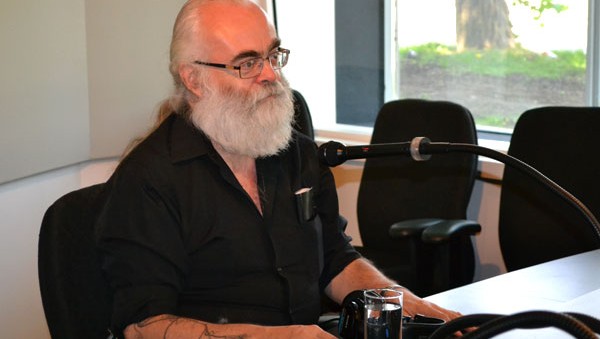
Plans by Murray and Tory: Steve Visits Goldhawk

On June 2, 2014, I appeared on Dale Goldhawk’s radio show talking about both the Murray High Speed Rail plan and the Tory “SmartTrack” scheme. A podcast of the show is available on Goldhawk’s site (running time about 34 minutes).

Even with half an hour, we couldn’t talk about everything including those pesky details that make superficially attractive projects run aground.

SteveMunro-600x339

[Photo by Zoomer Radio]

Just What Is The Liberal Platform on High Speed Rail?

When the Ontario Budget for 2014 was introduced, it included $29-billion for a variety of infrastructure projects including much transit in the GTHA. The list of projects did not include any mention of High Speed Rail service to London, although it did have a convenient trap door for scope expansion in the phrase:

Outside of the GTHA, priority projects could include …

That “could” can embrace many possibilities beyond the items in the budget paper.

This budget was not passed, but it has been substantially incorporated into the Liberal election platform. Oddly enough, if one visits their infrastructure page, there is still no mention of High Speed Rail. Only when we delve deeper by looking at the detailed plan linked from that page, do we see:

Investing in High-Speed Rail: We will invest in high-speed rail service between southwestern Ontario and Toronto, through London and Kitchener-Waterloo. We will move forward by finalizing the business cases and proceeding with environmental assessments on the line from Toronto to London and between London and Windsor. We will invite the private sector and Ontario-based pension plans to invest in this project.

Burying such an important project a few levels down in an election website is hardly the way to show off a signature plank, and with this as the only mention, there is certainly the feel that it was patched on at the last moment. Never mind that the line has already grown an extension to Windsor.

From the background material released to date, we know that even the most optimistic projections for this line will not be profitable. Where the interest will lie for investment without some form of subsidy is a mystery.

A basic fact bears repeating here: High Speed Rail was not part of the proposed budget, but was tacked on to the platform after the fact. Even now the only commitment is for further study including an environmental assessment.

When the budget was tabled, the HSR was not part of the $29-billion infrastructure fund. Was this a case of a project that didn’t pass muster for budget purposes, but could survive the lesser review needed for a campaign promise? Would the HSR scheme survive in a Ministry of Transportation without Glen Murray?

We are still waiting for the background consulting work done for Murray, but this will remain buried in his Ministry, unavailable for review, until after the election.

There is a case for better rail passenger service in Ontario outside of the GTHA, but this can come much more quickly and almost certainly at lower cost with a focus on less ambitious technology. Ontario may not like VIA’s lacklustre service levels, but building a parellel network and competing services is hardly the way to improve the situation.

Queen’s Park owes all of Ontario such a review, not just a bauble for one corridor.

TTC Route Relettering

The TTC plans to reletter many of its routes to adopt a somewhat standardized practice for the number/letter combinations:

  • Routes that have no branches will not use a letter.  For example, 64 Main will stay as 64 Main in both directions.
  • Routes that have branches will use letters for all services operating away from a common point.  For example, most buses outbound from Kennedy Station will use a letter because their routes have multiple destinations.
  • The “A” branch is typically, but not necessarily, the primary branch.
  • The “E” designation is reserved for express operations on routes that also have local service.
  • The “S” designation is used for any short turn for which a sign is provided.  It is by far the most commonly used letter.

What is frustrating about this change, like so many other pieces of TTC public information, is that the implementation and customer information campaigns are not co-ordinated. New signs have started to pop up even though they are not supposed to take effect until June 22, 2014.

In some cases, the reassignment of the “A” designation as the primary route will not be done in one step because “A” is already in use for another branch.  In these cases, there will be an interim configuration without an “A” branch, to be followed sometime in 2015 with a second set of changes.

In the table linked below, the current and final designations are shown.  Where there is no interim value, the “final” arrangement takes effect immediately on June 22.  Where an interim value is shown, this will be the setup on June 22, with the final shuffle to follow next year.

The rationale, such as it is, for this change is set out in the memo announcing the June service changes:

Changes will be made to the branch designations on 62 bus routes, to make branch and destination information more clear and consistent for customers. With these changes, routes that have only one branch will have a branch number with no alphabetic suffix. Routes that have more than one branch will have alphabetic suffixes for all branches. This will reduce confusion for customers in relation to unlettered and lettered branches.

As much as is practicable, consecutive letters will be used for branches. Branch letters that change will not be immediately reused, to avoid confusion and duplication. In a small number of cases the branch changes will be made in two stages, with branch letters changed now on some branches, and then reused later in 2015.

In addition to these changes, several minor or limited-service branches that do not now have formal branch designations will get new branch designations.

Branch designation changes for streetcar routes will be introduced as the new cars enter service.

TTC_20140622_RouteNameChanges

Queen & Victoria Reconstruction (Updated May 30, 2014)

Updated May 30, 2014: The TTC has announced that streetcar service along Queen will resume its normal route at 7:00 pm on Saturday, May 31. The shuttle buses will continue to terminate at Church because Victoria Street will not reopen to traffic until June 7. At that point, the shuttles will be extended to Victoria to make a closer connection with the Yonge subway.

Updated May 29, 2014: This project is now substantially complete. All four quadrants’ special work plus connections to the existing track have been installed and set in concrete, and as of today, paving work and other cleanup activities were underway in the curb lanes.

Reconstruction of Queen & Victoria began on May 12, 2014 with excavation and removal of the old track. Following a typical pattern for intersections, the job reached the point where some of the new foundation slab was in place by May 16.

Track panels for the diamond and for the east quadrant are parked on Victoria at Richmond (the diamond) and on Queen east of Victoria.

This is a 3/4 grand union with a pair of curves in all but the northwest quadrant.

Continue reading

What Should We Do With $47-million?

In a breathtaking display of political opportunism, mayoral candidate (and former TTC Chair) Karen Stintz attempted to highjack an unexpected “surplus” from 2013 transit operations to pay for a fare freeze in 2015. This move was not derailed, but at least shunted into a siding by an alternative proposal from the current Chair Maria Augimeri. How did we get from a TTC that is desperate to make ends meet to one that can glibly talk about avoiding a fare increase, conveniently in the run-up to an election?

The May 28 TTC meeting agenda included the audited financial statements for 2013 and a report on the unexpected drop in the subsidy requirement for last year’s operations.

The subsidy requirement was much lower than the budget projection because of one-time changes that benefited the TTC:

  • liabilities for Workplace Safety & Insurance Benefits and the Long Term Disability plan were reduced by $6.3-million;
  • various expenses including depreciation, allocation of costs between the operating and capital budgets, accident claims payouts and retroactive pay were below budget by about $18m;
  • variations in non-labour costs netted out to a saving of $16m relative to budget.

Add in the previously reported $7.3m surplus, and collectively, the subsidy needed by the conventional TTC system was $46m below budget, and Wheel Trans was down $1.7m.

Council’s policy dictates that when the TTC has a “surplus” (i.e. the subsidy requirement comes in lower than expected), the money stays with the city and is allocated mainly to capital accounts, including the large backlog of funding needed for TTC’s 10-year capital program. For 2013, the city’s current plans are to allocate any surplus:

  • 75% to the shortfall in TTC capital funding, and
  • 25% to fund TTC post-retirement benefits and and accident claims long-term liabilities.

(Although the TTC budgets for long-term liabilities in the year they are incurred, the city does not pay out the money through subsidies until the money is actually needed by the TTC. This keeps the working capital in city hands, and the future payouts are funded, if possible, from “found money” like the TTC “surplus” rather than from current revenues. From the TTC’s point of view, they are an “account receivable”.)

Stintz proposed that the TTC ask Council to approve that the money would stay in TTC hands and be used to avoid a fare increase in 2015. Riders have put up with a lot with service problems, and they deserve a reward, indeed they should get some of “their” money back, she argued.

Not only is this an unvarnished election ploy, but it runs directly contrary to positions Stintz has taken at the TTC and at Council.

  • The money is a “one time” windfall from better-than-expected conditions, and there is no guarantee that the TTC will perform similarly in 2014 and beyond. Indeed they are already short thanks to lower ridership and the brutal winter just past.
  • In both public and private sector finance the unfunded liabilities for future unavoidable costs such as pensions, benefits, and accident claims are a serious problem, and it is city policy to reduce its exposure to them.
  • Council debates over budgets repeatedly focus on the difference between “sustainable” and “unsustainable” funding practices. If City revenue is up, and this can reasonably be expected to continue in future years, then this is “sustainable”. The same is true for expense reductions that are permanent, not one-time blips. As part of “team Ford”, Stintz was quite insistent on the need for the City to avoid “unsustainable” funding strategies.
  • Stintz herself pushed and defended cuts to service quality both in hours of service and in crowding standards. These changes also led to the removal of a 150-bus order and the deferal of a new garage project in the Capital Budget. All of this was “for the greater good” of the transit system according to Stintz. Now, rather than improving service, she would rather hobble TTC’s revenue stream with a fare freeze.
  • Chair Augimeri attempted to get a motion through the TTC Board in April 2014 asking staff to report on service improvements to the June meeting with a view to including these proposals in the 2015 budget process. This motion was sidetracked by the Stintz faction on the Board who viewed it as an attempt to support her rival Olivia Chow. Staff will still do the work, but the due date is now conveniently beyond the election. Suddenly, with $47m in her pocket, Stintz wants a fare freeze.

During the debate, the question of creating a stabilization fund came up — “profits” from one year would go into a reserve to offset “losses” in another. This is a bit of accounting trickery because, of course, there is no “profit”, only a reduced subsidy requirement.

Nobody at the meeting, including the TTC’s own finance management, bothered to mention that such a fund already exists. It is listed in Note 17 to the financial statements on page 37 (page 41 of the PDF), and the account held $24.666m at yearend 2013. Oddly enough, during the 2014 budget debates, nobody talked about using this to lower fares or improve service for the obvious reason that the reserve is intended to deal with one-time events, and cannot provide “sustainable” funding for anything.

One member of the Board, Al Heisey, asked why there has been no debate on priorities for any spending of this type with a view either to service improvements or capital projects such as buying buses. This is part of a more general malaise at the TTC where broad policy objectives are not discussed by the Board. This is quite a change from the days of Chair Giambrone whose activist term routinely spawned many policy discussion through requests to staff for discussion papers that came to the public TTC agenda.

It is ironic that the city policy (keeping back any “surplus” from the TTC) arose in part due to Giambrone’s activism. If the money stayed in the TTC’s hands, it could be used to launch new programs without an explicit Council authorization. There was no guarantee against one-time “surplus” money funding a change that would require long-term subsidy funding in future years by Council. Stintz was trying to pull off precisely the type of funding trickery that Council spiked when it stopped putting TTC surpluses in the stabilization reserve.

In the end, the Board moved to ask the city to treat its budgets on a five-year basis so that a surplus from one year could be carried over and used to fund shortfalls the next. Whether the $47m will actually limit a fare increase, or even stay with the TTC, will be a decision for the new Council, one that, if polls are to be believed, will certainly not include Karen Stintz.

The Minister Muses on High Speed Rail

Suddenly London Ontario is the place to be if you’re looking for a high speed rail line. Glen Murray, Ontario’s Minister of Transportation & Infrastructure, has announced plans to have a high speed connection between Toronto downtown, Pearson airport, Kitchener-Waterloo and London up and running in 10 years.

Not just that, but the trains will run half-hourly with 28 trips each way daily on the line carrying, eventually, 20,000 riders per day.

I am not making this up. You can read more details on the CBC’s Kitchener-Waterloo site.

An extremely superficial document titled “Moving Ontario Forward” came my way recently, and I could not help thinking back to the early days of “GO Urban”, the technology that eventually became ICTS and Skytrain, with similarly vacuous presentations for public consumption.

Continue reading

Vanishing Streetcar Stops (Updated)

Updated May 26, 2014:

The TTC has released a report on the removal of streetcar stops that will be discussed at the Board meeting on May 28.

The report claims that there are two goals in the elimination and consolidation of streetcar stops:

  • Improving the consistency of stop placement to provide better safety so that stops are always at signalled intersections or those with pedestrian crosswalks, and
  • Reducing travel time through stop elimination where existing stops are very close to each other.

The question of safety in stop placement is laudable, although it is odd that so few locations are actually proposed for removal. Of the 550 existing streetcar stops:

  • 20 will be shifted from locations nearby traffic signals to be at the signalled intersection.
  • 39 regular stops that are within 200m of a nearby stop will be removed, although some of these are still under negotiation with the local Councillors.
  • Most Sunday stops (about 40) will be eliminated, and a few will be converted to regular stops.

The geographic distribution of stops to be eliminated is rather strange, and has an uneven feel to it at some locations. Oddly, there is discussion of removing the stops at Queen & Victoria, although this is still under review because of St. Michael’s Hospital, and King & Victoria westbound is on the hit list. However, the stops bothways at Dundas and Victoria (a location with problems compounded by traffic signals at Yonge and Victoria that prefer to thwart rather than aid transit) are not mentioned at all.  Ooops! They are.

Broadview Station could become the only place where one can board a streetcar in this neighbourhood as the stop on Erindale is to be removed, and the southbound stop at Danforth is under review. Strangely enough, the sidewalks at both stops were just rebuilt with accessibility ramps. Also, there is no mention of the northbound stop. Also, this stop is not in service during the peak period already, and how its removal would contribute to any peak time savings is a mystery.

There is no discussion of the comparable situation at Main Station, and 506 Carlton is not even included in the table of affected weekday routes.

The stops bothways at Connaught & Queen disappear, and I must assume that Russell operators are now doomed to making that “convenient” walk down the street to a consolidated stop.

It is particularly amusing to see a Sunday stop listed for Kingston Road at Malvern, a location where there is no streetcar service on Sundays.

Other anomalies can be found in the comment from “nfitz” that follows below.

This report has been three months in the making (at least), originally promised for February, finally delivered in May. It has the feeling of a report that argues the case for “faster transit” rather more forcefully than the actual number of stops involved would suggest. Sunday stops have nothing to do with weekday transit speeds, and the actual number of stops removed is trivial ib proportion to the streetcar system.

If the TTC wants to argue “safety”, fine, but don’t drum up another of these bogus claims that transit service will somehow be improved. That’s a task for the quantity and quality of service on the street, and the little matter of line management.

I cannot help remembering a report written years ago by a junior planner about the placement of all-night services that showed a hopeless lack of geographical knowledge of the city including basic obstacles like valleys, rivers and ponds to crow-fly walking distances.

If we were really talking about a major change in the philosophy of stop placement, and were looking at its effect not just on streetcars but also for buses, I might take this report seriously. Meanwhile, this is another of those “we know best” TTC reports that tries to justify a new policy with an oversold rationale.

The original article from May 9, 2014 follows the break.

Continue reading

Analysis of 7 Bathurst Bus: What Is The Effect of Articulated Buses? (Part I, Updated)

Updated May 26, 2011:

  • The three sets of charts for each day and location previously published here have been replaced with a single set to simplify navigation.
  • Calculations of the average and standard deviation was previously based on headways that had been rounded to the nearest minute. This has been changed to use the unrounded values causing minor changes from the original version of the charts.
  • Data for December 29, 2006 was incomplete causing some headway information to be incorrect. This day has been dropped from the “basic statistics” charts.

Effective with the April schedules, the TTC changed the 7 Bathurst to formally be an articulated bus route on weekdays. Headways were changed to reflect the larger capacity of the vehicles, and the TTC trotted out a commonly-cited story that fewer, larger vehicles are easier to manage and can provide better service than more, smaller ones.

Did this actually happen? What does the implementation on Bathurst bode for other major bus routes, not to mention the streetcar system which will start moving to larger vehicles in fall 2014?

In these articles, I will look first at the headways actually operated on the route for March and April 2014 (the before/after pair), and later at the time required for vehicles to make their trips, congestion and layover times that affect the service.

As it happens, I also have data from December 2006 for this route, one of the first sets of data I attempted to analyze when I started on this effort back in 2007. How has the service changed between late 2006 and early 2014?

Continue reading