Tunnels And Track But No Trains

At the TTC Board meeting on June 12, 2023, key reports presented the current and future challenges our transit system faces:

This article reviews the Major Projects Update and more generally the TTC’s Capital Program and funding shortfall. In future articles, I will turn to the Operating Budget, subsidies and the changing environment for transit in 2024 and beyond.

A related report from a past meeting presents the entire Capital Plan, not just the “major projects”, and I have consolidated information from it to provide a complete view.

TTC Capital Plans are presented with three separate timelines:

  • The current year,
  • A ten year window, and
  • Fifteen years and beyond.

The fifteen year view is comparatively recent, but it was a vital addition to the transit outlook. Until this version was introduced, a growing list of needed projects simply did not exist in the published TTC plans nor, more importantly, in the minds of Councillors and financial planners at all three levels of government. Magically, the ten year view always managed to fit within money the City had available from its own revenues or provincial and federal commitments.

That fifteen year view was a huge shock to the City, but it was no secret to anyone who looked through the budget and found gaping holes. This situation was a financial convenience to make future City capital needs appear smaller than they actually were. Funding problems were “fixed” year after year by failing to acknowledge key projects, or by pushing them beyond the City’s ten year capital planning window.

Doug Ford arrived on the scene with his subway plans and billions in provincial spending, but much of this was for projects that were not already part of the City’s plans, or at least not at the scale the City contemplated. The province gave the impression of taking a load off of Toronto, but much of the planned provincial spending was never in Toronto’s plans to start with.

Then came the pandemic and severe doubts about the sustainability of the City’s spending.

For his part, former Mayor Tory’s SmartTrack brand was still on the books, even if it was a shadow of its original plan. Despite going over budget, it lives on as five new GO stations thanks to an infusion of $226 million by the provincial government.

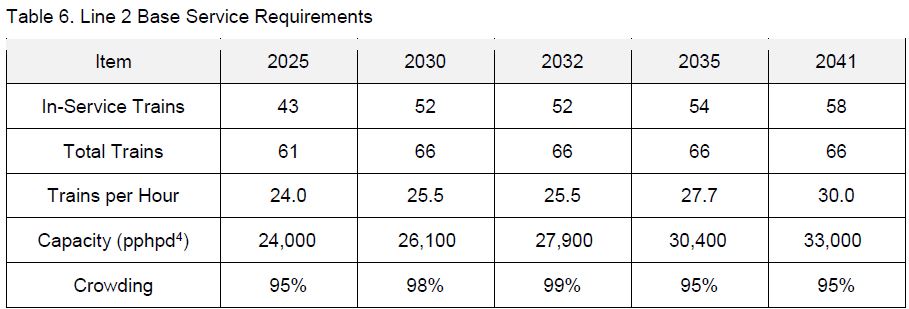
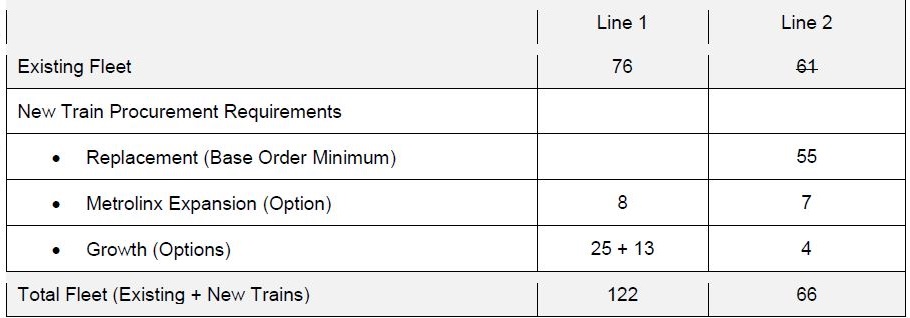
At the TTC, CEO Rick Leary was initially distrustful of Automatic Train Control and the new Line 2 fleet it would require. For a time, the projects to resignal the Bloor-Danforth line, buy a new fleet and build a carhouse at Kipling were put on hold. The TTC would make do through another decade with “life extended” trains which would be at least 40 years old by their retirement. Leary has since changed his tune, but this brought the cost of ATC, new trains and, possibly, the carhouse back onto the table.

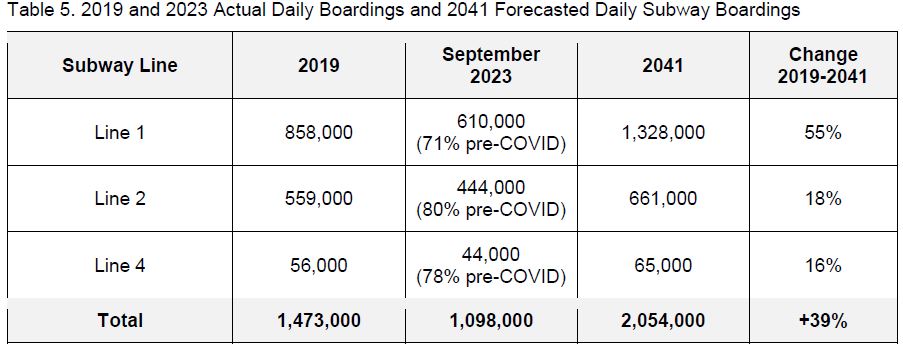
The situation is complicated by the Scarborough Subway Extension which would require more trains to provide full peak service to Sheppard than the existing fleet. Half of the peak service would short turn at Kennedy to fit the service within the existing Line 2 fleet.

The already-expensive extension does not include ATC signalling because Metrolinx does not know whether the TTC will have an ATC-capable fleet by the opening date. Only the construction delays due to Ford’s intervention in the project give the TTC enough time, and then only barely, to bring Line 2 up to modern standards.

Another related issue is the emerging demand for Platform Edge Doors (PEDs) for which ATC is a pre-requisite. Without new trains and signals, there will be no PEDs on Line 2.

Toronto is in the unhappy position that we are building miles of tunnels, but may not have trains to run in them when they are finished. The self-contained Ontario Line has a fleet, and the Crosstown has its LRVs, but the subway extensions and planned service improvements are another matter. Moreover, if the Line 2 fleet’s life is pushed out to 40 years, there is no guarantee it will provide reliable service.

Award of the contract for new subway cars has already been delayed into 2024 and costs rise thanks to inflation while we await a funding decision. The Major Projects Report notes that:

  • Delays in securing the required funding for the procurement of new trains will result in declining reliability, longer wait times between trains, increased crowding, and higher maintenance costs. The TTC is actively engaged with its Federal and Provincial partners.
  • The operation of new trains is interdependent with the planned resignalling on Line 2 (ATC). All T1 trains on Line 2 need to be replaced with new subway trains to operationalize ATC on Line 2. As a result, any delay in the funding decision for the procurement of the new trains will have an impact on the ATC requirements as well as the cost and schedule for both projects.
  • Recent increases in escalation will potentially result in an increase in overall cost. The TTC will continue to monitor producer’s price indices, update escalation projections and identify potential offsets to the greatest extent possible.
  • Award Contract in 2024, subject to partner funding. Should the partner funding be delayed or not available, the TTC will commence planning for the T1 Life Extension Overhaul (LEO) program to ensure service continuity.

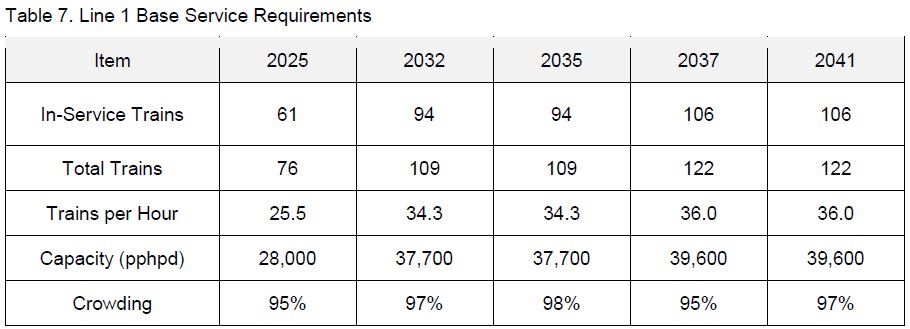
Meanwhile, on Line 1 Yonge-University, the fleet is in its youth, but more trains are needed to increase service and to provide for the Richmond Hill extension. A new maintenance facility will be required to hold the larger fleet, and it will most likely be built north of the new extension. There has been no word on whether York Region will contribute to any of the cost their subway extension will add to the TTC’s budget woes.

The Major Projects Report notes:

This program includes the accommodation of train storage and maintenance requirements, and other infrastructure enhancements, to expand capacity and improve circulation on Line 1, reduce overcrowding, increase the frequency of trains and reduce travel times, which will result in improved customer service.

[…]

Train Maintenance and Storage Facility (TMSF), which includes:

  • Storage for 34 trains, including a test track, and access track to the site;
  • Carhouse with five Bays for Preventative and Corrective Maintenance to support daily service;
  • Operations and Infrastructure (O&I) facility to support maintenance activities (small shop building, outdoor and indoor storage tracks for work cars, material storage, and staging area);
  • Ancillary facilities (Traction Power Substation (TPSS), Hostler platform).

More service adds to the electrical draw and in turn that will trigger upgrades to the subway’s power distribution system.

Without going into the many details, this illustrates how subway planning is not simply a question of drawing lines on a map and cutting ribbons when the tunnel boring machines arrive.

Continue reading

The Ever-Fading SmartTrack

John Tory might be gone as Mayor, but SmartTrack clings on like grim death even in his absence. A report before an upcoming meeting of Toronto’s Executive Committee shows that the total cost of the five remaining stations is estimated by Metrolinx at $1.697 billion, yes that’s with a “b”, or $234 million higher than the City’s $1.463 billion budget for this work.

Federal funding of $585 million has already been committed, but the remaining $1.112 billion is on the City’s dime. The City’s share will come from “development charges, tax increment financing and the City Building Fund” [CBF] according to the report. The CBF is an extra levy on the City Property Tax (recently extended to compensate for increased borrowing costs) that will help to pay for one of John Tory’s legacies.

Metrolinx seeks full reimbursement for this amount, but the City in March directed “the City Manager to negotiate with the Province of Ontario for the Province to commit to paying all amounts above the original Program Budget”. Negotiations are ongoing and a supplementary report will follow at an unspecified date.

The station locations are shown below, and they include a key station a East Harbour that will be the interchange between GO Transit, the Ontario Line and a possible future Broadview Avenue streetcar extension into the Port Lands. Why the City is paying for a major regional interchange is something of a mystery, but even worse is the fact that we now face a per-station cost of about $340 million for surface rail stations. The exact numbers are shrouded in the usual Metrolinx secrecy.

This is a sad story where too much political capital has been expended for anyone to ask just why we are building these stations, and especially why the SmartTrack moniker survives. With all of the hand-wringing over City budgets, the survival of at least some of these stations as City-funded projects should be reconsidered.

TTC Boosts Late Night Subway Service, Restores Beach-to-King Street Service

Effective Monday, May 8, the TTC has restored late night service on Lines 1 Yonge-University-Spadina and 2 Bloor-Danforth to every six minutes, seven days/week. This will be done with extra trains to supplement the scheduled service. The change will be formally scheduled in a future update.

Also, with the disappearance of the 503 Kingston Road car and its temporary replacement by the 505 Dundas, the TTC is now operating a supplementary bus service from Queen & Kingston Road to downtown via Queen and King from 7am to 7pm weekdays.

A direct streetcar service will not be possible until work on the Queen Street Don Bridge finishes sometime this summer, but there is another wrinkle. In the summer, Queen east of Broadview will close for Metrolinx bridge work at the future Riverside Station on the Lake Shore East Rail Corridor forcing all streetcars to operate via Gerrard. In turn that cannot begin until water main and track work at Coxwell & Lower Gerrard completes.

The additional subway service is made possible by an unexpectedly lower absentee rate among operators compared to budget. The TTC made a larger provision for covid-related sickness and finds itself with more available staff.

A Transit Platform For Toronto

Two months from now, on June 26, Toronto will elect a new Mayor thanks to John Tory’s unexpected departure. There will be at least fifty candidates on the ballot, although most of them will garner only a handful of votes.

I am not one of them, and have no ambitions to high office. That said, I certainly have hopes that our new Mayor will have a strong pro-transit agenda and will actually care about the City rather than brown-nosing their way to small favours from Queen’s Park.

For those who are interested, here is the campaign-sized version of my advice and platform were I running:

  • Service is key. Run as much as possible, everywhere, and run it well.
  • Build budgets based on what you want to see, not on what you think you can afford. Just getting by is not a recipe for recovery and growth. If the money doesn’t come, then look to “Plan B” but aim for “Plan A”.
  • Fares are a central part of our transit system, but the question is who should pay and how much. Strive for simplicity. Give discounts where they are truly needed. Make the transit system worth riding so that small, regular increases are acceptable.
  • Focus on ease of use among transit systems in the GTA, but do not equate “integration” with amalgamated governance.
  • Transit property: parking or housing?
  • Foster a culture of advocacy in management and on the TTC Board.
  • Beware of lines on maps. A “my map vs your map” debate focuses all effort on a handful of corridors while the rest of the network rots.
  • Plan for achievements in your current term and make sure they actually happen. Longer term is important, but the transit ship is sinking. You are running for office in 2023. Vague promises for the 2030s are cold comfort to voters who have heard it all before.

That’s more than will fit comfortably on a leaflet, but, hey, I am the blogger who writes long form articles about transit. As a commentator, my biggest worry lies with those who say “TL,DR”. In the following sections I will expand on the bullets above. Thanks for reading.

How much would all this cost? In many cases the answer depends on the scale and speed of implementation. Although I have a sense of at least order of magnitude costs, I am not going to be foolish enough to put specific dollar figures here. For too long, City policy has started with a budget rather than a philosophy, an aspiration to be great, and settled for just good enough. We almost certainly cannot afford everything today, but we need to know what tomorrow we strive for.

If the 2003 Ridership Growth Strategy taught us anything, it was that we should first talk about aspirations, about what the transit system might be, rather than precluding debate with the classic “we can’t afford it” response. It’s amazing what monies can be found once information is out in the open. We commit tens of billions to construction, but are terrified, at least politically, by far lower costs to improve transit for everybody today.

I have deliberately omitted a discussion of security and related social services here. These are not just transit issues, but part of a city-wide, society-wide problem that will not be solved with a simple show of force. Recent trends both in public opinion and official responses at the City and TTC show an emphasis on providing support for those who need it: the homeless and the mentally unwell. This should continue and expand.

An inevitable question is who will I endorse? That will come later in the campaign as candidates flesh out their programs. Some make their beds with the provincial Tories. As enemies of the city, collaborators, they deserve only contempt. For others, we are in promising early days.

Continue reading

TTC Board Meeting April 13, 2023

The TTC Board will meet on April 13, and the agenda for their meeting is rather small. Notable by its absence is any reference to the service cuts planned for May 7, 2023.

The big items in the public portion of the agenda are the monthly CEO’s Report and an update on TTC’s finances and major capital projects to the end of 2022.

There are also two reports on collective agreements and non-union salaries. Although the details lie in confidential attachments, the public reports give an overview of the various labour contracts and salary drivers across the organization. I leave perusal of these to interested readers.

Finally there are a few references to the TTC’s eBus program scattered through reports. I will consolidate this info in its own section at the end of the article.

Correction April 18, 2023: It turns out that the size of the bus fleet shown in the graphic below is wrong. There are only 2041 buses, not 2114, in service as of March 2023. The article has been amended to reflect this.

Continue reading

Osgoode Hall Garden and University Park

Over past months, the Ontario Line’s effect on trees in various locations around Toronto has become something of a cause célèbre. Osgoode Hall was, in a way, the “poster child” for this because of its location and the historic buildings at Queen & University. However, this was far from the only affected location with tree felling on a massive scale elsewhere including Moss Park, Riverside, and now planned for the Don Valley at the Leaside Bridge and the crossing of Walmsley Brook north of Thorncliffe Park.

A common refrain from citizens along the Ontario Line and other corridors is that Metrolinx does not deal in good faith, but rather presents its positions as unchangeable and pressing. They look only for acquiescence so that “consultation” can be claimed for the record. There is no public record of these consultations, and no community is aware of what might be told to others except by information sharing among them.

I have written about the garden at Osgoode Hall before, most recently in a review of the report prepared for the City of Toronto by Parsons looking at various alternative configurations.

On February 23, 2023, Toronto and East York Community Council established a subcommittee composed of Councillors from Wards 10 Spadina-Fort York, 13 Toronto Centre and 14 Toronto-Danforth and “directed the Executive Director Transit Expansion Division to report to the first meeting in March 2023 regarding the current status of the Ontario Line, pedestrian and traffic management plans, and opportunities for City and resident involvement moving forward”.

That meeting will occur on March 22, 2023. The only report on the agenda is from the Executive Director, and a great deal of it is a rehash of information from earlier reports along with a claim that Metrolinx is engaging with communities along the corridor. The actual degree of consultation is a matter for some debate, and one cannot wonder whether the ED is parroting the official line from Metrolinx, hardly an appropriate tactic for a senior City official. I will address that report in more detail after the meeting, but turn here to a proposal for the new entrance to Osgoode Station.

Continue reading

SmartTrack: The Brand That Will Not Die

On Tuesday, March 21, 2023, Toronto’s Executive Committee will consider an update on the so-called Smart-Track Stations project.

Reports:

For comparisons with the previous, February 2021 update on the station designs, please see:

Updated March 17, 2023 at 7:15 pm: The Early Works list for East Harbour Station has been corrected. In the original version of the article that section was copied as a template from another station’s entry, but not changed to reflect the East Harbour site.

This project is the remnant of a scheme first proposed by mayoral candidate John Tory in May 2014 to overlay a frequent surface rapid transit service from Unionville to Pearson Airport using primarily GO Transit corridors.

The proposed route included a bizarre idea of running a mainline railway corridor along Eglinton Avenue West in lands originally reserved for the Richview Expressway, and later intended for the Eglinton Crosstown LRT line. SmartTrack itself descended from an idea to run a similar route whose western leg would use the GO Milton corridor rather than Eglinton Avenue. Both of these foresaw frequent service with the dual benefit of providing more capacity into the core and making office/industrial areas that were choked by gridlock on roads more accessible by transit.

Both ideas were deeply flawed, and the issues with SmartTrack are covered in detail in many other reviews. In fairly short order, pieces started to fall off of the proposal, but it remained a scheme to add stops to GO within the City of Toronto and use GO at least in part for urban rapid transit.

One fairly early casualty was the notion of a separate SmartTrack service. This was replaced by the idea that at least some GO trains would serve new stops, although the number of such trains was always hard to nail down as Metrolinx service plans changed. Getting a strait answer out of them proved almost impossible, and the best we can get today is a 15 minute service on all corridors with more if demand justifies this.

This is considerably poorer service than was envisioned in the SmartTrack hype and in the way it was presented to Council. Indeed, ST was seen to be so competitive in the Scarborough corridor that the Scarborough Subway Extension was shifted east to avoid the competition.

That is a far cry from SmartTrack’s original promise, but the brand lived on because it was Mayor Tory’s plan. Dropping the name would be suicidal for City and TTC planners, even though Tory suffered from an acute case of “the emperor’s new clothes”. Metrolinx simply humoured the Mayor by using his name for their new stops.

We have reached the point where only four of the original 22 stops on the ST line remain: Finch-Kennedy, East Harbour, King-Liberty and St. Clair-Old Weston. A station on the Barrie line, not the original ST corridor although the format of the map below disguises this, was added.

All five of the station projects are running later than the originally proposed opening dates. Details are given in each station’s section.

A sixth station was proposed at Front-Spadina, but there is no sign of it yet even though the City’s contribution to the station dates back to a $60 million payment toward GO expansion costs in 2017-2019. (See Revised Ontario-Toronto Agreement in Principle at page 9.)

Toronto’s SmartTrack Station costs are, under that agreement, deemed to be the City’s contribution to GO Transit Growth Capital for 2017-18 to 2024-25.

The anticipated cost of the five stations was $1.463 billion, a Metrolinx estimate, but costs have now risen by $234 million to a total of $1.697 billion. Of this, $585 million would come from the Government of Canada. Although the station-by-station breakdown is in a confidential attachment to the report, this means the average cost per station would be $339 million, a value that was once considered rich for an underground subway station.

Toronto is prepared to spend a lot of money for a handful of stations that might only see 4 trains/hour each way.

The report recommends that Council ask Metrolinx to pause the contract award for Bloor-Lansdowne station pending a guarantee from Queen’s Park that Ontario will pick up cost overrun. This is only one of many transit projects that faces problems with rising costs, not to mention projects under other portfolios.

City staff are seeking City Council direction to request the Province to pay all cost increases over the existing Program Budget of $1.463 billion to deliver the Program, which as of the date of this report is anticipated to be $234 million, as further detailed in Table 1 of Confidential Attachment 1.

A decision on the future of the Program is required urgently as the Design-Build (DB) procurement for the Bloor-Lansdowne Station contract is set to be awarded in early April. With a DB procurement, the City, through Metrolinx, would be committing to proceed to detailed design and construction. As such, there may be no opportunity for the City to reconsider or “off-ramp” its commitment to the station’s delivery once the contract is awarded. Metrolinx has secured an extension to the bid validity date with the proponent until April 5, 2023. Prior to making this commitment, City staff are seeking City Council’s direction to confirm to Metrolinx that the City will not proceed with the delivery of the Bloor-Lansdowne Station until the Province has committed the additional funding required to deliver the Program as set out above.

SmartTrack Stations Update pp 7-8.

What Should Stay? What Should Go?

City has sunk costs in design (listed in the confidential appendix), and contracts have been awarded for all but the Bloor-Lansdowne Station. It is very unlikely that Council would consider dropping any stations except for Bloor-Lansdowne, but should ask itself the question of whether proceeding with all of the stations actually makes sense. Metrolinx is unlikely to let them off the hook.

Meanwhile, conversion of the SRT corridor as a bus roadway is not yet funded because the City wants Metrolinx to pay for it. At $59 million this is small change and yet it will have a considerable benefit for both riders and for the TTC. If the work begins as soon after the SRT shutdown as possible, the bus roadway could be operational by Winter 2025, according to the TTC.

From the TTC Website:

In the event the city is unable to secure the outstanding $59M for the SRT busway, will the project run along Kennedy, Ellesmere and Midland until the SSE is completed? 

If the City is unable to secure funding from the province, it would ultimately have to find an alternate source if it wished to build the busway. The transit priority measures that will be implemented on Kennedy, Ellesmere, and Midland are planned to be designed as long-term solutions regardless of the busway construction; they could have legacy use for customers even beyond SSE is completed. 

This is an example of how funding for projects is discussed in isolation without looking at tradeoffs that might be possible or necessary. What we do not know is how much dropping Bloor-Lansdowne from the overall plan will save in total, only that there is a $234 million overrun for the five stations.

We are in an interregnum between Mayors, and there is no sense of whether any of the would-be candidates see SmartTrack spending as an issue to revisit.

Continue reading

Bloor-Yonge Station Expansion Update

The TTC has published a Major Projects page for its Bloor-Yonge station expansion with a few renderings of the platform level views.

Many more illustrations were available on the TTC’s bid site, and this article is based on documents there which go into considerably more detail.

There are a lot of images here, and so I will leave most of the article beyond the “more” line.

Project Scope

The project involves the creation of a separate eastbound platform for Line 2 Bloor-Danforth and the reconfiguration of the existing centre platform as westbound only. Circulation space between Line 1 Yonge and Line 2 will be expanded substantially.

At the north end of Bloor Station, both platforms will be extended about one car length to the north (the existing Bloor crossover is located a short distance north of the station) to open up circulation space .

A new main entrance will be built within 2 Bloor Street East.

On the south side, at 81 Bloor East, an entrance will be added within a building whose primary purpose is to house a substation for electrical power to the expanded station. Traction power will continue to be supplied through the TTC’s Asquith Substation.

Four new fan plants will be added to bring the expanded station to modern fire code, and the existing fan plant at the south end of Bloor Station will be refurbished.

The drawings show no provision for Platform Edge Doors.

This will be a Design-Build project with the successful bidder responsible for taking TTC plans now at about 30% completion to a full 100% design, followed by construction. The Request for Proposals is expected to close later in 2023.

Construction is planned to begin in 2024Q2 with the new Line 2 eastbound platform and new areas of Line 1 platforms in service by 2029Q2. This assumes that the Yonge North Subway Extension to York Region will open in 2030. The project would close out in 2031.

Support for the project is in place from all levels of government, but until the bids come in, we will not know whether the full scope of work will fit within available funding of $1.5 billion.

The footprint of the expanded station will be considerable, and the drawing below gives an idea of how much more territory the station will occupy.

Continue reading

501 Queen Diversions and Shuttles for the Ontario Line

This article is a follow-up to my earlier piece about the TTC’s Rapid Transit Expansion report including the effect of Ontario Line construction on the 501 Queen service.

Updated March 1, 2023:

  • The reason that track installation on Adelaide, which by itself is relatively straightforward, cannot proceed immediately is that nine Toronto Hydro and Bell vaults must be relocated. Metrolinx opted not to do this work, but the City has taken over.
  • Streetcars will remain on 501 Queen but will divert both ways via Broadview, Dundas and McCaul from May 2023 to March 2024. A bus shuttle will operate over the central portion of the route.
  • The list of track construction projects for 2023-24 has been clarified.

Back in December 2021, the City approved a report with a very long list of proposed road closures for Ontario Line construction.

I wrote about this report beginning with this article:

The construction at Queen Station will entail a multi-year diversion of 501 Queen service, and the plan was for streetcars to operate:

  • Eastbound via York, Adelaide and Church
  • Westbound via Church, Richmond and York

Track already exists for the westbound route, but new track is required on York and on Adelaide for the eastbound diversion.

Much of this work was supposed to have been completed in 2022, with the intent that the diversion would be available in May 2023. Various factors combined to foul up this schedule.

  • The contract to install new track on York and on Adelaide east to Victoria was, for some reason, to be a Metrolinx responsibility separate from City work on utility upgrades and relocation. This lengthened the potential timespan with two separate procurements, and inevitable delays as one contractor waited for the the other to finish.
  • Metrolinx was supposed to build the new track on York Street in 2022. This did not happen. According to a recent City report (about which more below), Metrolinx has been preoccupied with the Ontario Line.
  • Construction on Adelaide west from York to Spadina was done by the City to restore track inactive for many decades and to provide more flexibility for downtown diversions. This went quickly through the fall, and was performed by Midome Construction who were also working on utilities east of York.
  • For various reasons, notably discovery of unexpected underground Toronto Hydro and Bell plant, the work east on Adelaide from York did not complete in 2022, although it was substantially finished from York to Bay. Some water main connections were incomplete with pipes blocking the curb lanes, and this complicated traffic and transit diversions around a major sinkhole at King and University.
  • The City proposes to expand the Midome contract to include track replacement from York to Victoria. Work on this can begin immediately where utility construction no longer occupies the eastbound track lane (second counting from the south side). See: Non-competitive Contract with Midome Construction Services Limited for the New Streetcar Tracks on Adelaide Street

Queen Streetcars or Shuttle Buses

Until quite recently, if one ignored the incomplete work on the diversion trackage, it was possible to think that the streetcars would simply divert as planned beginning in May. This is obviously not going to happen, and it must have been clear to the TTC for months that the 501 Queen service would have to be modified.

The first hint of this was buried in the report under discussion at today’s (February 28, 2023) TTC Board Meeting.

Metrolinx has identified that the potential delay to complete the streetcar detour work will result in approximately 20 months of shuttle bus service commencing in early May 2023. The TTC is still working closely with Metrolinx and the City on exploring options to optimize the construction schedule of the Adelaide civil and streetcar track construction work to reduce the duration of shuttle bus service.

TTC Transit Network Expansion Update at p. 14

The words “shuttle bus” will send hapless TTC riders screaming from the room. There is a long history, particularly in recent years, of the TTC’s incompetence in operating construction shuttles including changing routes with little or no notice, conflicting information online and at stops, and erratic service with shuttles running in packs and taking long layovers at terminals. This was compounded by the number of planned and unplanned construction projects and the overlapped periods of construction on what should have been distinct route and road closures.

The grand daddy of them all is the King-Queen-Queensway-Roncesvalles project where all manner of delays including pandemic effects on work, unexpected utility relocations, slow work by affected companies such as Toronto Hydro, Bell and others, pushed the completion date out to, with luck, July 2023.

The idea that Queen would see 20 months of shuttle buses before the streetcar diversion would be ready is a testament to fouled up planning. The work should never have been divided between Metrolinx and the City but consolidated as a single contract with a goal of completion as fast as possible.

We now know, courtesy of the Star’s reporting that the delay will be only ten months instead of twenty thanks to the City’s contract consolidation. That’s an improvement, but it should never have been necessary.

For the TTC’s part, this continues a sad tale of communications and consultation foul-ups. The need for shuttles would clearly have been known months ago. How exactly they will operate is totally unknown because the TTC has issued no guidance on this. Will there be shuttles downtown? Over the entire route? Will the route be split to make it more manageable and give different routing options for eastern and western legs?

This should have been a public discussion months ago even if some details were still to be nailed down rather than a surprise landing on already-suffering riders who have dealt with many disruptions on Queen and other routes.

There are several planned track and road construction projects on Queen and King Street in coming years, and I learned recently that several of these have been deferred to reduce overlaps and conflicts. The revised schedule has not been published, and yet this will be essential to any discussion of transit service through the Ontario Line’s construction period. These include:

  • Scheduled for 2023, but deferred:
    • King West from Close to Strachan.
    • Queen East from Parliament to River.
    • Queen East from Carlaw to Greenwood.
  • Queen at Degrassi. Revision to streetcar power distribution for Ontario Line. 2023, date TBA.
  • Scheduled for 2024:
    • Queen West from O’Hara to Triller. 2024.
    • Queen East from Davies to Carlaw. 2024 (likely during Metrolinx work at Degrassi underpass).
    • King West from Strachan to Spadina. 2024.
  • Bathurst Street from Queen to Front
  • Scheduled for 2024, but deferred:
    • King East at Church (intersection).

The City, TTC and Metrolinx owe everyone an apology for this cock-up, and a commitment to resolve conflicting schedules and publish credible plans as soon as possible.

I will add to this article as the story develops.

TTC Transit Network Expansion: February 2023 Update

At its meeting on February 28, the TTC Board will receive a report summarizing the status of most of the rapid transit plans in Toronto. This article condenses the TTC report and reorders some sections to group related items together.

Dominant among many projects are, of course, the “big four” provincial projects: Ontario Line, Scarborough Subway, Yonge North Subway, and Eglinton West LRT extension.

Project Status Overview

The effect of major projects elbowing everything else aside is clear in the table below. Some projects do not have in service dates because they are not funded, and the timing of that (when and if it occurs) will determine when various lines can open.

Not shown in this table are several major projects that pop up from time to time:

  • Bloor-Yonge Station Expansion
  • Waterfront West LRT from Dufferin to The Queensway
  • Bloor West subway extension
  • New Line 2 fleet and yard at Kipling (Obico yard property)
  • Sheppard East subway extension
  • Platform Edge Doors

Of these, only the Bloor-Yonge project has funding, and some are only a glimmer in various politicians’ eyes.

Continue reading