The reports did not include any illustrations of the proposed designs, but these are starting to appear through the SmartTrack station consultation meetings. As they become available, I will post excerpts in this article.
The March 1 meeting dealt with four stations on the west side of the old City of Toronto. The presentation materials are not yet online, but I have included excerpts from them here.
Among the issues discussed in an earlier round of meetings were:
Noise during the construction period, and later from trains including the bells which sound as they enter and leave stations.
The service plan – what will be the frequency of service through and at each station?
Fare integration – what will the fare be for a combined TTC/GO trip?
A Metrolinx representative was somewhat evasive on the issue of noise on two counts. First, there is the question of how long it will be before the majority of service will be electrified. If one believes the original electrification plan (cited by the Metrolinx rep), some trains will always be diesel on some lines because they will run into territory owned by other railways where electrification will not occur. Conversely, if one believes the optimistic claims of the hydrogen train study, all GO trains will convert to hydrogen-electric operation, although on exactly what timetable is unclear.
The noise of the bells raises two concerns. First is the question of whether there can be an exemption so that neighbours are not constantly annoyed by the bells of passing trains. The other is the methodology by which an “environmental assessment” treats transient noises like this. Past EAs have dismissed transient noises because they average out with lots of quiet time between trains, but this does not address the problem of occasional noises such as roaring engines or ringing bells. Moreover, with the planned increases in service levels, these noises will be present more frequently.
SmartTrack was described broadly in the following slide:
A pressing issue for most stations is the recently revised service plan that Metrolinx announced in its updated stations report.
Express (non-stop) and tiered service patterns typically have trains serving outer stations. They typically run non-stop past inner stations which are served for by other trains. Such tiered service patterns impact business case assessment in the following key ways:
Reduces the number of upstream riders that need to travel through the station. Upstream users that are travelling through may now choose to use a faster express train to reach their destination. This reduces upstream delays and the number of riders that switch to other modes. This will have a positive impact on station performance.
Reduced train frequency at stations without express service (i.e. trains that previously stopped at the station can now skip some stations). Riders may also divert to stations with express services resulting in a negative impact on station performance.
As the GO RER service plan is still evolving, a conceptual service plan has been developed for modelling purposes only, which considers the following express or tiered inner/outer service concepts on the Lakeshore West, Barrie and Stouffville corridors.
Lakeshore West corridor: Alternating trains with bi-directional 15 minutes service on the corridor with stops at Mimico and Park Lawn stations. Mimico and Park Lawn stations would therefore receive 30 minutes service inbound and outbound all day.
Barrie corridor: Outer service stopping at all stations between Allandale Waterfront and Aurora; trains will also stop at Downsview Park and Spadina stations, otherwise, express to Union Station. Inner services will serve all stations between Union Station and Aurora.
Stouffville corridor: All-stop peak direction outer service between Lincolnville and Unionville stations; trains will also stop at Kennedy and East Harbour stations, otherwise, express to Union Station. “Inner” services will stop at all stations between Unionville and Union Station.
This does not match the service plan adopted for RER in June 2016 where all trains would serve all stations, although that appears to be the plan staff at the March 1 meeting were working from.
The claim of “all-day two-way service, with more frequent trains during peak periods and every 15 minutes during off-peak periods” can be read to mean quarter-hourly service all day with even better peak service, or it can be read as “better service than you have today” during peak periods, but not necessarily every 15 minutes, let alone 10 minutes or below. As things now stand, the difference between Metrolinx’ updated service plan and the claims of SmartTrack service levels border on misrepresentation.
In a previous post, I reviewed the updated evaluation of proposed new stations on the GO/RER/SmartTrack network. In brief, the situation for some locations is not as dire as in mid-2016 because Metrolinx has changed some of the operating rules and plans for it services. Whether the newly proposed services can actually be operated remains to be seen and is, as usual, a subject for further study.
This article is a station-by-station review of the primary issues at each proposed new stop. The stations are ordered here by corridor for ease of reference by geographical grouping, whereas in the Metrolinx report they are in alphabetical sequence.
(There will doubtless be a small industry in pushing for reviews of stops that are not in the Metrolinx list. That is not the purpose of this piece which reviews the updated evaluations as presented by Metrolinx.)
My apologies in advance for a long, text-only read. There were no illustrations beyond general maps in the Metrolinx report, and so there are none here either.
There is a series of planned public meetings about SmartTrack stations, and it is possible that these will include more details of current designs. If so, I will update this article to include them.
THURSDAY MARCH 1, 2018
Lithuanian House
1573 Bloor Street West
6:30 pm – 8:30 pm
Presentation begins at 7:00 pm
TUESDAY MARCH 6, 2018
Scarborough Civic Centre,
Council Chamber
150 Borough Drive
6:30 pm – 8:30 pm
Presentation begins at 7:00 pm
WEDNESDAY MARCH 21, 2018
Queen Alexandra Middle School,
Small Gym
181 Broadview Avenue
6:15 pm – 9:00 pm
Presentation begins at 7:30 pm
A total of 17 stations are reviewed in this study. Of these, 5 were not recommended in the initial report in 2016. Of these, only Park Lawn has been resurrected to go forward for reasons discussed later. One of the 12 in the approved list, Mulock, has negative benefits and might fall off of the table if Metrolinx cannot find a way to make a better case for it.
General issues that are either not addressed by or not detailed in the report include:
There are no detailed design drawings of the stations, only very general location maps.
Details of the service plan(s) used to model demand. There are some specific references with respect to express and local operations at certain stations, but not for existing stations or the network as a whole. This affects demand modelling.
Modelled demand at all stations, not just the new ones, and of the cumulative on-train loads. This is important to ascertain whether the planned service can actually support the projected demand.
Details of the boardings and alightings at stations. Combined values are shown, and the descriptive text indicates which is the predominant flow, but not the proportions.
Differentiation of new riders attracted to GO service by the station as opposed to existing riders diverted from nearby stations (i.e. net new ridership).
The degree to which, if at all, performance improvements through electrification (whether by conventional power of hydrogen fuel cells) will offset the time penalty associated with new stations.
Additional infrastructure required for express and local operations to co-exist on each corridor. Some of this is mentioned, but not in a comprehensive way.
Details of train operations including use of express and local tracks, and track assignment on corridors with multiple services. Any requirement for individual services to cross each other affects capacity along the route and at Union Station.
Details of the implications for freight operations both with respect to existing spur lines and to clearance issues with new structures.
The anticipated volume and operational interference of freight operations on GO’s passenger service.
For the original station designs which, in some cases, have now been modified, please refer to the Metrolinx mid-2016 reports. Go to the Metrolinx New Stations page, scroll down to and open the Initial Business Cases bullet.
A consistent problem through all of these studies is the reliance on the imputed value of time savings to travellers. This is not “real money” in the sense that it can be recouped to pay for the transit investment, but a social benefit that transit confers. There is nothing wrong with this outlook, but readers are cautioned that when Metrolinx speaks of benefits exceeding costs, this does not mean that profits will roll in the doors at stations. Moreover, the model is very sensitive to the imputed effect of delays caused by new stations.
In their attempt to address the negative effect of adding stations to the corridors on riders making long trips, Metrolinx has changed their service design to include express and local trains. This fixes one problem, but adds others in terms of the resulting frequency at local stations, and the capacity of local trains to handle the projected demand.
All demand numbers cited here are for the 2031 projection which assumes the current fare structure with GO/TTC co-fares, but no “regional integration” beyond what is already in place:
The PDBC analysis assumes:
introduction of Presto on all TTC services across the City of Toronto;
the current discounted double fare agreement between the City of Toronto and Metrolinx – a $1.50 discount is applied when an adult Presto user’s journey includes both a TTC and GO segment;
the planned TTC 2-hour transfer to make the TTC more aligned with 905 transfer policy, planned for implementation in August 2018; and
progress by all transit agencies on addressing removal of fare barriers and improved service integration.
As a starting point, the base fare structure as of December 2017 is assumed for the PDBC analysis. [p 12]
Mayor Tory has trumpeted this report as showing a strong support for his SmartTrack project with 60-year benefits of $4.59 billion greatly exceeding the capital costs of $1.195 billion (2022$). However almost all of the benefit comes from two stations – East Harbour and King-Liberty.
East Harbour provides 55% of the demand and 84% of the imputed benefits from the six SmartTrack stations. King-Liberty adds a further 16% of the demand and 9% of the benefits. These stations stand on their own as worthwhile additions completely separate from SmartTrack.
In anticipation of its board meeting on March 8, 2018, Metrolinx has released a report updating its analyses of various proposed new GO stations, some of which are intended to serve John Tory’s SmartTrack scheme.
The whole question of new stations has been under a cloud recently thanks to reporting by the Star’s Ben Spurr who has documented political interference in the evaluation process. Metrolinx is very sensitive to this and tries to dodge questions both by characterizing such reporting as “conspiracy theories” and by saying that they want to go forward rather then looking back on how we reached the current situation. It’s water under the bridge, dirt swept under the carpet, pay-no-attention-to-that-man-behind-the-curtain territory. And if you don’t buy that, well, politicians make decisions all the time, and the staff’s job is only to provide advice. That the advice might be tailored to fit a desired conclusion is simply beyond discussion.
In a set of analyses conducted in mid-2016, Metrolinx reviewed several stations and found some of them wanting in the contribution they might make to the network. Notable among these was Kirby Station on the Barrie line which was not originally recommended. Magically, the numbers changed after Ministerial intervention. We have no way of knowing how many other Metrolinx staff recommendations have been perverted in this manner, but the problem will not go away. Already the newly minted Minister is musing about stations in her political territory, the Milton corridor.
The new report seeks to justify continued spending on many stations, but with the focus on individual station analyses, important details are buried or simply not included in the published information. We are supposed to read the summary and look no further.
The status of stations still actively under review is presented in one chart.
In a marvellous piece of newspeak, Metrolinx refers to stations where “Benefits are Positive but Less Than Costs”. In other words, the costs outweigh the benefits, but this is presented as if it were a positive state of affairs.
One would generally expect that the presence of new stations would be positive, and the only case where this does not apply depends on the presumed effect of adding a stop on the attractiveness of service to existing and potential riders. A large proportion of the “benefit” in Metrolinx analyses arises from the imputed value of reduced travel times and diversion of trips from auto to transit. The model is very sensitive to changes in travel time, and so the addition of stops tends to hurt ridership whose trips are lengthened by adding stations.
Back in June 2016, Metrolinx evaluated four models for future service on its network including the new stations to be added by SmartTrack. The service plan at the time was quite clearly to provide a 15 minute or better service on most of the network except some outer sections which would receive a lower level of service, possibly peak only. With respect to service inside the City of Toronto, the report observed:
All seven GO corridors run through the City of Toronto, stopping at 19 stations, and meeting at Union Station. … the GO corridors largely run through Etobicoke and Scarborough, providing downtown access opportunities to neighbourhoods located at a distance from the subway. By bringing fifteen minute or better two-way service to five of the GO corridors, … GO RER will bring more flexible travel options for residents and jobs within the City and to the broader region. [pp 18-19]
This information is echoed on the “How Will You Benefit” pages such as the Stouffville Corridor page where it is quite clear the intent is for all trains to stop at all stations.
This echoes the conclusion of the June 2016 report in which four possible service plans were considered:
• Option A: Increased frequencies, 5 new stations
• Option B: Express and local service, 8 new stations
• Option C: Committed GO RER frequencies, 7-8 new stations
• Option D: Committed GO RER frequencies, 4-5 new stations
The first two options, notably the one including express service, were dropped because of the infrastructure needed to provide for SmartTrack and GO/RER co-existence.
GO RER is expected to utilize the available and planned track and corridor capacity. In this light, integrated GO RER-SmartTrack options were screened to determine the extent of additional infrastructure that they would require over and above that which is required for GO RER. Through this analysis, it was determined that Options A and B would each require extensive additional track infrastructure, resulting in the need for corridor widening, extensive property acquisition, consequent community impacts, and other deliverability challenges. In light of these findings, Options A and B were screened out and detailed analysis focused on Options C and D. [p 19]
Option D makes the cut because with fewer new stations, it creates less delay for riders on the outer ends of the corridors and hence less imputed value from lost time and potential lost ridership.
In summary, based on business case analysis, Option D is the stronger performing option for integration of SmartTrack with GO RER, striking the optimal balance between advancing local access within Toronto while preserving service quality for medium and longer distance passengers. Consistent with the findings of the new stations analysis, this report recommends six new stations for GO RER-SmartTrack integration: St. Clair West, Liberty Village, Don Yard/Unilever, Gerrard, Lawrence East, and Finch with an estimated cost of $0.7 to 1.1 B ($2014, costs do not include escalation, financing costs, lifecycle and operating and maintenance). [p 20]
Times have changed at Metrolinx, and they now regard a mix of express and local services as best service design.
An all-stop service (as in the IBC) means that the upstream riders are delayed at every new station, which is a negative economic benefit. This negative benefit is compared to the positive economic benefit from the new riders joining at the station and the time savings they will make from using GO. It is much more optimal to have an express service (rather than all-stop) that selectively stops at those stations and at those intervals when the new riders joining would be substantial enough to justify the stop. This is best practice in service planning in all jurisdictions. [p 2 Staff Report]
CEO Phil Verster was quite adamant on this point during a media briefing and was quite dismissive of the idea of stopping trains for comparatively few passengers. There is only one small problem – it is precisely this type of stopping pattern and service level at every stop that was used to “sell” SmartTrack as part of GO/RER. No amount of managerial swagger can undo the very real position taken by Metrolinx and by municipal supporters of SmartTrack less than two years ago. A train every 20 minutes is not what riders in Scarborough and elsewhere along the ST corridor expected in place of their existing transit service, especially when SmartTrack is touted as a substitute for stations on the Scarborough Subway Extension.
Stops that would be affected by the new service design include: Bloor-Lansdowne, Kirby, Park Lawn, Mimico, Finch-Kennedy, Lawrence-Kennedy, Gerrard-Carlaw, St. Clair-Old Weston. This list may not include all affected locations as only those in or directly related to the new station analysis are mentioned in the report.
(As an aside, one cannot help wondering what the Toronto subway network would look like if subjected to the Metrolinx outlook. Many stations would close for much of the day, if not permanently, because there simply is no justification to keep them open for very low demand.)
By reversing course and reinstating express trains in the service plan, Metrolinx avoids the travel time penalty of adding new stations, but with the offsetting effect that these stations get much less service. The problem is so acute for the SmartTrack corridor that Metrolinx is now trying to figure out how to squeeze more trains onto the line, and even talks of a separate “relief” function for a U-shaped Unionville to Bramalea service. The infrastructure to support this does not exist, and the scheme is a far cry from the idea that “SmartTrack” could simply be implemented using existing infrastructure. A further problem lies in the Union Station Rail Corridor (USRC) where track, signalling and platform configurations combine to dictate how many trains/hour can operate there without substantial upgrades.
In a media scrum at the Board of Trade, CEO Verster stressed that service was the most important factor, the one with the biggest effect on ridership. GO Transit and Metrolinx have planned within the limitations of their corridors including the USRC, but there may now be a recognition that what is planned simply is inadequate to address region-wide needs.
Two other factors were touted as improvements to GO operations and travel speeds:
By the same logic of minimizing the time of every stop at every station, implementing level boarding (as opposed to low platforms and a delay from stepping up/down and positioning the train) reduces the negative impact of the station on the economic benefits of the upstream riders.
The business cases now assume that all fare barriers have been removed with an integrated fare system in place. The economic benefits of fare integration is estimated to exceed the cost by a factor of 12 (ie a BCR or Benefit Cost Ratio of 12).
There is no question that level boarding will speed things up at GO stations, but this is a matter of reducing the time spent at all stations, including any added ones. Not mentioned at all were the travel time savings possible with electrification. In earlier studies, these were counted as an offset to the extra delay of added stations.
The question of fare barriers is rather odd because it is unclear whether the barrier is physical (a turnstile or limited access streams past Presto readers) or psychological (a double fare). The technical report notes:
As a starting point, the base fare structure as of December 2017 is assumed for the PDBC analysis. A future looking full fare integration scenario was also tested to examine impacts on ridership and the overall economic case for each station where no fare barriers exist. [p 10]
Elimination of physical barriers or congestion points at platform access will only speed travel for riders who show up at the last minute and could face a missed trip if their path from parking space or connecting bus were longer than a “crow fly” distance, or delayed by queueing at fare machines. Otherwise, fare validation occurs during the wait time before a train arrives. From a demand modelling perspective, there is also a “barrier” inherent in extra fares for each stage of a journey. Metrolinx has long talked of the need for “regional fare integration” without getting into the specifics especially as they might affect riders of local transit systems. If the analysis mentioned above shows a benefit cost ratio of 12, or extremely high, this must be based on some specific mix of tariff and subsidy changes.
A major failing of the New Stations report is the omission of much detail such as the derivation of claimed demand at the various stations, notably a split of new and existing riders, a breakdown of boarding and alighting passengers, the effect on conditions at nearby stations, and the specifics of the modelled service plan. Some of this information was included in the initial round of evaluations in 2016, but only summary values are published in 2018.
The chart above shows numbers for AM Peak and All Day boardings and alightings, but there are large differences in the behaviour which are mentioned in the individual station analyses. During the AM peak:
Some stations are primarily “boarding” locations either from local transit or from parking. Indeed, it might be argued that in a few cases, the primary function of a new station is to host a new parking garage that might not fit at an existing site.
Some stations are primarily “alighting” locations in that they are destinations, not origins, of trips. This is strikingly true for the Liberty Village and East Harbour stations who primary function is to bring people to work in the immediate vicinity, not as an origin point for “in town” travel.
Demand at stations could be new GO riders, or it could be from trips that are more conveniently served from the new station. For example, a new station might shorten the access trip to GO by car or transit, and this translates to an imputed benefit from time saving.
For the SmartTrack stations, the 60-year benefits are shown as outweighing the capital costs by a factor of almost 4:1. However, almost all of those benefits are the notional value of time saving, and to a lesser extent, reduced auto travel. Operating costs, including that of any additional local transit service or of fare integration subsidies is not included in the analysis.
Of the six SmartTrack stations, East Harbour, the site of a proposed massive commercial development east of the Don River, is by far the major contributor to the positive comparison for SmartTrack. It accounts for 84% of the travel time savings and 55% of the passenger activity at the six stations. The analysis did not include the presence of the Relief Line, and the service plan assumes that Lake Shore East trains do not stop at East Harbour.
Because the individual station cost estimates are not broken out, it is impossible to know the performance of the StartTrack stations, but we know from the summary that only East Harbour and Liberty Village have benefits which outweigh their costs.
This is an almost meaningless analysis.
Metrolinx claims that it will produce an updated analysis and recommendations by the end of 2018 in time for an RFP for the implementation and operation of GO RER and SmartTrack. At this point, a huge amount of detail is missing, especially the degree to which the original GO service plan from 2016, on which a great deal of infrastructure work now in progress is based, must now be revised. It is quite clear that Metrolinx is struggling to come up with credible plans, and they are quite defensive about the changes they are now making.
All is not sweetness and light, and the unseen hand of political interference to justify many of these stations is clearly at work.
In a future article, I will turn to the individual stations and discuss the issues affecting them.
The TTC’s detailed version of the Capital Budget is known as the “Blue Books” because they are issued in two large blue binders. They are not available online. Over coming weeks, I will post highlights from this material beginning with the fleet plans.
These plans were drawn up in late 2017 as the budget was finalized, and there have actually been changes since that are not reflected here. I will note these where appropriate.
For starters, a review of how all of these capital projects are paid for.
Financing and Funding the Capital Budget
The TTC’s budget process at times looks like a game of Three Card Monte where one is certain that one card is the Queen of Diamonds, but never quite sure where she is. This shows up in various ways:
There is a “base program” consisting of projects that have Council approval for inclusion in the ten-year plan. The estimated cost of this program is $9.240 billion, but there is funding shortfall of $2.702 billion.
There is an “unfunded list” of projects making up the shortfall. These will migrate to funded status as and when money becomes available.
The City requires that the TTC make provision for “capacity to spend” reductions in its projects based on the premise that all of the money in the budgets will not actually be used. This offsets $427 million of the shortfall, although one can argue that this is a polite fiction meant to convey the idea that the funding hole is not quite as deep as it seems. The premise is that not all projects will be spent to their full budgets, and an across-the-board provision will soak up the underspending. In practice, some of this “shortfall” is a question of timing – project slippage that shifts spending to other years – not a question of budgeting too high.
Some projects have their own, dedicated funding streams and appear separately from the base program. At present, these are the subway extensions to Vaughan and to Scarborough.
Some projects in the base program have funding directed specifically to them. The provincial 1/3 share of the new streetcars is an example. This is separate from provincial money that flows to Toronto from the gas tax.
Some projects have timelines associated with the structure of funding programs. Ottawa’s Public Transit Infrastructure Fund (PTIF) Phase 1 requires that projects be completed by March 31, 2019 so that the subsidy is expensed, federally, by the end of the 2018-19 fiscal year. PTIF phase 2 has not yet been announced either as to amount or to the timeframe in which spending will occur. These constraints prevent many projects from receiving PTIF money because they do not fit within the prescribed window for spending.
Metrolinx projects do not appear on the TTC’s books, but in some cases they can trigger payments from the TTC and/or the City of Toronto. Examples are Presto and SmartTrack.
Some transit proposals are not even in the base program, but wait in readiness as “nice to haves”.
“Funding” is the process of paying for projects, while “Financing” is the mechanism by which that money is raised. A “funded” project is associated with revenue from “financing” sources that the City can depend on such as property taxes and committed monies from other governments. Where there is a shortfall, someone has to step up with new money, however they might raise it, or something must be removed (or at least reduced in scope) from the list of funded projects.
City of Toronto contributions to capital come primarily from current taxes (“capital from current” and development charges) and from borrowing. The amount of borrowing available to the TTC each year is dictated by the City’s self-imposed 15% cap on the ratio of debt service costs to property tax revenue. A few major projects in the near future, notably the Gardiner Expressway rebuild, are crowding the debt ceiling, and there are years when little new debt will be issued on the TTC’s behalf. In turn, this affects spending plans at the TTC, and projects are shifted into future years with more borrowing room to get around this.
Other constraints can arise from a program like PTIF which, because it has a sunset date, requires that spending that might otherwise occur some years in the future must actually happen sooner than planned. This, in turn, requires matching funds from the City in years where they might otherwise have been spent on other projects.
In recent days, Mayor Tory has announced, twice, a ten point program to address crowding on the TTC. The effectiveness of this program is limited by years of bad political decisions, and the hole Toronto has dug itself into is not one from which it will quickly escape.
This article is a compendium of information about the three major portions of the “conventional” (non-Wheel-Trans) system: subway, bus and streetcar. Some of this material has appeared in other articles, but the intent here is to pull current information for the entire system together.
Amendment February 15, 2018 at 5:30 pm: This article has been modified in respect to SmartTrack costs to reflect the fact that over half of the cost shown as “SmartTrack” in the City Manager’s budget presentation is actually due to the Eglinton West LRT extension which replaced the proposed ST service to the commercial district south of the airport. A report on SmartTrack station costs will come to City Council in April 2018. Eglinton LRT costs will take a bit longer because Council has asked staff to look at other options for this route, notably undergrounding some or all of it.
The SSE itself is not on the agenda, but it has been the subject of much recent debate over when the projected cost and schedule for the extension will be released.
In the November 2017 CEO’s Report, the project scorecard included a schedule showing that 30% design would be complete in the second quarter of 2018, and an RFP [Request for Proposals] would be issued in the third quarter. Even when this report came out, former CEO Andy Byford was hedging his bets about a spring 2018 date saying that more work would be needed to verify and finalize the figures. A key note in this scorecard states:
EFC [Estimated Final Cost] was approved in 2013 based on 0% design. With the alignment/bus terminal now confirmed by City Council, the project budget and schedule will be confirmed as design is developed to the 30% stage, factoring in delivery strategy and risk. The performance scorecard will continue to report relative to the project’s original scope, budget and schedule, as approved by Council in 2013, until the project is rebaselined at the 30% stage in late 2018.
In other words, neither the schedule nor the projected cost reflected the evolving and expanding design of this project.
Jennifer Pagliaro in the Star wrote about the result of a Freedom of Information Request that revealed a briefing to Mayor Tory in September 2017. That briefing included a statement that the cost estimate for a Stage 3, 30% design, would be available in September 2018.
Because Council will not meet until 2019, numbers that might have been available before the election would not be released until after the new Council takes office. After the story appeared, City staff replied:
The cost information referenced in page 9 of the October TTC briefing deck refers to the planned timing for initial cost inputs from TTC engineering staff. These are not the full cost estimates necessary for consideration by Council. Further work will be required to appropriately account for financing, procurement model, market assessment and other critical factors. The final cost estimate, subject to the variability ranges noted below, will include these inputs.
This additional work will be undertaken by various TTC staff as well as city officials from corporate finance, financial planning, city planning and other divisions. [Tweet from Jennifer Pagliaro, February 7, 2018]
I wrote to the TTC’s Brad Ross about this conflicting information, and particularly about the question of how an RFP could be issued in 3Q18 when Council would not be approving that the project pass beyond “stage gate 3” until 2019. He replied:
No RFP will be issued until after Council approval. You will note in the Key Issues and Risks section of the scorecard from November reads, “The performance scorecard will continue to report relative to the project’s original scope, budget and schedule, as approved by Council in 2013, until the project is rebaselined at the 30% stage in late 2018.”
To be consistent with the report to Council in March 2017, only the revenue service date was revised in the scorecard (from Q4 2023 to Q2 2026). The TTC recognizes and acknowledges that this has led to confusion. The TTC will be taking steps to ensure greater clarity in its next CEO Report in March 2018. [Email of February 9, 2018]
The February CEO’s report states:
Work continues to progress design towards Stage Gate 3, expected in fall of 2018. At this time, the project will provide initial cost inputs from the TTC team (includes detailed costs for the Scarborough Centre station, tunnel, Kennedy station, systems, property and utilities). Further work is underway by the new Chief Project Manager with key stakeholders within TTC and the City to define the activities, approval process and timelines to arrive at the final Class 3 Cost Estimate, Level 3 Project Schedule, and associated Risk Analysis.
As requested by City Council, a report will be presented at the first opportunity to the Executive Committee, TTC Board and City Council, which is expected to be Q1 of 2019. [pp 15-16]
The debate, as it now stands, is about releasing whatever material will be available in September 2018 so that it can inform the election debates. Additional costs as cited by the city would sit on top of the September numbers, but at least voters and politicians would know whether the SSE’s cost has gone up just for the basic construction, let alone factors related to financing and procurement that would be added later.
Meanwhile, SSE promoter Councillor Glenn De Baeremaeker speaking on CBC’s Metro Morning said:
I don’t think it matters what the costs are.
This has been taken to read that money is no object, and that well may be the political reality in Scarborough – there is no way the many politicians who have so deeply committed to the subway project can back out. De Baeremaeker continued:
Whether the costs go up or the costs go down, people who have tried to sabotage the subway and stop the subway, will continue to try to sabotage it, they’ll continue to try to stop it, and they will never vote for it. So I would challenge the Councillors who say “I want to see the cost”. My response is and if it’s a reasonable cost, will you support the subway? Well, no. [At 3:26 in the linked clip]
What De Baeremaeker does not address is whether he has an upper limit beyond which even his enthusiasm might be dimmed. Also, on the question of a “reasonable cost”, what has been lost here is the fact that the subway “deal” was sold on the basis that the $3.5 billion included the Eglinton LRT extension to UTSC Campus. What had been a $2 billion-plus subway when it was approved as a compromise by Council, quickly grew to $3 billion-plus, and the LRT extension is left to find alternate funding. One could reasonably ask whether the LRT was ever really part of the deal, or was simply there as a sweetener that pulled in wavering supporters who now see just how gullible they were.
A related issue that has not yet surfaced is the question of whether building the SSE for a 2026 opening will require concurrent changes in timing and/or scope for the planned renewal of the Bloor-Danforth subway including a new signalling system and fleet. A report on the renewal is expected in April 2018, although this date has changed a few times over past months. The TTC/City capital budget and ten year plan do not reflect this project, at least with respect to timing, and probably with respect to total cost.
With recent events of major subway delays and discussions at the TTC Board about a “Ridership Growth Strategy”, the whole question of “what can we do” is swirling through the Toronto media and online. This article is an attempt to pull together threads from several reports and discussions.
This is a very long read and I salute those who stay the course to the end.
In brief, there is a capacity crisis on every part of the TTC system that is the product of years of pretending the problem is not as bad as it looks, and that a few magic bullets can solve everything. This is compounded by underinvestment in the bus network, by Bombardier’s sluggish delivery of new streetcars, and by subway planning that leaves major components either unfunded or missing from the long range capital plans.
There is no easy fix to any of this, but that is no reason to throw up our hands in hopeless resignation to further decline of our transit network. Recovery has to start somewhere even though the benefits will take time to appear. Politicians are afraid of spending money and driving up taxes. Staff act as enablers by concocting budgets that fit within available funding. The numbers “come out right” only because we ignore the full scope of our needs and how badly we have deferred addressing them.
This article does not propose specific remedies, but sets out the history of what has been done (or not done) over past years. Reading through all of it, I cannot help thinking that “Ridership Growth” is a laughable goal considering how hard Toronto has tried to stifle transit’s capacity and attractiveness. But at least the TTC Board is talking about trying to build more demand on its system. To do that, they must first acknowledge the accumulated shortfall between transit we think we would like and transit that is actually on the street.
For convenience, the documents referenced are all linked here:
Metrolinx Yonge Network Relief Study (June 25, 2015) Presentation
Amended 2012-2016 Capital Program and 10 Year Forecast – Shortfall Reduction Plans (September 16, 2011) Report
2003 Ridership Growth Strategy
Although the 2003 RGS was recently dismissed by current TTC Chair Josh Colle as if it were yesterday’s answer to transit problems, the context in which it was written is as fresh today as it was 15 years ago.
There is a growing expectation that transit in general, and the TTC in particular, must take on an increased role in providing travel for people in Toronto if the City is to grow and thrive economically and in an environmentally-sustainable way. Each level of government has recently announced plans and policy initiatives, that highlight the need for greater use of transit in urban areas – the City with its Official Plan, the Province of Ontario with its “Smart Growth Council” and “Gridlock Subcommittee”, and the Government of Canada with its approval of the Kyoto Accord. Achieving these policy objectives will require a fundamental shift in transit’s role in Toronto and the relative importance of automobile travel.
Unfortunately, these initiatives follow on the heels of a consistent lack of government support for the TTC in the past decade. Provincial funding was reduced a number of times in the mid-1990’s and is only now being partly restored. The TTC’s ridership and market share has fallen significantly during this period, to a large extent because of lack of government support. While there is no simple “magic answer” that will reverse this trend, government support for the TTC must be real and pronounced if the current widespread public and government expectations for improved transit are to be met.
The TTC’s mandate is to operate and maintain transit services that provide safe, fast, reliable, convenient, and comfortable travel in a cost-effective way. The TTC’s highest priorities are to our current passengers, and to maintain the existing system in a state-of- good-repair. The TTC needs a substantial, ongoing, funding commitment to meet these basic priorities and fulfill its role of providing transportation services to a large proportion of Toronto’s population. Once these needs are met, the TTC could attract more people out of their automobiles and onto transit with a stable source of increased funding and a commitment on the part of the City to implement policies that support efficient transit operations and transit-oriented development in Toronto. [Executive Summary, p. E-1]
Two points here cannot be made too strongly:
There is no magic answer, and
Looking after the system and riders we have today is essential to attracting new riders.
Investing in improved transit service makes sense for many reasons, but it must be done in a way that provides significant, measurable, and real returns on investment. If taxpayers’ funds are to be used to improve transit services, there needs to be a strong business case to prove that the money is well spent, and that any funding provided will generate significant additional ridership. There is no simple, low-cost solution to achieving increased transit ridership, or to reduce congestion and pollution. Attracting new riders to transit will require substantial increases in government policy commitments and subsidy, on a consistent basis, over a number of years. One-time funding arrangements and individual mega-projects will not result in significant changes in overall travel patterns over the long term or over a wide area. A consistent, long-term, staged program of providing priorities for, and investing in, expanded existing transit services, using proven technologies and operating strategies, provides the best opportunity to achieve sustained increases in transit ridership.
The underlying issue will continue to be the extent to which the City and senior levels of government will be willing to take the steps necessary to invest in transit to achieve their broader objectives. [p. 3]
There is a section titled “Why people choose to use transit” that is too long for me to quote in full here [see pp. 5-6], but a few excerpts are worth including:
The key factors governing mode choice are speed, reliability, comfort, convenience, and cost. Different segments of the market put differing values on these factors, and an understanding of market segments is critical to determining the potential for attracting transit riders. In addition, some modes of travel are simply not available or practical for some trips – few people will make very long walking trips for example – and people do not necessarily have an automobile available for any given trip. The availability and attractiveness of various modes is also very dependent on the location of both the origin and the destination of the trip being made.
…
The situations where transit can compete effectively with automobile travel are those where there is good pedestrian access to transit at both ends of the trip, and where transit can provide comparable speed to automobile travel when all factors are considered. Under these conditions, transit travel becomes attractive to many potential users. These conditions exist for travel to and from downtown Toronto in peak periods, where the roads are congested and rail lines (GO and subway) provide a comparable travel speed to automobile travel. There is also excellent pedestrian access from the downtown rail stations to destinations in the downtown. Transit achieves a 60%-to-70% mode split to transit in these favourable circumstances.
There is an obvious problem with this observation, and it applied even in 2003: much GTHA travel is not oriented to downtown and its concentrated destinations, and riders will not fall into transit’s lap simply because this is the obvious way to travel. Indeed, in many cases transit will be the last, not the first, choice. This begs the question of whether there are some trips for which making transit even grudgingly acceptable simply is not economic, but at the same time whether there are trips that are poorly served by a downtown focus on travel. This question is not new to transit debates.
If we abandon trips that are harder (or more expensive) to serve, or provide only minimal service to “show the flag” with a route map whose many lines hide less-than-ideal service, do we risk alienating potential riders especially in an era of population and density growth? Market conditions could evolve to give transit a greater role provided that it is there to establish credibility and a base of demand. This is not just an issue for the far suburbs in the 905, but for areas in both the outer 416 and in more central, redeveloping industrial neighbourhoods.
My thoughts on the TTC’s 2018 Ridership Growth Strategy were originally published on the Torontoist website on January 23, 2018. That publication is defunct, and the text is here for reference.
Why ridership has plateaued and what can be done about it?
After many years of growing demand, the Toronto Transit Commission’s system hit a plateau of 535 million rides in 2014. Give or take a few million, the TTC has been stuck there ever since. Toronto may be the envy of other cities with a great economy and a highly-touted transit network, but that system has been losing the travel market share. Even before 2014, the growth rate was falling, but this went unnoticed.
No transit growth in a booming city whose population rises every year is a red flag–the TTC is in trouble. This is not the message managers and politicians celebrating a fresh award as “2017 Transit System of the Year” want to hear.
How did the TTC lose its momentum, and what can they do about it?
A History of Strangled Growth
Both the subway and streetcar systems have been capacity-constrained for years. On the subway, signalling technology limits the number of trains per hour that can operate. Both Yonge-University (Line 1) and Bloor-Danforth (Line 2) have run the most scheduled service that will fit for many years. The streetcar system has a declining fleet of 30-to-40 year old cars, with the recent addition, well behind schedule, of Bombardier’s new Flexitys. The SRT fleet, itself over three decades old, runs below full capacity while trains are rebuilt for service into the mid 2020s when the Scarborough Subway will open.
Only the bus fleet has been free to grow, but even that has its limits thanks to budget cuts.
Date
Era
AM Peak Buses
January 2006
2nd Miller term begins
1,328
October 2010
2nd Miller term ends
1,468
March 2011
Start of Ford cuts
1,478
January 2015
Start of Tory term
1,504
January 2018
Today
1,528
Very little bus service was added to the system during the Ford years, and not much more during Tory’s either despite claims that more buses were funded. Yes, they were purchased, but the extra vehicles went mainly to increasing the maintenance pool and to back-filling on the streetcar system.
Because the TTC had some leeway in its service capacity, the Ford and Tory constraints did not hurt ridership in the short term, although growth when it came tended to be more in the off-peak periods when vehicles had more room than during the peak. As off-peak demand grew, the TTC burned through its spare capacity, and little was added to peak periods.
Recent gains in ridership have masked an underlying problem in the bundling of statistics. Increases in student, senior and (free) children’s riding has been offset by a loss of adult and other riders (mainly day passes).
Even when the totals were rising, the TTC was losing its primary rider type, adults. There are now about 20 million fewer adult rides, about 4.5%, than in 2014. [Source: TTC Ridership Analysis 1985-2017]
Fare Type
2014
2017
Change
Adult
437.3
417.6
-19.7
Student/Senior
69.0
78.0
9.0
Children
10.8
25.0
14.2
Other
17.7
12.5
-5.2
Total
534.8
533.2
-1.6
Waiting for a Strategy
In March 2016, Councillor and TTC Board Member Shelley Carroll moved:
That TTC staff report back to the Commission by the third quarter of 2016 with a development plan for a comprehensive multi-year strategy to address current ridership stagnation and to achieve a steady rate of ridership growth annually thereafter.
Despite former CEO Andy Byford’s focus on customer service, TTC management did not rush to complete the report. Fall 2016 came and went, as did all of 2017. Eventually a preliminary report appeared in December. The delay was so long that some events overtook the “strategy” with a TTC/GO co-fare announced by Queen’s Park, and the TTC Board and Mayor Tory embracing the two-hour transfer, subject to Council approval.
During this long wait, TTC concentrated on the APTA Transit System of the Year award.
The last five years have seen significant improvements and modernization efforts in all areas of the TTC. This transformation has been acknowledged by customers, who report a significantly improved satisfaction score, and the organization’s American Public Transportation Association peers who awarded the Outstanding Public Transit System of the Year Award to the TTC in 2017. [p. 4]
This award’s primary focus was on organizational turnaround through Byford’s five-year plan, work that was needed to position the TTC to move forward. However, during this period, the budget marching orders from City Hall were to keep down expenses and limit the demand for greater subsidy. This continues into 2018 when any improvements will come by shifting resources between routes, but with no overall service growth.
2018 Ridership Growth Strategy
The Ridership Growth Strategy (RGS) flags three strategic objectives for the TTC’s future.
1. Retain current customers 2. Increase transit rides per current customer 3. Attract new customers to the system [p. 4]
None of these is surprising, but the challenge will be to decide which approaches will yield the greatest effect. Although the RGS contains many proposals, it is not clear on the benefits these will bring to each of the objectives.
Past studies have shown that retaining existing customers and encouraging more trips by them is cheaper than wooing new riders to transit. Current riders have already decided to use the TTC, while new face the biggest change in their travel style moving from a personal vehicle. If the TTC can lure them in, new riders have the potential to generate lots of new rides, but how much will it cost to get them?
The subway extension to York University and Vaughan was a big event, especially for those directly served by the new line. There is no question that the quality of transit service has improved for those who use the extension, but much of the city receives no benefit. Riders far from the subway corridor can only look on with envy at the new service. As for ridership growth, that will be limited to net new riders, and demand projections indicate that most riding on the extended subway will be by people who were already on the TTC.
Rapid transit projects have a role in transforming how transit is perceived in the newly served areas, but they cannot address demand issues across the city, especially in the short term. The TTC might have high customer satisfaction scores, but more is needed to shift auto users to transit.
The TTC’s five year plan includes rapid transit changes–Eglinton Crosstown and Finch West LRTs–but these are actually Metrolinx projects and they will not contribute new ridership in the short term. Many other projects are planned further out–Waterfront, Scarborough, SmartTrack, Richmond Hill, Relief line–but all of these lie outside of the planning horizon. Even the Bloor-Danforth renewal project gets only a passing reference in the plan even though it is critical to rejuvenate and improve Line 2 service and operations.
Census data shows that more people in Toronto are commuting via transit, but that growth is not reflected in TTC statistics. The King Street Pilot shows that there is a latent demand for better transit service even when the measured change appears to be less than what riders perceive. King cars are packed, and the TTC is caught flat-footed with limited additional capacity. For system-wide growth, there must be system-wide change, and this will not be easy in a climate where higher spending does not fit the prevailing political mindset.
A key chart in the RGS report shows the factors affecting customer satisfaction.
Riders-specific items address system usage from the point of view of someone who is already a customer, while non-users factors affect speed and the absence of boundaries that are invisible to auto users. Any proposed improvement must be measured against the common transit basics–total trip time, comfort and cost. The relative importance and benefits must be considered too. Real time information and fare discounts are “good to haves”, but without service people can and want to use, they are window dressing.
The first big challenge will be to know and understand existing ridership. For decades, the TTC counted riders on its vehicles infrequently, and a major route like 501 Queen could go years between updates of riding data. Published route-by-route counts are now four years old. Recent technology can change this.
PRESTO’s data will provide the TTC with insights into travel behaviour that will assist in transit planning and budgeting, while the implementation of automatic passenger counters on the TTC’s surface fleet will increase the frequency of ridership counts. Thereby allowing the TTC to respond more quickly to changes in demand. [p. 6]
One might ask whether City Council is prepared to fund better service if actual demand today and potential demand tomorrow are greater than the TTC can handle by shifting a few buses between routes.
An issue for TTC and Council is that there are two ways of looking at “ridership”. This was evident during staff responses in a recent TTC Board meeting debate. For Service Planning, ridership is “bums in seats”–real riders counted either by hand (the old way) or with new technology (automatic passenger counters and Presto). For the financial folks, ridership is really a revenue question, but it is this measure that is commonly reported. Revenue figures drive budget debates about service levels, not actual counts of passengers.
The problem will grow with the move to two-hour fares where a “ride” as we know it ceases to exist, replaced by a limited time pass. Passengers might take more “trips” on the TTC, but the link between “trips” and “fares” will be tenuous. Reporting of actual demand on routes will be vital to understanding where there are shortfalls in service.
The split between claims of flat ridership while actual rider experience is of growing crowding clouds the funding debates, and out of date counts have masked growth. The TTC quite recently updated its ridership estimate for the King Street corridor from 65,000 to 71,000 daily even without the effect of the transit priority pilot. How many other routes suffer from out of date counts, and what latent demand would push these even higher if only service were improved? Riding counts see only passengers on vehicles, not would-be customers who give up waiting.
What’s In Store for 2018?
The focus for 2018 is on consultation, and this kicks major decisions on transit improvement beyond the election. However, some pending reports will inform debate.
On fares, the principal changes are already in the works–the co-fare with GO Transit and the two-hour transfer. A report is planned in the first quarter of 2018 on a “framework” for implementation of a post-secondary student “UPass”. The RGS is silent on the “Fair Fare” proposal within the city’s Poverty Reduction Strategy, but the TTC advises:
As the report indicates, the RGS is a live document subject to further stakeholder consultation. The Fair Pass is very much part of the strategy and will be added in. [Email from Stuart Green, TTC Communications, January 23, 2018]
A potential landmine in the regional fare debate is the Metrolinx Fare Integration Strategy which is expected in February 2018. With a provincial election in the offing, Queen’s Park might prefer that substantial changes be left for the future. A big step to “integration” would be a funding scheme to allow cross-border recognition of two-hour transfer privileges between the TTC and the transit systems in the 905. This would have obvious benefits for TTC ridership, and the TTC plans to work on its development and implementation this year. However, budget considerations put this option in 2019 or beyond, according to the TTC’s Stuart Green.
On service, a report in the second quarter will analyze the RGS initiatives including changes to the crowding and wait time standards, and a review of weekend service.
Aside from the operating cost, this will take the TTC into thorny debates about increasing the bus fleet and providing a new garage. With current facilities already overcrowded, this has been put off for too long, and the ability to run more service is limited by the space available to store and maintain buses.
The TTC will open the new McNicoll Bus Garage in 2020. The new total design capacity of for the eight garages will be 1881 and the new total buses available, by design, for service will be 1554.
When McNicoll Bus Garage opens, the TTC will continue to operate above capacity with reduced spares ratio beyond 2020 to accommodate service requirements. The planned overcapacity will accommodate 2007 buses at the eight bus garages with 1673 buses available for service. The TTC is assessing locations and available properties for a ninth bus garage. [Briefing Note, p. 6]
The design capacity of 1,554, even with McNicoll Garage, will be only slightly higher than the current peak requirement of 1,528. This is not mentioned in the RGS.
The TTC also plans reports on area studies considering how routes in various parts of the city can be reorganized to better serve riders, but the RGS does not list the affected areas.
The streetcar system will gain some capacity from the continued delivery of new cars by Bombardier, but this will be partly offset by retirement of old ones. The TTC’s budget, keyed to staffing and vehicle hours of service, does not provide for a net increase in the total number of vehicles on the road.
The Briefing Note [p. 4] lists the routes where improvements are planned for fall 2018. Unless you are a customer of these routes, don’t hold your breath waiting for more service.
7 Bathurst
56 Leaside
113 Danforth
11 Bayview
72 Pape
122 Graydon Hall
23 Dawes
79 Scarlett Rd.
165 Weston Rd. North
25 Don Mills
88 South Leaside
185 Don Mills Rocket
26 Dupont
91 Woodbine
195 Jane Rocket
29 Dufferin
96 Wilson
199 Finch Rocket
36 Finch West
107 St. Regis
43 Kennedy
109 Ranee
Notable by their absence is the proposed expansion of the Express Bus Network. This is directly linked to the bus shortage, and the TTC does not expect to begin implementation until 2019.
Between 2019 and 2021, we’re planning new or enhanced Express Bus service on 13 routes, and other routes have been identified as candidates for our Express Bus Network in 2022 and beyond. [Five Year Corporate Plan, p. 67]
Advance the implementation of service enhancements that are currently planned in 2020 to induce ridership growth (i.e. express bus services, new services etc.) [Briefing Note, p. 6]
Transit Priority on Streets
An important part of any plan for the surface routes is a transit priority plan.
Create a Transit Surface Priority Plan in collaboration with City staff that allows buses and streetcars to operate more quickly and consistently on key corridors [RGS, Attachment II, p. 2].
Initiate plan development
Implement transit signal priority on key corridors
Implement up to three queue-jump lanes
This will also include “engagement” with the Toronto Parking Authority “to align parking strategies to support transit.” This will inevitably run headlong into protests from businesses and councillors about the removal or restriction of on-street parking along transit routes, a delicate issue in many wards.
Queue-jump lanes, bypass arrangements for buses at key locations, have been on the TTC’s wish list for years, but they address only local pinch points and require reconstruction of roadways.
How much Toronto will progress beyond having a plan remains to be seen. The proposed plan does not include any rights-of-way, only improved priority on existing streets. Changing the way streets worked was an integral part of the 2003 RGS, and that evolved into the Transit City LRT plan.
A main feature of the strategy is the construction of surface rapid transit rights-of-way on major roads and “Avenues” as identified in the City’s Official Plan. These partially-exclusive transit rights-of-way, in the centre of major roads, will allow surface transit services to be provided on key corridors at speeds and reliability comparable to the subway, and very competitive with the automobile. The strategy highlights the need for the City to act to improve transit operational efficiency on the street system. The City has identified this need, in its work on the Official Plan, and the City must now operationalize its Official Plan by implementing effective policies and regulations to improve surface transit operations. [2003 Ridership Growth Strategy]
Accessibility
Several projects are listed in the RGS although they already exist outside of it:
The Easier Access Program continues with completion of elevators at St. Patrick Station, and start of work at Wilson, Runnymede and Chester. Elevator retrofits are a multi-year plan stretching into the mid 2020s.
A study of subway platform gap reduction and a wayfinding pilot involving electronic beacons for the blind will begin.
The Wheel-Trans “Family of Services” roll out will continue. This is a challenge for the TTC to execute because of variation in the levels of service and physical infrastructure around the system. Politically, the pressure is to cap the growth of expensive services and shift riders onto the “conventional” TTC network wherever possible.
Stop location and design will be reviewed.
As part of a comprehensive review and improvement effort for surface stops across Toronto:
With consultation and support from local councillors and communities, review and optimize stop spacing to improve safety, accessibility, and reliability at approximately 300 bus stops across the city.
Make additional stops on different routes accessible to meet AODA mandated standards.
Continue to support City staff in adding shelters and improving shelter amenities at transit stops across Toronto [Attachment I, p. 1].
Consultation, Communication, Commitment
The RGS includes an extensive consultation plan, although who will be included varies greatly from topic to topic. Councillors and communities are essential not just for advising on components that might go into the plan, but as key players who must understand what might be happening.
There will also be communication both about the studies and about changes already in the pipeline, notably Presto, but communication is no substitute for real change. Without that, there will not be much to tell would-be riders and lure them onto the transit system.
For 2018, there is not much on the table because the Mayor and Council decided in 2017 to continue on their tax-fighting ways. We do not yet know how many of the proposals for 2018, notably the fare changes and the limited amount of service expansion, Mayor Tory and his crew will support. The provincial election in June could bring further complications depending on whose view of transit funding, operations and importance rules at Queen’s Park for the next term.
Toronto is at a point where it must decide whether continued austerity in the quality of municipal services will bring the future city we see in announcements and photo ops.
The core of a Ridership Growth Strategy is not simply to have a document, but to integrate advocacy for better transit throughout the organizational and political debates. Just getting by should not be an acceptable way to run the transit system. Those who tout cutbacks by whatever name should be called out for their true role in undermining the network’s future.
Why We Need Ridership Growth
Transit is an essential part of moving many, many people around the city. Without it, they would be forced into the extra expense of driving, or face much more limited choices of where to travel. Congestion, already bad, would be intolerable.
The change would not be overnight, but a deliberate decision for “business as usual” would bring a gradual decline in transit use, and a concentration on two markets: those who live and work along major corridors and will support whatever service remains to bursting, and those who have no option but to use transit no matter how bad it is.
This would skew political support and hamper the ability to build a network of services beyond high capacity, commuter oriented lines. For someone who is not a transit user, the primary desire would be “to get those (expletives deleted) streetcars/buses out of my way”. They might support a new subway if they would use it, or if they perceive that it would reduce congestion on their commute, but there is no guarantee. Indeed, many who live in Toronto work in the 905, and new subway proposals offer little incentive for them to support transit spending.
In a regional context, if transit cannot work in a city where the population and travel demand is growing, why hope that it can make a difference outside of Toronto?
The more people who use transit not from necessity but because it truly is “the better way”, the more political support there will be to build on that success.
In my reporting of the September 2017 Metrolinx Board Meeting, I reviewed a presentation on Regional Fare Integration. At the time of writing, only the summary presentation to the Board was available, but the full Draft Business Case appeared some time later. This is the sort of timing problem that Metrolinx has vowed to correct.
A basic problem with such a delay is that one must take at face value the claims made by staff to the Board without recourse to the original document. This will mask the shortcomings of the study itself, not to mention any selective reinterpretation of its findings to support a staff position.
In the case of the Regional Fare Integration study, this is of particular concern because Metrolinx planners clearly prefer that the entire GTHA transit structure move to Fare By Distance. However, they keep running into problems that are a mix of organizational, technical and financial issues, not to mention the basic politics involved in setting fares and subsidies. If FBD is presented as the best possible outcome, this could help overcome some objections by “proving” that this is the ideal to which all systems should move.
At the outset, I should be clear about my own position here. The word “Bogus” is in the article’s title not just because it makes a nice literary device, but because I believe that the Fare Integration Study is an example where Metrolinx attempts to justify a predetermined position with a formal study, and even then only selectively reports on information from that study to buttress their preferred policy. The study itself is “professional” in the sense that it examines a range of options by an established methodology, but this does not automatically mean that it is thorough nor that it fully presents the implications of what is proposed.
The supposed economic benefit of a new fare scheme depends largely on replacement of home-to-station auto trips with some form of local transit (conventional, ride share, etc) whose cost is not included in the analysis. This fundamentally misrepresents the “benefit” of a revised fare structure that depends on absorption of new costs by entities outside of the study’s consideration (riders, local municipalities).
The set of possible fare structures Metrolinx has studied has not changed over the past two years, and notably the potential benefits of a two-hour universal fare are not considered at all. On previous occasions Metrolinx has treated this as a “local policy” rather than a potential regional option, not to mention the larger benefits of such fares for riders whose travel involves “trip chaining” of multiple short hops.
One must read well into the report to learn that the best case ridership improvement from any of the fare schemes is 2.15% over the long term to 2031, and this assumes investment in fare subsidies. Roughly the same investment would achieve two thirds of the same ridership gain simply by providing a 416/905 co-fare without tearing apart the entire regional tariff. In either case, this is a trivial change in ridership over such a long period suggesting that other factors beyond fare structure are more important in encouragement or limitation of new ridership. Moreover, it is self-evident that such a small change in ridership cannot make a large economic contribution to the regional economy.
Specifics of the Board Presentation
The Board Presentation gives a very high level overview of the draft study.
On page 2:
The consultant’s findings in the Draft Preliminary Business Case include:
All fare structure concepts examined perform better than the current state, offering significant economic value to the region
Making use of fare by distance on additional types of transit service better achieves the transformational strategic vision than just adding modifications to the existing structure, but implementation requires more change for customers and transit agencies
More limited modifications to the status quo have good potential over the short term
“Significant” is the key word here, and this is not supported by the study itself. Ridership gains due to any of the new fare structures, with or without added subsidies, are small, a few percent over the period to 2031. The primary economic benefit is, as the draft study itself explains, the imputed value of converting park-and-ride trips to home based transit trips thanks to the lower “integrated” fare for such services, encouraged possibly by charging for what is now free parking.
A large portion of automobile travel reduction benefits come from shift from park and ride trips to using transit for the whole trip – highlighting the importance of exploring paid parking to also encourage a shift from automobile for transit access. (p. xiv)
However, local transit (be it a conventional bus, a demand-responsive ride sharing service, or even a fleet of autonomous vehicles) does not now exist at the scale and quality needed, and this represents a substantial capital and operating cost that is not included to offset the notional savings from car trips.
Fare by distance does perform “better” than the alternatives, but none of them does much to affect ridership. Moreover, the fare structure, to the limited extent that the study gives us any information on this, remains strongly biased in favour of cheaper travel for longer trips. An unasked (and hence unanswered) question is whether true fare by distance and the sheer scale of the GTHA network can exist while attracting long-haul riders and replacing their auto trips with transit.
On page 3, the presentation includes recommendations for a step-by-step strategy:
Discounts on double fares (GO-TTC)
Discounts on double fares (905-TTC)
Adjustments to GO’s fare structure
Fare Policy Harmonization
This is only a modest set of goals compared to a wholesale restructuring of the regional tariff, and it includes much of what is proposed by “Concept 1” in the study – elimination of the remaining inter-operator fare boundaries, restructuring GO fares (especially those for short trips) to better reflect the distance travelled, and harmonization of policies such as concession fare structures and transfer rules.
Further consultation is to follow, although as we now know, the first of the four steps has already been approved by TTC and Metrolinx.
On page 6:
Without more co-ordinated inclusive decision making, agencies’ fare systems are continuing to evolve independently of one another leading to greater inconsistency and divergence.
This statement is not entirely true.
The GO-TTC co-fare is an indication of movement toward fare unification, although the level of discount offered on TTC fares is considerably smaller than the discount for 905-GO trips. That distinction is one made by the provincial government as a budget issue, and it cannot be pinned on foot-dragging at the local level.
Assuming that Toronto implements a two-hour transfer policy later in 2018 (and the constraint on its start date is a function of Presto, not TTC policy), there will be a common time-based approach to fares across the GTHA. All that remains is the will to fund cross-border acceptance of fares (actually Presto tap-ons) regardless of where a trip begins.
Without question, there should be a catalog of inconsistencies across the region, and agreement on how these might be addressed, but that will involve some hard political decisions. Would Toronto eliminate free children’s fares? Would low-cost rides to seniors and/or the poor now offered in parts of the 905 be extended across the system? Will GO Transit insist on playing by separate rules from every other operator as a “premium” service? These questions are independent of whether fares are flat, by distance, or by some other scheme as they reflect discount structures, not basic fare calculations.
Pages 6 and 7 rehash what has come before on pp. 2-3, but the emphasis on fare by distance remains:
Fare by distance should be a consideration in defining the long-term fare structure for the GTHA. [p. 7]
“A consideration” is less strong language than saying that FBD should be the target framework. If this is to be, then Metrolinx owes everyone with whom they will “consult” a much more thorough explanation of just how the tariff would work and how it would affect travel costs. The draft report is quite threadbare in that respect with only one “reference” tariff used as the basis for a few fare comparisons, along with a caveat that this should not be considered as definitive. That is hardly a thorough public airing of the effects of a new fare structure.
No convincing rationale has been advanced for moving to a full fare by distance system, including for all local travel, and it persists mainly because Metrolinx planners are like a dog unwilling to give up a favourite, long-chewed bone. At least the draft study recognizes that there are significant costs, complexities and disruptions involved with FBD, begging the question of why it should be the preferred end state.
On page 8:
Amend [GO Transit fares] to address short/medium trips and create a more logical fare by distance structure based on actual distance travelled instead of current system to encourage more ridership.
This is an odd statement on two counts:
Lowering fares for short trips will encourage demand on a part of the GO system that overlaps the local TTC system, and will require capacity on GO that might not be available, especially in the short term before full RER service builds out.
True FBD will increase long trip fares on GO and discourage the very long haul riders whose auto-based trips GO extensions were intended to capture. The reference tariff implied by sample fares in the draft report is most decidedly not FBD with short haul fares at a rate about four times that of long hauls.
In other words, the goal as presented to the Board does not match the actual sample fare structure used in the draft study.
On page 14:
GO/UP uses tap on/off, other agencies are tap on only. Emerging technological solutions may allow tap on-only customer experience while maintaining compatibility with fare-by-distance or –zone structures.
The technology in question, as described in the study, would require all Presto users to carry a GPS enabled device that could detect their exit from vehicles automatically without the need to physically tap off. This requires a naïve belief that all riders will carry smart mobile devices to eliminate the congestion caused by a physical tap on/off for all trip segments, and is is a middle-class, commuter-centric view of the transit market.
On page 15:
Completely missing from the discussion is any consideration of loyalty programs such as monthly passes or other “bulk buy” ways of paying fares. Already on the TTC, over half of all rides (as opposed to riders) are paid for in bulk, primarily through Metropasses. GO Transit itself has a monthly capping system which limits the number of fares charged per month, and software to implement the equivalent of a TTC Day Pass through fare capping is already in place on Presto. (It has not been turned on because of the possible hit to TTC revenues if riders were to start receiving capped fares without having to buy a pass up front.)
Several issues are listed here that reflect the complexity of a system where the lines between local and regional service have already started to blur, and where simplistic segmentation of classes of service simply do not work. The argument implicit in this is that only a zonal or distance based fare will eliminate many of the problems, but there is no discussion of the benefits obtained simply by a cross-boundary co-fare plus time-based transfer rules to benefit multiple short-hop trips. This demonstrates the blinkered vision at Metrolinx and a predisposition to distance-based “solutions”.
For those who will not read to the end of the detailed review, my concluding thoughts:
There are major gaps in the analysis and presentation of the Draft Report. By the end of the study, it is abundantly clear that the target scheme is FBD and future work will aim in that direction. Metrolinx’ FBD goal has not changed, and this begs the question of how any sort of “consultation” can or will affect the outcome.
The remainder of this article examines the 189-page Draft Report and highlights issues in the analysis.



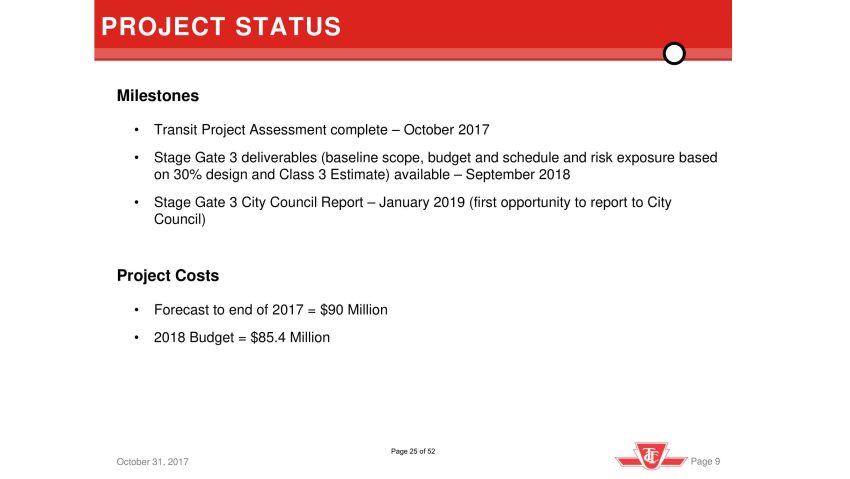
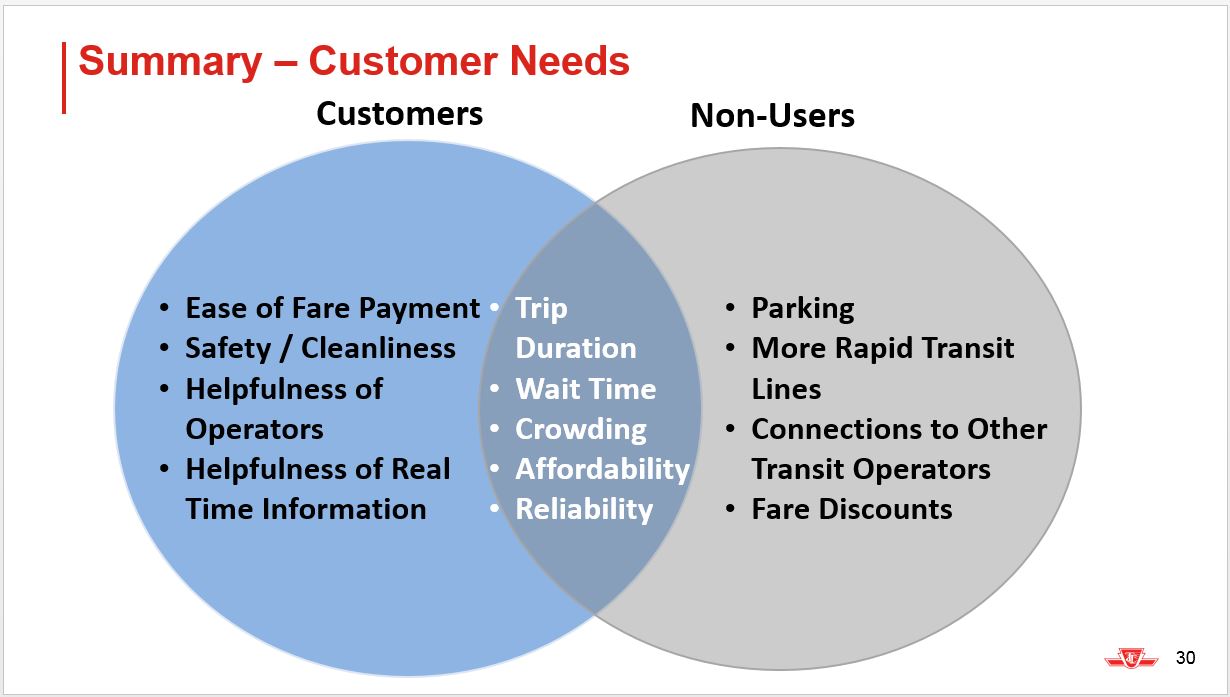

 Steve Munro