
Riders of the western branch of TTC’s Line 1 Yonge-University-Spadina have suffered through long-standing areas of restricted speed opertion for years. However, the problem has crept onto the eastern branch is recent months making for very slow trips over the most heavily used part of the line.
On the past weekend (September 19-20, 2026), Line 1 was closed between St. Clair and College for track repairs, but this is only one in a seemingly unending series of works.
Subway service becomes less and less credible through many types of delay, but also the sense that nothing is done. Much debate recently in social media and now in election campaigns focuses on Platform Edge Doors (PEDs) whose supposed purpose is to keep riders off of the tracks (regardless of their motive) and resulting delays. An installation-in-progress at TMU (formerly Dundas) Station is laughably inadequate to this task.
Any goal of increasing transit use is doomed if the service offered is slow and unreliable. Without downplaying the potential value of PEDs, a far more pervasive problem is part of the daily subway experience – slow zones.
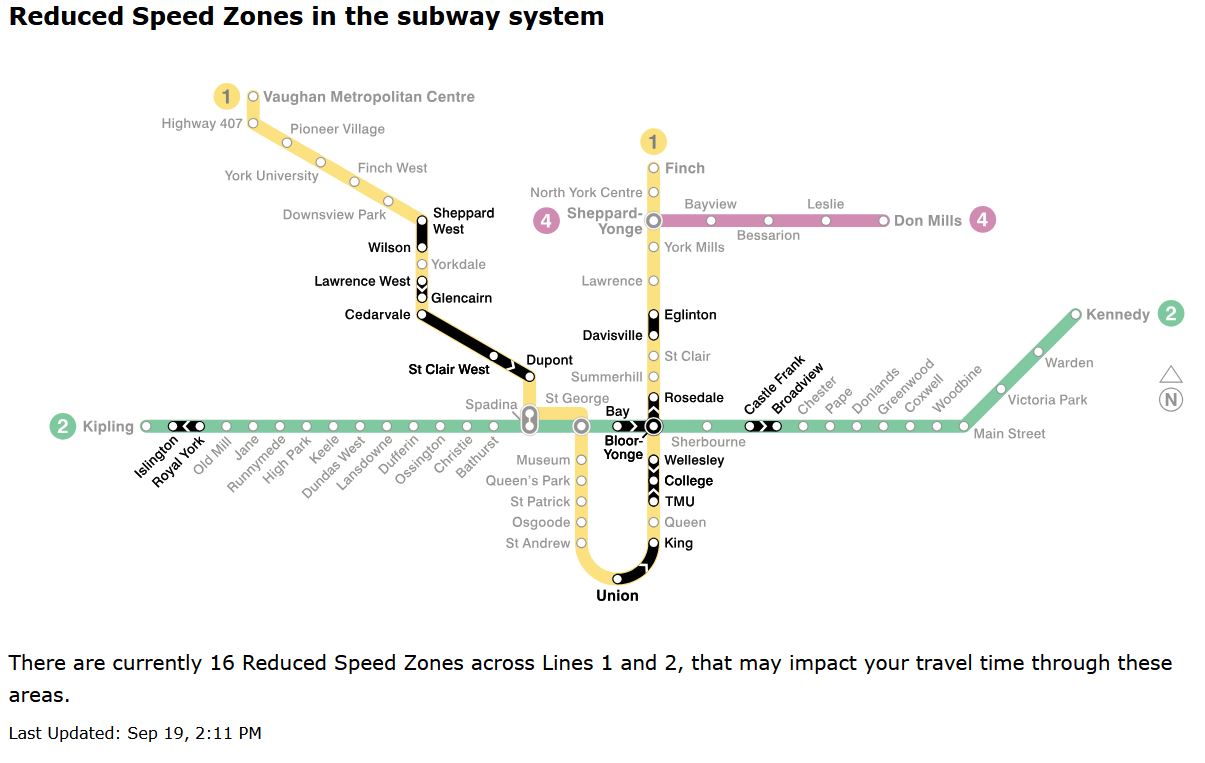
Here is the map of slow zones taken from the TTC’s site on Saturday, September 19. The “downtown” part of Line 1 is particularly bad, but the “Spadina” leg of the subway is close behind.
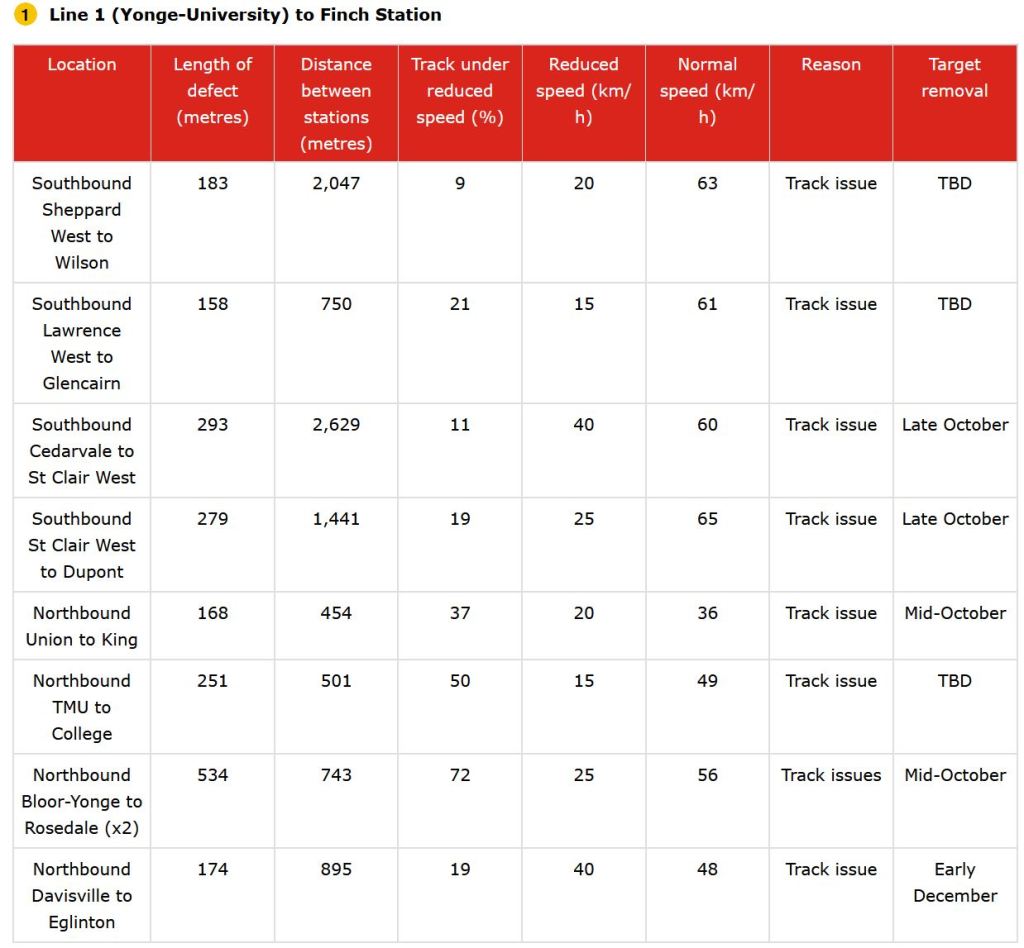
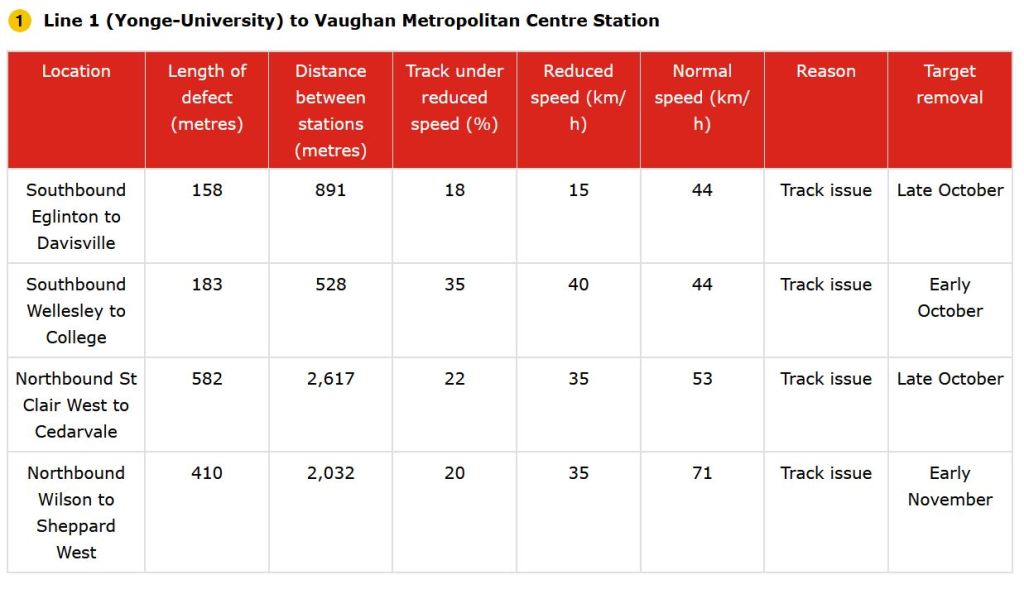
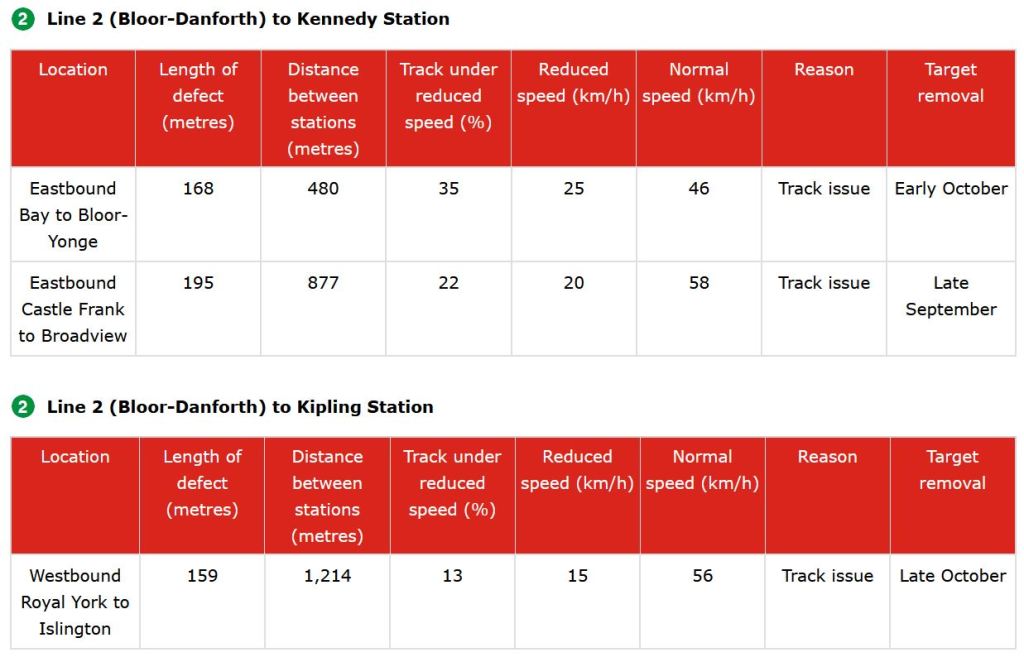
These are detailed in tables taken from the same TTC page (click to expand).
 Steve Munro