The Gardiner East Conundrum: Saving Time Is Not The Only Issue

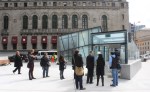
Toronto’s Public Works and Infrastructure Committee (PWIC) will consider an updated report on the Gardiner East reconstruction options at a special meeting on May 13, 2015 where this will be the only item on the agenda. (Note that additional detailed reports are linked at the bottom the main report.)

There has been much discussion of the alternative designs for the expressway section between Jarvis Street and the Don River and, broadly speaking, there are two factions in the debate.

  • For one, the primary issues are to maintain speed and capacity of the road system, and to avoid gridlock.
  • For the other, the primary issue is the redevelopment of the waterfront, and the release of lands from the shadow of the expressway structure.

Both camps seek to encourage economic growth in Toronto, but by different means and with different underlying assumptions.

A further issue, largely absent from the Gardiner debate, is the role and comparative benefits of various transit projects ranging from GO/RER/SmartTrack at the regional level, down to subway options including the Scarborough Subway Extension and the Downtown Relief Line, and local transit including the Waterfront East LRT line and a proposed Broadview Extension south across Lake Shore to Commissioners Street including a Broadview streetcar.

Continue reading

TTC Board Meeting Wrap-up April 28, 2015

The TTC Board met on April 28, 2015, with what looked on the surface like a light agenda. Maybe a 3:00 pm finish after a short two-hour meeting, but in fact the whole thing dragged on to 6:00. Although parts were tedious, there was comic relief (a classic put-down of Denzil Minnan-Wong on funding of Seniors’ Fares), and some actual discussion of policy. Among the items on the agenda covered in this wrap-up are:

  • A request to Metrolinx re audit controls on Presto
  • A discussion of Mobility Hubs notably at Danforth Station
  • A presentation about TTC’s Procurement Process
  • Council decisions regarding the TTC’s 2015 Budget
  • A presentation about the quarterly Customer Satisfaction Survey
  • A presentation about TTC service to the Pan Am Games
  • The April 2015 CEO’s Report
  • Lease of additional office space for TTC capital program staff

Separate articles posted earlier on this site deal with:

Continue reading

Metropass Turns 35: Time To Talk About Fare Options

May 1, 1980, saw the introduction of Toronto’s Metropass and the beginning of a shift away from pay-as-you-ride travel on the TTC.

May1980Pass

The pass did not come without some political battles, and the stock TTC line was that this just wouldn’t work in Toronto. What they really worried about, of course, was lost revenue, a topic that comes up every chance TTC management gets to cry in their beer about the good old days when people actually paid full fares to ride.

The fare multiple in 1980 was 52 – the price of the pass at $26 was the equivalent of 52 tokens at, wait for it, fifty cents each. Over the years it was wrestled down to 46, but has been drifting up again in an attempt to make those pesky pass holders pay more. The ratio stands at 50.5 today for a regular pass with no discounts.

In fact, passholders now represent over half of all TTC rides. In 2014, out of a total 534.8-million rides, 290.7m were paid for with transit passes. It is long past time that we should think of pass users as if they are some small privileged group, but rather that they take the majority of trips on the TTC. It is their fares which are the “standard”, not the higher priced token users nor the real cash cows, those who pay the full cash fare. The chart below shows the evolution of fare media usage over the past three decades.

1985-2014 Analysis of ridership

At its April 29, 2015 board meeting the TTC approved a request that staff report on various fare options including:

  • fare by time of day
  • 2 hour transfer
  • Seniors fares by time of day, including $1.00 seniors fare during off-peak hours
  • Fare by distance
  • Concession policy overall as informed by Fare Equity Strategy
  • Monthly pass versus daily / weekly / monthly capping
  • Free regular transit fares for Wheel-Trans qualified passengers in addition to the visually impaired

This report is expected to arrive on the October 2015 board agenda.

Continue reading

Finch West LRT Soon, Sheppard East Not So (Updated)

Updated April 28, 2015 at 8:20 am:

The decision to push construction of the Sheppard LRT out to the 2020s was taken quite recently as shown by two separate reports.

In today’s Globe & Mail, Oliver Moore reports:

According to Mr. Del Duca, the delay on Sheppard was because of the difficulty of trying to do too many big projects at once. “The plan right now is to have the procurement begin for the Sheppard East LRT after we complete the Finch West LRT,” he said.

There was no firm timeline available for the Sheppard line. If it starts on its new schedule and takes about as long as Finch to build, it should be ready some time after 2025.

This timeline is sharply at odds with the information given to a reporter in the provincial budget lock-up on Thursday. The government’s position then – given on background and not for attribution, under the rules of the lock-up – was that the Sheppard line would open about a year after Finch. Mr. Del Duca’s spokesman did not return a message Monday seeking clarification of what had changed.

On April 27, over an hour after the LRT announcement, one of my readers, seeking clarification from Metrolinx received the following email:

From: Metrolinx Customer Relations <customerrelations@metrolinx.com>
Date: April 27, 2015 at 10:43:26 AM EDT

Dear [x]

Thank you for contacting us about the status of the Sheppard East LRT.

The Sheppard East LRT is fully funded and approved. The Sheppard East LRT underpass construction at Agincourt GO Station has been completed.

Preliminary design and engineering work will be happening over the next few years. Construction is expected to begin in 2017 and be completed by 2021.

I appreciate you taking the time to contact us.

Sincerely,

[x] Customer Service Representative
GO Transit, A Division of Metrolinx

One wonders just what triggered a change so last-minute that it was not communicated to Metrolinx’ own “communications” team. The Minister claims that the delay is because there is only so much construction work that can be undertaken concurrently, but this seems to have more to do with avoiding a politically difficult decision.

A much more honest position would be to say simply that “we’re waiting for the results of various studies now underway on transit for Scarborough”, but leadership, or even a bit of common sense on anything transit-related in that part of town seems to escape the Liberals at Queen’s Park.

Original article from April 27 at 12:11 pm:

Continue reading

Union Station York Concourse Opens April 27, 2015

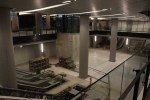
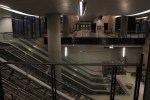
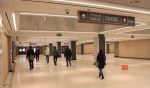
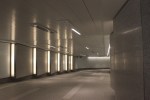
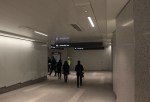
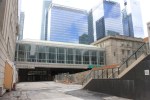
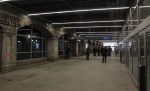
The new GO Transit York Concourse at Union Station will open for business on Monday, April 27. After years of construction and an ever-changing maze pf construction hoarding, the new concourse will show off what the Union Station Revitalization project is all about.

Anyone who travels through Union Station knows the old, crowded GO Transit area under the East Wing of the station. Passengers rushing for trains jostle with queues in the fast food court and the ticket area. The York Concourse opens up space under the West Wing that formerly housed baggage services and parking, an area that for most users of the station simply didn’t exist because much of it was off limits to the public.

The new concourse will add about 50% to the available passenger space and will open up circulation between the waiting areas and the tracks above, not to mention adding new ways to get into and out of the station.

Union_EN-1000x800_201504

This map looks north with the existing Bay concourse at the right hand end of the station. On either side of Bay Street are the old freight teamways which are now pedestrian paths under the rail corridor and access to tracks above.

In the middle of the station is the Via concourse which is not affected by this work. To the west (left) is the new York Concourse.

Both the Bay and York concourses will remain open until after the Pan Am Games this summer, and the Bay Concourse will then close for a renovation to match the new York Concourse with a target reopening date early in 2017. Concurrent work will include completion of the new lower level shopping concourse in two stages (under Via in 2016, and under the Bay Concourse in 2017), as well as heritage restoration of the Great Hall and the East Wing of the building.

The goal is to have three times the space GO Transit has today to serve at least twice the passenger volume.

Also opening will be new accesses to the station and tracks including the first phase of the NorthWest PATH link across Front Street (eventually to extend north to Wellington Street) and the York East Teamway providing another set of stairs up to track level and access to the station itself.

The photo gallery below is from a media tour on April 24, 2015.

Ontario’s 2015 Budget and GTHA Transit Projects

To no great surprise, Ontario’s budget for 2015 included a lot of transit spending, although the degree to which this is new money rather than old repackaged announcements is a tad vague.

The transportation portion of the budget, “Moving Ontario Forward”, begins on page 42 of the main budget document (which is page 74 of the linked pdf). The financial information can be confusing because projects are grouped in various sections depending on their source of funding.

To support Building Together, Ontario’s long-term infrastructure plan, investments of more than $100 billion over 10 years are underway, including $50 billion for transportation infrastructure. This is above the commitment to make $31.5 billion in dedicated funds available through Moving Ontario Forward.(p. 38)

In other words, there are now two pools of funding: the original $50b announced for the first parts of  The Big Move, and a further $31.5b for recently green-lit projects. The original $50b is going toward various projects including:

  • UP Express
  • Mississauga Transitway
  • vivaNext Rapidways
  • Eglinton Crosstown LRT
  • Finch and Sheppard LRT projects.

On the Finch and Sheppard projects, the Budget has this to say:

The Finch West and Sheppard East LRT projects, which will provide reliable and improved transit service on these busy corridors. The Finch West LRT will run along Finch Avenue between Humber College and Keele Street, and the Sheppard East LRT will run along Sheppard Avenue from Don Mills Station to Morningside Avenue. The procurement process for the Finch West LRT project is expected to begin later in 2015. (p. 39)

Additional investments not tied to specific project groups of funding streams include:

  • The PRESTO fare card.
  • Region of Waterloo’s ION LRT/BRT rapid transit project.
  • Ottawa’s Confederation LRT line.
  • Toronto’s streetcar fleet renewal.
  • The Scarborough Subway Extension.
  • Various highway projects. (pp. 40-41)

Moving Ontario Forward: Asset Optimization and Dedicated (Redirected) Taxes

This process began with the 2014 budget and, basically, involves land sales to fund infrastructure costs. In 2014, the target amount was $3.1-billion, but this has now been increased to $5.7b. The projects supported from this source include:

  • Accelerate service enhancements to the GO Transit network, which will lay the foundation for Regional Express Rail (RER);
  • Launch a new Connecting Links program, which provides funding for municipal roads that connect to provincial highways;
  • Develop a new program to expand the natural gas network, which would help more communities generate economic growth; and
  • Enhance regional mobility by investing in Metrolinx’s Next Wave projects of The Big Move, such as the Hurontario–Main Light Rail Transit project in Mississauga and Brampton, and rapid transit in Hamilton. (p. 43)

A further $25.8b (unchanged from the 2014 budget, see list on pp. 44-45) comes partly from tax revenues that are explicitly directed to the Moving Ontario Forward program. Some of this money is not yet in hand, notably contributions expected from the Federal Government.

A big chunk of Moving Ontario Forward is the GO Regional Express Rail (RER) scheme that has already been announced. The map in Chart 1.7 (at page 47) shows RER service to Oshawa, Unionville, Aurora, Bramalea and an unnamed point somewhere east of Hamilton, as well as service improvements on the Milton and Richmond Hill lines, plus the portions of the Stouffville, Barrie and Kitchener corridors beyond the RER limits. This is similar to information in the recent RER announcement, but with a notable difference regarding electrification:

The Province is also enhancing train service on all lines, including fully electrifying the Barrie, Stouffville and Lakeshore East corridors. (p. 47)

The description of RER service is also intriguing:

Regional Express Rail will deliver electrified service, at about 15-minute frequencies, along the following routes:

  • Lakeshore East and Lakeshore West corridors, between Oshawa and Burlington;
  • Union Station to Unionville on the Stouffville corridor;
  • Union Station to Bramalea on the Kitchener corridor, including UP Express; and
  • Union Station to Aurora on the Barrie corridor. (p. 47)

Given that the UPX will itself operate on a 15-minute headway, I hope that this description is merely a drafting error that has conflated two separate services in one corridor.

The Budget goes on to say that beginning in 2015-16, trains will be added on all corridors during various periods. This is an operating cost, not (in the main) a capital cost, and it is unclear whether this is coming from the “Moving Ontario Forward” pot or from general budgetary allocations to Metrolinx/GO.

Funding Partnerships

The budget is quite clear that Ontario is not going to build every project solely with provincial money.

The GO system, strengthened by the Province’s investments in RER, including on the Stouffville and Kitchener lines, will provide the backbone for a regional network. This network will also be the foundation for the SmartTrack proposal in the City of Toronto. Additional funding is needed to support key elements of this proposal, such as new stations along the route and an extension along Eglinton to the busy airport area. The SmartTrack funding proposal entails contributions of about $5.2 billion in new funding from partners, including the City of Toronto and the federal government. (p. 49)

At this point, Queen’s Park is not getting into a technology debate about the Eglinton West branch of SmartTrack and still describes this line as an airport service. However, as we will see later, the “Eglinton Extension” has been hived off as a separate budget item, and it is to be entirely funded with “partnership” money.

Another role for “partnership” funds lies in improvements to the Richmond Hill corridor with flood mitigation. It appears that Queen’s Park regards this as part of the larger bundle of projects that relate to core area capacity relief that should have money from more than one government. Whether Ontario would contribute anything is uncertain, and probably the subject of a future budget announcement if others come to the table.

The Next Wave

The Metrolinx “Next Wave” includes several projects that have not proceeded beyond lines on the map, but for which the province will continue planning and design work:

  • Dundas Street Bus Rapid Transit, linking Toronto, Mississauga, Oakville and Burlington;
  • Durham–Scarborough Bus Rapid Transit;
  • Brampton Queen Street Rapid Transit;
  • Toronto Relief Line; and
  • Yonge North Subway Extension. (p. 51)

Moreover:

In addition to RER, the Province will work with related municipalities to move towards implementation of the Hurontario–Main Light Rail Transit project in Mississauga and Brampton, and rapid transit in Hamilton. (p. 51)

Exactly what “rapid transit in Hamilton” might be is not specified.

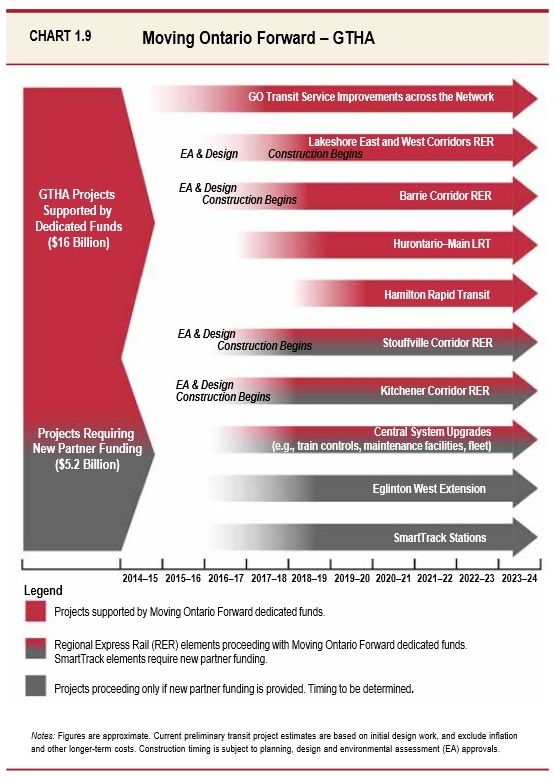
The status of various projects is summarized in the following chart (p.52).
OntarioBudget2015Chart1Dot9

As noted above, the SmartTrack elements of this plan at a cost of $5.2b are left for others to finance, and the Eglinton Extension is shown separately with 100% “new partner” requirements. An obvious place where Mayor Tory might save substantially would be to return to the Eglinton Crosstown LRT option for this segment, but we are unlikely to see any shift in his position until evidence from studies now underway shows just how impractical his SmartTrack scheme is in this regard.

What’s In and What’s Out

Notable by its absence is any reference to Waterfront transit which appears to be left in Toronto’s (or the tripartite Waterfront Toronto’s) hands. There is a generic reference to the proposed works at the mouth of the Don River, but nothing specific.

The status of route and technology selections in Scarborough is not touched both because this is a hot potato, and because legitimately Queen’s Park can point to studies now in progress that will sort out the potential role of various lines. Any move away from the subway option will not happen without a shift in Toronto Council’s position, and that is only likely if the project’s cost escalates well beyond the currently projected level.

Further enhancements to GO, notably on the Milton and Richmond Hill corridors, are topics for another day. In particular, Richmond Hill is unlikely to get serious attention until Queen’s Park and Metrolinx wrestle with the combined issues of routes serving the core area from the north and which infrastructure improvements make the most sense as a package.

No other Toronto rapid transit schemes are listed including perennial pet projects such as the Sheppard West and Bloor West subway extensions, nor is there any talk of enhancing the ongoing funding via gas tax revenue that contributes, in part, to the operating subsidy. Moreover, the question of funding accessibility is still clearly in Toronto’s hands.

The Budget doesn’t give Toronto everything it wants, and puts the City on notice that it has to come up with its own funding to address various problems, even if there might be a bona fide call on Queen’s Park for some areas.

At a minimum, there is more definition to what the government claims it will do in coming years. The challenge will be actual delivery, something for which the Liberals at Queen’s Park don’t have a good track record.

GO Transit RER/Electrification Plans Announced

The details of GO Transit’s service improvements and electrification leading to the rollout of the “RER” (Regional Express Rail) network were announced today by Minister of Transportation Steven Del Duca.

The plans will please some and disappoint others, but there is little to surprise anyone familiar with the details of GO Transit’s network and the constraints of the rail lines around the GTHA.

RER rollout by line

RER rollout details

If there are “winners and losers” in this announcement, the benefits clearly fall (a) on lines that are completely under Metrolinx ownership and control and (b) on lines that do not already have full service, that is to say, there is room for growth.

Electrification is planned for most corridors by 2022-2024 starting with the Kitchener and Stouffville routes in 2022-23, followed by Barrie and the Lakeshore in 2023-24. The announcement is silent on the UPX service on the Kitchener line and whether the inner portion of the corridor will be electrified as a first step for UPX before 2022. (I have a query out to Metrolinx on this topic.) These dates have implications for rolling stock plans including purchase of whatever new technology — electric locomotives or EMUs — will be used for electric services, and, by implication the eventual fate of the existing fleet.

The scope of electrification will be:

  • Kitchener line: Bramalea to Union
  • Stouffville line: Unionville to Union
  • Lakeshore East: Full corridor
  • Lakeshore West: Burlington to Union
  • Barrie: Full corridor

There are no plans to electrify either the Milton or Richmond Hill lines, nor to substantially improve service on them. In Milton’s case, this is a direct result of the line’s status as the CPR mainline. On Richmond Hill, significant flood protection works are needed in the Don Valley as well as a grade separation at Doncaster. Plans could change in coming years, but Queen’s Park has clearly decided where to concentrate its spending for the next decade – on the lines where improved service and electrification are comparatively easy to implement.

The limits of electrification correspond, for the most part, to the territory where all-day 15-minute service will be provided. This will be the core of the “RER” network with less frequent, diesel-hauled trains providing service running through to the non-electrified portions.

One important aspect of the line-by-line chart of service improvements is that there will be substantially more trips (most in the offpeak) before electrification is completed. This allows GO to “show the flag” as an all-day provider and build into a role as a regional rapid transit service, not just a collection of peak period commuter lines. This will also give local transit a chance to build up to improved GO service over time rather than a “big bang” with all of the changes awaiting electrification.

Over the five years 2015-2020, the Kitchener corridor will see the greatest increase in number of trains, although many of these will not actually run through all the way to Kitchener. The service build-up will finish in 2017.

The Barrie line will receive weekend service in 2016-17 with weekday off-peak service following in 2017-18. The Stouffville line also gets weekday service in 2017-18, while weekend service follows in 2018-19.

Minor off-peak improvements are planned for both Lakeshore corridors in 2018-19.

Peak service improvements relative to today vary depending on the corridor:

  • Lakeshore East: 4 more trains by 2018-19 on a base of 45 (9%)
  • Lakeshore West: 6 more trains by 2019-20 on a base of 47 (13%)
  • Stouffville: 4 more trains by 2018-19 on a base of 12 (33%)
  • Kitchener: 6 more trains by 2019-20 on a base of 15 (40%)
  • Milton: 6 more trains by 2019-20 on a base of 18 (33%)
  • Barrie: 2 more trains in 2019-20 on a base of 14 (14%)
  • Richmond Hill: 4 more trains by 2018-19 on a base of 8 (50%)
  • Total: 32 more trains by 2019-20 on a base of 159 (20%)

Other than making trains longer (where this has not already occurred), that’s the limitation of peak period growth for the next five years on GO Transit. This has important implications for projections of greater transit commuting along the GO corridors, and especially for the shoulder areas within Toronto itself that lie along GO routes, but also face capacity and travel time issues with the local transit system. Unlocking gridlock may be the goal, but the rate of service growth could not be described as “aggressive” especially against the background growth in population and jobs.

This will, or at least should, lead to renewed discussion both of rapid transit capacity within Toronto, and on how GO Transit will address growth beyond 2020. Where should new capacity be provided? What are the realistic upper bounds for various options? How will Toronto deal with demand for expanded suburban subway service to handle growth in the 905?

It is quite clear from the electrification dates that an electric SmartTrack is not going to start running soon, and with frequent all-day service to Bramalea, Aurora and Unionville using diesel-hauled trains operating well before electrification is completed, one might wonder just where SmartTrack as a separate “local” service will fit in.

Beyond these questions lie the more complex issues of travel that is not bound for Toronto’s core. “Gridlock” is commonly cited as the rational for transit spending, and yet this spending does little to improve travel anywhere beyond existing corridors to central Toronto. Demand in the GTHA is not conveniently focused on a few points, not even on Pearson Airport which is a major centre, and single-route improvements do not address the diverse travel patterns of GTHA commuters.

Ontario will spend billions on transit in the coming decade, and sticker-shock has already set in with the huge amount of infrastructure needed. Even this is only a start and the work to truly address travel requirements of the coming decades is only just starting.

The Dubious Economics of the Union Pearson Express

In today’s Toronto Star, Tess Kalinowski writes about recently released Metrolinx reports concerning the Union Pearson Express (UPX).

The items of interest are down at the bottom of the Reports & Information page and they include ridership forecasts from December 2011 and May 2013. The latter report was cited as background to the Auditor General’s 2012 Report on Metrolinx [beginning on p. 6 of the pdf].

Given that the projection is almost two years old, one might be tempted to say “maybe things have improved”, but that’s a tad hard to believe in the absence of any newer studies from Metrolinx.

There are great hopes, and even greater hype, for the UPX, and getting some basic information on the table is certainly worthwhile. Continue reading

The Evolution of TTC Signaling Contracts (Updated)

Updated April 19, 2024 at 10:40 am: The links to TTC reports have been updated again to reflect the current URL structure of the TTC’s website.

Updated September 29, 2022 at 1:30 pm: Links to TTC reports have been updated to point to the “new” TTC website except in cases where the report is no longer online. In those cases, a copy from my archives is linked on this site.

Updated April 4, 2015 at 6:00 am: The review of options for consolidation of the signal contracts by Parsons is now available as part of the TTC’s report online. Comments have been added at the end of this article.

Recently much attention has focused on the runaway project to extend the Spadina Subway north to Vaughan with a flurry of questions about project management, scope creep and cost controls. Another of the TTC’s megaprojects, one that is actually far more critical to the subway as a whole, is the replacement and upgrading of the signal system controlling the movement of trains. This project has dragged on for years while riders endure service problems with antique equipment and line shutdowns for installation and testing of the replacement system.

At its recent meeting, the TTC Board approved a proposal to restructure existing contracts for new signal systems and to simplify the signaling technology that will emerge as the standard on Yonge-University (Line 1) by 2020 with the remainder of the subway system to follow.

In order to make sense of the evolving design for new TTC signals, this article will begin with a short history of the system as it existed and the limitations the new system is designed to remove.

Continue reading

TTC Board Meeting March 26, 2015 (Update 2)

The TTC Board met on March 26, and considered a meaty agenda that begins to address some important policy issues.

Updated March 29, 2015 at 3:45 pm: The presentation on One Person Train Operation (OPTO) given at the meeting has been added along with comments.

Updated March 24, 2015 at 8:10 am: After this was published, the TTC posted the CEO’s Report.

In a previous article, I wrote about the Spadina subway extension project update. This will undoubtedly be the main attraction both for board members and the media. Other items of interest include:

  • An overhaul of system key performance indicators (KPIs)
  • A door monitoring system for Toronto Rocket trains and one person train crews (Updated March 29)
  • Revision and consolidation of the resignalling contract for the Yonge-University line
  • A study of express bus routes
  • CEO’s Report

Continue reading