Where Should We Put A (Downtown) Relief Line?

The City of Toronto began a series of public meetings yesterday (March 3) to advance the cause of a a new subway line that would relief capacity constraints into downtown.  This round focuses on the question of station locations in the segment from the core area east and north to the Danforth Subway.

It is no secret that I have strongly supported the “Downtown Relief Line” (DRL) for a long time, and yet I could not help being disappointed by the structure of studies now underway and the public participation process. There is a sense of a process that is too low-key, that may give the impression of movement while failing to advance the cause.

In this article, I will review the presentation deck being used in these meetings, the questions being asked of participants, and the shortcomings in the advocacy for this new subway line.

Continue reading

Toronto Regional Relief Public Meetings

The City of Toronto Planning Department will hold four public meetings regarding their Regional Relief study now in progress.

The meetings will be held between 7:00 and 9:00 pm:

  • Tuesday, March 3, 2015 at Calvary Church, 746 Pape Avenue (Pape Station)
  • Thursday, March 5, 2015 at Riverdale Collegiate, 1094 Gerrard Street East at Jones (506 Carlton car of 83 Jones bus)
  • Monday, March 9, 2015 at St. Lawrence Hall, 157 King Street East at Jarvis (504 King car)
  • Thursday, March 12, 2015 at Christ Church Deer Park, 1570 Yonge Street (St. Clair Station)

The focus of the meetings will be station locations and evaluation criteria.

Platform Edge Doors: Motherhood or a Vital Addition to the TTC Subway? (Updated)

At its meeting of February 11, 2015, Toronto Council debated a report from the Medical Officer of Health on Suicide Prevention. In response to this report, Council approved the following motion (which is a modified version of one of the MOH’s recommendations):

1. City Council request the Toronto Transit Commission to consider the following improvements to passenger safety and suicide prevention in future budget submissions as the automatic train control project is completed:

a. in the design of stations for all future extensions or new lines include Platform Edge Doors or other means for restricting unauthorized access to the subway tracks by members of the public;

b. retrofit existing stations with Platform Edge Doors or other means for restricting unauthorized access to the subway tracks by members of the public.

Please refer to the update at the end of this article for comment about the content of the debate which is now available online.

During the debate, various claims were made for the benefits of Platform Edge Doors (PEDs) on the advice of TTC staff, notably that it would not be possible to increase subway service from 28 trains/hour to 36/hour without the installation of PEDs.

28 trains/hour is equivalent to a headway of 128.6 seconds, somewhat shorter than the current scheduled level of 141 seconds, but within the capabilities of the existing signal system. 36 trains/hour is equivalent to a headway of 100 seconds which is well below the current infrastructure’s capacity.

This is the first time that the TTC has advanced PEDs not just as a “nice to have” option, but as a pre-requisite to improved subway service. The MOH cites a TTC report on the subject, but does not comment on its technical merit only regarding PEDs as a way to eliminate subway suicides, a noble goal.

The TTC received a presentation on this report in September 2010, but only a two-page covering report is online. (The TTC plans to post the longer version, but as I write this it is not yet online.)

According to this report:

In May 2010, SYSTRA Group (an affiliated company of Paris Metro) was retained to conduct a business case study for the installation of PEDS at TTC subway stations.

The SYSTRA report is not publicly available, but the presentation summary will be posted by the TTC soon. It is not yet on the TTC’s site as I write this article, but was provided to me by the TTC’s Brad Ross and is available here.

PEDs Business Case Presentation Sep 28, 2010

This presentation is misleading in that it combines benefits expected to flow from reduced headways through Automatic Train Control (ATC) and those specific to PEDs. A major benefit of the doors is to keep debris from falling onto the tracks where it creates a fire hazard. However, a separate review of TTC operations by an international consulting group noted that the TTC’s ability to operate its advertised service is compromised by several factors including equipment reliability and passenger illness (some of which is a result of overcrowding). Continue reading

Population Density and Proposed Transit Lines

The question of population density has come up in comment threads here in relation to various competing transit proposals.

As part of a planning course at Ryerson, Anthony J. Smith reviewed the SmartTrack and Downtown Relief Lines together with detailed data on population density, income and other measures. His paper Toronto Transit Choices: Evaluation of the Downtown Relief Line + SmartTrack Options including maps is available online at the Healthy City Maps website.

CPR Obico Yard: A chance for TTC Expansion?

According to the Globe and Mail, the CPR plans to redevelop surplus lands in many cities. Among the land that is up for grabs is the Obico Yard near Kipling Station in Etobicoke.

Why does the TTC need more yard capacity?

For starters, they have more trains than will fit within existing yards and the problem will only get worse with the construction of any new lines such as the Scarborough extension or the Downtown Relief Line. The yard at Keele Station has been pressed back into service to hold the overflow from Greenwood Yard that was triggered, in turn, by the T1 car fleet at Wilson Yard being pushed out by the new TR fleet.

The Scarborough project includes budget room for a new yard, but exactly where the TTC would put this in Scarborough is a bit of a mystery.

A west end yard on the BD line would allow service to be split between both ends of the line, and it would free up space at Greenwood. The property is already a railway yard, and it sits in the middle of an industrial area.

Toronto talks a lot about preserving industrial lands, but if this property turns into a new subdivision, this will be a major failure by the TTC (or GO Transit) to grab an ideal spot for expanded system capacity.

Planning for SmartTrack

At its meeting of January 22, 2015, Toronto’s Executive Committee will consider a report (SmartTrack Work Plan 2015-2016) recommending a work plan for the study of Mayor Tory’s SmartTrack proposal together with other related transit projects. This is intended to dovetail with Metrolinx’ work on their Regional Express Rail (RER) network, and will have spillover effects on studies of both the Downtown Relief Line (DRL) and the Scarborough Subway Extension.

The most important aspect of this report is that, at long last, a study is reviewing transit options for Toronto on a network basis rather than one line at a time. Factors such as alternative land use schemes, fare structures and service levels will be considered to determine which future scenarios best support investment in transit. Rather than starting with a “solution”, the studies are intended to evaluate alternatives.

If this outlook actually survives, and the studies are not gerrymandered before they can properly evaluate all strategies, then the process will be worthwhile and set the stage for decisions on what might actually be built. The challenge will be to avoid a scenario where every pet project on the map is untouchable rather than making the best of the network as a whole. The term “best” will be open to much debate.

Continue reading

John Tory’s “SmartTrack”: Will That Train Ever Leave The Station?

Late in May, John Tory launched his “SmartTrack” transit line, the centrepiece of his “One Toronto” plan. Media reps gathered for a preview at the Metro Toronto Convention Centre, and the launch was handled almost entirely by Tory’s staff. All of the background papers are on the One Toronto website, and little has been added since that event.

Even then, in the early days of the campaign, there was good reason to distrust Tory’s grasp of his own proposal, let alone a willingness to engage in debate, when he made the briefest of appearances for a canned statement to give the media clips for the news broadcasts, but answered few questions.

I was modestly impressed that at least a Mayoral candidate was not just thinking at the ward level for a transit proposal, but felt the plan was rather threadbare — a single line to solve almost all of Toronto’s problems.

Wearing two hats that day – as both reporter and activist – I was scrummed by the media for comments, and the Tory campaign chose to lift one phrase out of context as an “endorsement” for SmartTrack that remains online.

Steve Munro, Toronto Transit Blogger, said, “This is very much a refocusing of what transit in Toronto should be.”

What I was talking about was the need to look at the region and at trips to points other than the corner of Bay & Front and times other than the traditional commuter peaks. As to the specifics of SmartTrack, I was rather less complimentary.

In brief, SmartTrack would see electric multiple unit (EMU) trains operating primarily on GO Transit corridors between Unionville on the Stouffville line and Mount Dennis on the Weston corridor (the Kitchener-Waterloo line). At Eglinton and Weston, the line would veer west along the former Richview Expressway lands to the Airport Corporate Centre, but not to the airport itself.

The route would charge regular TTC fares with free transfers to the existing system, and with frequent all-day service at peak levels of every 15 minutes. Over its 53km it would have 22 stations, and might, according to the campaign, carry over 200,000 passengers per day.

Continue reading

Metrolinx Board Meeting June 26, 2014 (Corrected)

Correction July 1, 2014: In the original version of this article, I attributed a comment to Metrolinx Chair Rob Prichard regarding the sharing of information between bidders on rapid transit projects, and expresssed my surprise that this did not match the process I was familiar with from my own public sector experience. In fact, the remark was with regard to sharing information about questions to Metrolinx from candidates in the municipal election.

The procurement process does include sharing of information via addenda to Requests for Information issued to all bidders as mentioned in the Rapid Transit Quarterly Report. I regret this error and frankly cannot understand how I scrambled two very different topics together.

However, the process for dealing with candidate questions at Metrolinx is completely different from that followed by the City of Toronto. Where Metrolinx preserves confidentiality about questions a campaign might ask, the City posts responses to any query online so that no candidate has the advantage of professional advice not available to others. The basic premise is that the staff works for Council, not for an individual member or candidate.

As a public agency, Metrolinx should be providing information to everyone. The discussion (which starts at about 21:10 of the meeting video) emphasizes that Metrolinx has no part in the election, and yet the confidentiality of information exchanges could offer an advantage to a campaign that is unknown to other candidates.

Original Article  from June 29, 2014:

The Metrolinx Board met on Thursday, June 26 in a quite celebratory air. With the provincial election out of the way and the return of a pro-transit Liberal majority to Queen’s Park, Metrolinx sees a rosy future for transit expansion. They wasted no time telling anyone who would listen about the great work now at hand.

Among the items of interest were reports on:

Another burning question about the recently announced funding is just how much money is on the table, especially how much is new money as opposed to funds earmarked for specific projects like RER or previously announced/expected for projects in the “Next Wave” of Metrolinx undertakings. It didn’t take the assembled media long to notice that the GO RER scheme would gobble up much of the $15b earmarked for transit in the GTHA. I will return to this in a separate article.

Continue reading

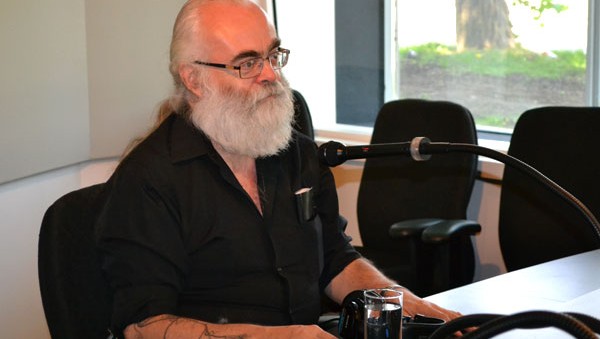
Plans by Murray and Tory: Steve Visits Goldhawk

On June 2, 2014, I appeared on Dale Goldhawk’s radio show talking about both the Murray High Speed Rail plan and the Tory “SmartTrack” scheme. A podcast of the show is available on Goldhawk’s site (running time about 34 minutes).

Even with half an hour, we couldn’t talk about everything including those pesky details that make superficially attractive projects run aground.

SteveMunro-600x339

[Photo by Zoomer Radio]