A Surfeit of Streetcars

The last of the TTC’s 60-car add-on streetcar order arrived in Toronto recently, and entered service on December 16, 2025. This brings the streetcar fleet to 264 vehicles.
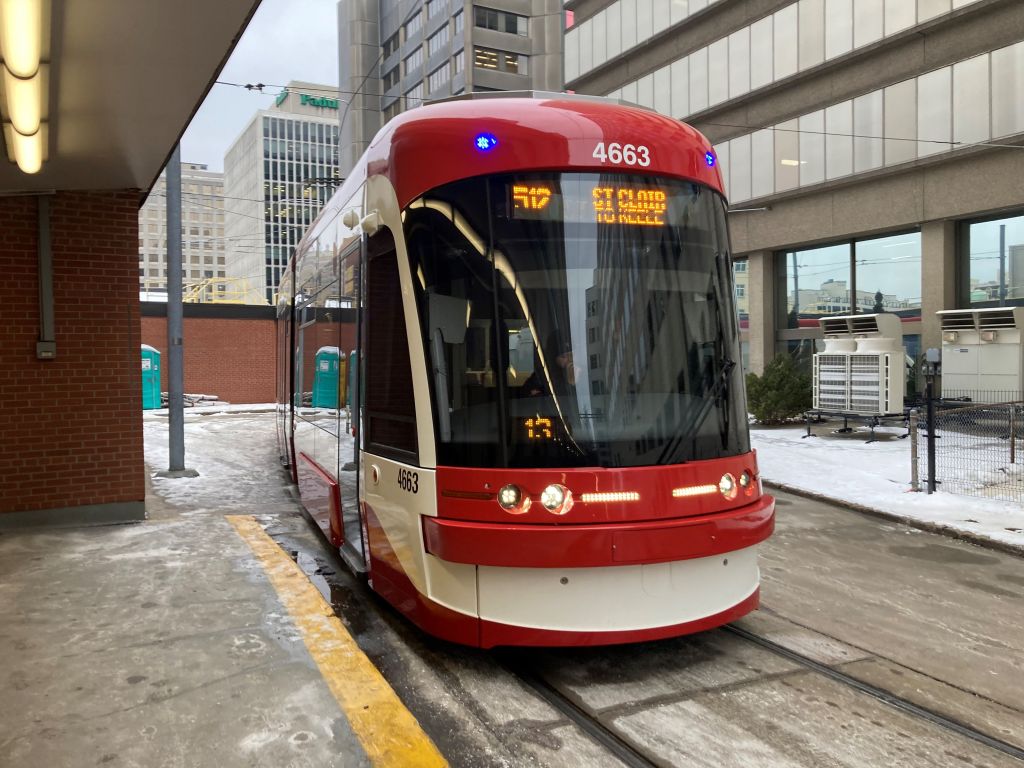
4663 at St. Clair Station Loop, December 16, 2025. Photo by Jeffrey Kay.

With so many streetcars, the real shame is that the service is so poor on many routes through a combination of 10-minute headways and erratic operation, not to mention the effect of never-ending diversions, construction projects and bus replacements.

The TTC began a shift to a 6-minute headway standard with 512 St. Clair earlier in 2025, and this was followed by 505 Dundas and 511 Bathurst in mid-November.

Due to construction at Queen & Broadview, the 503 Kingston Road car is operating with buses, and will continue to do so at least until April 2026. There are moves afoot within the TTC to kill off the all-day operation of the 503 downtown, but one of its biggest challenges comes from irregular service on the 503 itself, and the total absence of headway blending where the 503 joins the 501 Queen car westbound at Kingston Road and Queen. Pairs of 503 buses are a common sight today, and 503/501 pairs were common when streetcars plied both routes.

The TTC simply does not take seriously the effect of unreliable service on ridership.

As we see a move to a new 6-minute standard, the question is just how far the 264-car fleet will stretch. The table below shows all of the streetcar routes with headways and PM peak car requirements. Toronto has not seen every streetcar route active at the same time for a very long time thanks to equipment shortages during the later days of the CLRV fleet, and the omnipresent construction projects that always managed to keep a route running with buses. One might think that the TTC overextended its route closures simply to save on streetcar operations.

In fact, a big shortage lies in operating staff and in budget headroom to field more cars on a scheduled basis.

If all streetcar routes were operating with streetcars today, the TTC would need 172 cars for service. A 20% provision for spares would raise this to 206 leaving a substantial pool of cars on the sidelines.

The right-most column below shows the current peak requirements scaled up for routes that now run on headways above six minutes. For example, getting 501 Queen down from a 9-minute to a 6-minute service would require 14 more cars. The total for an all-streetcar operation would be 215 cars, plus 43 spares for a total of 258, only slightly below the fleet size.

Until we see details of the 2026 budget, we will not know if any more routes will join the 6-minute network in the coming year.

RouteHeadwayPeak CarsCars Required for
6-Minute Network
501 Queen9’00”2842
503 Kingston Road to York (April 25)10’00”1220
504 King (April 25)5’00”2727
505 Dundas6’00”2525
506 Carlton (Sept 25)10’00”1932
507 Long Branch10’00”813
508 Lake ShoreTrippers55
509 Harbourfront9’00”69
510 Spadina5’00”1414
511 Bathurst6’00”1414
512 St. Clair6’00”1414
Total172215

The 60 new cars were intended both to handle growth and to provide for the Waterfront East line that is still only a faint hope for better transit there. An update on this project is expected at Council early in the new year, but a projected opening date lies in the 2030s.

The TTC is also short carhouse space. Thanks to the arrival of all 60 cars well before planned work completes to expand storage and maintenance capacity at Russell and Hillcrest. Part of the main shops will be converted as a streetcar barn serving 512 St. Clair and possibly 511 Bathurst. Several Blue Night streetcar routes operate with improved headways simply to reduce overnight storage demands on the carhouses.

The streetcar system always pulls up the rear in reliability stats, and recovery of pre-pandemic demand is not as strong on that part of the network as elsewhere. This is due in part to a shift in travel and work patterns in the area streetcars serve, but one cannot help wondering how much the erratic service deters riders from returning.

An ironic side-effect of a move to 6-minute service is that this makes “on time” an easier target, but with bunching as a daily event. The reason is that TTC vehicles can be up to 5 minute late and still count as “on time”. On a 6 minute headway, this easily leads to pairs of “on time” vehicles every 12 minutes. The real condition of service is hidden by a too-easily attained “target”.

The bus network also has fleet utilization issues, but these are a mixture of scheduled service levels, vehicle reliability, budgeted headroom for growth and the use of “Run As Directed” buses. The “RADs” are a relic of the Leary era that were routinely cited as a catch-all alternative to addressing specific problems. The vehicles were not well-used and their numbers dwindled as the pool of spare operators moved to other duties, notably on Lines 5 and 6. I will turn to the bus fleet in a future article.

For 2026, streetcar routes face many challenges:

  • Provision of enough budget to allow improved utilization of the streetcar fleet.
  • Service management that actually brings evenly spaced streetcars on dependable headways.
  • Addressing the validity of operating practices that hamper streetcar speeds everywhere, rather than just at locations with problems such as badly worn track. This includes sorting out constraints that really do relate to “safety” as opposed to using that as a catch-all excuse for padded schedules.
  • Addressing track switch controller issues that have plagued the streetcar network for decades.
  • Providing real transit signal priority for streetcars including at locations where diversions and short turns see streetcars fight through traffic attempting turns with no signal assistance at all.
  • An end to construction diversions scheduled for longer periods than actually needed to complete road, water, track and overhead repairs or upgrades.
  • Getting City projects that are supposed to be co-ordinated with streetcar track and overhead repairs to actually start and end when they are planned.

4663 Arrives!

The last of the 60-car add-on order of Flexitys arrived at TTC Hillcrest on November 18, 2025.

This brings the fleet to 264 cars, although one long-time out-of-service car remains offsite for repairs.

Current peak requirements are for 165 cars. About a dozen more would be needed to reactivate 503 Kingston Road, now bus route due to construction diversions, to its traditional terminus at York Street, more to continue further west to Spadina or Dufferin.

Allowing for spares at 20%, the TTC will still have roughly 50 surplus streetcars. Some of these will be soaked up by the move to 6-minute headways on all routes (subject to budget approval, as always), and some by the Waterfront East route if that is ever built. The next WELRT status report is to come to Council early in 2026.)

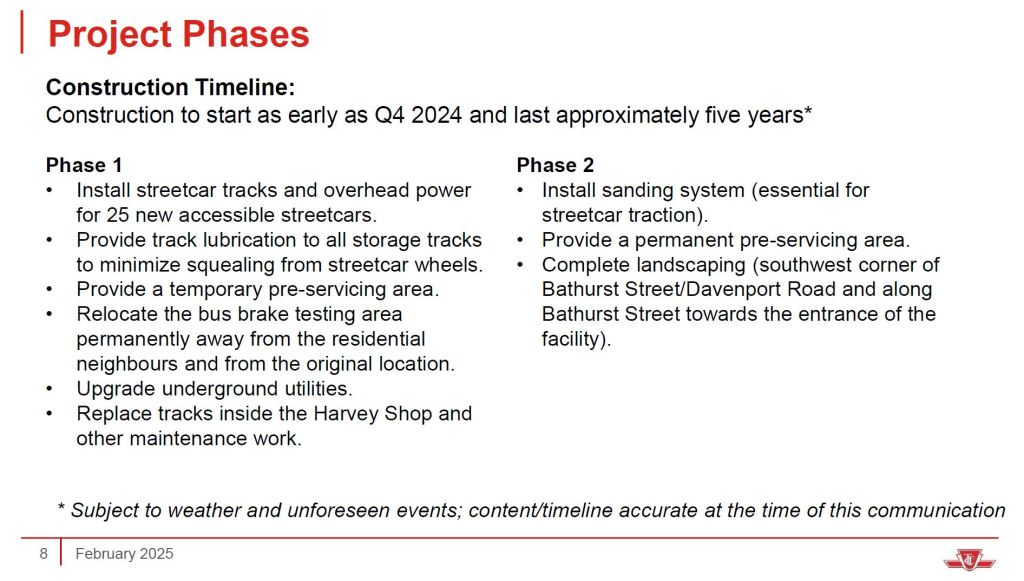
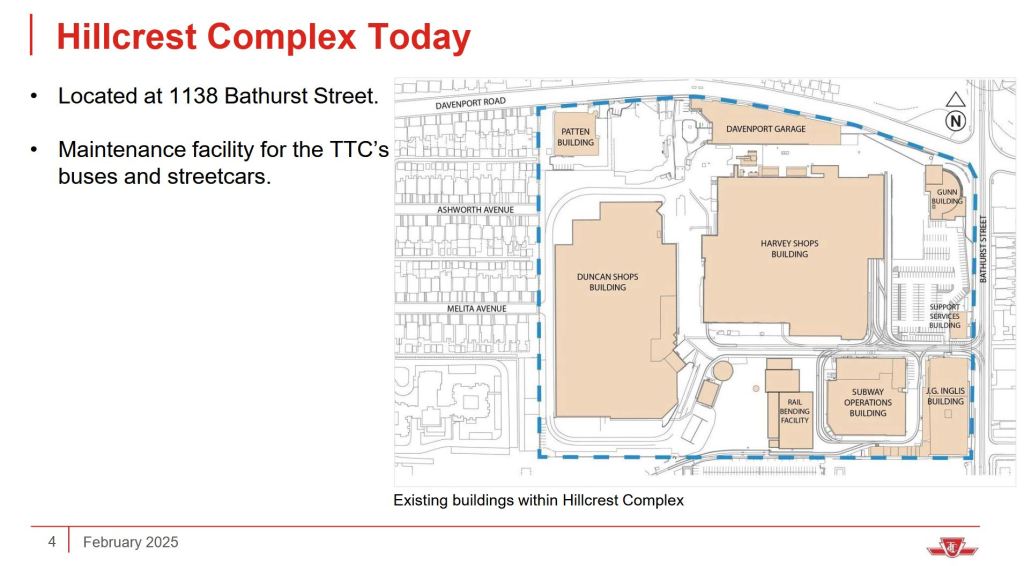
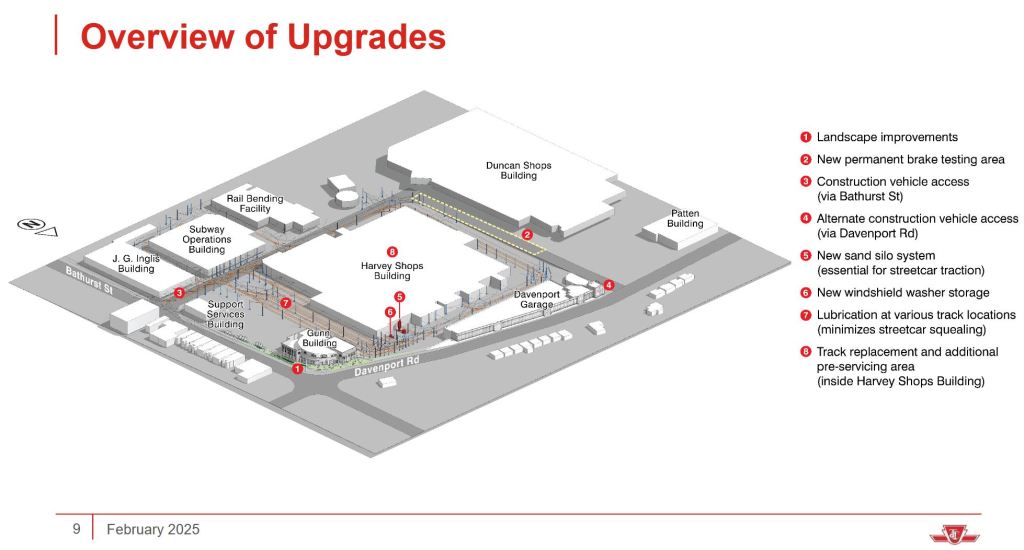
Work is underway to convert part of Harvey Shops (the building behind 4663) into a carhouse to operate 512 St. Clair and at least part of 511 Bathurst, in effect restoring the function once performed by St. Clair Carhouse on Wychwood. With the longer Flexitys, the transfer table at Hillcrest cannot be used, and tracks must be converted to through-running across the transfer table runway. This work is expected to complete in two phases with storage for 25 cars and temporary pre-servicing facilities in Q4 2028, and with permanent facilities in Q3 2029.

TTC Seeks Consultant for Streetcar Overhead Engineering

The TTC has an open RFP on the Bonfire site for a Triennial Contract for design services for its streetcar overhead contact system. Much of this document is boilerplate legalese, but the scope of work shows that the TTC plans to address key issues with systems related to streetcar overhead. Five specific tasks are listed in the RFP and more might be added over the term of the contract.

  • Overhead/Traction Power Supply Study
    • This involves a review of the existing system that supplies power to streetcars and the demands placed on it as vehicles move through the network. There is no mention of modelling the effect of increasing service, but this should obviously be part of the study to determine where constraints might exist to service growth. (The recent suspension of streetcar service on Bathurst during the busy CNE period thanks to a power supply failure is an obvious incentive for this work.)
  • Overhead Design for Interections
    • This task would review existing intersections with a view to improvements where appropriate.
  • Overhead Design for New and Existing Lines
    • The title is self-explanatory but it begs the question of why a new design is needed for the existing system, much of which has been rebuilt once for dual-mode trolley pole and pantograph operation, and again for a pantograph-only configuration. The latter work is still in progress, and is responsible for some of the extended bus-streetcar substitutions in recent years. Also notable is the absence of any reference to eBus charging infrastructure.
  • Streetcar Track Switch
    • Although track switches are not part of the power supply to streetcars, historically they were controlled through hardware mounted on the overhead wires. The current system uses antennae in the pavement and on streetcars, and responsibility for the system rests with the Streetcar Overhead section.
  • Streetcar Signal System Alterations
    • The definition of this task is unclear in that there are almost no signals anywhere on the streetcar system. Moreover, there is no reference to the interface between streetcar operations and traffic signals.

In this article I will address only the last two items as they are both related to issues of streetcar operating speeds, a topic raised in a recent UITP review of the streetcar system. (See The UITP Peer Review: What is the TTC Trying to Hide?) Details from this review might become public at the November TTC Board meeting.

Continue reading

Toronto’s Ambling Streetcars

One year ago, the TTC’s Audit & Risk Management Committee endorsed management’s proposal of a peer review of subway and streetcar assets and maintenance programs by the International Association of Public Transport (UITP).

Much of the review concerned asset management, inventory of system components, condition tracking and planning for maintenance and replacement. There is also a concern that subway and streetcar maintenance could be better integrated due to common technologies. I will leave a full review of this until after the A&RM Committee considers the UITP report at its September 22, 2025 meeting.

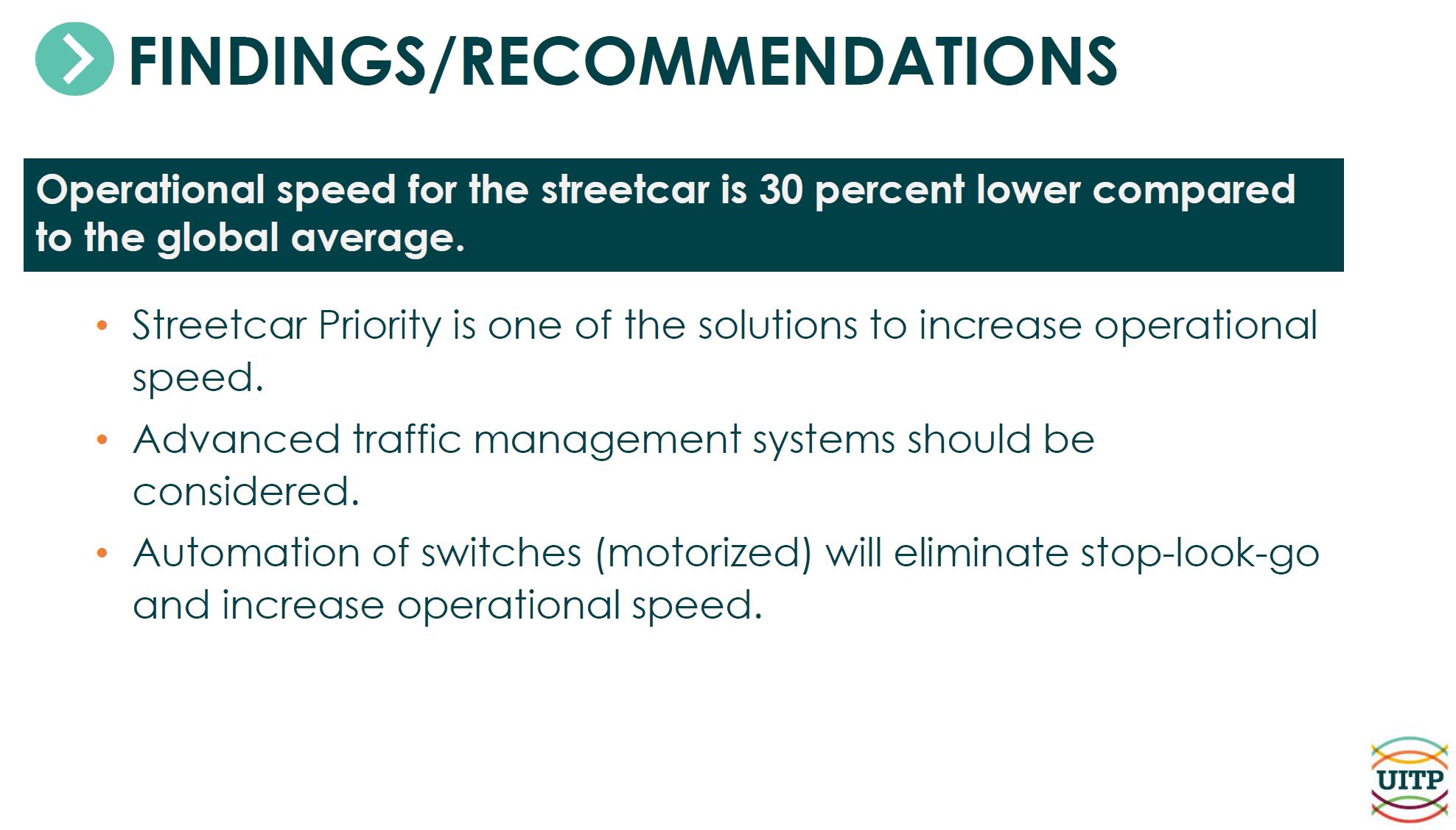
One slide in the UITP’s presentation deck speaks to streetcar operations and notes the glacial pace of Toronto streetcars compared to other systems.

The gradual slowdown of streetcar speeds evolved over a long period, and some of the history is not well known by current TTC Board members nor, I suspect, by many in TTC management. Many readers will remember the sprightly operation of the previous generations of CLRV streetcars and of the PCCs before them. The slowing of streetcar operations is not just a question of traffic congestion, but of other factors including TTC policy decisions. Any move to speed up operations needs to address as many of these issues as possible.

These include:

  • Electric switch operation
  • Track condition at intersections and associated slow orders
  • Overhead condition notably at underpasses
  • Flexity door operations
  • Nearside vs farside stops
  • Transit priority at signals especially for turning movements
  • Reserved transit lanes

The full version of the UITP report is not available and it will be discussed in private session at the committee meeting.

Continue reading

Pantographs for TTC Legacy Streetcars?

The TTC has a Request for Bid open on merx for the retrofit of pantographs on up to six legacy streetcars.

The base bid is for one car, with an option for five additional.

If this work goes forward, Toronto might still see its legacy fleet returned to occasionally active duty, but there is no further information in the request.

The legacy fleet is temporarily stored at the Halton County Radial Railway Museum.

TTC Hillcrest Update: March 2025

The project to reconfigure Harvey Shops at TTC’s Hillcrest facility was formally launched today. The work involves rejuvenation of the 100-year old property so that it can host up to 25 streetcars serving 512 St. Clair and, at least to some extent, 511 Bathurst greatly reducing dead-head time from carhouses for these routes.

This change in use is triggered by the new longer cars and the shift of major streetcar maintenance to Leslie Barns which is designed for them. Hillcrest was built in an era of Peter Witts, later PCCs, that are half the length.

See also:

This project is long overdue because the extra capacity is needed for streetcars to be delivered over the coming year. The situation is compounded by the loss of capacity at Russell Carhouse where major reconstruction is still incomplete. The TTC has improved overnight streetcar service as a means of “storing” surplus cars, although this has the added benefit of generating new riding and providing more convenient service for users of the night routes.

The Hillcrest project will be done in two phases allowing it to begin carhouse operation before the planned end date in 2029.

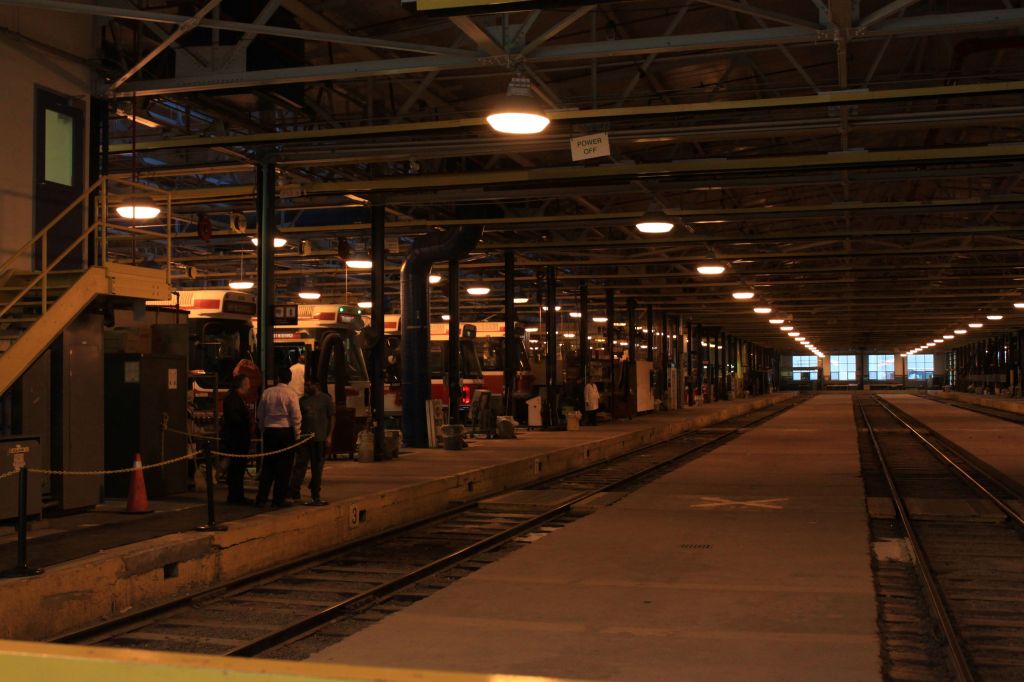
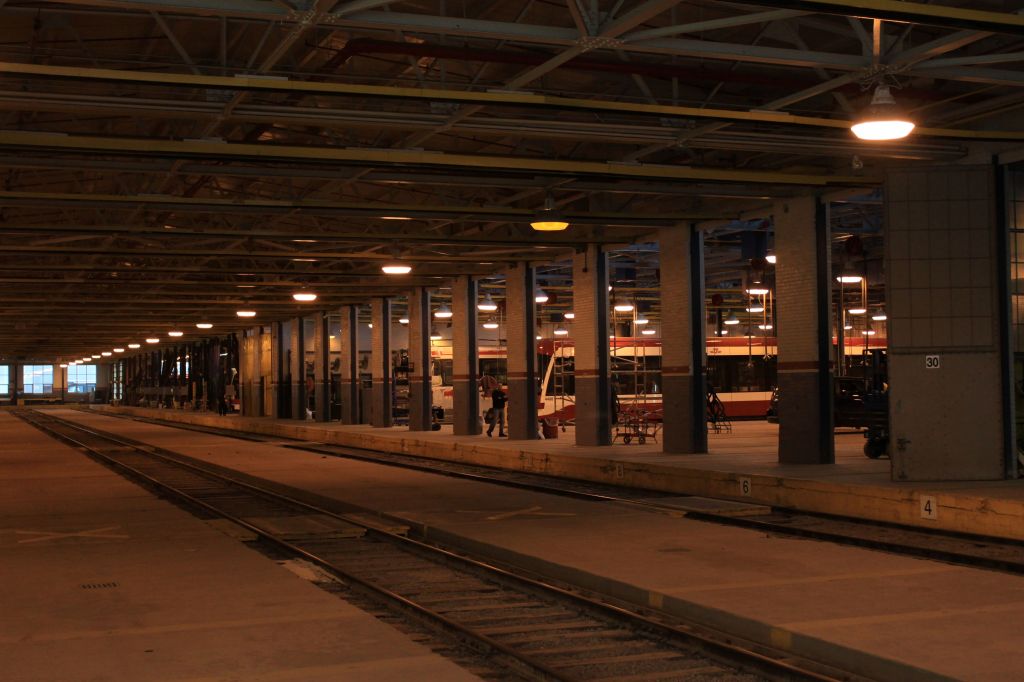
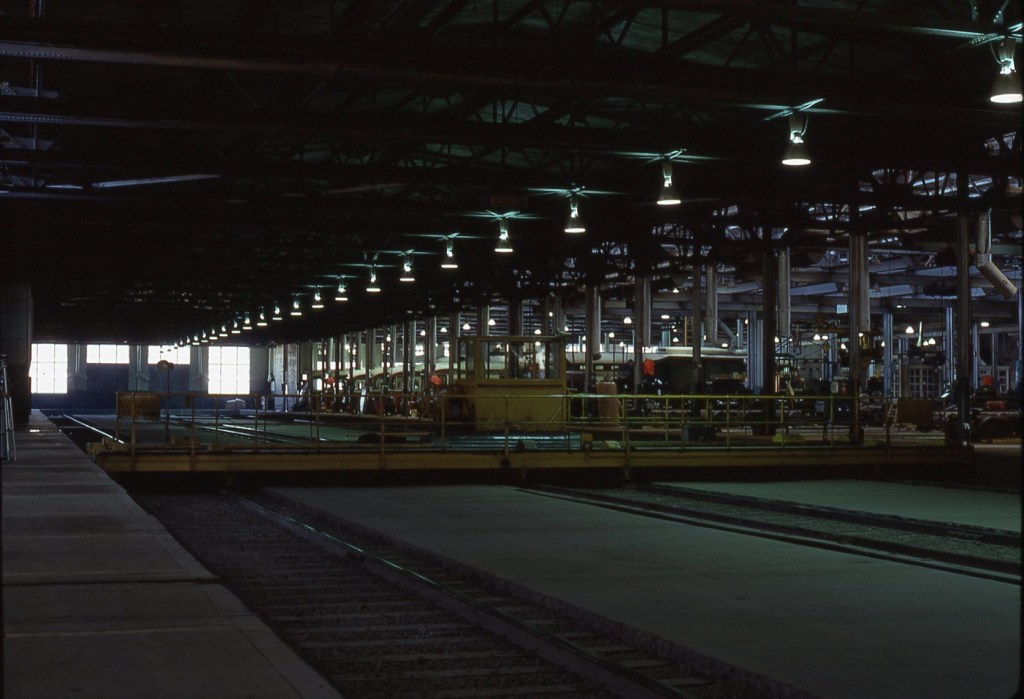
The eastern portion of the shops will be converted so that tracks run through from north to south. The current arrangement is oriented south to north, and most car movement within the building uses a transfer table to shift cars between the entry at the east side of the building and stub tracks further west.

The views below look west along the transfer table runway from the east side of the building in 2012 when CLRVs were the dominant form of vehicle. The runway will be filled in, and tracks which are now separated by it will be connected to provide a through route.

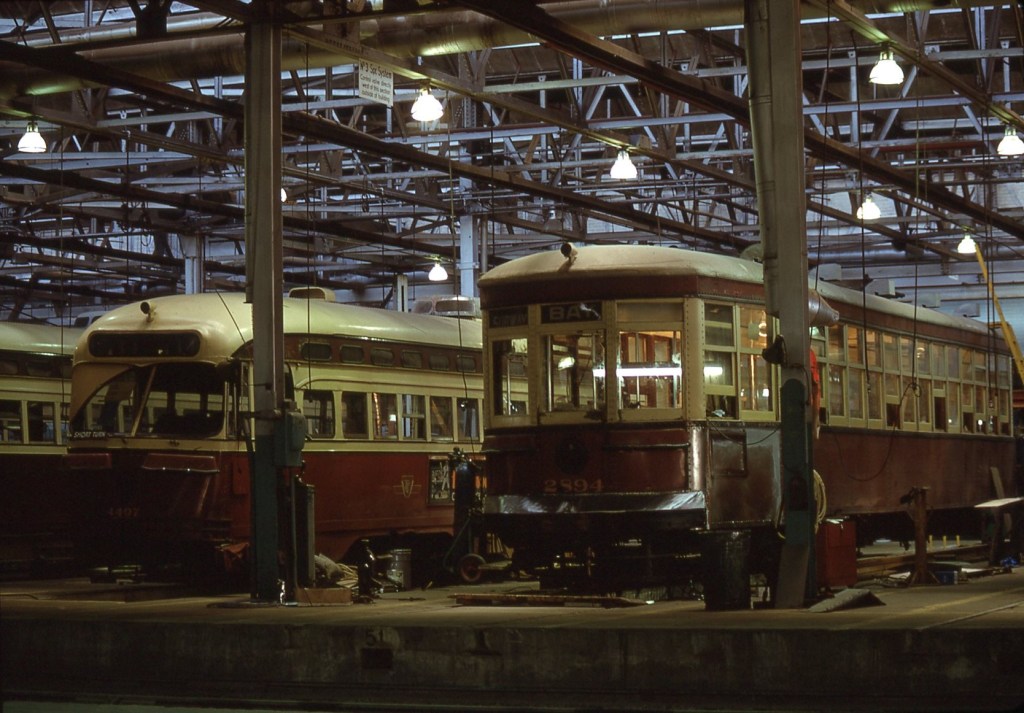
And here are views in earlier days showing the transfer table itself, and Peter Witt 2894 undergoing restoration for Tour Tram service. (This car is now at the Halton County Radial Railway Museum.)

Tracks around Harvey Shops will be reconfigured to provide a clockwise loop rather than the counter-clockwise arrangement now in place. Most of the storage area will be east of the building replacing some employee parking.

TTC Board Meeting Wrap-Up – January 27, 2025

This article covers:

  • The January 2025 CEO’s Report
  • A follow-up on the report re Subway Streetcar Fleet and Infrastructure
  • The proposed interim wayfinding strategy
  • An update on fare collection technology
  • A new procedure for handling complaints about CEO misconduct

I will cover the 2025 Annual Service Plan and the Corporate Plan Update in a separate article.

Location of Reports Changed

Effective with this meeting, the agendas and reports for Board meetings have shifted to the City’s meeting management site which hosts Council and Committee meetings. This will also host documents for Board committees such as Audit & Risk Management. Information for past meetings continues to be available on the TTC’s own site.

In Fall 2024, the CEO’s Report was reorganized with the Key Performance Indicators split off from the main report. There are now separate pages on the TTC site for accessing monthly CEO’s Reports and KPI reports.

Continue reading

TTC Historic Fleet Moves to Streetcar Museum

Updated January 29, 2025 at 7:35am: I have just received a note from the TTC stating that the historic fleet will return to Toronto following completion of reconstruction at Hillcrest. Good news, eventually.

From time to time, readers ask when or if the TTC will retrofit its historic streetcar fleet with pantographs so that cars can operate on the new pan-only overhead. That question is now answered with the move of these cars to the streetcar museum at Rockwood, the Halton County Radial Railway.

Peter Witt 2766 and PCC 4500 are already at the museum as of January 28. 4549 will move on January 29, and the CLRVs will move on February 3 & 4.

Here is car 4549 sitting at Hillcrest ready to leave.

Photo by an anonymous reader
Continue reading

TTC Fleet Utilization

From time to time, a discussion arises about the makeup of the TTC’s surface fleet, how it is utilized and the effect on service levels. This article presents details broken down by vehicle type to show variations across the system.

My apologies to readers if this seems a tad nerdish, but any discussion of future service requires an understanding of the fleet’s makeup and how it is used. Any fundamental differences between vehicle types will affect future planning, but equally there are inherent differences in types of routes and schedule designs that have nothing to do with the vehicles.

The charts in this article are based on tracking data accumulated by Darwin O’Connor at TransSee for the months of November and December 2024, less a few days around Christmas when the site was offline.

First, a basic question about how many vehicles were actually active over the two-month period. The chart below shows the daily count of vehicles that were observed in service by the TTC’s tracking system and TransSee during the period.

The peak number of buses (blue) is higher than the peak service requirement shown on the Scheduled Service Summaries for these months. The difference is due both to “Run as Directed” buses which do not show up in the assigned vehicle counts, and to buses that only work for part of the day and are replaced by other vehicles for various reasons.

The situation for streetcars (red) is similar, but with a smaller difference because there are few “RAD” streetcars and most cars stay in service all day, as shown in the detailed stats later in the article. Another important difference for streetcars is that weekend service is close to weekday service in terms of the number of vehicles used.

The bus fleet is in flux as old vehicles are retired and replaced by new deliveries. If anything, this should increase availability by removing the least reliable vehicles from service. The streetcar fleet is growing with deliveries of new cars that will continue through 2025. Service levels for both modes have yet to catch up with fleet size and availability, although some improvements are planned later this year.

The remainder of this article looks at the stats for individual vehicles, grouped by type.

Continue reading

TTC Board Meeting: July 17, 2024

The July 17 Board meeting was extraordinarily long thanks to three in camera items, plus extended discussions of the CEO’s Report and of use of buses as homeless shelters during the winter.

The confidential session dealt with:

  • A collective bargaining update for two small groups of customer service and operations supervisor employees.
  • An update on advice from External Counsel. On a recorded vote, this was adopted with all Board members except Councillor Saxe in favour. As of the publication of this article (July 28), there have been no leaks about the subject of this report.
  • An update on the fare modernization program including the status of the Presto contract. The report was also discussed briefly in the public session later in the meeting.

The public meeting included:

  • The July 16 storm, flooding and hardening of infrastructure against climate change.
  • New subway trains and federal funding announced earlier the same day (July 17).
  • Prioritization of State of Good Repair projects. This item received scant attention although the report contains much interesting background on capital plans.
  • Safety on the TTC.
  • Use of shelter buses.
  • Transit network expansion update.
  • Fare Compliance Action Plan: See the updated version of my previous article on this report which includes the debate at the Board meeting.

Not discussed was the issue of hydraulic fluid leaks from subway work cars of which one quarter are still out of service. A report is supposed to be coming to the Board soon. It is not clear how much this situation is affecting the TTC’s ability to stay on top of track maintenance issues and the growing list of slow orders for track that cannot be safely operated at full speed.

Continue reading