TTC Board Meeting of May 28, 2014

I have been remiss in completing my coverage of the TTC Board meeting on May 28 as other issues and activities have drawn my attention.

The big issue was the $47-million so-called surplus in the 2013 operating results which I addressed in an earlier article. Let’s just say it was one of the less well-informed debates I have seen in my years watching the TTC.

Another issue of note was the matter of eliminating stops on the streetcar system, an issue also covered elsewhere on this site.

Continue reading

John Lorinc and the Sad Story of Scarborough Transit

For those who may not follow their site, Spacing Toronto has an excellent series by John Lorinc about the machinations at City Hall and Queen’s Park behind the many changes in transit plans for Scarborough.

Reading through this, and in particular the double-dealing at Queen’s Park, not to mention self-serving moves by some city councillors, it is impossible to have any faith in plans or grand statements about the future of our transit system. Even worse, any thought of transparency is a fiction, and transit planning is a secret, political exercise utterly devoid of credibility.

This is not news to those of us who watch the process close up, but seeing the gory details on Scarborough brings a stench of opportunistic grandstanding to every other transit scheme on the table. Does anyone actually care about transit riders, or are we just buying votes with billion dollar promises?

Plans by Murray and Tory: Steve Visits Goldhawk

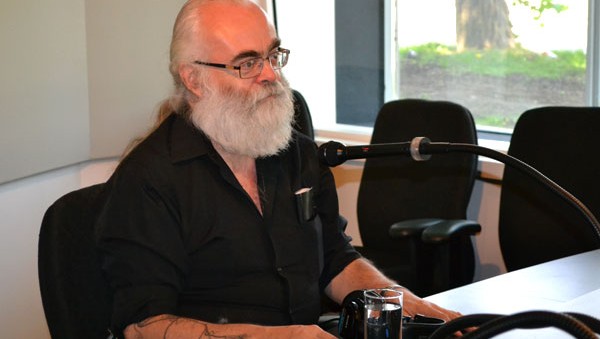
On June 2, 2014, I appeared on Dale Goldhawk’s radio show talking about both the Murray High Speed Rail plan and the Tory “SmartTrack” scheme. A podcast of the show is available on Goldhawk’s site (running time about 34 minutes).

Even with half an hour, we couldn’t talk about everything including those pesky details that make superficially attractive projects run aground.

SteveMunro-600x339

[Photo by Zoomer Radio]

So You Want To Own A Subway …

November 25, 2017: As the Tories have trotted out the same uploading plan as in the last election, I’m reminding folks that their scheme simply does not hold water. The numbers here are from 2014, and in due course I might getting around to updating them with 2017 or 2018 data. But it won’t change the conclusions.

This article was originally published in May 2014.

The madness that passes for political policy in Toronto continues in the provincial election with a proposal that a Tory administration under Tim Hudak would transfer control of the rapid transit system to GO Transit as a regional asset. The conventional wisdom is that the subway on its own would be “profitable”, and that Toronto would be stiffed for the money-losing surface network.

Quite bluntly, any claim that the subway makes a profit and could be uploaded at no net cost to Queen’s Park is pure bunk, and it says something about the quality of Hudak’s advisors that they don’t seem to know this (among many other fiscal facts of life). Just like the operation of a house or a car, two things many voters must deal with day-to-day, there are two budgets:

  • Operating: Here we have the bills that roll in regularly such as taxes, utilities, insurance. Unless we are renting out our homes or vehicles, there is no offsetting revenue, but in the case of the subway, there are fares and other much smaller sources of income.
  • Capital: Now and then, major expenses come along such as a new roof or foundation repairs, a new furnace or other appliances, fixing the plumbing and electrics, building that nice new patio you always wanted. These don’t happen often, and the expense covers an asset that should last decades, but some level of capital spending is unavoidable.

I have omitted mortgage costs here because they do not have a direct equivalent in transit budgets where the cost of borrowed money is not visible. If this were included, then capital-intensive modes like the subway would have a higher operating cost with the debt service charges included.

Continue reading

Neptis Reviews Metrolinx: A Critique (I)

In December 2013, the Neptis Foundation published a review of the Metrolinx Big Move plan authored by Michael Schabas. This review received prominent attention in the Toronto Star and is regularly cited in their coverage of transportation issues. Some elements also appear in recent comments by Transportation Minister Glen Murray, and it is reasonable to assume that his view of Metrolinx priorities has been influenced by the Neptis paper.

Since its publication, I have resisted writing a detailed critique in part because of the sheer size of the document and my disappointment with many claims made in it, and a hope that it would quietly fade from view. Recent Ministerial musings suggest that this will not happen.

The stated goals of the report arose from four basic questions posed shortly after The Big Move was released in 2008:

  • What evidence suggests that the projects in the Big Move will double the number of transit riders and significantly reduce congestion in the region, as promised by Metrolinx?
  • Does each project offer good value for money?
  • Do all the projects add up to a substantial regional transit network or is the Big Move just an amalgam of projects put forward by diverse sponsors?
  • How do the projects in the Big Move relate to the Growth Plan for the Greater Golden Horseshoe, its land use equivalent? [Page 2]

The report itself addresses a somewhat different set of questions and notably omits the land use component.

  • Will the Big Move projects achieve the Metrolinx objective of doubling transit ridership?
  • Are these projects consistent with Metrolinx’s own “guiding principles”?
  • Are they well-designed, consistent with international best practice, and integrated with other transport infrastructure?
  • Will they support a shift of inter-regional travel onto transit?
  • Are there alternative, more effective schemes that should be considered?
  • What changes would help Metrolinx produce better results? [Page 14]

Schabas’ work is frustrating because on some points he is cogent, right on the mark.

Metrolinx has bumbled through its existence protected from significant criticism, swaddled in a cocoon of “good news” and the presumed excellence of its work. To be fair, the agency operates in a political environment where independent thought, especially in public, is rare, and years of planning can be overturned by governmental whim and the need to win votes.

That said, Metrolinx is a frustrating, secretive organization conducting much of its business in private, and tightly scripting public events. Schabas rightly exposes inconsistencies in Metrolinx work, although his own analysis and alternatives are, in places, flawed and blinkered.

Continue reading

Neptis Reviews Metrolinx: A Critique (II)

This article is the second section of my critique of the December 2013 review of the Metrolinx Big Move Plan written by Michael Schabas for the Neptis Foundation. It should be read in conjunction with Part I and following sections.

Continue reading

Neptis Reviews Metrolinx: A Critique (III)

This article is the third section of my critique of the December 2013 review of the Metrolinx Big Move Plan written by Michael Schabas for the Neptis Foundation. It should be read in conjunction with Part I and Part II.

Continue reading