TTC Management Proposes Widespread Service Improvements, Two Hour Fare and More (Updated)

Updated August 19, 2014 at 10:50 pm: The TTC board unanimously adopted the proposals in this report with amendments.  Some of these were intended to ensure clear understanding that approval was only in principle and subject to the review process in the 2015 budget.

In what proved quite a surprise to me, Chair Maria Augimeri moved a request for a set of reports related to service and fleet plans. The text of this came directly from a deputation on the CEO’s report which, at that point in the meeting, I had not actually presented because the Board took the agenda items out of sequence.

Here are my deputation texts, one on the “Opportunities” report itself, and one on the CEO’s report. The motion I proposed and which the Board adopted is in the second item below.

Although there were questions about details and about the manner in such a far-reaching set of proposals appeared on the Supplementary Agenda of the last Board Meeting before the election, there was broad support for the content.

Of the Mayoral candidates, even Mayor Ford has spoken favourably about many of the proposals with the exception of the widespread rollout of PoP (self service) fare collection and the move to time-based transfers/fare receipts.

Only John Tory has been strongly opposed choosing to take a hard-line tax-fighter stance that is hard to swallow in light of his own multi-billion dollar transit plans. Tory also does not understand that a staff report at the TTC only makes proposals for what should or might be done — it is up to Council to decide on priorities and funding mechanisms. Tory continues to disappoint as a candidate who has more bluster than substance, a trait he shares with the current Mayor.

Updated August 15, 2014 at 8:00 pm: Detailed comments about the proposal have been added.

The Supplementary Agenda for the TTC Board Meeting of August 19, 2014, contains a report that is breathtaking in its scope:

Opportunities to Increase Transit Service in Toronto

The report recommends a program to include the following initiatives:

a) implement all door boarding and proof-of-payment on all streetcar routes;
b) reduce wait times and crowding on bus and streetcar routes;
c) establish a city-wide network of Ten-Minute-or-Better bus and streetcar services;
d) expand the Express Route Network with new and improved express bus routes;
e) implement more transit priority measures;
f) add resources to improve service reliability and route performance;
g) operate all routes all day, every day across the city;
h) change the one-trip-per-fare to a two-hour-travel-privilege-per-fare;
and
i) expand the overnight bus and streetcar network.

[The agenda will also include presentations on the new streetcar implementation, and on “Customer Journey Times”, a new way to measure the usefulness of transit service to riders. These presentations are not yet online.]

Continue reading

The Crisis in TTC Service Capacity (Update 3)

Updated August 8, 2014 at 6:40 am: According to an article in today’s Toronto Star, TTC CEO Andy Byford is advocating a move to Proof-of-Payment (POP) fare collection on all streetcar routes effective January 1, 2015. He will also seek funding for service improvements including a return to the 2012 crowding standards, although this will only be applicable for off-peak service thanks to the shortage of vehicles.

Updated August 7, 2014 at 4:20 pm: The City’s Planning & Growth Management Committee has voted to defer the McNicoll Garage issue until 2015. More political point scoring by the Ford/Stintz faction in their waning hours.

Updated August 7, 2014 at 7:50 am: Information has been added about the bus and streetcar fleet sizes in 1990 before the recession that led to widespread service cuts. Service in 1990 was better on the streetcar network than it is today, and the bus fleet is barely back to 1990 levels in terms of scheduled capacity across the system.

Comments about system capacity that were originally in the post about service changes for August 31, 2014 will be moved to this thread.

Transit is “The Better Way”, or so we have been told by the politicians responsible for managing our transportation system. Road building simply won’t work — there is no room for more cars in many locations even if we could build more expressways — and transit is the answer.

Sounds great! Transit advocates like me should be cheering. With the election of those champions of infrastructure spending, Kathleen Wynne’s Liberals, to Queen’s Park and the imminent demise of the Escalade-loving Brothers Ford at City Hall, transit’s future should be assured.

If only it were that simple.

Continue reading

TTC Board Meeting: July 23, 2014 (Updated)

The TTC board met on July 23 with some items of modest interest on the agenda. This is the second last meeting of the current board before the October municipal election sweeps away at least some of the current crew. Nothing of real substance will happen until the new Council takes office, and a new Mayor attempts to forge an agenda for transit that is more than a simplistic, pandering slogan.

Included in the agenda are:

  • The monthly CEO’s report;
  • A purchase amendment regarding the new TR trainsets to retrofit additional handholds and to provide speakers outside of cars so that riders can hear door closing announcements;
  • The Transit Project Assessment (TPA) for McNicoll Garage (a proposal already contested by the neighbourhood where it will be built);
  • The proposed sale of the Tunnel Boring Machines (TBMs) used for the Spadina Subway Extension;
  • A proposal from Commissioner Heisey that the City of Toronto seek a change in TTC and Metrolinx governance so that one member would be cross-appointed between each board; and
  • A request from newly minted Commissioner Pasternak for a report on his pet project, the Sheppard Subway extension west to Downsview.

Update: An additional item came in via correspondence: a request for an express bus route from Liberty Village to downtown.

Continue reading

How Much Will $15-billion Buy Us? (Updated)

Updated July 7, 2014 at 9:10am: The table of project costs has been corrected to place some BRT project costs in the first wave, and to include their “next wave” spending that was omitted in error in the original version. Thanks to Divyesh Mistry for catching these errors.

Ontario’s budget will be re-introduced on July 14, and it is expected to include $15-billion for transit projects in the GTHA over the next ten years. What, exactly can we expect to see from this spending? Is there room for additional projects? Will projects once proposed by Queen’s Park or Metrolinx fall off of the table?

From the budget website’s description of the infrastructure plans:

Proceeds from the dedicated fund for the GTHA would be invested exclusively in public transit priorities that address congestion and improve mobility throughout the region. Proceeds would be used to build priority projects included in Metrolinx’s regional transportation plan, The Big Move, and for other potential projects that support economic development and improve mobility, such as the East Bayfront Light Rail Transit (LRT) project on Toronto’s waterfront. This would build on the first wave of projects, such as the Eglinton Crosstown LRT line and Union Pearson Express, and the Bloor-Danforth subway extension in Scarborough.

The government recognizes continued expansion towards two-way, all-day GO Transit rail service as a priority. GO Transit improvements on all corridors would include additional track, grade separations, improved signalling, station improvements and additional fleet, which are all building blocks towards two-way, all-day service. In addition, analysis is underway on a proposal to electrify the GO rail system to deliver service at intervals as frequent as 15 minutes.

The Big Move identifies additional GO service as critical to developing the regional rapid transit network, and all-day, two-way express rail service as part of the solution.

The Province has asked Metrolinx to begin work immediately to examine opportunities to move GO service towards a regional express rail, providing fast and frequent electrified service on all corridors at intervals as frequent as 15 minutes. This would represent a game-changer in how people move about the region, and enhance ridership and efficiency on GO Transit and other projects that connect to the network as well.

The Province will work with Metrolinx and municipalities on how best to prioritize transit investments through the use of rigorous business-case analyses. These analyses will help prioritize Next Wave projects that could be accommodated within the Province’s dedicated fund for the GTHA and provide the best value for Ontarians.

Beyond the existing GO network, priority projects within the GTHA would be drawn from the Next Wave of Metrolinx projects included in The Big Move.

Cost estimates for every project are not publicly available, but we can get a good sense of the financial situation by looking at the snapshots for major projects listed on the Metrolinx site.

20140702_BigMove_ProjectCostSummary

We have heard many times how Ontario has committed $16b to transit for the GTHA, and the “First Wave” contains the projects that money will fund. Published project cost estimates total $15.172b of which $12.766b comes from Queen’s Park.

The most important point about this list is that over half of the money has not yet been spent, and some projects have not even gone beyond the stages of preliminary design and Transit Project Assessment.

That unspent amount represents future spending that must be funded from somewhere, but there has been no discussion of exactly where or how this will be done beyond an assumption that it will come from general revenues.

Notable by its absence from the list is Presto for which a cost estimate has not been published. This project came in for criticism by the Provincial Auditor in 2012.

When we come to the Next Wave, the total estimated cost is $22.6-billion, although two major projects – the Relief Line and the Richmond Hill extension – will at best be started, but certainly not completed during the 10-year window for the next $15b commitment.

The Next Wave includes some electrification projects, but certainly not the complete GO network, nor a system-wide rollout of 15-minute service, a scheme well beyond Metrolinx ambitions when the Next Wave was announced. Note how the budget language refers “expansion towards” and “building blocks” that will lead to service “as frequent as 15 minutes”. This is not the same as quarter-hourly service on all lines, all day.

Regardless of what we actually get, the current “commitment”, one that was discussed quite clearly at the recent Metrolinx Board meeting, was to provide just that: a full buildout of an electrified frequent service network within ten years. This will require substantial additions to spending plans, and will inevitably elbow aside other projects.

Queen’s Park and Metrolinx owe us, the voters and the would-be riders on their network, a clear statement of just what they hope to build with the funds earmarked for the GTHA.

I wrote to Metrolinx seeking clarification on some issues. Here are my questions and their replies:

1. Of the First Wave projects, is the $16b all money that is separate from whatever might come from the IS (or whatever equivalent might be in the budget)?

Yes, the $16 billion worth of current transit projects referenced in our communications is separate and apart from recent provincial announcements.

2. Can you reconcile the $14.7b number with the $16b overall claim for the first wave, notably the missing amount for Presto?

The $16 billion figure refers to an estimated investment in capital projects completed or underway since 2008. Projects included in the $16 billion figure are primarily construction projects with shovels in the ground and as such, PRESTO, Smart Commute and other non-construction programs were not included. While many of the 200 construction projects completed or underway are part of the $16 billion figure, our website only features fact sheets for major projects. The figure also includes many supporting GO Transit projects, such as platform extensions and station upgrades, which play a transformative role in forming a solid foundation upon which to expand GO service across the GTHA.

3. For the Next Wave projects, how much of the total spend is expected to be within the 10-year window of the budget’s $29b?

A significant portion of the anticipated provincial spending will be spent within the next 10 years. Environmental assessments, planning work and an examination of operational needs will more precisely determine the timing of cashflow. We will be reporting our anticipated timelines for new projects at our September board meeting.

4. For financial planning, is there any intent that Metrolinx would produce a project-level projection that will show capital requirements and the degree to which funding has been committed (and from what pool)?

This is part of our 10-year financial planning process, which represents confidential advice to the government and is not available to the public.

This statement confirms that the two pools of funding (first and next waves) are actually separate, and important distinction especially if future budgets attempt to pay for “first wave” work out of revenues nominally earmarked for the “next wave”. That next wave will include some money from the “outside of GTHA” pool of $13.9b (portions of the GO network beyond the Metrolinx planning area), but the lion’s share of that funding should go to other parts of Ontario.

In general, the budget page slips back and forth between projects that are in the first and next wave pools, and projects that have been independently funded such as the Waterloo and Ottawa LRTs and the provincial share of the Toronto streetcar project. Figuring out just how much is to be spent on transit, when and from which funding pool, can be quite a challenge.

The absence of a consolidated list even for Metrolinx – something they consider as confidential information for the government – is troubling. By contrast, the 10-year capital project list including annual cash flows and funding sources is part of the public record for the TTC and informs much debate about the budget shortfall and the growing backlog of work.

Missing from the proposed budget is any mention of the 25% municipal share in the “Investment Strategy” proposed by Metrolinx. Queen’s Park seems content to repeat over and over the support via gas tax revenue:

Ontario provides significant ongoing funding for municipal transit systems across the province by sharing two cents per litre of provincial gas tax revenues. Since 2004, the Province has committed more than $2.7 billion in gas tax funding. This program is now a guaranteed source of funding for eligible municipalities to improve and expand their transit services.

It is now 2014, and that $2.7b doesn’t amount to much on an annual basis spread over the entire province for a decade. Moreover, the revenue stream is not indexed, and that two cents is worth less and less each year with growth, if any, coming from increased consumption that is no longer a sure thing.

Transit infrastructure will be a centrepiece in the coming budget, one that will almost certainly pass the now-majority Liberal legislature. The level of support is worth celebrating, but the party should be restrained, not wild jubilation that Santa Claus has arrived with an overflowing bag of goodies.

$15-billion sounds like a big number, but it is only $1.5b per year over 10 years, still less than the $2b/year spend proposed in the original 2008 Big Move. Metrolinx always quotes projects for a base year with inflation to come, but it is not clear whether the budget will do the same. That $15b could be a hard number that will buy considerably less than the uninflated prices in the Metrolinx catalog.

Queen’s Park owes us many answers on transit funding and financing, not least of which is transparency in their plans rather than assertions of confidentiality.

Metrolinx Board Meeting June 26, 2014 (Corrected)

Correction July 1, 2014: In the original version of this article, I attributed a comment to Metrolinx Chair Rob Prichard regarding the sharing of information between bidders on rapid transit projects, and expresssed my surprise that this did not match the process I was familiar with from my own public sector experience. In fact, the remark was with regard to sharing information about questions to Metrolinx from candidates in the municipal election.

The procurement process does include sharing of information via addenda to Requests for Information issued to all bidders as mentioned in the Rapid Transit Quarterly Report. I regret this error and frankly cannot understand how I scrambled two very different topics together.

However, the process for dealing with candidate questions at Metrolinx is completely different from that followed by the City of Toronto. Where Metrolinx preserves confidentiality about questions a campaign might ask, the City posts responses to any query online so that no candidate has the advantage of professional advice not available to others. The basic premise is that the staff works for Council, not for an individual member or candidate.

As a public agency, Metrolinx should be providing information to everyone. The discussion (which starts at about 21:10 of the meeting video) emphasizes that Metrolinx has no part in the election, and yet the confidentiality of information exchanges could offer an advantage to a campaign that is unknown to other candidates.

Original Article  from June 29, 2014:

The Metrolinx Board met on Thursday, June 26 in a quite celebratory air. With the provincial election out of the way and the return of a pro-transit Liberal majority to Queen’s Park, Metrolinx sees a rosy future for transit expansion. They wasted no time telling anyone who would listen about the great work now at hand.

Among the items of interest were reports on:

Another burning question about the recently announced funding is just how much money is on the table, especially how much is new money as opposed to funds earmarked for specific projects like RER or previously announced/expected for projects in the “Next Wave” of Metrolinx undertakings. It didn’t take the assembled media long to notice that the GO RER scheme would gobble up much of the $15b earmarked for transit in the GTHA. I will return to this in a separate article.

Continue reading

TTC Board Meeting June 24, 2014

The TTC Board met a light agenda and little inclination to debate. As events at City Hall wind down toward the October election, there are no major decisions, and Commissioners in the Karen Stintz camp have succeeded in blocking any significant policy discussions until 2015. This leaves the Commission and Council going into the election and next year’s budget process without background information that could be useful in quick implementation of a policy shift in the post-Ford era at City Hall.

If it is any consolation, Stintz currently is polling at 3%, below the “don’t know” category.

Items of interest on the agenda include:

Details on the debate and actions taken, if any, follow the break.
Continue reading

A Father of LRT Speaks in Waterloo

On June 11, Dr. Vukan Vuchic spoke in the Council Chamber of the Waterloo Region Council on the subject of medium capacity transit modes. Dr. Vuchic has been around transportation issues for decades. He organized the first Transportation Research Board Light Rail Conference in 1975 in Philadelphia, an event that became a series of 12 such meetings, the last in 2012.

Dr. Vuckic’s presentation (just over an hour long) covers a lot of historical ground going back to the early days when “LRT” as a mode distinct from “streetcars” – the missing link between bus systems and full-scale subways or rapid transit – started to gain popularity. Vuchic’s speaking style isn’t breezy. He could cover his material faster (and probably with less text on the Powerpoints running behind him), but he gives us the history of transit evolution over four decades.

This is not an all LRT, all the time, presentation, and it gives fair credit to the importance of buses at the core of transit systems. The point, as always, is to use the right mode for each implementation.

TTC Board Meeting of May 28, 2014

I have been remiss in completing my coverage of the TTC Board meeting on May 28 as other issues and activities have drawn my attention.

The big issue was the $47-million so-called surplus in the 2013 operating results which I addressed in an earlier article. Let’s just say it was one of the less well-informed debates I have seen in my years watching the TTC.

Another issue of note was the matter of eliminating stops on the streetcar system, an issue also covered elsewhere on this site.

Continue reading

John Lorinc and the Sad Story of Scarborough Transit

For those who may not follow their site, Spacing Toronto has an excellent series by John Lorinc about the machinations at City Hall and Queen’s Park behind the many changes in transit plans for Scarborough.

Reading through this, and in particular the double-dealing at Queen’s Park, not to mention self-serving moves by some city councillors, it is impossible to have any faith in plans or grand statements about the future of our transit system. Even worse, any thought of transparency is a fiction, and transit planning is a secret, political exercise utterly devoid of credibility.

This is not news to those of us who watch the process close up, but seeing the gory details on Scarborough brings a stench of opportunistic grandstanding to every other transit scheme on the table. Does anyone actually care about transit riders, or are we just buying votes with billion dollar promises?

Plans by Murray and Tory: Steve Visits Goldhawk

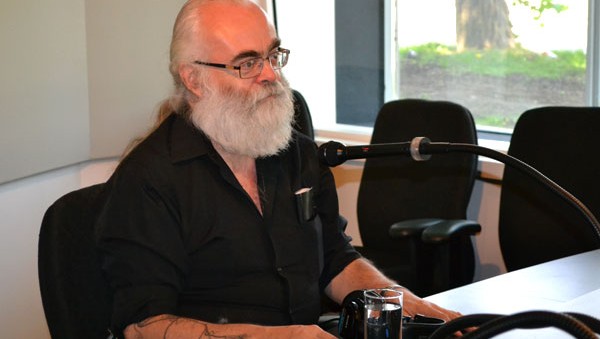
On June 2, 2014, I appeared on Dale Goldhawk’s radio show talking about both the Murray High Speed Rail plan and the Tory “SmartTrack” scheme. A podcast of the show is available on Goldhawk’s site (running time about 34 minutes).

Even with half an hour, we couldn’t talk about everything including those pesky details that make superficially attractive projects run aground.

SteveMunro-600x339

[Photo by Zoomer Radio]