RER, UP(X), (D)RL, SmartTrack, W(W/E)LRT: The Frustration of Competing Plans

Updated Sept. 9, 2014 at 12:50 pm: NOW Magazine has published an article by Rob Salerno detailing the problems with the right-of-way on Eglinton West that John Tory’s SmartTrack plan assumes is available, as well as questions about the need for both a frequent service on the Stouffville GO corridor and the Scarborough Subway.

Toronto is beset by a love of drawing lines on maps. We have stacks of rapid transit studies going back to the horsecar era. We have competing views of regional and local transit. We have the pandering “I have a solution for YOU” approach tailored to whichever ballot box needs stuffing. Almost none of this gets built.

Fantasy maps abound. The difference between the scribblings of amateur transit geeks and professional/political proposals can be hard to find.

Common to both is the sense that “my plan” is not just better, it is the only plan any right-thinking person would embrace. Egos, both personal and governmental, are literally on the line. Once pen meets paper ideas acquire a permanence and commitment that are almost indelible.

If transit networks were cheap to build and operate relative to the resources we choose to spend on them, transit would be everywhere and blogs like this would be reduced to debating the colour scheme for this week’s newly-opened station. Transit is not cheap, and the debates turn on far more complex issues than which shade of red or green is appropriate for our two major networks.

Another election with competing views of what is best for Toronto brings a crop of proposals. I hesitate to say “a fresh crop” as some schemes are long past their sell-by dates. Candidates may strive to bring something new to the discussion, but these attempts can discard good ideas simply to appear innovative. Perish the thought that we might embrace something already on the table when we can wave a magic wand and – Presto! – the solution to every problem appears in a puff of smoke, a well-timed entrance and an overblown YouTube video.

Moving people with transit is not simply one problem with one solution. Nobody pretends that a single expressway could cure all the ails of Toronto and the region beyond. A single highway – say, a “401” in a Toronto that had only recently paved Sheppard Avenue – would be recognized for its limitations. But once a plan is committed to paper – even the dreaded coffee-stained napkin, let alone election literature –  resistance is futile. At least until the next election.

This article reviews several dreams for new and upgraded transit, and tries to make sense out of what all these lines might achieve.

As I was reading through all of this, I felt that some of my critique will sound rather harsh, and inevitably I would be challenged with “so what would you do”. If you want to see my answer, jump to the end of the article, remembering that my scheme is not a definitive one.

Although some of my comments touch on proposals of various Mayoral candidates, I will leave a detailed review of those for a separate article. A good regional plan is more important than any one campaign, and the debate on what we should build should not be dictated by this week’s pet project, whatever it might be.

Continue reading

How Much Will $15-billion Buy Us? (Updated)

Updated July 7, 2014 at 9:10am: The table of project costs has been corrected to place some BRT project costs in the first wave, and to include their “next wave” spending that was omitted in error in the original version. Thanks to Divyesh Mistry for catching these errors.

Ontario’s budget will be re-introduced on July 14, and it is expected to include $15-billion for transit projects in the GTHA over the next ten years. What, exactly can we expect to see from this spending? Is there room for additional projects? Will projects once proposed by Queen’s Park or Metrolinx fall off of the table?

From the budget website’s description of the infrastructure plans:

Proceeds from the dedicated fund for the GTHA would be invested exclusively in public transit priorities that address congestion and improve mobility throughout the region. Proceeds would be used to build priority projects included in Metrolinx’s regional transportation plan, The Big Move, and for other potential projects that support economic development and improve mobility, such as the East Bayfront Light Rail Transit (LRT) project on Toronto’s waterfront. This would build on the first wave of projects, such as the Eglinton Crosstown LRT line and Union Pearson Express, and the Bloor-Danforth subway extension in Scarborough.

The government recognizes continued expansion towards two-way, all-day GO Transit rail service as a priority. GO Transit improvements on all corridors would include additional track, grade separations, improved signalling, station improvements and additional fleet, which are all building blocks towards two-way, all-day service. In addition, analysis is underway on a proposal to electrify the GO rail system to deliver service at intervals as frequent as 15 minutes.

The Big Move identifies additional GO service as critical to developing the regional rapid transit network, and all-day, two-way express rail service as part of the solution.

The Province has asked Metrolinx to begin work immediately to examine opportunities to move GO service towards a regional express rail, providing fast and frequent electrified service on all corridors at intervals as frequent as 15 minutes. This would represent a game-changer in how people move about the region, and enhance ridership and efficiency on GO Transit and other projects that connect to the network as well.

The Province will work with Metrolinx and municipalities on how best to prioritize transit investments through the use of rigorous business-case analyses. These analyses will help prioritize Next Wave projects that could be accommodated within the Province’s dedicated fund for the GTHA and provide the best value for Ontarians.

Beyond the existing GO network, priority projects within the GTHA would be drawn from the Next Wave of Metrolinx projects included in The Big Move.

Cost estimates for every project are not publicly available, but we can get a good sense of the financial situation by looking at the snapshots for major projects listed on the Metrolinx site.

20140702_BigMove_ProjectCostSummary

We have heard many times how Ontario has committed $16b to transit for the GTHA, and the “First Wave” contains the projects that money will fund. Published project cost estimates total $15.172b of which $12.766b comes from Queen’s Park.

The most important point about this list is that over half of the money has not yet been spent, and some projects have not even gone beyond the stages of preliminary design and Transit Project Assessment.

That unspent amount represents future spending that must be funded from somewhere, but there has been no discussion of exactly where or how this will be done beyond an assumption that it will come from general revenues.

Notable by its absence from the list is Presto for which a cost estimate has not been published. This project came in for criticism by the Provincial Auditor in 2012.

When we come to the Next Wave, the total estimated cost is $22.6-billion, although two major projects – the Relief Line and the Richmond Hill extension – will at best be started, but certainly not completed during the 10-year window for the next $15b commitment.

The Next Wave includes some electrification projects, but certainly not the complete GO network, nor a system-wide rollout of 15-minute service, a scheme well beyond Metrolinx ambitions when the Next Wave was announced. Note how the budget language refers “expansion towards” and “building blocks” that will lead to service “as frequent as 15 minutes”. This is not the same as quarter-hourly service on all lines, all day.

Regardless of what we actually get, the current “commitment”, one that was discussed quite clearly at the recent Metrolinx Board meeting, was to provide just that: a full buildout of an electrified frequent service network within ten years. This will require substantial additions to spending plans, and will inevitably elbow aside other projects.

Queen’s Park and Metrolinx owe us, the voters and the would-be riders on their network, a clear statement of just what they hope to build with the funds earmarked for the GTHA.

I wrote to Metrolinx seeking clarification on some issues. Here are my questions and their replies:

1. Of the First Wave projects, is the $16b all money that is separate from whatever might come from the IS (or whatever equivalent might be in the budget)?

Yes, the $16 billion worth of current transit projects referenced in our communications is separate and apart from recent provincial announcements.

2. Can you reconcile the $14.7b number with the $16b overall claim for the first wave, notably the missing amount for Presto?

The $16 billion figure refers to an estimated investment in capital projects completed or underway since 2008. Projects included in the $16 billion figure are primarily construction projects with shovels in the ground and as such, PRESTO, Smart Commute and other non-construction programs were not included. While many of the 200 construction projects completed or underway are part of the $16 billion figure, our website only features fact sheets for major projects. The figure also includes many supporting GO Transit projects, such as platform extensions and station upgrades, which play a transformative role in forming a solid foundation upon which to expand GO service across the GTHA.

3. For the Next Wave projects, how much of the total spend is expected to be within the 10-year window of the budget’s $29b?

A significant portion of the anticipated provincial spending will be spent within the next 10 years. Environmental assessments, planning work and an examination of operational needs will more precisely determine the timing of cashflow. We will be reporting our anticipated timelines for new projects at our September board meeting.

4. For financial planning, is there any intent that Metrolinx would produce a project-level projection that will show capital requirements and the degree to which funding has been committed (and from what pool)?

This is part of our 10-year financial planning process, which represents confidential advice to the government and is not available to the public.

This statement confirms that the two pools of funding (first and next waves) are actually separate, and important distinction especially if future budgets attempt to pay for “first wave” work out of revenues nominally earmarked for the “next wave”. That next wave will include some money from the “outside of GTHA” pool of $13.9b (portions of the GO network beyond the Metrolinx planning area), but the lion’s share of that funding should go to other parts of Ontario.

In general, the budget page slips back and forth between projects that are in the first and next wave pools, and projects that have been independently funded such as the Waterloo and Ottawa LRTs and the provincial share of the Toronto streetcar project. Figuring out just how much is to be spent on transit, when and from which funding pool, can be quite a challenge.

The absence of a consolidated list even for Metrolinx – something they consider as confidential information for the government – is troubling. By contrast, the 10-year capital project list including annual cash flows and funding sources is part of the public record for the TTC and informs much debate about the budget shortfall and the growing backlog of work.

Missing from the proposed budget is any mention of the 25% municipal share in the “Investment Strategy” proposed by Metrolinx. Queen’s Park seems content to repeat over and over the support via gas tax revenue:

Ontario provides significant ongoing funding for municipal transit systems across the province by sharing two cents per litre of provincial gas tax revenues. Since 2004, the Province has committed more than $2.7 billion in gas tax funding. This program is now a guaranteed source of funding for eligible municipalities to improve and expand their transit services.

It is now 2014, and that $2.7b doesn’t amount to much on an annual basis spread over the entire province for a decade. Moreover, the revenue stream is not indexed, and that two cents is worth less and less each year with growth, if any, coming from increased consumption that is no longer a sure thing.

Transit infrastructure will be a centrepiece in the coming budget, one that will almost certainly pass the now-majority Liberal legislature. The level of support is worth celebrating, but the party should be restrained, not wild jubilation that Santa Claus has arrived with an overflowing bag of goodies.

$15-billion sounds like a big number, but it is only $1.5b per year over 10 years, still less than the $2b/year spend proposed in the original 2008 Big Move. Metrolinx always quotes projects for a base year with inflation to come, but it is not clear whether the budget will do the same. That $15b could be a hard number that will buy considerably less than the uninflated prices in the Metrolinx catalog.

Queen’s Park owes us many answers on transit funding and financing, not least of which is transparency in their plans rather than assertions of confidentiality.

Metrolinx Board Meeting June 26, 2014 (Corrected)

Correction July 1, 2014: In the original version of this article, I attributed a comment to Metrolinx Chair Rob Prichard regarding the sharing of information between bidders on rapid transit projects, and expresssed my surprise that this did not match the process I was familiar with from my own public sector experience. In fact, the remark was with regard to sharing information about questions to Metrolinx from candidates in the municipal election.

The procurement process does include sharing of information via addenda to Requests for Information issued to all bidders as mentioned in the Rapid Transit Quarterly Report. I regret this error and frankly cannot understand how I scrambled two very different topics together.

However, the process for dealing with candidate questions at Metrolinx is completely different from that followed by the City of Toronto. Where Metrolinx preserves confidentiality about questions a campaign might ask, the City posts responses to any query online so that no candidate has the advantage of professional advice not available to others. The basic premise is that the staff works for Council, not for an individual member or candidate.

As a public agency, Metrolinx should be providing information to everyone. The discussion (which starts at about 21:10 of the meeting video) emphasizes that Metrolinx has no part in the election, and yet the confidentiality of information exchanges could offer an advantage to a campaign that is unknown to other candidates.

Original Article  from June 29, 2014:

The Metrolinx Board met on Thursday, June 26 in a quite celebratory air. With the provincial election out of the way and the return of a pro-transit Liberal majority to Queen’s Park, Metrolinx sees a rosy future for transit expansion. They wasted no time telling anyone who would listen about the great work now at hand.

Among the items of interest were reports on:

Another burning question about the recently announced funding is just how much money is on the table, especially how much is new money as opposed to funds earmarked for specific projects like RER or previously announced/expected for projects in the “Next Wave” of Metrolinx undertakings. It didn’t take the assembled media long to notice that the GO RER scheme would gobble up much of the $15b earmarked for transit in the GTHA. I will return to this in a separate article.

Continue reading

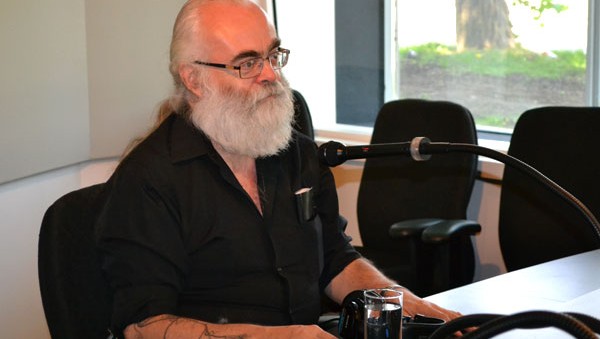
Plans by Murray and Tory: Steve Visits Goldhawk

On June 2, 2014, I appeared on Dale Goldhawk’s radio show talking about both the Murray High Speed Rail plan and the Tory “SmartTrack” scheme. A podcast of the show is available on Goldhawk’s site (running time about 34 minutes).

Even with half an hour, we couldn’t talk about everything including those pesky details that make superficially attractive projects run aground.

SteveMunro-600x339

[Photo by Zoomer Radio]

The Minister Muses on High Speed Rail

Suddenly London Ontario is the place to be if you’re looking for a high speed rail line. Glen Murray, Ontario’s Minister of Transportation & Infrastructure, has announced plans to have a high speed connection between Toronto downtown, Pearson airport, Kitchener-Waterloo and London up and running in 10 years.

Not just that, but the trains will run half-hourly with 28 trips each way daily on the line carrying, eventually, 20,000 riders per day.

I am not making this up. You can read more details on the CBC’s Kitchener-Waterloo site.

An extremely superficial document titled “Moving Ontario Forward” came my way recently, and I could not help thinking back to the early days of “GO Urban”, the technology that eventually became ICTS and Skytrain, with similarly vacuous presentations for public consumption.

Continue reading

Neptis Reviews Metrolinx: A Critique (I)

In December 2013, the Neptis Foundation published a review of the Metrolinx Big Move plan authored by Michael Schabas. This review received prominent attention in the Toronto Star and is regularly cited in their coverage of transportation issues. Some elements also appear in recent comments by Transportation Minister Glen Murray, and it is reasonable to assume that his view of Metrolinx priorities has been influenced by the Neptis paper.

Since its publication, I have resisted writing a detailed critique in part because of the sheer size of the document and my disappointment with many claims made in it, and a hope that it would quietly fade from view. Recent Ministerial musings suggest that this will not happen.

The stated goals of the report arose from four basic questions posed shortly after The Big Move was released in 2008:

  • What evidence suggests that the projects in the Big Move will double the number of transit riders and significantly reduce congestion in the region, as promised by Metrolinx?
  • Does each project offer good value for money?
  • Do all the projects add up to a substantial regional transit network or is the Big Move just an amalgam of projects put forward by diverse sponsors?
  • How do the projects in the Big Move relate to the Growth Plan for the Greater Golden Horseshoe, its land use equivalent? [Page 2]

The report itself addresses a somewhat different set of questions and notably omits the land use component.

  • Will the Big Move projects achieve the Metrolinx objective of doubling transit ridership?
  • Are these projects consistent with Metrolinx’s own “guiding principles”?
  • Are they well-designed, consistent with international best practice, and integrated with other transport infrastructure?
  • Will they support a shift of inter-regional travel onto transit?
  • Are there alternative, more effective schemes that should be considered?
  • What changes would help Metrolinx produce better results? [Page 14]

Schabas’ work is frustrating because on some points he is cogent, right on the mark.

Metrolinx has bumbled through its existence protected from significant criticism, swaddled in a cocoon of “good news” and the presumed excellence of its work. To be fair, the agency operates in a political environment where independent thought, especially in public, is rare, and years of planning can be overturned by governmental whim and the need to win votes.

That said, Metrolinx is a frustrating, secretive organization conducting much of its business in private, and tightly scripting public events. Schabas rightly exposes inconsistencies in Metrolinx work, although his own analysis and alternatives are, in places, flawed and blinkered.

Continue reading

Neptis Reviews Metrolinx: A Critique (II)

This article is the second section of my critique of the December 2013 review of the Metrolinx Big Move Plan written by Michael Schabas for the Neptis Foundation. It should be read in conjunction with Part I and following sections.

Continue reading

Liberals Plan Transit One Tweet At A Time

Premier Kathleen Wynne recently unveiled the Moving Ontario Forward plan which, at this point, consists of a website and a  general idea of what level of spending we could see. The details won’t be released until the budget is tabled in early May.

Some ideas come out in comments by Transportation & Infrastructure Minister Glen Murray who is as active on Twitter at times as he is in press scrums. How much these comments are realistic, how much they reflect government policy or detailed study, is quite another matter.

From a funding point of view, there will be two pots of money – one for the GTHA and one for the Rest Of Ontario.  When the Transit Panel released its Making The Move revenue tool proposal, misinformed media stoked the idea that rural gas taxes would go to pay for subways in Toronto even though this was explicitly rejected by the panel.

The solution is to fund the non-GTHA projects with non-GTHA money, in effect building a wall around whatever the “GTHA” means for planning purposes from day to day. This may quiet those who feel “Toronto” gets everything, but with the scale of transit operations in southern Ontario, “Toronto” grows every time the government announces a new GO service.

The political rhetoric takes the Scarborough-vs-Downtown battle over rapid transit spending to a province-wide scale. Perish the thought that Thunder Bay should pay one penny toward a rapid transit line in Toronto even though they will reap the benefit from cars manufactured to operate it. The Liberals bought into this divisive talk to win a by-election in Scarborough, ironically in a riding that won’t even see a subway line. The danger is that even within the GTHA, voters may well ask “why should I pay for a service I won’t use”.

According to the Premier’s announcement, “nearly $29 billion” will be split between the GTHA and non-GTHA funding pools over the coming decade with four sources of funding:

  • “Repurposing” the sales tax (HST) now charged on gasoline and diesel fuel for on-road use;
  • “Redirecting” 7.5 cents of the existing fuel tax;
  • Sales of government assets, and
  • Proceeds of a “Green Bonds” program.

Among the tactics proposed by the Transit Panel was the leveraging of any revenue stream through borrowing. A government that once was terrified of more public debt may now embrace it with the proviso that it can be retired with earmarked revenue.

The problem here is that new spending requires either new revenues, or cuts in expenses elsewhere. Shifting existing tax streams into a transit fund will leave a hole in general revenues that could be made up by other taxes on classic targets such as the well-to-do and the corporate sector. We must await for the budget for any details.

A backgrounder from the Ministry of Finance hints at some of the projects that might be funded:

Proceeds from the dedicated fund for the GTHA would help build the next set of priority projects included in Metrolinx’s regional transportation plan, The Big Move. Projects identified in The Big Move include: GO Rail Service Expansion (more two-way, all day and rush hour service) on key corridors, Brampton Queen Street Rapid Transit, Dundas Street Bus Rapid Transit, Durham-Scarborough Bus Rapid Transit, Hamilton Rapid Transit, Hurontario-Main LRT linking Mississauga and Brampton, a Relief Line, and Yonge North Subway Expansion to York Region. The fund could also support other transit infrastructure projects that stimulate economic development and improve mobility, such as the East Bayfront Light Rail Transit project.

This list sticks mainly to the established Metrolinx plans and implies that they still have some relevance in this very political setting. However, a backgrounder on GO Regional Express Rail ups the ante:

The new Moving Ontario Forward plan would work toward phasing in electric train service every 15 minutes on all GO lines.

This is a rather careful statement, and the words “work toward phasing in” have been the death knell of more than one project, most recently the Transit City LRT plan. The backgrounder talks of the benefits, oddly, of relieving subway congestion rather than of the much larger regional role GO could have.

It would also give commuters within Toronto another way to get downtown by increasing service between GO stations and Union Station. A commuter could get to Union Station from Danforth GO Station in just 9 minutes, or from Bloor GO Station in just 15 minutes.

This ignores the problem of transferring between routes and the substantial barrier now posed by GO’s separate and punitive fares for travel over short distances within the city. It also presumes there would be capacity available for such short-hop trips. Near-downtown trips were an odd choice to feature in such an important announcement.

Although the “Downtown Relief Line” is still mentioned as an important part of overall plans, work now underway by Metrolinx and comments by some politicians imply that they would love to put this project on a slow track with GO improvements taking up the role. If nothing else, this would free up money in the short-to-medium term for large pet projects elsewhere. Both GO and an expanded subway system have a role to play, but too much rhetoric has focused on single-line “solutions” rather than a network view.

All this begs the question of just how much of The Big Move will actually survive the Minister’s interventions.

In qualifying the electrification plans, both the Premier and the Minister talk of “lines that we own”, although the Minister is on record about acquiring more track for GO:

“We’re looking at higher speed connectivity, buying up rail lines more aggressively, improving service outcomes and more regular two-way GO service,” Murray said of the priorities that will be laid out in the budget.

… he said the province is actively buying up rail capacity so that GO Trains are no longer seen as “tenants” on other railroad’s lines.

“We now own 80 per cent of the track that we need to own, we will be buying up the remaining 20 per cent and a lot of that is on the lines that come to Kitchener,” Murray said.

[Kitchener-Waterloo Record March 31, 2014]

That will be a challenge considering that portions GO does not yet own are the main lines of CNR and CPR, not lightly used or abandoned branches.

GO has long had an aversion to electrification both because of objections from the railways whose lines would be affected, and from a chronic lack of strong, dedicated funding that could expand service and operations to a range where electrification made sense. Changing that outlook would be quite a coup, but this depends on continuity in the government and long-term commitment to transformation of the GO network. GO must have a publicly announced plan for expansion and improvement beyond whatever is needed to win the election of the day.

On the municipal front, things are not quite as clear. Although the Metrolinx Investment Strategy included 25% of new revenues for municipal projects (with 15% going to transit), municipal funding was completely absent in this announcement. Indeed, Murray has rather testily noted that Toronto, especially, already gets money from the gas tax and has revenue tools such as Vehicle Registration Tax that it chose not to use.

The gas tax revenue, of course, has been established for many years and is worked into the budgets of all local transit systems. It is not “new money”, and can hardly be cited in response to questions about the hoped-for Investment Strategy dollars. [Toronto splits its provincial gas tax between the operating and capital budgets. See 2012 financial statements at page 26 (operating, $91.6m) and page 28 (capital, $75.0m).]

Murray also spoke of “High Speed Rail” in the Toronto KW London corridor, an idea that has been floated before. Although this was unclear in the press statements, Murray’s Twitter exchanges claim that the corridor would see 320 km/h operation (see below). The problem with the Toronto-Kitchener-London corridor, however, is not simply getting from one and to the other, but to the many stations in between.

The line once had reasonably frequent VIA trains on rider-friendly schedules, but this service withered through years of cutbacks and, more recently, competition from GO expansion. The infrastructure needed for operation at this speed is substantial, and one must ask whether the corridor’s demand could be better served simply by more frequent service at typical (Canadian) rail passenger speeds up to 150 km/h. Better service for southwestern Ontario risks being highjacked as an HSR technology project rather than a service improvement that could be delivered faster at much less cost.

The operative phrase throughout the announcement was “wait for the budget”.  A Liberal party website promotes the Moving Ontario Forward plan, but is short on details pending the budget announcements.

Meanwhile, Minister Murray, a prolific tweeter, adds his own spin to the debate.  [The tweets have been edited to remove extraneous user ids and hastags. All of this can be retrieved by browsing Murray’s Twitter account @Glen4ONT.]

On April 17, an exchange about GO and Downtown Relief, Murray shows support for both regional and local relief.

Glen Murray: #RER15Min will build transit ridership on local transit routes. Need 2 plan GO-local transit connections together. Greater demand w/RER

Robert Zaichkowski: I wonder if #RER15Min will lead to GO stations being placed closer together? Could be a good #ReliefLine solution.

Glen Murray:  Robert you are absolutely right. Downtown relief needs system wide relief & increased capacity downtown.

Also on April 17, an exchange about the Scarborough Subway.

Rob Salerno: So if Scarb has access to improved GO service, is there still ridership/need for a subway there?

Glen Murray: MLX will make that decision. We will meet our commitments.

Rob Salerno: erg, so now the Scarb subway may be cancelled if @Metrolinx says it’s not necessary?

Glen Murray: No. Let MLX do their job.

Rob Salerno: Huh? Those two sentences are contradictory.

Glen Murray: No. MLX has made a decision. I don’t imagine that will change, but it is their decision.

Oh come off it, Glen. The idea that Metrolinx makes any decision independently of the government is riotously laughable. The Liberals ran on a Scarborough Subway platform to win the Scarborough-Guildwood by-election, and Murray himself is pushing a subway from Kennedy Station to Scarborough Town Centre via the existing SRT alignment.

It’s amusing that in one line, Murray says that Metrolinx “will make” the decision, and later that they “have made” it. One of these statements cannot be true.

Is there now a recognition that the rationale for the subway may have been cooked to placate Scarborough voters (not to mention the Scarborough Liberal Caucus)? Might a proper analysis show that another option including GO improvements might be preferable? If Metrolinx made a decision, where was this analysis? Nobody has ever published a review including GO services, the subway option and the Scarborough LRT network proposals.

Even better, what would happen if an independent Metrolinx actually concluded that the Scarborough Subway was a waste of money? Would such a report ever see the light of day?

In a discussion with the Globe’s Oliver Moore, we hear about the benefits of more frequent off-peak service.

Oliver Moore: Increased GO service will lead to higher ridership and lower subsidy required, @Glen4ONT says. Could lead to more competitive fares.

‏@GTAMOVEnetwork: The big problem is spending the money required to take GO transit from “commuter” to “rapid transit” and in ensuring that the investment in GO Transit will not be pulled back in the first 3 years when ROI is not great.

Glen Murray: Not an issue at all.

‏@GTAMOVEnetwork: I very much hope so. This is going to be a huge investment and ROI won’t be seen for a long time.

Glen Murray: ‏Not true. 1/2 hour Lakeshore service increased ridership & fare revenue by 30% in less than a yr.

This discussion dodges the basic point that capital costs have never been considered in evaluating GO’s business, only day-to-day operating costs. The situation is the same at the TTC. It is very unlikely that GO will make a profit from extra fares with expanded service. If anything, one could argue that service improvements should come as quickly as possible to maximize the ridership and convenience from the capital investment.

On service to Niagara Falls, London and “HSR”:

Glen Murray: Niagara will be getting 15min Regional Express Rail. See today’s announcement. Completed with in 10 yrs.

Tom W: Wynne said GO-owned tracks only – still valid? Or will GO be buying tracks from Burlington to Niagara Falls?

Glen Murray: No. All tracks we own or lease.

Tom W: Thanks! Also, does “high-speed rail” to London mean 200+km/hr?

Glen Murray: 320KM

Tom W: To be clear, you’re promising a train with a top speed of 320 kilometres per hour running from Toronto to London?

Murray really seems to be freelancing on both of these issues given the ownership and existing uses of the corridors in question, not to mention the challenge of truly high speed operation in the KW-London corridor.

On April 17, asked about travel across Toronto rather than to the core:

Glen Murray: #RER15Min is 15 minute service across the GTHA using Electric Multiple Units (EMUs) running on all GO lines. Huge reduction in congestion.

Saurabh: Someone going from York region to Peel can bypass Union?

Glen Murray: Yes. Once the Crosstown is complete. It is under construction now.

Someone should mention to the Minister that his own government chopped off the western end of the Crosstown, and unless the boundary of Peel Region is now at Weston Road, the Crosstown won’t get someone to Peel from Richmond Hill even presuming they wanted to take such a route.

And finally on April 19:

Glen Murray: Projects 4 Prov funding will b evaluated by MLX based on Big Move priority & net benefits.

This, of course, presumes that “net benefits” are fairly calculated and don’t include politically inflated assumptions.

When the budget comes out, we will see just how much of the “promises” made here have survived.