Joint Metrolinx, City and TTC Consultation on Transit Studies (Updated June 21, 2015)

Updated June 21, 2015 at 12:45 am: SmartTrack alignment option 1C which was included in the presentation deck, but not in the individual illustrations on the project website, has been added to the consolidated set.

Updated June 12, 2015 at 6:30 am: Details of SmartTrack and Relief Line alignment options added.

The City of Toronto, Metrolinx and the TTC will conduct a series of eight meetings at locations around Toronto over coming weeks to present current information on studies now in progress regarding GO’s Regional Express Rail (RER) plan, SmartTrack, the Scarborough Subway Extension (SSE) and the Relief Line (aka “DRL”). Some of these meetings will focus on specific projects (noted below), while others are general overviews.

  • Sat. June 13 9:30am: Burnhamthorpe Collegiate Institute, 500 The East Mall
  • Mon. June 15 6:30 pm: Estonian House, 958 Broadview Avenue (Relief Line)
  • Wed. June 17 6:30 pm: Spring Garden Church, 112 Spring Garden Avenue
  • Thurs. June 18 6:30 pm: Archbishop Romero Catholic SS, 99 Humber Boulevard South (SmartTrack)
  • Sat. June 20 9:30 am: Hyatt Regency Hotel, 370 King Street West
  • Mon. June 22 6:30 pm: Winston Churchill Collegiate Institute, 2239 Lawrence Avenue East
  • Wed. June 24 6:30 pm: Scarborough Civic Centre, 150 Borough Drive (SSE)
  • Thurs. June 25 6:30pm: Riverdale Collegiate Institute, 1094 Gerrard Street East (Relief Line)

Consultation in Mississauga, Peel, Markham and York Region will occur in September according to the City’s press release.

Recommendations will be presented by TTC and City staff to the TTC Board and Council in Fall 2015 on SmartTrack, the SSE and the Relief Line.

Update June 12:

SmartTrack

The presentation boards and alignment options for the western leg of SmartTrack are now available online. For convenience, I have collected the illustrations in one file [PDF 2MB].

Broadly the study is considering three alignment groups for the link between Mount Dennis and the Mississauga Airport Corporate Centre:

  • A direct connection via Eglinton from the Kitchener rail corridor
  • A separate heavy rail corridor via Eglinton from Mount Dennis
  • A direct connection south from the Kitchener rail corridor through the airport

The “base case” for the study is the already-approved second phase of the Crosstown LRT.

The options include:

  • 1: Direct links with the SmartTrack alignment:
    • 1A: Swinging east of the KW rail corridor south of Eglinton, and then turning west to make a direct connection with the Crosstown line.
    • 1B: Turning west from the KW rail corridor south of Eglinton. This is the original SmartTrack proposal.
    • 1C: Continuing north of Eglinton, and then veering back south through a vaguely defined area west of Weston Road [illustration added June 21]
  • 3A: A separate line west from Mount Dennis.
  • 2: Links north via the rail corridor and then south into the airport lands:
    • 2A: To a point beyond the UPX airport spur, then south through the airport. The “Airport” station would be a connection to the UPX at Airport Road.
    • 2B: The same alignment as 2A at the north end, but following Dixon Road and Carlingview south to 427/401.
    • 2C: To a point east of the UPX spur with a station at the east side of the airport, then south via Carlingview as in 2B.

Some alignments require tight turns and tunneling will be needed for all of them contrary to the original claims that SmartTrack would be a “surface subway”. This will also force the issue of electrification without which a tunnel alignment is impossible, but Metrolinx plans now claim that the first electric operations will not begin until 2023.

The option 2 alignments will face technical challenges including curve radii depending on the exact details of the alignment and the equipment chosen for the route.

Headways for all option 1 and 2 alignments will be constrained by the need to share trackage with the UPX operation.

Relief Line

Four corridor options are under consideration. At its northern end, the corridor would start at either Broadview or Pape Station, and through the core area, the line would follow either Queen or King/Wellington. I have collected the four maps together in one file for convenience.

Detailed discussions of the pros and cons of these options are on the respective pages of the project site. The Pape alignment has clear advantages over Broadview, and a Wellington alignment through the core has advantages over King or Queen.

UPX Was Never To Break Even

With all the hoopla surrounding the launch of service on the Union-Pearson Express (aka UPX or UP Express), it was refreshing to learn today from no less than the CEO of Metrolinx, Bruce McCuaig, that the line will never cover its costs.

Cast your mind back to the days of Prime Minister Chrétien and his Transport Minister, David Collonette (1997-2003). They had a dream of an express train from Union Station to Pearson Airport, a service that would be built, owned and operated at no cost to the government through the magic of private enterprise. SNC Lavalin was to be the lucky proprietor.

Things didn’t quite work out. SNC Lavalin discovered that the cost recovery for “Blue 22” as it was called in the early days simply didn’t pan out, and they looked for government support. When the Tories came to power, Ottawa’s love for this project waned, and they dumped it … right into the willing lap of Dalton McGuinty who embraced the scheme as a way for Ontario to show the world what we’re made of. Don’t be the last city without an air rail link! The matter was especially crucial as part of the Pan Am Games bid — there would be an express train to the airport.

Alas, the numbers still didn’t work, and SNC Lavalin looked to Queen’s Park for financial support. McGuinty showed them the door, and that might have been the end of things but for the usual Ontario hubris. The project became a public sector job 100%, but there was still the sense that it wouldn’t be a burden on the taxpayer.

On Friday, June 5, 2015, the Star’s Tess Kalinowski had an online Q&A with Bruce McCuaig, and it was quite revealing.

When will the line be electrified?

“The recent provincial budget set aside funding for Regional Express Rail, which includes electrification of the corridors, including UPX. We are folding the UPX electrification into the electrification of the Kitchener corridor as far as Bramalea, and we expect electrification to start being operational on five of the lines in 2023.”

There was a time when electrification was promised for only a few years after UPX began operation. Clearly, this is not going to happen even on a small scale for 8 years, let alone a full buildout. Whether there will even be a government left in office willing to undertake this project remains to be seen.

Back in September 2014, McCuaig claimed that the government’s promised electrification within 10 years was possible. Hmmm. Maybe a few kilometers here and there, but certainly not the full buildout if they’re only going to start in 2023. After a burst of election fever and enthusiasm for electrified GO services, Queen’s Park is getting cool, if not cold feet.

What about additional stations?

“We are building in plans for a new GO station and UPX station into the construction contract for the Eglinton Crosstown LRT. The Crosstown phase 1 ends at Mount Dennis and I think it would be a great place to have an interchange to give people more choice. At Woodbine, we have done what transit planners call “protect” for a potential future station.

“More stations connected in to the subway (like Dundas West/Bloor) and a future location at Mount Dennis means you can access the service at a lower cost. The trip from Dundas West/Bloor to the airport will have a fare of $15.20 if you use your PRESTO card”

It’s nice to know that Metrolinx still implies that the Crosstown will have a “phase 2”, although the almost certainly lower fare on this local transit service would make one wonder why one would choose to transfer off of the Crosstown and onto UPX, especially at a premium fare. As for the fare from Dundas West, it might just be a tolerable alternative to the 192 Airport Rocket from Kipling Station once Metrolinx builds a convenient link from the UPX station to the subway. The current arrangement is not exactly a “first class” link the fare would imply.

How many riders will UPX need to break even, and will it pay off its capital costs?

We plan to have the fare box for UPX cover its operating costs within three to five years. As you would expect, it will take a few years to build the ridership, just like any other system. We are not expecting fares to pay back the capital costs at this time. The province has invested the $456 million in the capital and it would be unusual in a North American context to expect customers to pay back the capital cost through their fares. I don’t know off the top of my head how many riders per day will be needed for cost recovery, but we do expect that level of ridership by year three to five.

So let’s get this straight: what started out as a sure thing for the private sector will take maybe three years just to reach a break-even state on operating costs. This also happens to be the period by which Metrolinx expects ridership to stabilize, and one wonders just how much room for growth in demand and revenue there will be beyond that. As for capital costs, oh we could never expect passengers to pay those. No wonder SNC Lavalin wanted a subsidy.

By the way, remember that phrase the next time someone tries to slip capital-from-current spending into an operating budget as John Tory did this year with the TTC’s bus purchase.

What we don’t know is the amount of subsidy the UPX will divert from other transit needs within GO or other transit systems. There will inevitably be pressure to bring fares on UPX down, especially if service in the corridor is combined with a route like SmartTrack. Then there is the small matter that UPX is a separate division complete with its own president. This is rather like having a President of the Scarborough RT except that Line 3 carries nearly 40,000 riders a day, more than UPX can physically handle if it were packed from 6am to midnight.

I will be magnanimous. Get the line open. Enjoy Balzac’s coffee in the station. Thrill to the glorious view of Toronto’s former industrial might along the rail corridor. Impress the hell out of those Pan Am visitors (although of course the officials and athletes have limos and buses and reserved lanes on expressways for their delicate sensibilities).

Once the games are over, let’s get serious about the money we have invested in the Weston/Georgetown corridor and figure out how to run an actual transit service that caters to more than the well-off who can afford to pay extra for a fast ride downtown.


Metropass Turns 35: Time To Talk About Fare Options

May 1, 1980, saw the introduction of Toronto’s Metropass and the beginning of a shift away from pay-as-you-ride travel on the TTC.

May1980Pass

The pass did not come without some political battles, and the stock TTC line was that this just wouldn’t work in Toronto. What they really worried about, of course, was lost revenue, a topic that comes up every chance TTC management gets to cry in their beer about the good old days when people actually paid full fares to ride.

The fare multiple in 1980 was 52 – the price of the pass at $26 was the equivalent of 52 tokens at, wait for it, fifty cents each. Over the years it was wrestled down to 46, but has been drifting up again in an attempt to make those pesky pass holders pay more. The ratio stands at 50.5 today for a regular pass with no discounts.

In fact, passholders now represent over half of all TTC rides. In 2014, out of a total 534.8-million rides, 290.7m were paid for with transit passes. It is long past time that we should think of pass users as if they are some small privileged group, but rather that they take the majority of trips on the TTC. It is their fares which are the “standard”, not the higher priced token users nor the real cash cows, those who pay the full cash fare. The chart below shows the evolution of fare media usage over the past three decades.

1985-2014 Analysis of ridership

At its April 29, 2015 board meeting the TTC approved a request that staff report on various fare options including:

  • fare by time of day
  • 2 hour transfer
  • Seniors fares by time of day, including $1.00 seniors fare during off-peak hours
  • Fare by distance
  • Concession policy overall as informed by Fare Equity Strategy
  • Monthly pass versus daily / weekly / monthly capping
  • Free regular transit fares for Wheel-Trans qualified passengers in addition to the visually impaired

This report is expected to arrive on the October 2015 board agenda.

Continue reading

Union Station York Concourse Opens April 27, 2015

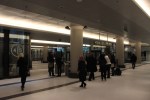
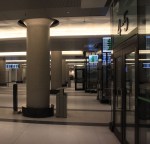
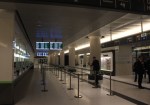
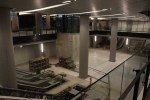
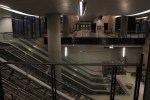
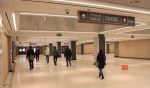
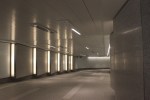
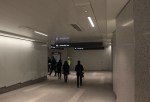
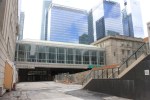
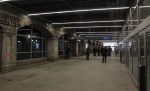
The new GO Transit York Concourse at Union Station will open for business on Monday, April 27. After years of construction and an ever-changing maze pf construction hoarding, the new concourse will show off what the Union Station Revitalization project is all about.

Anyone who travels through Union Station knows the old, crowded GO Transit area under the East Wing of the station. Passengers rushing for trains jostle with queues in the fast food court and the ticket area. The York Concourse opens up space under the West Wing that formerly housed baggage services and parking, an area that for most users of the station simply didn’t exist because much of it was off limits to the public.

The new concourse will add about 50% to the available passenger space and will open up circulation between the waiting areas and the tracks above, not to mention adding new ways to get into and out of the station.

Union_EN-1000x800_201504

This map looks north with the existing Bay concourse at the right hand end of the station. On either side of Bay Street are the old freight teamways which are now pedestrian paths under the rail corridor and access to tracks above.

In the middle of the station is the Via concourse which is not affected by this work. To the west (left) is the new York Concourse.

Both the Bay and York concourses will remain open until after the Pan Am Games this summer, and the Bay Concourse will then close for a renovation to match the new York Concourse with a target reopening date early in 2017. Concurrent work will include completion of the new lower level shopping concourse in two stages (under Via in 2016, and under the Bay Concourse in 2017), as well as heritage restoration of the Great Hall and the East Wing of the building.

The goal is to have three times the space GO Transit has today to serve at least twice the passenger volume.

Also opening will be new accesses to the station and tracks including the first phase of the NorthWest PATH link across Front Street (eventually to extend north to Wellington Street) and the York East Teamway providing another set of stairs up to track level and access to the station itself.

The photo gallery below is from a media tour on April 24, 2015.

Ontario Funds 100% of the Hurontario-Main LRT

The Ontario government has announced that it will fund 100% of the proposed Hurontario-Main LRT line, although they would happily receive contributions from other partners such as the Federal government should it be so inclined.

If the Hurontario-Main project proceeds as expected, detailed design will get underway soon, construction will begin in 2018, and revenue service would start in 2022. Whether there  might be staging options for the route would likely come out of the detailed design work. The line has its challenges and intriguing design choices including side-of-the-road running and mixed streetcar-like operation where road space is scarce. Will the province champion this project over local objections, or does this line face years of carping about the “St. Clair disaster” and other fictional effects of LRT?

The Transit Project Assessment for this route was approved in August 2014, but the debate remained on who would pay the estimated $1.6-billion cost. Ontario is already funding 100% of the Eglinton-Crosstown project in Toronto, and a chorus of “me too” understandably arose in Mississauga and Brampton.

A provincial commitment at this level raises obvious questions about and comparisons to the stillborn Toronto projects on Sheppard, Finch and the Scarborough RT replacement. These lines are all but dead thanks to a lack of provincial leadership on LRT not to mention the vote-buying embrace of the Scarborough subway option. If that subway proves too rich for Toronto (or for an increased provincial contribution), the LRT scheme might reappear, but that’s a very long shot. As for Finch West, as an isolated route it could have trouble finding a political market unless it is extended beyond the originally proposed Humber College terminal.

Another obvious question is the future of LRT proposals elsewhere that have only partial provincial funding, or no money at all. Has 100% provincial funding become the new standard and goal for transit expansion in the GTHA? How will this affect planning for other routes, not to mention the substantial demands for better local transit operations to feed expanding regional networks? Queen’s Park still appears to be making up policy as it goes along, and refusing to engage in the larger question of how all of the transit we need will be paid for.


GO Transit RER/Electrification Plans Announced

The details of GO Transit’s service improvements and electrification leading to the rollout of the “RER” (Regional Express Rail) network were announced today by Minister of Transportation Steven Del Duca.

The plans will please some and disappoint others, but there is little to surprise anyone familiar with the details of GO Transit’s network and the constraints of the rail lines around the GTHA.

RER rollout by line

RER rollout details

If there are “winners and losers” in this announcement, the benefits clearly fall (a) on lines that are completely under Metrolinx ownership and control and (b) on lines that do not already have full service, that is to say, there is room for growth.

Electrification is planned for most corridors by 2022-2024 starting with the Kitchener and Stouffville routes in 2022-23, followed by Barrie and the Lakeshore in 2023-24. The announcement is silent on the UPX service on the Kitchener line and whether the inner portion of the corridor will be electrified as a first step for UPX before 2022. (I have a query out to Metrolinx on this topic.) These dates have implications for rolling stock plans including purchase of whatever new technology — electric locomotives or EMUs — will be used for electric services, and, by implication the eventual fate of the existing fleet.

The scope of electrification will be:

  • Kitchener line: Bramalea to Union
  • Stouffville line: Unionville to Union
  • Lakeshore East: Full corridor
  • Lakeshore West: Burlington to Union
  • Barrie: Full corridor

There are no plans to electrify either the Milton or Richmond Hill lines, nor to substantially improve service on them. In Milton’s case, this is a direct result of the line’s status as the CPR mainline. On Richmond Hill, significant flood protection works are needed in the Don Valley as well as a grade separation at Doncaster. Plans could change in coming years, but Queen’s Park has clearly decided where to concentrate its spending for the next decade – on the lines where improved service and electrification are comparatively easy to implement.

The limits of electrification correspond, for the most part, to the territory where all-day 15-minute service will be provided. This will be the core of the “RER” network with less frequent, diesel-hauled trains providing service running through to the non-electrified portions.

One important aspect of the line-by-line chart of service improvements is that there will be substantially more trips (most in the offpeak) before electrification is completed. This allows GO to “show the flag” as an all-day provider and build into a role as a regional rapid transit service, not just a collection of peak period commuter lines. This will also give local transit a chance to build up to improved GO service over time rather than a “big bang” with all of the changes awaiting electrification.

Over the five years 2015-2020, the Kitchener corridor will see the greatest increase in number of trains, although many of these will not actually run through all the way to Kitchener. The service build-up will finish in 2017.

The Barrie line will receive weekend service in 2016-17 with weekday off-peak service following in 2017-18. The Stouffville line also gets weekday service in 2017-18, while weekend service follows in 2018-19.

Minor off-peak improvements are planned for both Lakeshore corridors in 2018-19.

Peak service improvements relative to today vary depending on the corridor:

  • Lakeshore East: 4 more trains by 2018-19 on a base of 45 (9%)
  • Lakeshore West: 6 more trains by 2019-20 on a base of 47 (13%)
  • Stouffville: 4 more trains by 2018-19 on a base of 12 (33%)
  • Kitchener: 6 more trains by 2019-20 on a base of 15 (40%)
  • Milton: 6 more trains by 2019-20 on a base of 18 (33%)
  • Barrie: 2 more trains in 2019-20 on a base of 14 (14%)
  • Richmond Hill: 4 more trains by 2018-19 on a base of 8 (50%)
  • Total: 32 more trains by 2019-20 on a base of 159 (20%)

Other than making trains longer (where this has not already occurred), that’s the limitation of peak period growth for the next five years on GO Transit. This has important implications for projections of greater transit commuting along the GO corridors, and especially for the shoulder areas within Toronto itself that lie along GO routes, but also face capacity and travel time issues with the local transit system. Unlocking gridlock may be the goal, but the rate of service growth could not be described as “aggressive” especially against the background growth in population and jobs.

This will, or at least should, lead to renewed discussion both of rapid transit capacity within Toronto, and on how GO Transit will address growth beyond 2020. Where should new capacity be provided? What are the realistic upper bounds for various options? How will Toronto deal with demand for expanded suburban subway service to handle growth in the 905?

It is quite clear from the electrification dates that an electric SmartTrack is not going to start running soon, and with frequent all-day service to Bramalea, Aurora and Unionville using diesel-hauled trains operating well before electrification is completed, one might wonder just where SmartTrack as a separate “local” service will fit in.

Beyond these questions lie the more complex issues of travel that is not bound for Toronto’s core. “Gridlock” is commonly cited as the rational for transit spending, and yet this spending does little to improve travel anywhere beyond existing corridors to central Toronto. Demand in the GTHA is not conveniently focused on a few points, not even on Pearson Airport which is a major centre, and single-route improvements do not address the diverse travel patterns of GTHA commuters.

Ontario will spend billions on transit in the coming decade, and sticker-shock has already set in with the huge amount of infrastructure needed. Even this is only a start and the work to truly address travel requirements of the coming decades is only just starting.

The Dubious Economics of the Union Pearson Express

In today’s Toronto Star, Tess Kalinowski writes about recently released Metrolinx reports concerning the Union Pearson Express (UPX).

The items of interest are down at the bottom of the Reports & Information page and they include ridership forecasts from December 2011 and May 2013. The latter report was cited as background to the Auditor General’s 2012 Report on Metrolinx [beginning on p. 6 of the pdf].

Given that the projection is almost two years old, one might be tempted to say “maybe things have improved”, but that’s a tad hard to believe in the absence of any newer studies from Metrolinx.

There are great hopes, and even greater hype, for the UPX, and getting some basic information on the table is certainly worthwhile. Continue reading

How Much Will The Spadina Extension Cost? (III) (Update 3)

Updated April 13, 2015:

The TTC has issued a press release regarding the management of the Spadina subway extension project:

The Toronto Transit Commission has entered into an agreement with Bechtel Canada Co. for project management of the Toronto-York Spadina Subway Extension (TYSSE) for up to $80 million.

The contract value to Bechtel is based on staffing costs, management fees and incentives to open the subway extension by Dec. 31, 2017. Bechtel staff begin work today and will form an integrated team with existing TTC personnel. The Bechtel contract will expire March 31, 2018. Bechtel’s project director will report directly to TTC CEO Andy Byford.

On March 26, the TTC board approved a report from staff that recommended TTC enter into a sole source agreement with a project manager with a proven track record of delivering similar-sized projects on time, and with experience working with multiple contractors, in order to have the TYSSE in service by Dec. 31, 2017.

Toronto City Council subsequently authorized the expenditure of $90 million, while the Regional Municipality of York authorized the expenditure of $60 million, for a total of $150 million (third party contractor, plus in-house project costs), to fully deliver TYSSE by the end of 2017.

The release is silent on the issue of what might be done with the remaining $70m of Toronto/York’s $160m authorization.

Original article of March 29, 2015:

In a previous article, I reviewed information from a media briefing by Andy Byford on the status of the Toronto York Spadina Subway Extension (TYSSE) project. At the TTC Board meeting on March 26, 2015, further information was made public both in Byford’s presentation, and in additional material appended to his report.

Updated March 30, 2015 at 1:30 pm: The slides from Byford’s presentation are now available starting at page 58 of the linked pdf.

Updated March 30, 2015 at 11:30 pm: A new report from the Toronto City Manager to Council advises that the interest earnings on the “Move Ontario Trust” (the repository for provincial contributions to the TYSSE project) have not achieved the target rate of 4% resulting in an $85m shortfall. Oliver Moore reports in the Globe that Ontario has refused to make up this amount as per the original agreement between the funding partners. Toronto and York Region are on the hook for this additional cost estimated at $51m for Toronto and $34m for York Region. This expense is over and above the cost overruns on various contracts, but at least Council cannot blame the TTC because the trust fund is not under TTC control.

Appendix F (beginning at page 33 of the linked PDF), is a presentation given to the Executive Task Force who oversee the project on behalf of the sponsoring governments on July 28, 2014. The presentation was given by Parsons Brinkerhoff who had been retained by the TTC to review the project.

Appendix G (beginning at page 56) is a two-page summary of Bechtel’s work reviewing PB’s original study and a subsequent APTA (American Public Transit Association) peer review. APTA concluded that an earlier completion date would be possible than PB had projected, but only with major changes to the project management structure. Bechtel concurred in these findings.

It is abundantly clear from this material that the TYSSE’s problems were known at the top level of the project in mid-2014 at the latest. At the time, their severity was so great that the project would still be incomplete by the time of the next municipal and provincial election cycles, and that considerable additional cost could be facing the funding partners. This very serious issue did not arise in public discussion until six months later, notably after Toronto’s 2015 budget cycle was complete.

Continue reading

Metrolinx Board Meeting Wrapup: March 3, 2015

The Metrolinx Board met on March 3 for its quarterly gathering. Although there were important issues on the agenda, the debate was as superficial as usual, and the message that “everything is just great” permeated the proceedings.

Things got off to a slow start. The meeting room is relentlessly beige, overlit and unadorned. Windows there are, but when we entered, they were already partly screened and the view, such as it is, simply looks across to rooms and the roof opposite. Not long into proceedings, a further set of screens blocking this view descended lest we be distracted from the worthies sitting at the board table. We might as well have been in the set of an existential play wondering if there actually was a world outside, not a fine, downtown historic building.

The first order of business was a goodbye to retiring director Nicholas Mutton, a genteel fellow who has headed up the Customer Service Committee. Sadly his reports are always pushed to the back of the agenda and are rushed for time, and his presentations rarely get beyond reading a few pages of a short PowerPoint.

Then we had a brief report from Bruce McCuaig, the Metrolinx President & CEO, reiterating events of note since the last board meeting in December. One might forgive the poor directors for being out of touch with recent news given that they meet so rarely and have so little to say. Surely they stay informed on Metrolinx activities and don’t need a recap beyond the most unusual events.

In the remainder of this article, I will discuss:

  • Back-Charging Toronto for Metrolinx Work
  • The Regional Express Rail (RER) Update
  • The Regional Fare Integration Study
  • The Study of the Pearson Airport Area

Continue reading