
Those of you who know me as a transit advocate and policy critic don’t often get to see one of my other hats, that of an avid supporter, consumer and commentator on the performing arts. In the Reviews section of this site, I have posted my Toronto Film Festival reviews going back to the dawn of time. [Friends kept asking, and I tired of sending emails.] Continue reading
Reader Comments: A Mixed Bag For the End of April
The responses to the RT issue have kept me busy, and now it’s time to deal with the backlog of mail again. Continue reading
From the Archives: The Scarborough LRT — What Might Have Been
Back in April 1977, the TTC and the Metro Toronto Planning Department produced a feasibility study for a Scarborough LRT line. I’m not going into all of the details as it’s too sad to contemplate the missed opportunity. Queen’s Park wanted to show off their toy trains, and the chance for a suburban transit network was lost for decades, maybe forever.
Here’s just a taste.
Rumours About Siemens and New Streetcars (Updated)
After last week’s TTC meeting, an article appeared in the National Post claiming that the TTC had just authorized purchase of 96 new streetcars from Siemens. Continue reading
What Shall We Do With The Scarborough RT?
Last night (April 24), the TTC and City Planning held a public workshop at Scarborough City Hall. They presented the results of the technical analysis of what to do when the current fleet of RT cars wears out in 2015. I am not going to reprise the entire presentation, and you can look at the presentation here. Note that some of my comments here come from oral presentation and discussion, not from the document itself. Continue reading
Jane Jacobs
Last night, Jane Jacobs died at Toronto Western Hospital. There is a good, long article about her on the Star’s website.
I first met Jane in the early days of Streetcars for Toronto. David Gurin, then a researcher working for the US Senate committee investigating the role of the auto industry in destroying American transit systems, came to Toronto to see how we had saved our streetcars. He was a friend of Jane’s, and the three of us lunched near Bloor and Avenue Road.
Jane was a presence for decades in Toronto who kept popping up here and there (usually “there” — she always seemed to be off at some other meeting than the one I was at) with simple, clear words about what Toronto as a City could be despite the worst excesses of our so-called leaders.
Last April, I was privileged to receive the Jane Jacobs Prize in recognition of years of transit advocacy. To be associated with such a luminary as Jane is a huge honour and it links my own work with that of many other people who make a difference in how our city has grown. When the award winners gather and I hear stories of what others have done, somehow the battles to make the Queen car run properly don’t seem quite as heroic.
That’s what makes cities great: people who care about the place they live, how it works, why it works, what makes a neighbourhood rather than a bunch of buildings.
Last year sitting on the podium during the award ceremony, I had the joy of watching as Jane skewered David Miller with a diatribe against his “North York Planning Department”. Few people could get away with that, and it’s a measure of our city that we have a Mayor who would sit and listen to Jane. It’s been a while.
Jane’s advice won’t be there in person any more to decry an over-large condo tower or a ludicrous road project or to talk about the role of communities. Those of us who remain will carry Jane’s torch even if our comic timing and acid wit may not match hers.
Somewhere in the clouds, Robert Moses is trying to build an expressway network and he’s just discovered that Jane has arrived to defeat him, again.
From The Archives: New Streetcars for Toronto (Updated)
Here’s a streetcar design that’s been around for a while, and it served us all well. We could have had a new generation of these cars back in the 1970s, but Queen’s Park and the UTDC gave us the CLRV instead. The Edsel of the streetcar, as a former Chief General Manager once said.

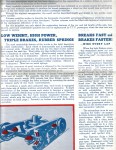


Here is a PDF version of a single file rather than four separate images.
Updated February 7, 2018 with higher resolution images.
Plans for New Streetcars?
TTC plans for a new streetcar fleet moved onto the front burner at the April 19th meeting of the Commission. After a staff update on the CLRV rebuild program and possible timetables for new streetcar purchases, the Commission decided that:
- Only 100 CLRVs will be rebuilt, not 196.
- New streetcars will be procured with a prototype to be delivered in 2010 and production deliveries from 2011 through early 2014.
- The Commission will take a package consolidating all information about streetcar fleet planning through the committee cycle (Budget Advisory, Policy & Finance, Council) in May. Continue reading
Wye Didn’t Subway Integration Work? A Look Back at Subway Operations
The recent 40th anniversary of the Bloor-Danforth Subway brings up another piece of TTC history: the integrated operation of the Bloor-Danforth and Yonge-University lines. Continue reading
Streetcar Vehicles, Operations and Service: Reader Comments
It’s time to catch up on the backlog of comments. Here are several that came in about various aspects of streetcar operations over the past weeks: Continue reading

