TTC’s 2016 Customer Charter Reviewed

The TTC has released the 2016 version of its Customer Charter listing a number of areas in which they promise improvements through the year.

First Quarter:

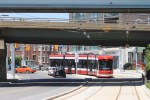
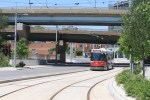
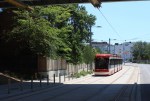
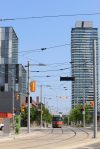
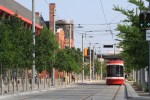
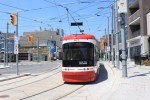
  • Ensure that 510 Spadina is served by fully accessible streetcars: Mostly done already with a few of the high-floor ALRVs still in service but the majority of runs operated with low-floor Flexitys.
  • Apple Pay at collectors’ booths: In progress.
  • Reduce streetcar short-turns by a further 20% over Q1 2015: New schedules on 501 Queen effective January 3 make a big contribution to this coupled with the milder winter weather.
  • Start subway service at 8:00am on Sunday: Done effective January 3.
  • Add service to Line 1 (YUS) during off-peak: Not done yet, but the schedules going into effect at the end of March have not yet been announced. (Note 1)
  • Establish a Local Working Group for Donlands Station second exit project: Done.
  • Add five new express bus services: Planned for late March.

Second Quarter:

  • Wifi at 22 new stations (Note 2).
  • Roll-out of new fare gates with Main Station as a pilot: Work at Main in progress.
  • Improve bike parking at 5 stations.
  • Add 20 bike repair stops at subway stations: Subject to outcome of a pilot.
  • Install notice boards in 12 busy stations to inform passengers about planned/unplanned closures.

Third Quarter:

  • Ensure 509 Harbourfront and 511 Bathurst are served by low-floor streetcars: With delivery of new cars, Harbourfront is already planned to ramp up beyond two assigned Flexitys in mid-February. Delivery rates for new cars are supposed to be up to 1/week by the end of March and this should make conversion of 511 Bathurst an easy task provided Bombardier manages to stay on track.
  • Pilot high capacity bike parking at one station.
  • Replace T1 trains on Line 4 (Sheppard) with 4-car TR sets: The order for these cars is in progress at Bombardier with delivery expected later this year.
  • Improve 28 Bayview South and 101 Downsview Park routes to be part of all-day, every day service. This will bring services to two park-based areas. The Bayview South bus serves the Brick Works from the west (Davisville Station), but service from the east (Broadview Station) will still be operated by a free shuttle bus.
  • Add 3 trains to Line 1 (YUS) to improve AM peak service. It is unclear whether these will be “gap” trains used to supplement service when things go wrong, or an attempt to slightly shorten the average headway over the entire line. Gap trains generally make a bigger difference for situations where holes in service at peak times and direction need to be filled because the extra train is used specifically where it is most needed.
  • Add peak service to 25 busy bus routes.
  • New streetcar service on Cherry Street: (Note 1) This service could most easily be implemented by converting the 504 buses now scheduled from Dufferin to Parliament back to streetcars as a Dufferin to Cherry operation. Peak vehicle requirements would probably go down, but the off peak service on Cherry would be a net addition. This change is related to whatever modifications the TTC will make to the 72 Pape and 172 Cherry bus routes.
  • Begin revamping the east parking lot at Finch Station.

Fourth Quarter:

  • Widen 25 bus stop pads to improve accessibility: Locations TBA
  • Install external route announcement system on all vehicles: Work in progress.
  • Add two new elevators at Ossington Station: Work in progress.
  • Install customer info screens at Union Station mezzanine and platform levels: An overdue follow-up. This work should have been an integral part of the station renovation.
  • Install customer info screens at Dufferin, York Mills and Lawrence stations.
  • Install transit signal priority at 15 intersections: Locations TBA
  • Complete PRESTO roll out to the entire system: Bus fleet conversion in progress; new fare gates will finish PRESTO subway access as they are installed.
  • 10 additional WiFi stations: Locations TBA (Note 2)
  • Lengthen 10 bus pads for compatibility with articulated buses: Locations TBA
  • Start construction on a bus queue jump lane: Location TBA
  • Introduce a new Wheel-Trans qualification process: Details TBA
  • Install new, “more informative” stop markers at over 3,000 surface stops.
  • Review schedules on 32 bus and streetcar routes to improve reliability and travel times.
  • Reduce subway delays by 10% (counted as both incidents and minutes of delay). See What Causes Subway Delays?
  • Consult with riders and other stakeholders to revise service in three neighbourhoods around routes 40 Junction, 54 Lawrence East and 116 Morningside.

Note 1: Some items in the Charter are not yet funded in the City’s budget. Whether they will actually operate depends on the TTC’s ability and desire to squeeze money out of other parts of their operation.

Note 2: The WiFi rollout in the subway is limited to internet access only because the major telcos – Bell, Rogers, Telus – will not provide service over the incumbent provider’s network. Even the internet access has its problems due to login requirements recently introduced that require signon to a sponsoring site such as Twitter. This state of affairs can be traced to a bad system and contract design by the TTC who appear not to have contemplated the difficulties of the “big” players refusing to come onto, and thereby financially support, the network.

I cannot help feeling that a lot of this “Charter” is a shopping list of the low hanging fruit, things the TTC planned to do anyhow, but repackaged in a “look at us” format where green tick marks will gradually fill up the boxes. What is missing, and this is as much a political discussion as a managerial one, is a “what could we be” dimension and aspirational goals that might not be achieved, certainly not in a one-year timeframe.

Of course, when there are members of Council and the TTC Board who would rather count paperclips than address fundamental issues of just what  “good transit” really is, this situation is almost inevitable. Good news, but as cheaply as possible, and so we aim low.

TTC Budget Meeting: November 9, 2015 (Updated)

Updated November 10, 2015 at 6:00 pm:

The Budget Committee meeting was not the best-organized or well-informed of TTC meetings thanks to a combination of factors. It was held in the boardroom at TTC headquarters which is no longer configured suitably for such events and cannot handle a large presence by the media who were out in force anticipating a story about 2016 fares. Almost all of the material was presented by one person who, unfortunately, trusted to memory rather too often and got the odd fact wrong as the meeting wore on. Moreover, there simply was too much material to absorb in the manner it was presented.

Committee members, for their part, tended to view the situation through their personal lenses of which hobbyhorse needed attention. This did not necessarily make for a broad view of TTC issues, and many erroneous assumptions, often uncorrected, crept into the debate.

We will go through this and much more all over again at the November 23, 2015 meeting of the full Board when we can also expect a very long parade of deputations on the subject of fares.

The entire exercise of having a Budget Committee has been useful, up to a point, in that some Commissioners have been exposed to the gory details, but they remain confused, and we have yet to see an actual philosophical discussion of just what the TTC should be as a basis for the budgets for 2016 and beyond.

The following motions were approved by the Committee:

Continue reading

TTC Board Meeting of May 28, 2014

I have been remiss in completing my coverage of the TTC Board meeting on May 28 as other issues and activities have drawn my attention.

The big issue was the $47-million so-called surplus in the 2013 operating results which I addressed in an earlier article. Let’s just say it was one of the less well-informed debates I have seen in my years watching the TTC.

Another issue of note was the matter of eliminating stops on the streetcar system, an issue also covered elsewhere on this site.

Continue reading

Toronto Deserves Better Transit Service Now! Part 2: What Can Be Done

The first part of this article reviewed the evolution of transit service and riding since 2006. In brief:

  • System riding grew by about 22% from 2006 to the projected demand in 2014.
  • The bus fleet, after increasing by about 22% early in that period in part for the Ridership Growth Strategy (RGS), has not grown since 2009.
  • The capacity of the bus fleet has dropped by about 6% as the remaining high-floor fleet was replaced with low-floor buses.
  • Although RGS improved crowding standards to encourage more riding, these changes were reversed in 2012 to fit more passengers on existing vehicles.
  • The streetcar fleet size has not changed at all, and peak service improvements, such as there were any, came from redeploying vehicles from routes shut down for construction projects.

Changing the level of TTC service on a broad scale is not something anyone can do overnight.  More service means more buses and streetcars, more operators and more garage capacity.  All of this takes more operating and capital subsidy, and a sustained commitment that lasts longer than a campaign sound-bite.

Continue reading

Updating TTC Wayfinding

This article has been split apart from the coverage of the October TTC Board meeting to accommodate updates and to keep the comment thread separate from other issues.

The Board considered a presentation entitled New Wayfinding Standards which, among other things, proposed a change in naming for subway lines to the use of numerals.  This has provoked no end of comment, some on this blog, as an ill-advised waste of money.

More to the point, this presentation is neither a “standard” nor a comprehensive review of TTC wayfinding.  It is an overview of a few changes, and even these are not set out on a thorough basis.  What we have here is a proposed trial, but not a systemic review of wayfinding.

The goals are simple: avoid multiple styles of signs, convey information in a consistent way so that riders know the “language” of the signs across the system, make maps easier to understand, and make all forms of wayfinding more accessible.  One style, one letter font, one style of branding should identify a “TTC” message wherever it appears.

Consistency and legibility are not important just for the casual user, but for the regular passenger who  may be in an unfamiliar part of the system.  They may walk through their “home” station on auto-pilot, but off of their regular territory, they too will be “tourists”.

Continue reading

TTC’s Five Year Plan Reviewed

TTC CEO Andy Byford was hired by former chief Gary Webster to modernize management practices and provide focus to an organization that had lost its way.  Thanks to Webster’s ousting at the hands of the subway-loving, LRT-hating Mayor Ford, Byford unexpectedly found himself top dog.  After a year in Toronto, Byford released his five year corporate plan on May 29, 2013.

Those of use who follow the TTC closely have heard a lot about this plan as a centrepiece for the future of our transit system.  Byford’s talks at meetings around the city, most recently a Town Hall presented by Councillor Josh Matlow on the eve of the plan’s release, raised expectations for a major document, a fundamental shift in how the TTC would operate.  If this were a summer movie release, Byford’s appearances would be the equivalent of ever more tantalizing trailers and “sneak peeks” at what would come.

The plan’s release was something of an anti-climax — a press release via web and email, no additional information, no political feedback to indicate support.  The TTC board discussed the plan in its private session at their May 24 meeting, but made no public comment.  Internally, the plan was launched at staff meetings that will continue over coming weeks to reach throughout the 12,000-strong company.

Media attention is, to be generous, muted with the story completely submerged under the Ford follies at City Hall and the Metrolinx Investment Strategy.

Continue reading

TTC Meeting Wrapup: March 27, 2013

The Toronto Transit Commission met on March 27.  This wrapup includes comments on:

  • Purchase of Articulated Buses
  • The CEO’s Report for March 2013
  • The Gateway Newsstand Contract
  • Priorities for Subway Station Elevators

The Leslie Barns project, and the streetcar system renewal in general, received comments in the press recently about the scale of expenditures, and the sense that the TTC estimates understated the full cost.  See the National Post here and here.  I will discuss these issues in a separate article.

Updated April 2, 2013:  Rahul Gupta has addition background on the Gateway issue at InsideToronto.com.

Continue reading

TTC Meeting Preview: February 25, 2013 (Update 2)

Update 2 on Tuesday, February 26, 2013 at 10:00 am:

Additional information from presentations and debates at the Commission meeting has be added to this article.

The Toronto Transit Commission will meet on Monday February 25, 2013.  This month’s agenda is a tad on the thin side, but there are some reports of interest.

  • CEO’s Report (updated)
  • Status Report on TTC Accessible Services
  • Second exit planning & consultation / Response to Ombusman’s report
  • Leslie Barns connection to Queen Street
  • Accommodating strollers
  • Purchase of 126 articulated buses (updated)
  • Amending the Automatic Train Control System contract to include Spadina/Vaughan extension (updated)
  • Update on Bus Servicing and Cleaning Contract (new)
  • Deputation by Merit OpenShop Contractors Association of Ontario (new)

There was also a presentation on new shelter maps and stop poles.  This item is likely to generate a strong response in the comment thread, and I will create a separate article for it.

Continue reading