
One year ago, the TTC’s Audit & Risk Management Committee endorsed management’s proposal of a peer review of subway and streetcar assets and maintenance programs by the International Association of Public Transport (UITP).
Much of the review concerned asset management, inventory of system components, condition tracking and planning for maintenance and replacement. There is also a concern that subway and streetcar maintenance could be better integrated due to common technologies. I will leave a full review of this until after the A&RM Committee considers the UITP report at its September 22, 2025 meeting.
One slide in the UITP’s presentation deck speaks to streetcar operations and notes the glacial pace of Toronto streetcars compared to other systems.
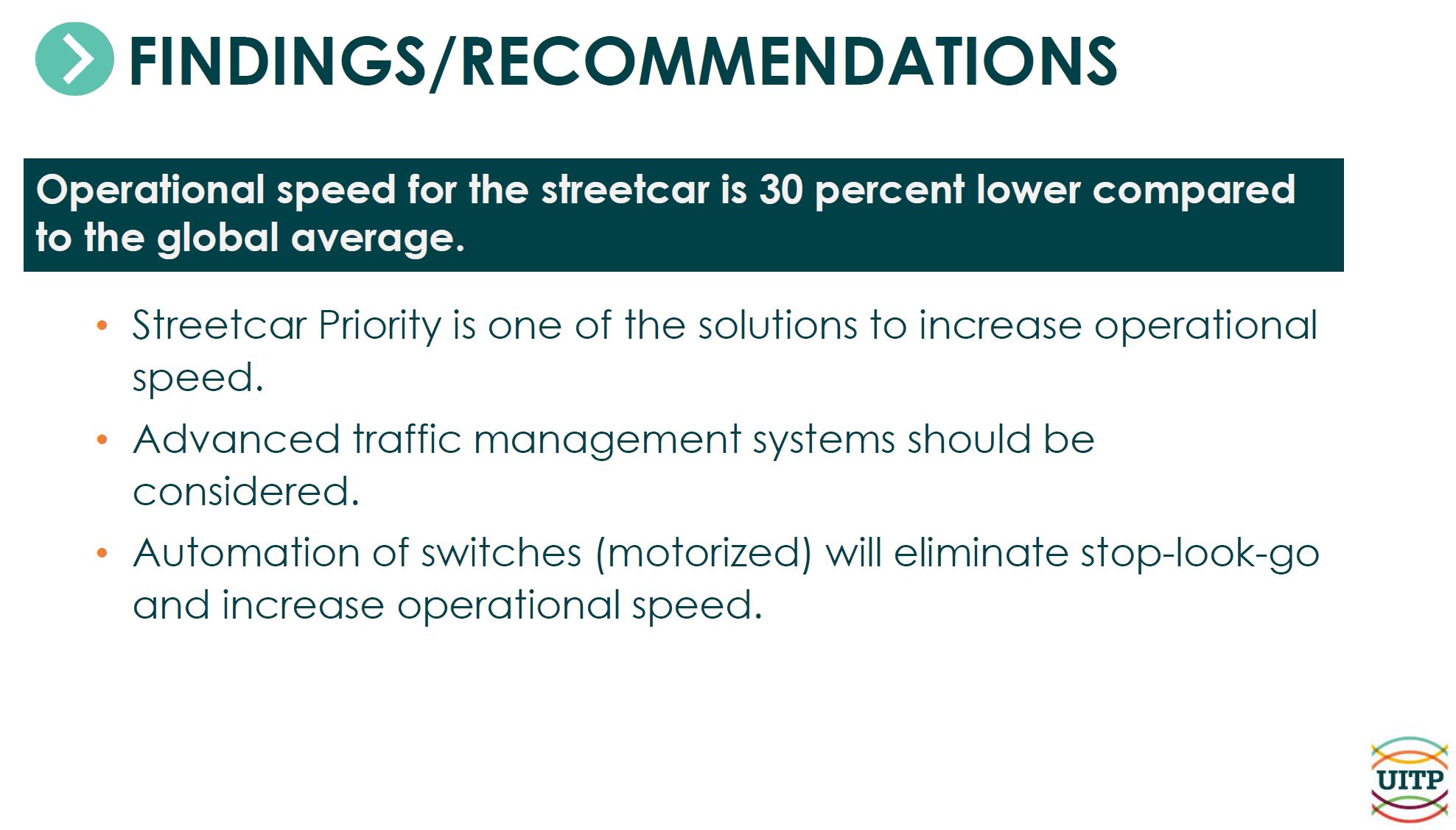
The gradual slowdown of streetcar speeds evolved over a long period, and some of the history is not well known by current TTC Board members nor, I suspect, by many in TTC management. Many readers will remember the sprightly operation of the previous generations of CLRV streetcars and of the PCCs before them. The slowing of streetcar operations is not just a question of traffic congestion, but of other factors including TTC policy decisions. Any move to speed up operations needs to address as many of these issues as possible.
These include:
- Electric switch operation
- Track condition at intersections and associated slow orders
- Overhead condition notably at underpasses
- Flexity door operations
- Nearside vs farside stops
- Transit priority at signals especially for turning movements
- Reserved transit lanes
The full version of the UITP report is not available and it will be discussed in private session at the committee meeting.
Continue reading Steve Munro