
This article continues the analysis of service on routes where the TTC claims to be implementing mid-route headway management. The routes included here are:
- 24/924 Victoria Park
- 25/925 Don Mills
- 29/929 Dufferin
See Part I for a general introduction and details of 7 Bathurst, 100 Flemingdon Park, 165 Weston Road North, 506 Carlton and 512 St. Clair.
A common factor evident in the charts for these routes is that service near the origins of routes is barely within the target range for headways, and more commonly well beyond it. AM peak service might squeeze within the target, but service falls apart from midday onward and does not recover in the evening.
Although the TTC reports performance based on “on time” departure from terminals, they actually have a headway standard, but never report on how well routes meet it. Note that the standard actually is very generous and allows a wider range of headways than the “on time” standard. For example, a bus operating every 10 minutes is allowed a 50% headway deviation either way meaning that the actual headway could be anywhere from 5 to 15 minutes, and 40% of the service can be even worse. This is a standard designed to make management look good to those who don’t peer “under the covers”.
For services that operate between 5 and 10 minutes, passengers do not rely on printed schedules, but expect vehicles to arrive at prescribed headways. Therefore, on-time performance for frequent service is measured by how well actual headways correlate to scheduled headway intervals. Trips are monitored at a location based on arrival time, without regard to whether the trip that arrived was scheduled for that time slot. The vehicle is considered on-time when the headway deviation is less than 50% of the scheduled headway. For example, a service that operates every 6 minutes is deemed on-time if the headway deviation falls between 3 minutes and 9 minutes. TTC’s goal is to have 60% of all trips operated within +-50% of the scheduled headway over the entire service day. [Service Standards at pp 15-16]
The TTC plans a review of its Service Standards in coming months. That review and much-needed reporting on service quality are long overdue.
Express routes can have very wide ranging headways making their benefit to riders dubious. The wait for an express bus can be longer than the travel time saving from skipped stops. Meanwhile riders at “local” stops cannot benefit from the express vehicles. The TTC plans a review of its Express Network later this summer, and service reliability should be a major issue. It is not enough to advertise a faster trip, but the network must actually provide it, including waiting time, reliably.
Another factor that appears in some of these charts (as well as in Part I) is that for some periods there is more service on a route than is scheduled. This is due in part to the assignment of the “run as directed” buses to supplement regular routes. However, the base schedule is not adjusted, and the RADs do not create a uniform combined headway. They can even contribute to bunching by running close to a scheduled run.
TTC still has not deigned to release detailed data from their APCs (Automatic Passenger Counters) and only coarse information (corresponding to the three levels of loading shown on their real time info) is publicly available. I have asked many times, but this request goes nowhere. Without detailed data it is impossible to know the loads on buses or to differentiate between a modest seated load and a partially standing one. Considering that the Service Standards call for at most a few standees in the off peak, this distinction is crucial to evaluating how service matches the standards.
When the use of RADs to supplement service began, the intent was to soak up spare bus operators (not to mention spare buses) without committing to a permanent service improvement. There has been no external report on whether the added service improved ridership, or the effect of its withdrawal.
24 Victoria Park
- 24A Victoria Park Station to Steeles
- 24B Victoria Park Station to Don Mills Station via Consumers Road
| Effective | AM Peak | Midday | PM Peak | Early Eve | Late Eve |
|---|---|---|---|---|---|
| 27-Mar-23 | 24A – 10′ 24B – 20′ | 24A – 10′ 24B – 24′ | 24A – 10′ 24B – 22′ | 24A – 8′ | 24A – 10′ |
The Victoria Park bus operates primarily between Victoria Park Station and Steeles. During weekday daytimes, there a branch to Don Mills Station via Consumers Road. Note that headways are such that the two branches will not blend and buses will, on occasion, run close together by design, sometimes one minute apart. This built-in irregularity affects analysis of service reliability.
The express service to Steeles (see below) operates only in peak periods.
The screenlines used for both the local and express services are:
- Northbound: Just north of Victoria Park Station, Lawrence and Sheppard
- Southbound: South of Steeles, Sheppard and Lawrence
Note that there is no data shown for June-August 2024 as I was not collecting the 24/924 during that period.
Northbound
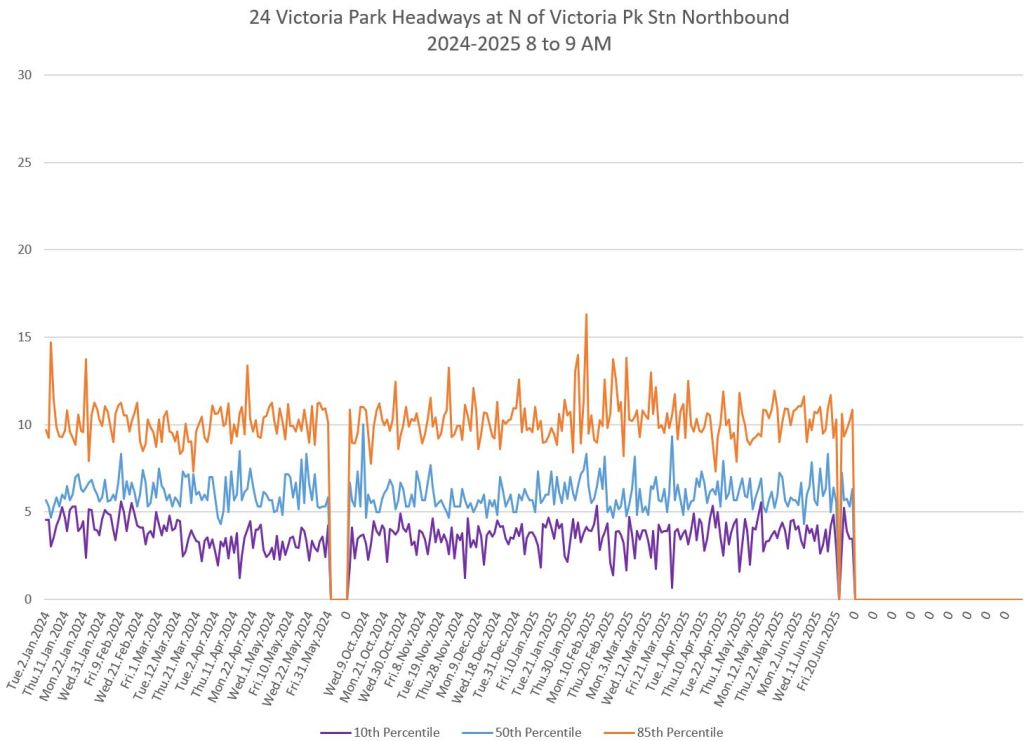
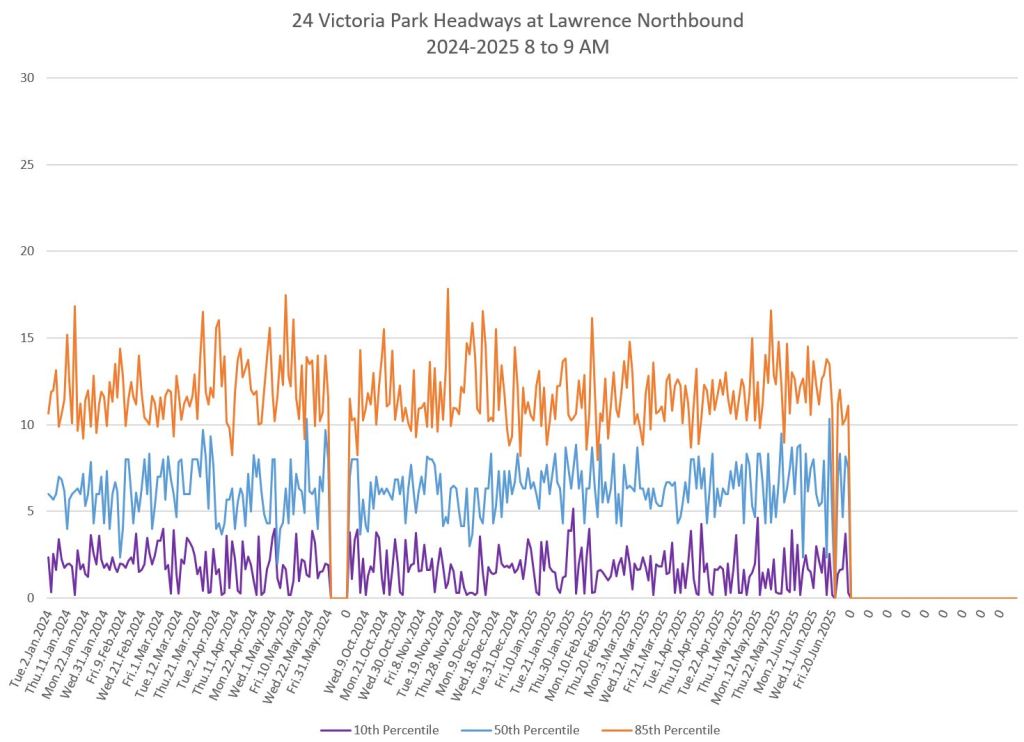
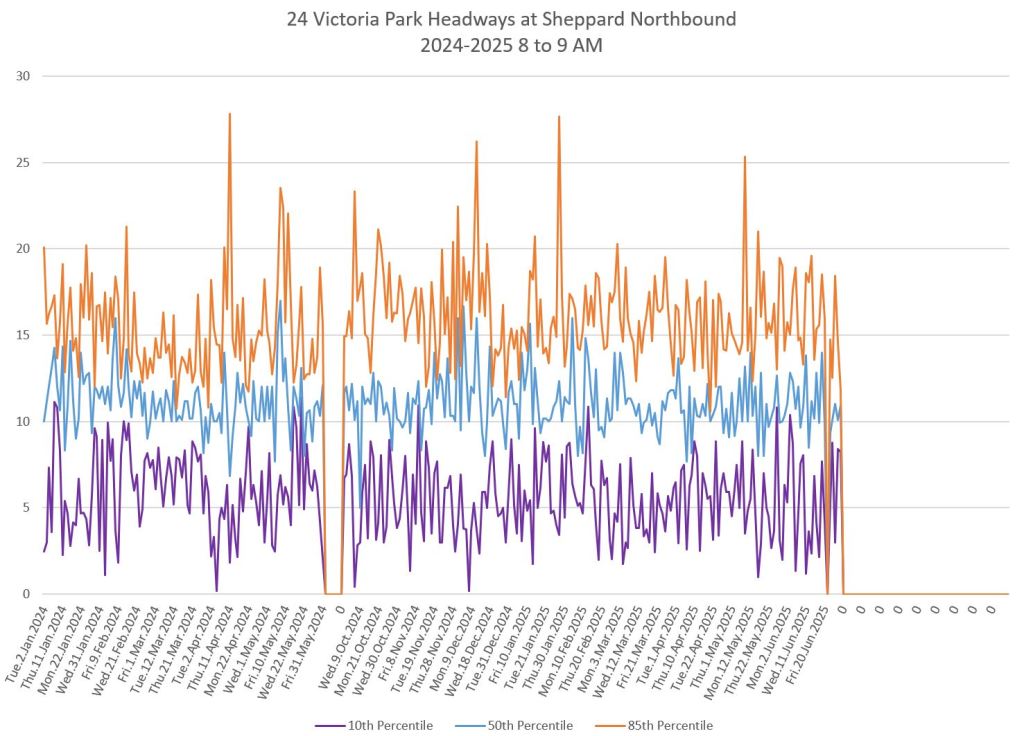
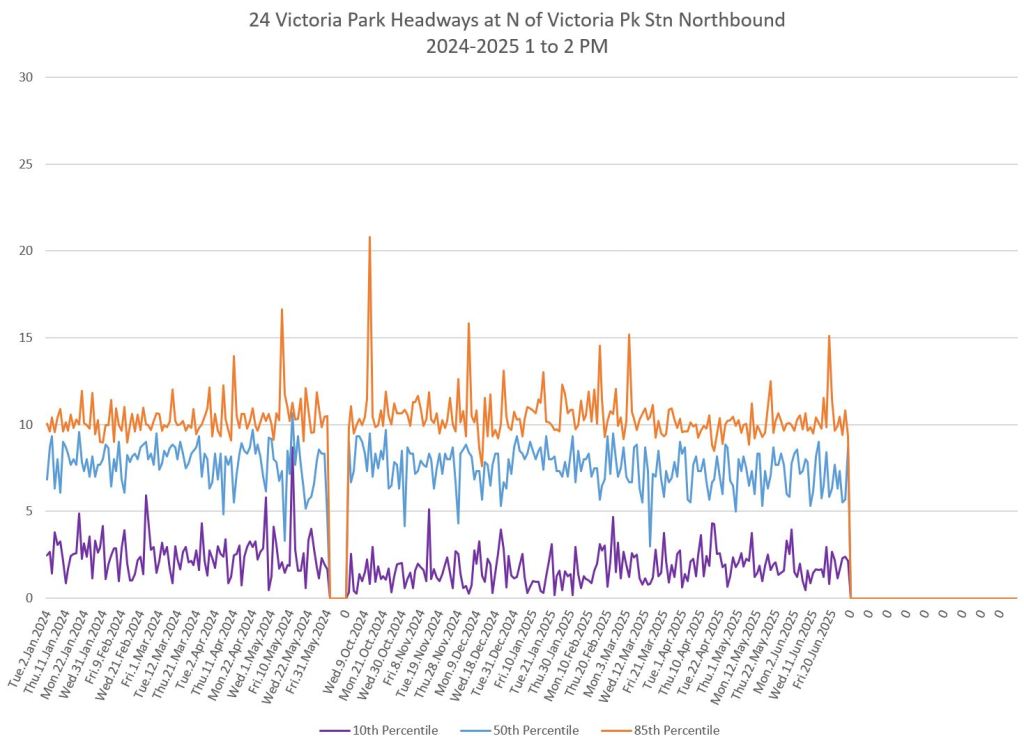
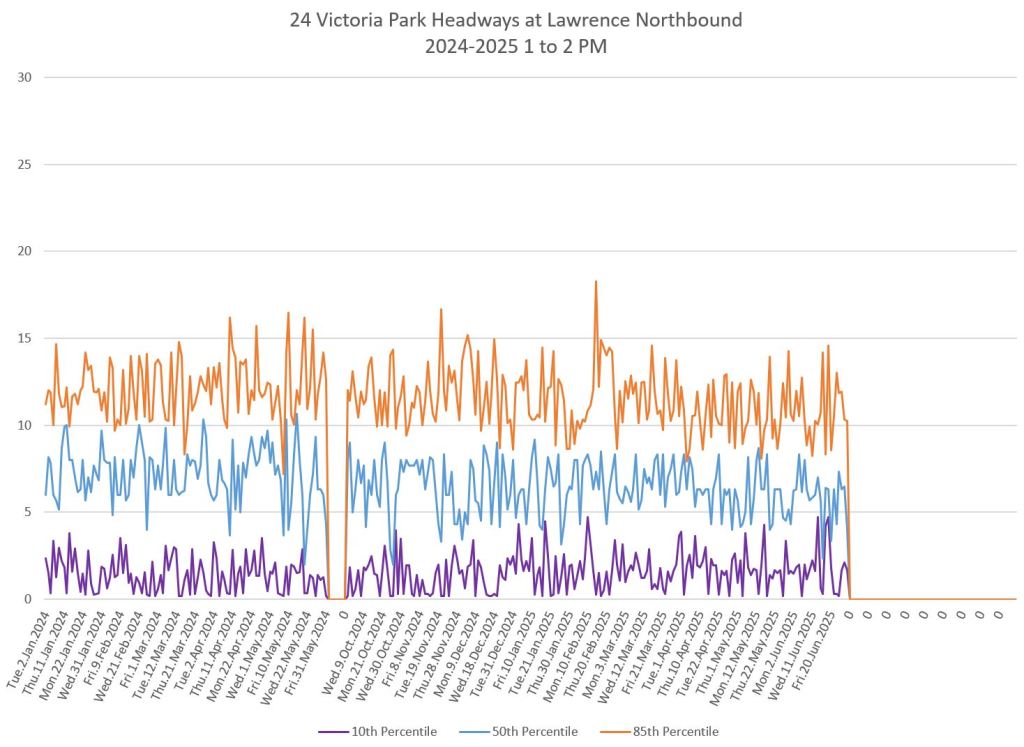
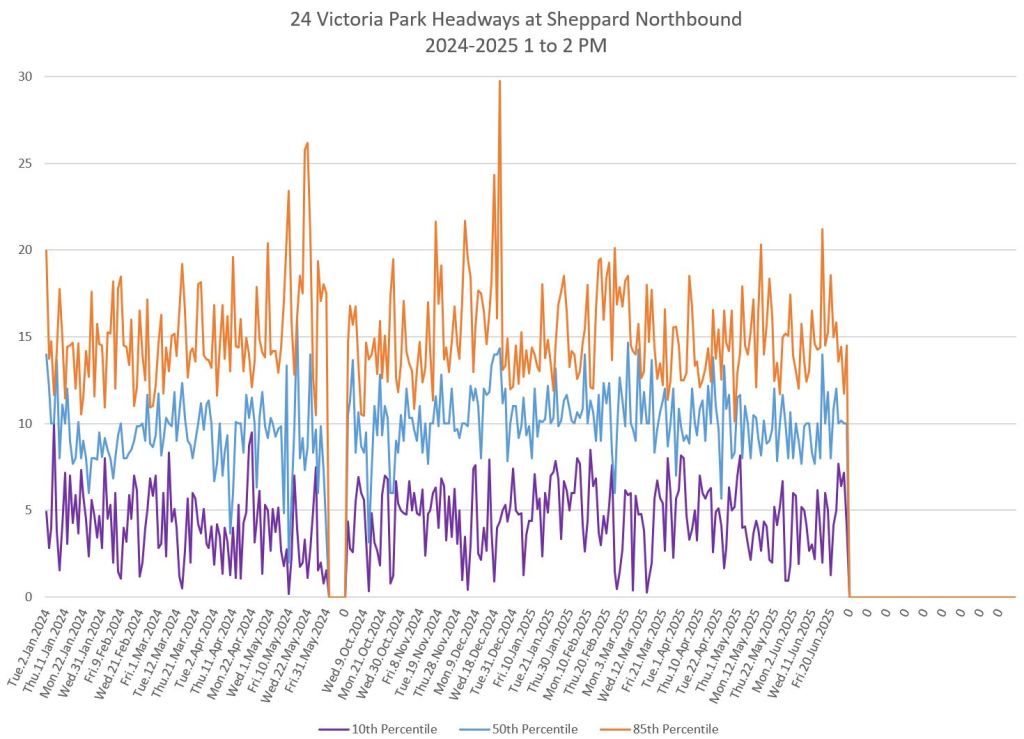
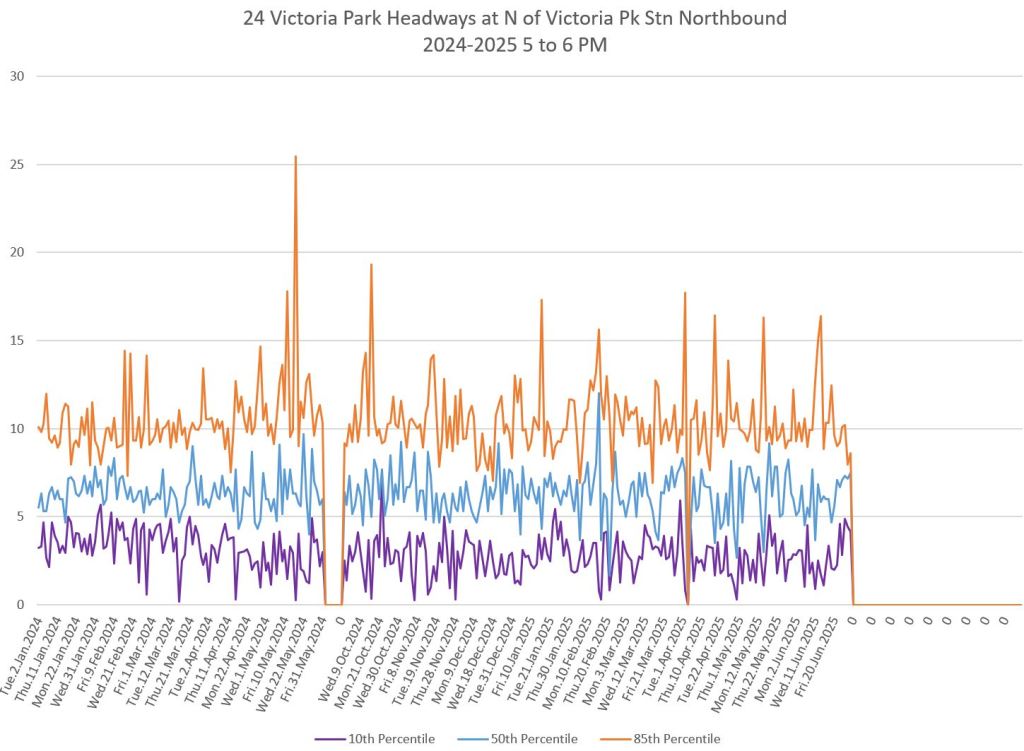
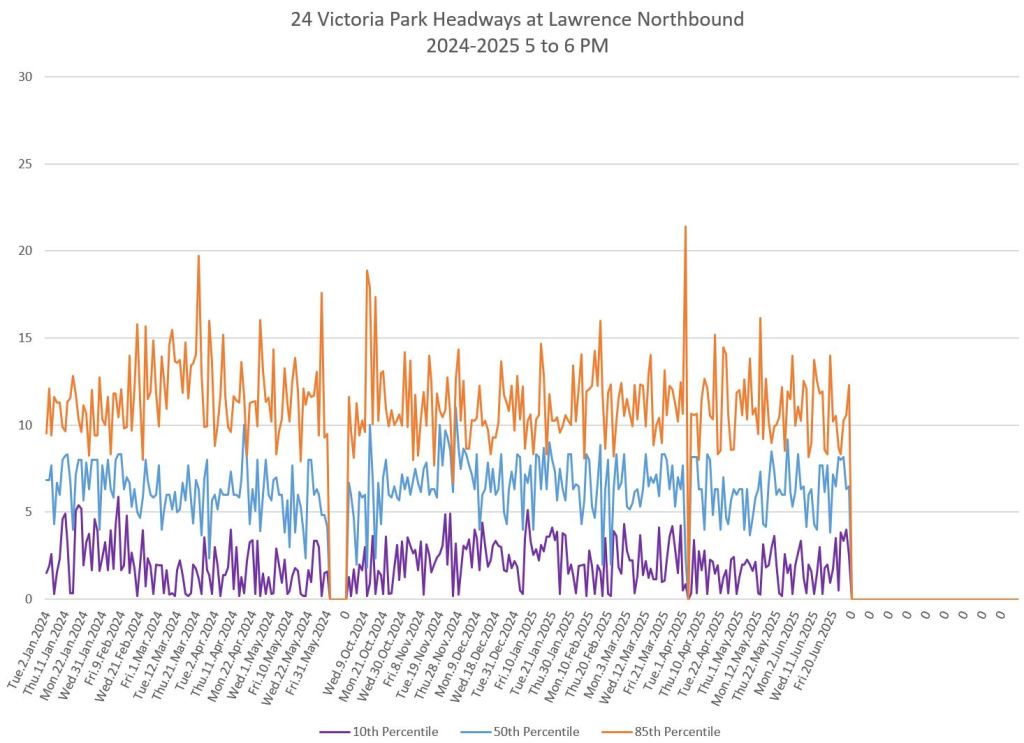
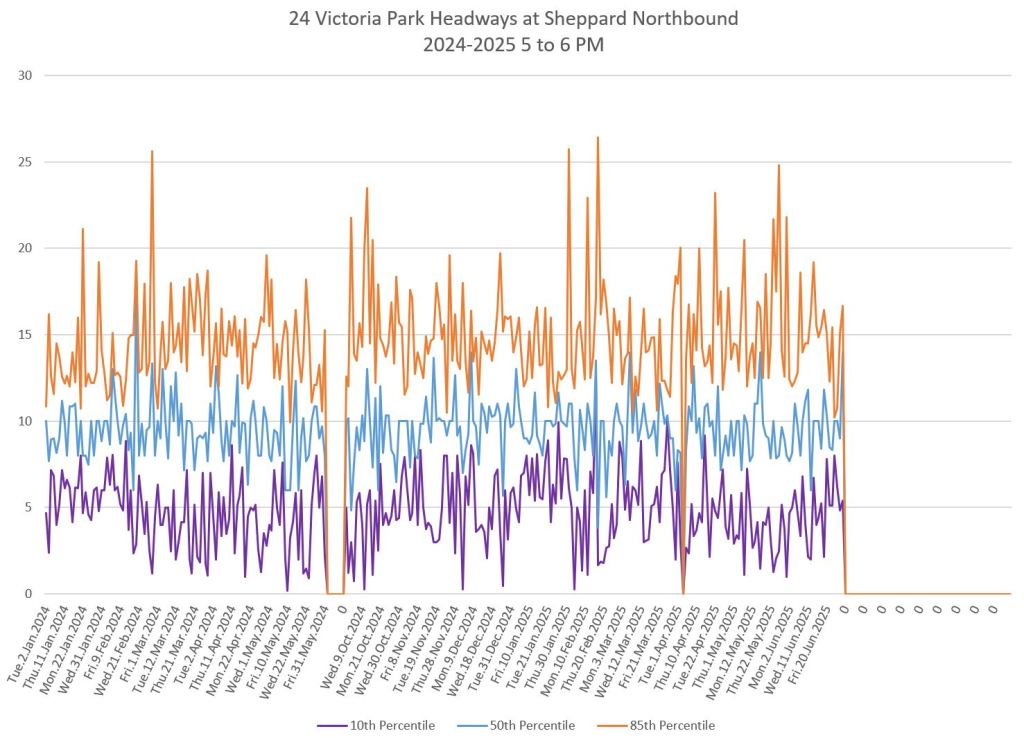
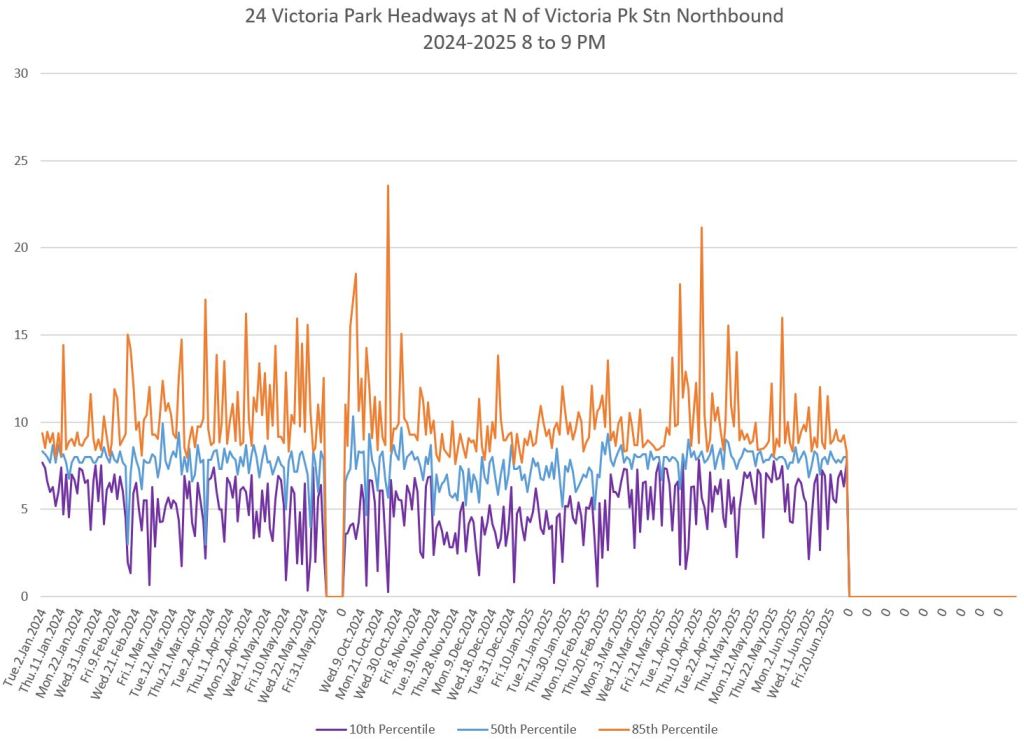
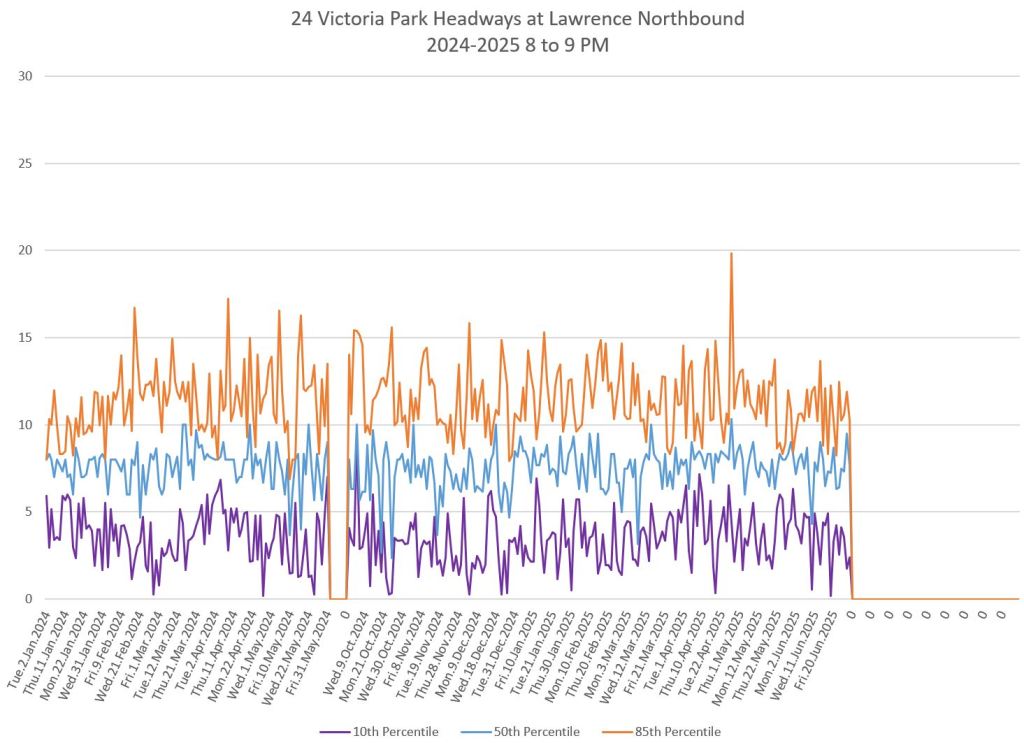
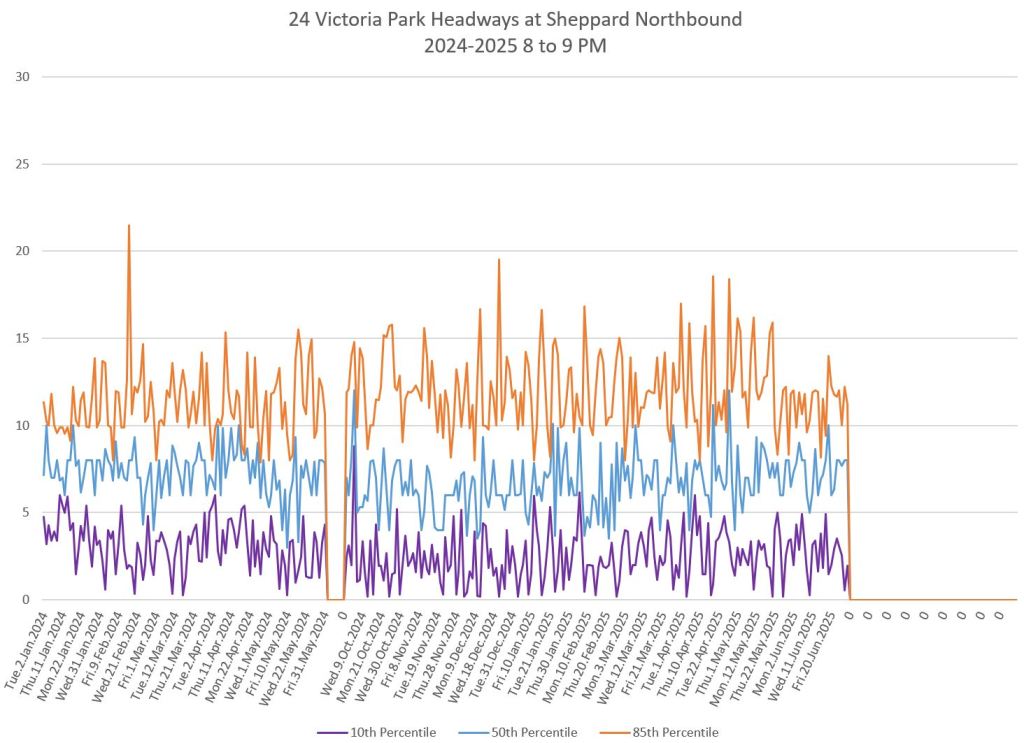
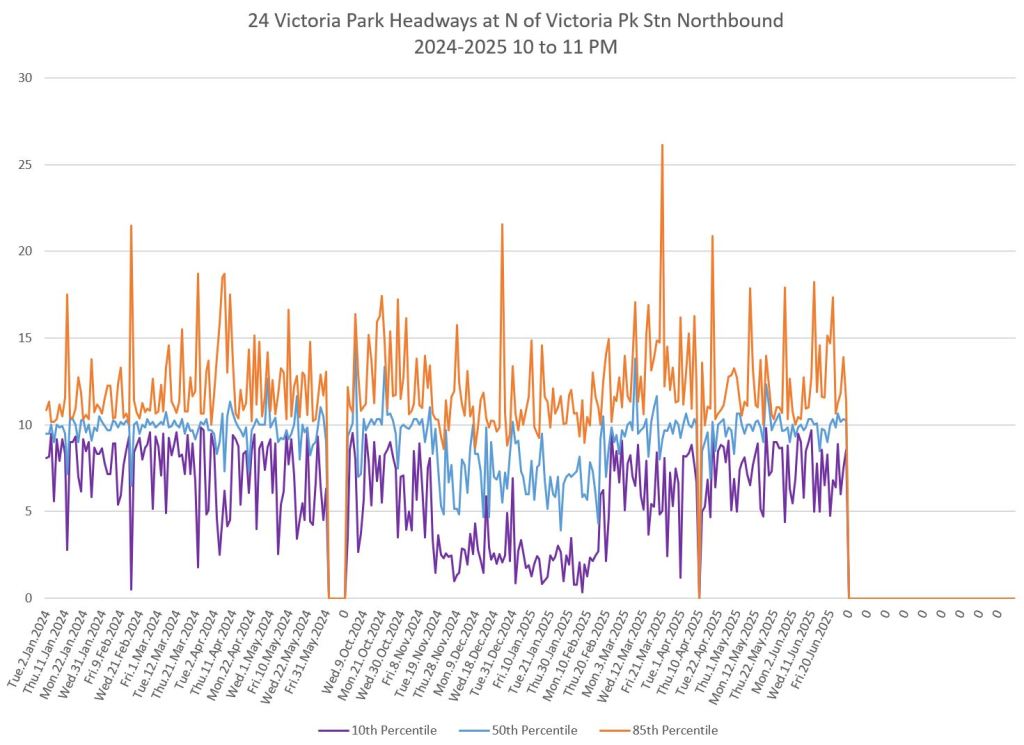
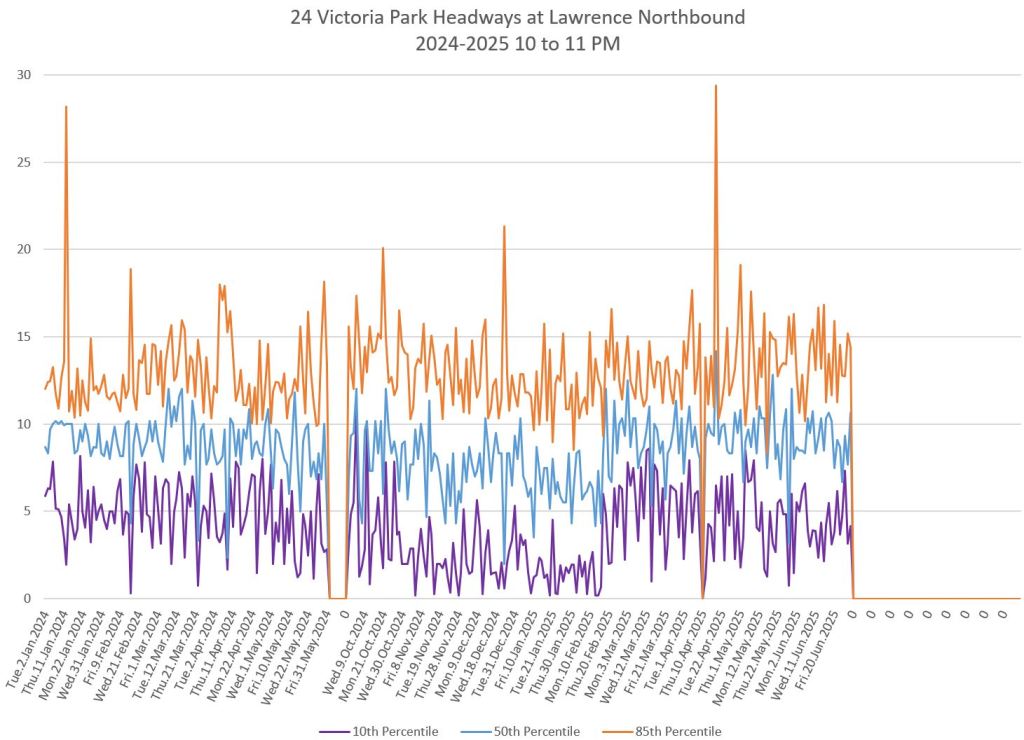
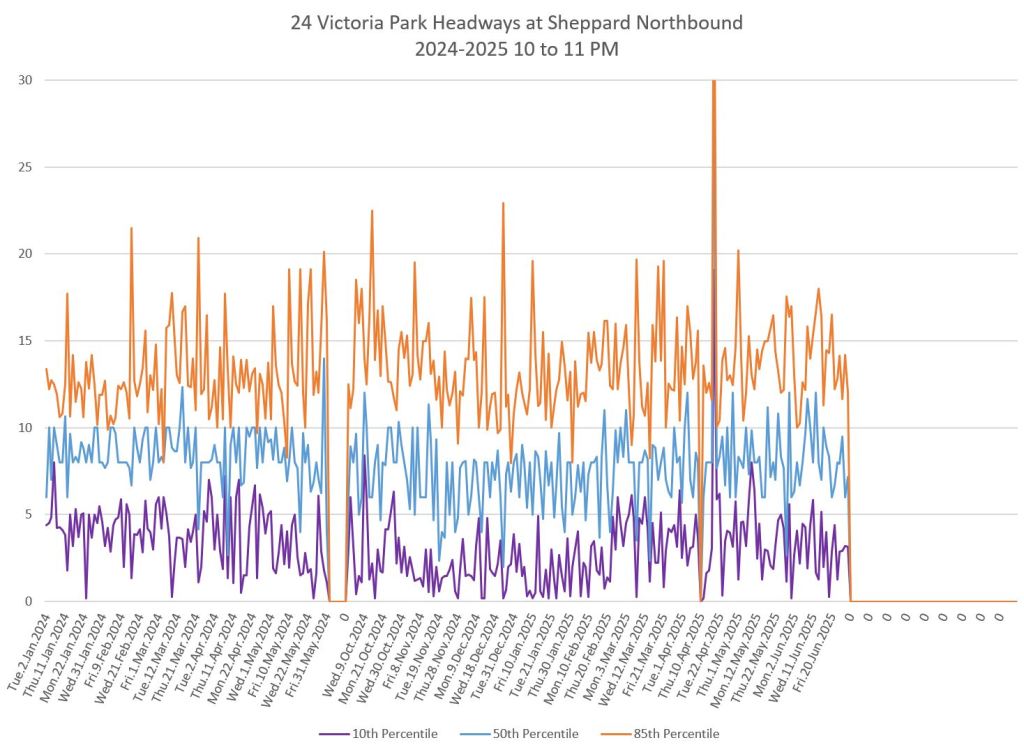
The route shows the familiar pattern of a fairly narrow band between the 10th and 85th percentile of headways leaving the terminal, but this widens out as buses travel further north. Note that the entire range of headways shifts up for the Sheppard data because the 24B Consumers service has dropped out.
The 10th percentile is quite low, especially at Lawrence, because some 24B trips are scheduled very close to 24A Steeles trips and the buses run together.
The spread of headways is wider in the midday and PM peak than the AM peak, and it drops back again from Victoria Park Station in the evening. However, there is no 24B service and so the irregularity is entirely on the 24A service. Extra service was operated in the late evening from late November 2024 through mid-February 2025, but the low value of the 10th percentile during the affected period shows that the extra buses likely ran close to scheduled trips.
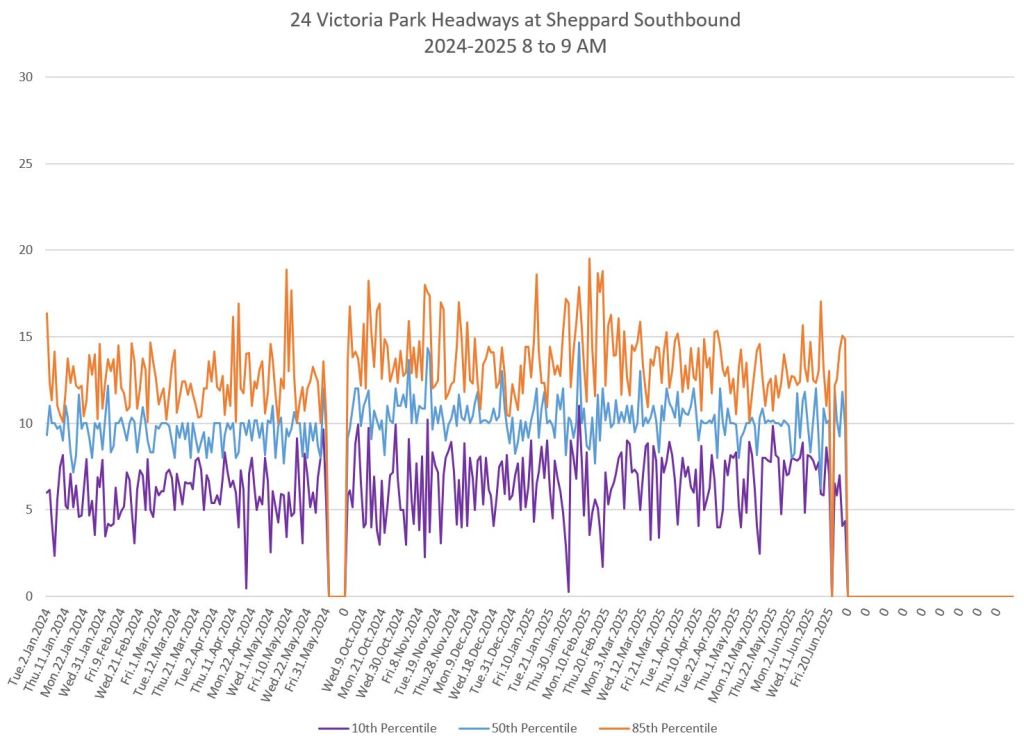
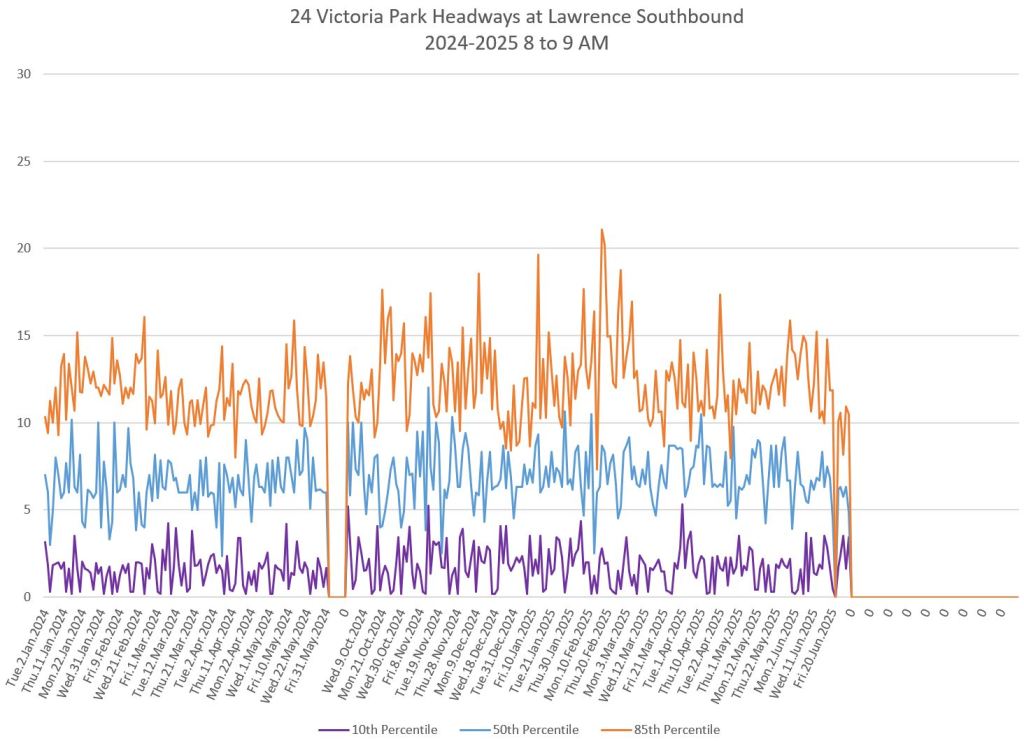
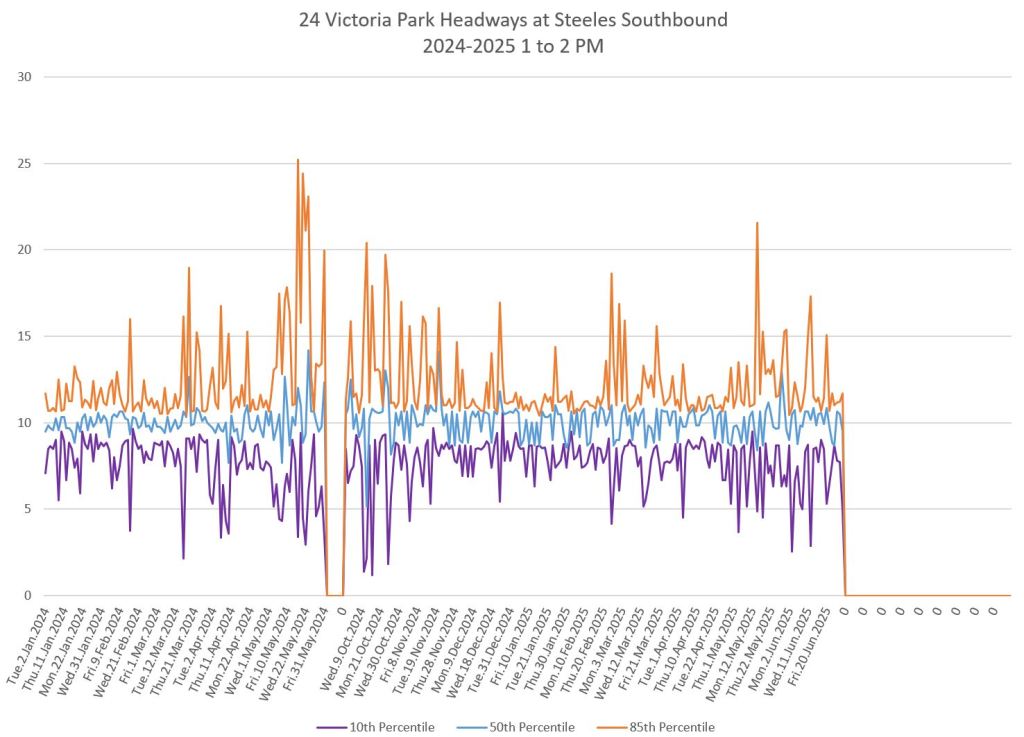
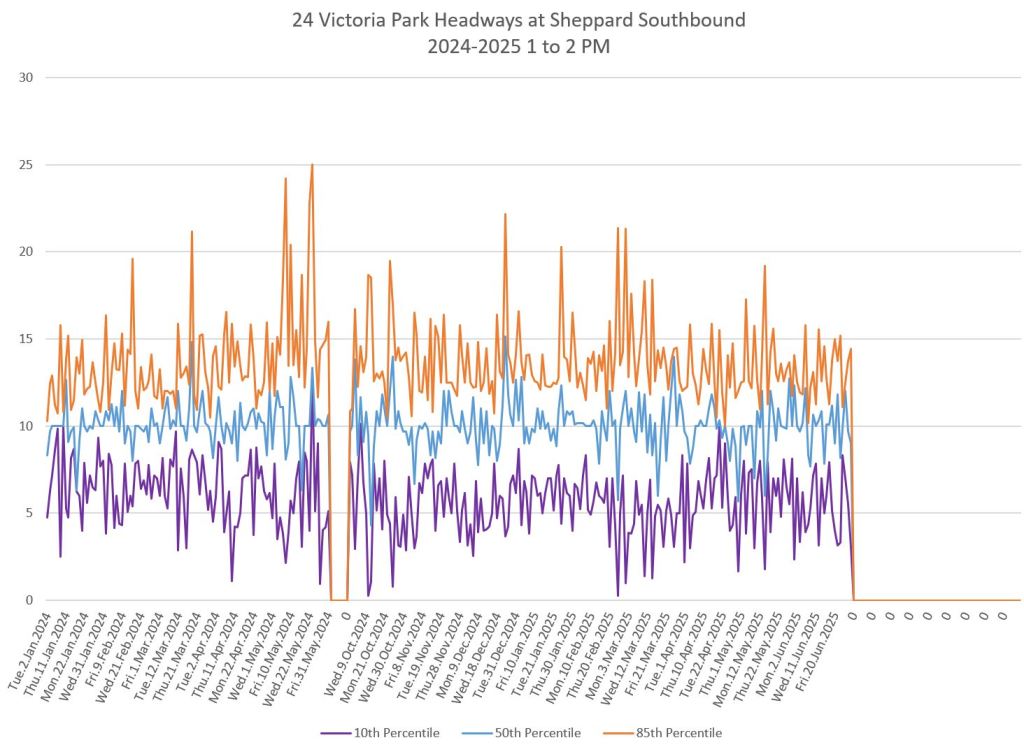
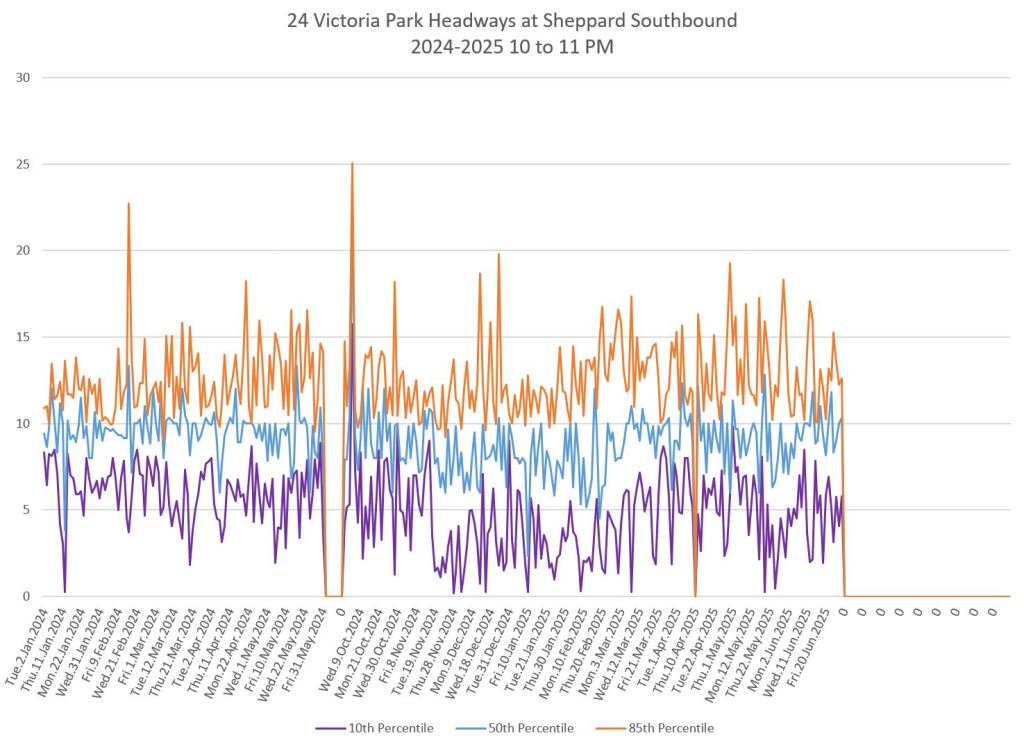
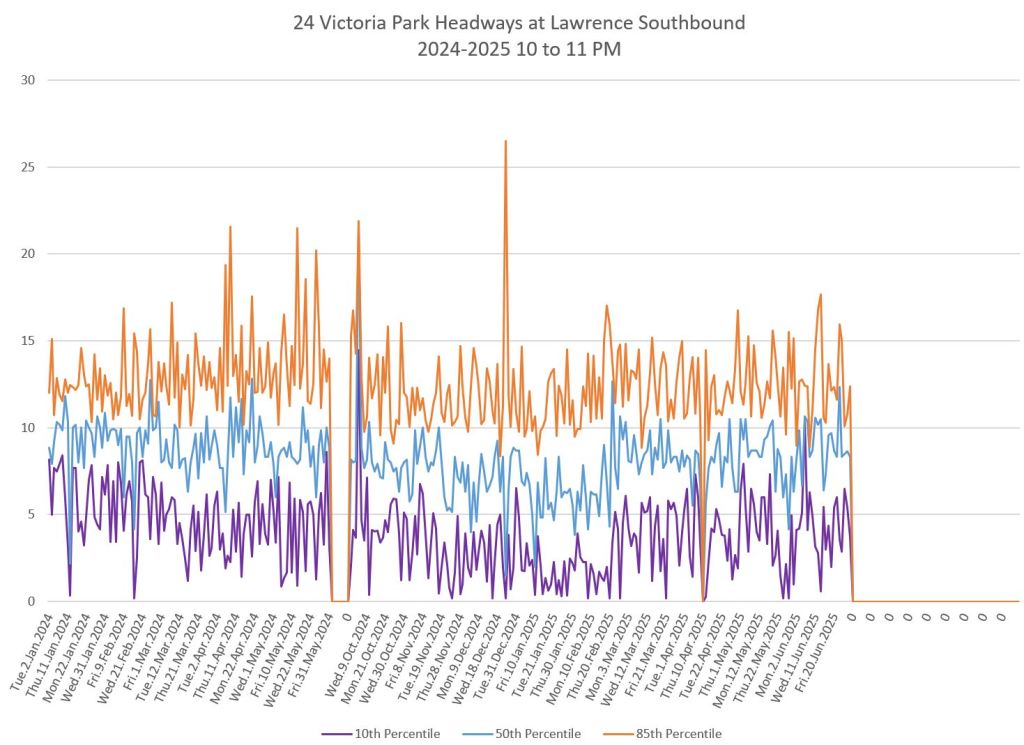
There is no sign of improved headway management in 2025.
AM Peak
Midday
PM Peak
Early Evening
Late Evening
Southbound
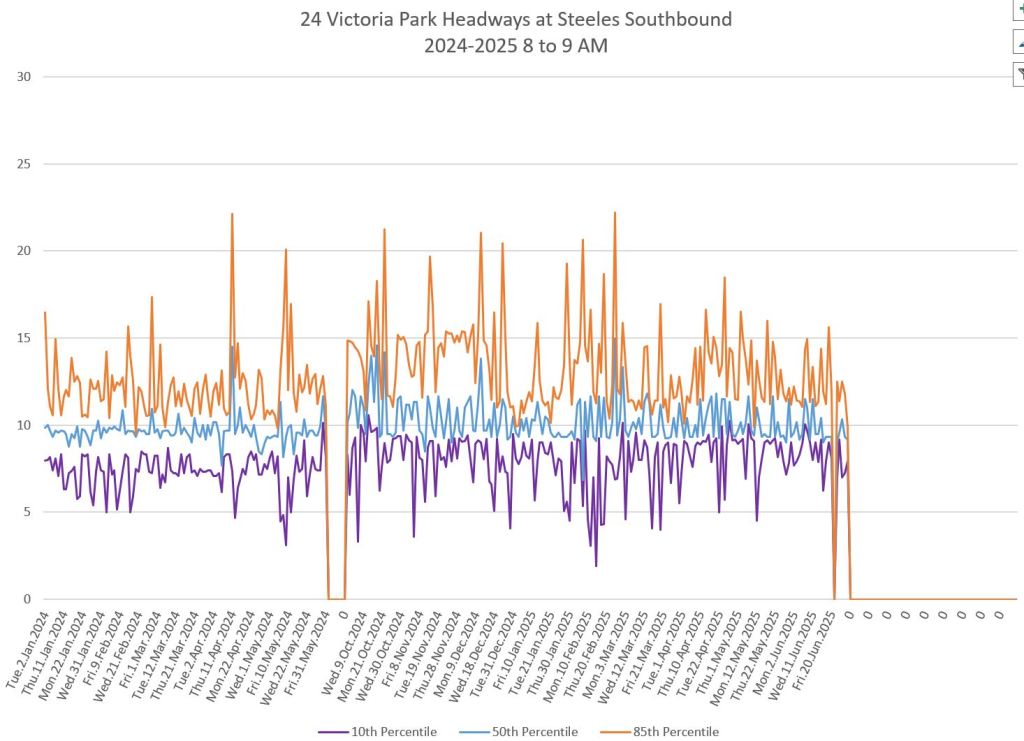
Service on 24 Victoria Park leaves Steeles southbound with a fairly tight range of headways through early 2024. The values are more scattered from fall 2024 onward. As the service moves south, the range widens. At Lawrence, the 24B Consumers service has merged in and this drives down both the median and 10th percentile values.
AM Peak
Midday
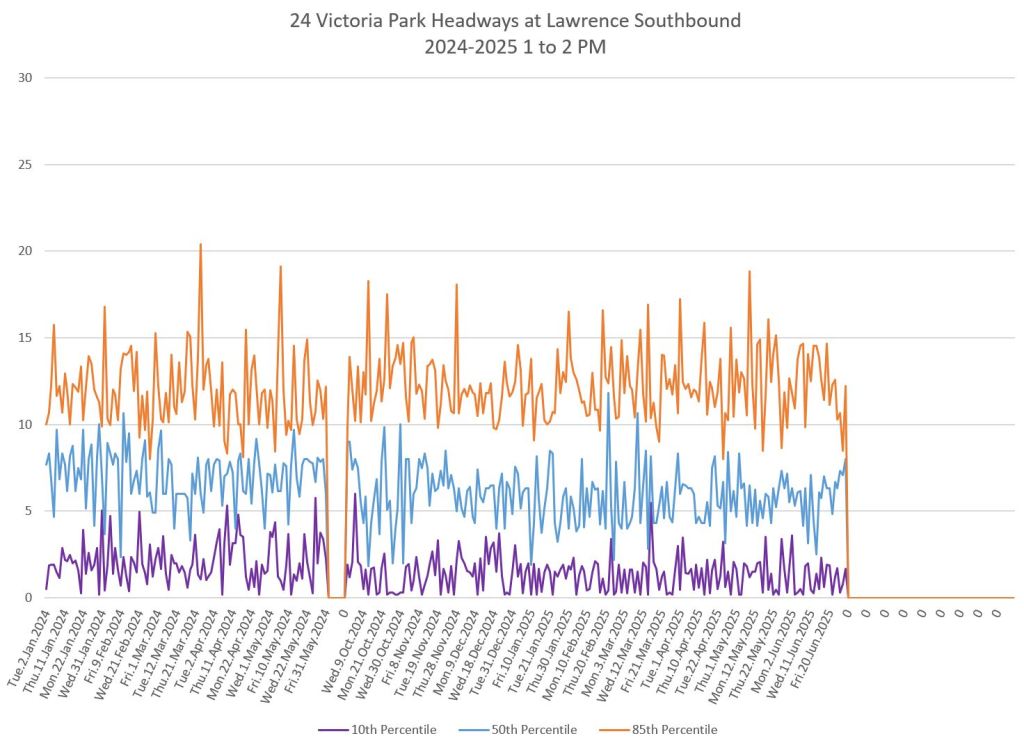
PM Peak
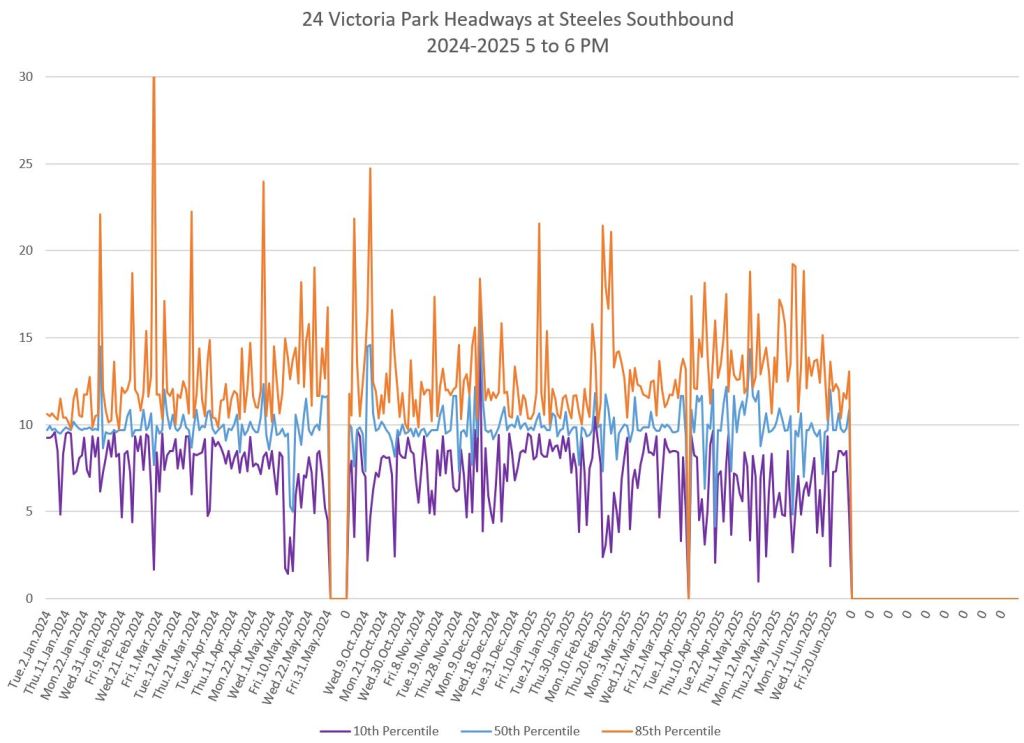
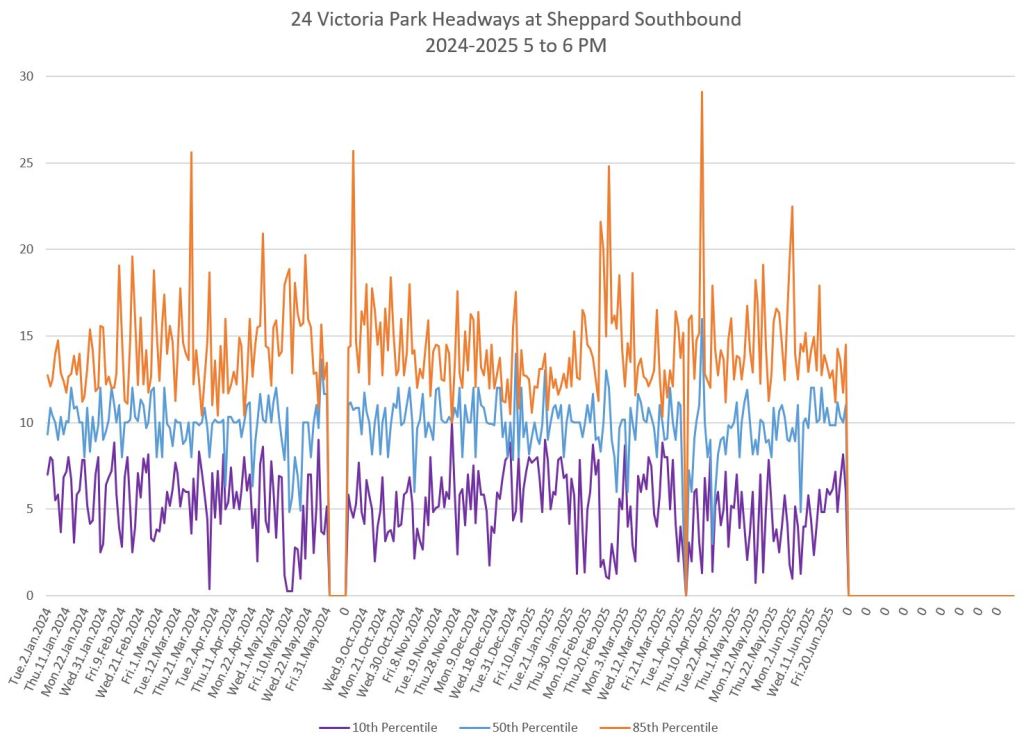
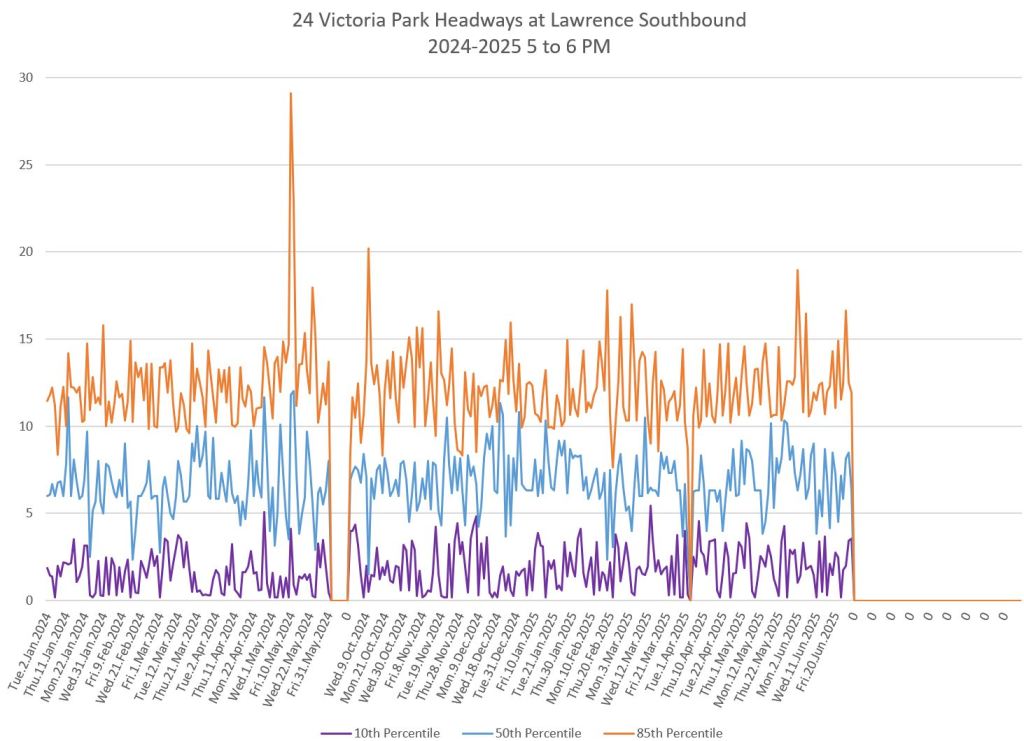
Early Evening
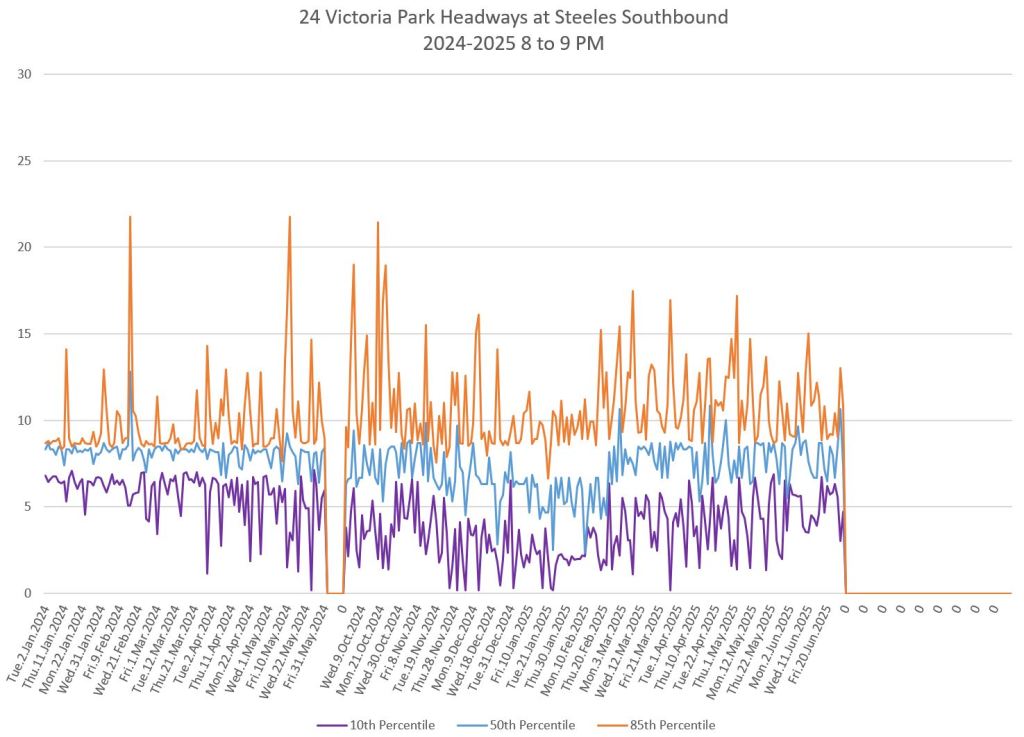
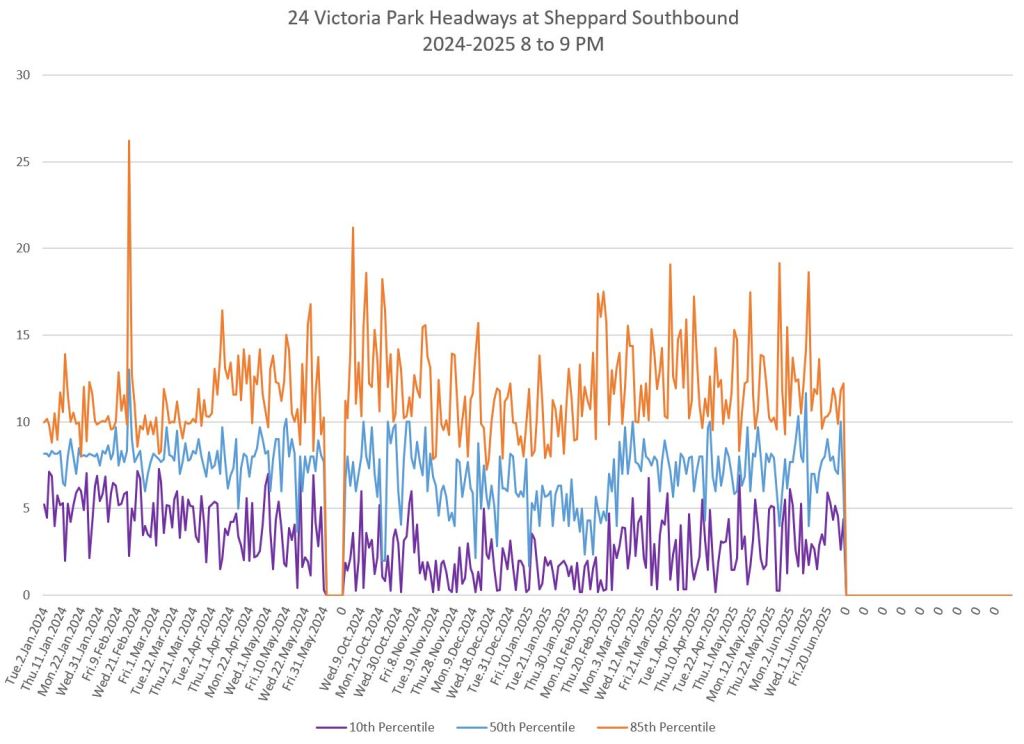
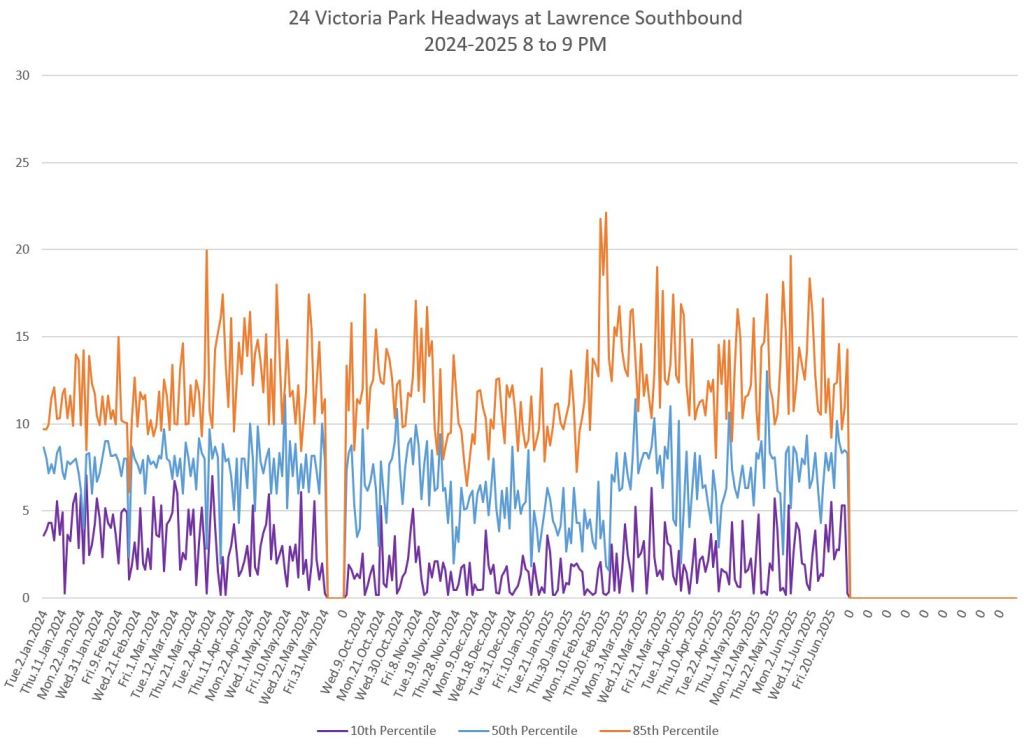
Late Evening
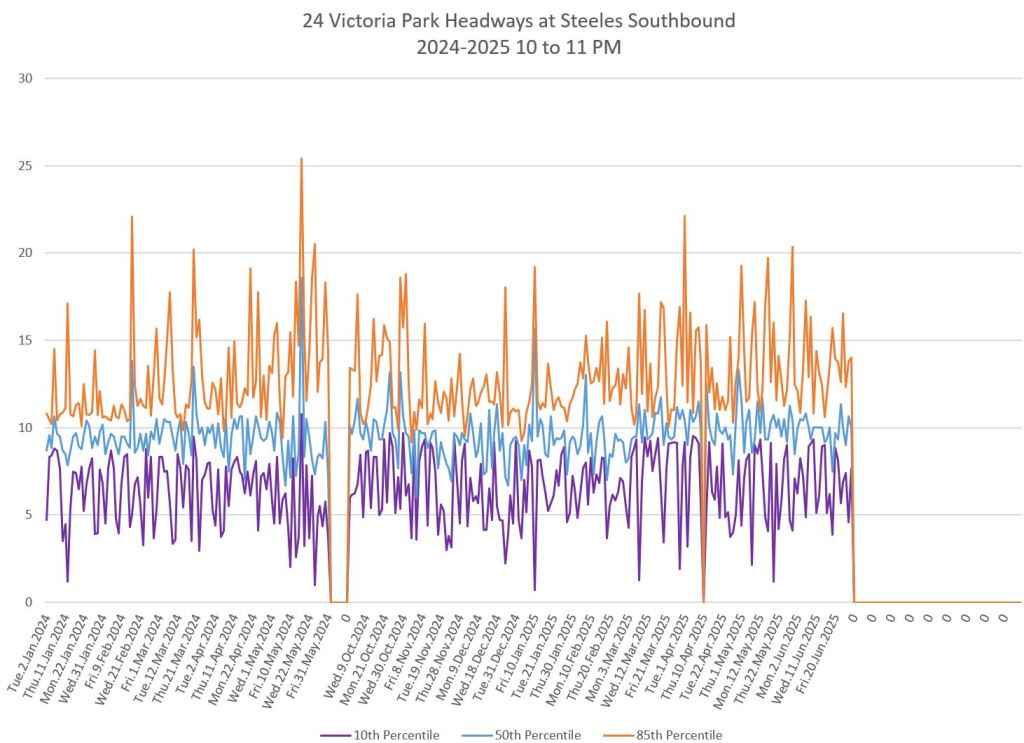
924 Victoria Park Express
- 924 Victoria Park Station to Steeles
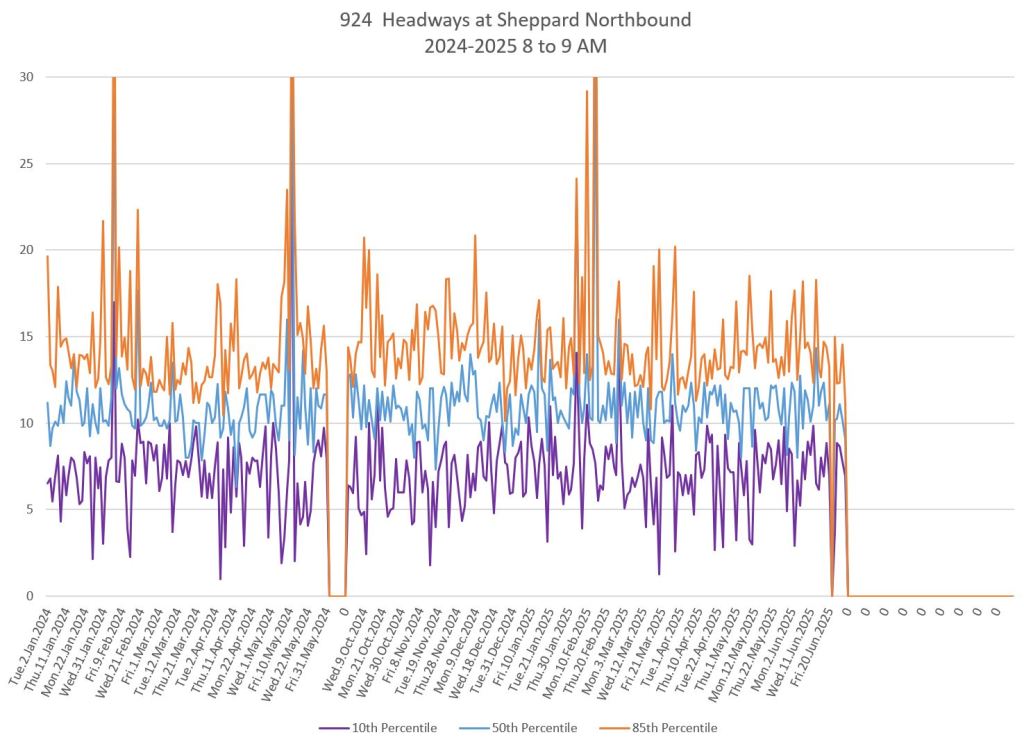
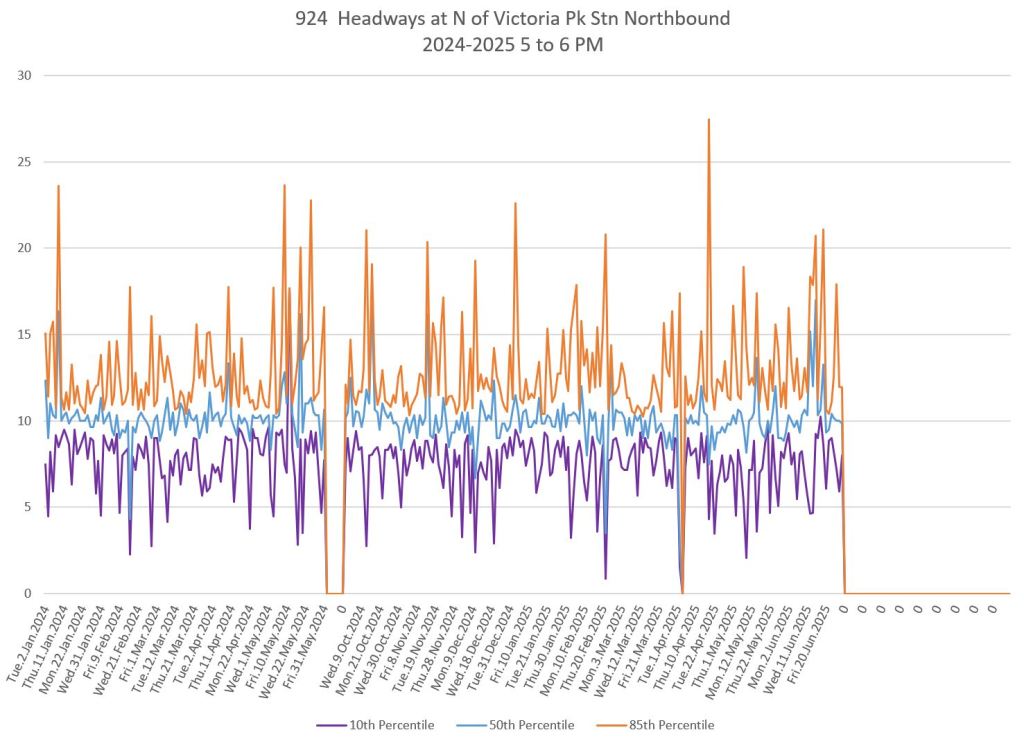
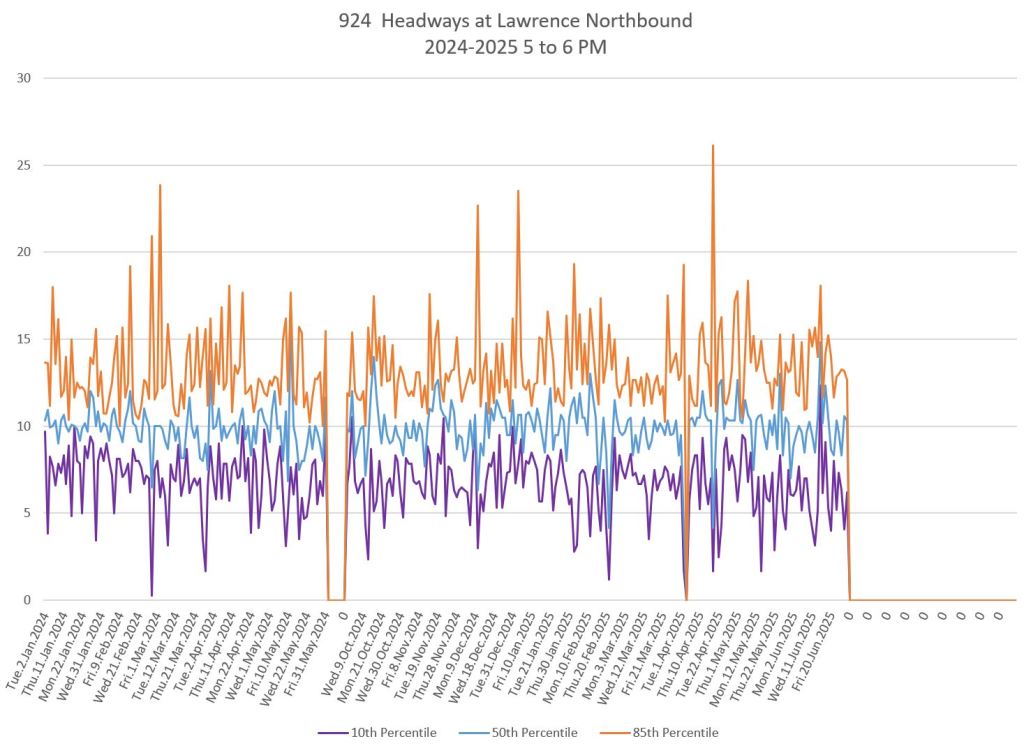
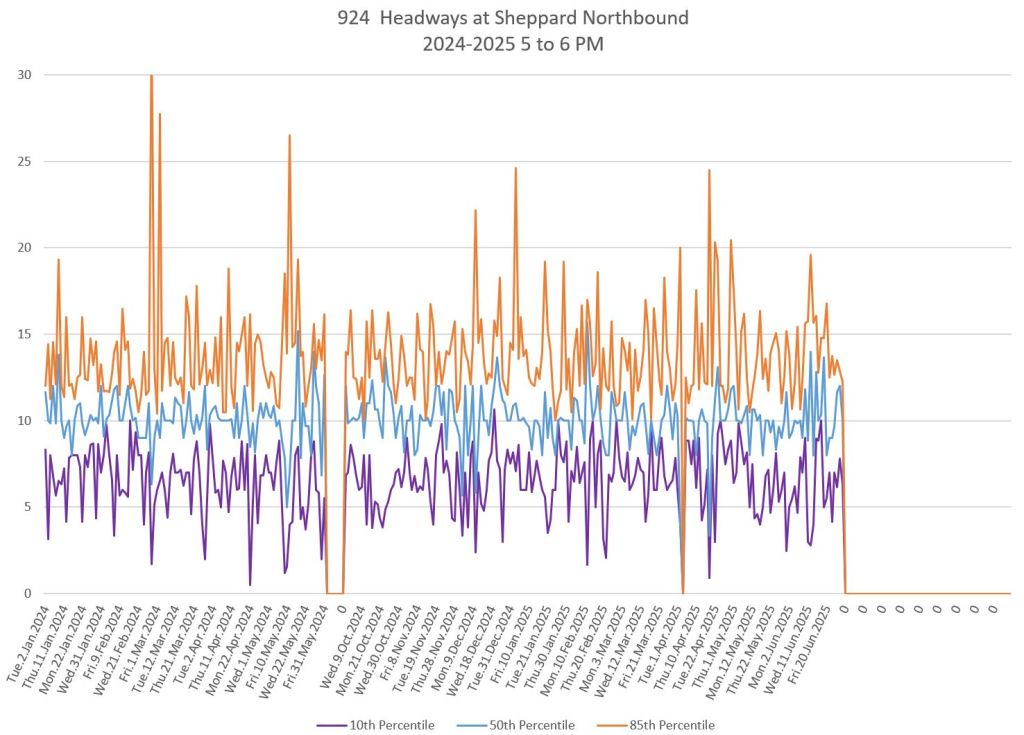
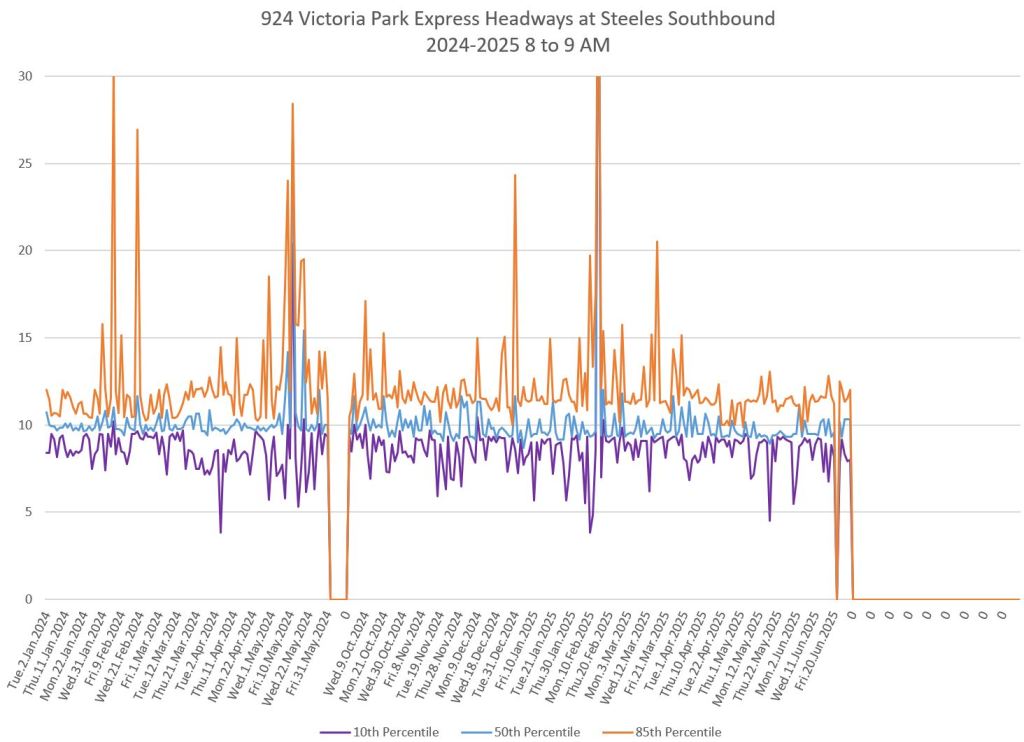
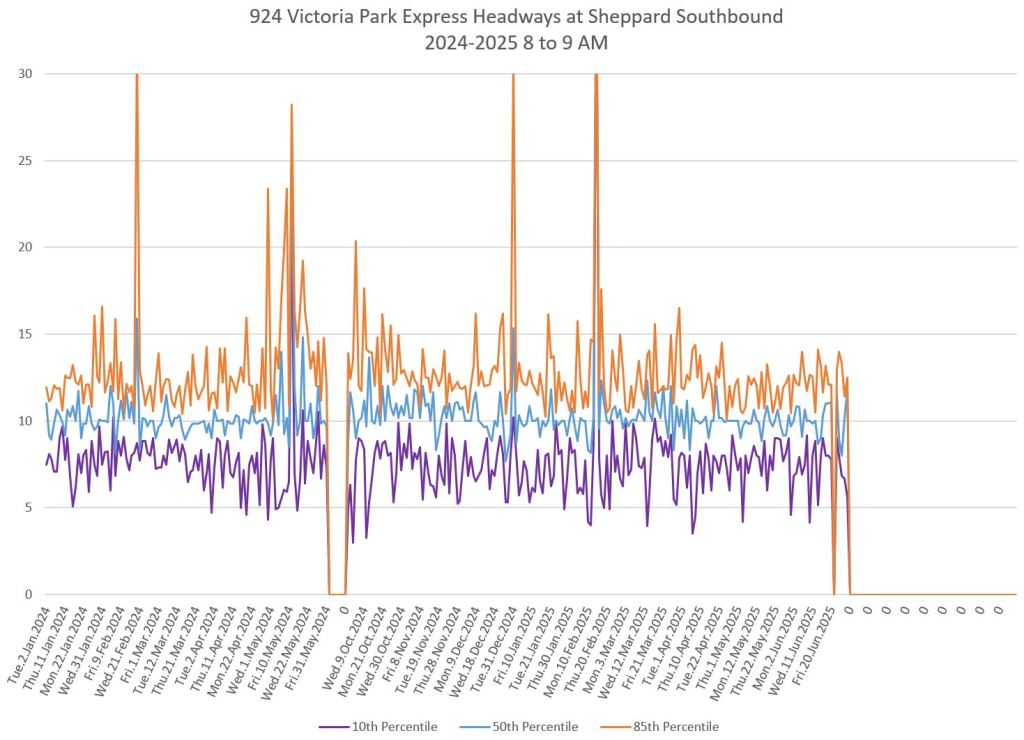
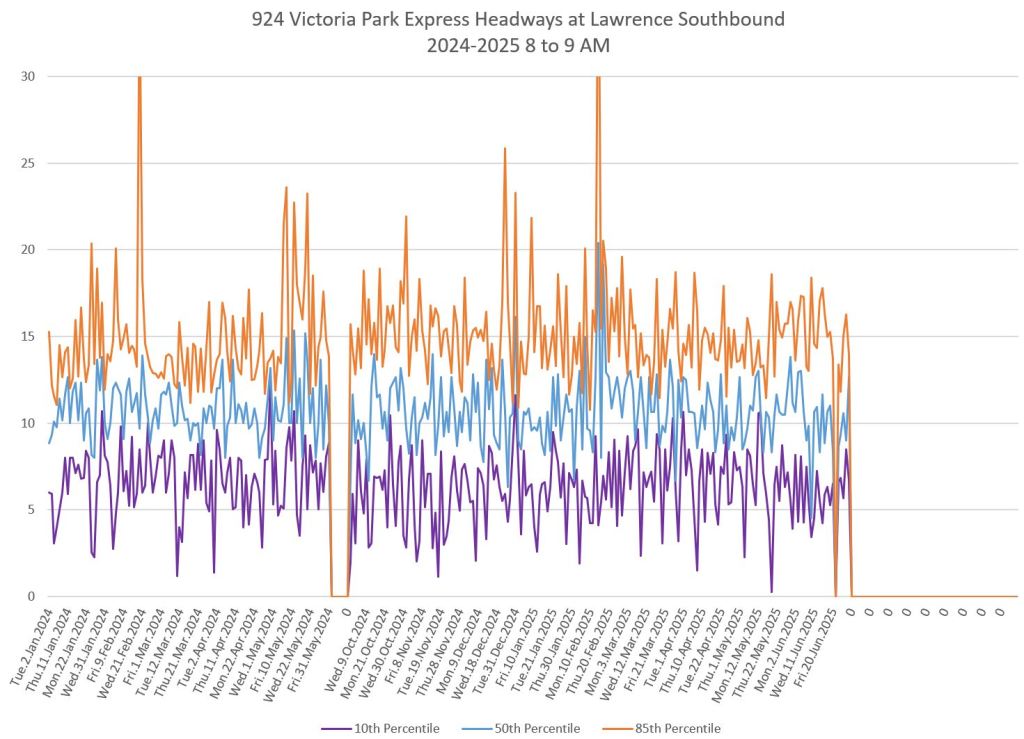
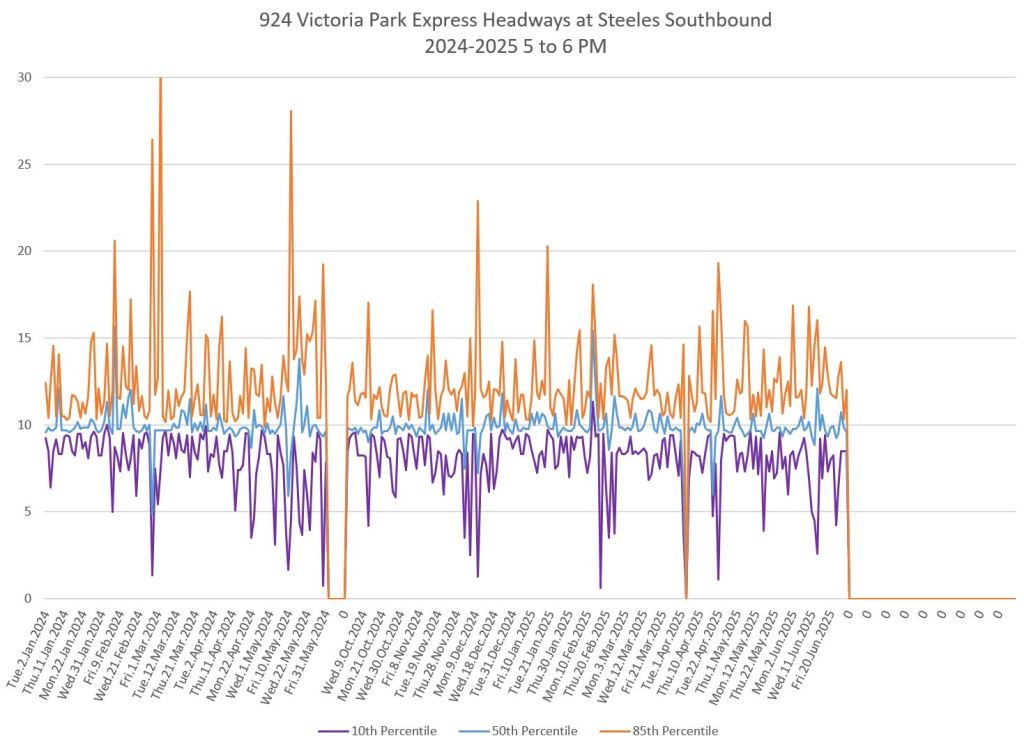
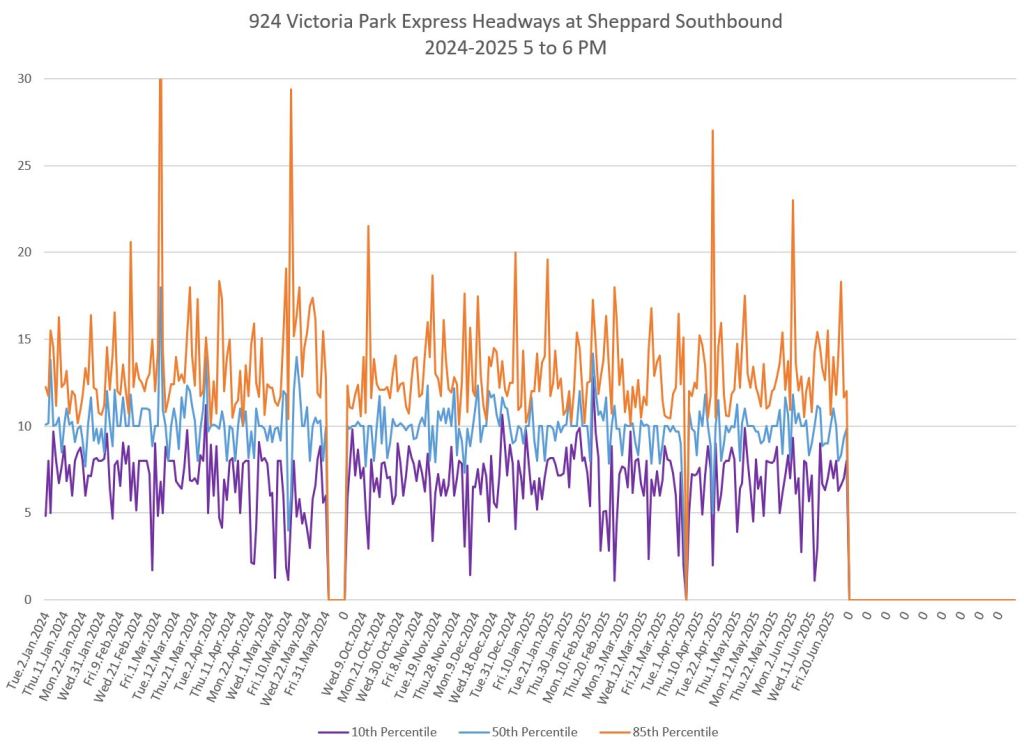
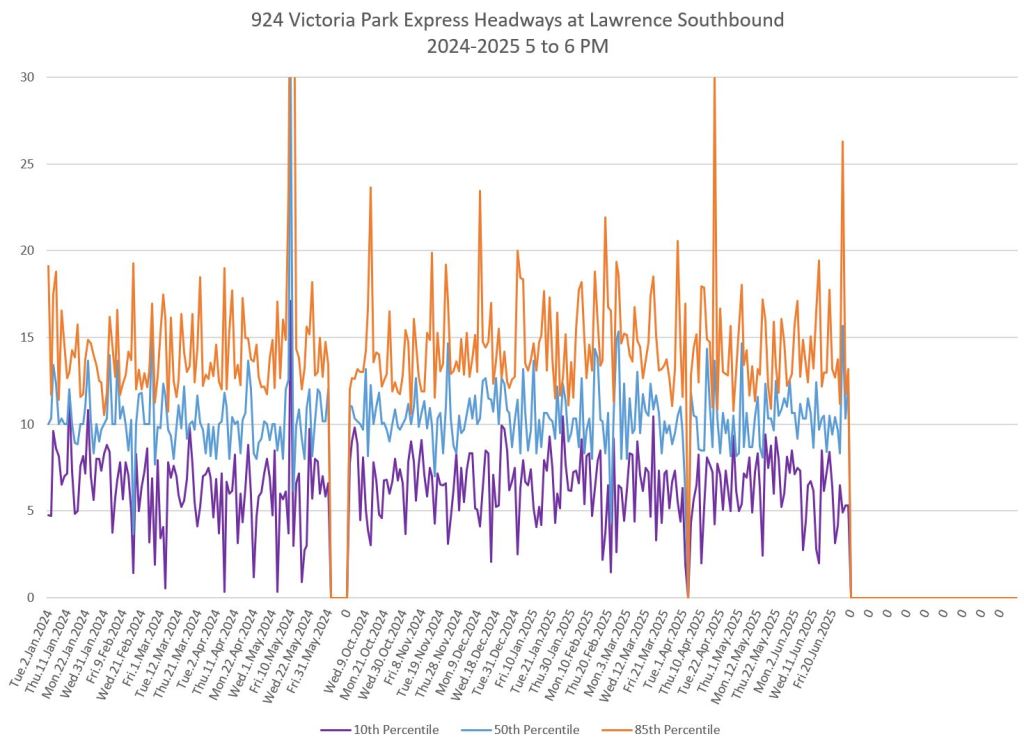
The 924 Victoria Park Express operates only in peak periods, and it has been on the same scheduled headway for a few years.
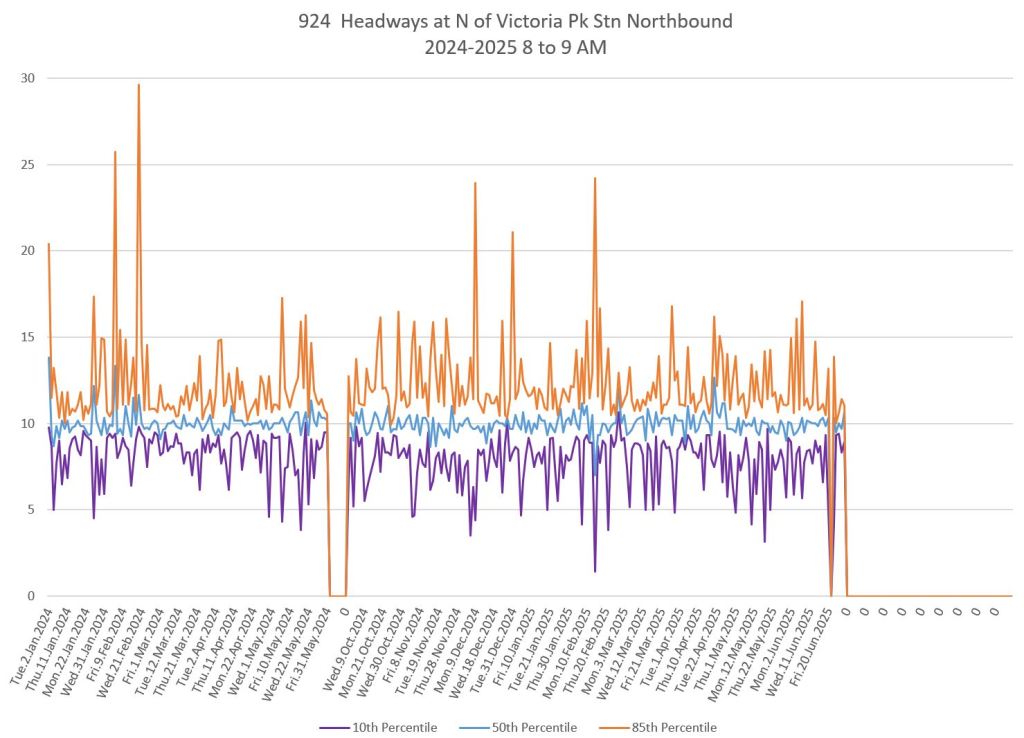
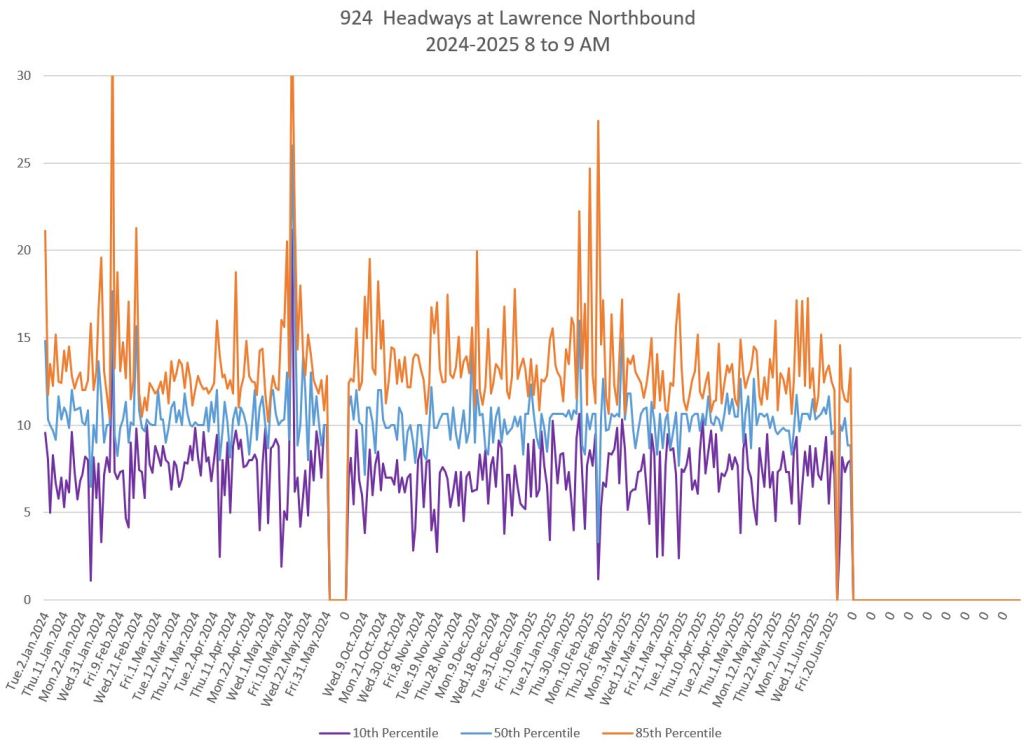
Headways from terminals both ways are tightly grouped in the AM peak, less so in the PM peak. As buses progress along the route, the range of headways widens but without the irregularity caused by an extra branch joining in as happens on the local service. With fewer stops, the accumulated delays from stop service time are lower and the headway spread is less than for the local service.
| Effective | AM Peak | Midday | PM Peak | Early Eve | Late Eve |
|---|---|---|---|---|---|
| 27-Mar-23 | 10′ | 10′ |
Northbound
AM Peak
PM Peak
Southbound
AM Peak
PM Peak
25 Don Mills
The Don Mills bus operates between the Danforth Subway and Steeles. During the daytime there are separate branches north (25C) and south (25B) of Don Mills Station. In the late evening, there is a single route (25A). The normal southern destination was Pape Station, but service shifted to Broadview Station from May 2024 for Ontario Line construction.
Don Mills buses are affected by various projects enroute:
- Ontario Line construction in Thorncliffe Park and on Don Mills from Overlea to Eglinton
- Reconstruction and reconfiguration of the Leaside Bridge and Pape Avenue for bike lanes
Branches:
- Until May 11, 2024:
- 25A Pape Station to Steeles
- 25B Pape Station to Don Mills Station
- 25C Don Mills Station to Steeles
- From May 12, 2024:
- 25A Broadview Station to Steeles
- 25B Broadview Station to Don Mills Station
- 25C Don Mills Station to Steeles
Note that because the 25B and 25C services do not overlap, there is no issue with service blending between them.
The screenlines used here are at:
- North of Pape/Broadview Stations (pre/post May 12, 2024), Overlea & Millwood, Lawrence, South of Sheppard, North of Don Mills Station, Freshmeadow (S end of Steeles Loop)
| Effective | AM Peak | Midday | PM Peak | Early Eve | Late Eve |
|---|---|---|---|---|---|
| 27-Mar-23 | 25B – 7′ 25C – 9′ | 25B – 9′ 25C – 9′ | 25B – 6’30” 25C – 6’30” | 25B – 8′ 25C – 8′ | 25A – 12’30” |
| 13-May-24 | 25B – 7′ 25C – 9′ | 25B – 9′ 25C – 9′ | 25B – 6’30” 25C – 6’30” | 25B – 8′ 25C – 8′ | 25A – 10′ |
Northbound to Don Mills Station
AM Peak
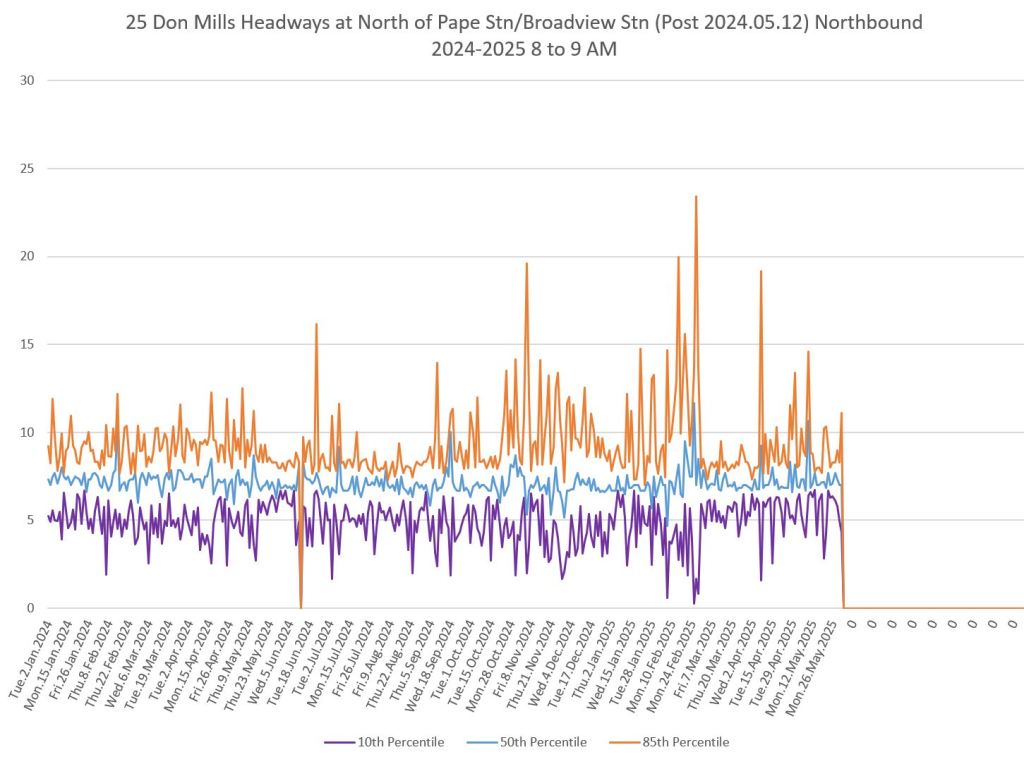
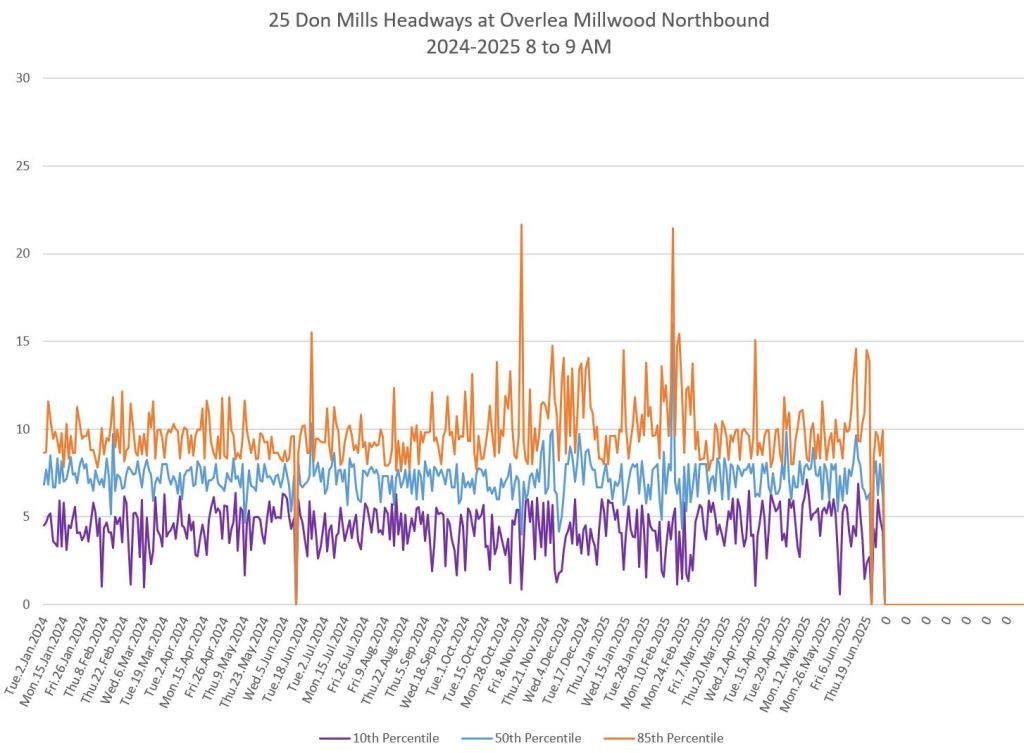
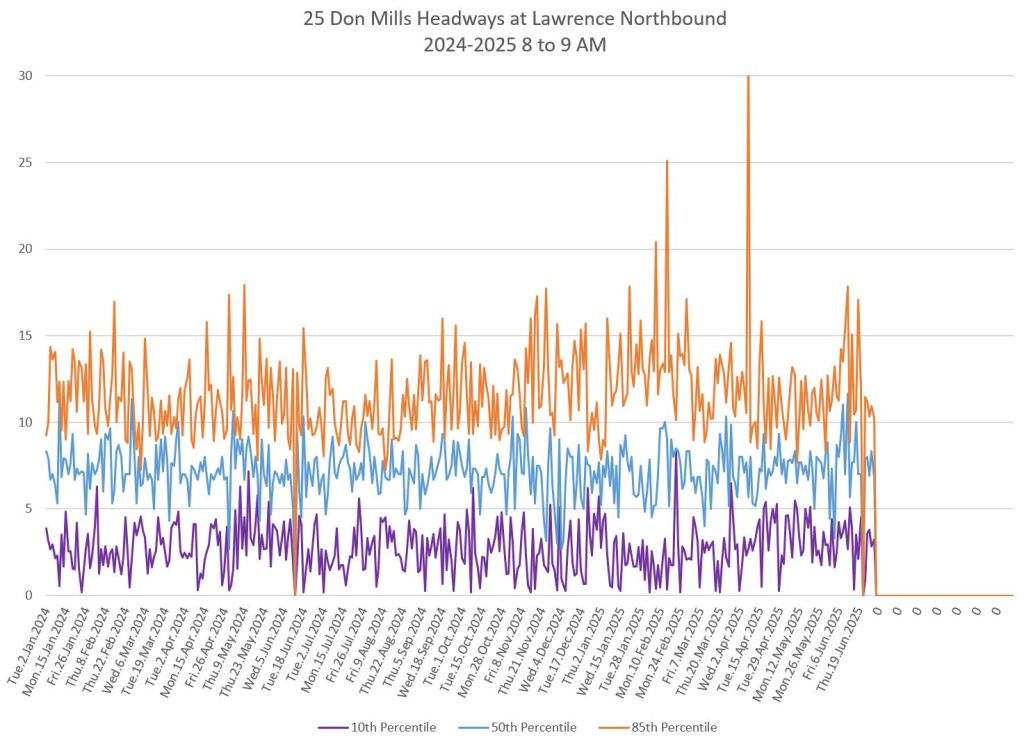
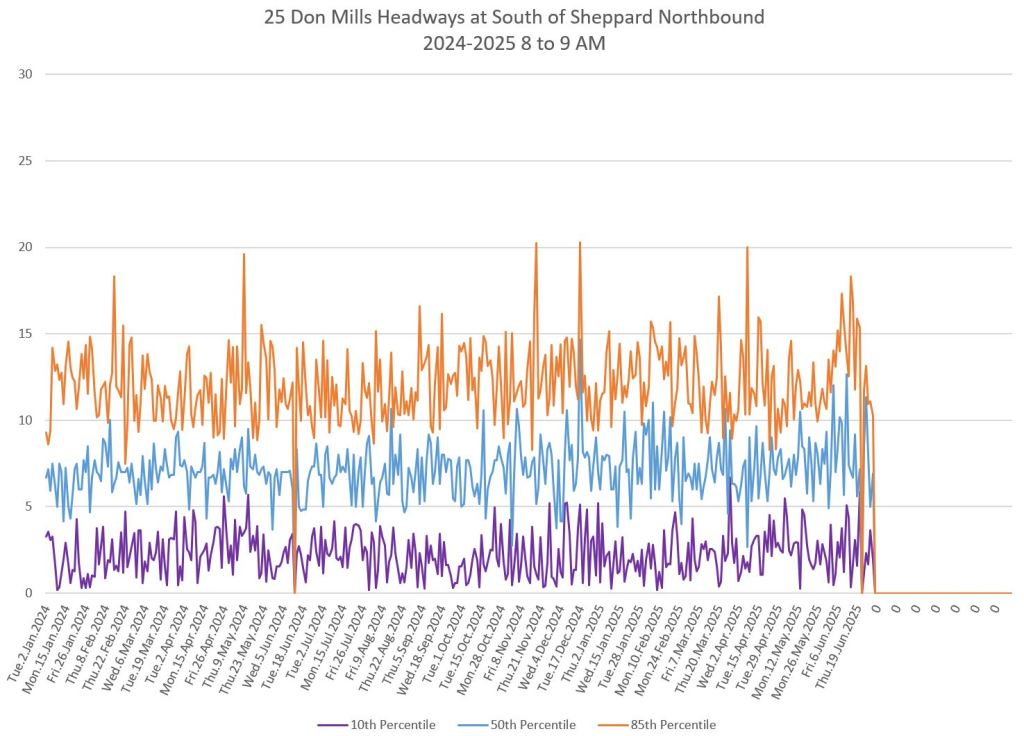
AM peak northbound service starts out with a narrow range of headways until late 2024. The spread in values disappears in March 2025, but this effect only lasts one month. Moreover, it appears to be only at the southern terminus, Broadview Station as there is no evidence of a headway “reset” enroute northbound.
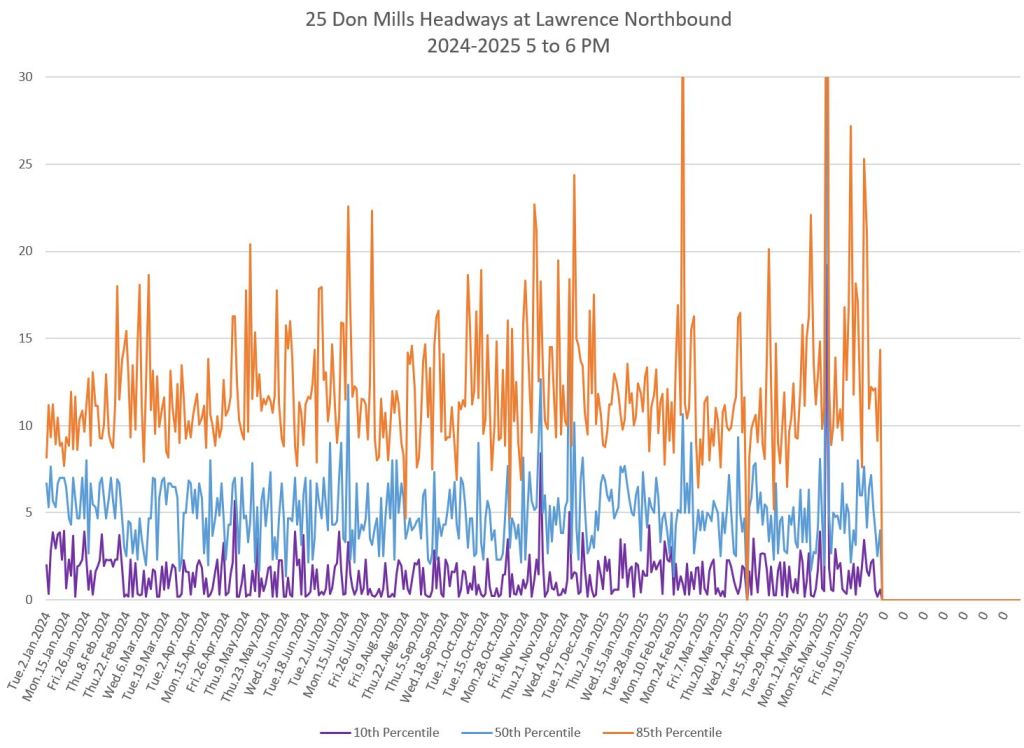
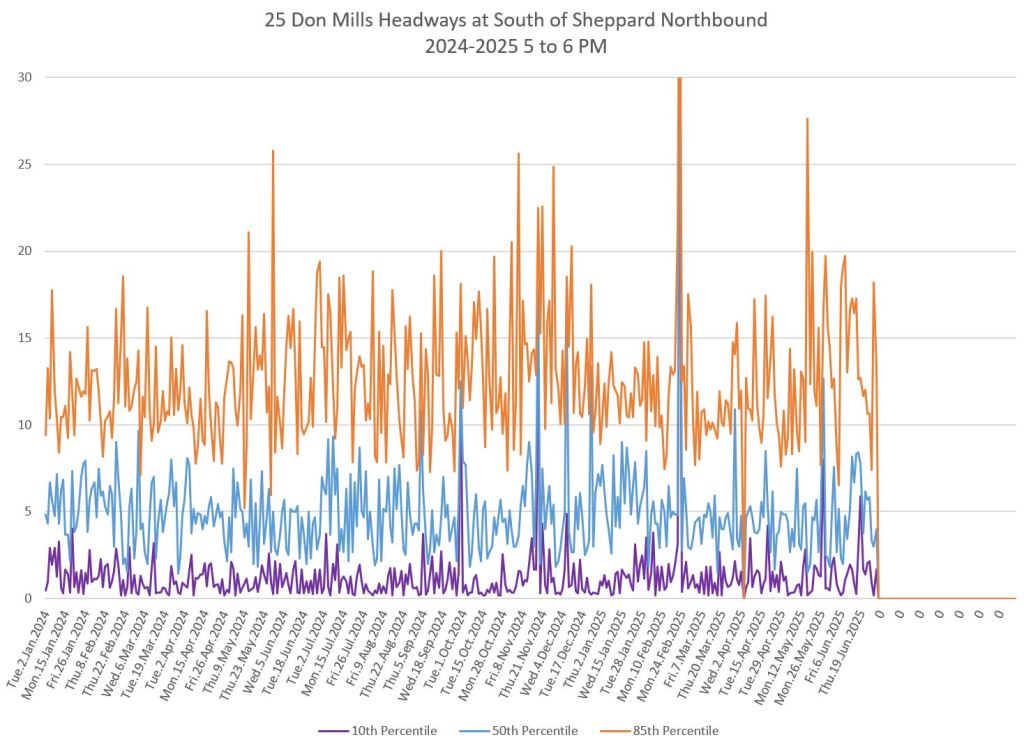
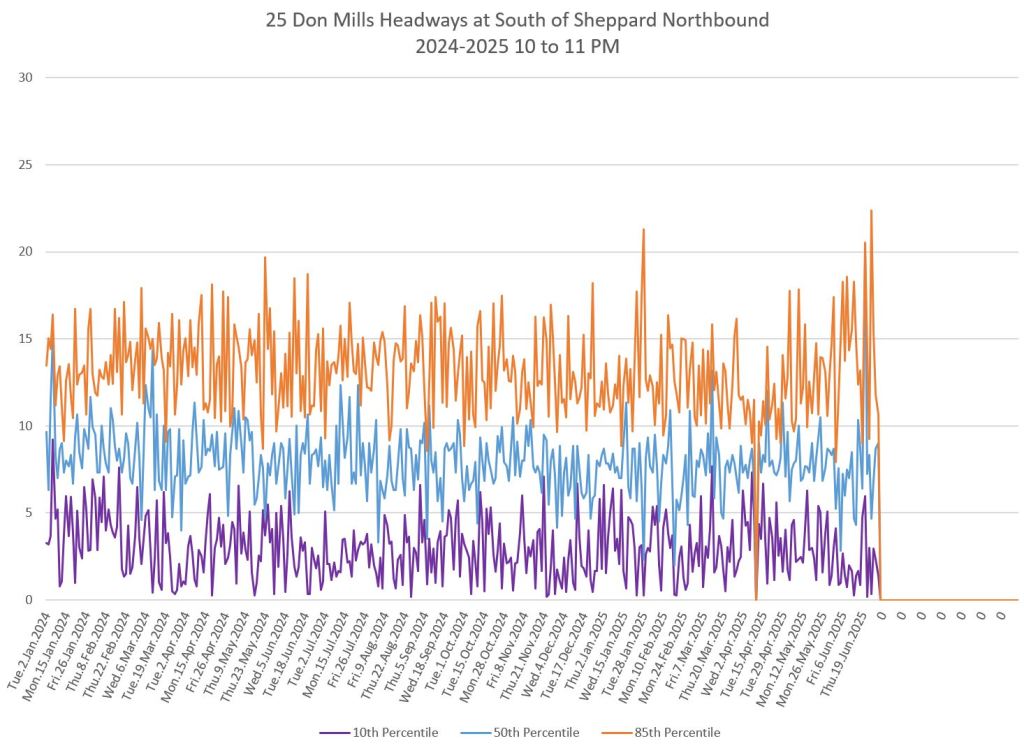
By the time service reaches Lawrence, the 10th percentile line is moving down towards the zero line, and service is bunched. It continues this way north to Sheppard.
Midday
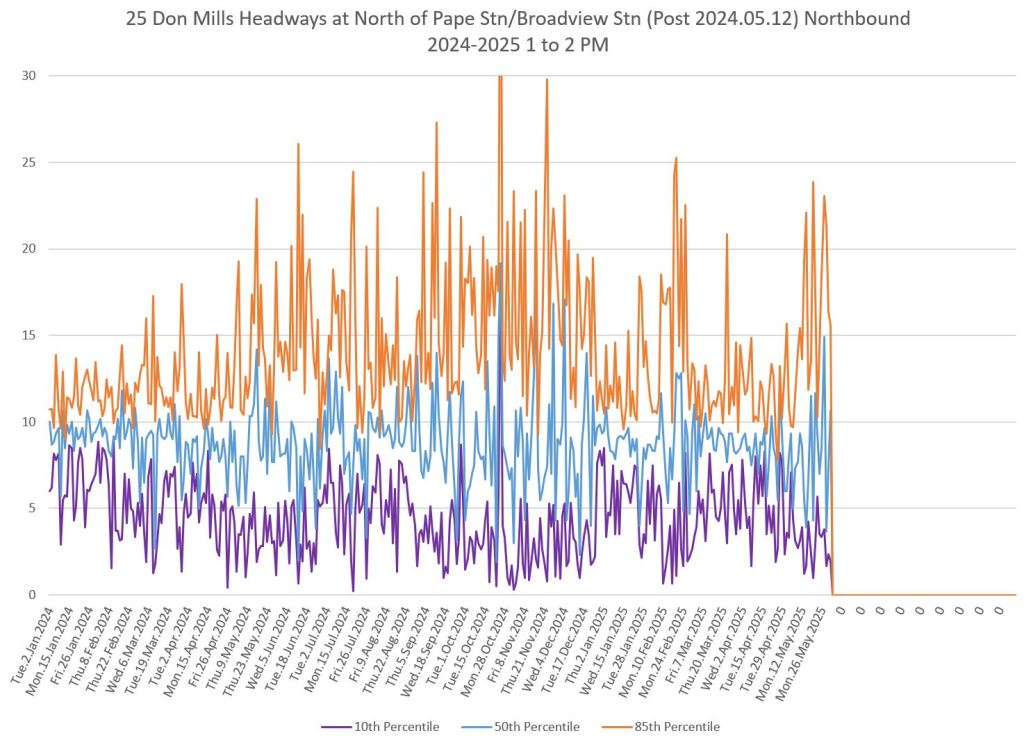
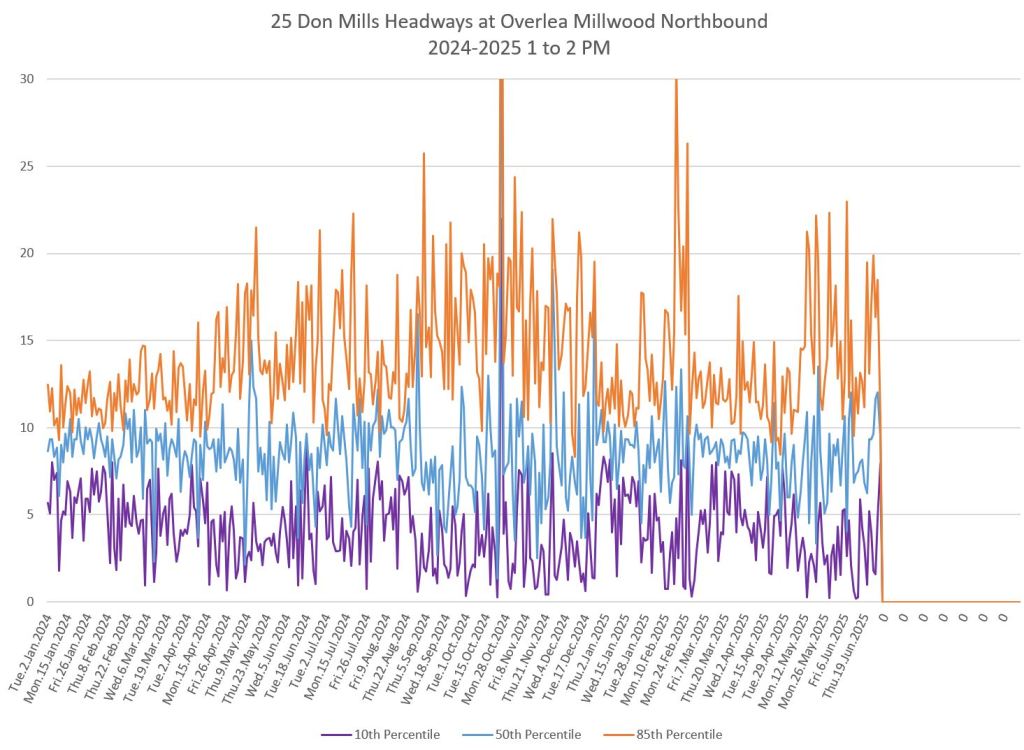
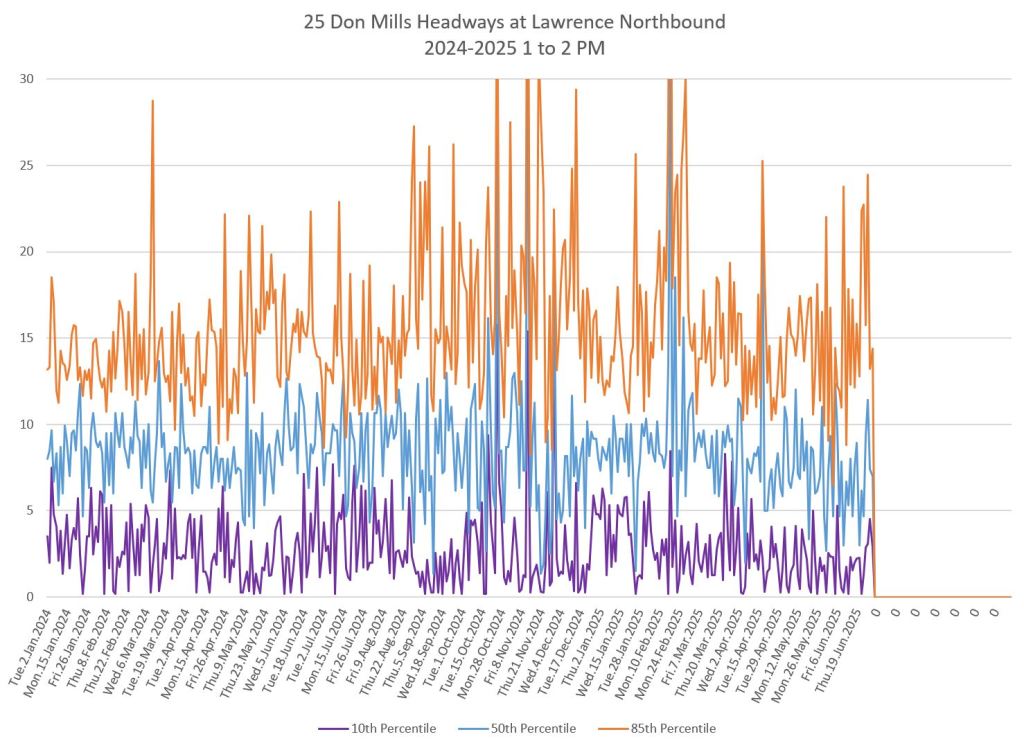
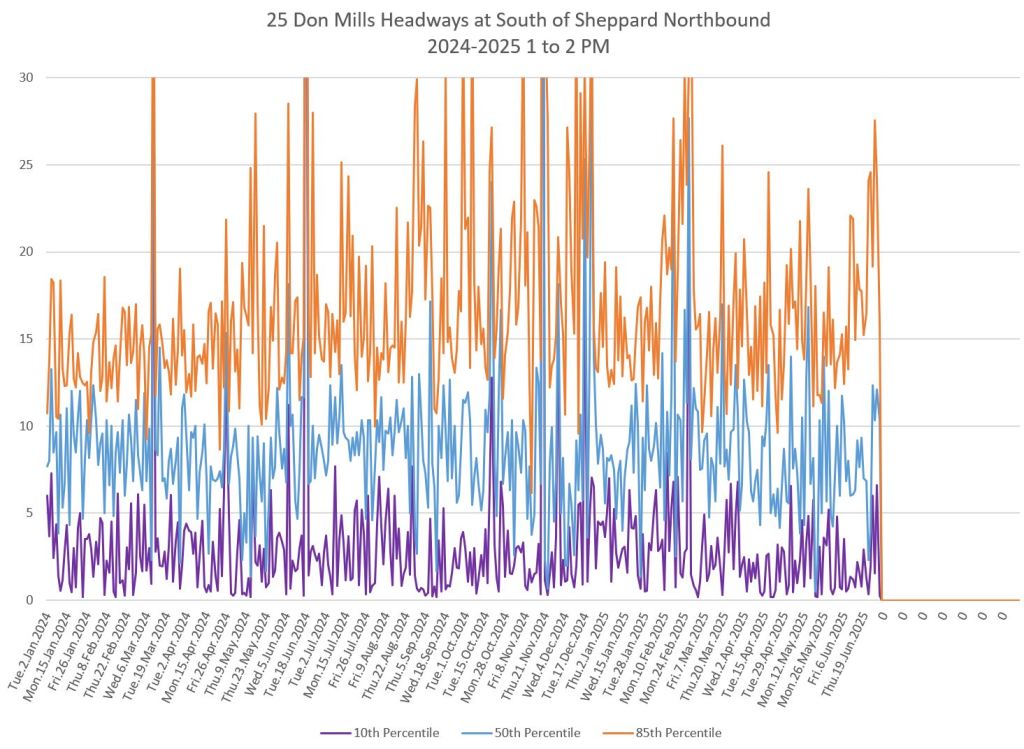
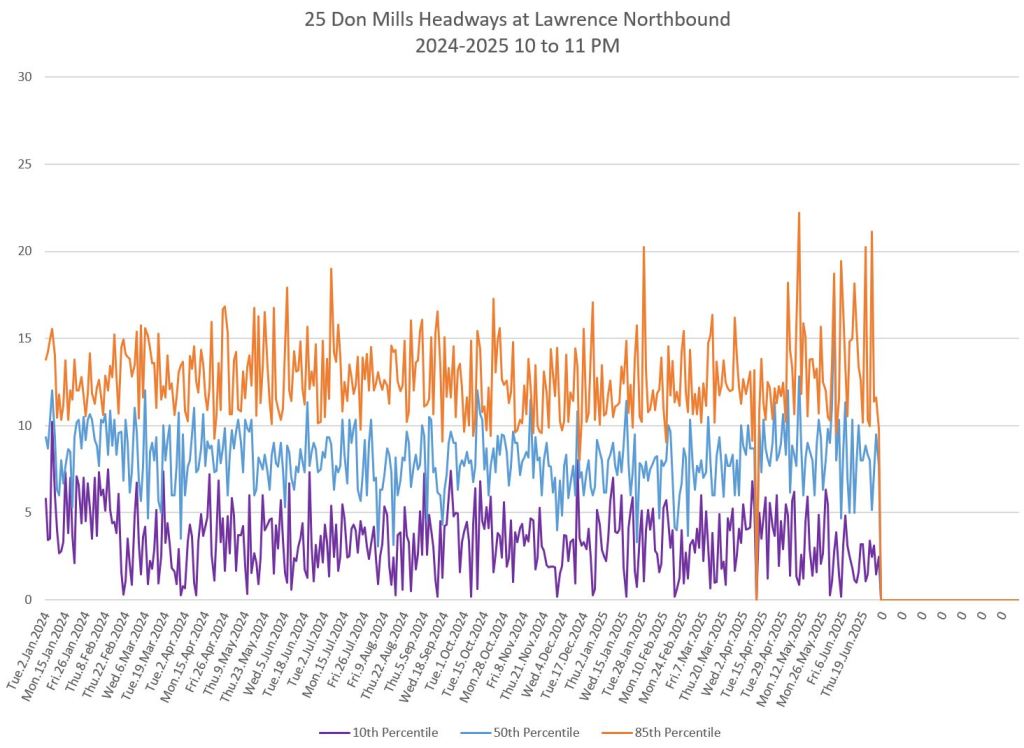
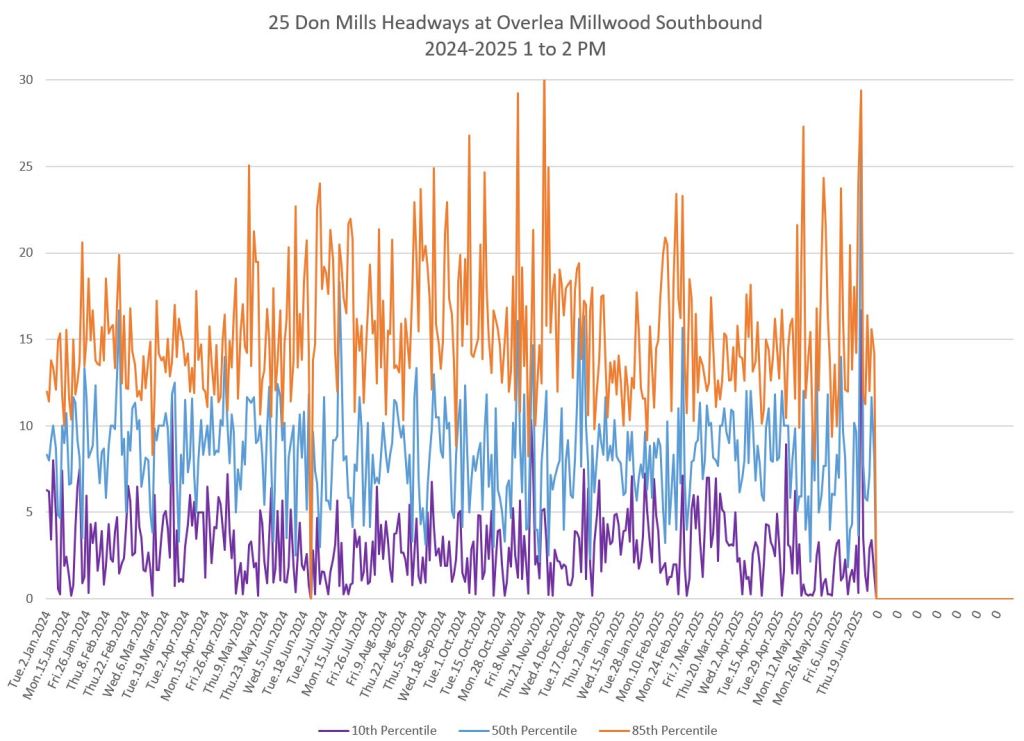
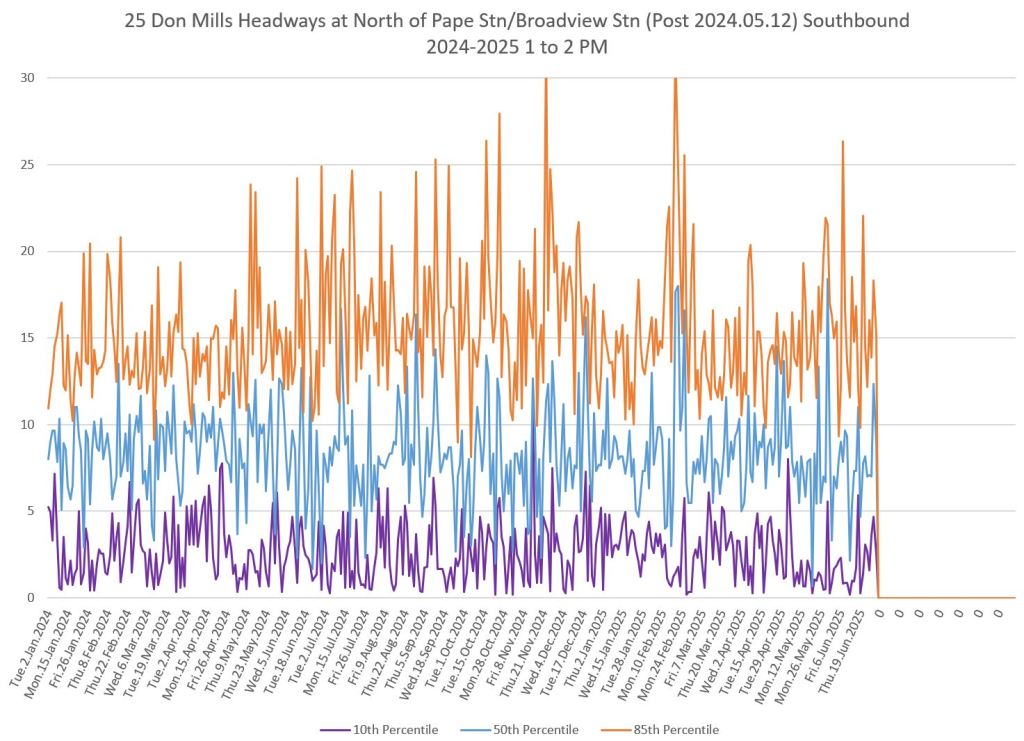
Unlike the AM peak service, the midday service is badly disrupted from May 2024 onward, falling back to a loewr range of headways in January-February likely due to suspension of construction work. There is a marked and sustained spike from the late February snowstorm. Note that at Lawrence and points further north the 85th percentile routinely lies between 15 and 20 minutes while the 10th percentile is at or near zero. There is no sign of headway management.
PM Peak
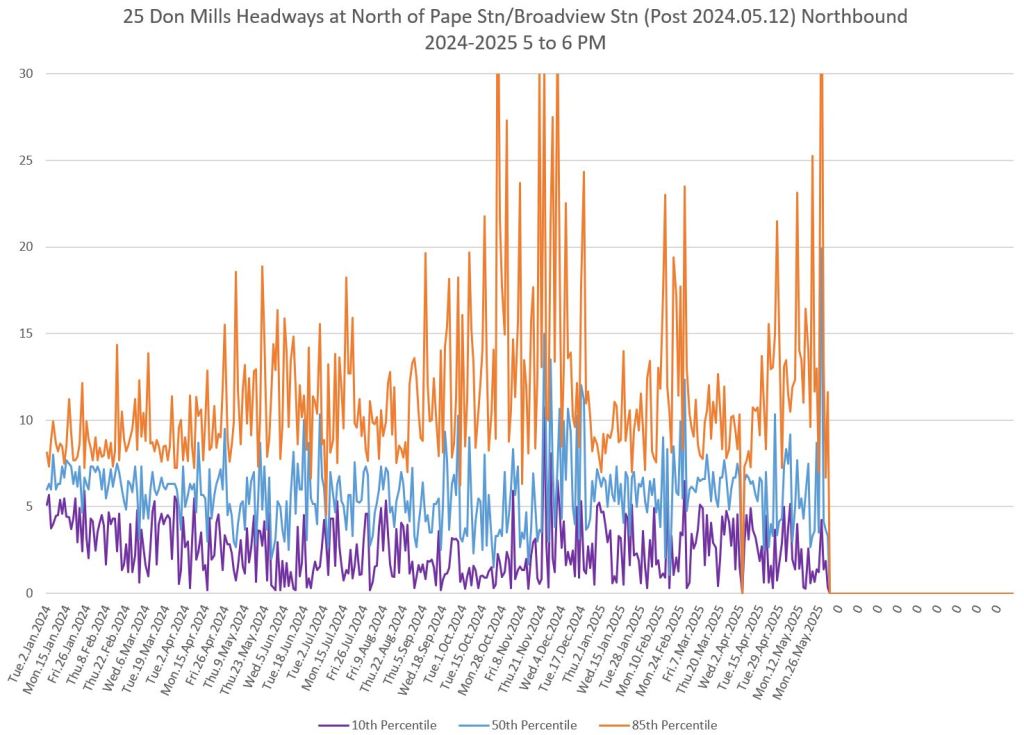
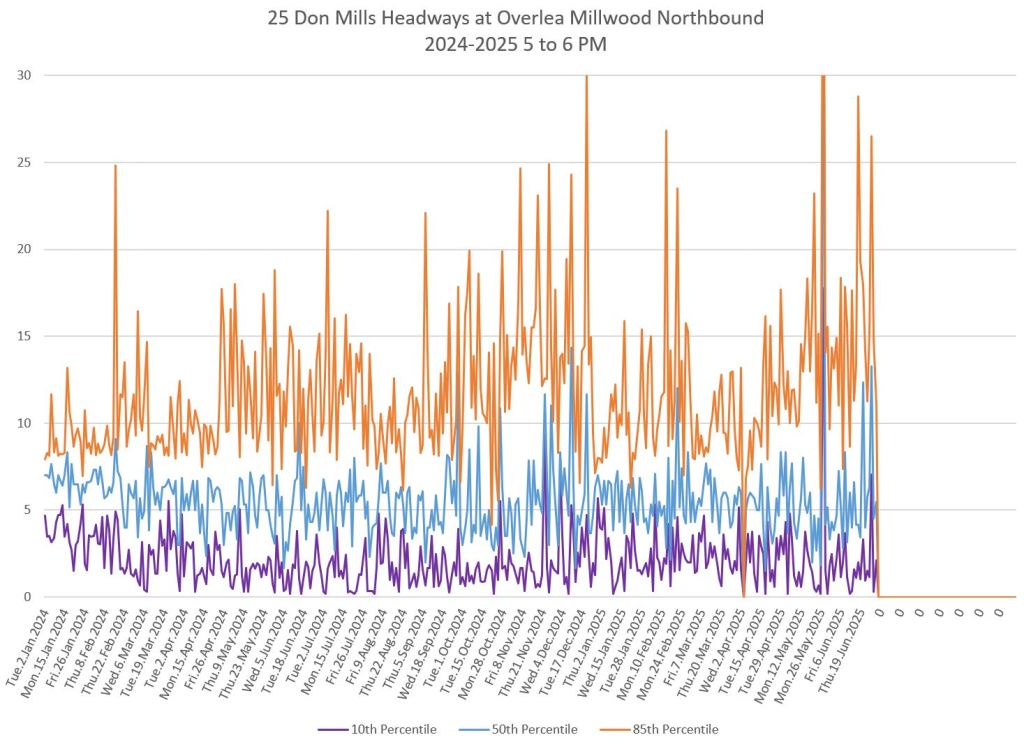
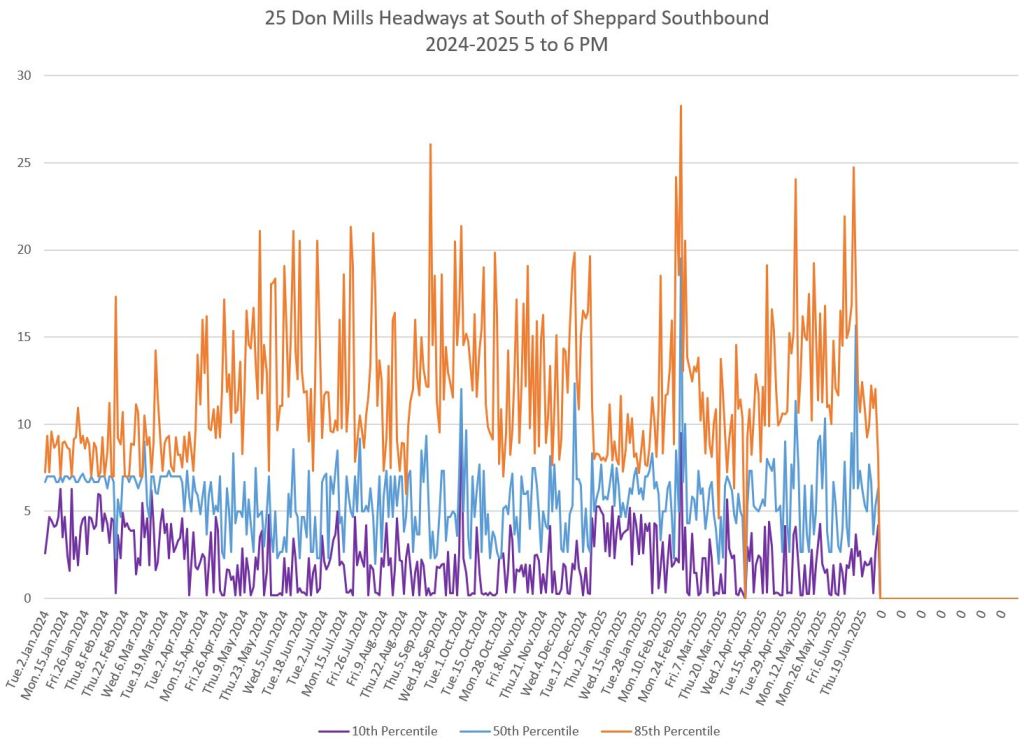
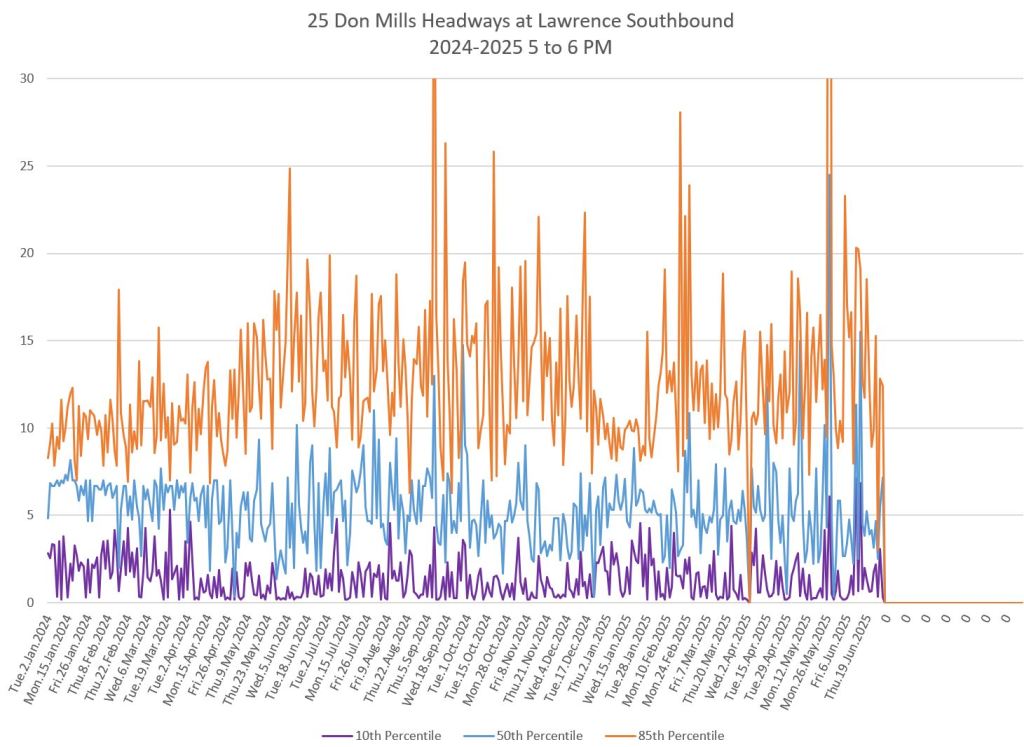
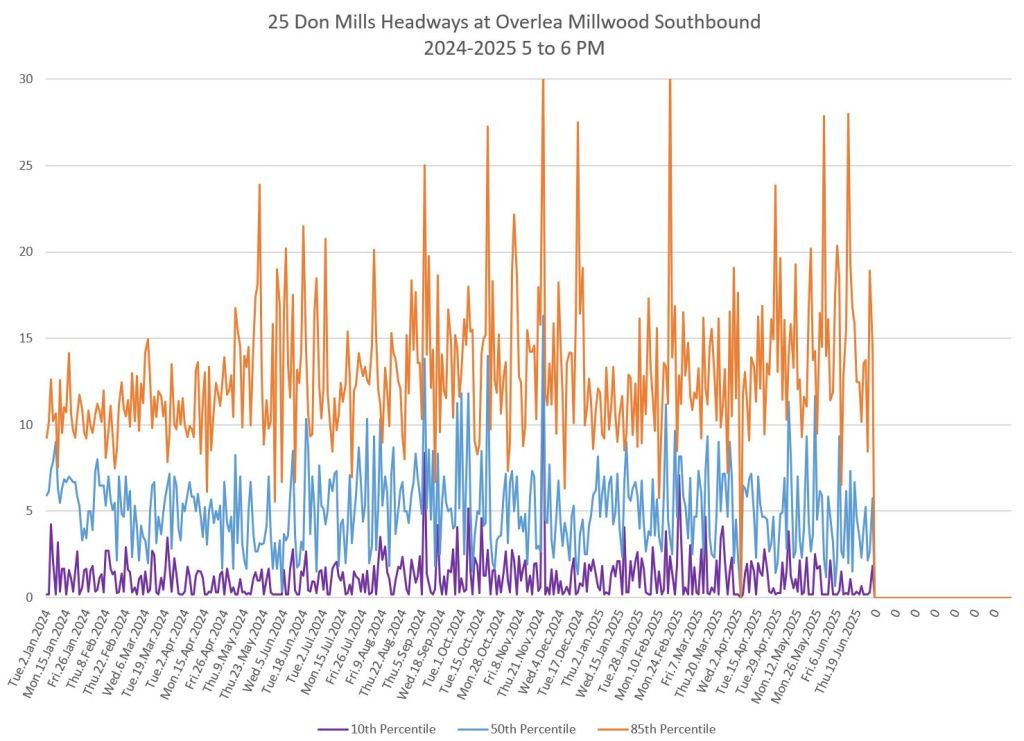
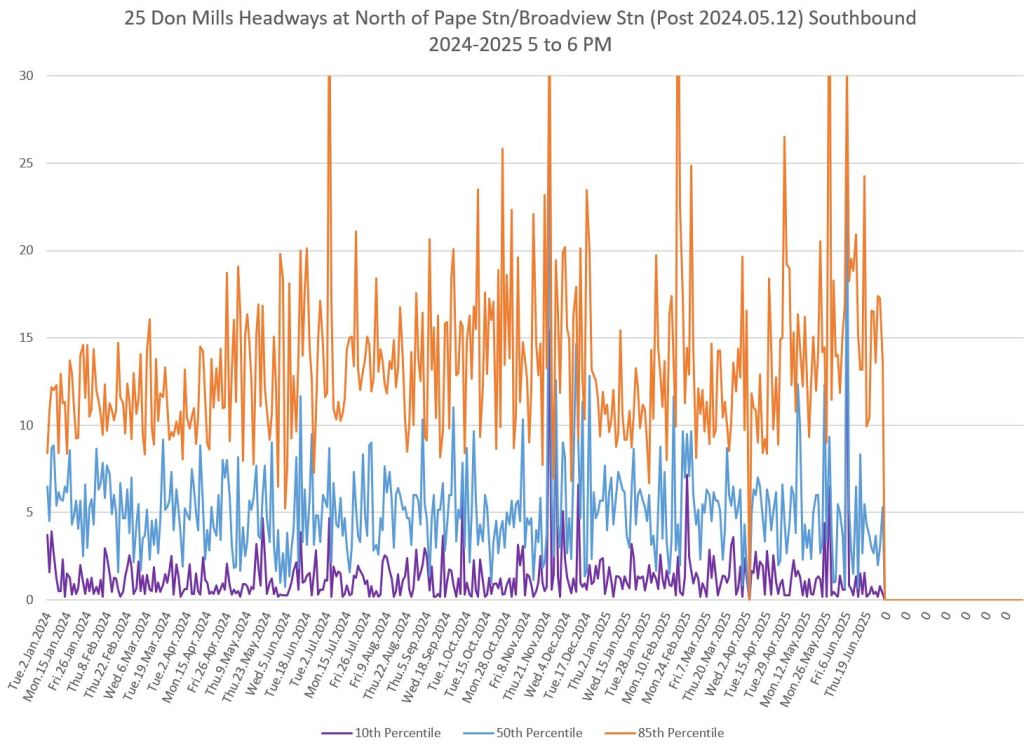
The PM peak shows generally smaller values for the 85th percentile although this is likely due to the shorter scheduled headways during this period. Nonetheless, the 10th-85th range is at least 10 minutes during many periods with the 10th percentile at or close to zero. Bunching is chronic.
Early Evening
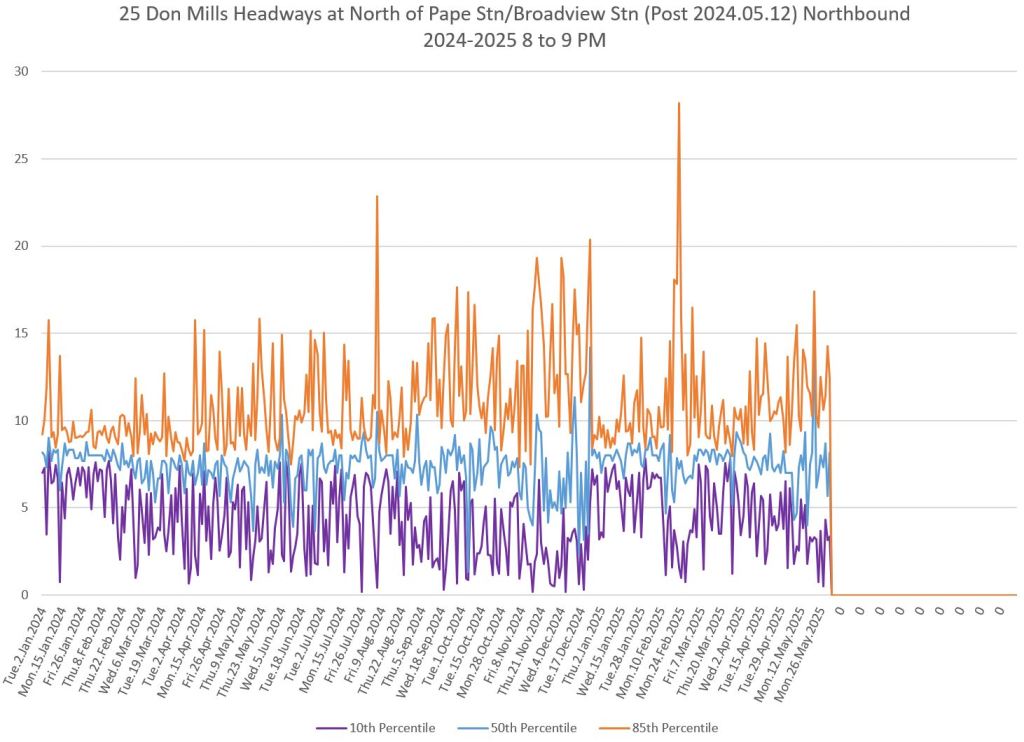
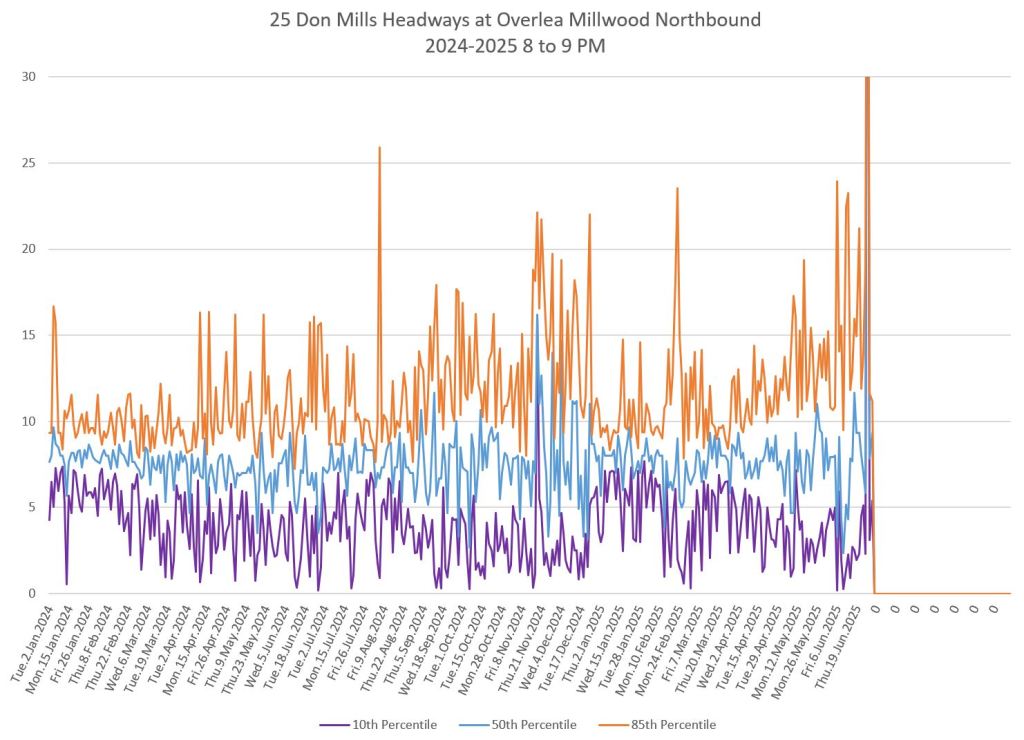
In the early evening, the range of headways begins to shrink but the problem of bunching remains over the whole route getting worse as buses travel north.
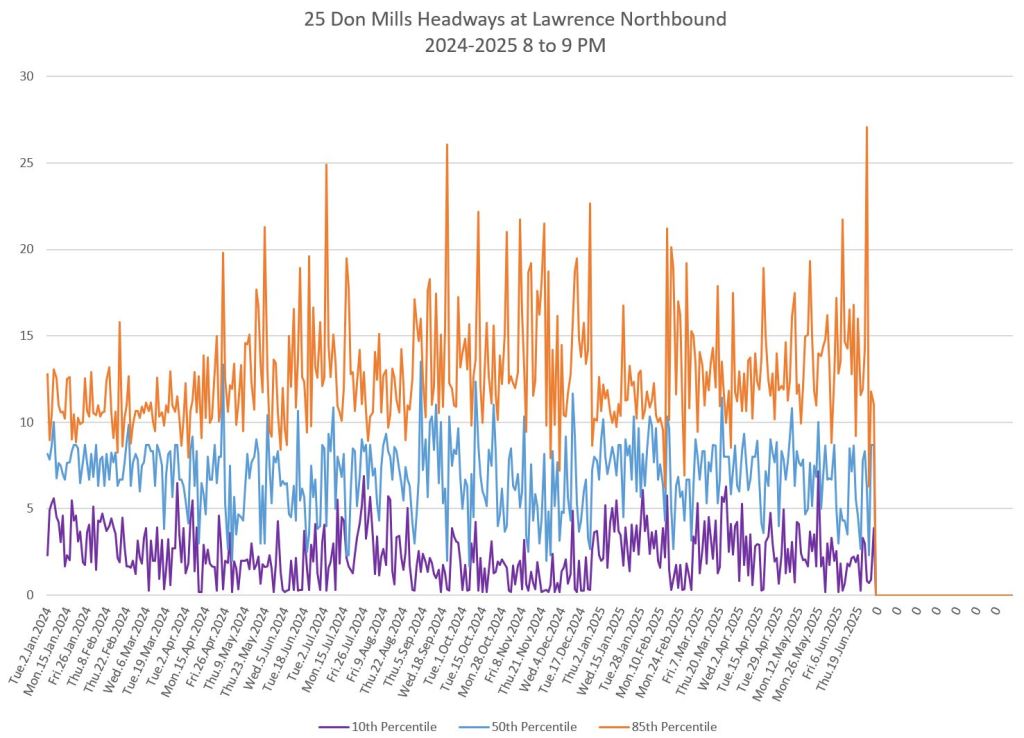
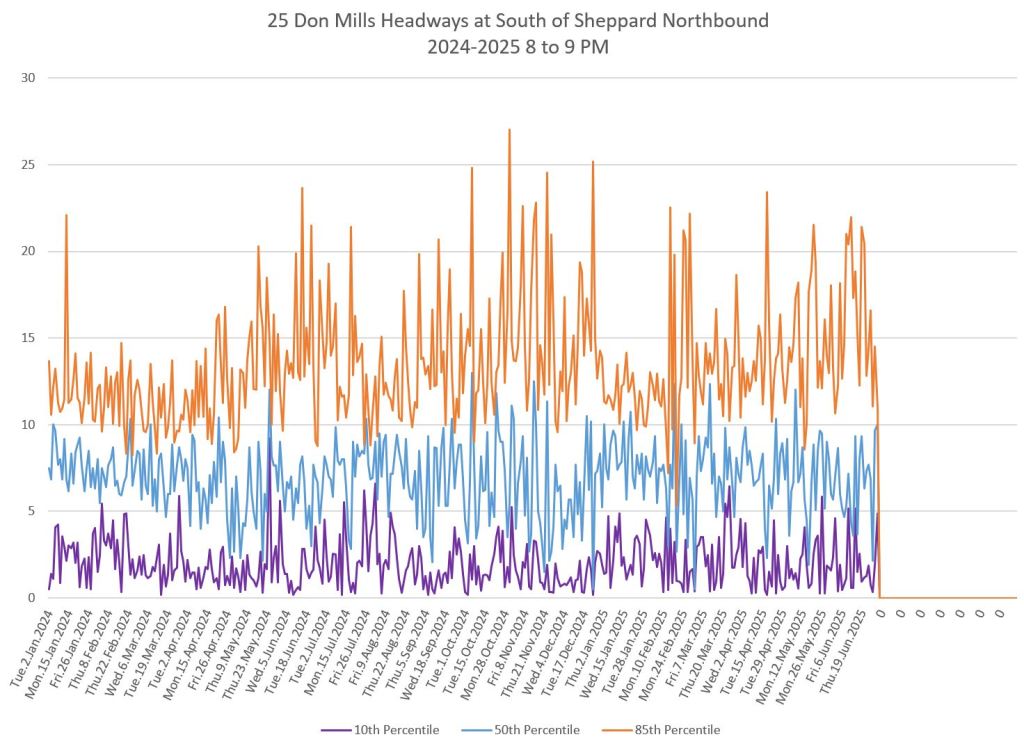
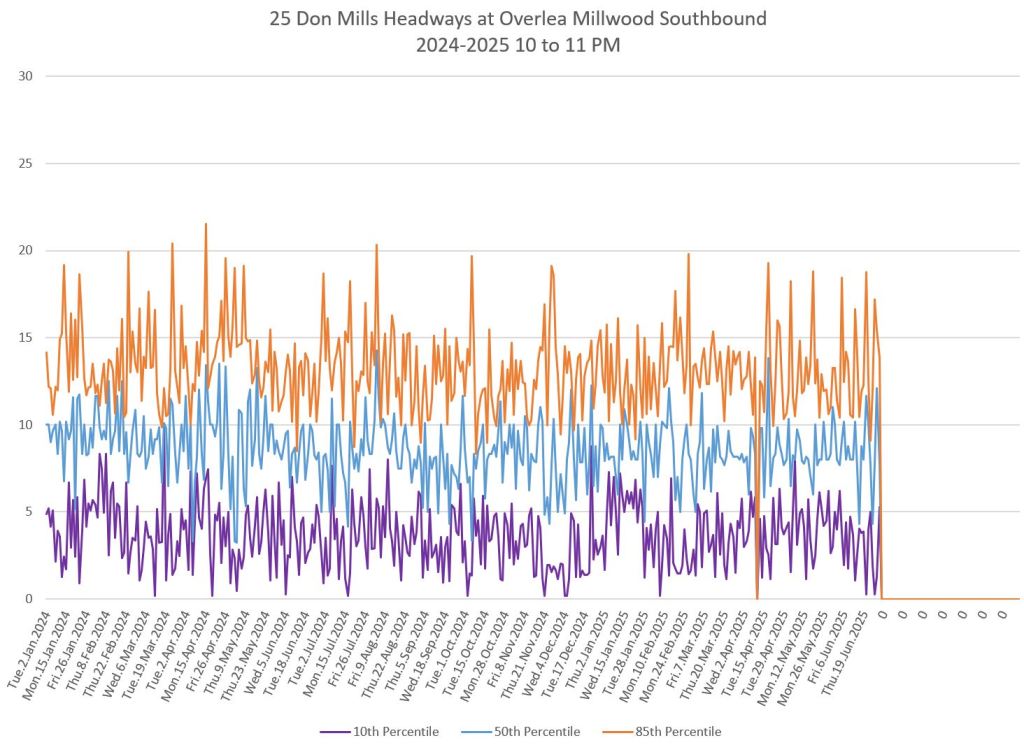
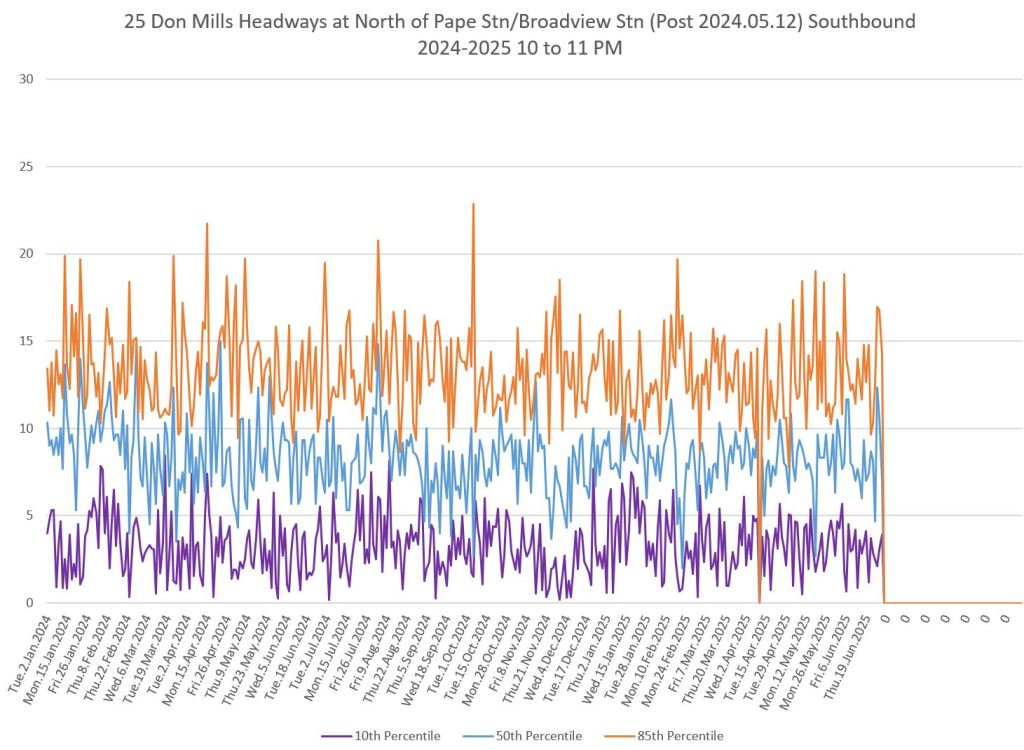
Late Evening
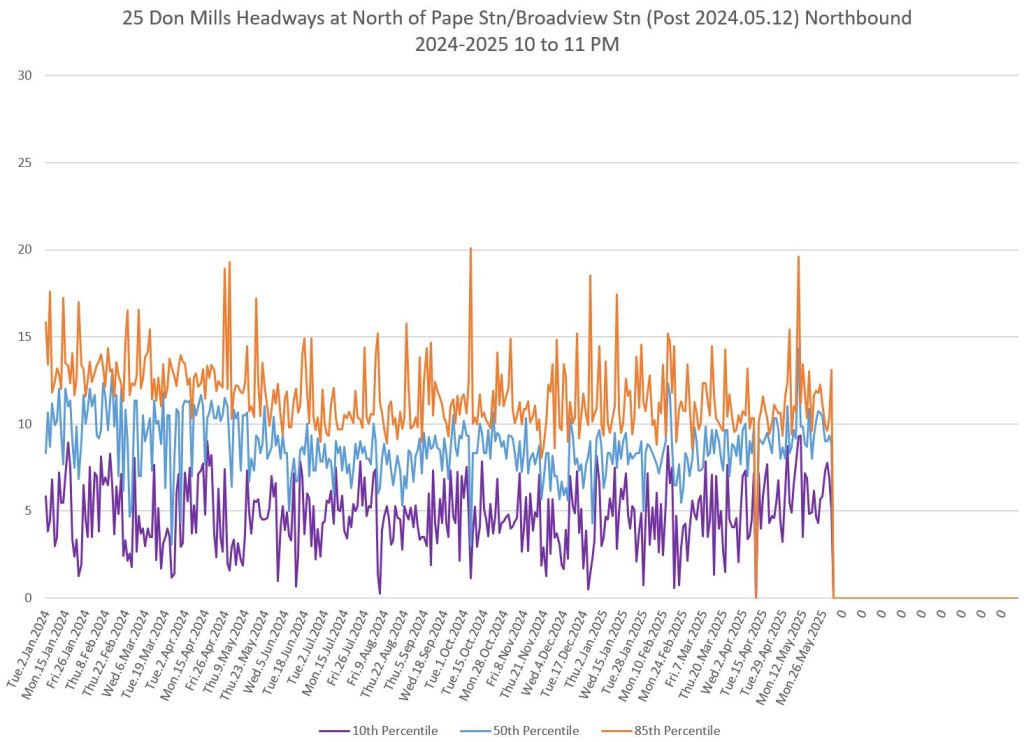
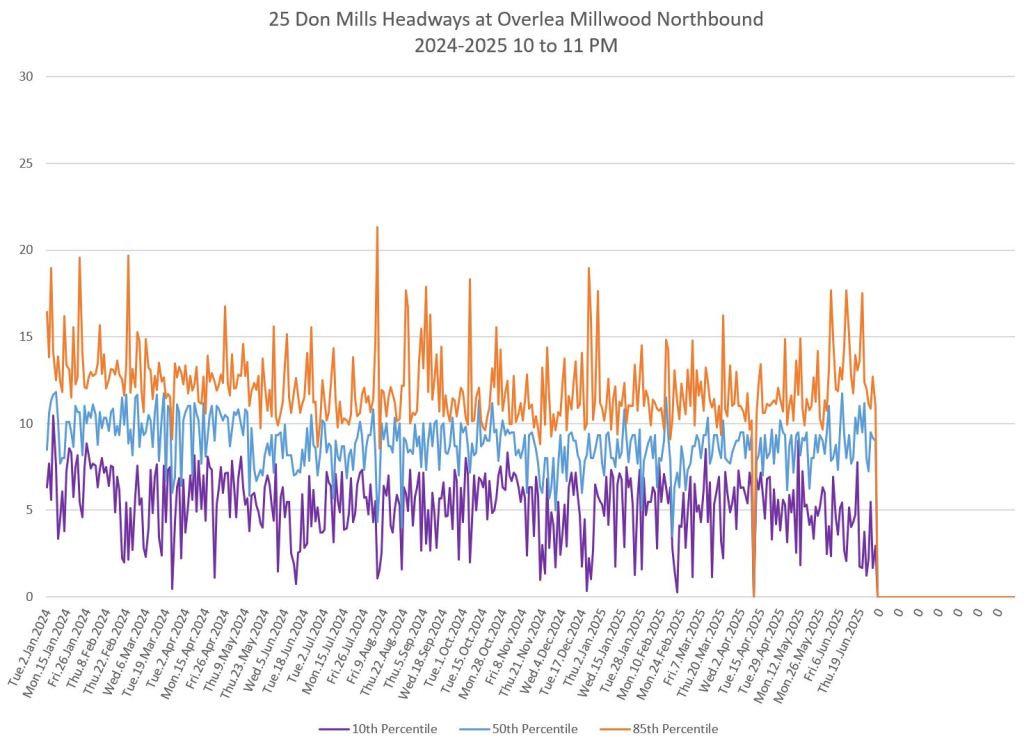
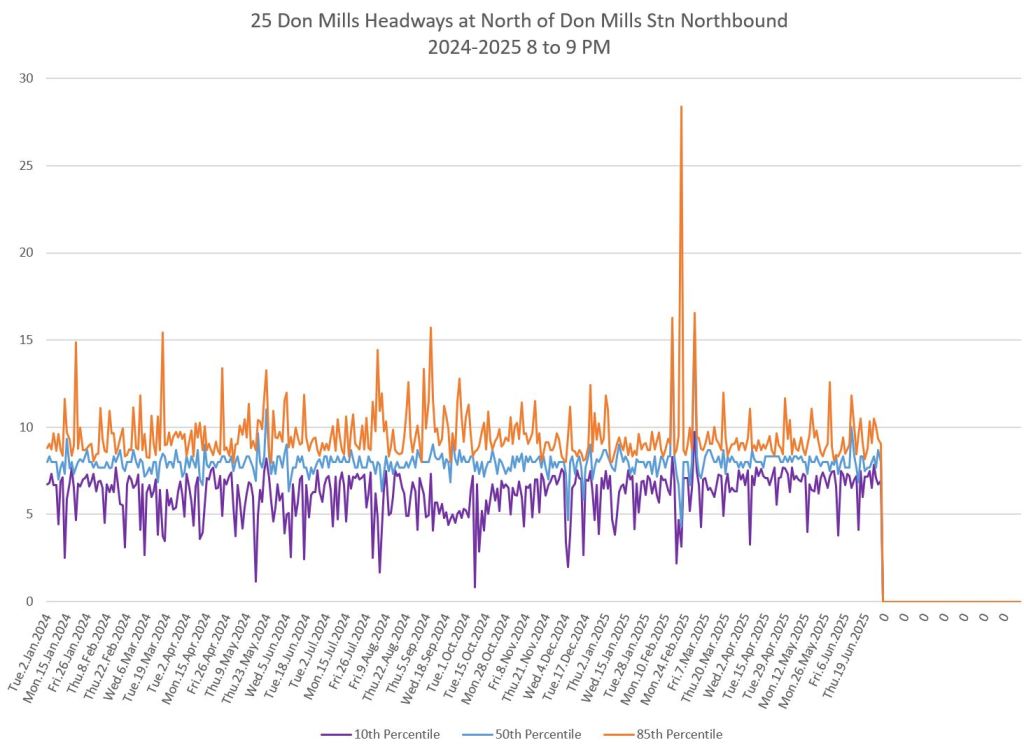
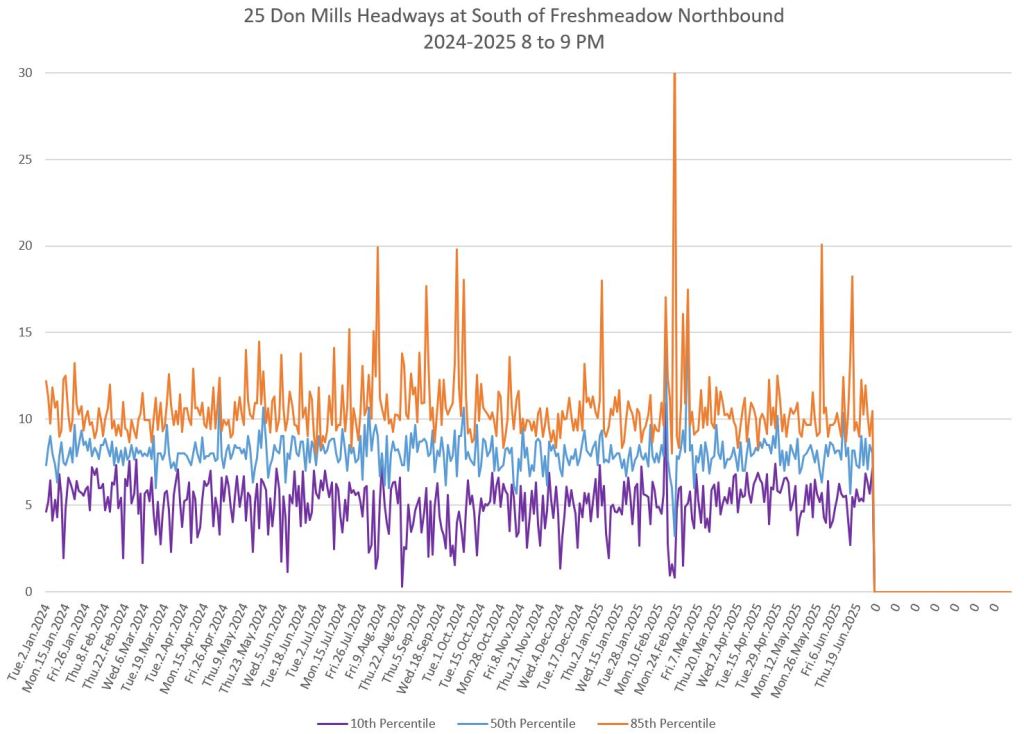
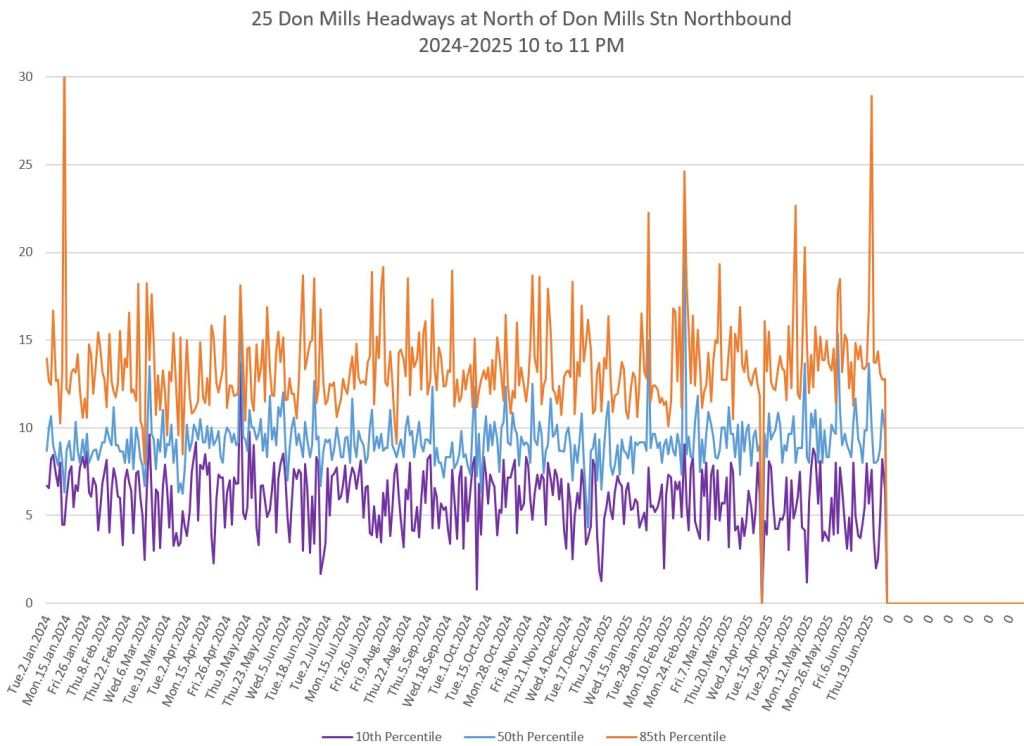
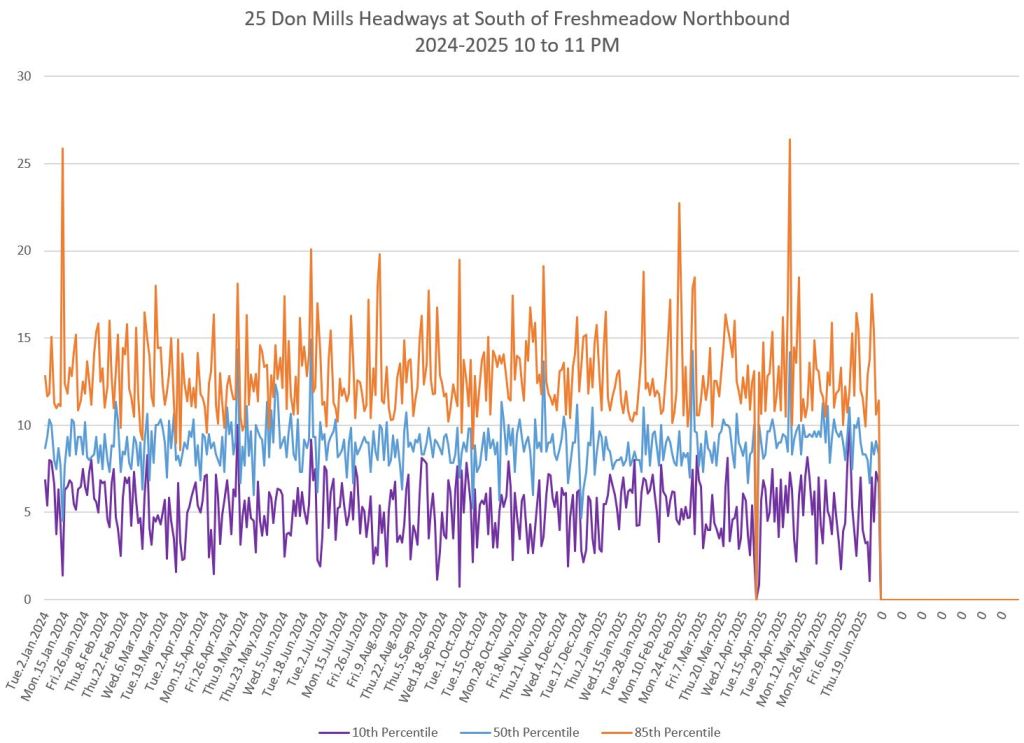
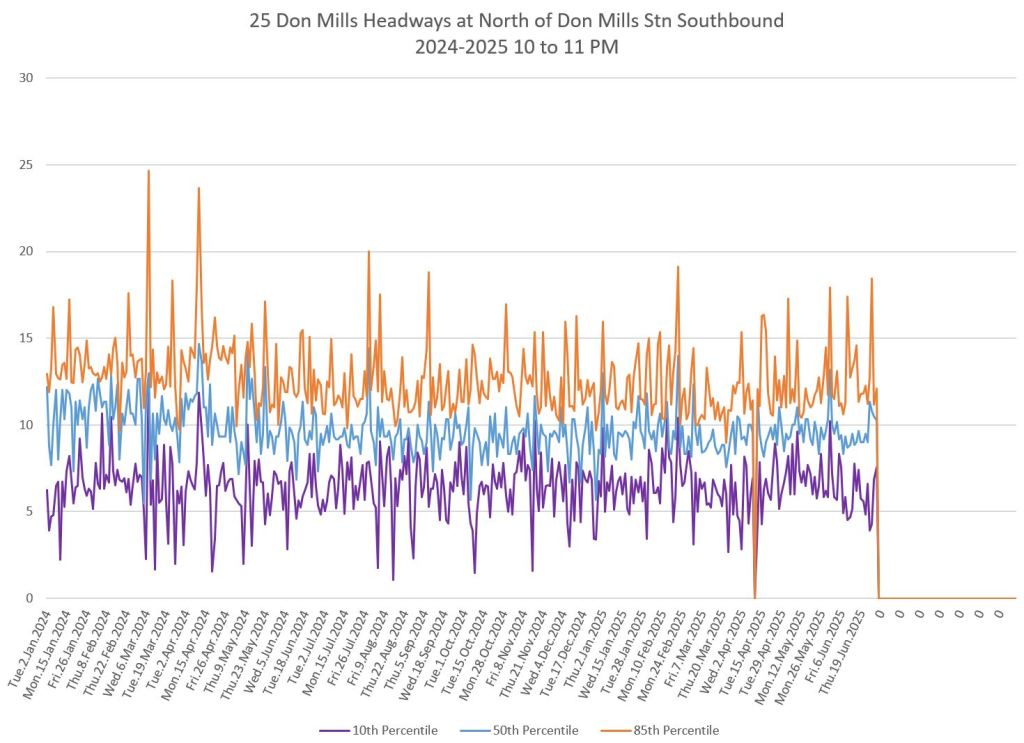
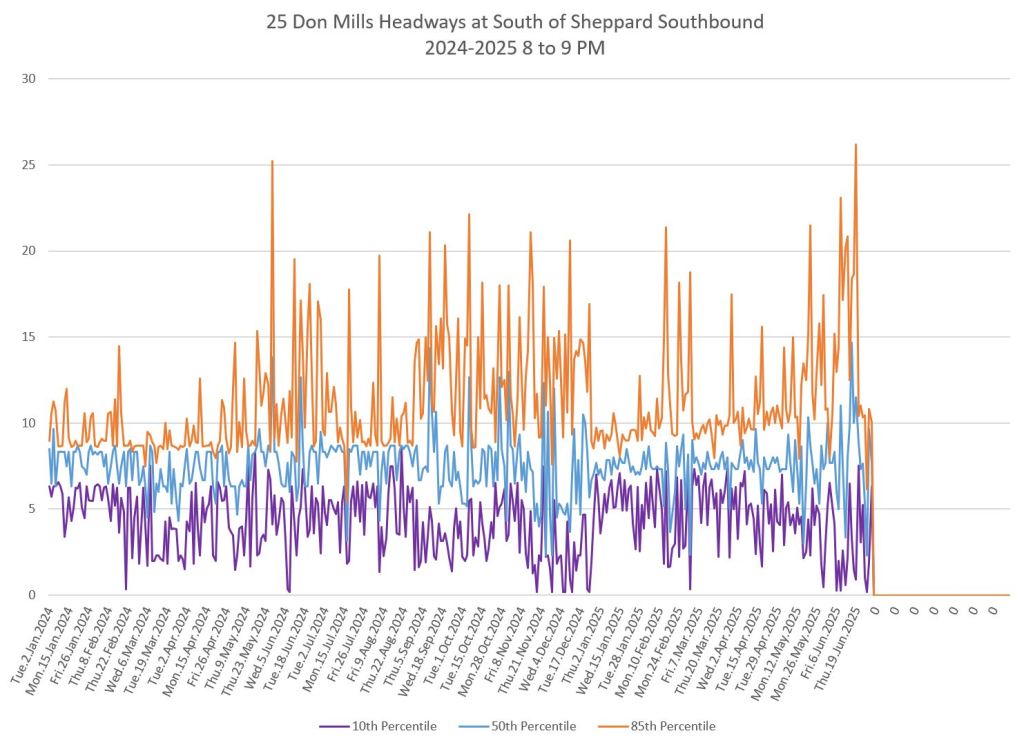
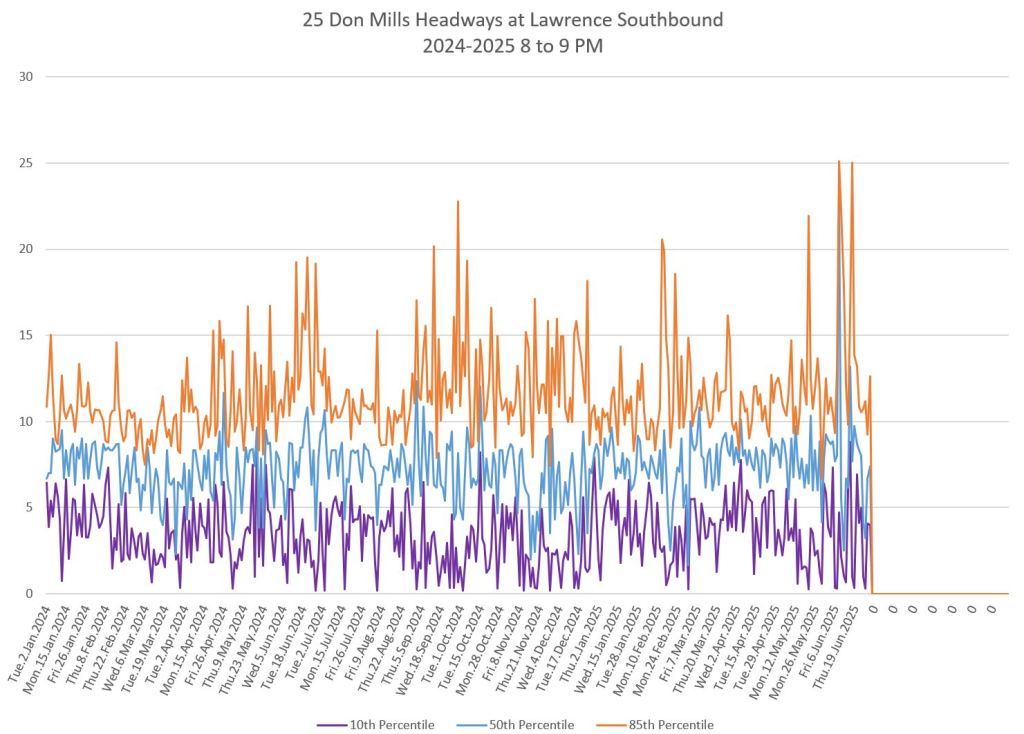
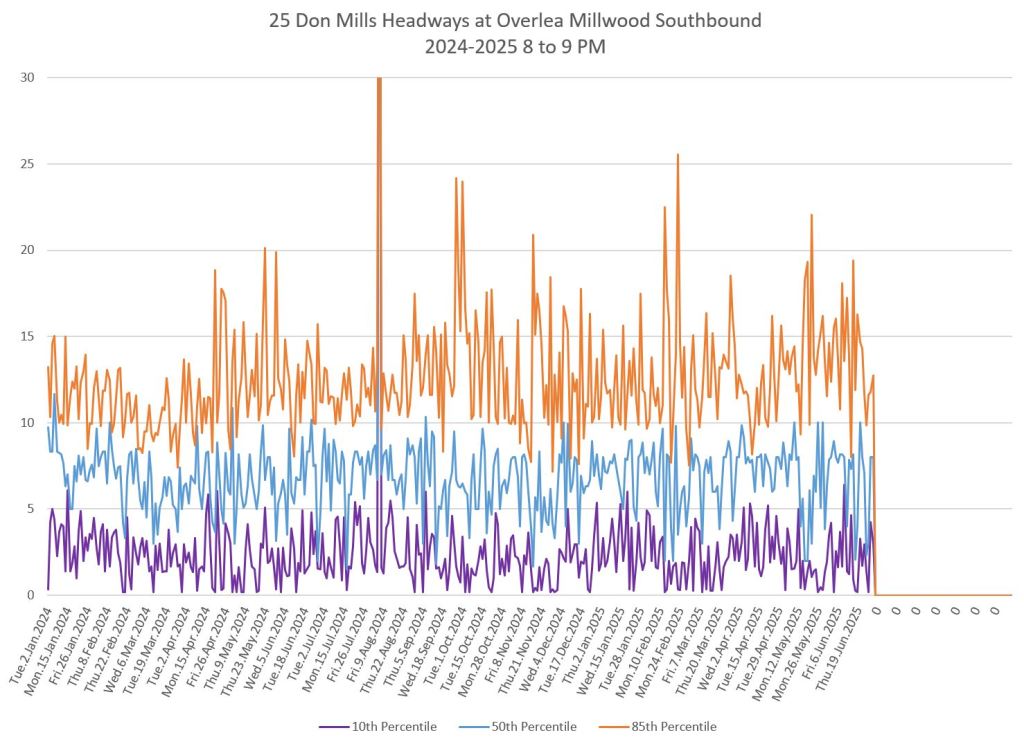
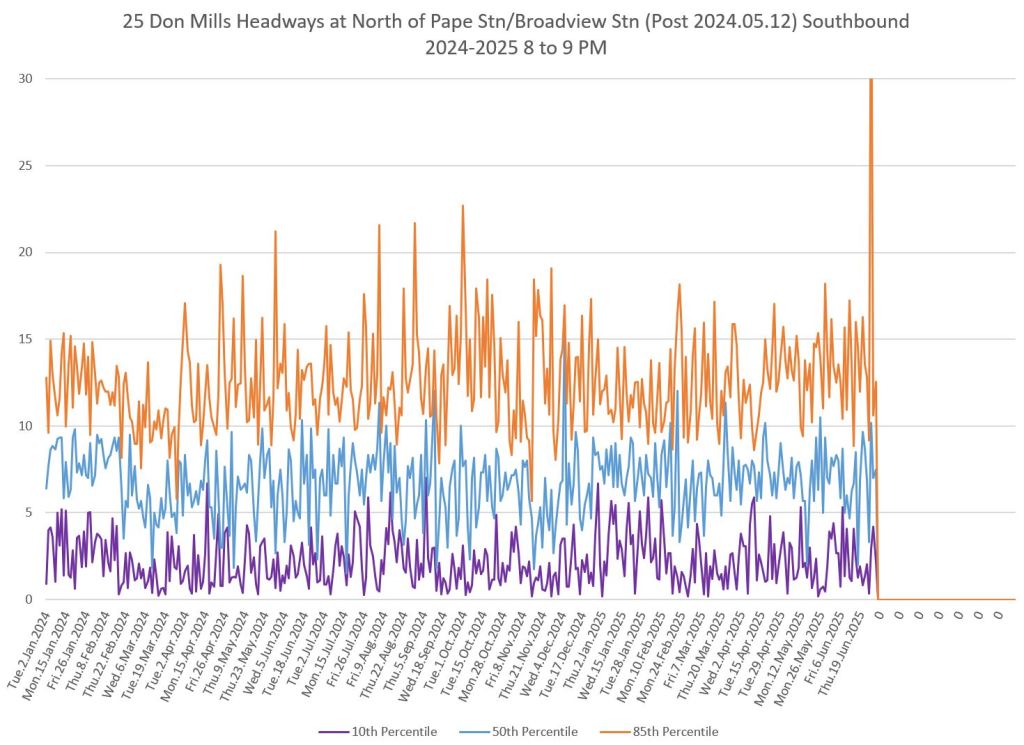
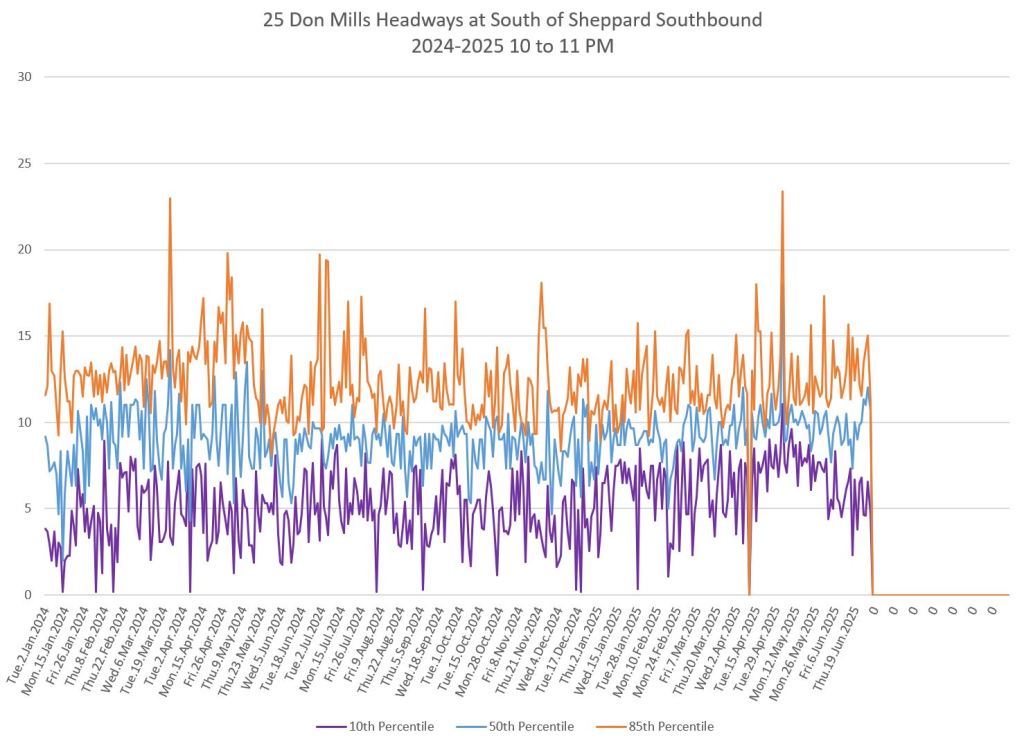
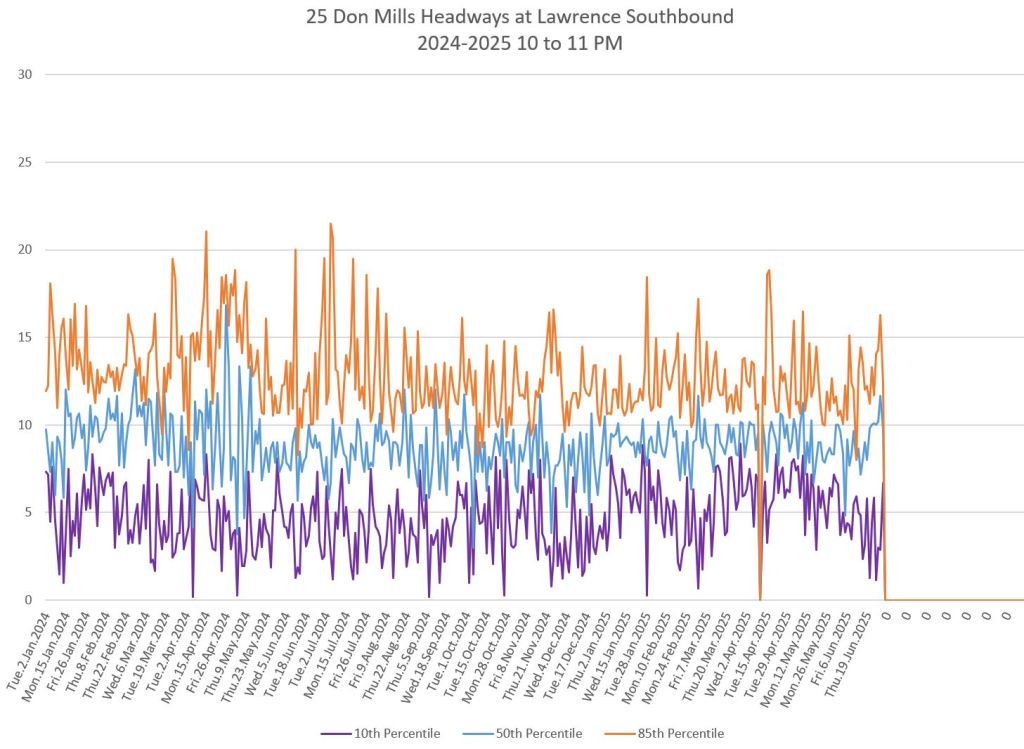
Late evening service shows a similar pattern to the early evening. Note that the spread out headways at Sheppard are the starting point for through service to Steeles, and a headway reset should be possible a Don Mills Station. The actual results are seen in the next section.
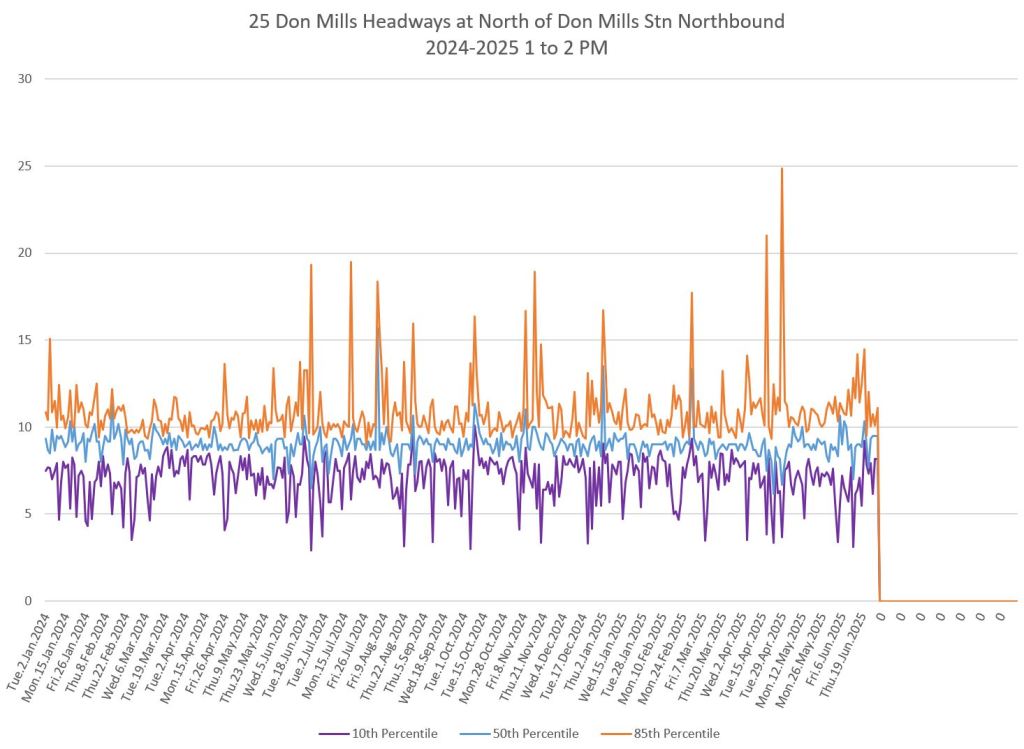
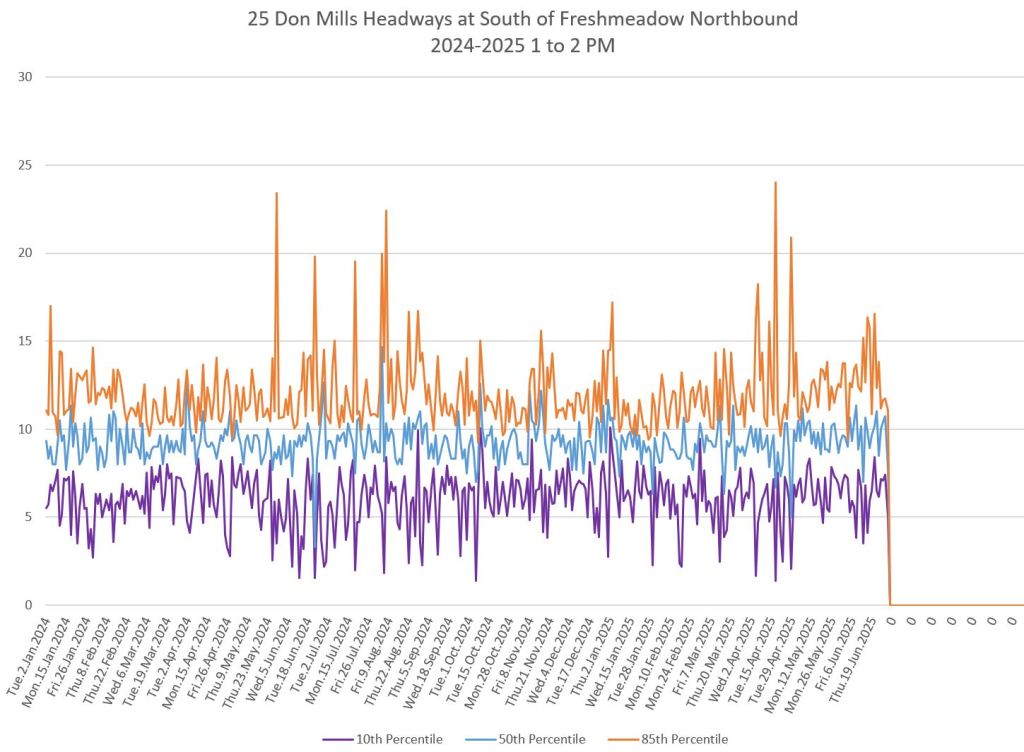
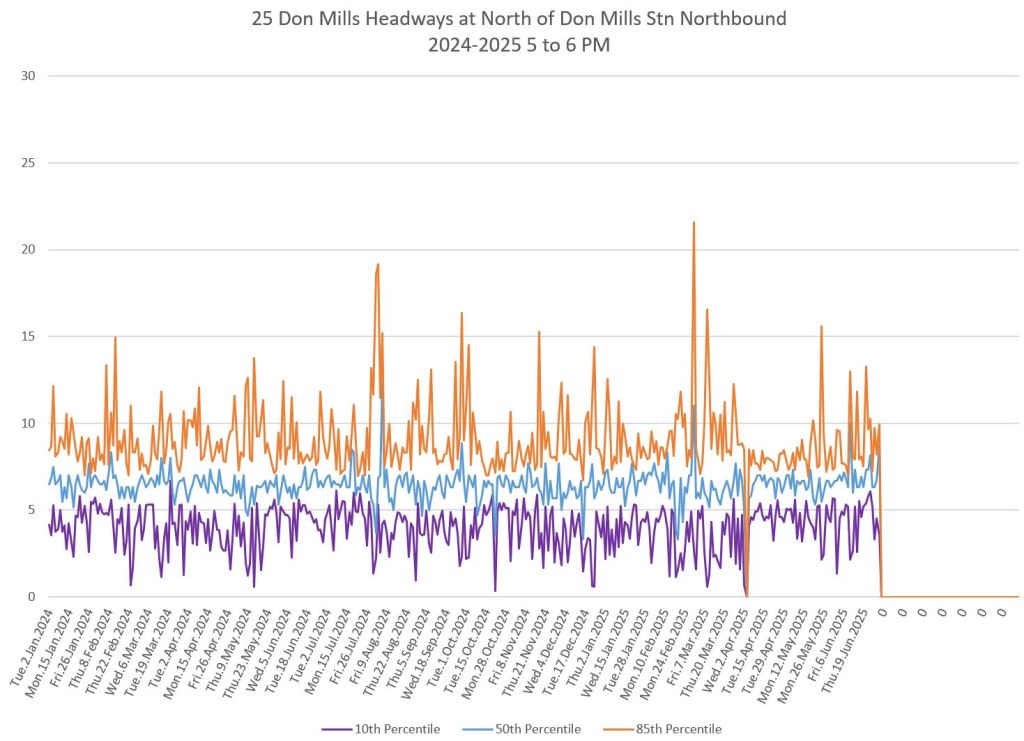
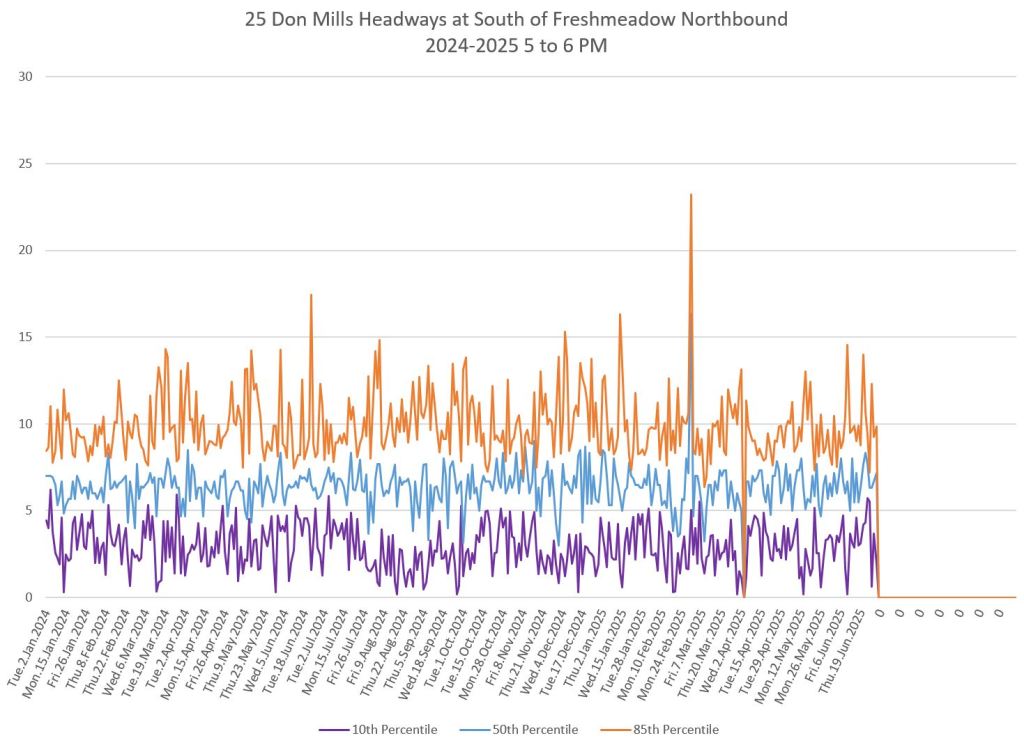
Northbound from Don Mills Station to Steeles
AM Peak
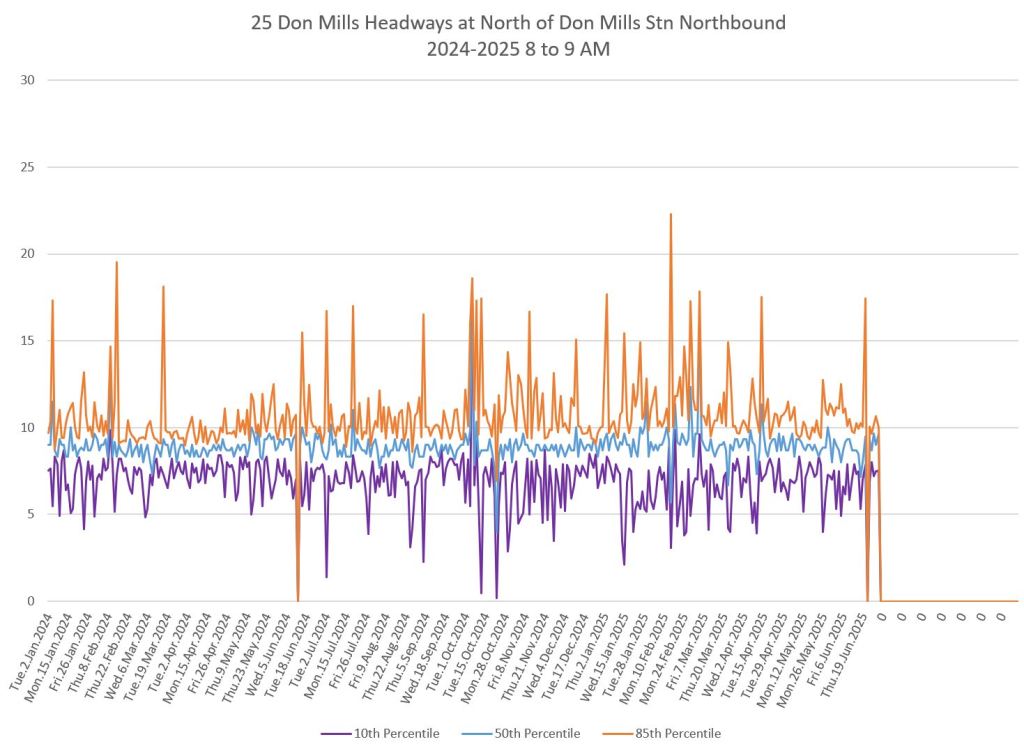
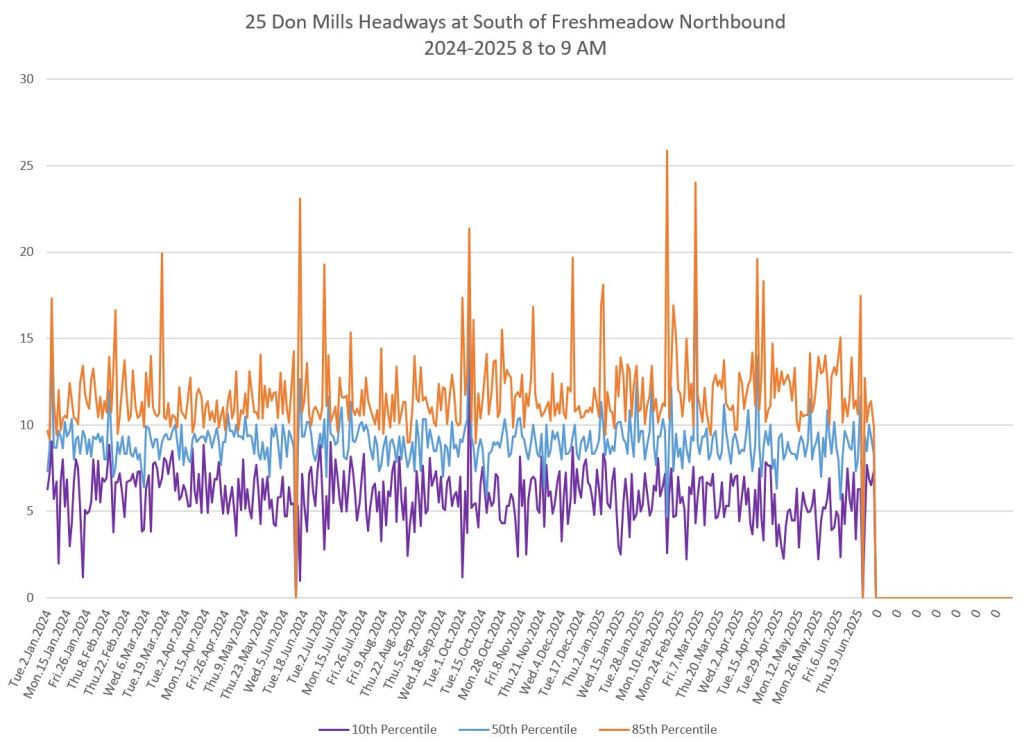
Headways north from Don Mills Station stay in a fairly narrow band through the AM peak and Midday with a slight widening of the range between Don Mills Station and Steeles that is most prevalent in the PM peak.
Midday
PM Peak
Early Evening
Late Evening
There is a marked change in the Late Evening service when 25A Steeles buses are through routed at Don Mills Station. The wider range of headways reflects the character of service arriving northbound at the station and the fact that it leaves on a less disciplined basis than the 25B service originating there.
Southbound from Steeles to Don Mills Station
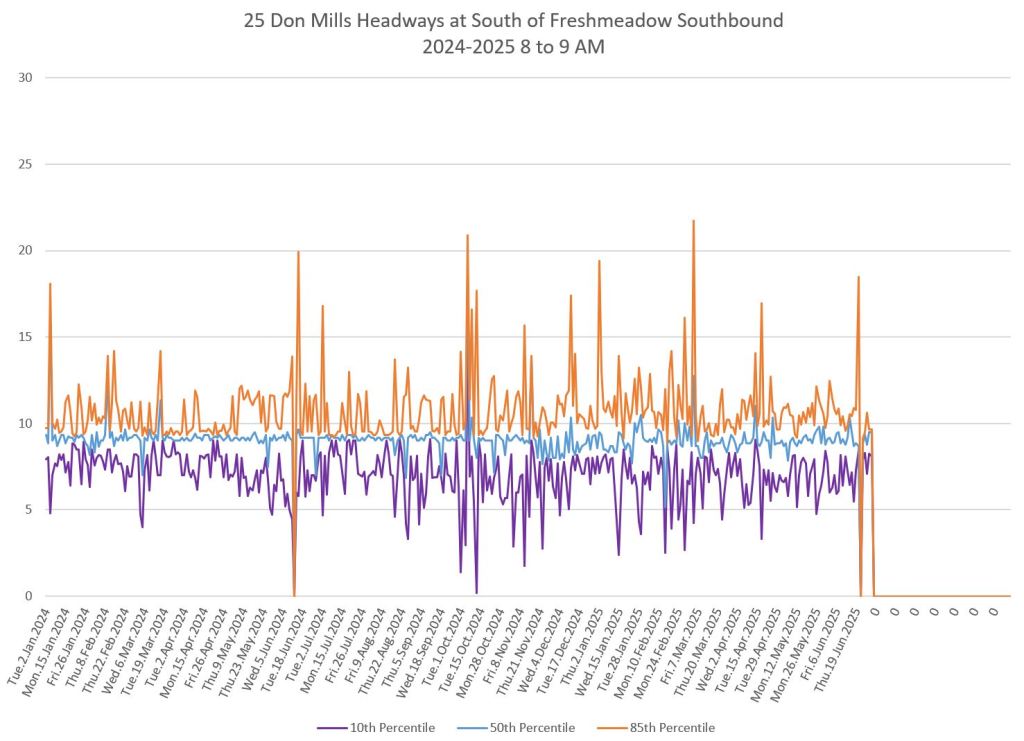
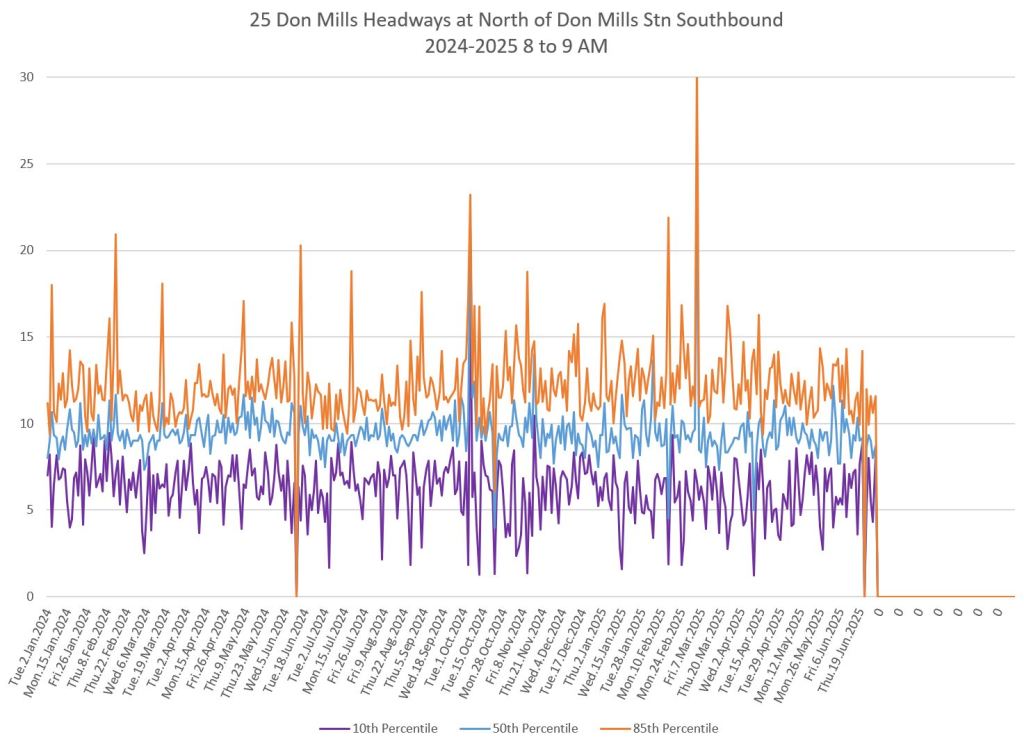
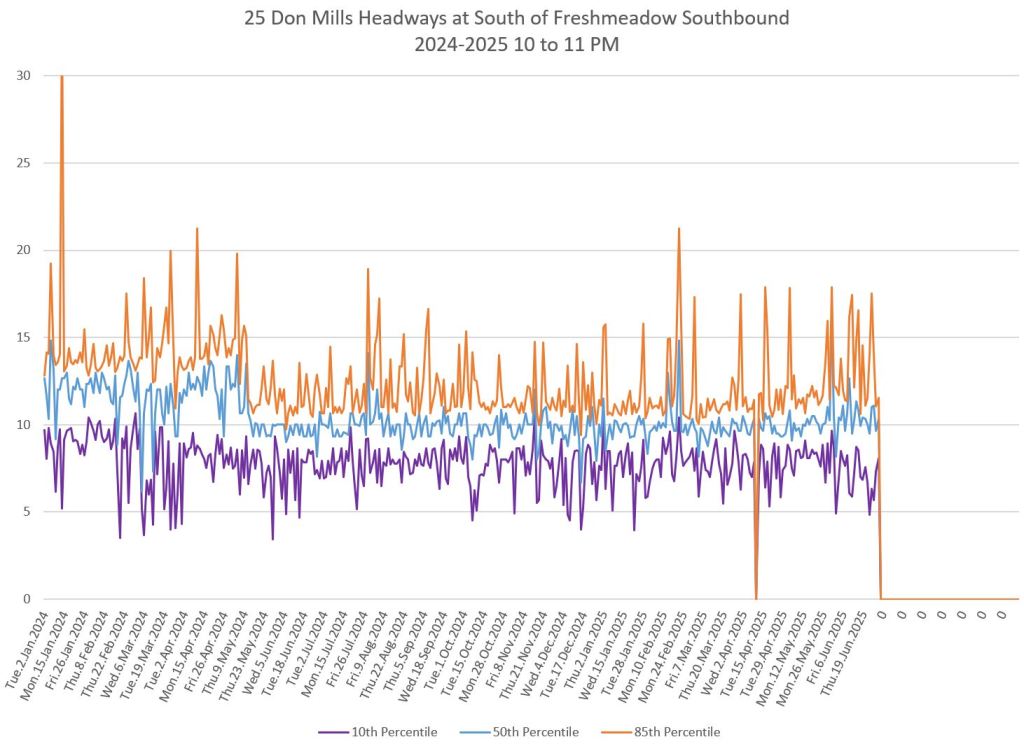
Like the northbound service, southbound buses from Steeles leave on a narrow band of headways that only widens slightly enroute to Don Mills Station. That effect is strongest in the PM peak.
AM Peak
Midday
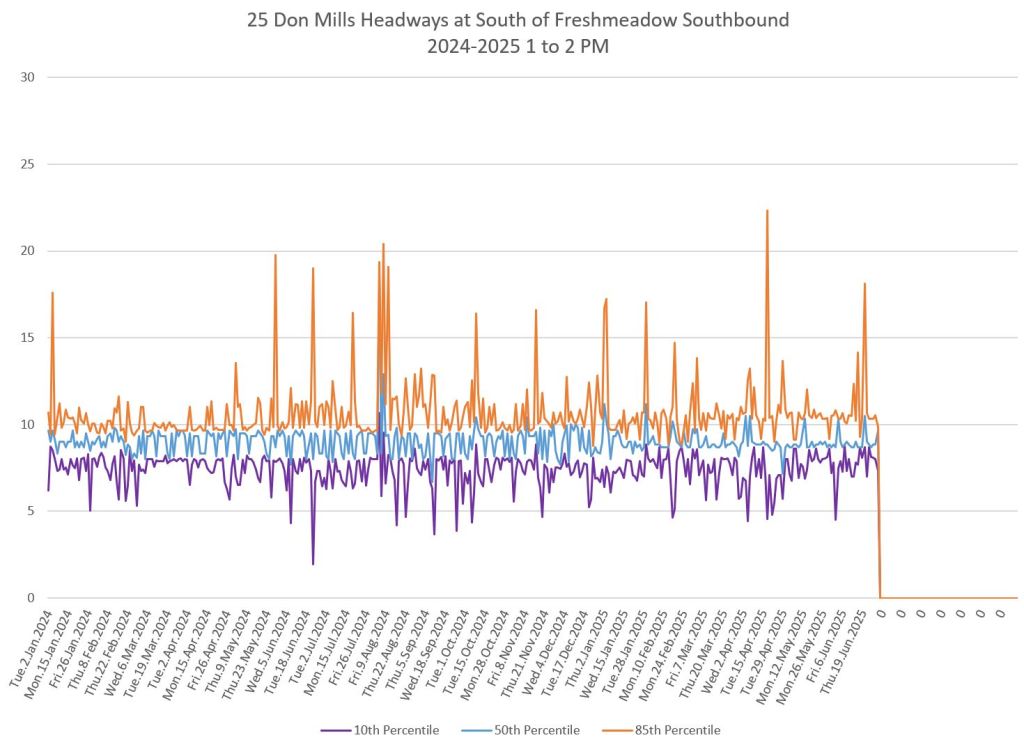
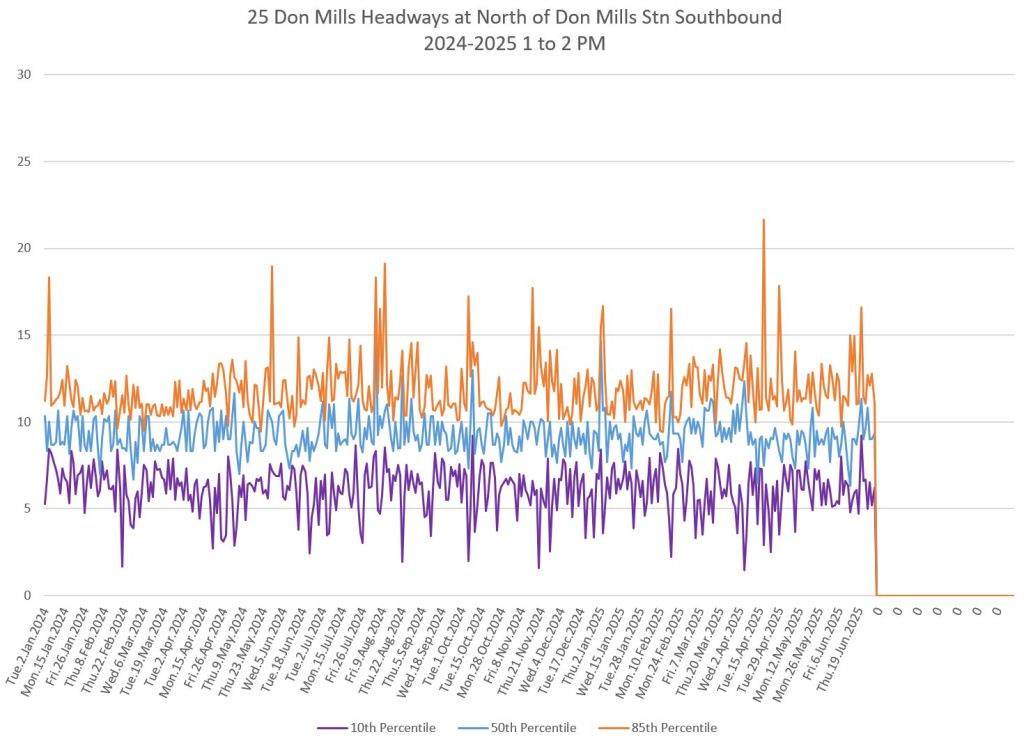
PM Peak
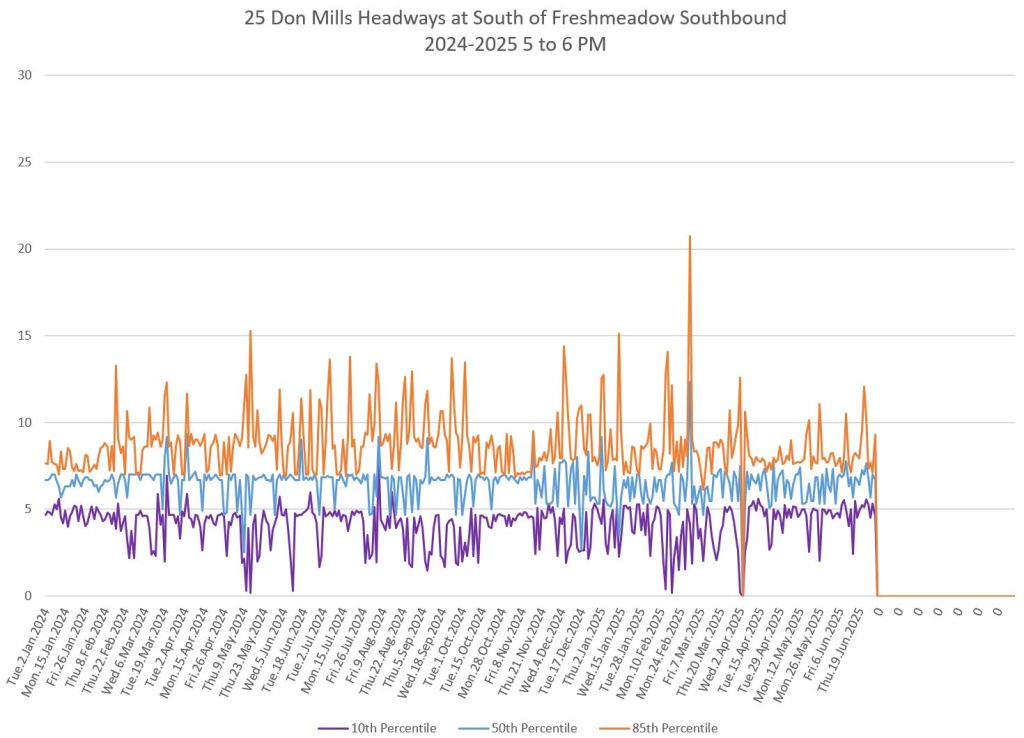
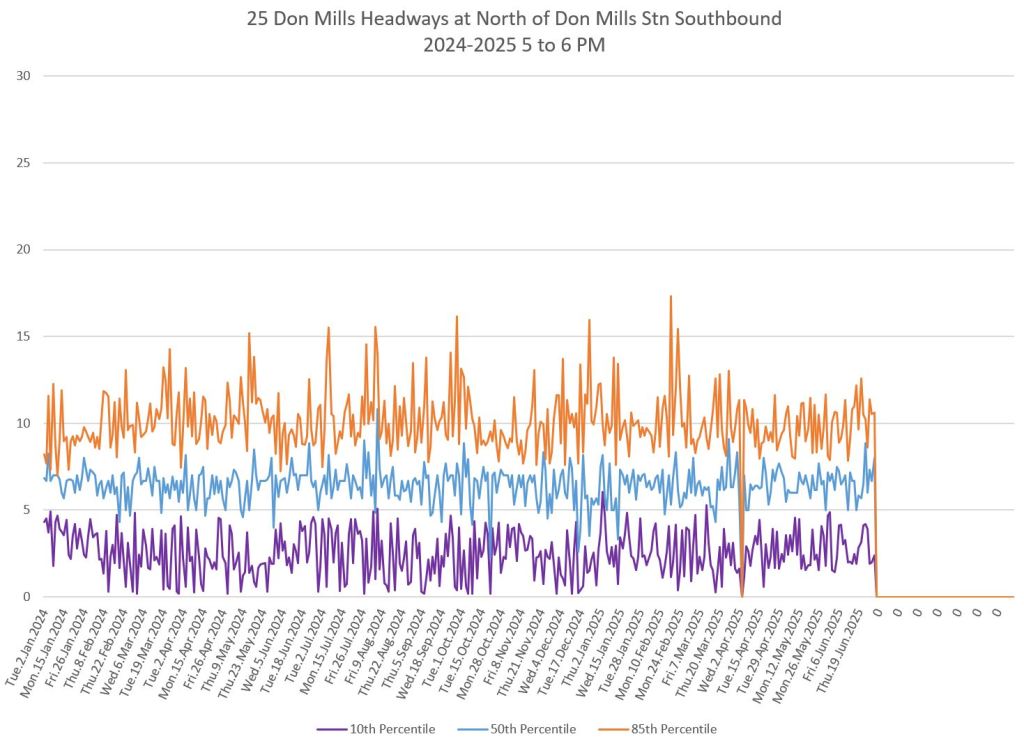
Early Evening
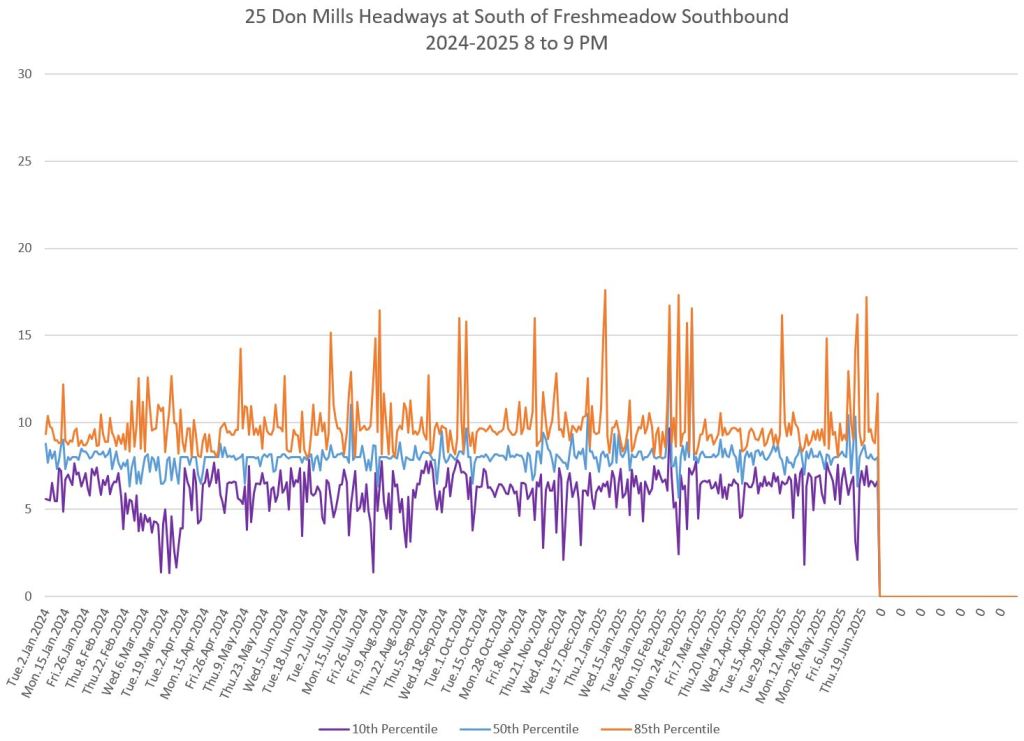
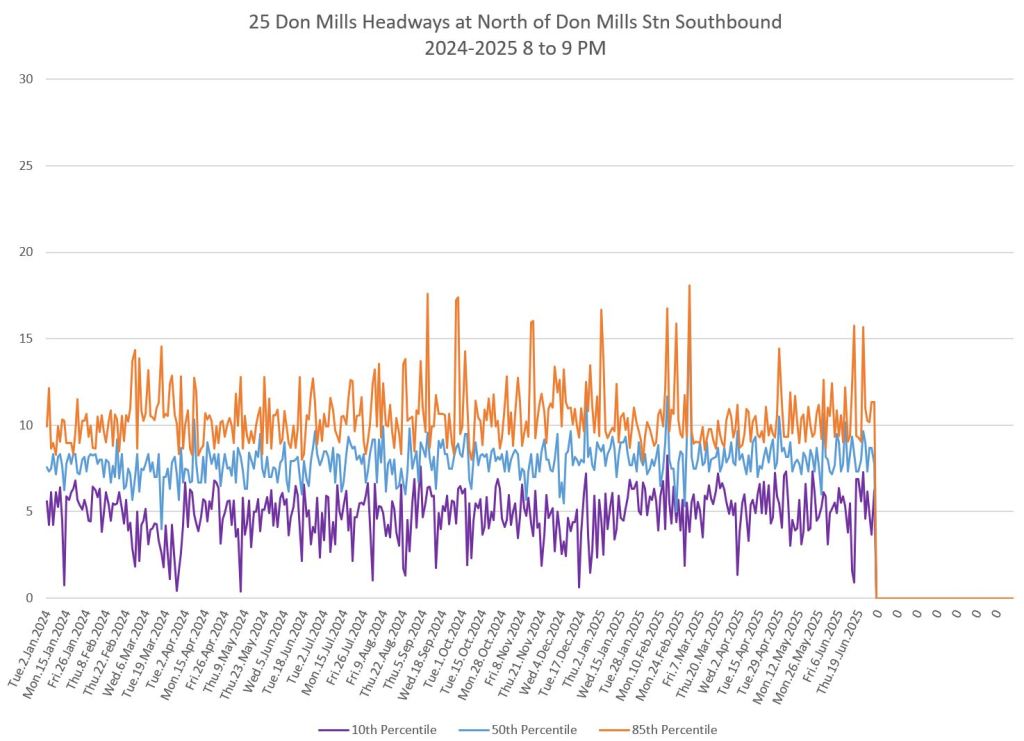
Late Evening
Southbound from Don Mills Station
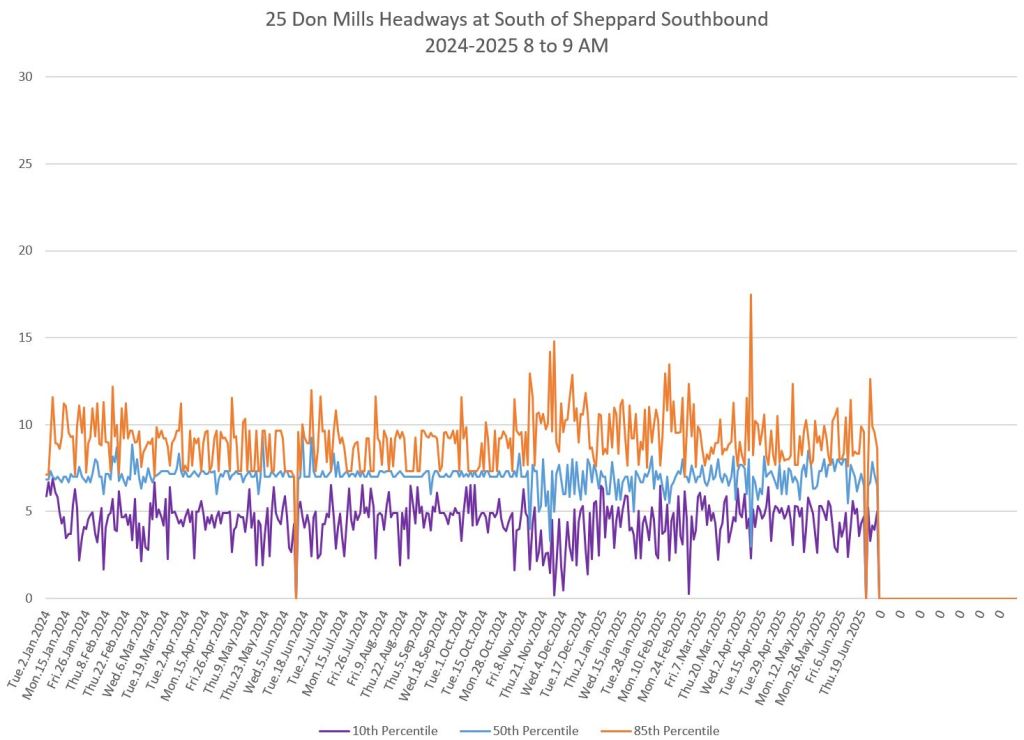
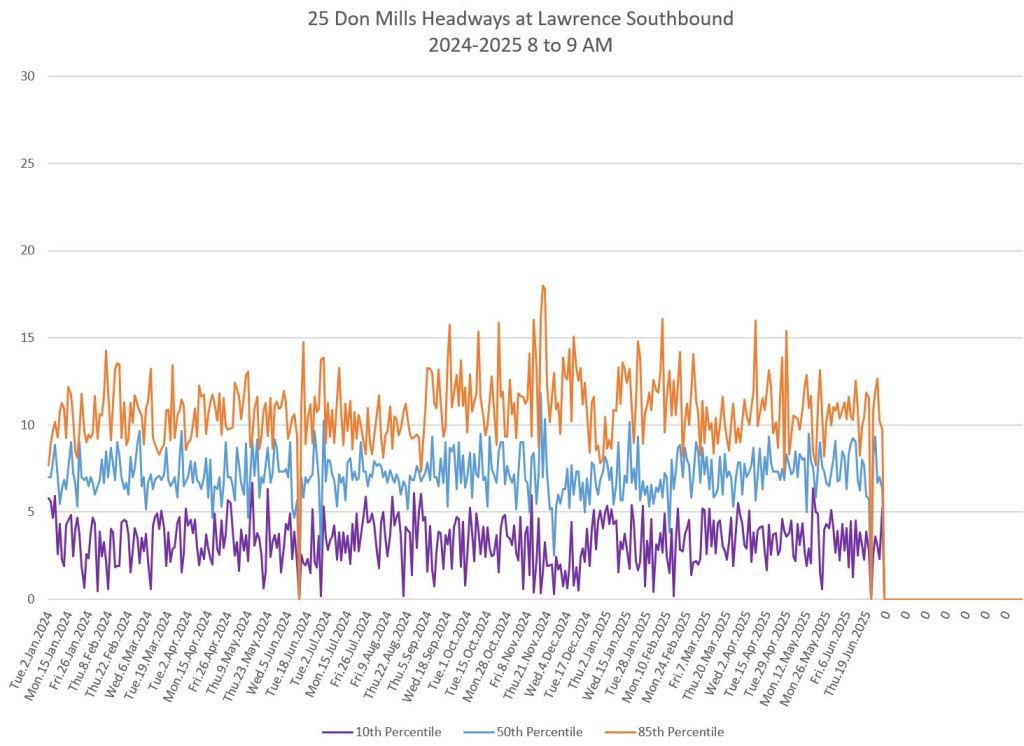
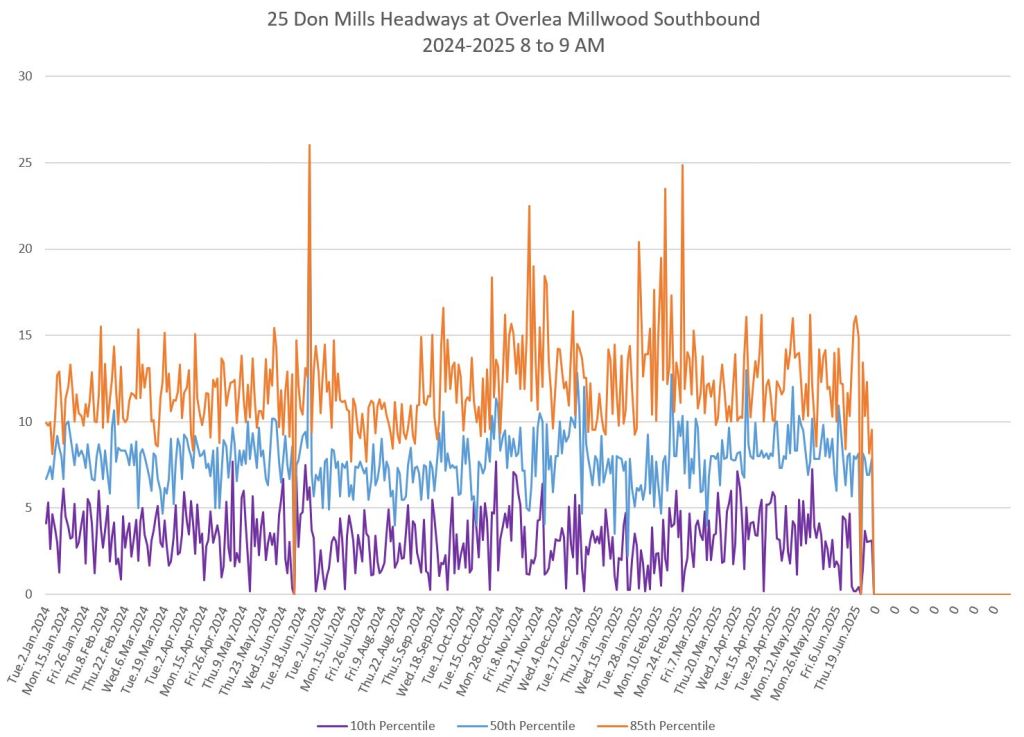
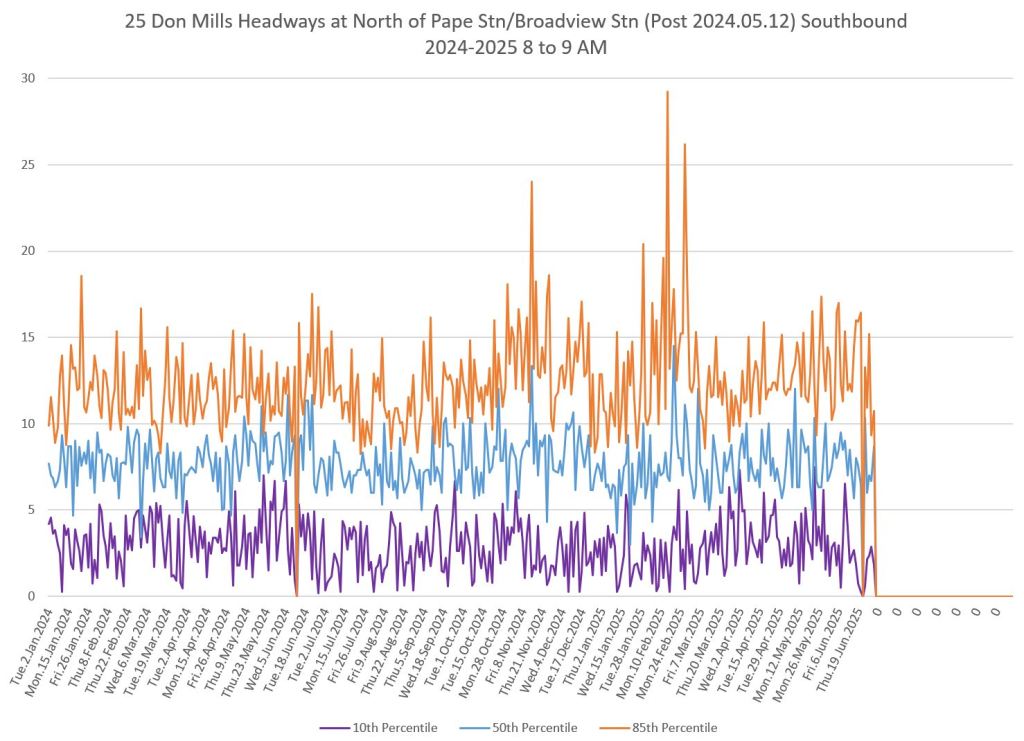
Buses originate their trips at Don Mills Station, and the range of headways is fairly narrow there in the AM peak. However, this does not last through the day and by Midday, the headway range is much wider. As we saw northbound, the spread lessens in the PM peak, but that is due partly to the lower scheduled headway. The 10th percentile hugs the zero line indicating that bunching is common.
Evening service is somewhat better than the PM peak, but still not ideal especially at the south end of the route.
AM Peak
Midday
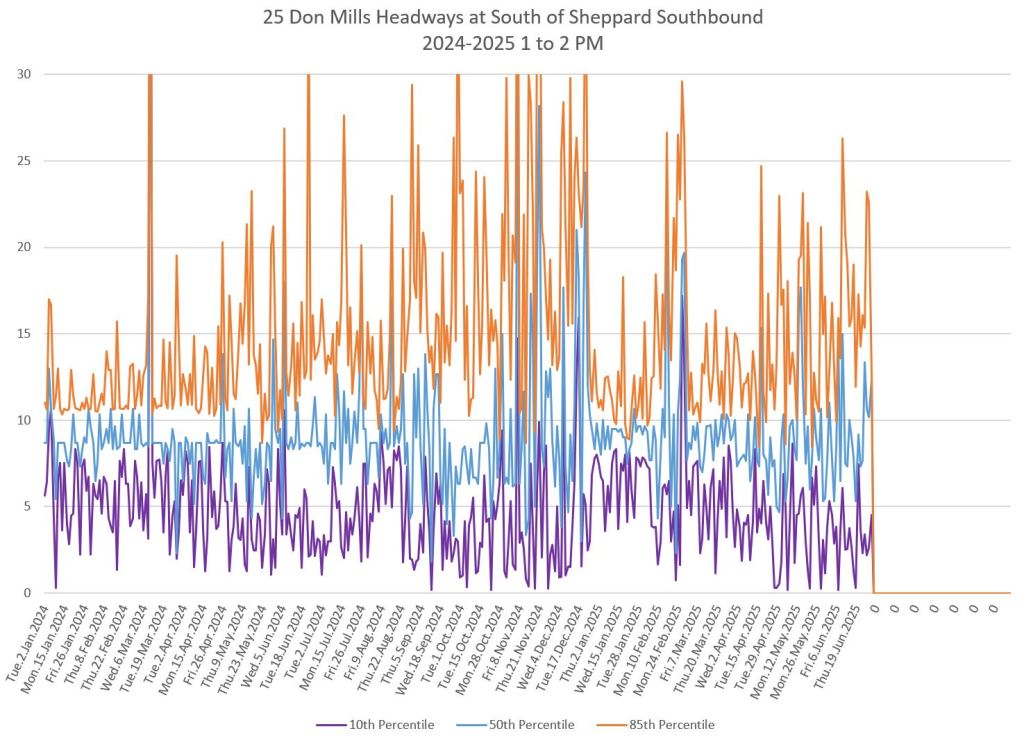
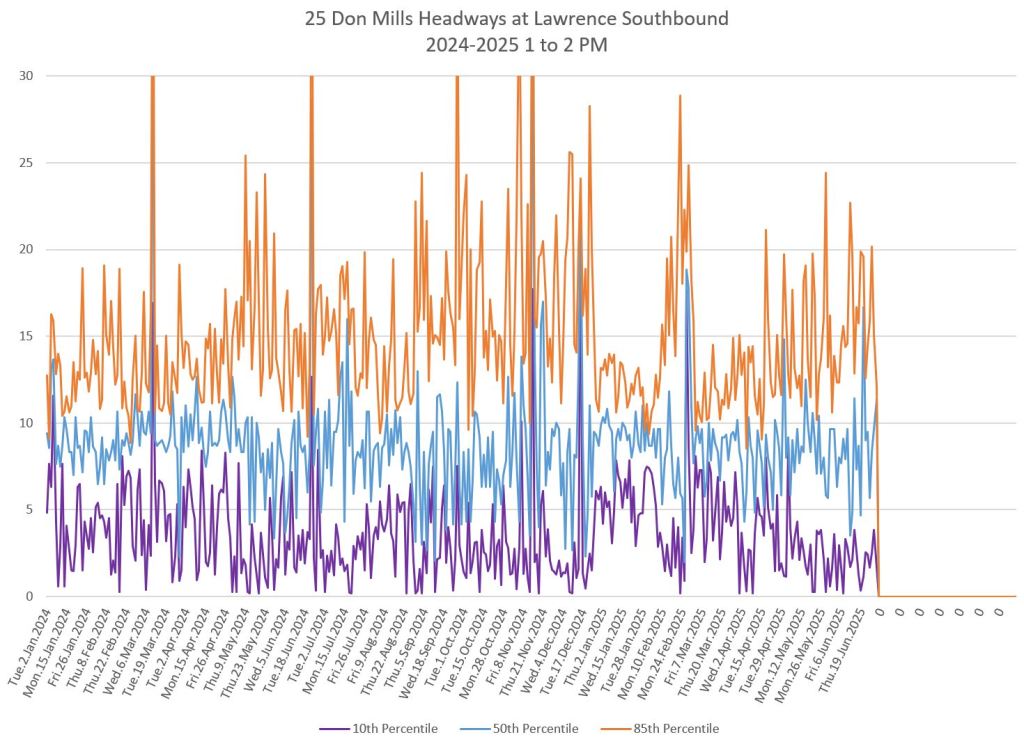
PM Peak
Early Evening
Late Evening
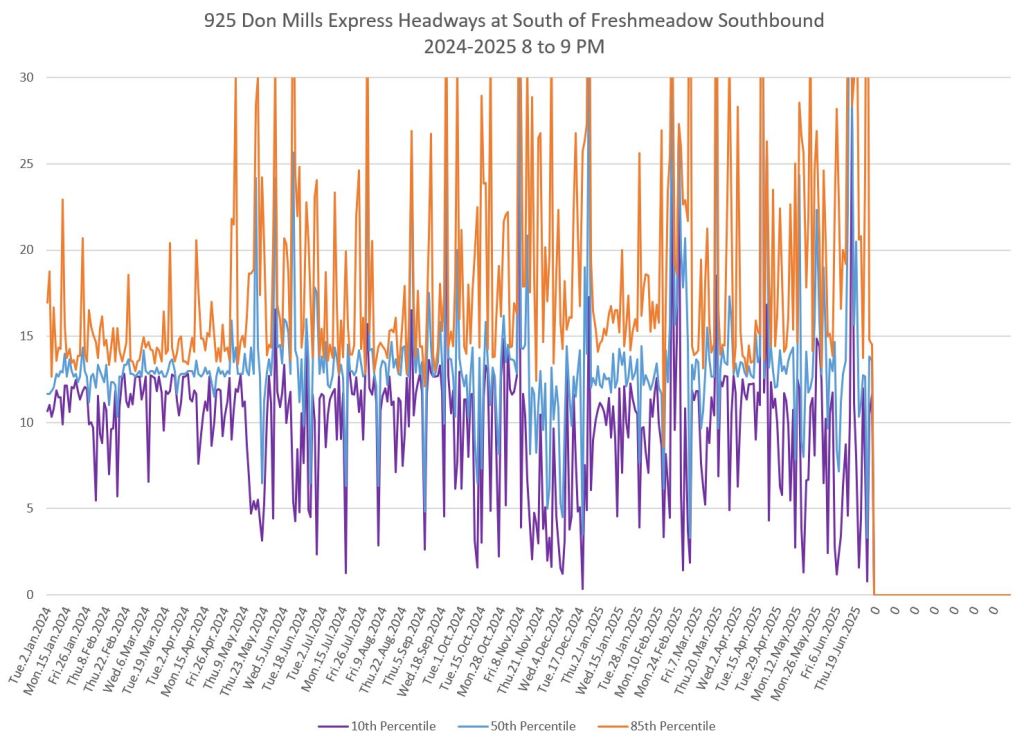
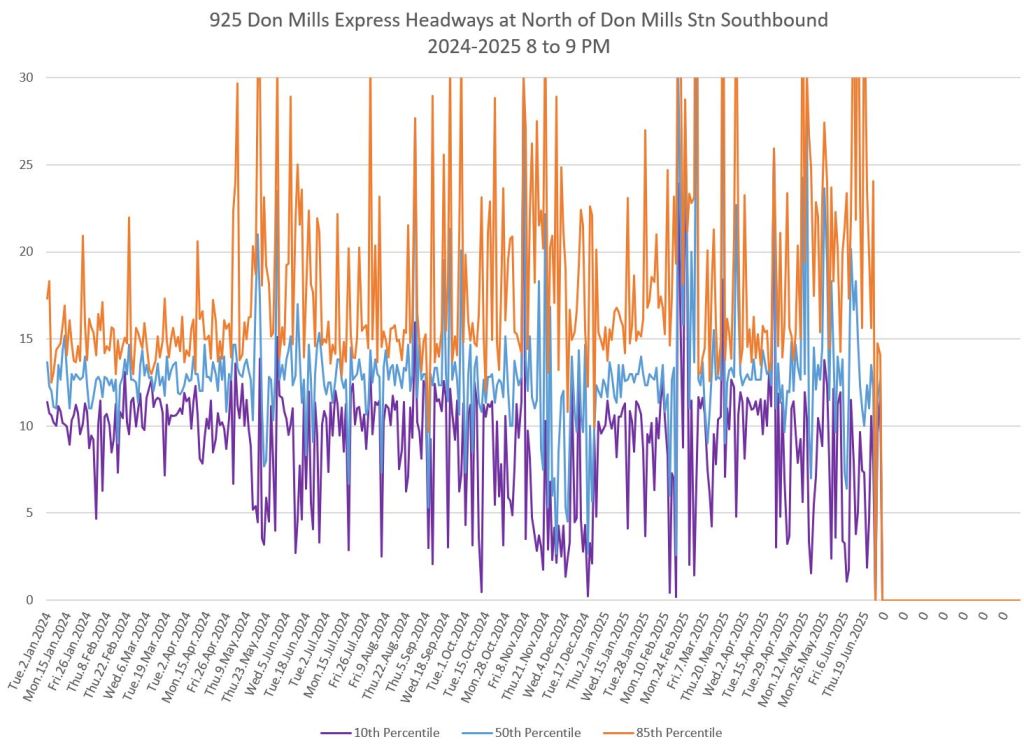
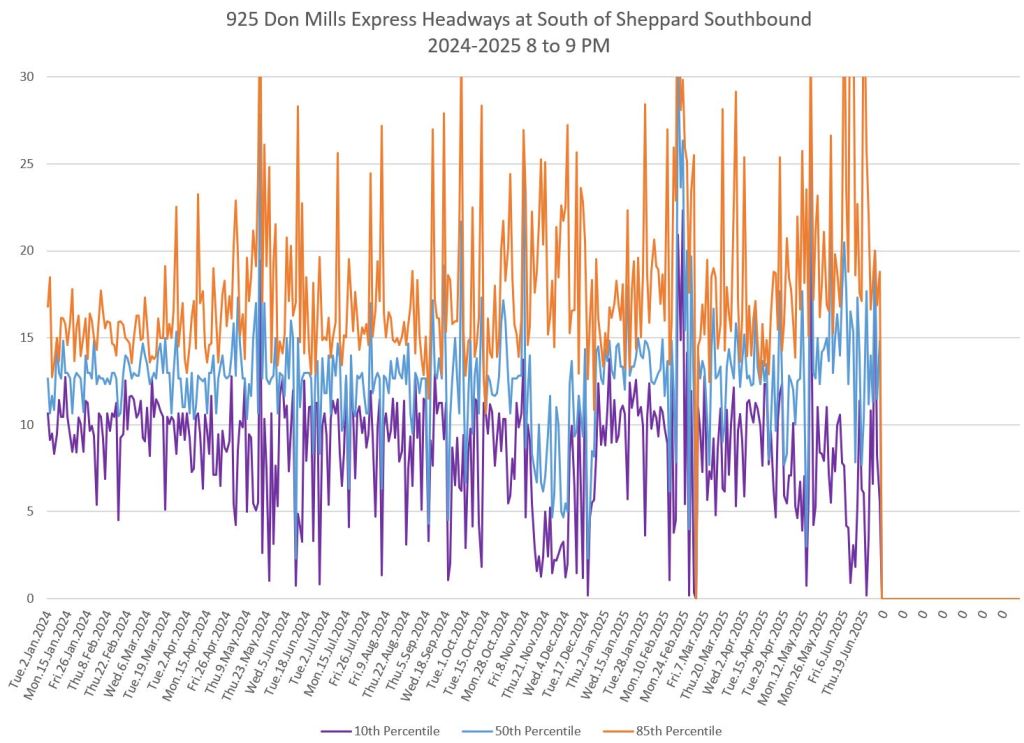
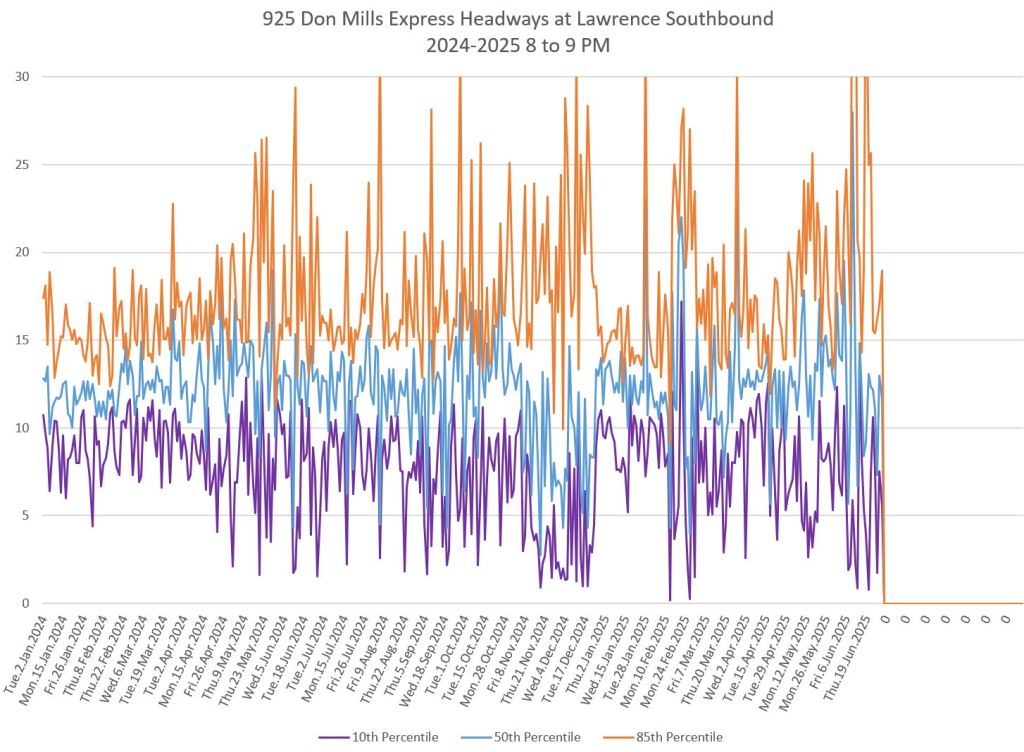
925 Don Mills Express
- 925 Pape Station to Steeles (Until May 11, 2024)
- 925 Broadview Station to Steeles (From May 12, 2024)
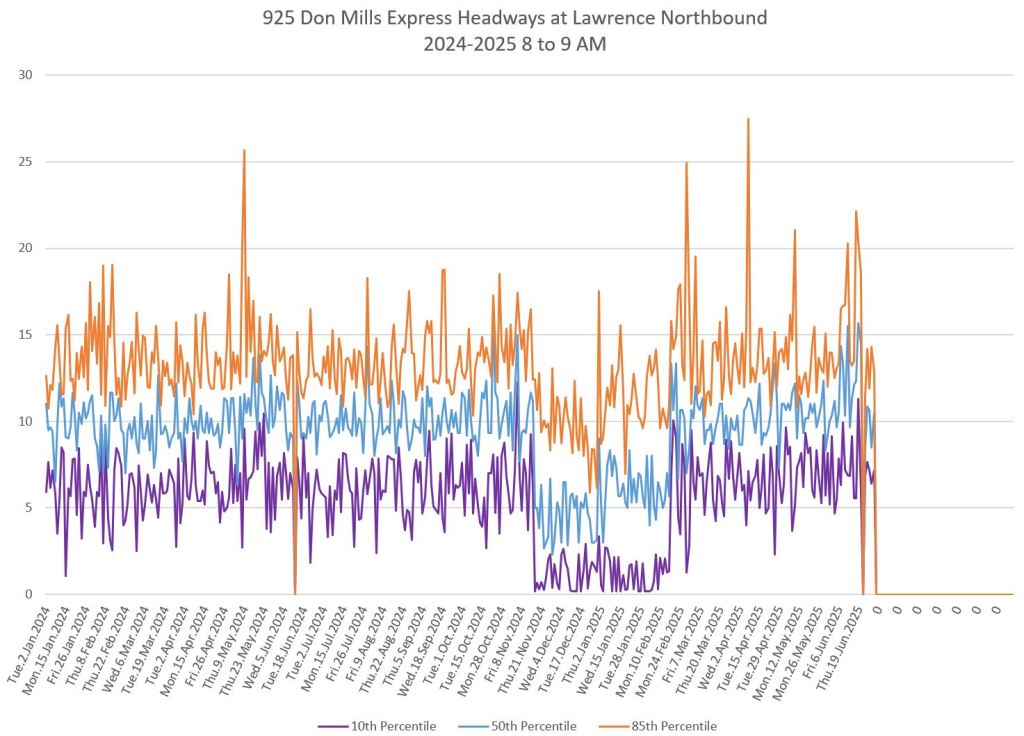
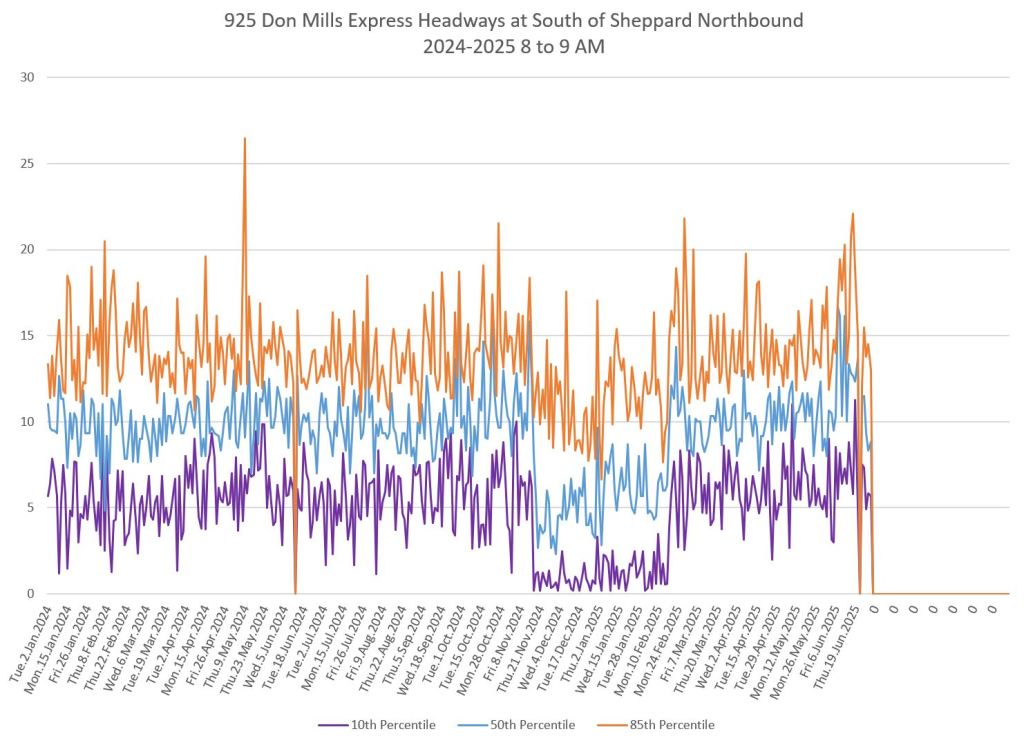
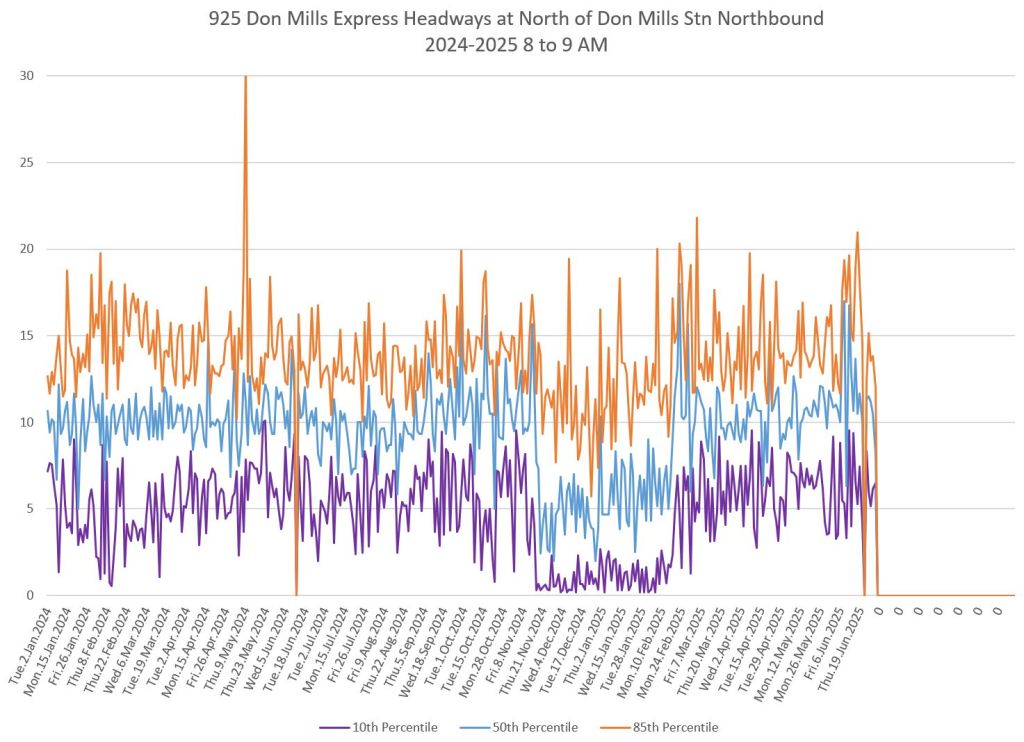
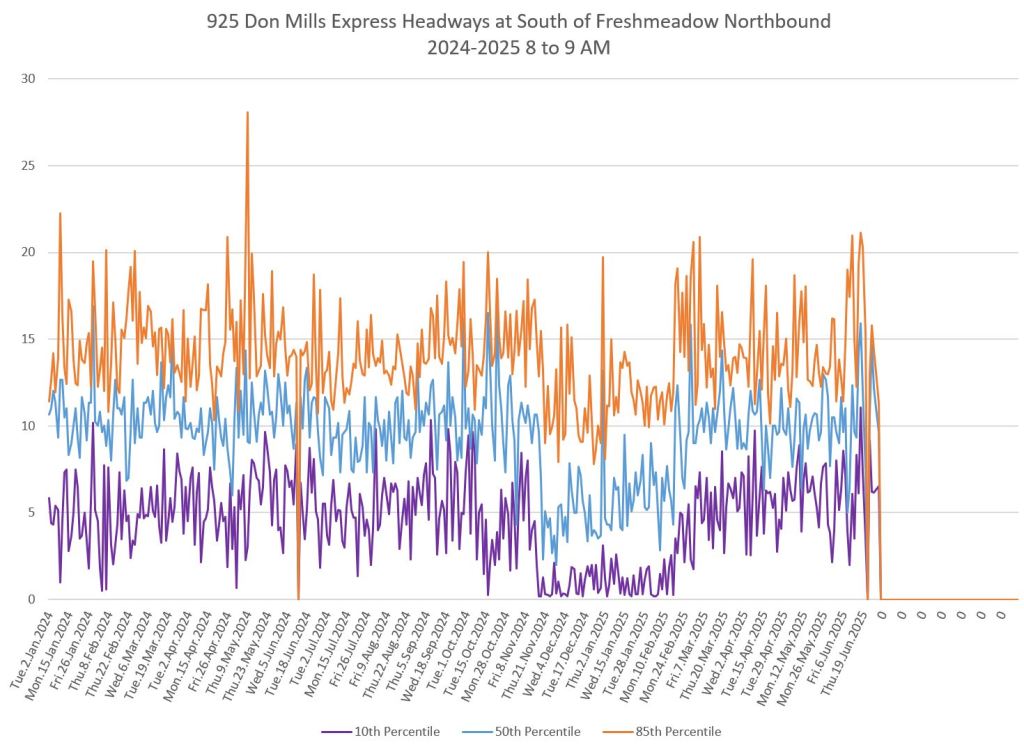
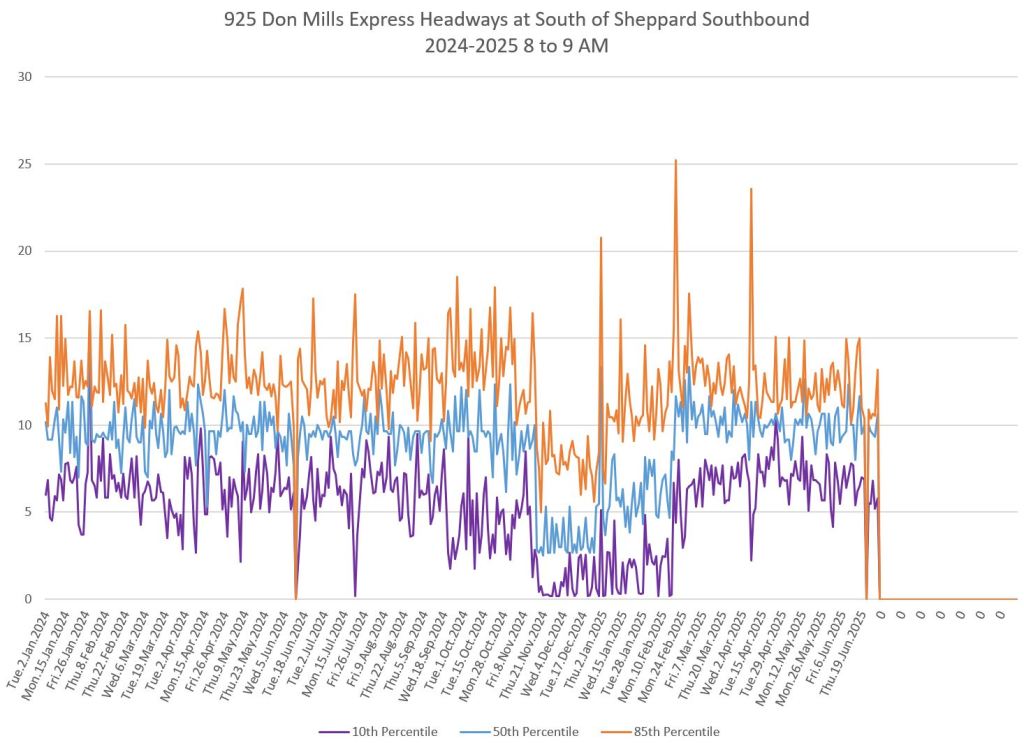
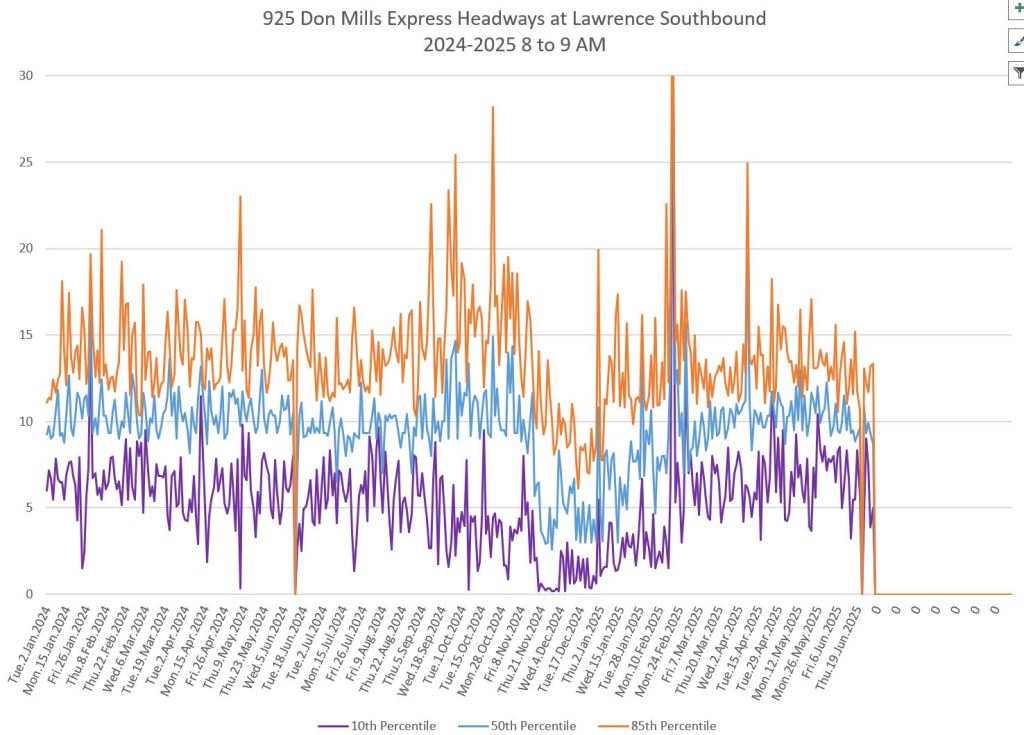
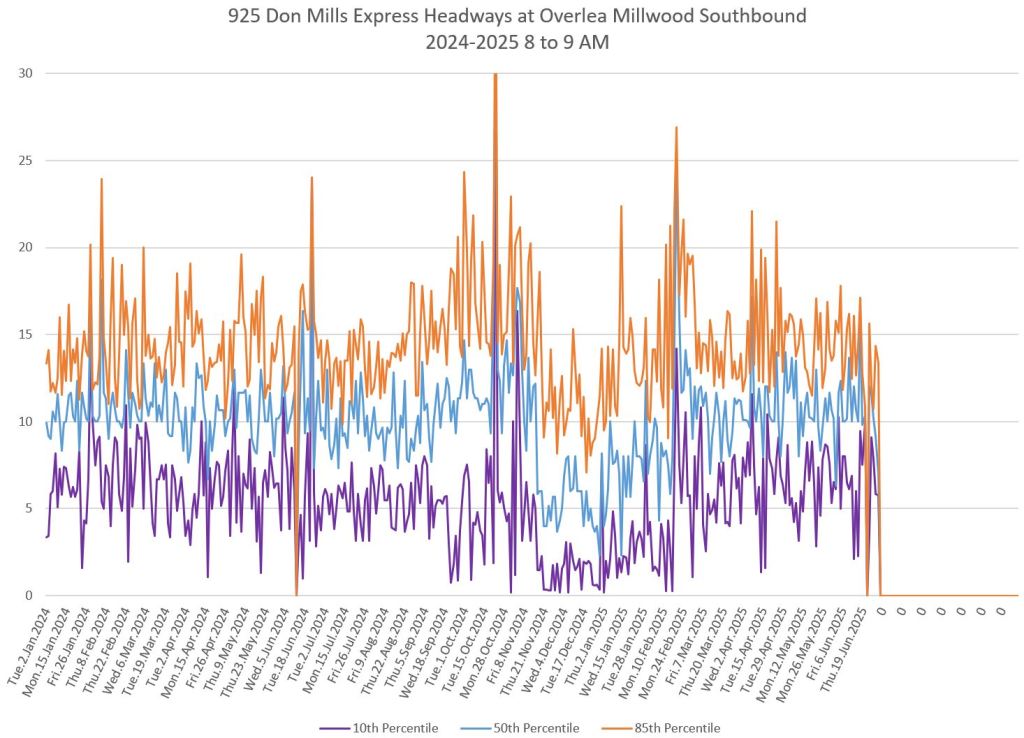
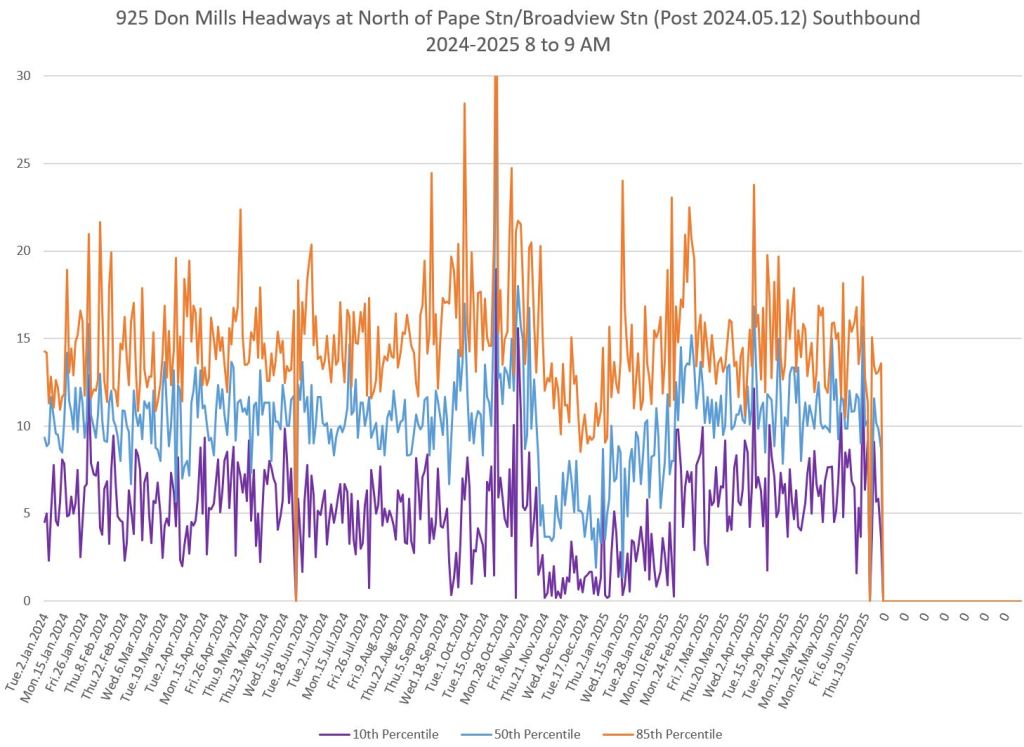
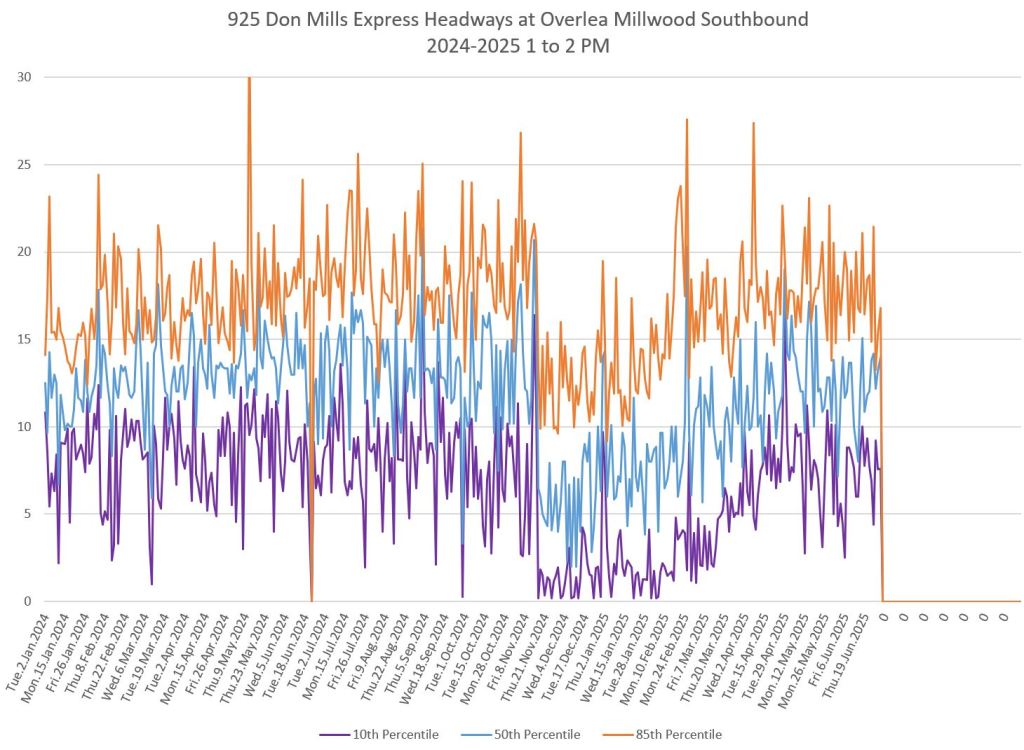
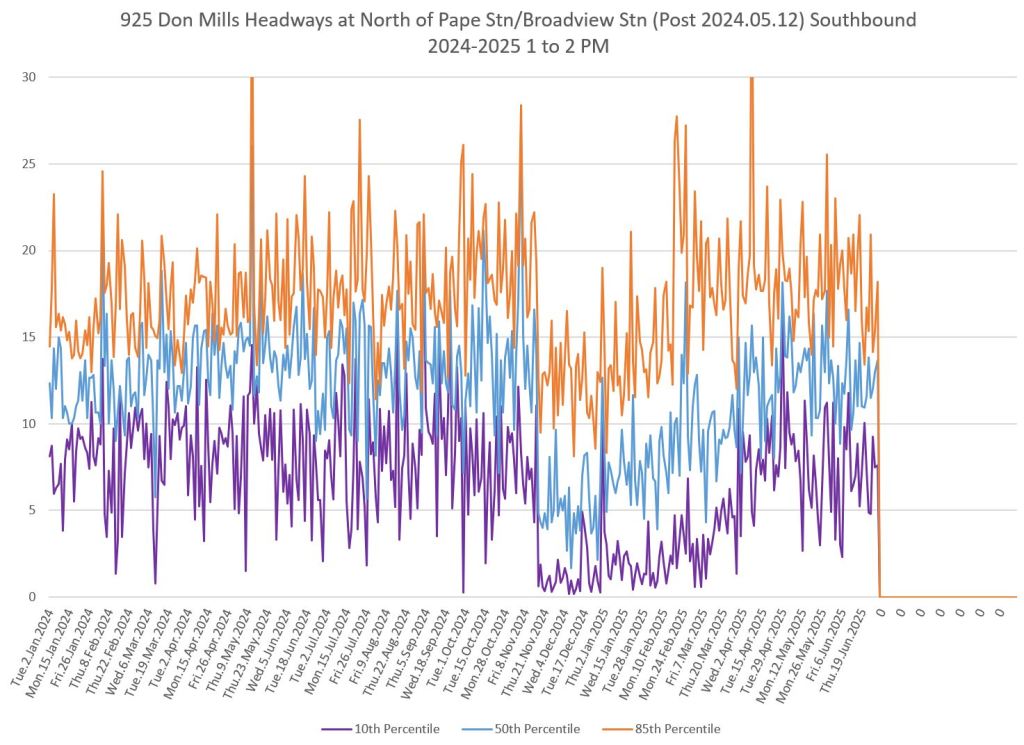
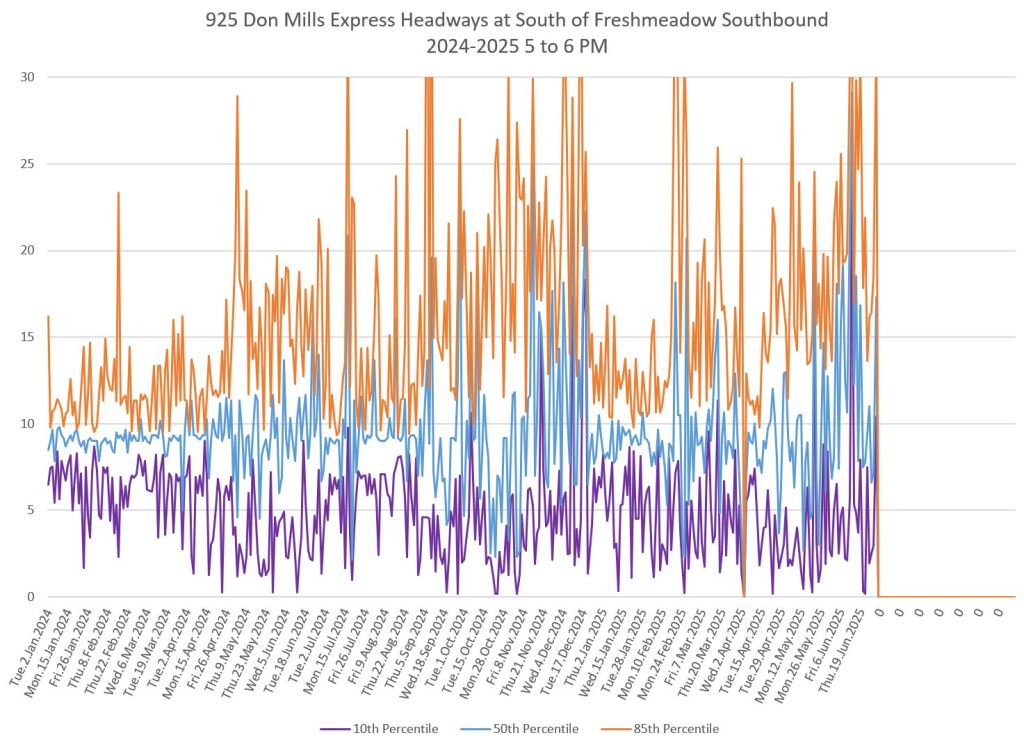
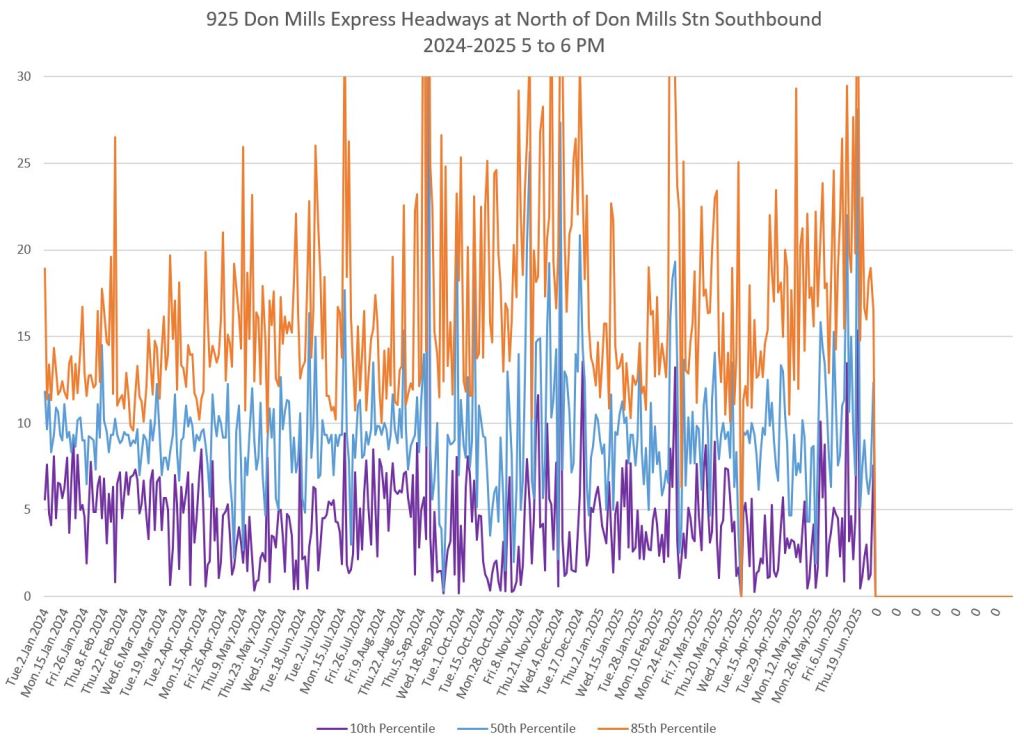
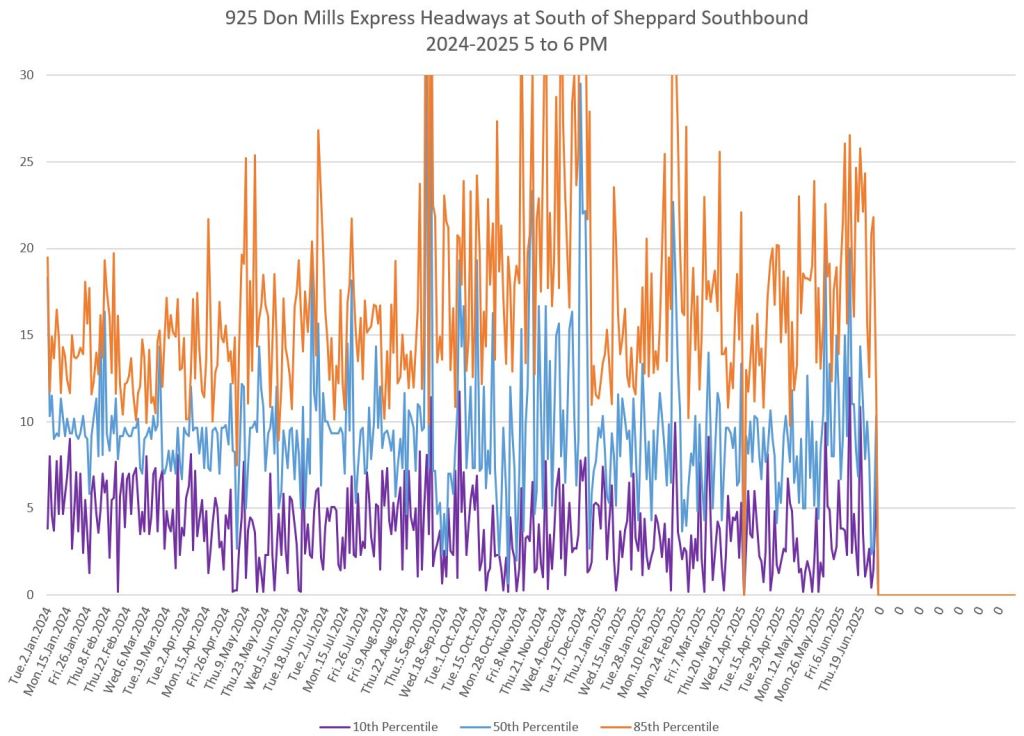
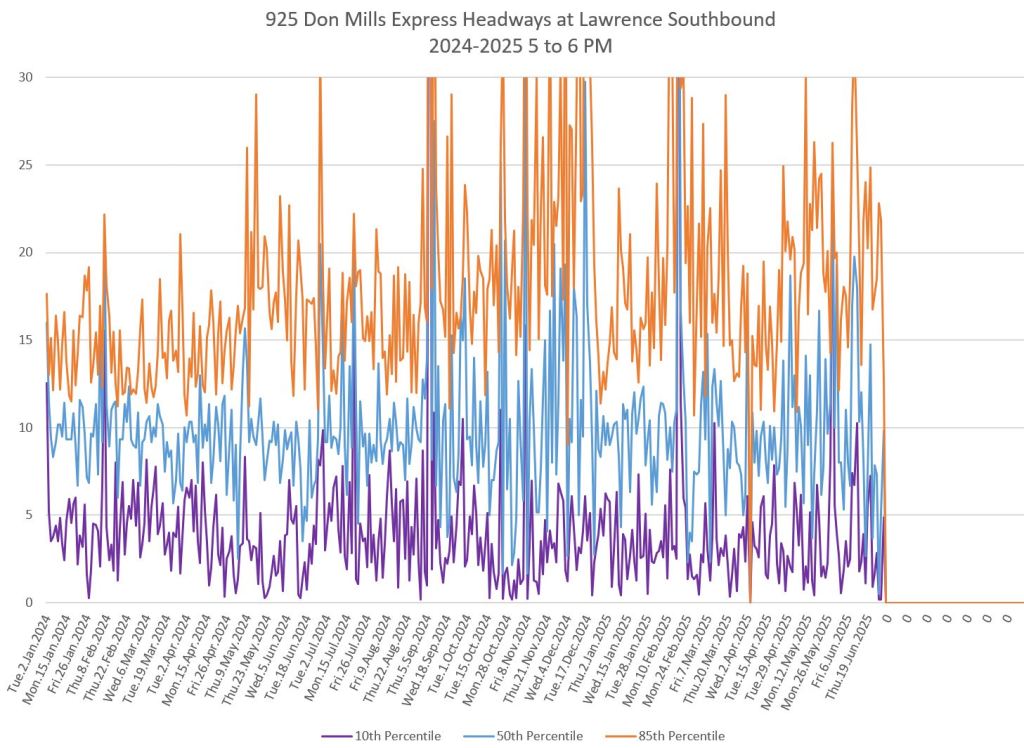
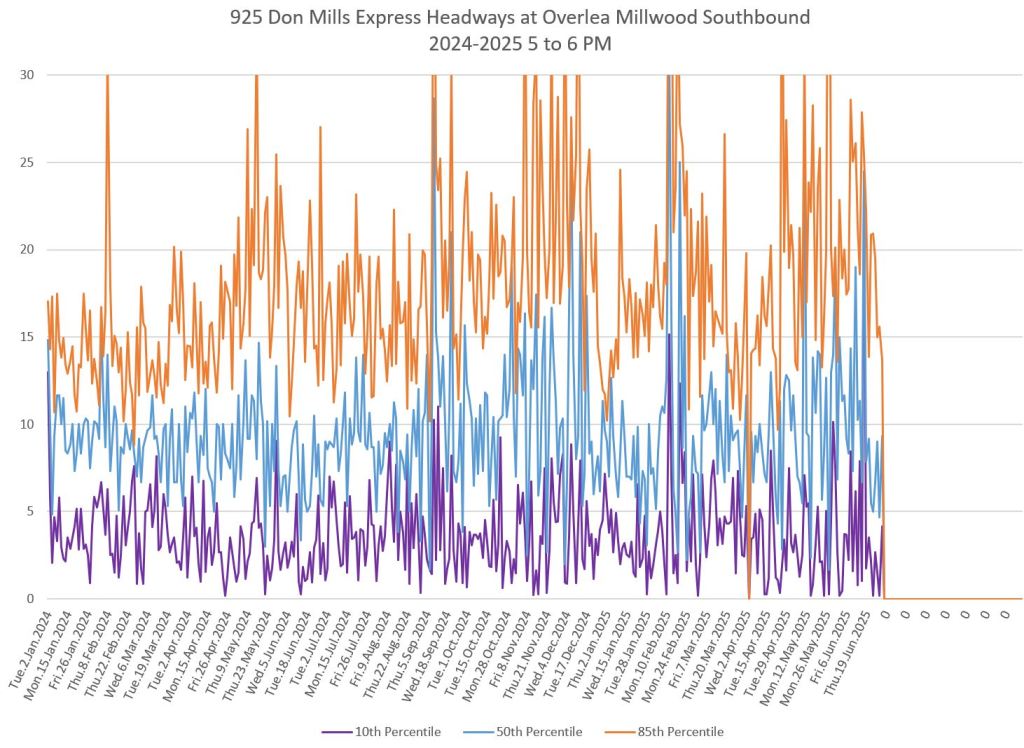
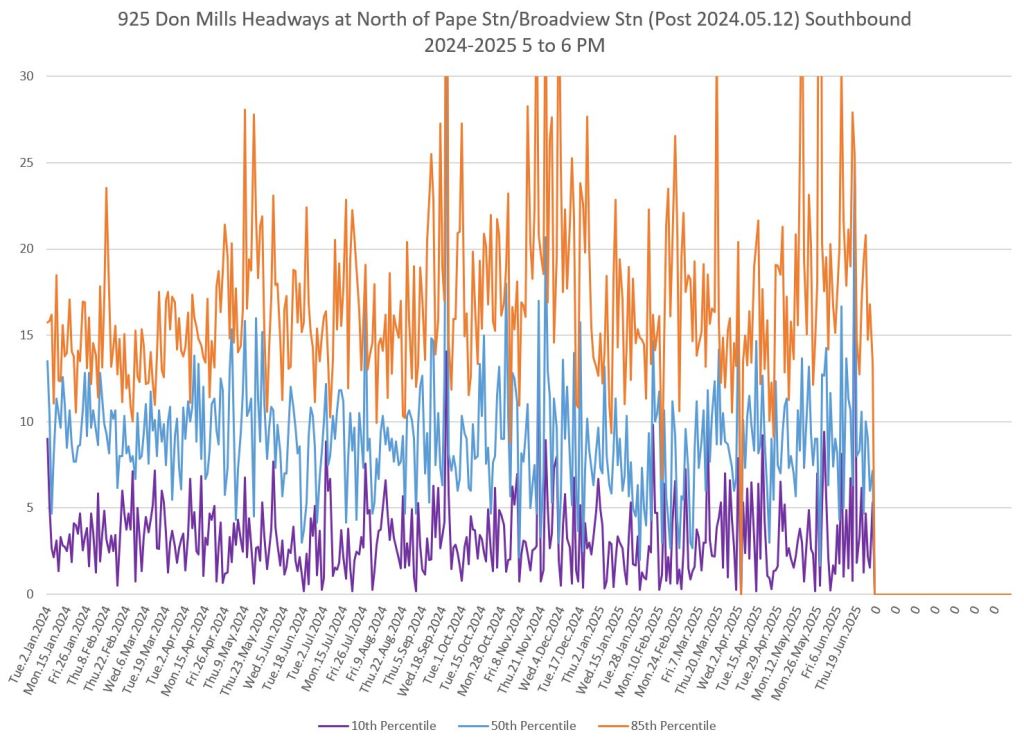
The screenlines used for 925 Don Mills Express are the same as for the 25 Don Mills local service.
The route operates through from Danforth to Steeles passing through Don Mills Station enroute.
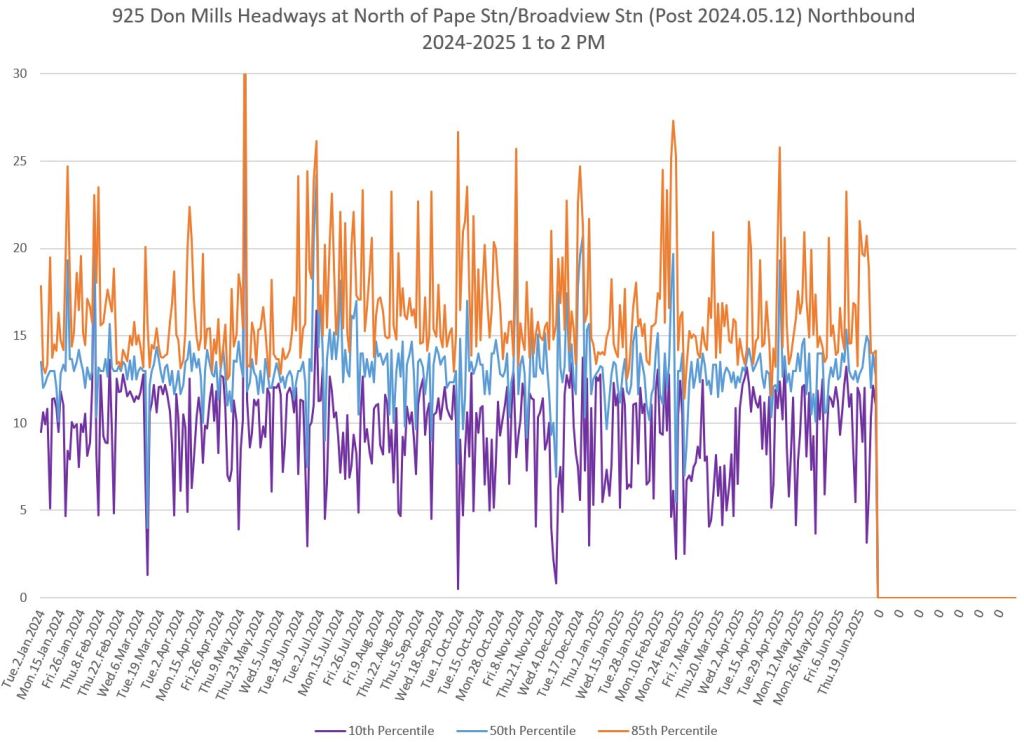
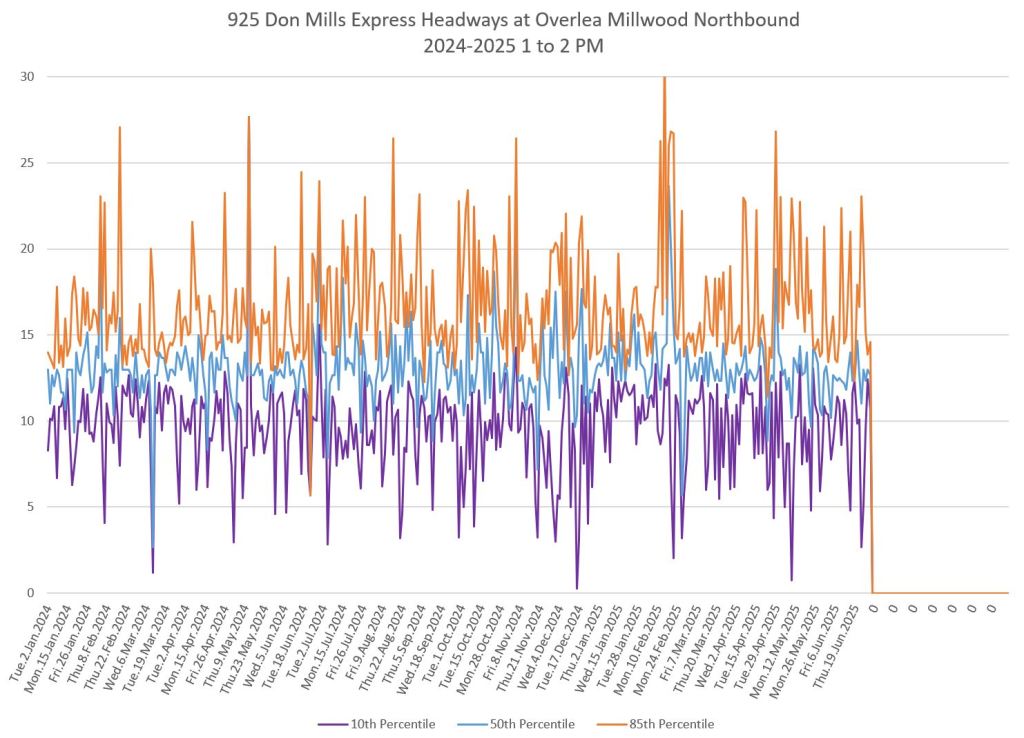
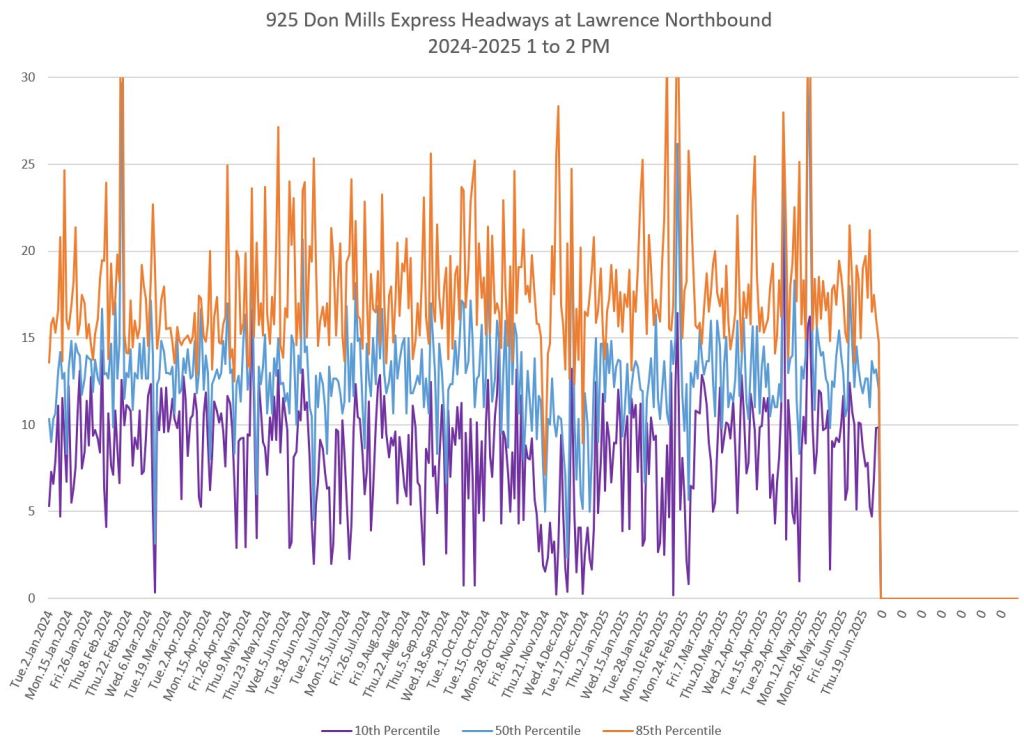
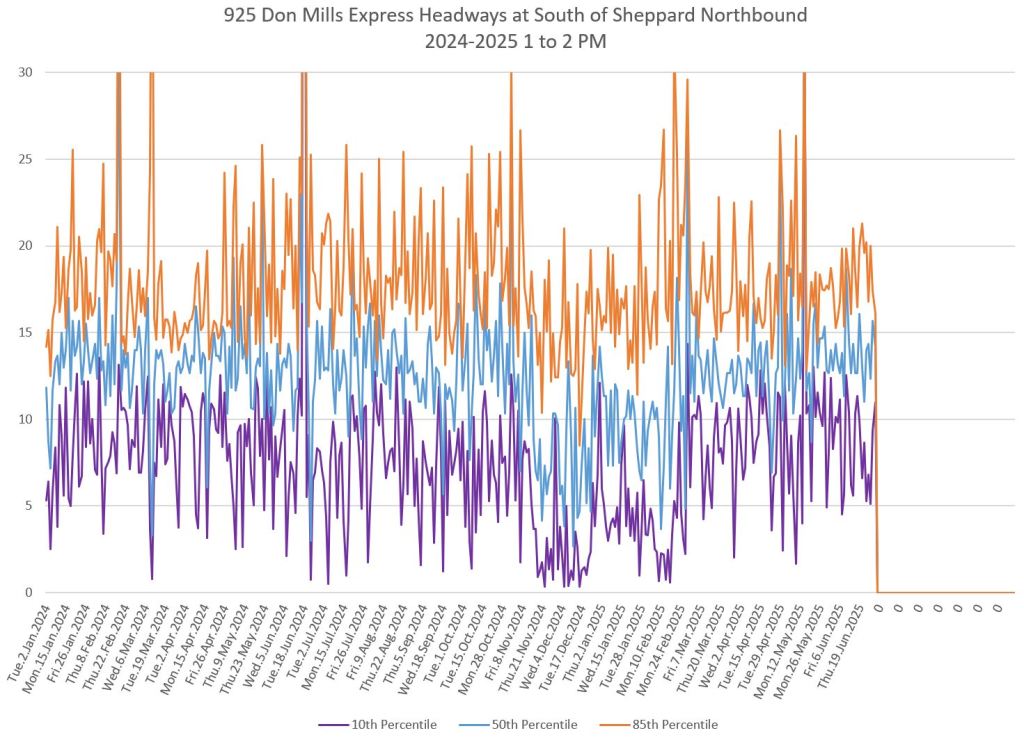
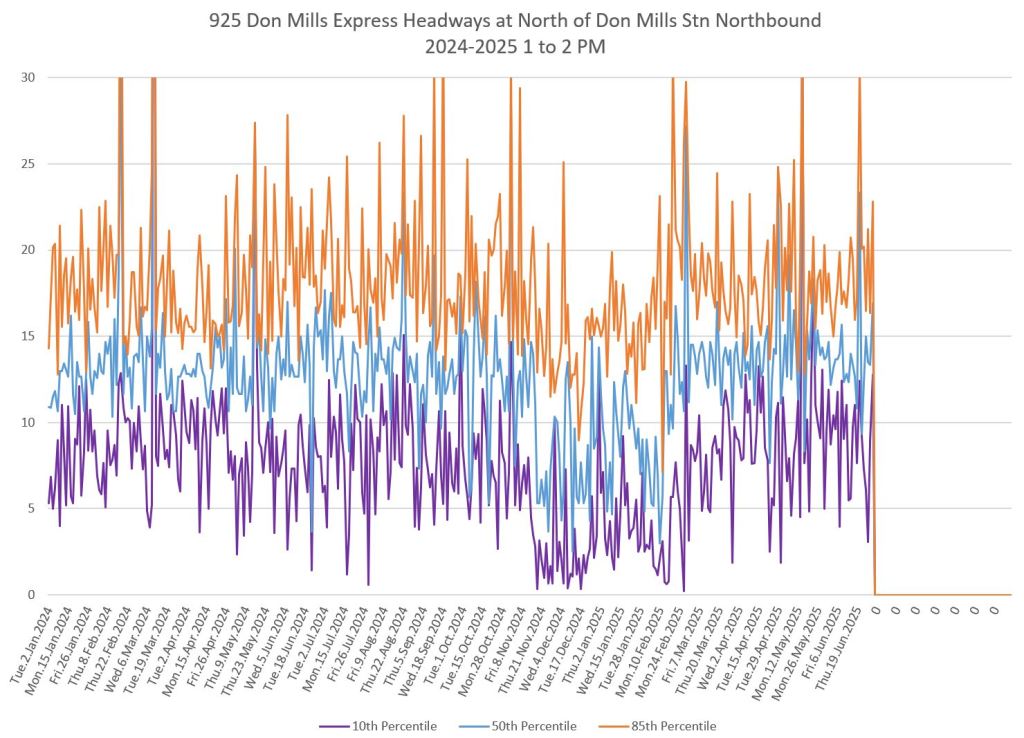
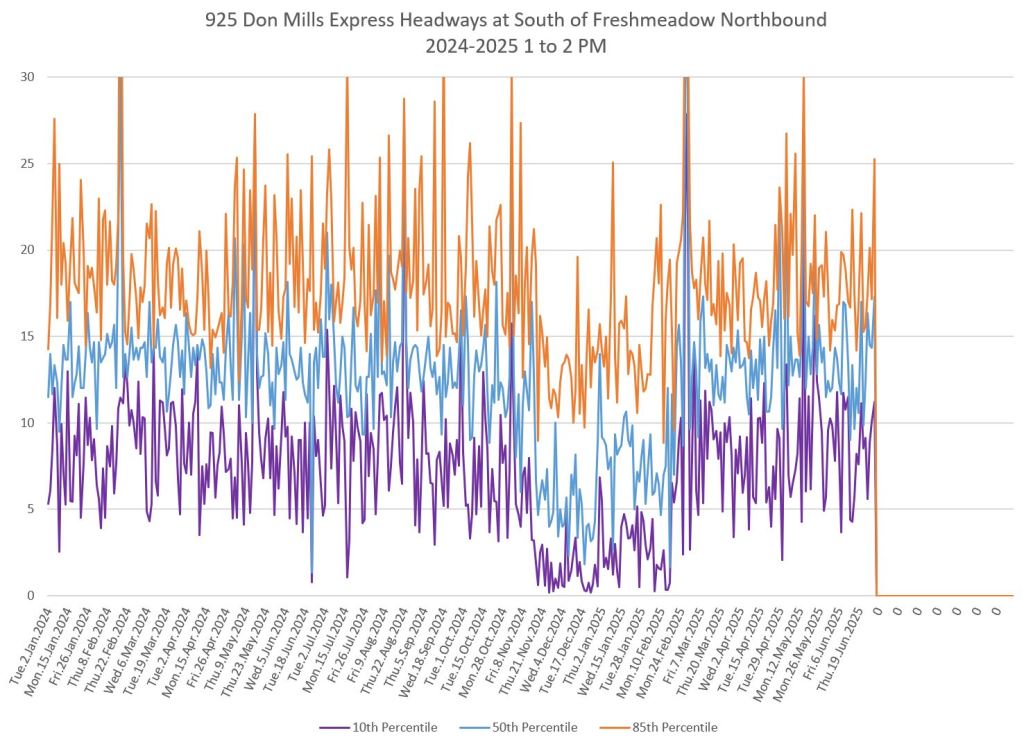
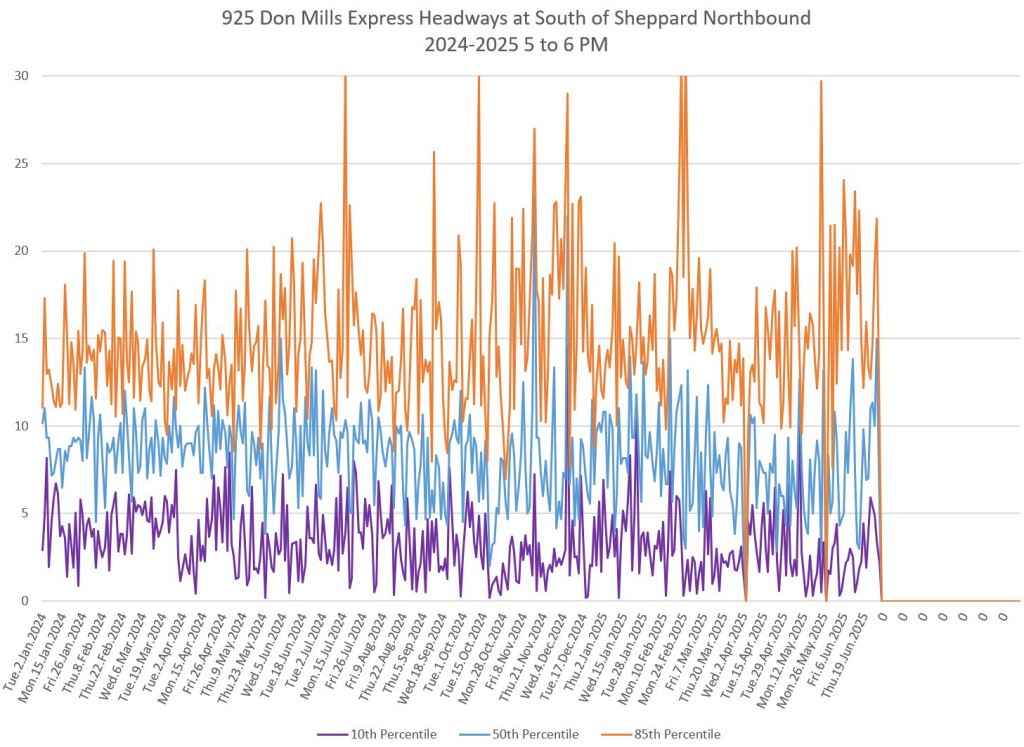
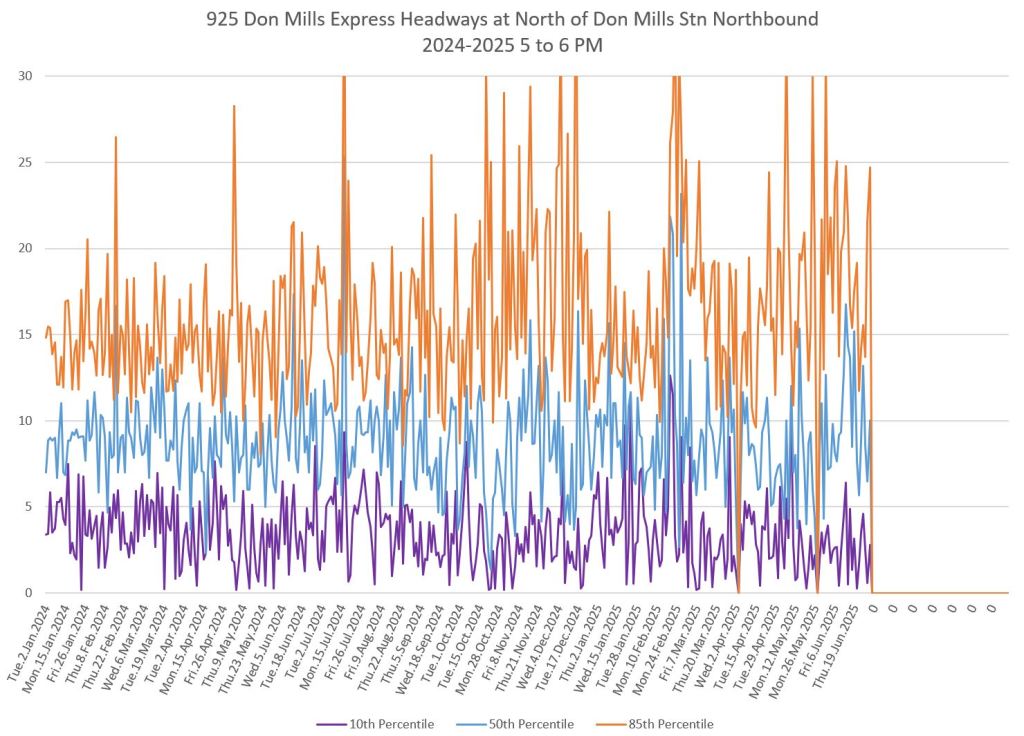
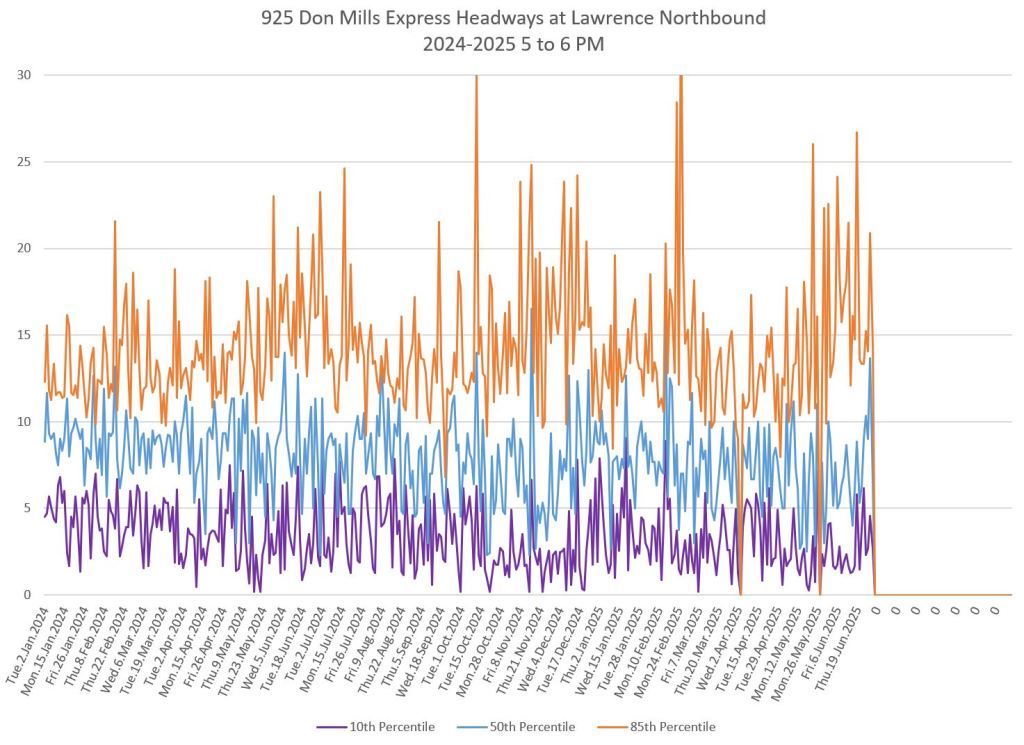
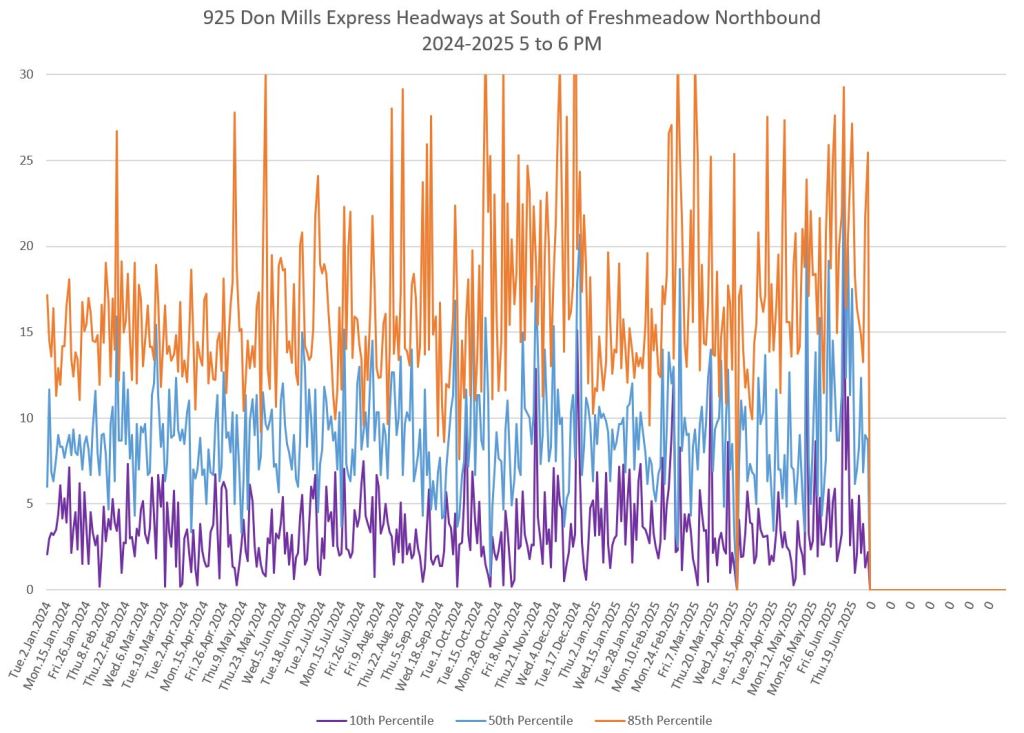
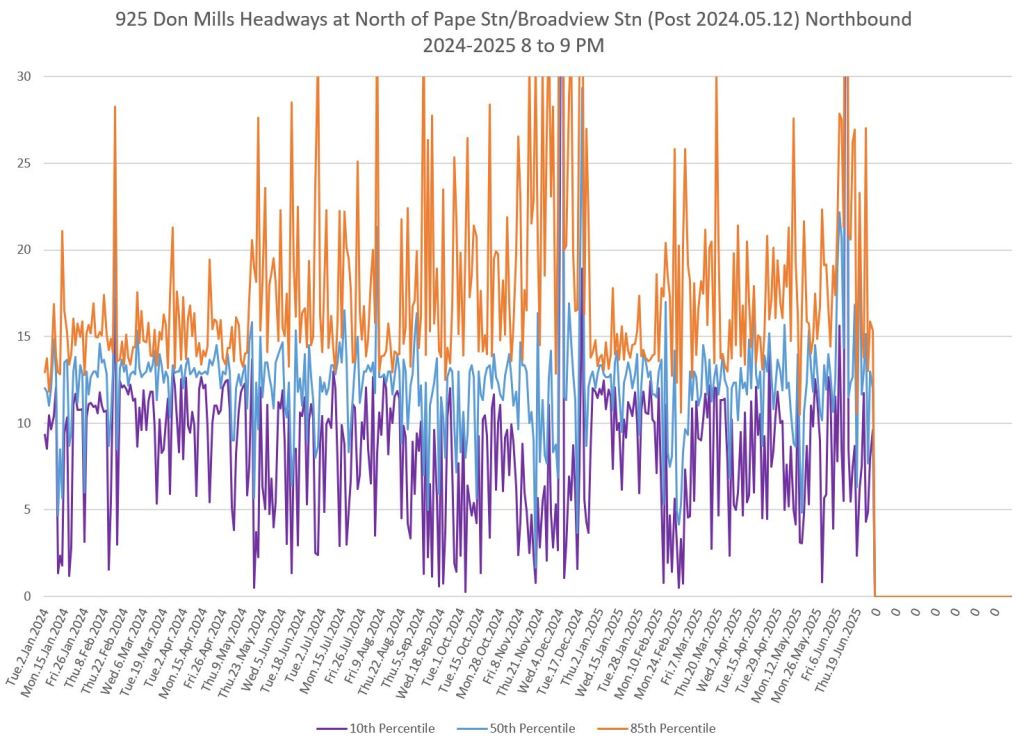
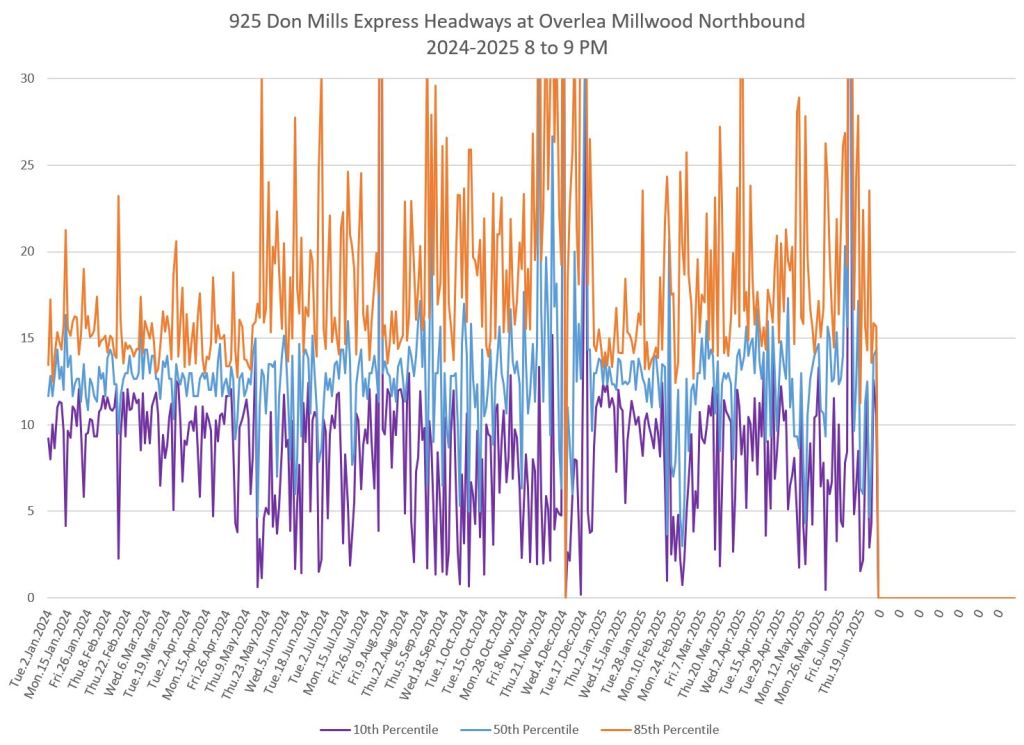
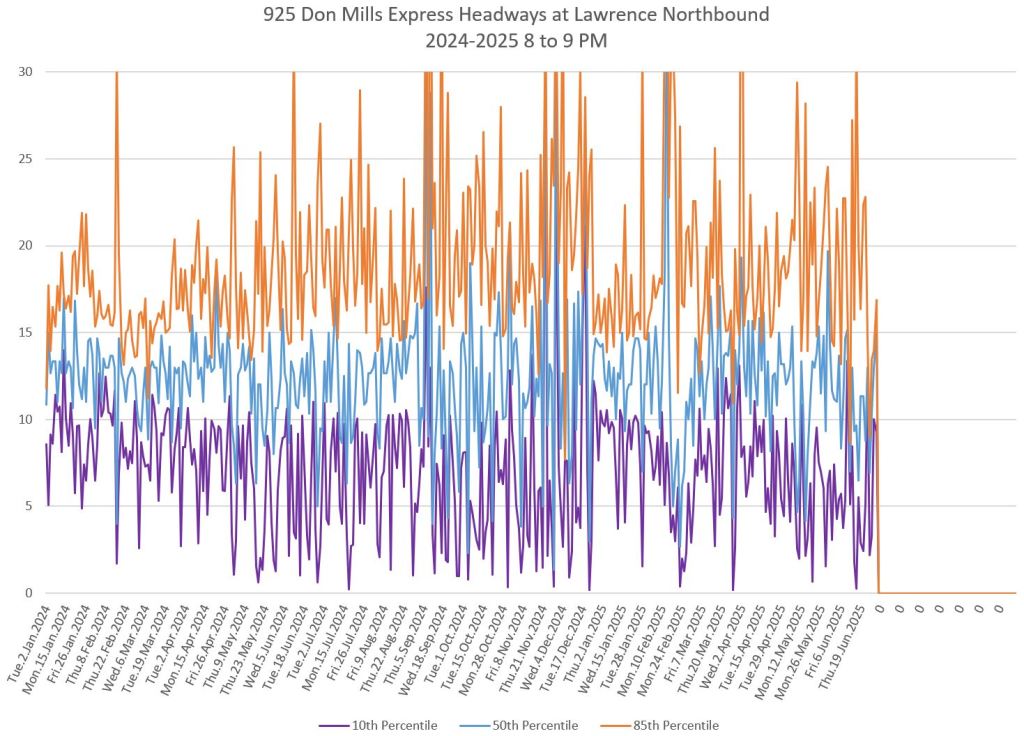
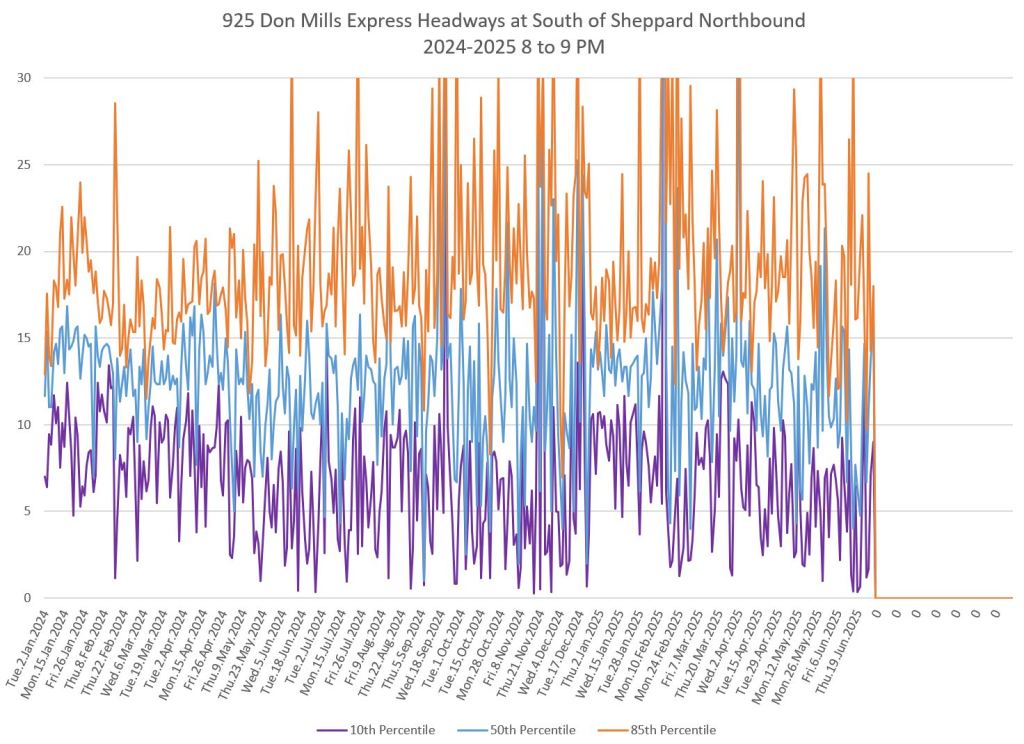
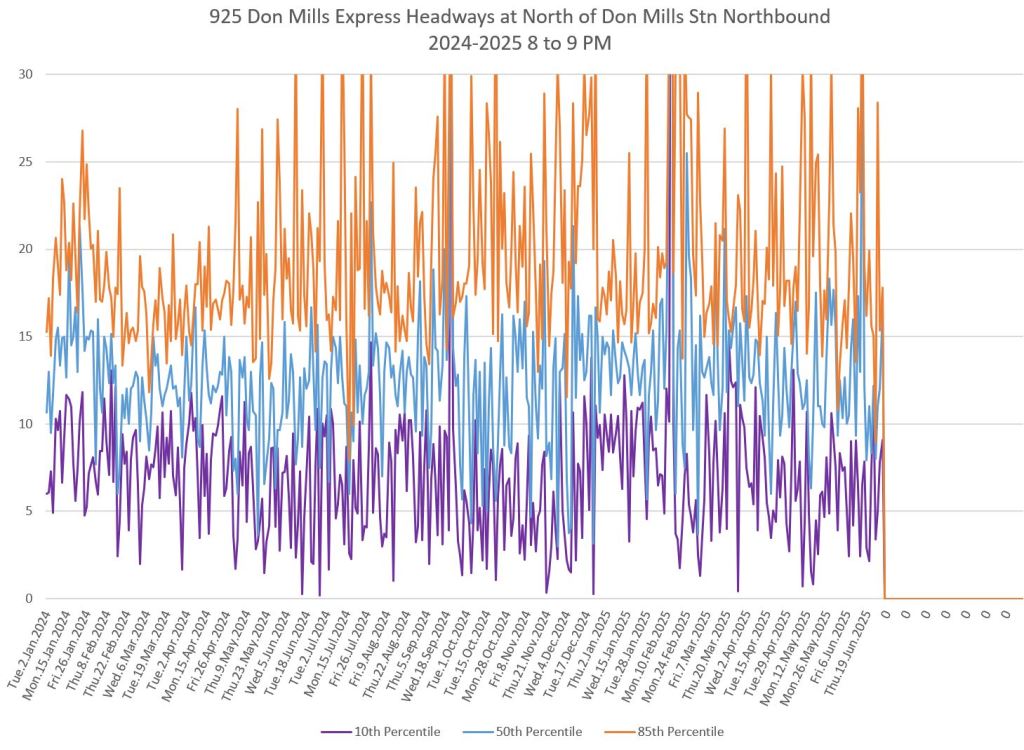
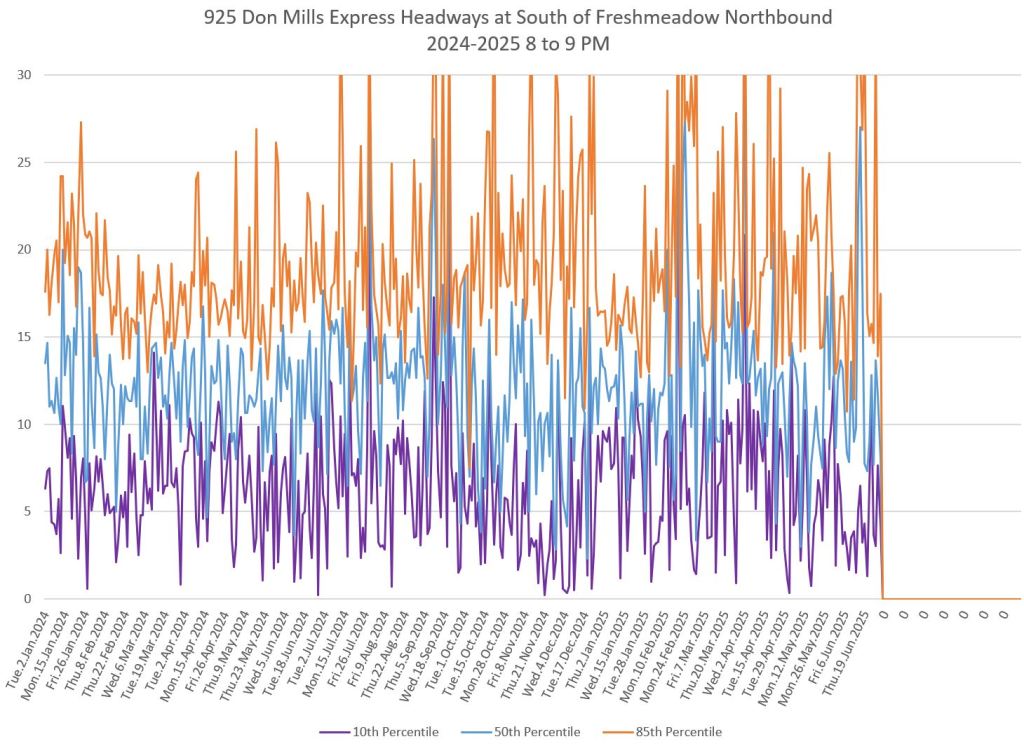
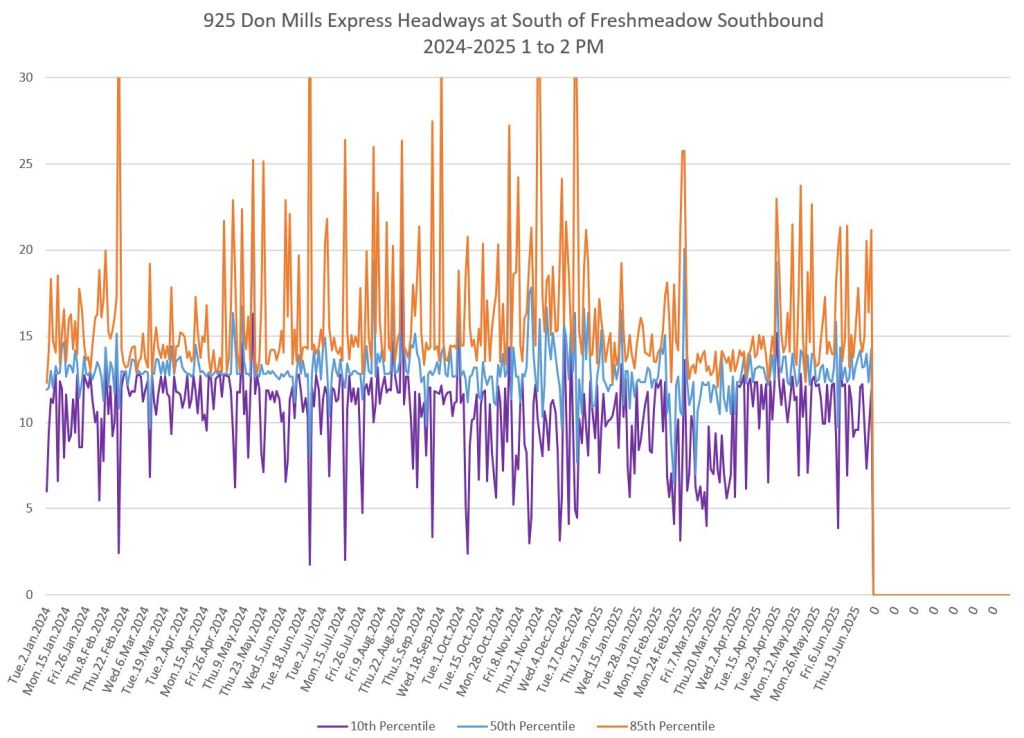
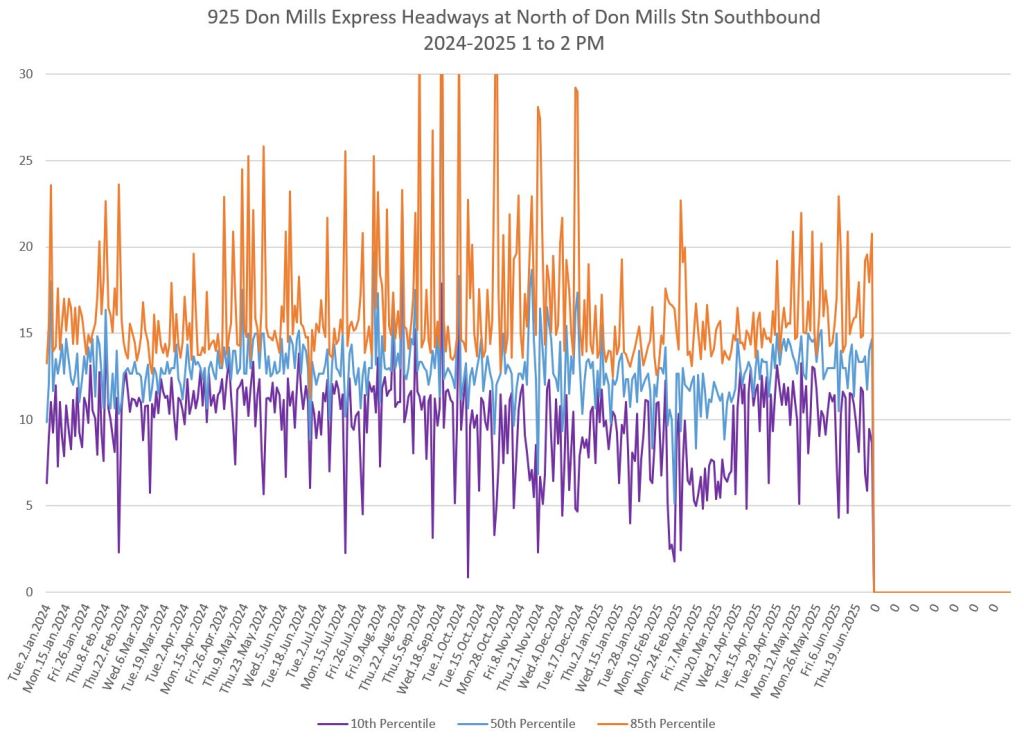
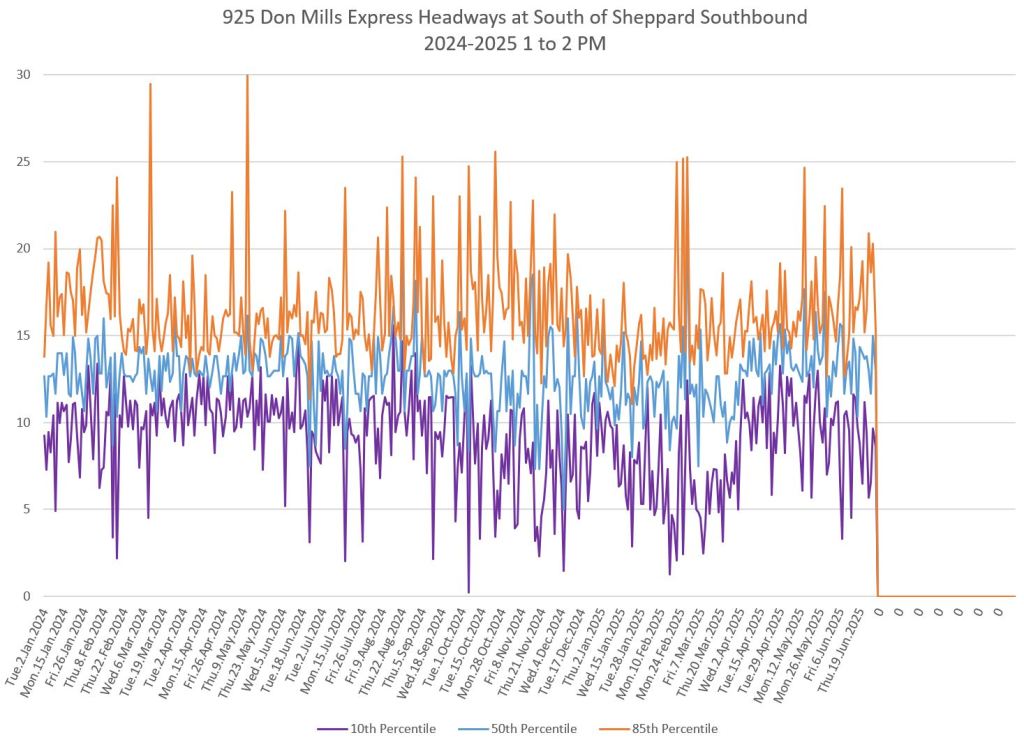
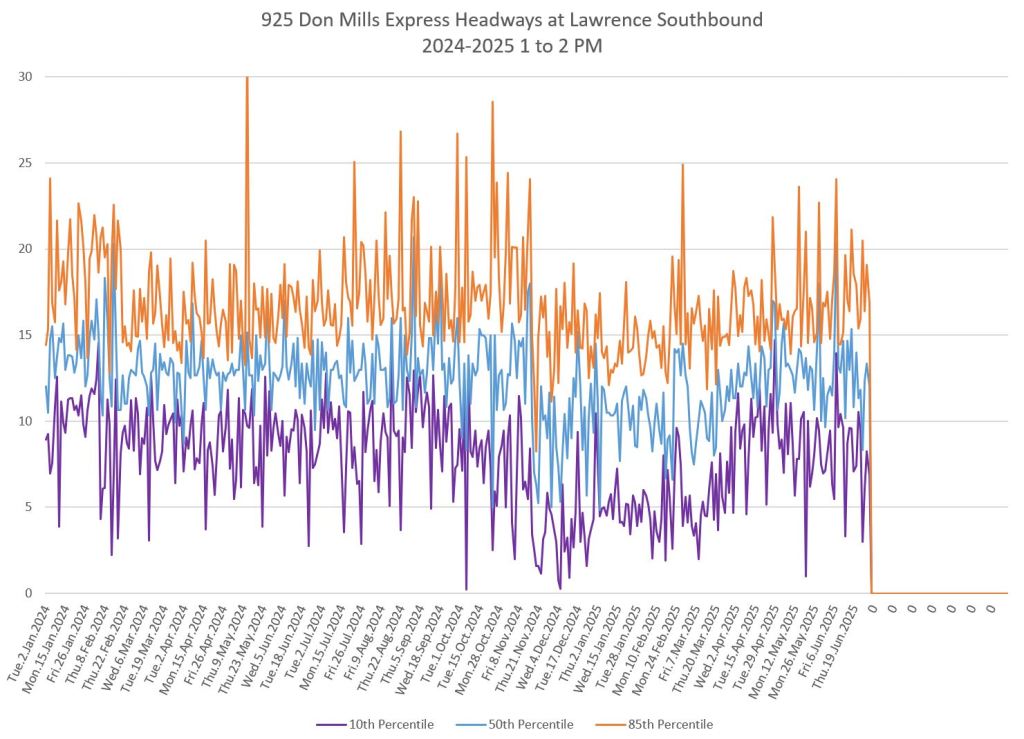
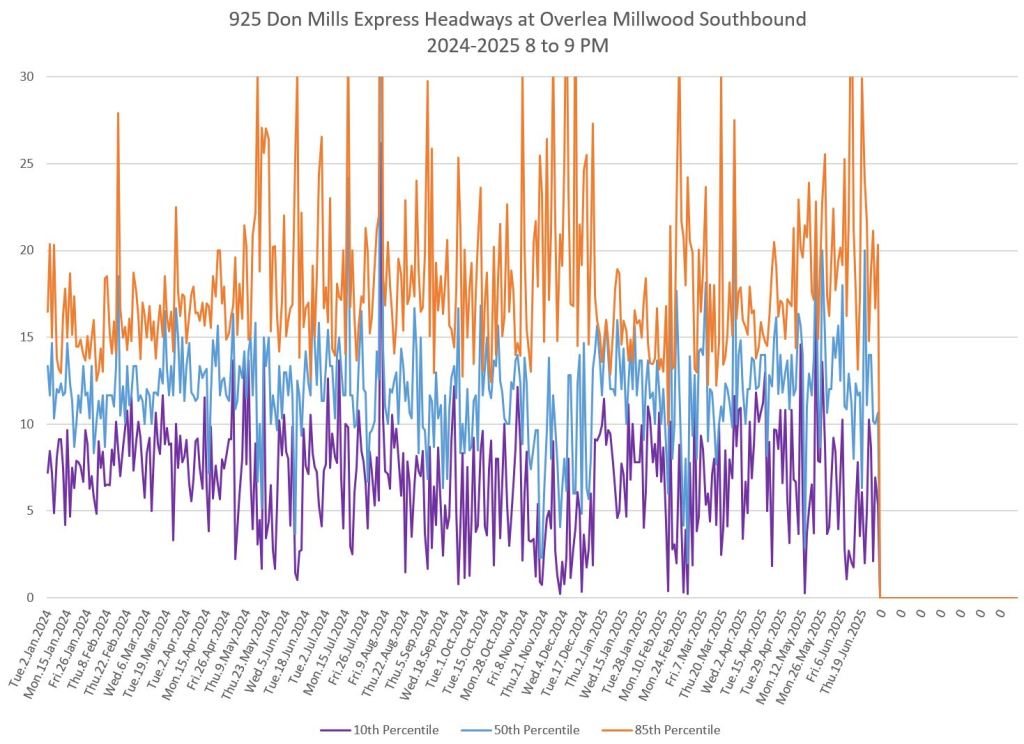
Extra service was operated in November-December 2024, and to a lesser extent in January-February 2025. Like the local service, the express service reliability took a hit from the February snow storm and its aftereffects.
| Effective | AM Peak | Midday | PM Peak | Early Eve | Late Eve |
|---|---|---|---|---|---|
| 8-Jan-24 | 925 – 9’30” +1 Tripper | 925 – 13′ | 925 – 9’15” +1 Tripper | 925 – 13′ | |
| 13-May-24 | 925 – 9’30” | 925 – 13′ | 925 – 9’15” | 925 – 13′ |
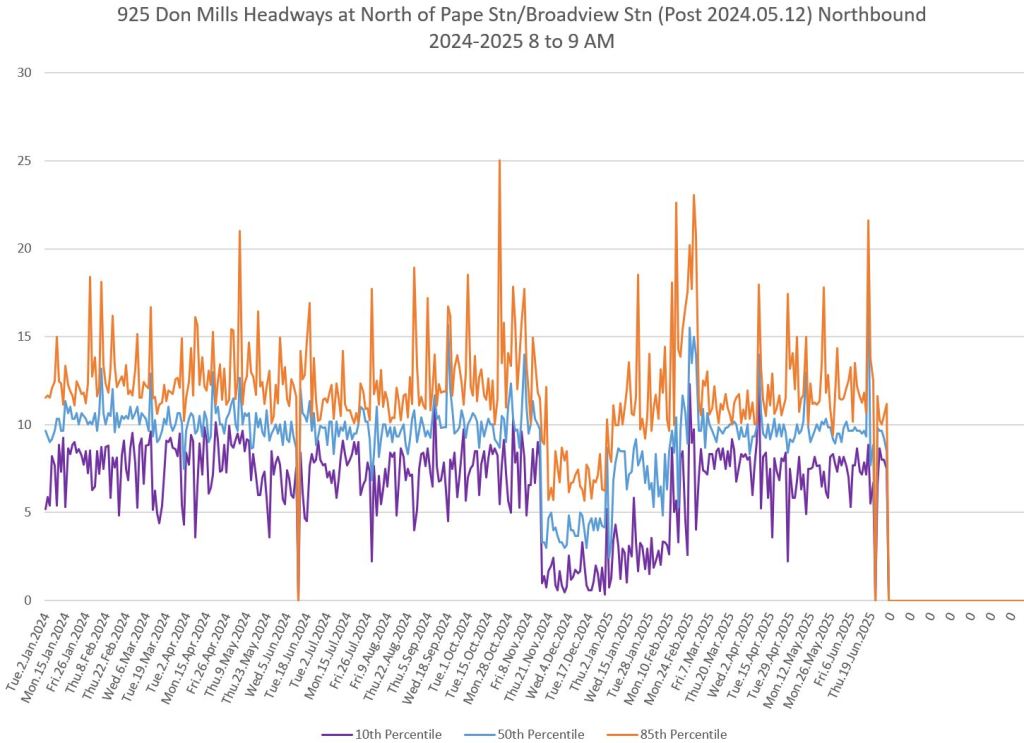
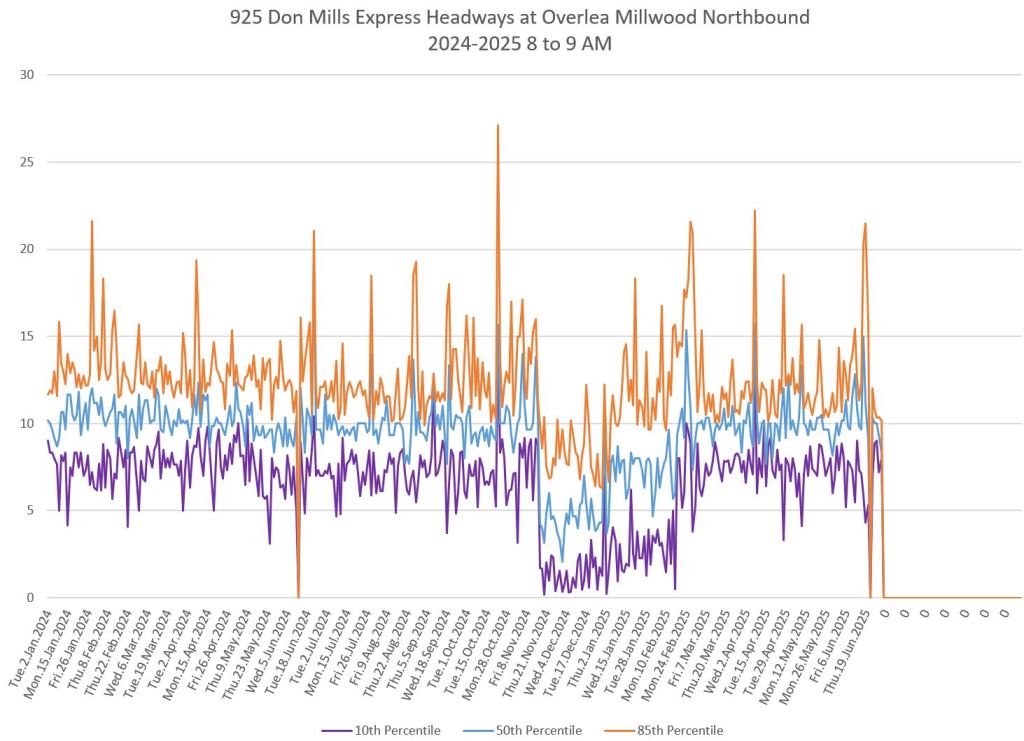
Northbound from Danforth to Steeles
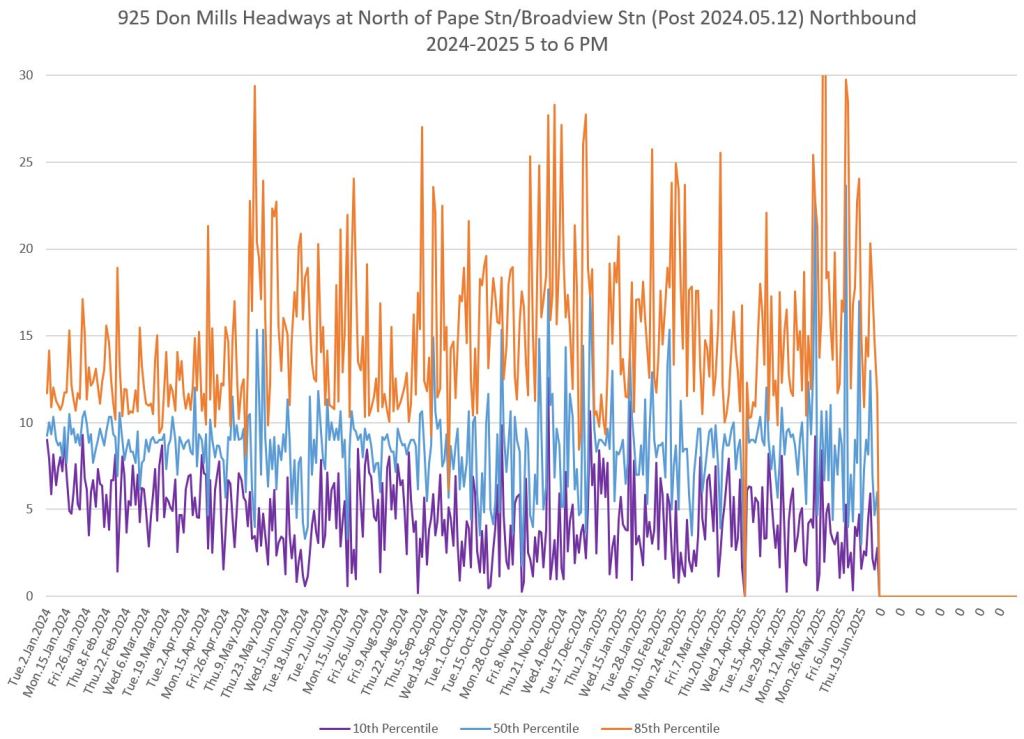
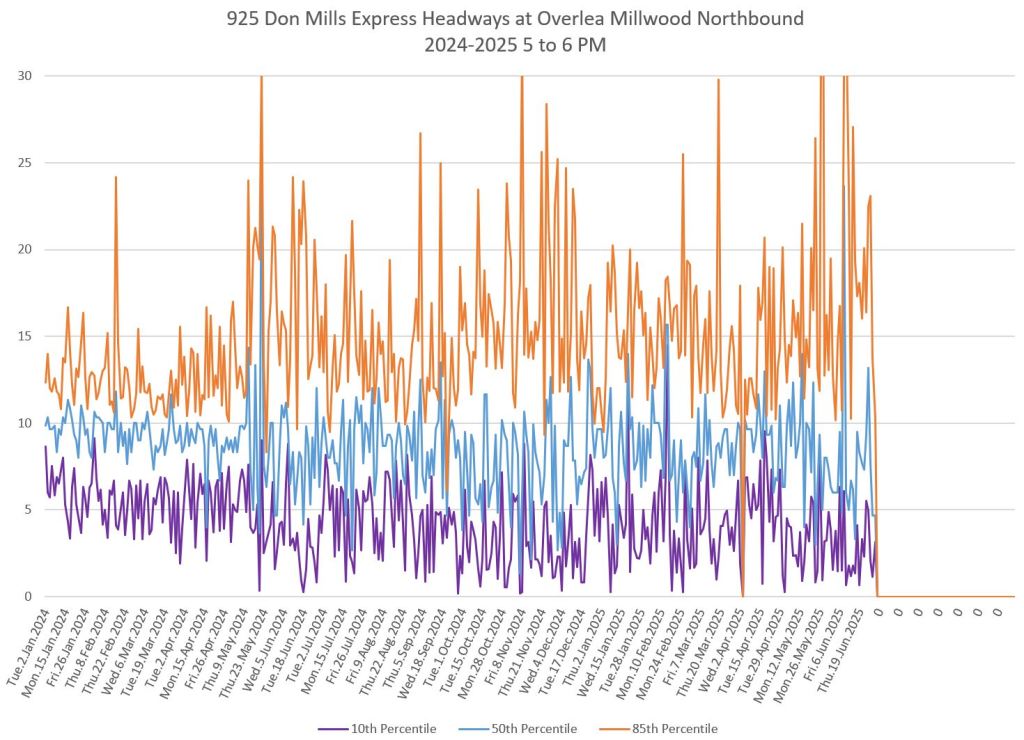
Service north from Danforth shows the usual pattern of a widening range of headways as buses move along the route. The 85th percentile hits the 30 minute line on several occasions from Midday onward. Waiting for this “express” bus is more an act of faith than good trip planning.
The period of extra service is marked by low 10th percentile values showing that the added buses were not well-integrated into the scheduled service.
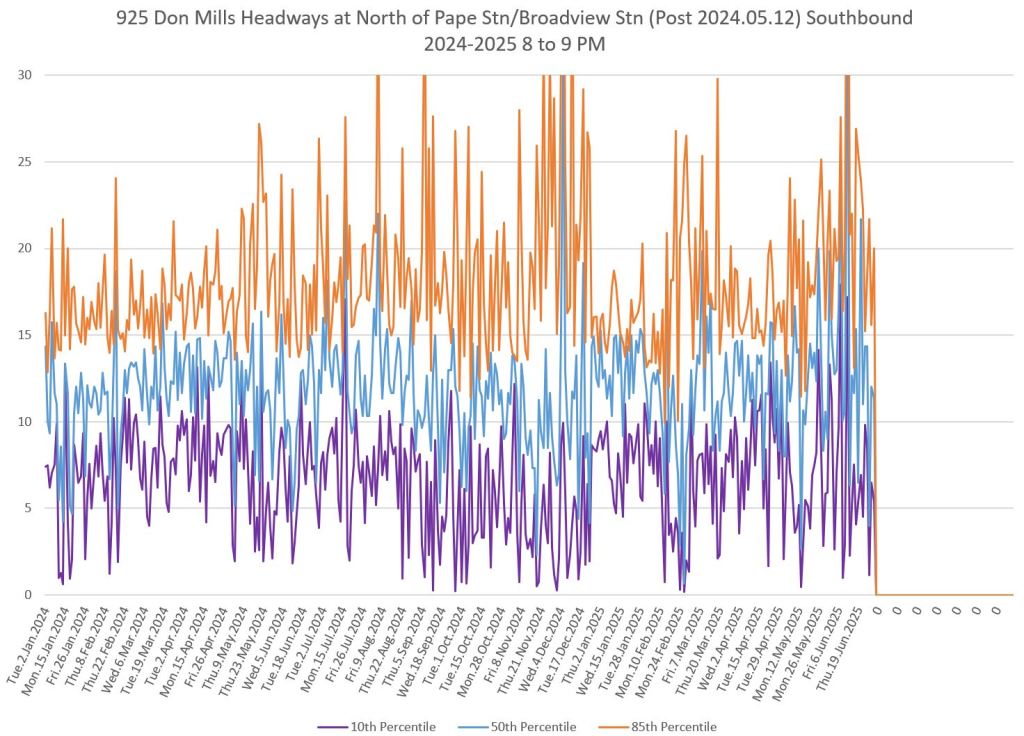
The spread in headway ranges at the south end of the route opens out noticeably with the shift of terminus from Pape to Broadview Station particularly in the PM peak and Early Evening periods.
AM Peak
Midday
PM Peak
Early Evening
Southbound from Steeles
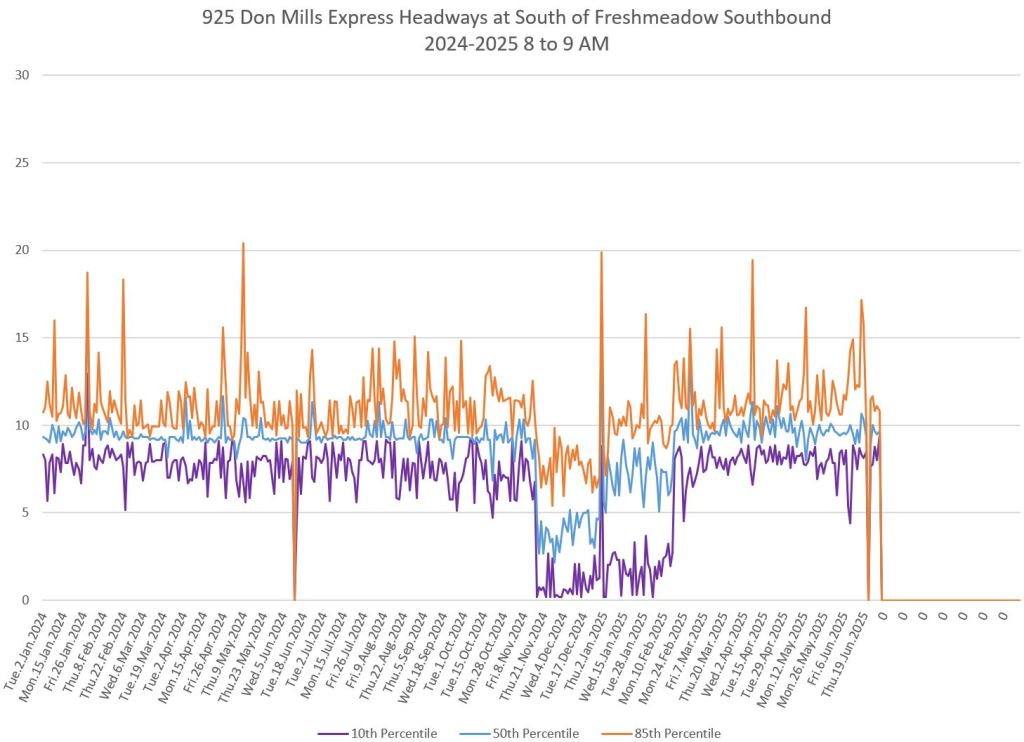
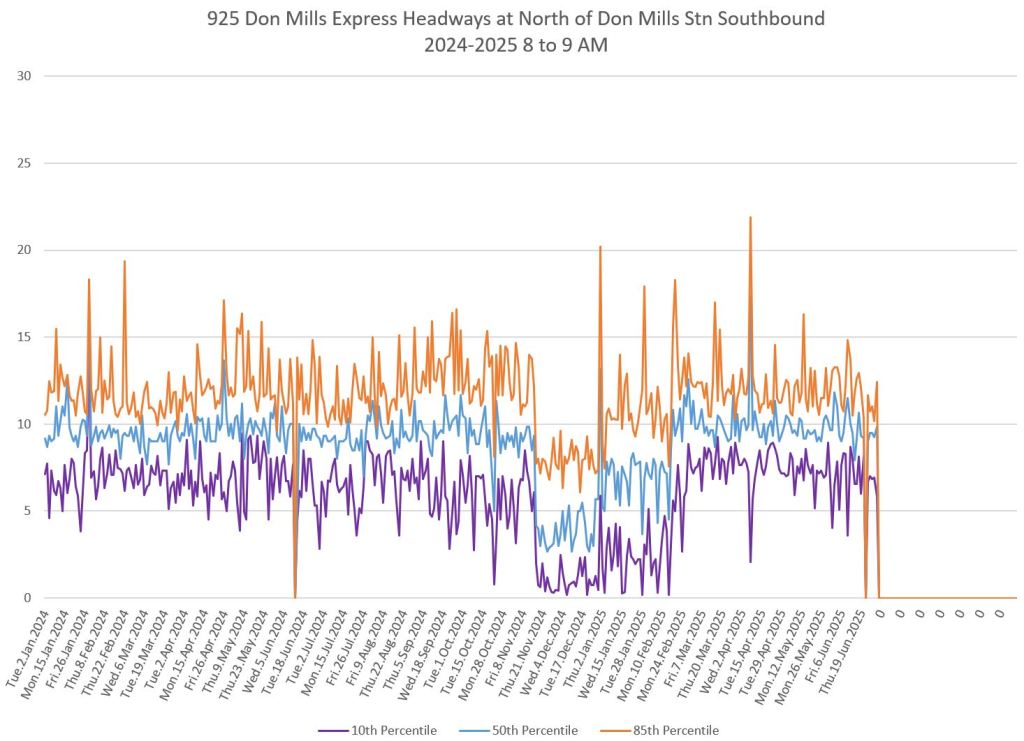
The southbound service shows some of the same patterns as northbound including the jump in headway ranges concurrent with the southern terminal switch to Broadview Station. Later in the day, the range of headway values for the 10th-85th percentiles is very wide with the 85th percentile frequently hitting the 30 minute line.
AM Peak
Midday
PM Peak
Early Evening
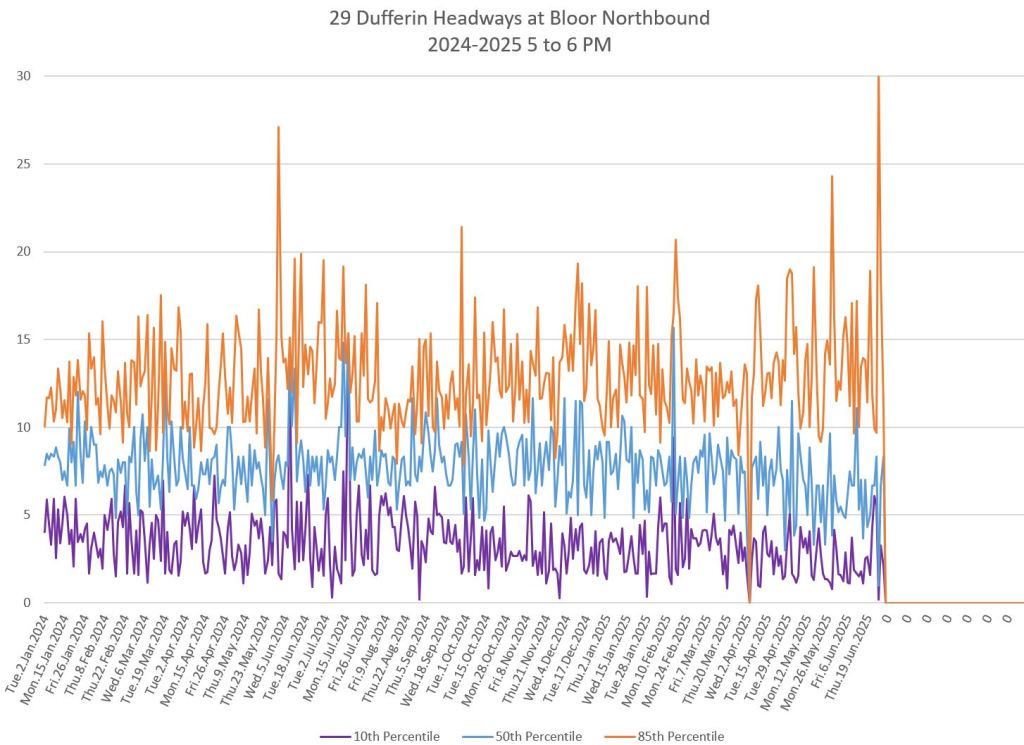
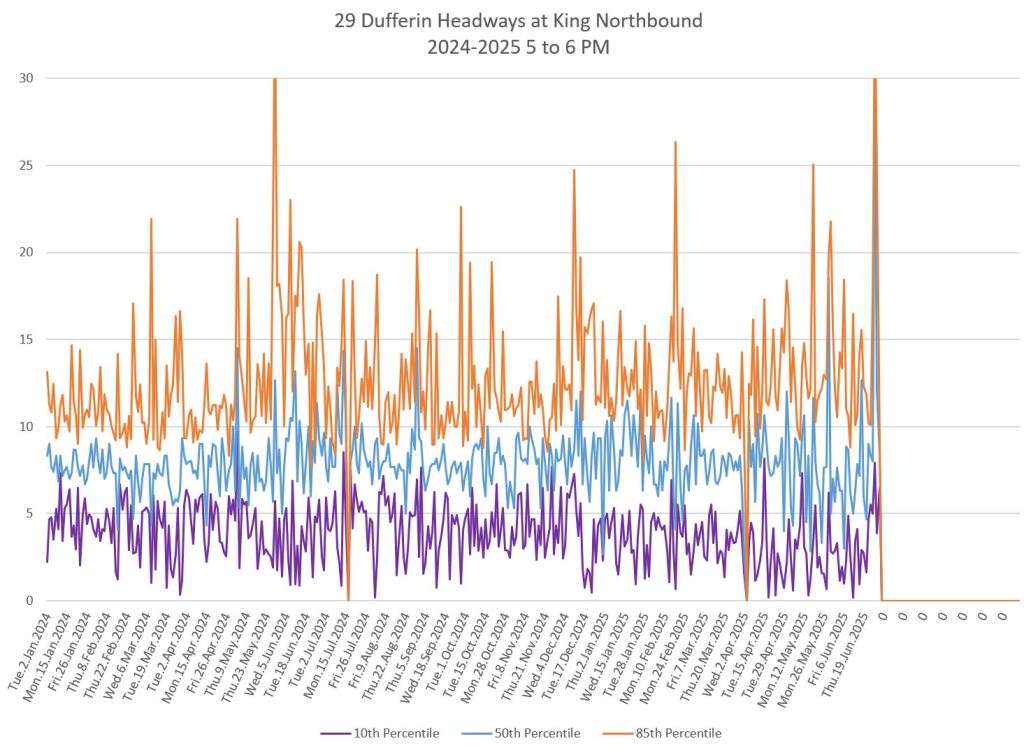
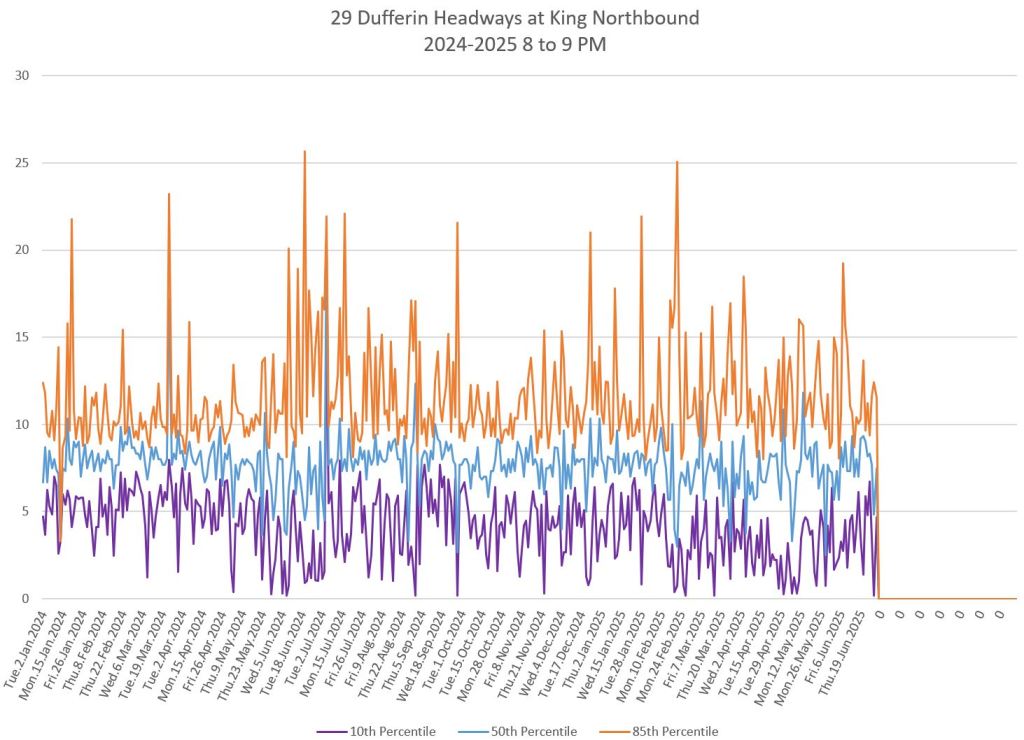
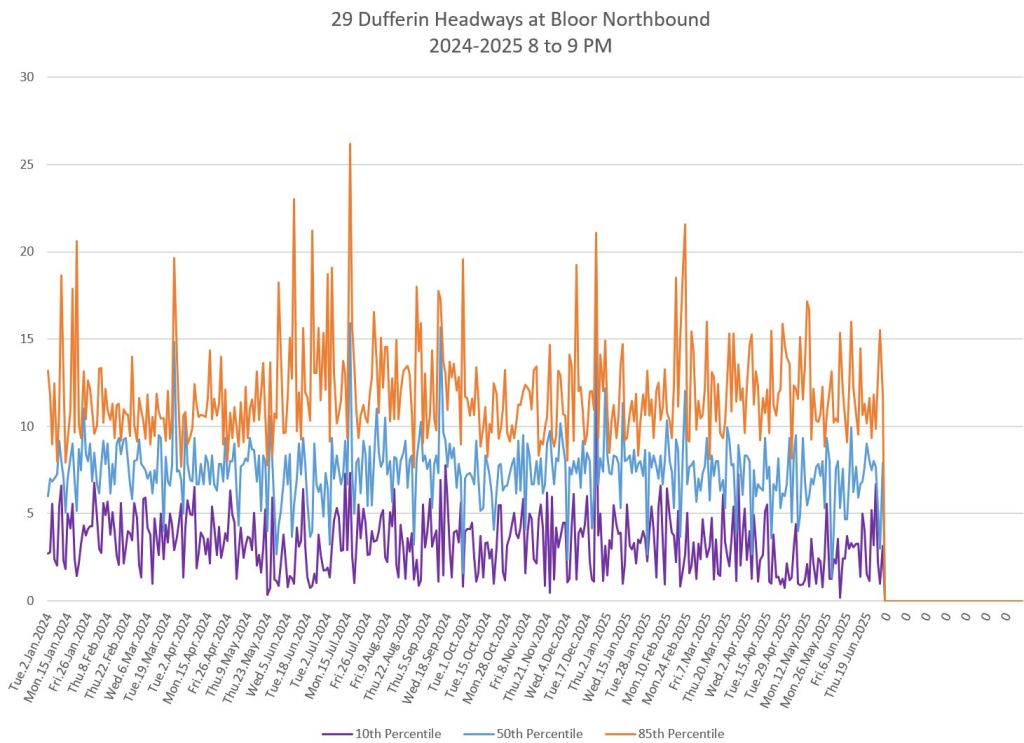
29 Dufferin
- 29A Wilson Station to Dufferin Gate
- 29C Wilson Station to Princes’ Gate (* Alternate trips run as 29A and 29C)
During the winter when there is little activity in Exhibition Place, half of the 29 Dufferin local service is extended through the grounds to the loop at Princes’ Gate (29C). A blended service runs north from the Dufferin Gate.
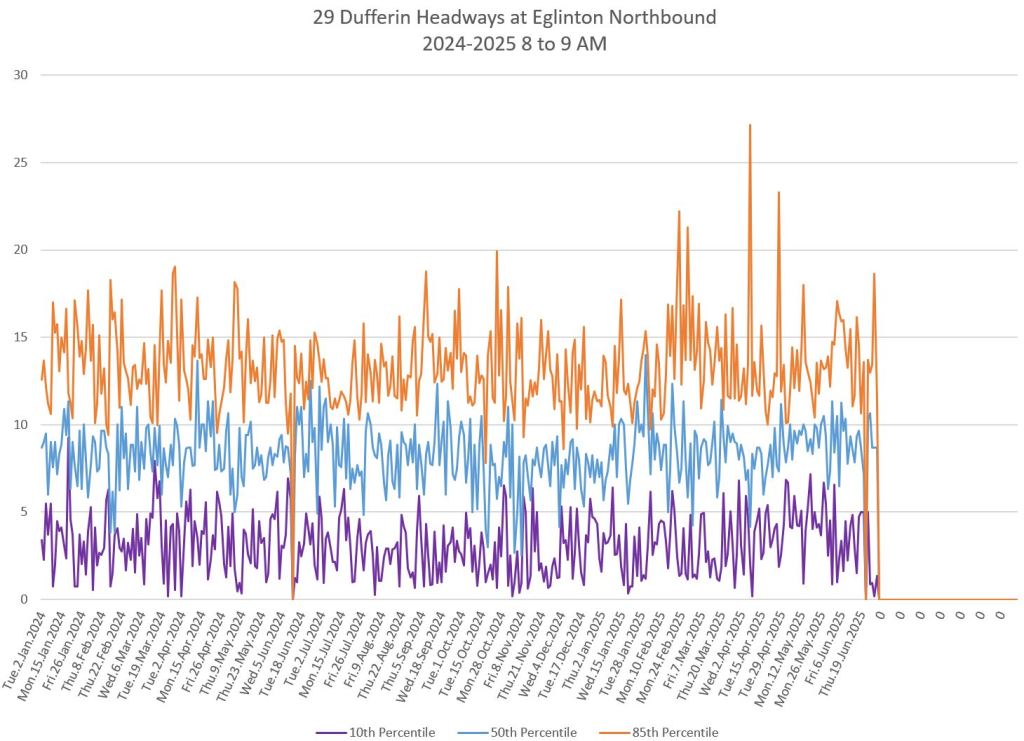
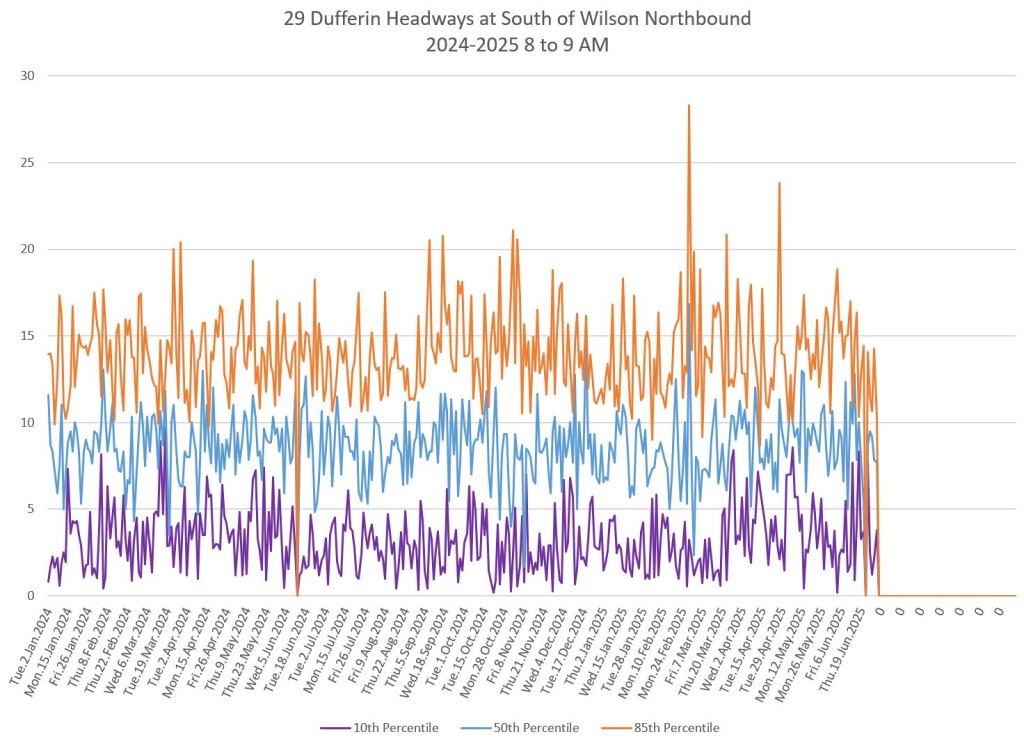
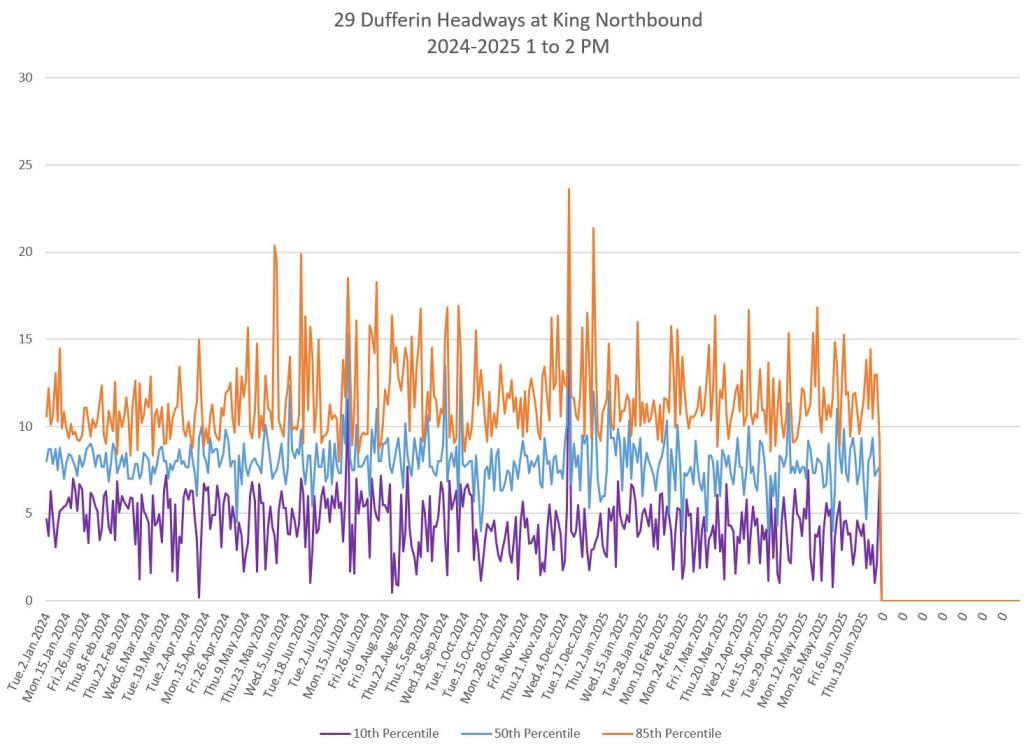
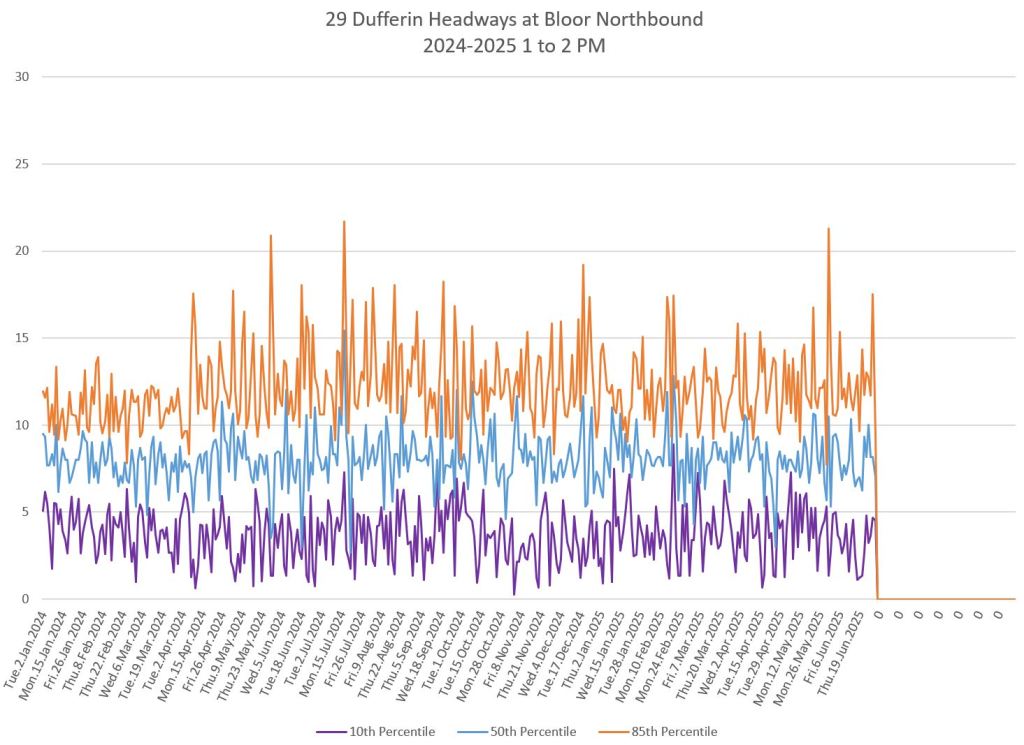
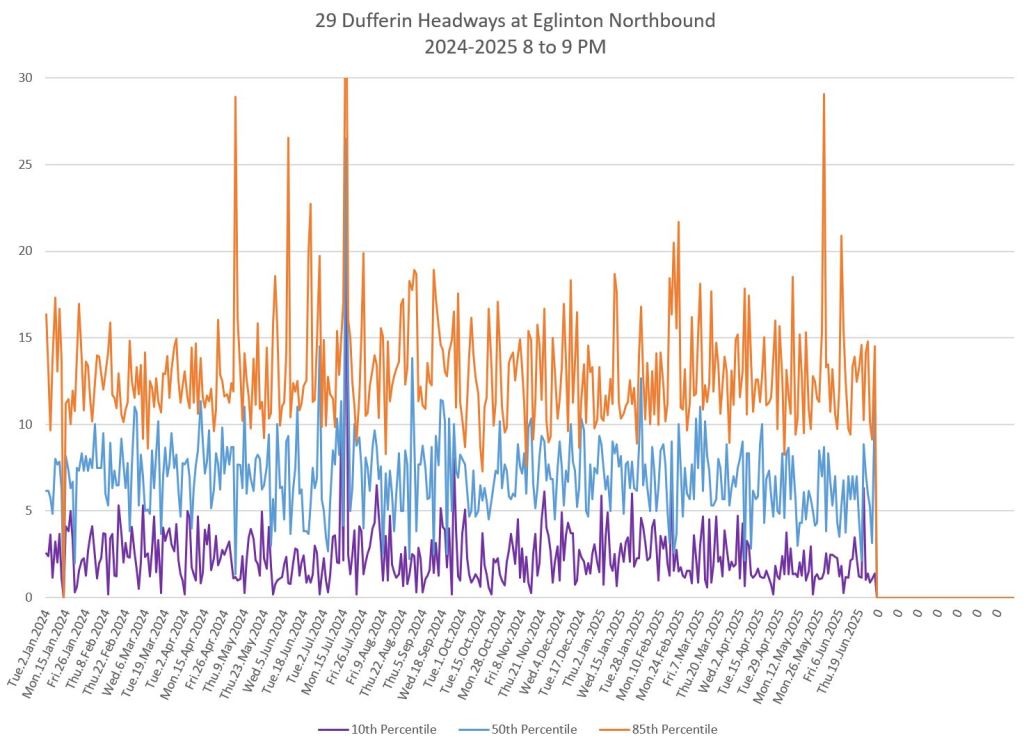
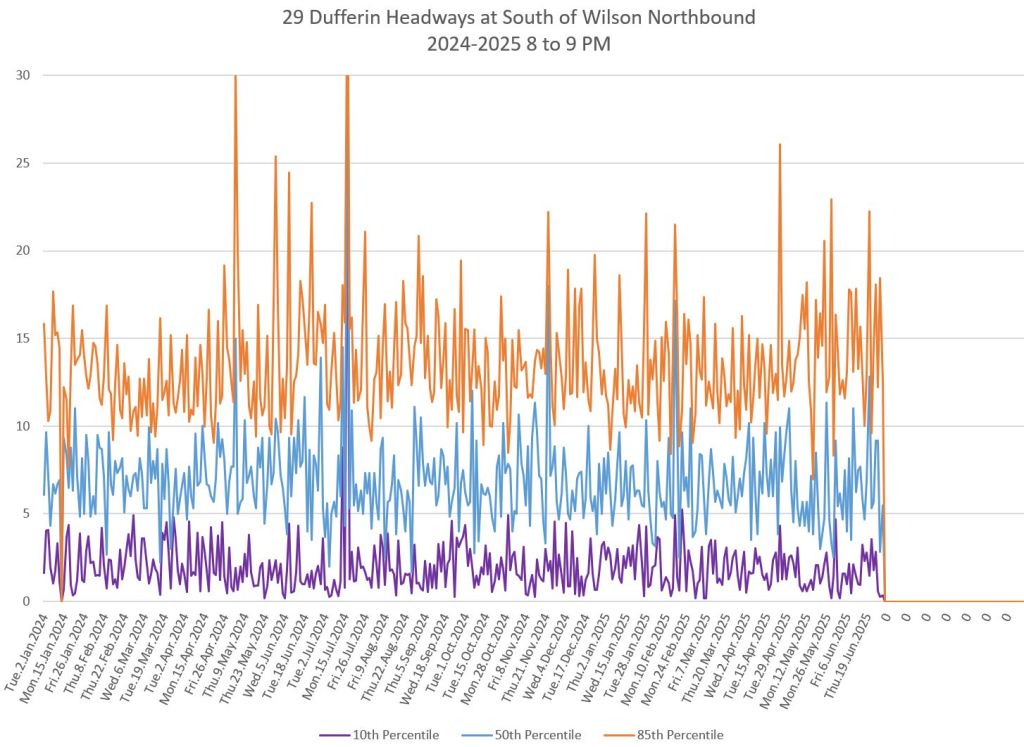
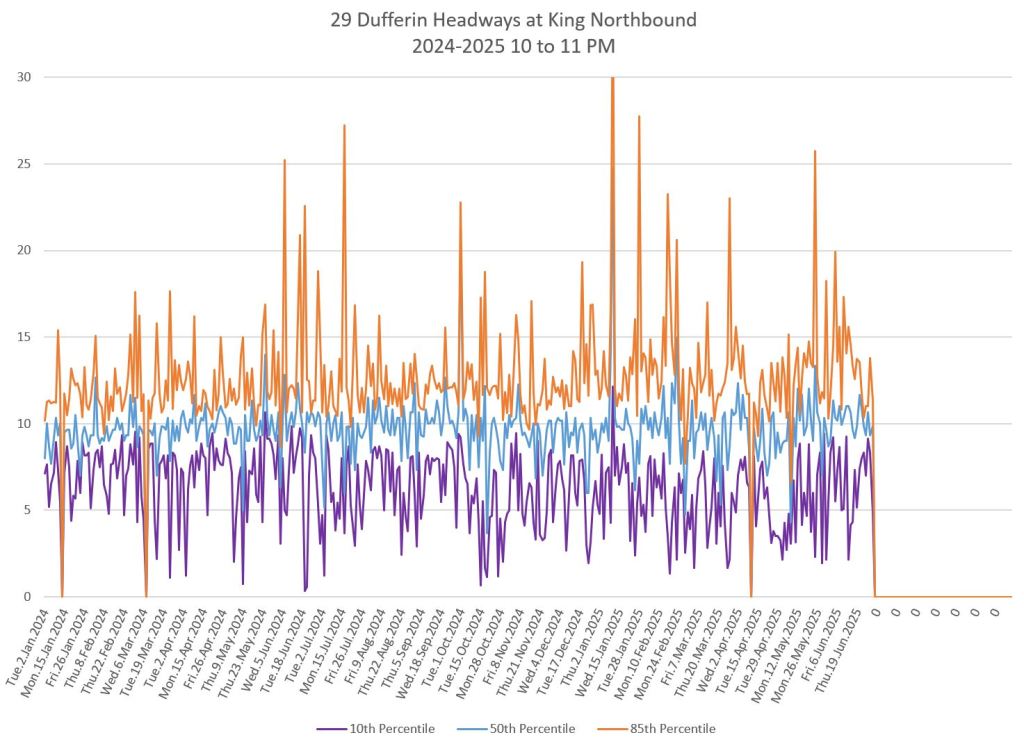
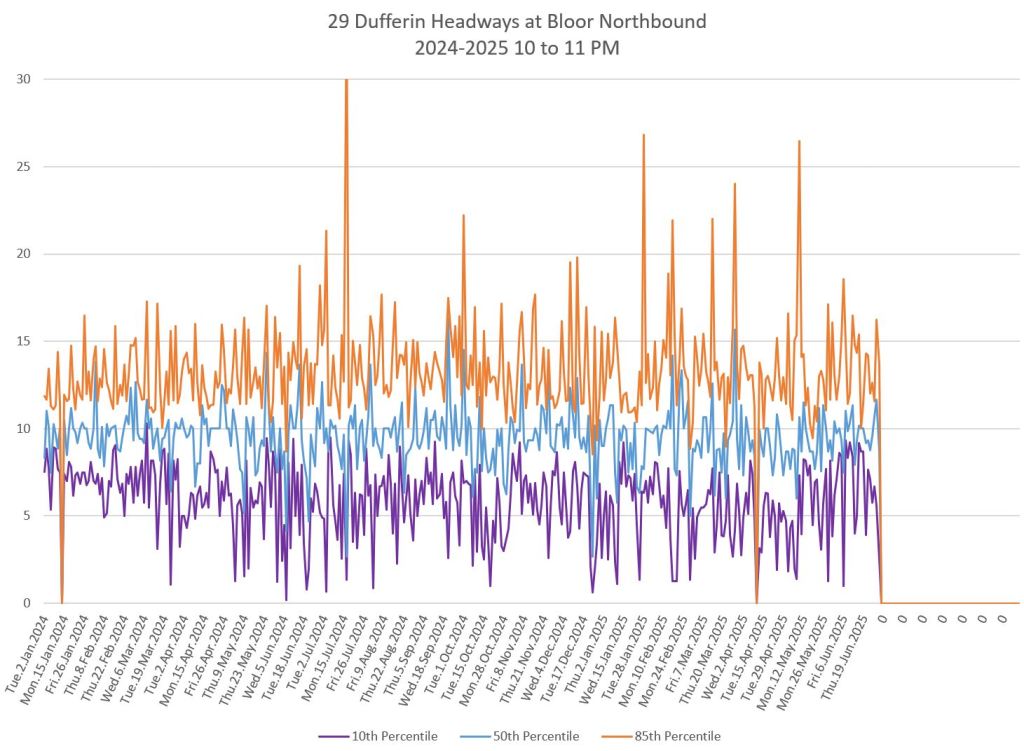
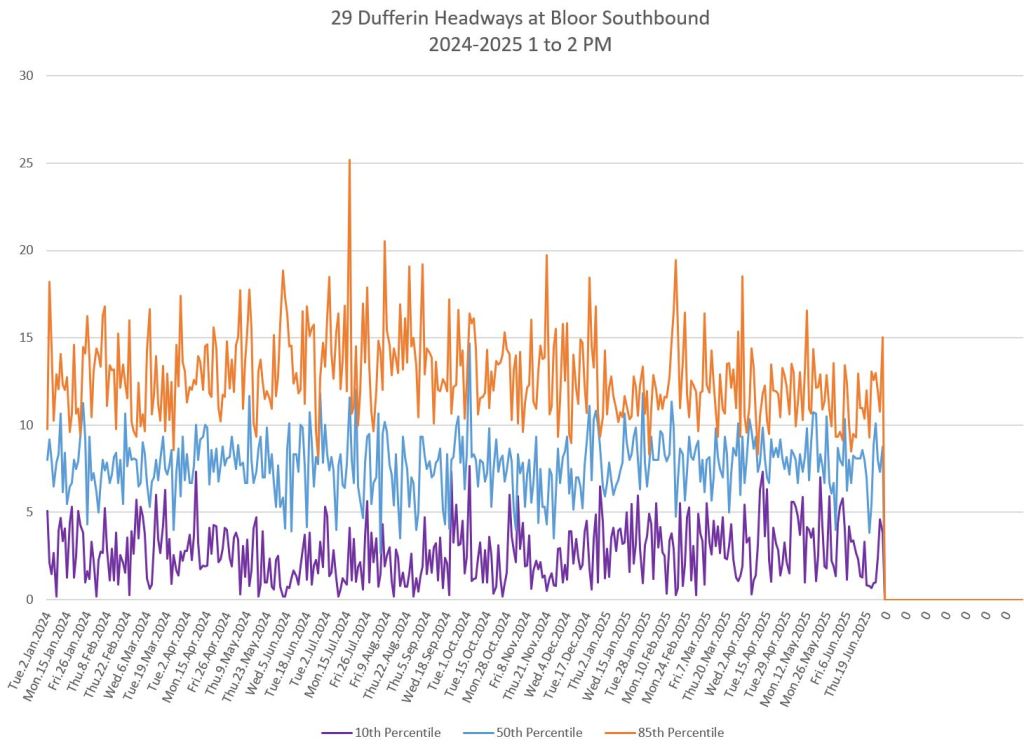
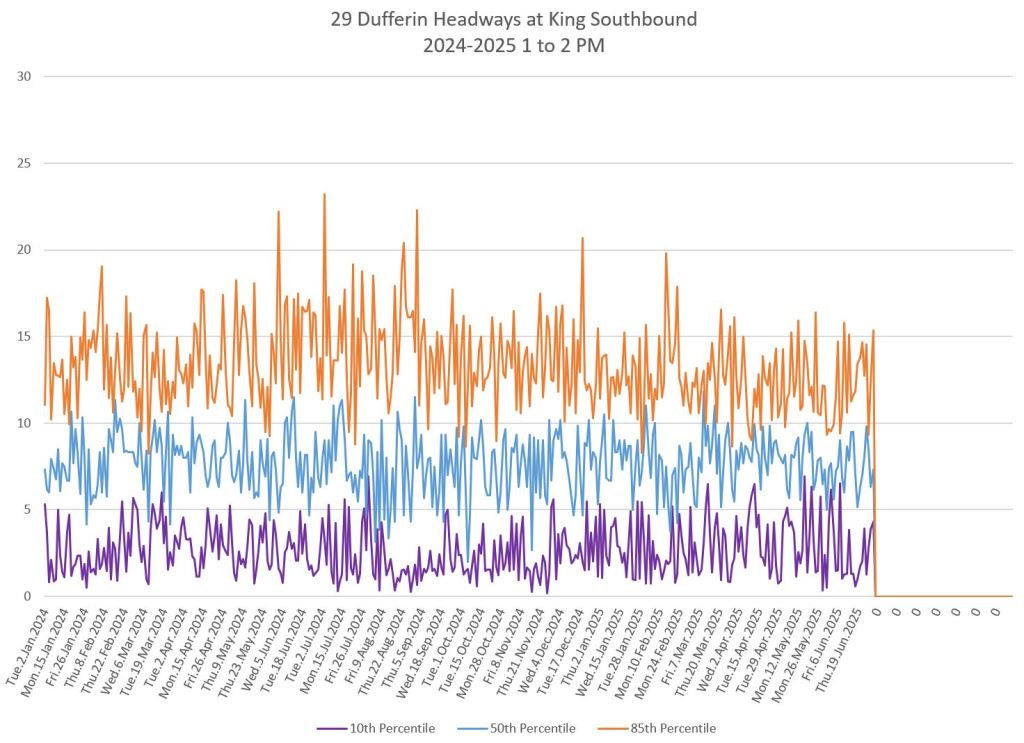
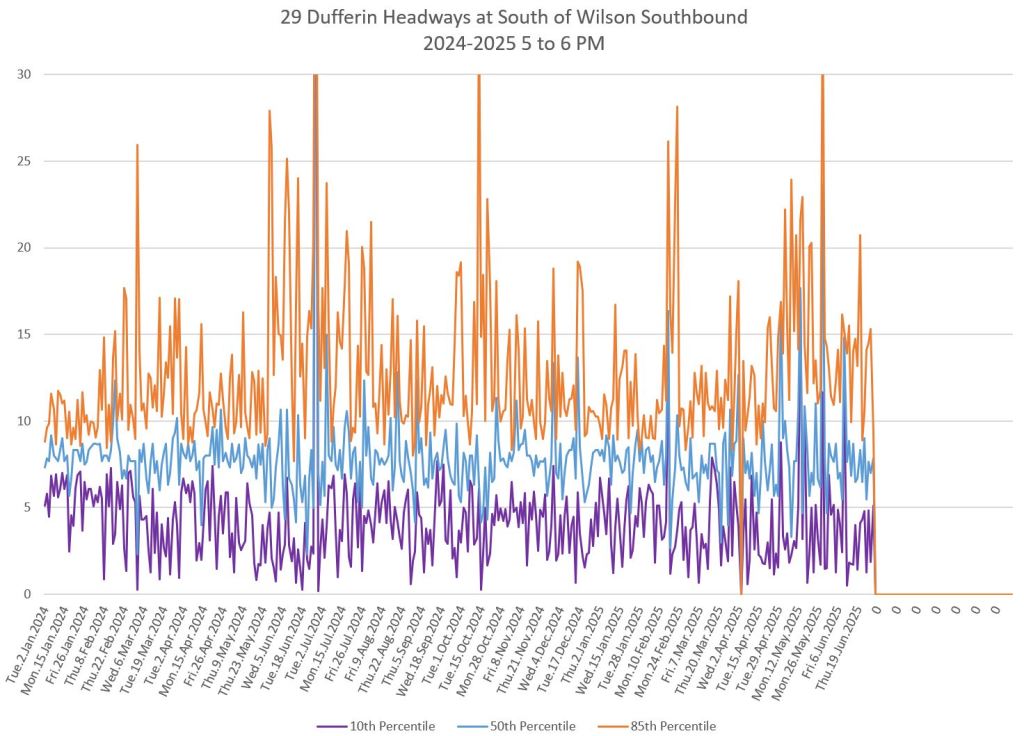
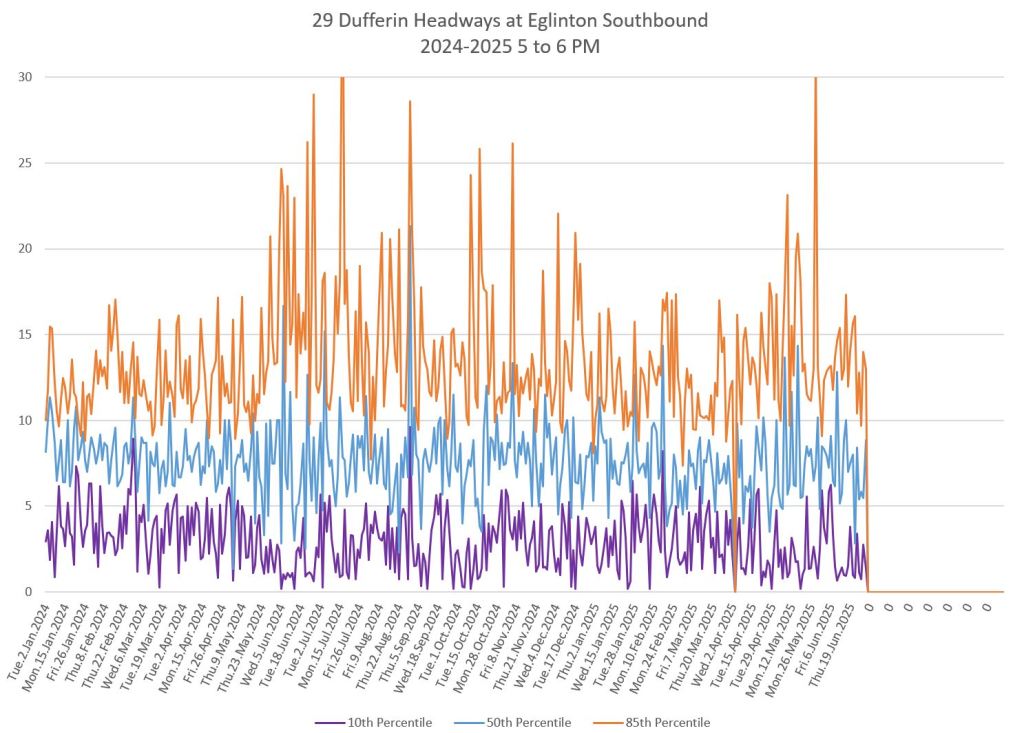
The screenlines used for 29 Dufferin are at King, Bloor, Eglinton and Wilson.
| Effective | AM Peak | Midday | PM Peak | Early Eve | Late Eve |
|---|---|---|---|---|---|
| 8-Jan-24 | 29A – 8′ | 29A – 8′ | 29A – 8′ | 29A – 8′ | 29A – 10′ |
| 7-Oct-24 (*) | 29A – 8′ 29C – 16′ | 29A – 8′ 29C – 16′ | 29A – 8′ 29C – 16′ | 29A – 8′ 29C – 16′ | 29A – 10′ 29C – 16′ |
| 23-June-25 | 29A – 8′ | 29A – 8′ | 29A – 8′ | 29A – 8′ | 29A – 10′ |
Northbound from Exhibition to Wilson Station
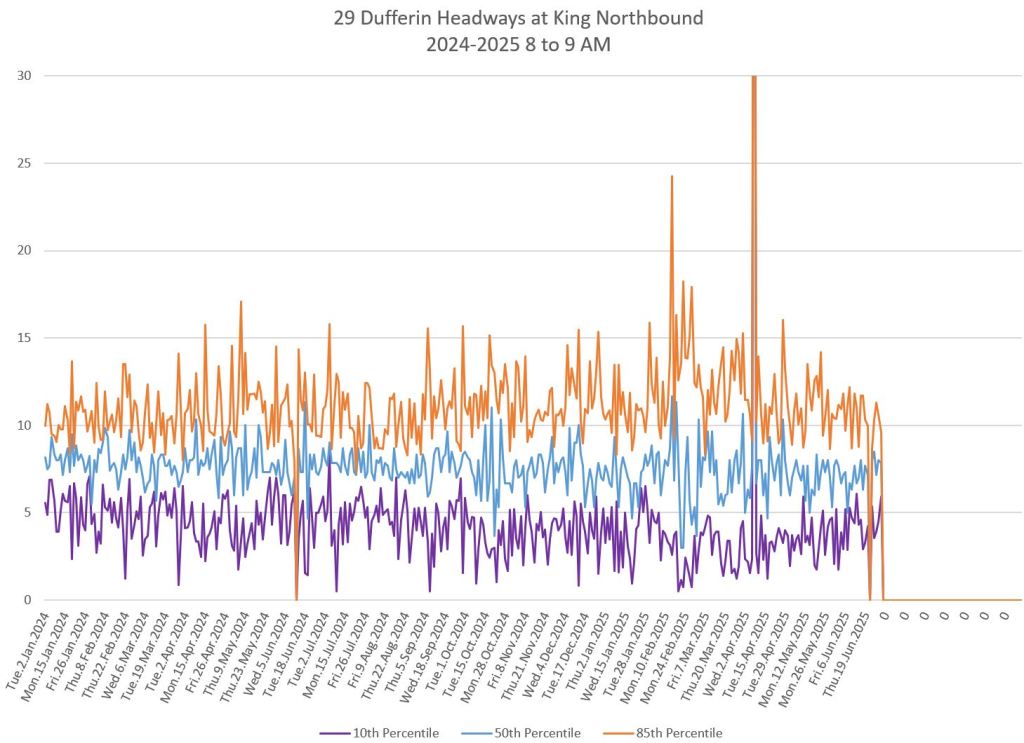
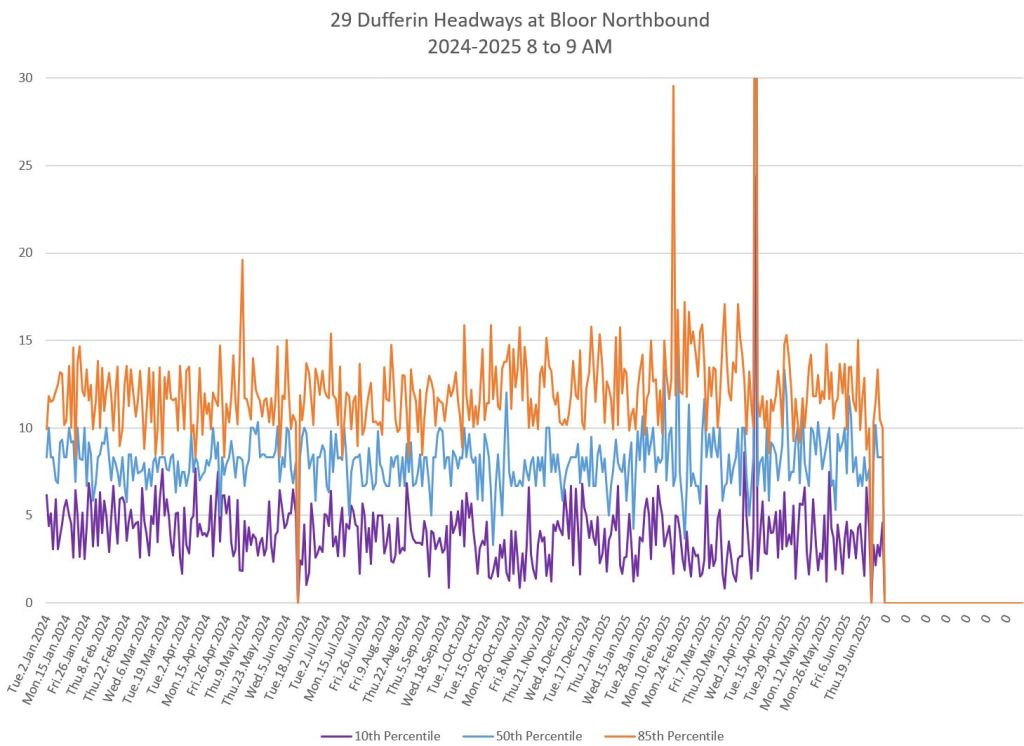
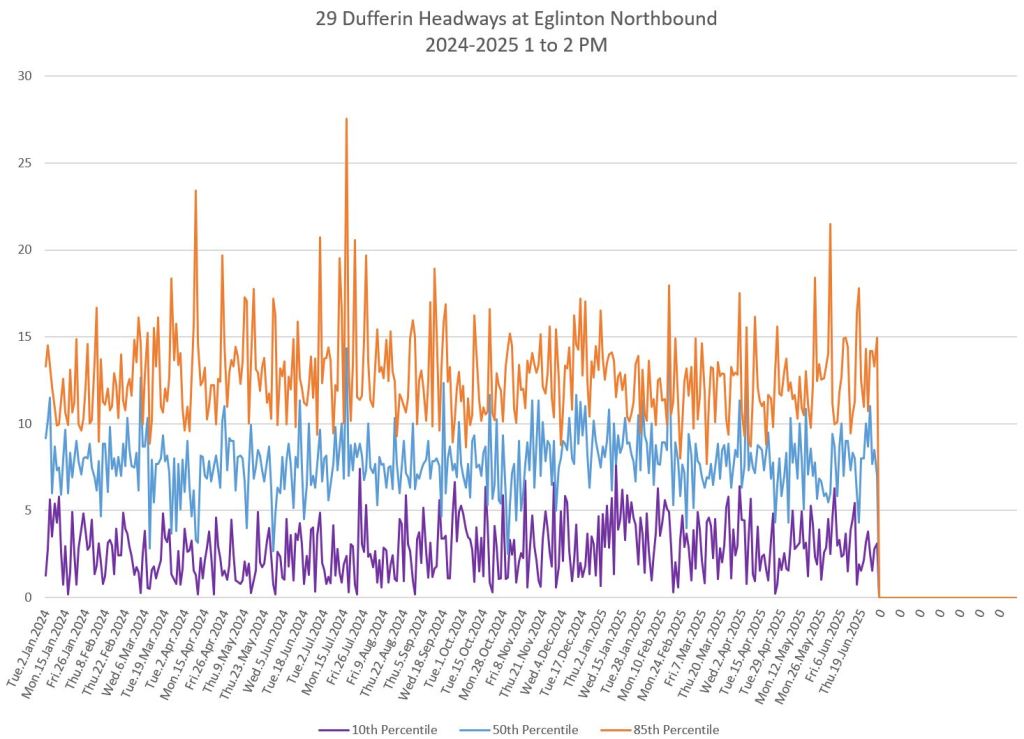
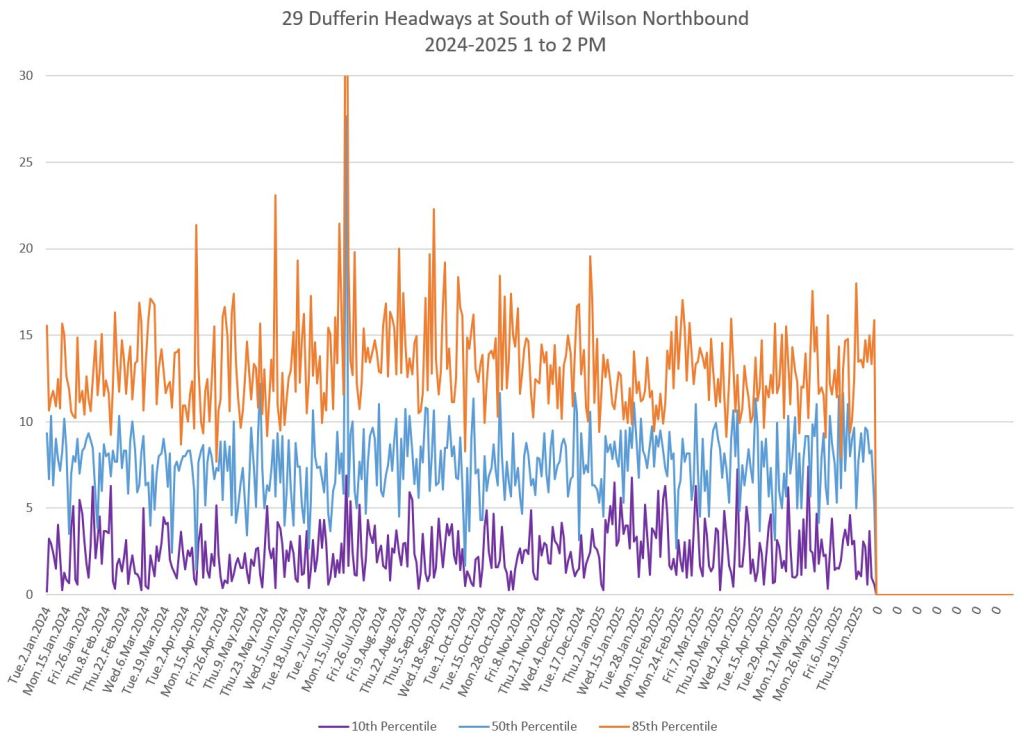
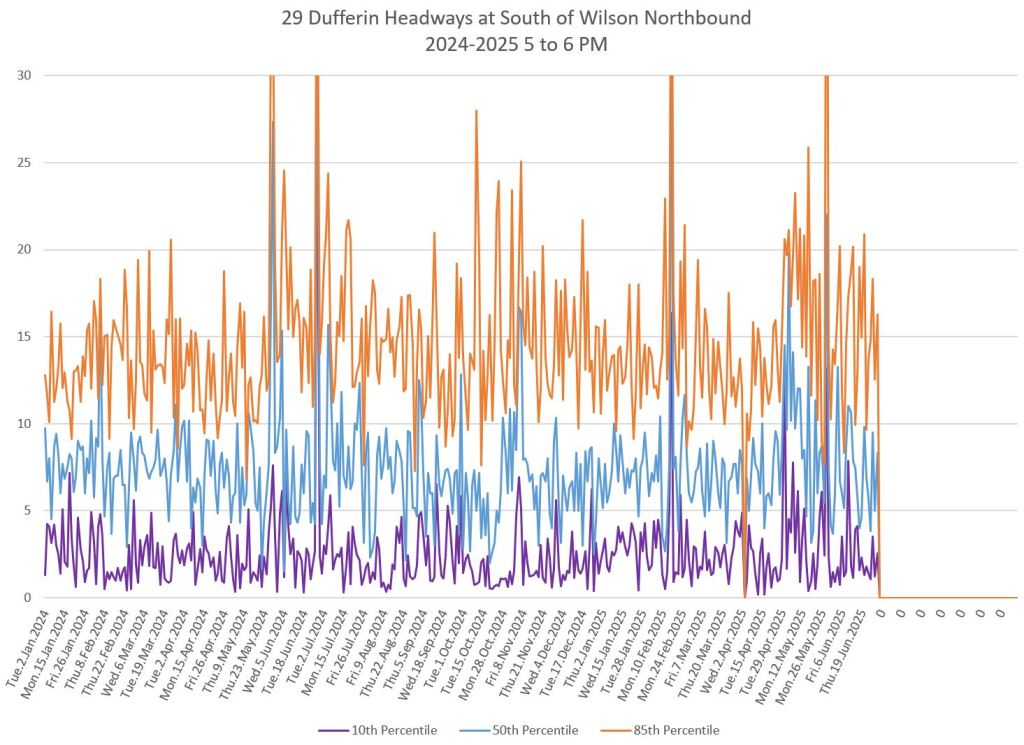
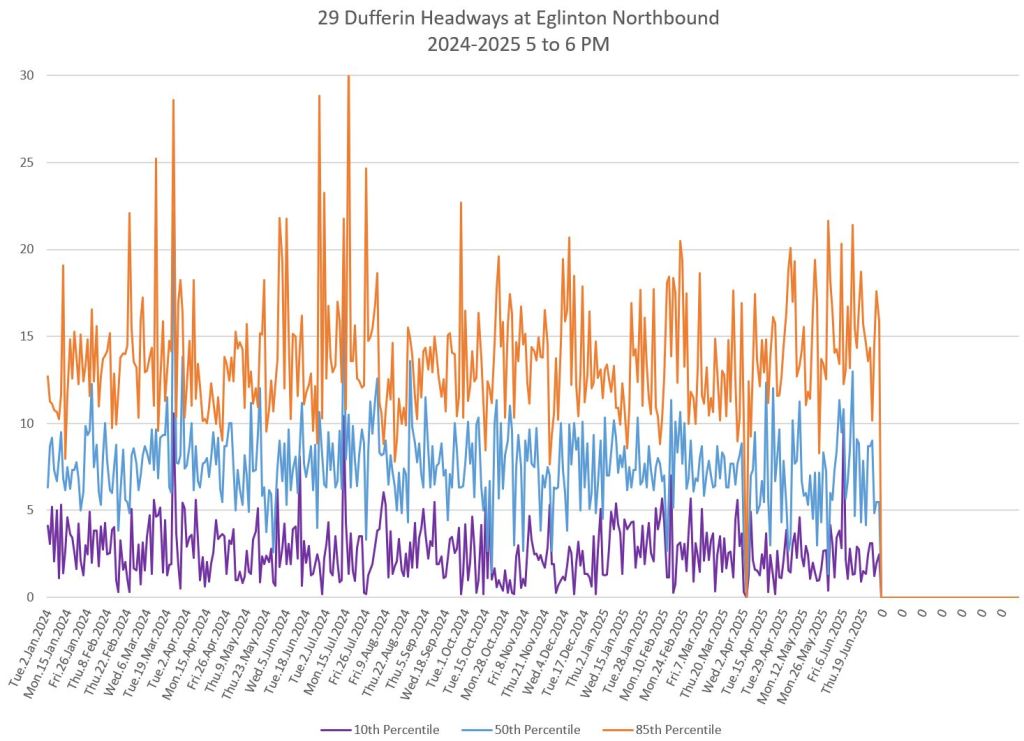
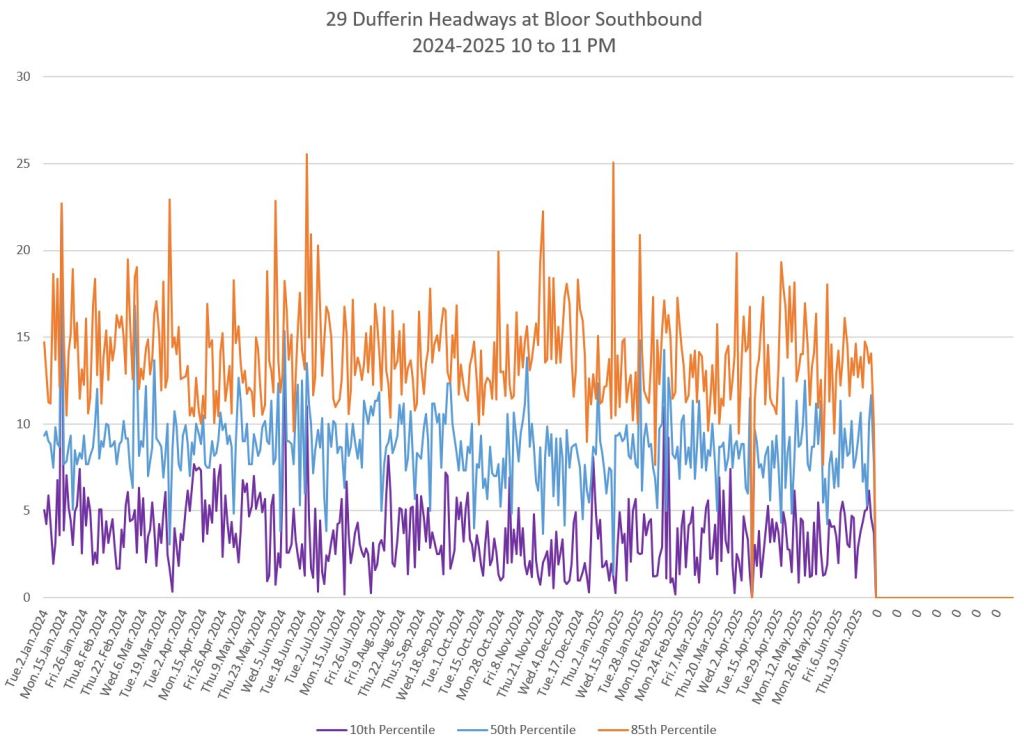
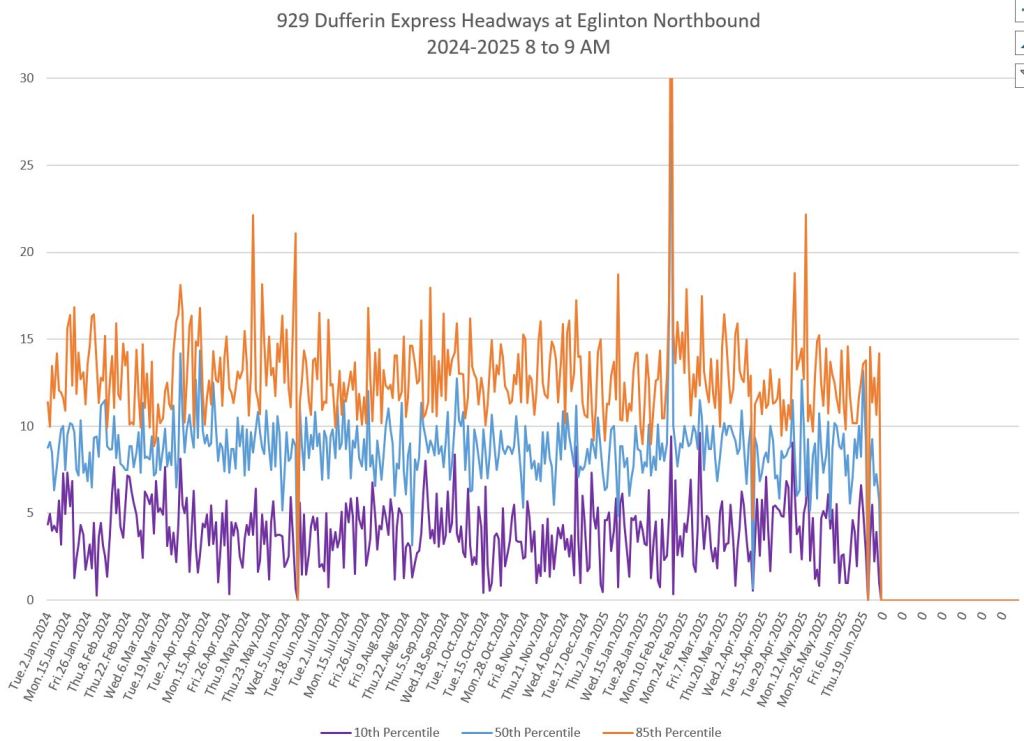
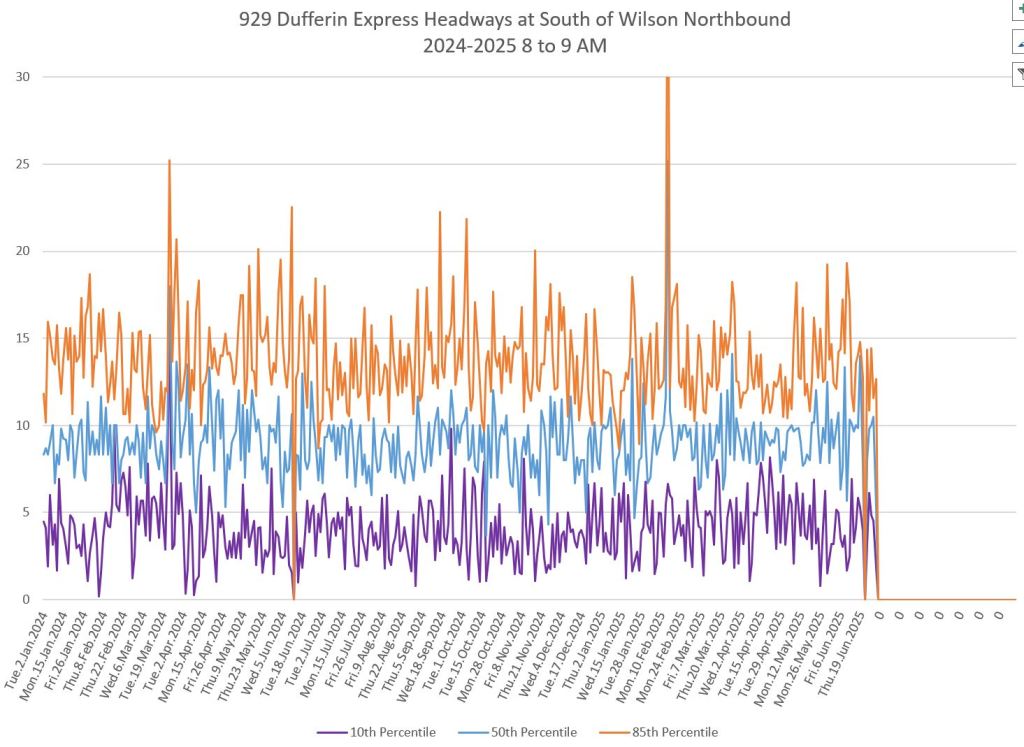
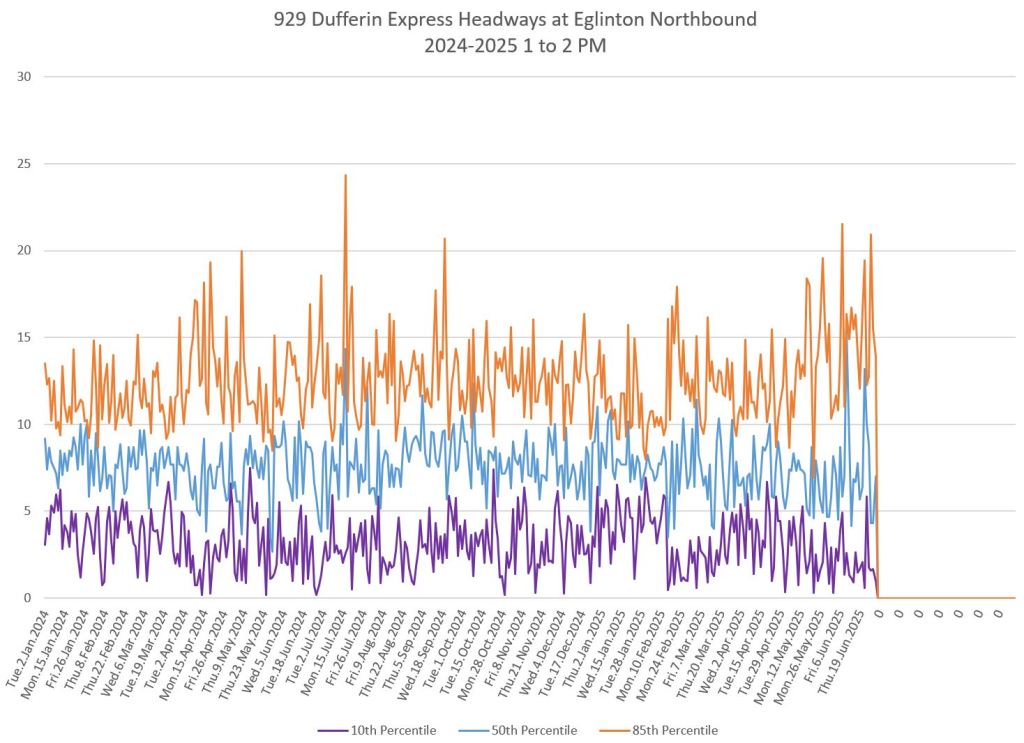
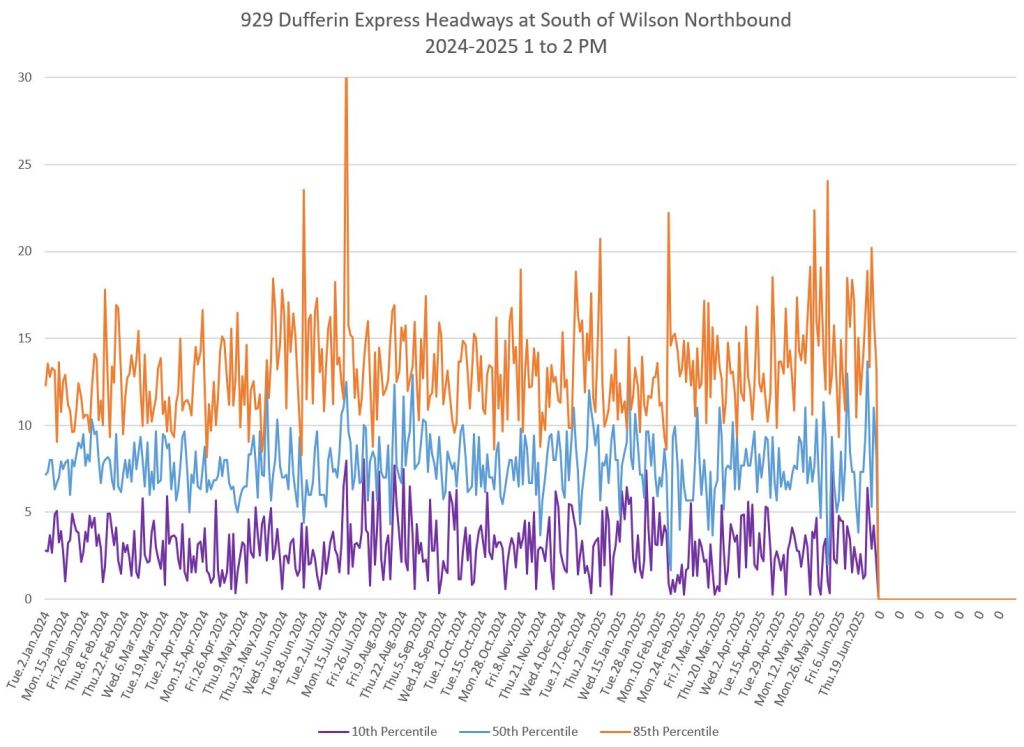
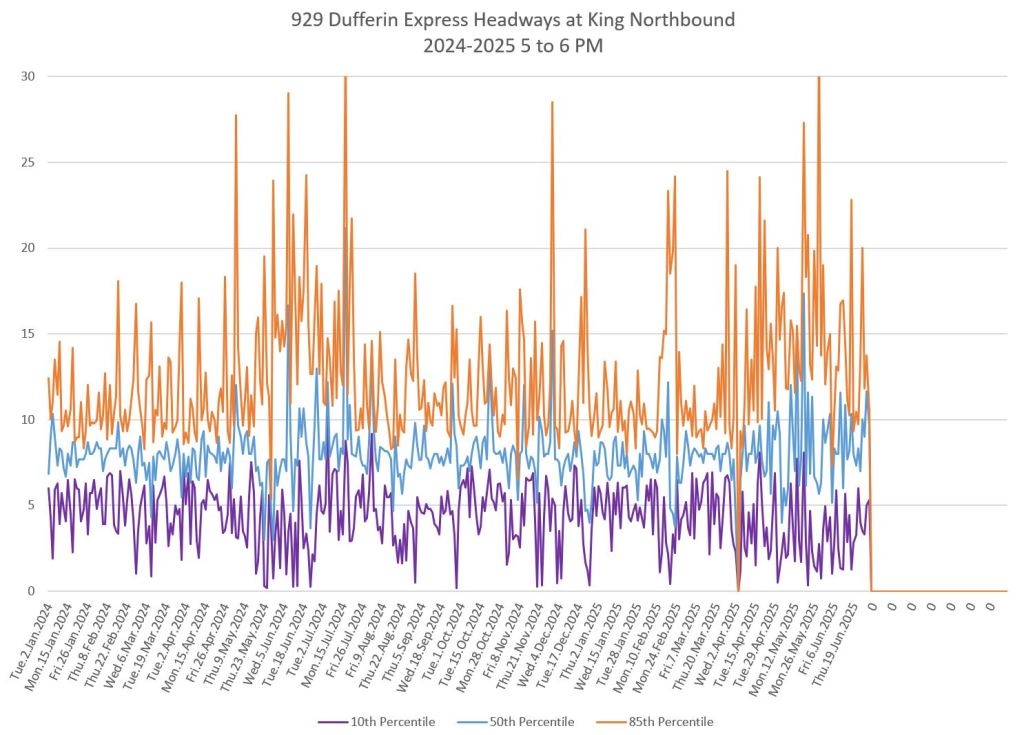
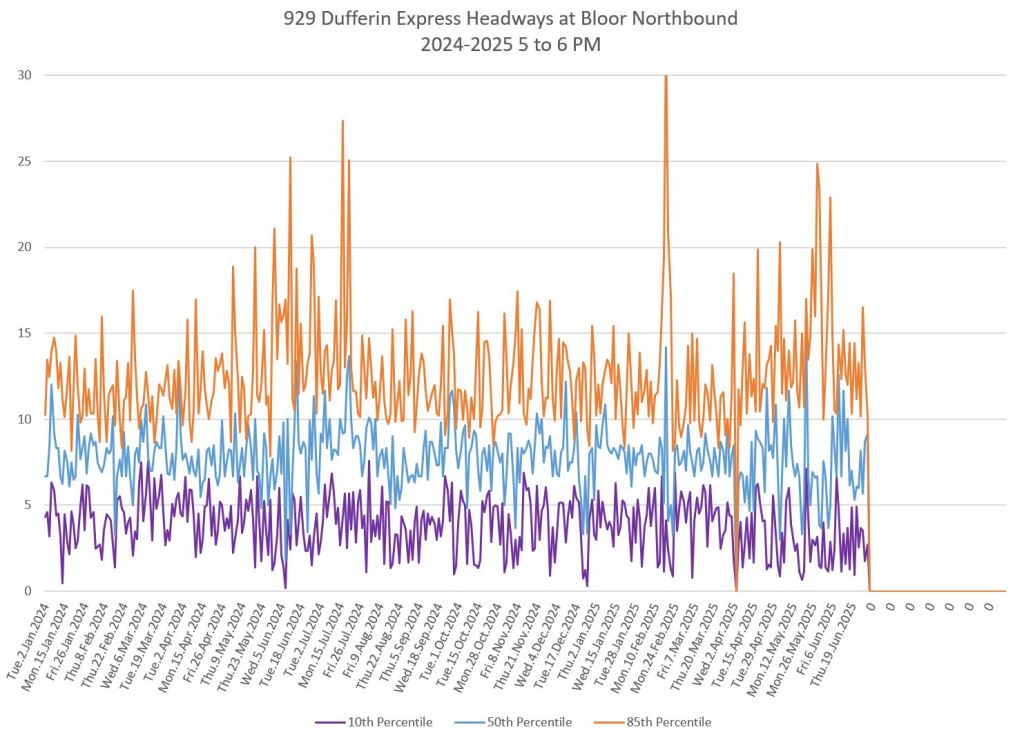
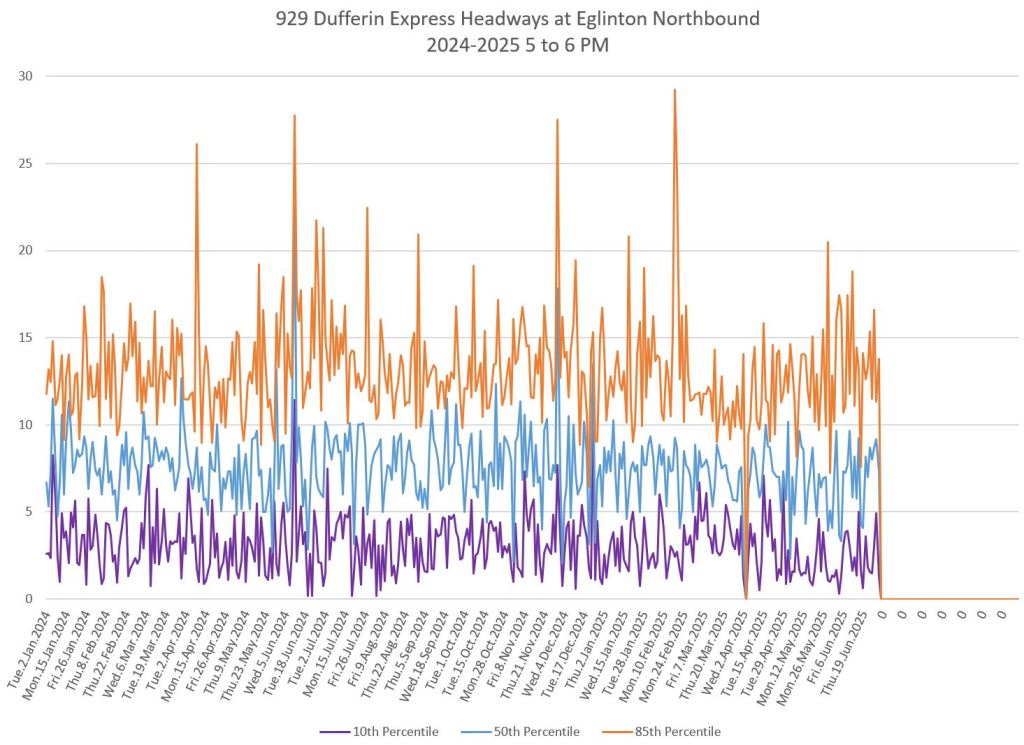
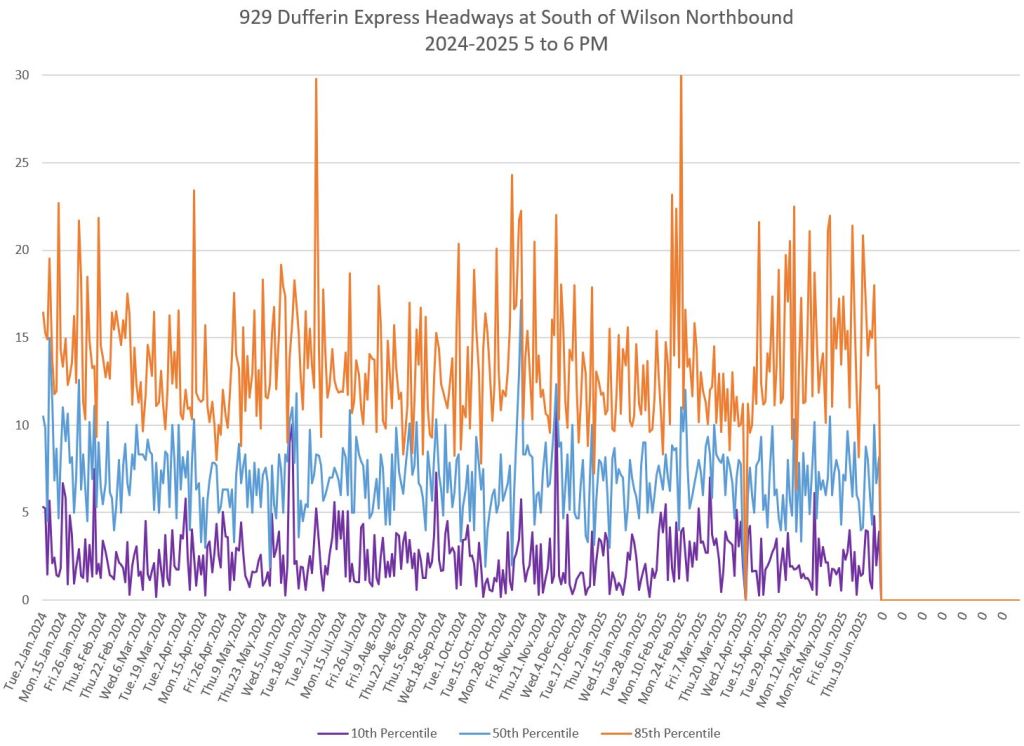
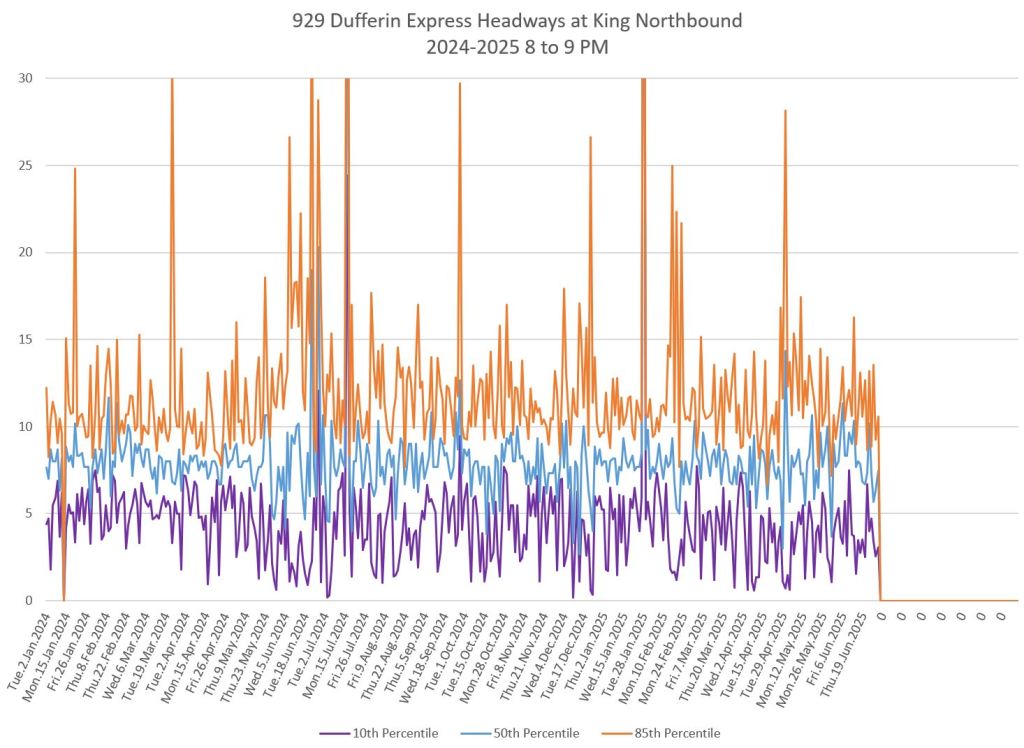
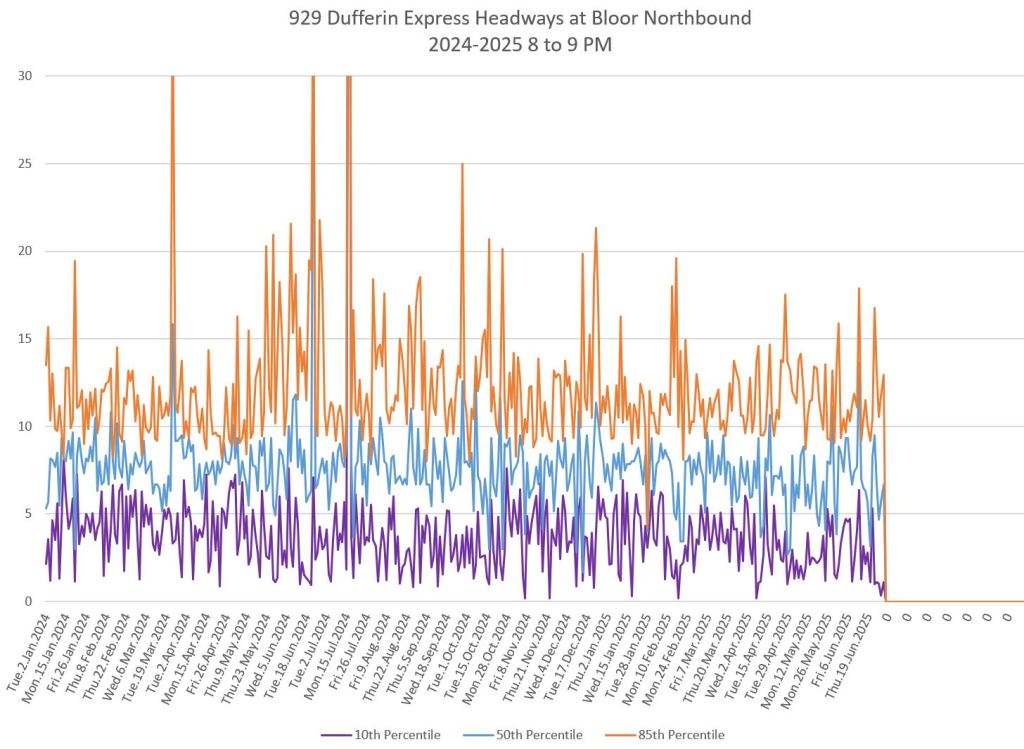
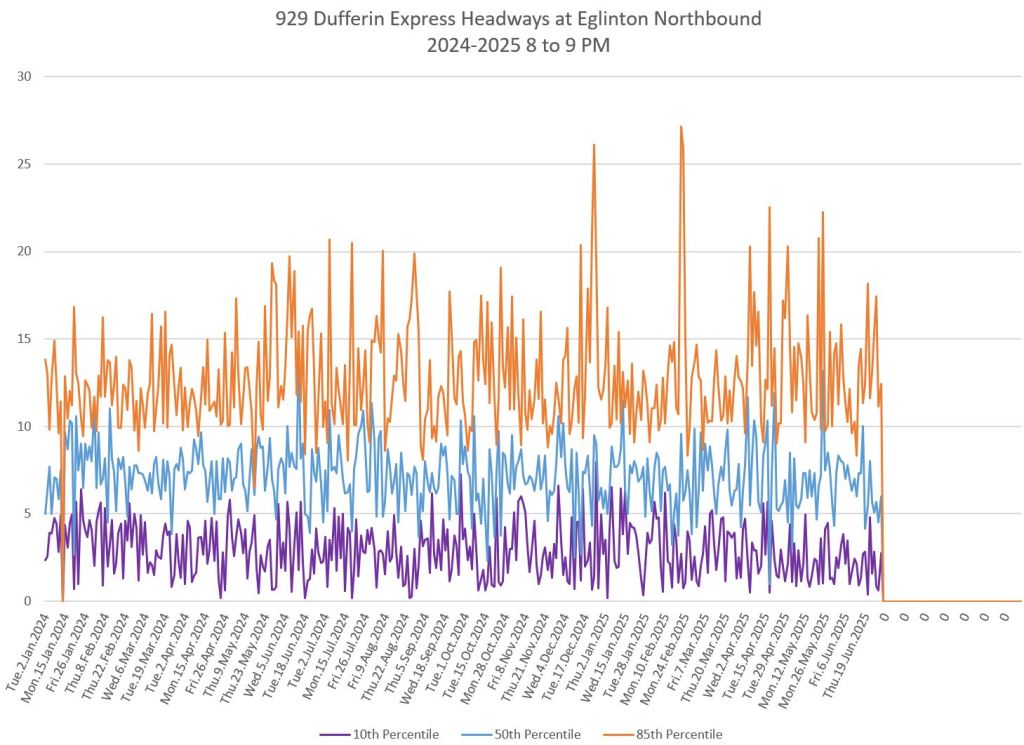
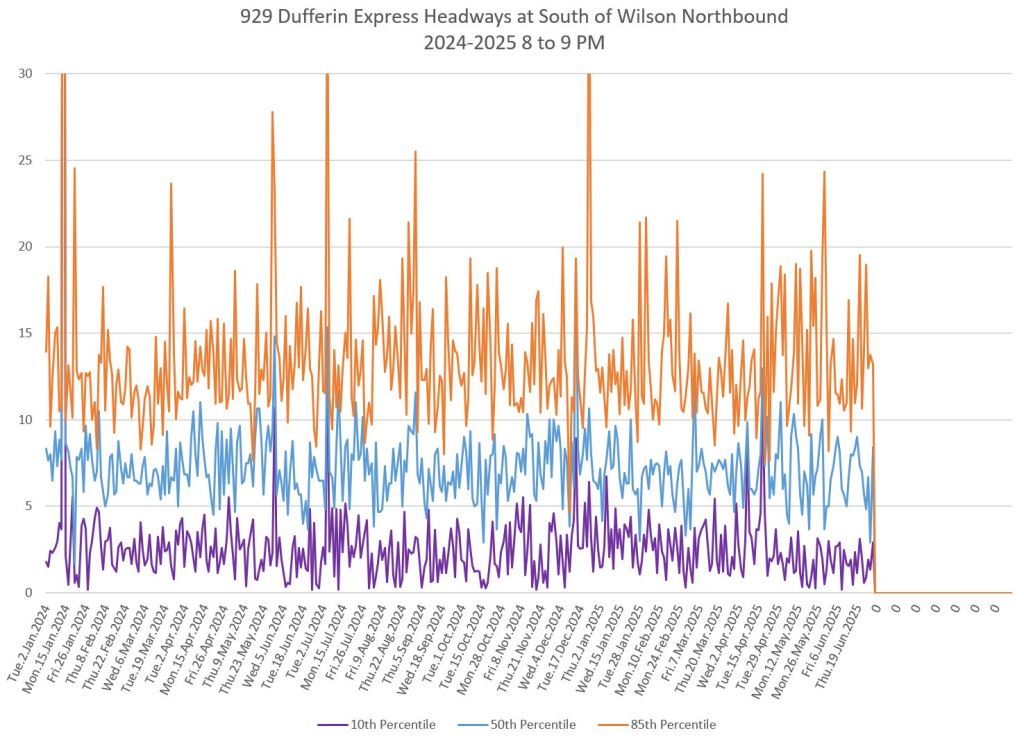
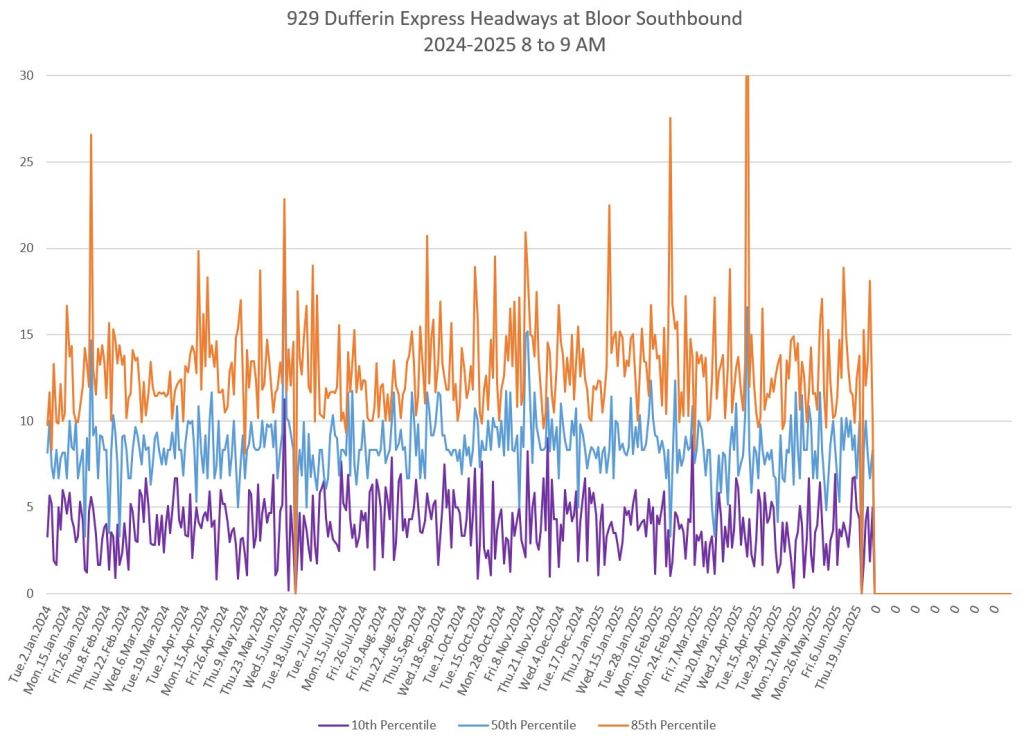
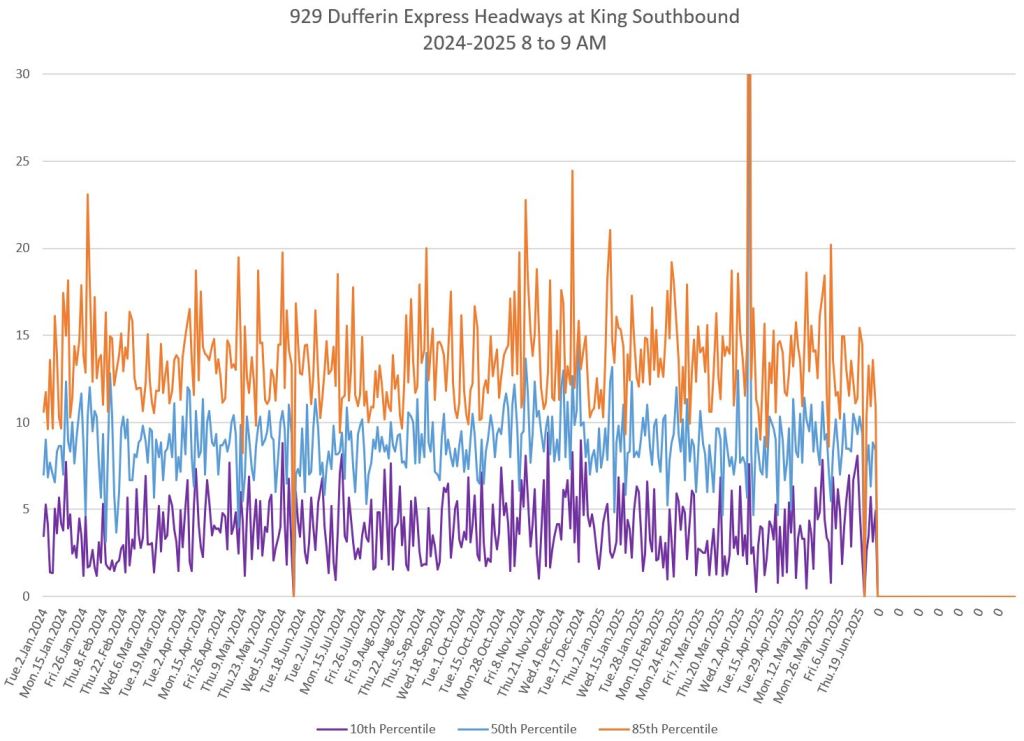
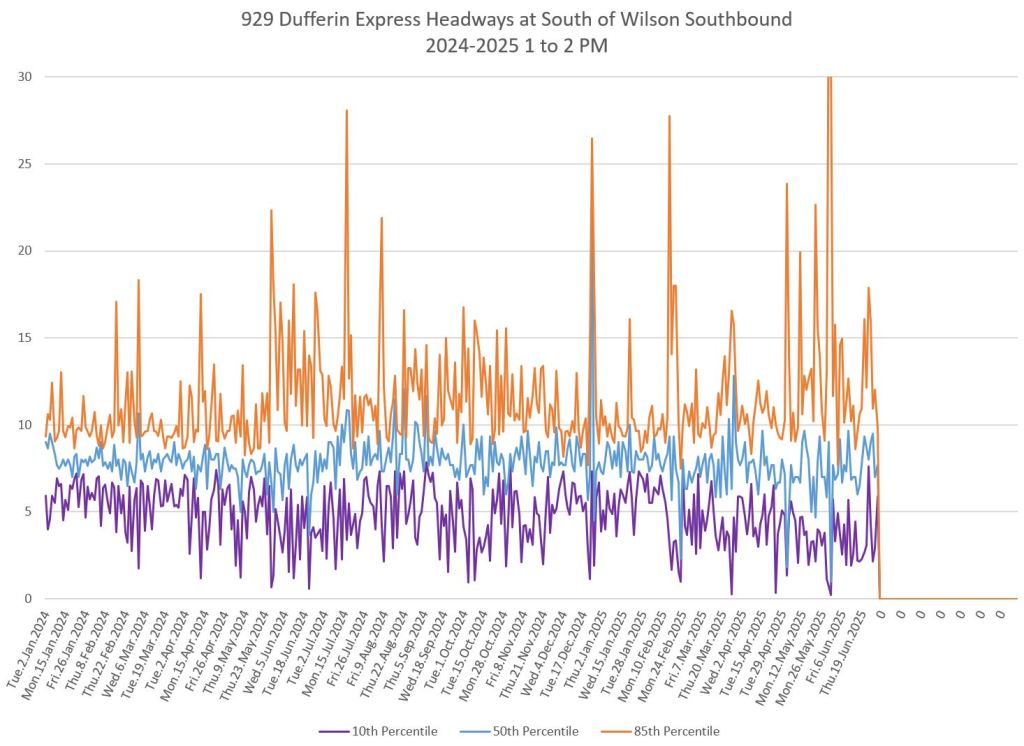
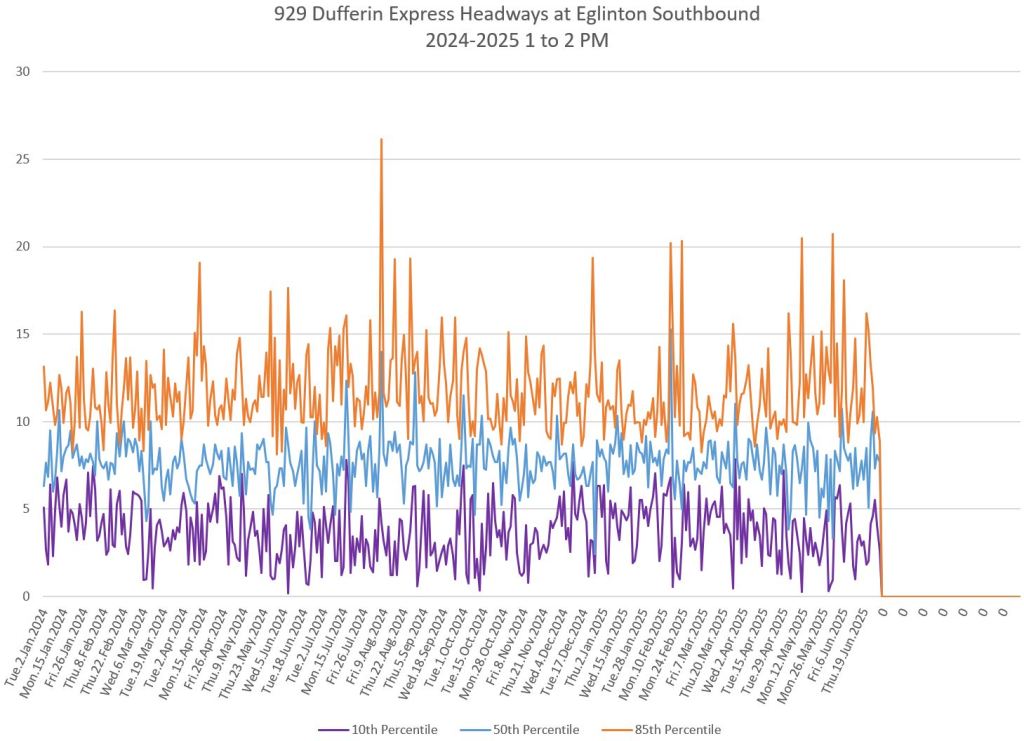
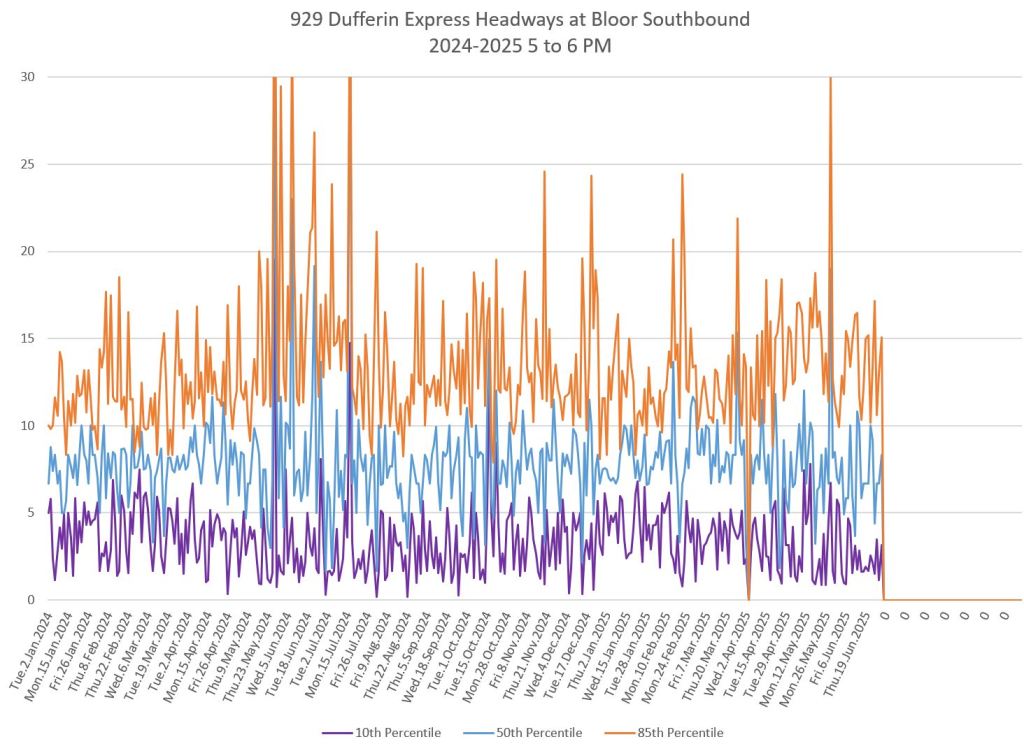
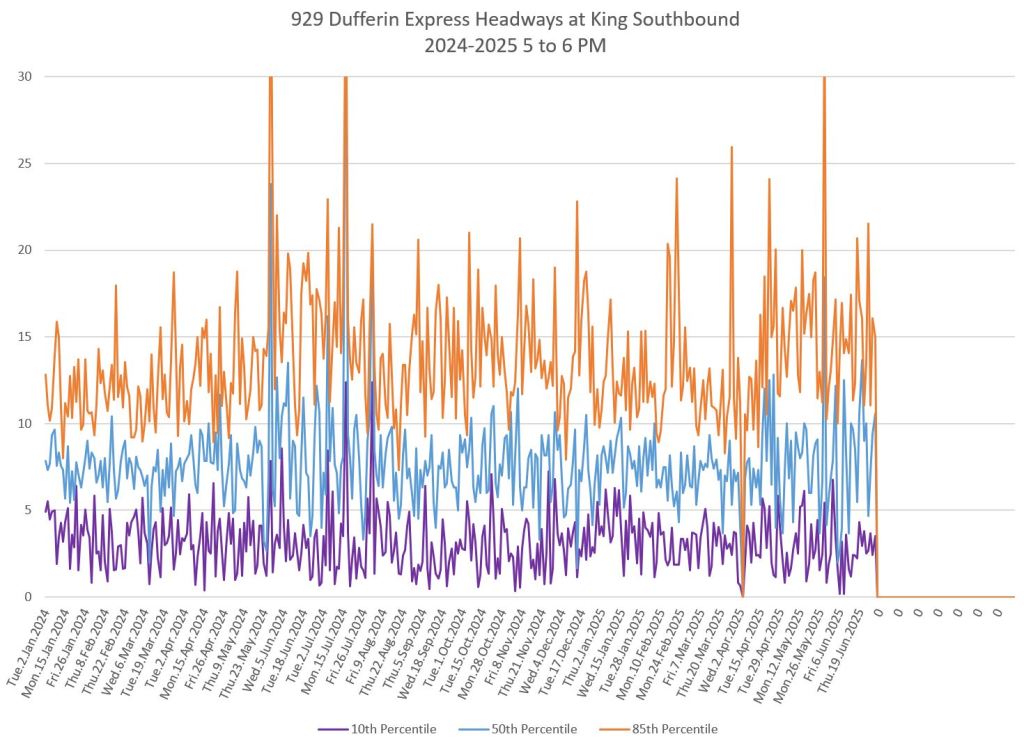
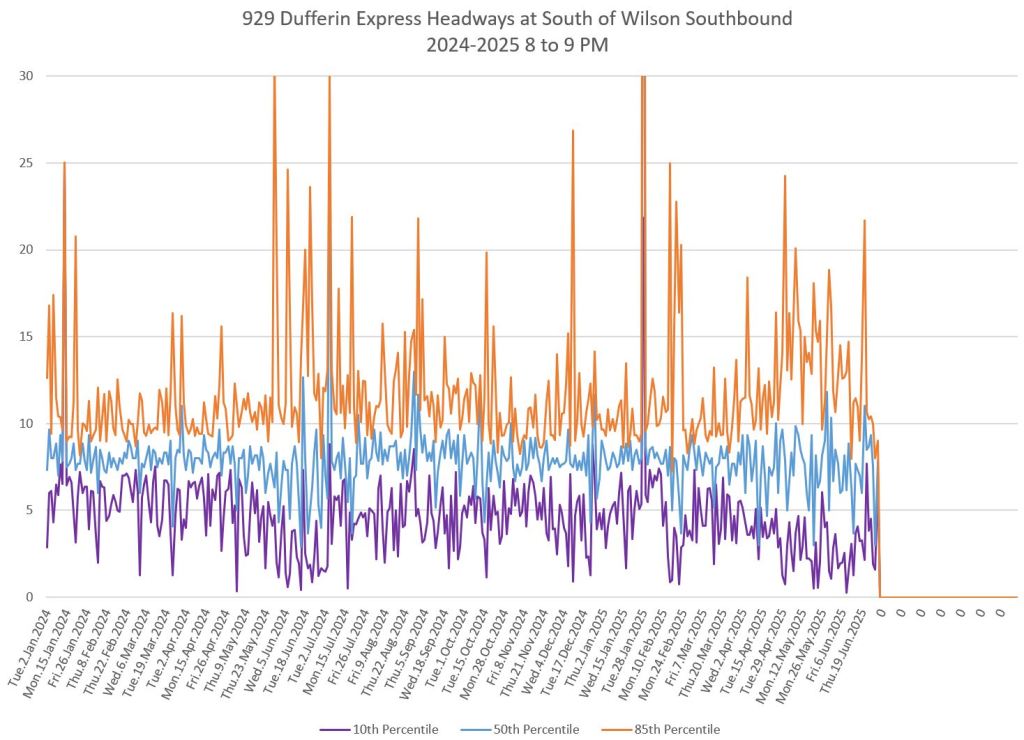
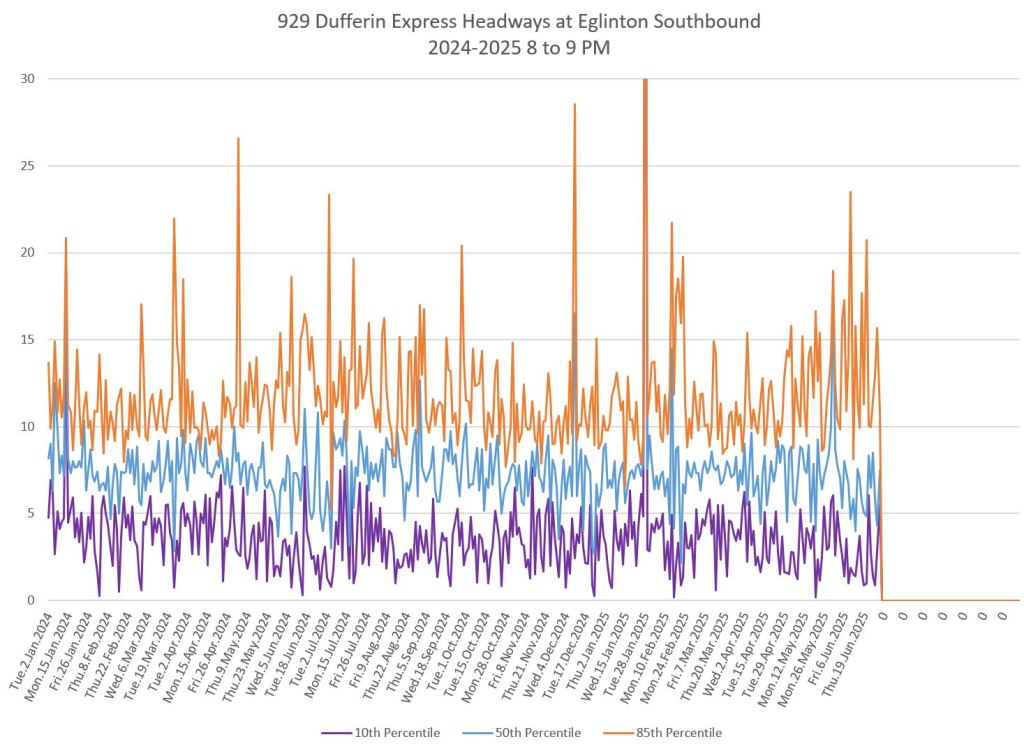
The behaviour of the 29 Dufferin local service mirrors what we see on other routes with a fairly narrow band of AM peak headways near the terminal widening out as buses move along the route. The spread in the PM peak is the worst of the five periods. Note that there has been little change in the character of the stats here over the past 18 months except for some widening of headway ranges in May 2024. The 10th percentile stays close to the zero line in most periods and locations indicating bunching. There is no indication of a change in headway management.
AM Peak
Midday
PM Peak
Early Evening
Late Evening
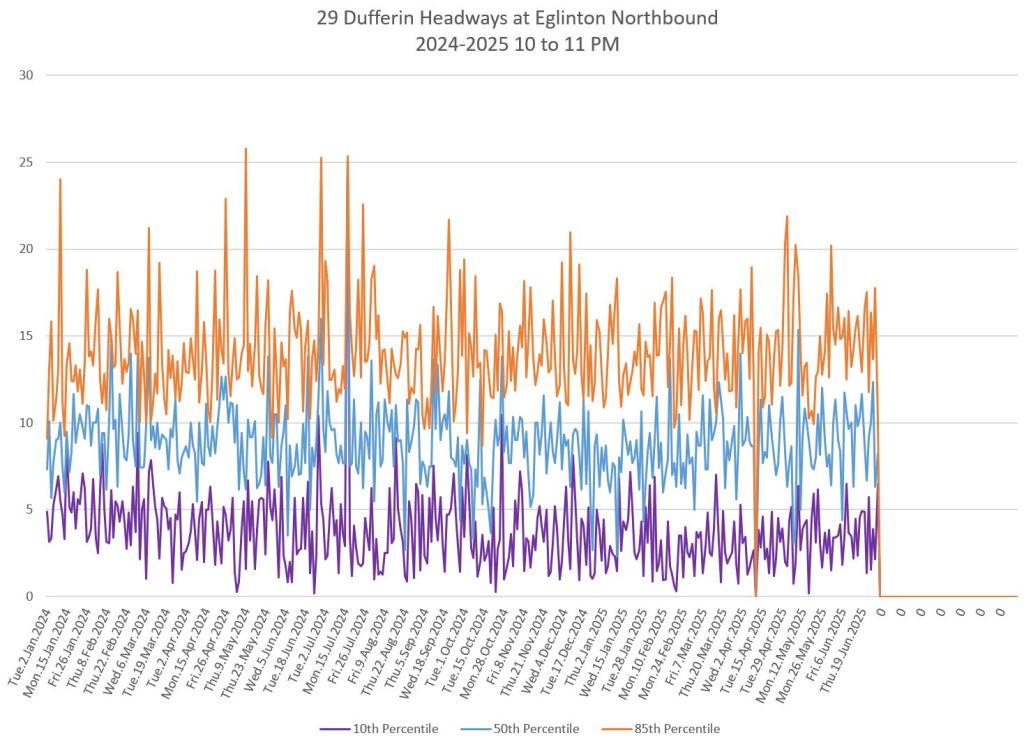
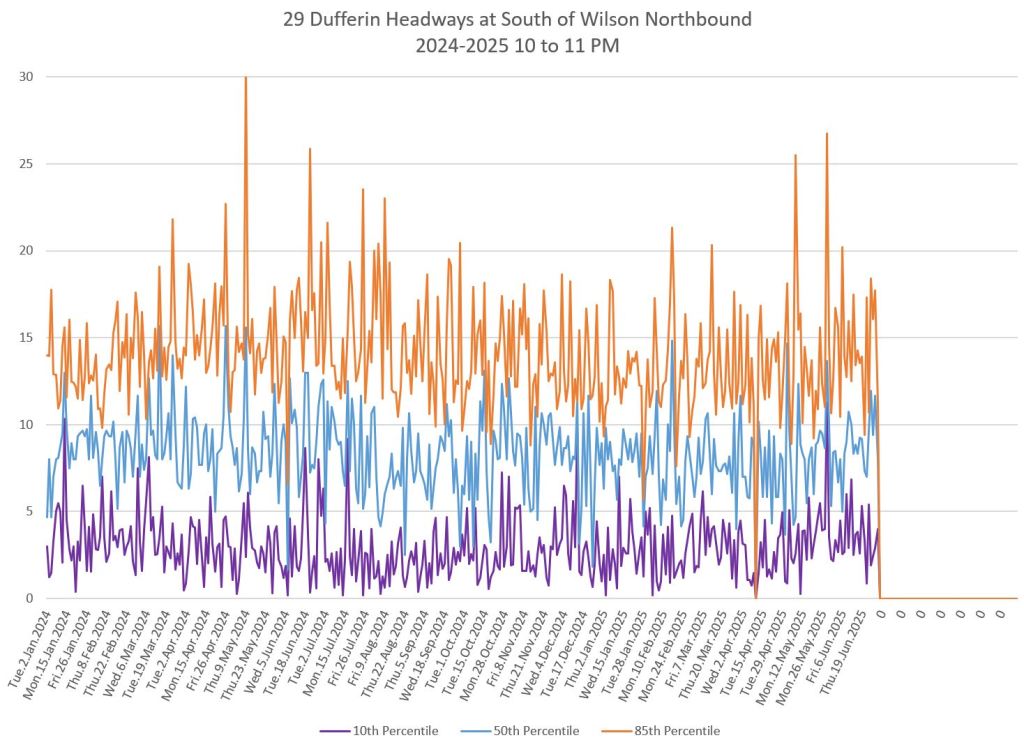
Southbound from Wilson Station to Exhibition
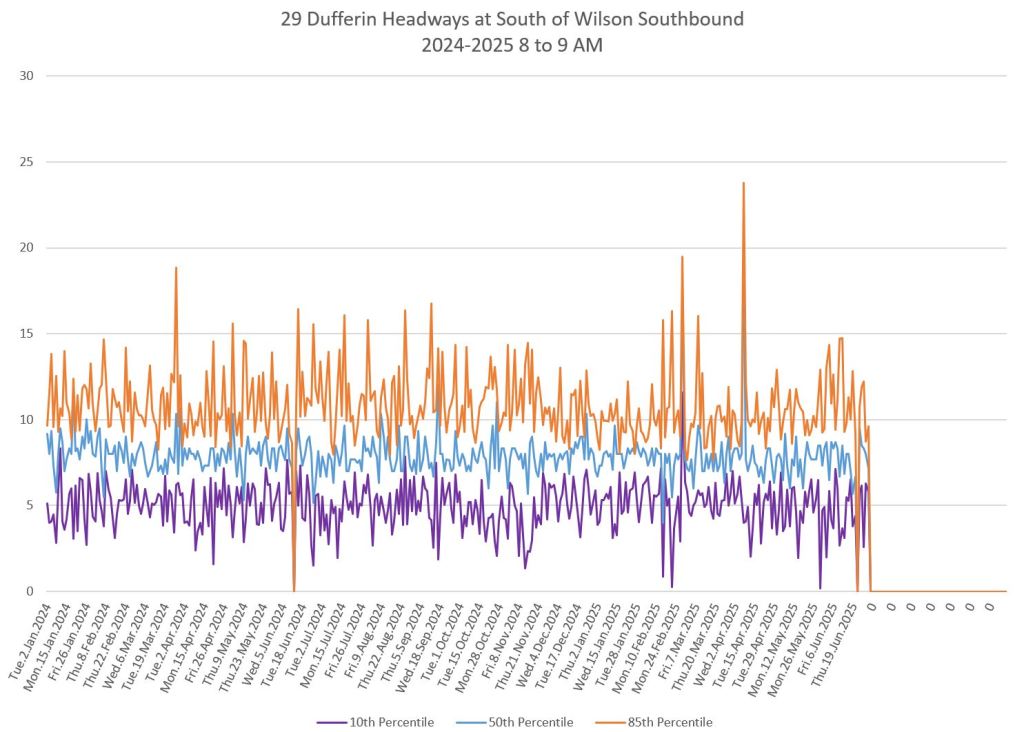
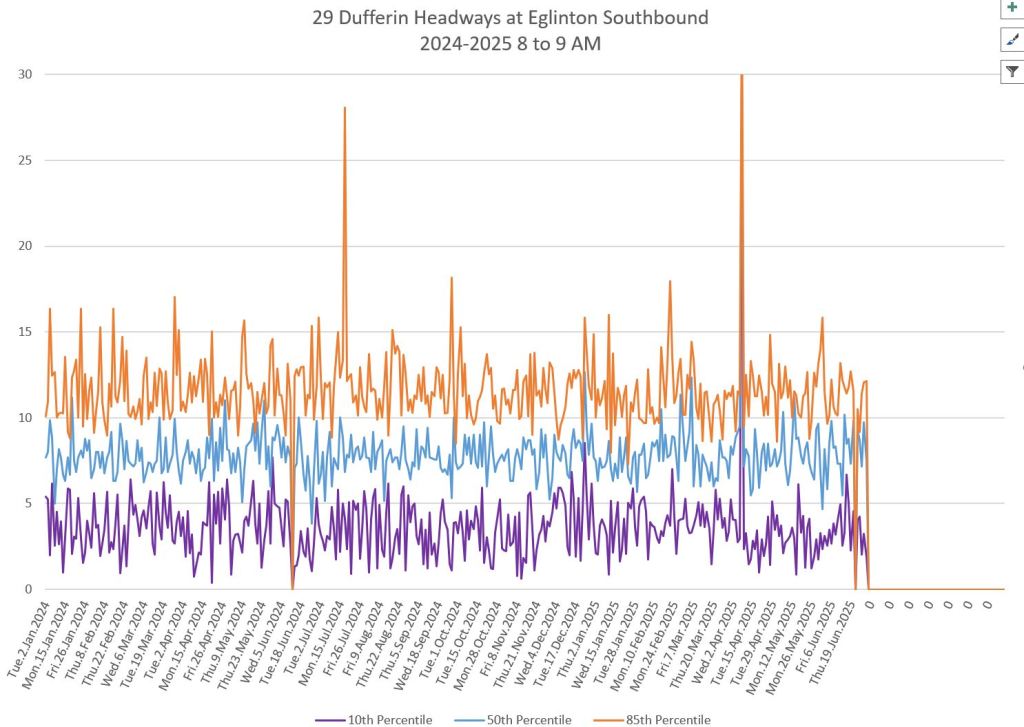
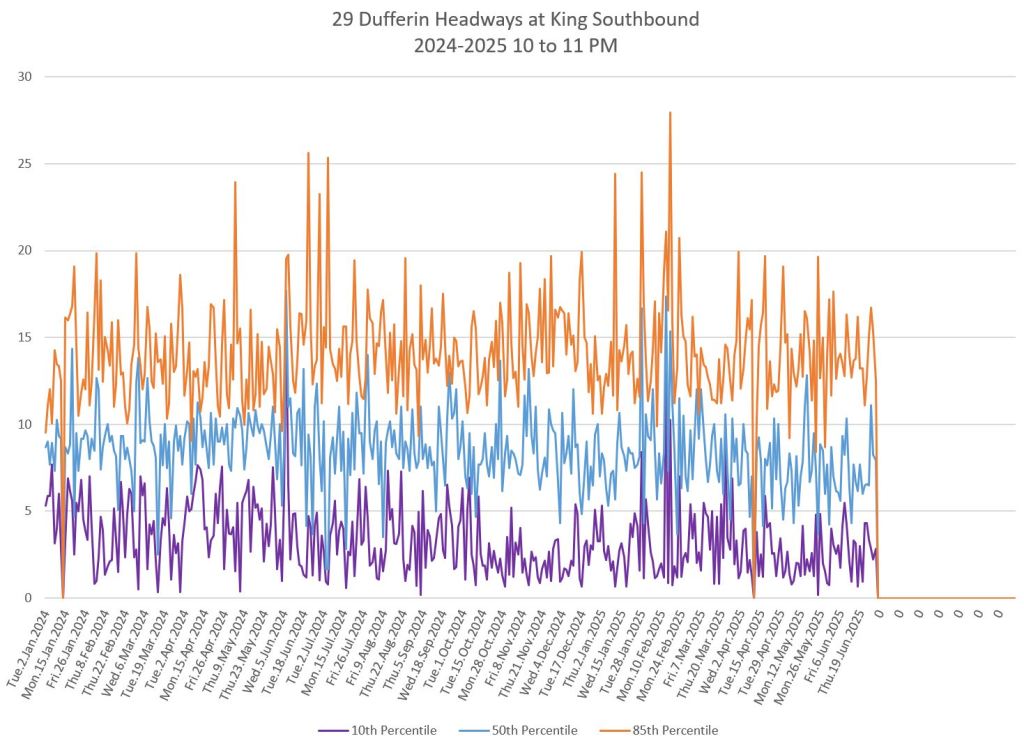
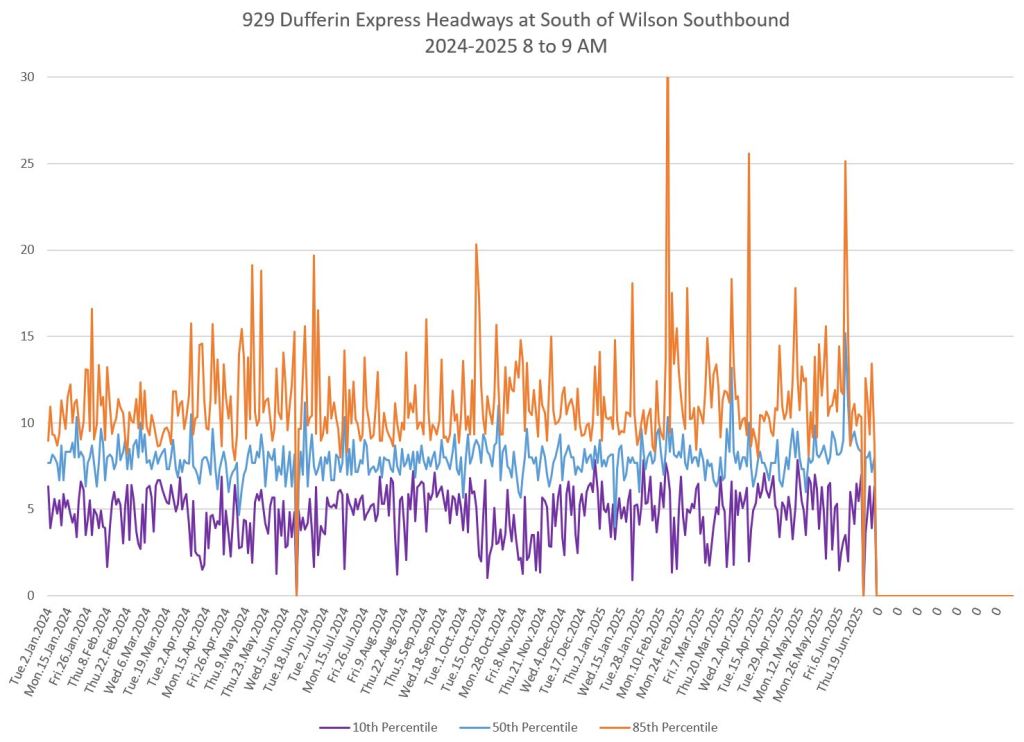
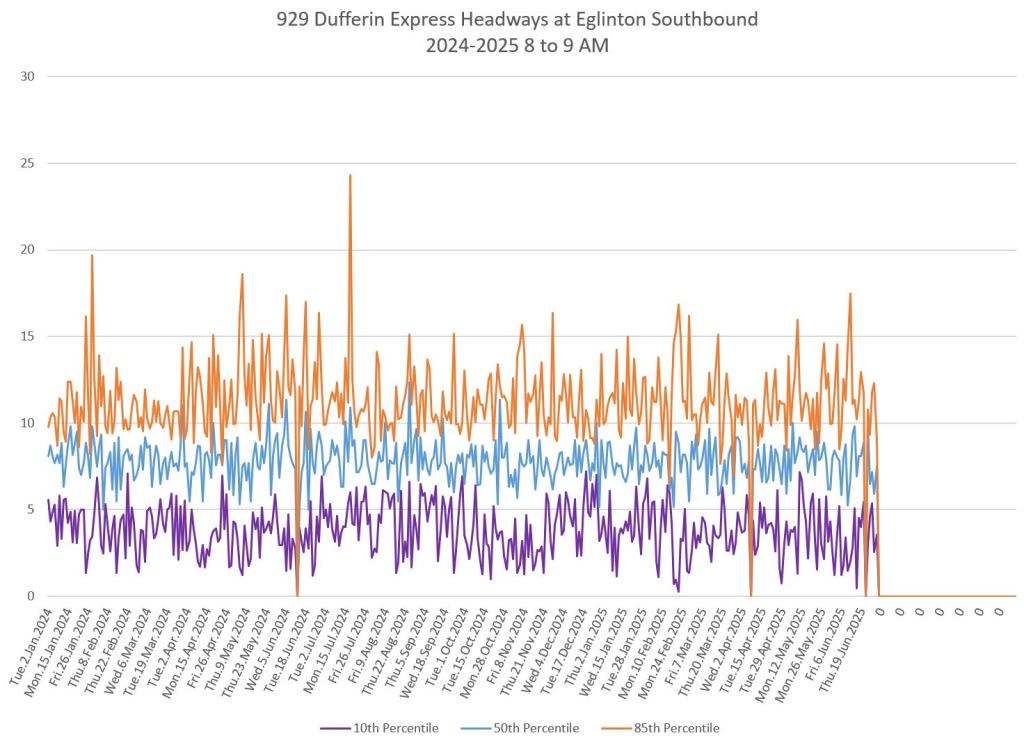
The southbound service mirrors northbound in having a comparatively narrow range of headways near the northern terminus, a gradual spread of headway ranges as buses move south, and persistent signs of bunching in all periods.
Note that the original RapidTO plan for Dufferin would have seen red lanes south from Wilson, but this was revised in the FIFA proposal to start at Eglinton. The charts show that service is already irregular when buses reach Eglinton and red lanes will not correct this problem.
AM Peak
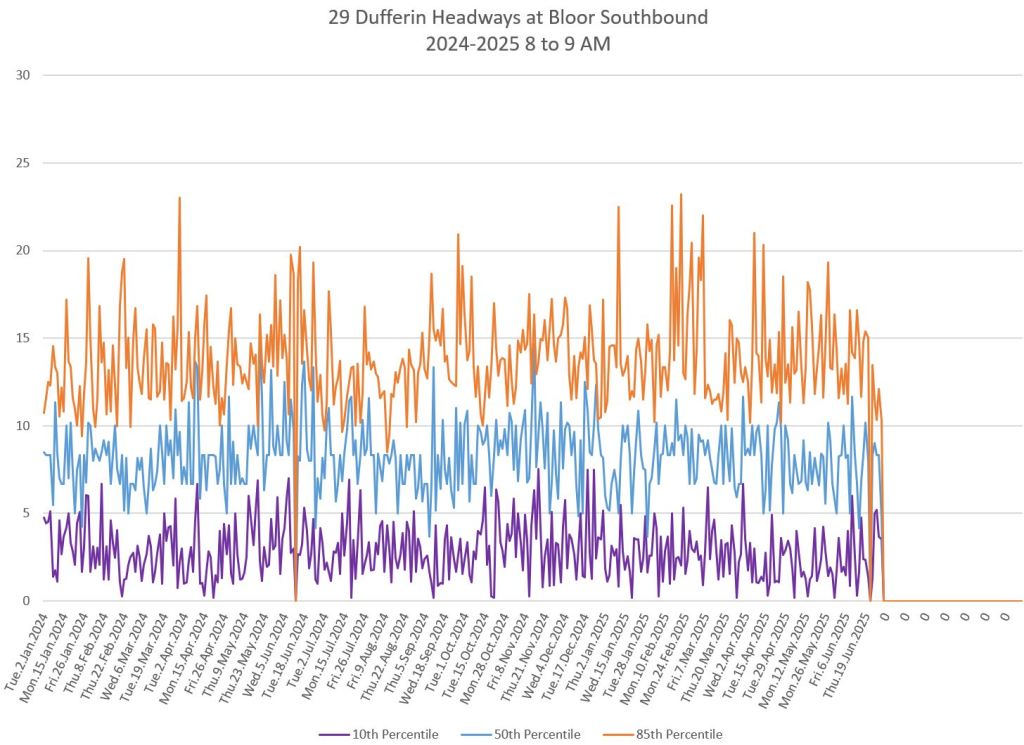
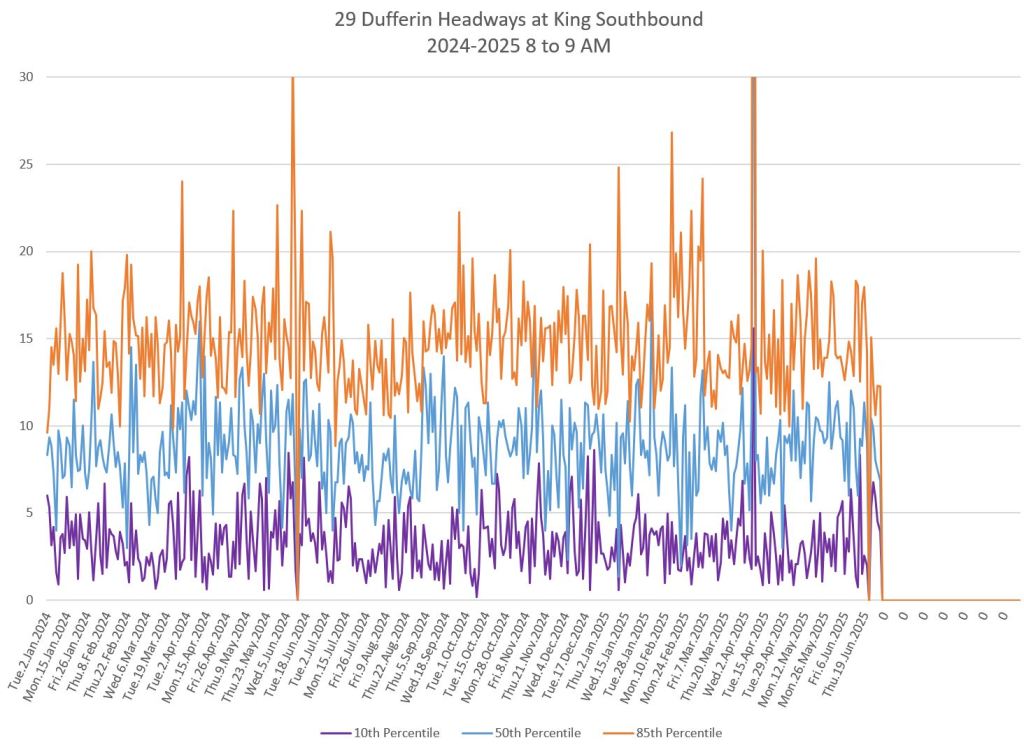
Midday
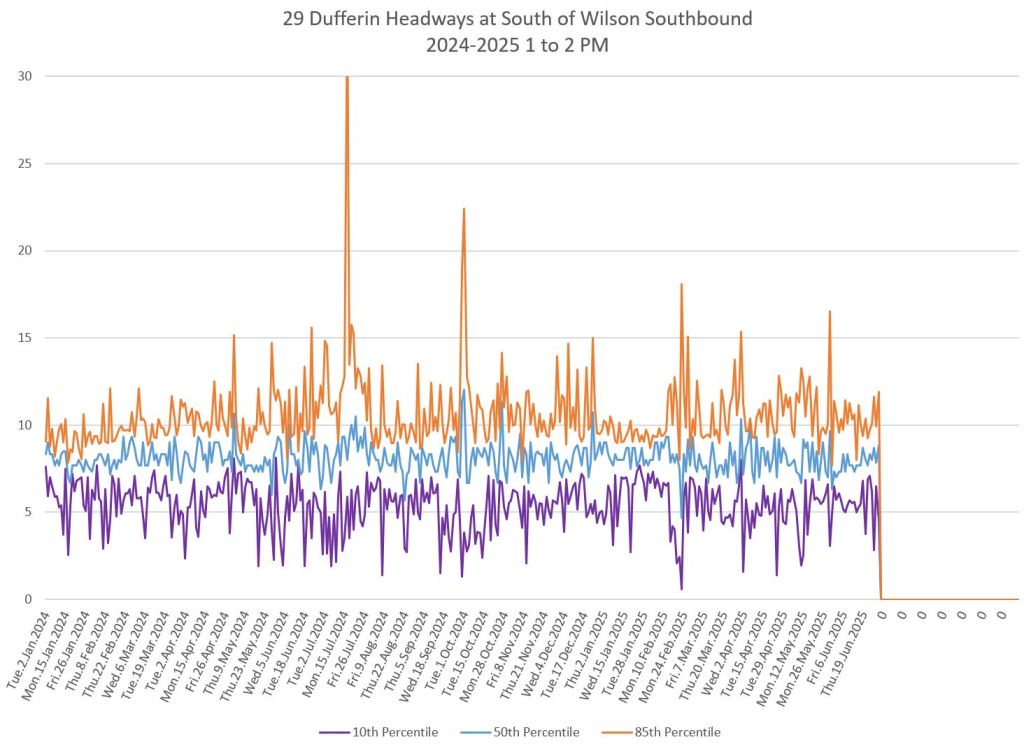
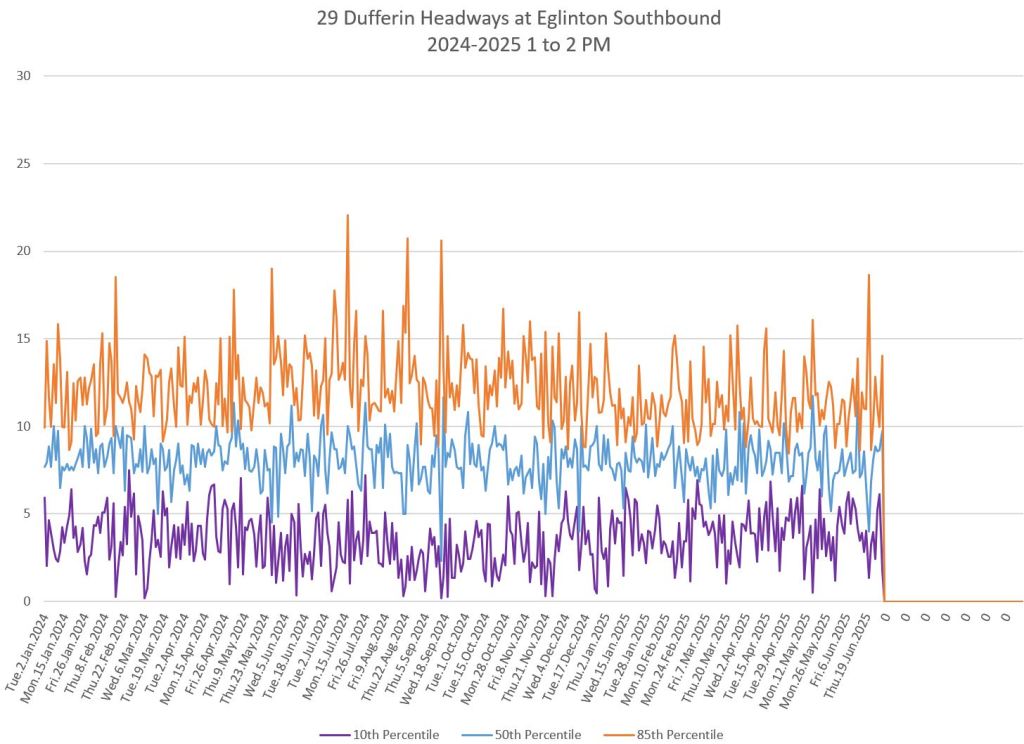
PM Peak
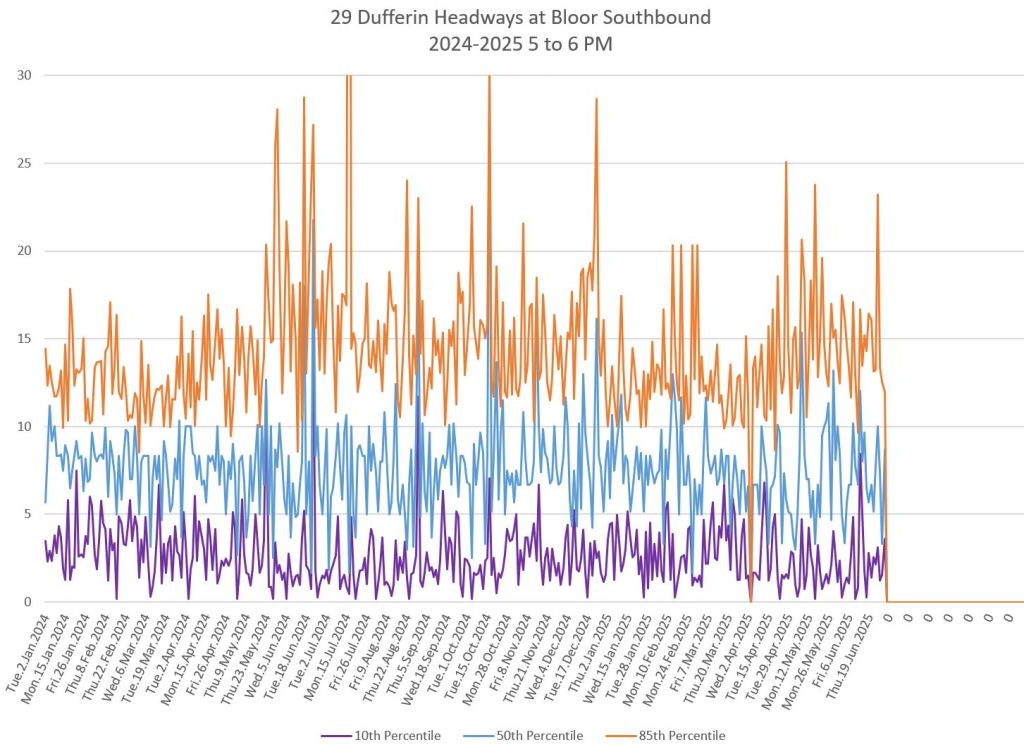
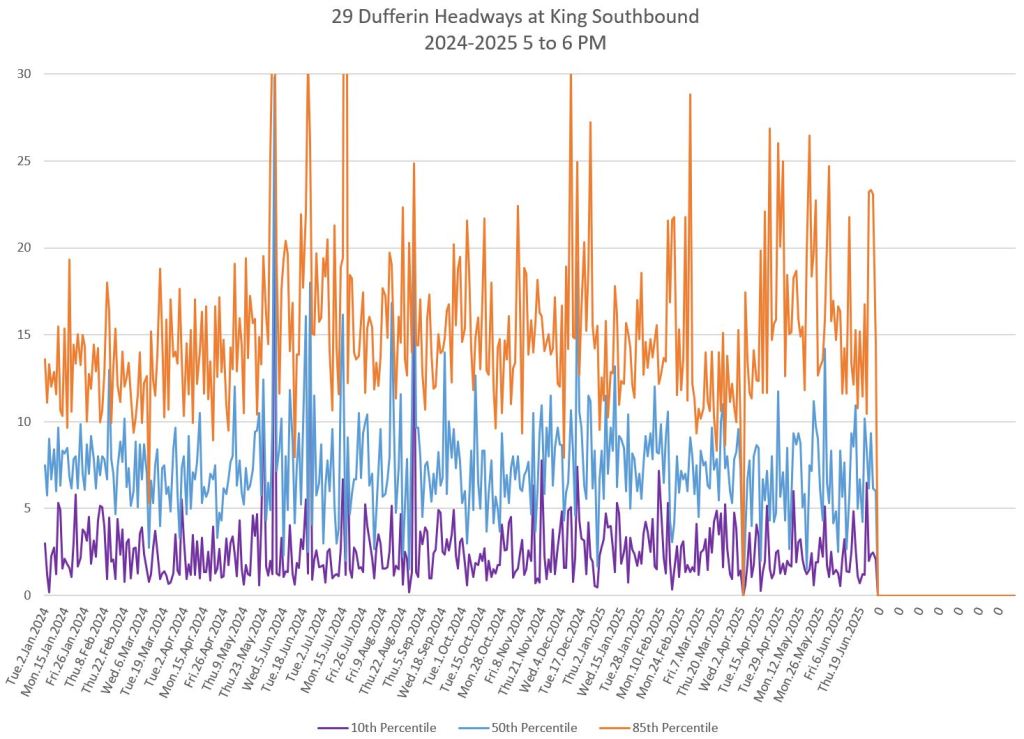
Early Evening
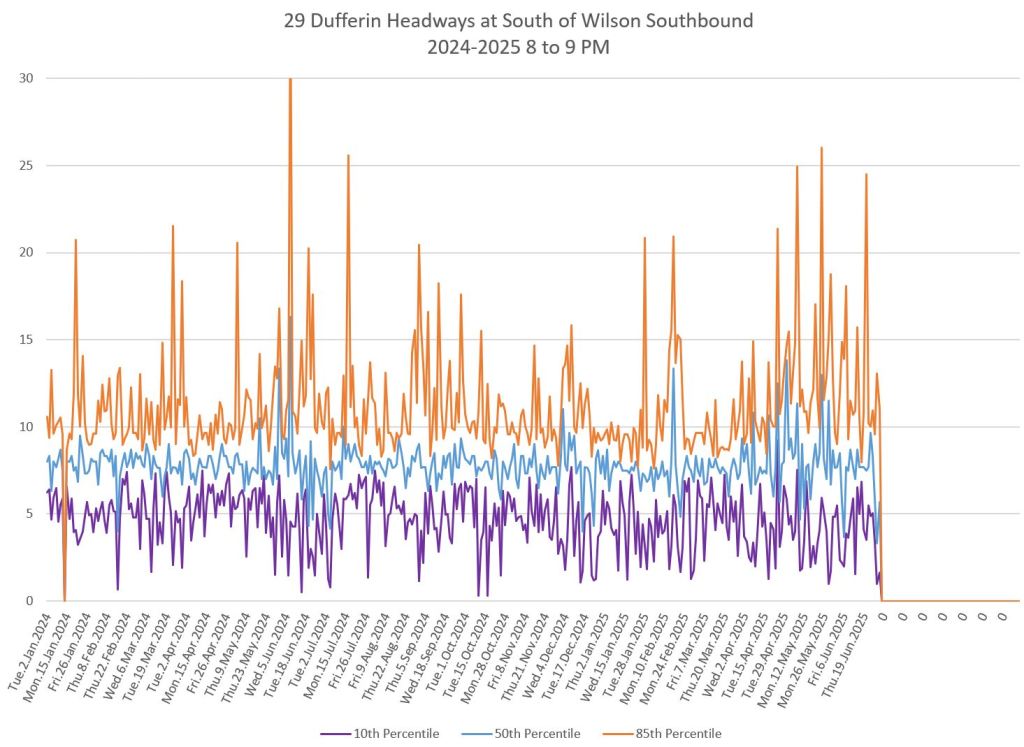
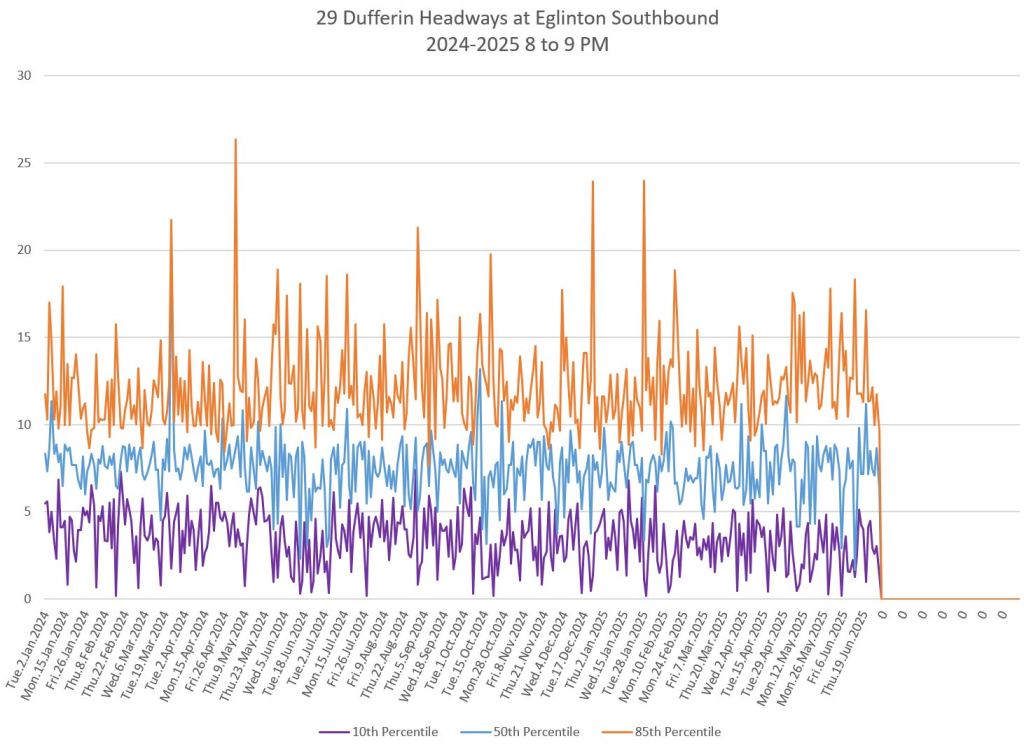
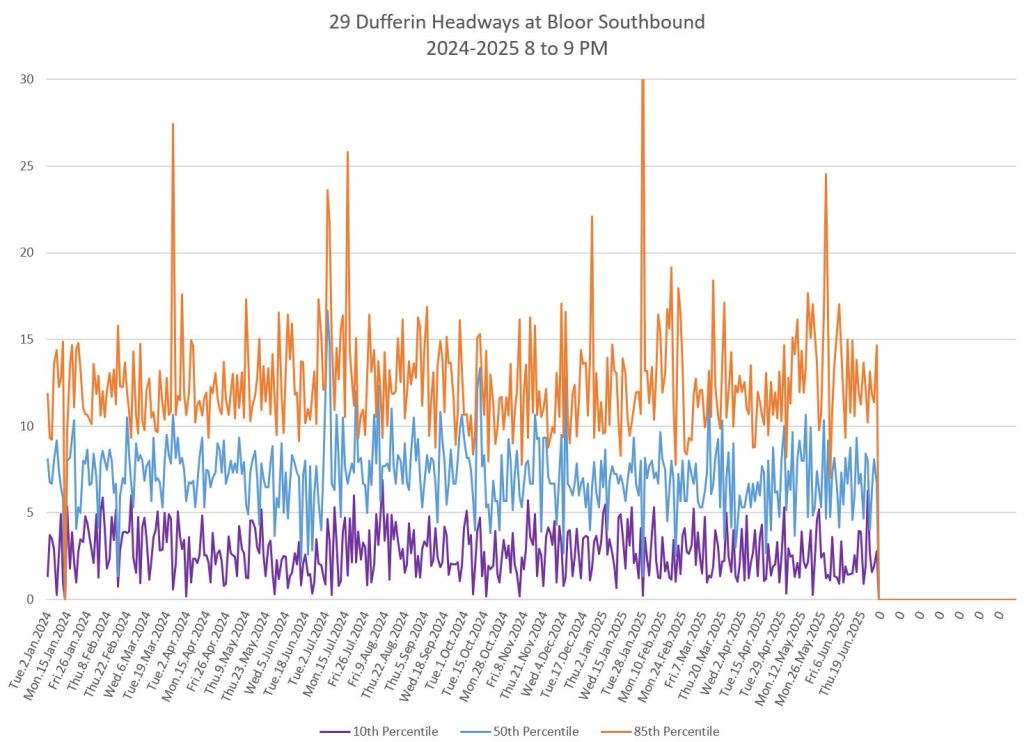
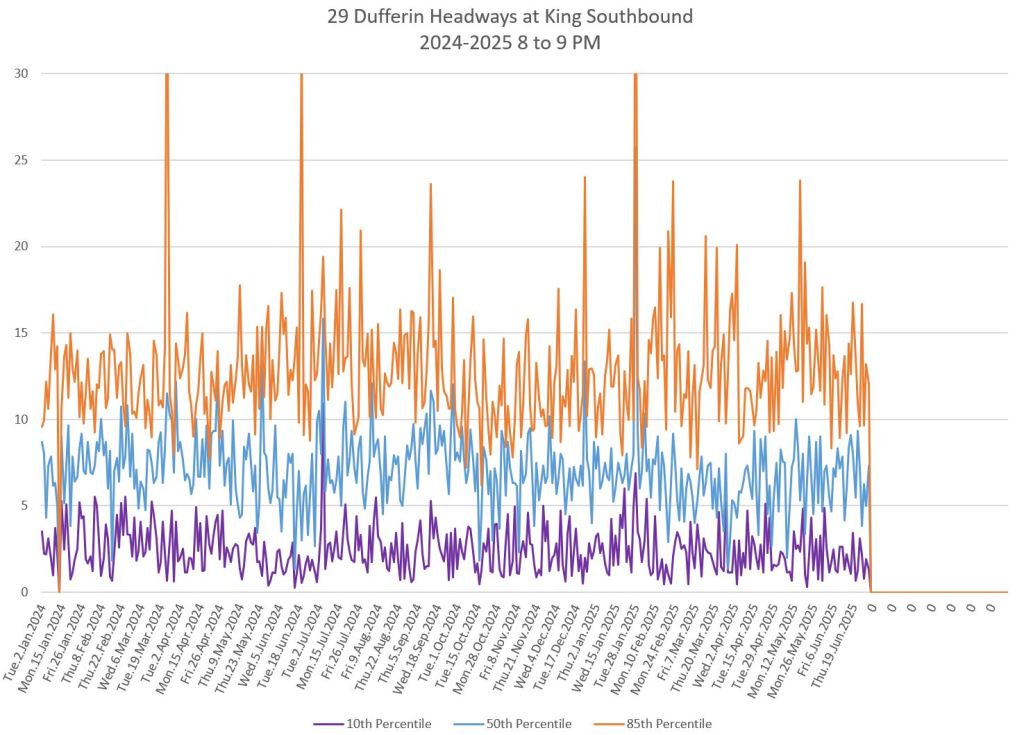
Late Evening
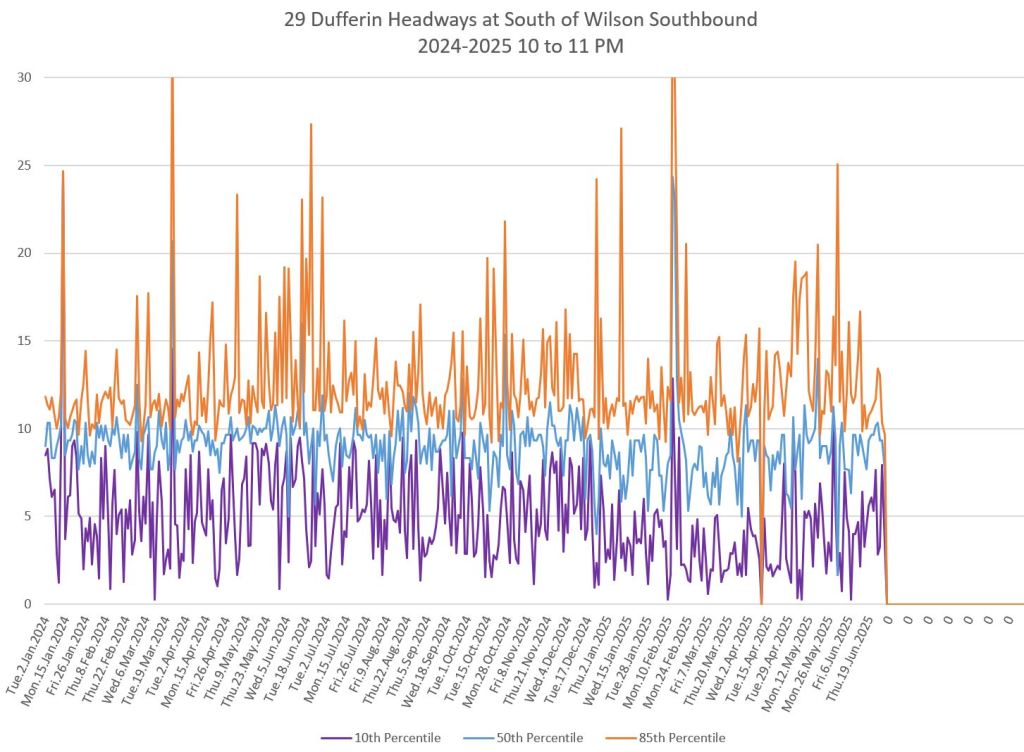
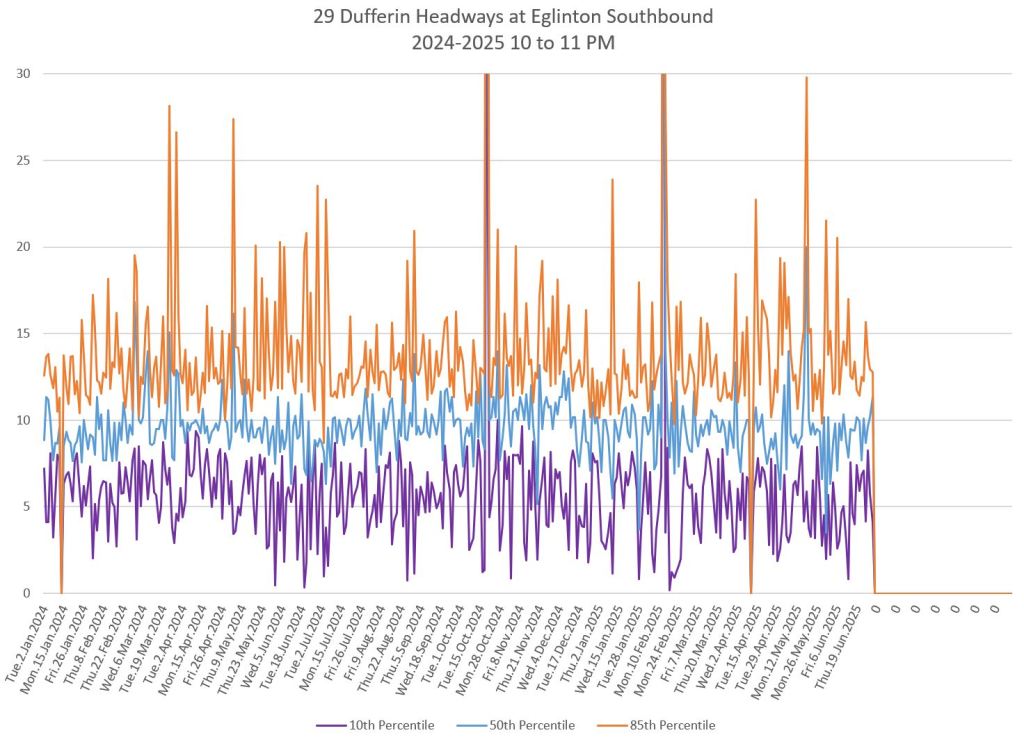
929 Dufferin Express
- 929 Wilson Station to Dufferin Gate
The screenlines used are the same as for the 29 Dufferin local service.
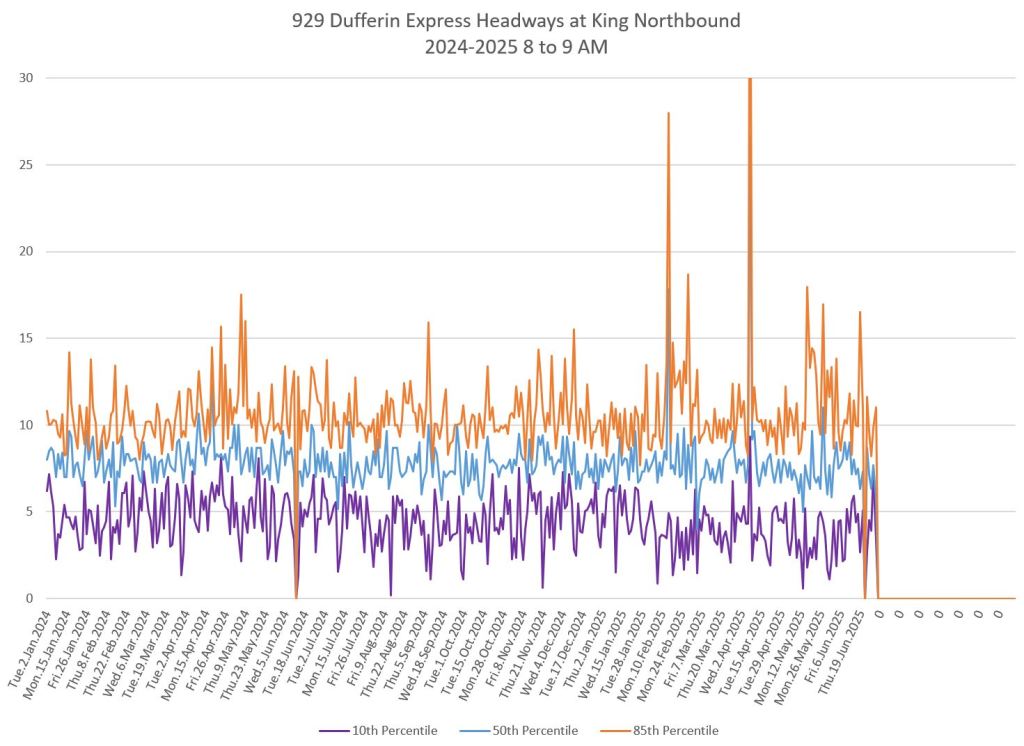
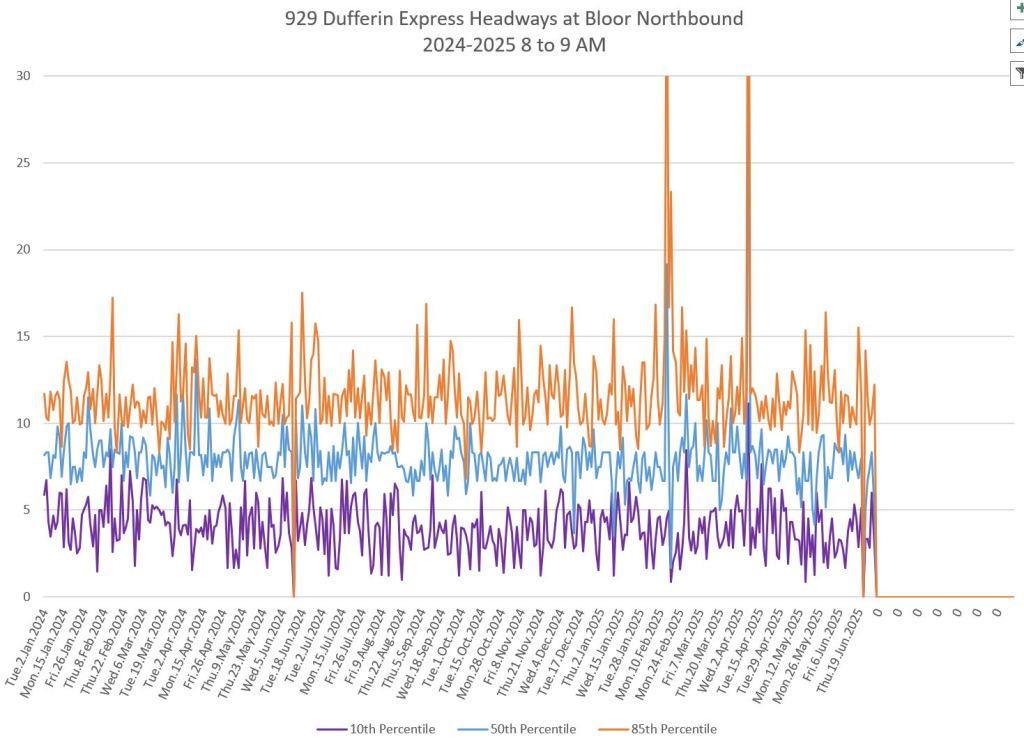
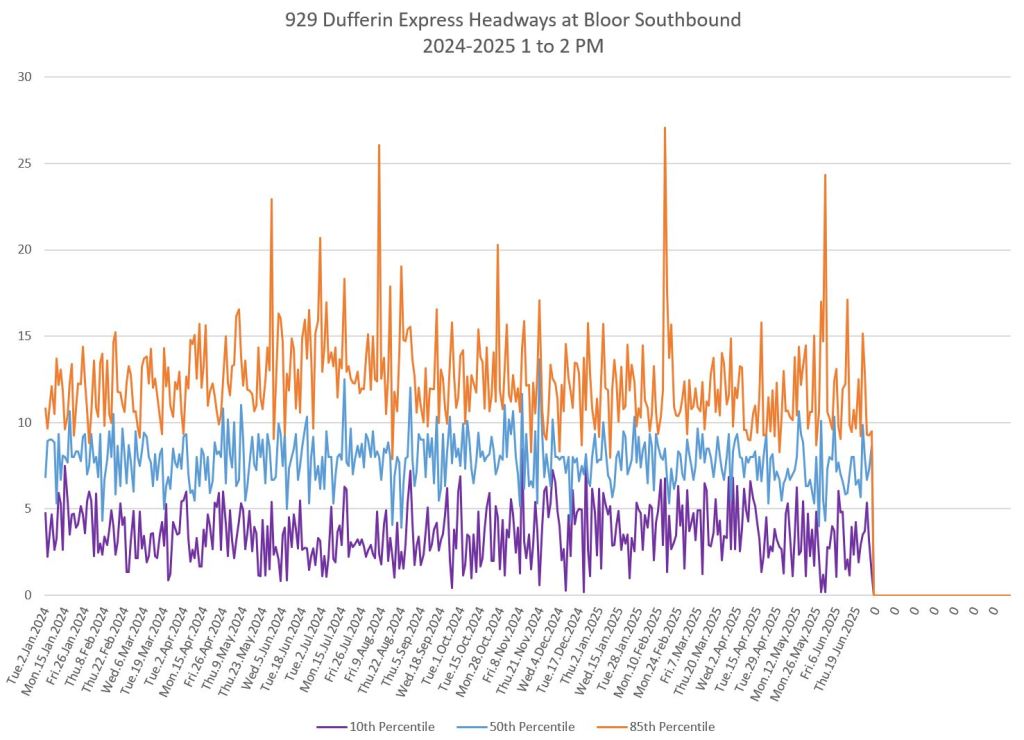
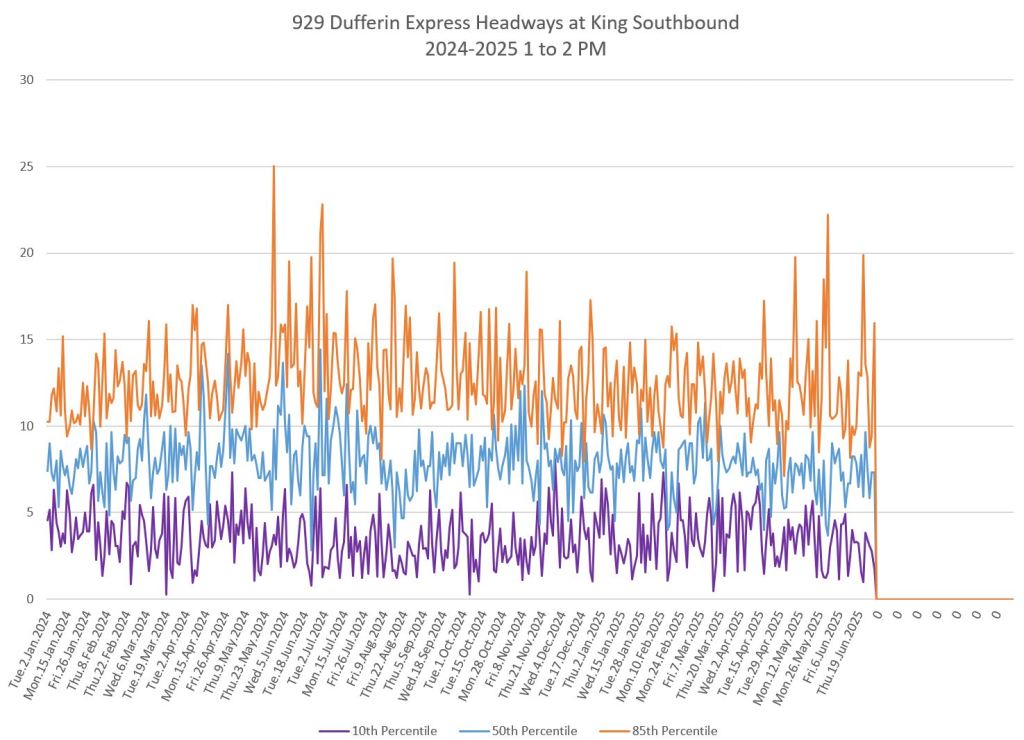
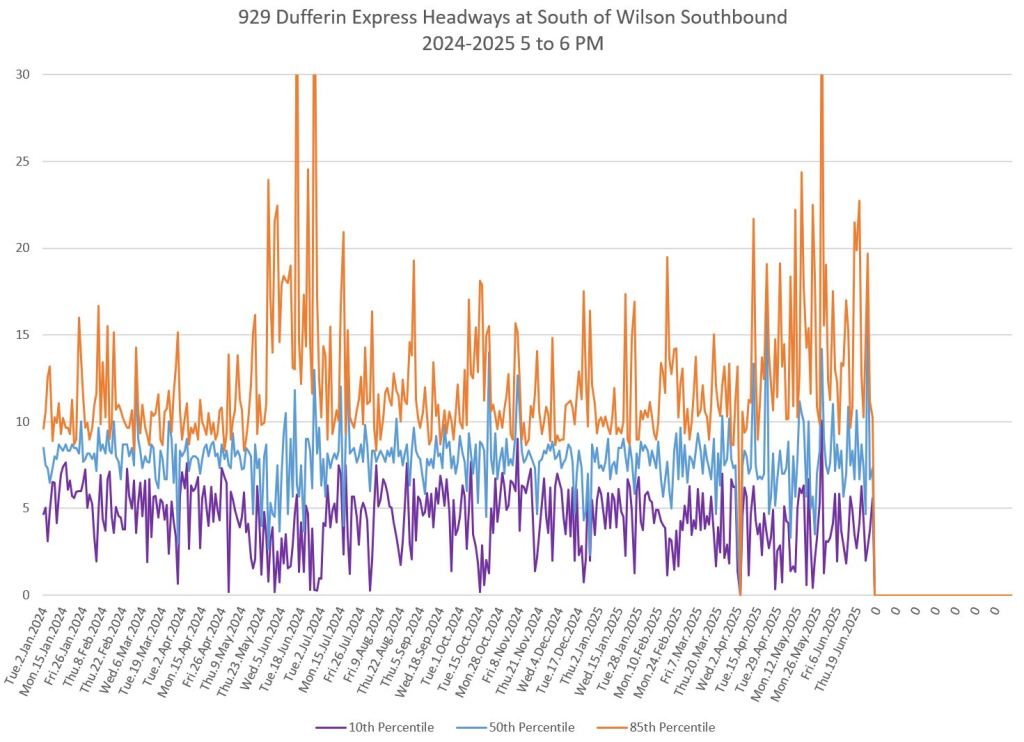
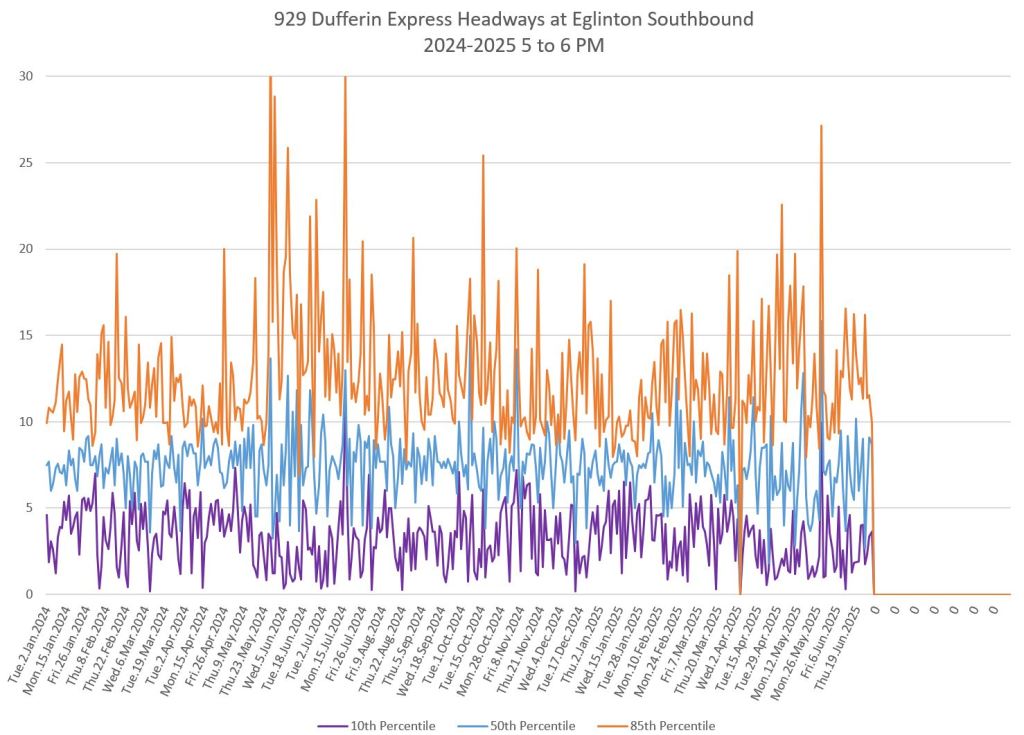
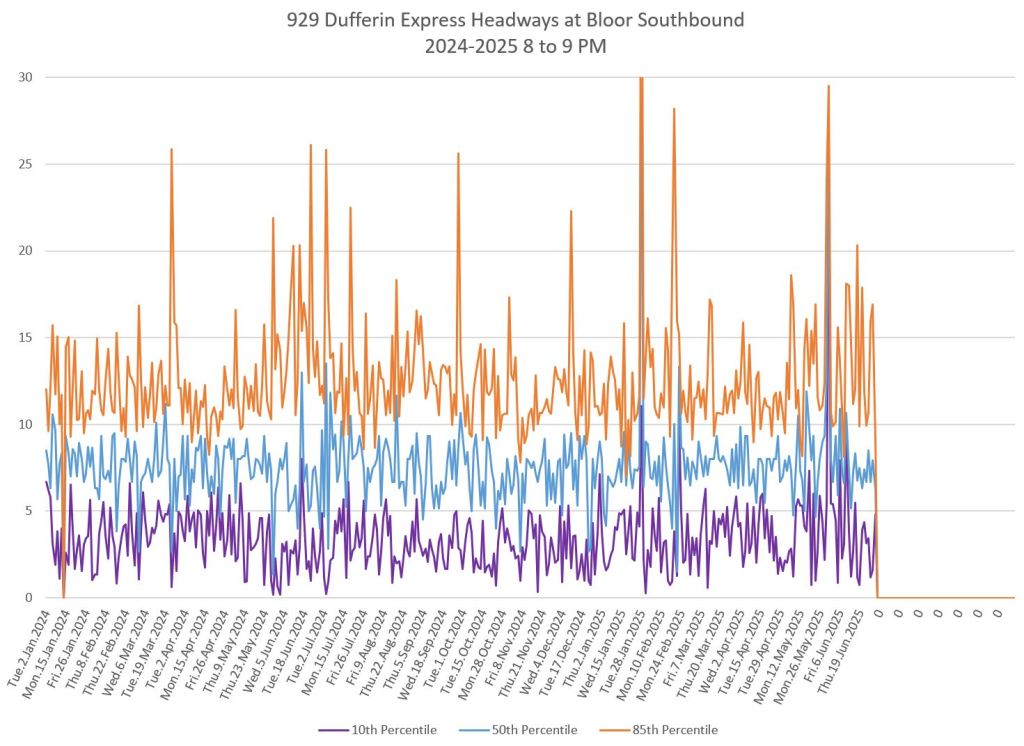
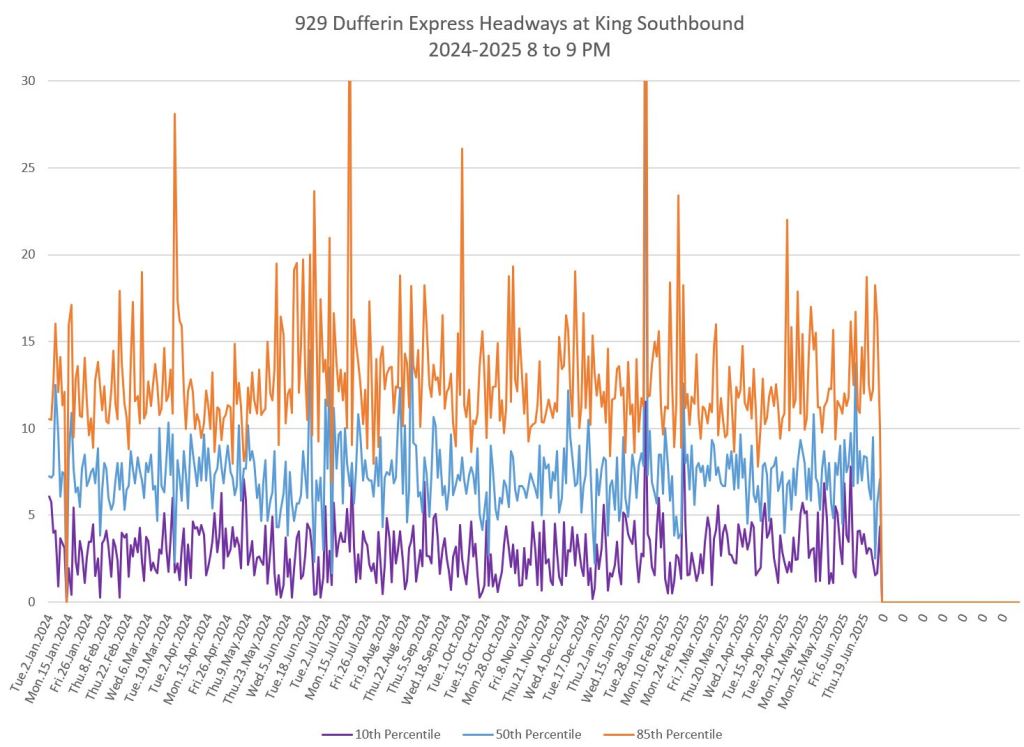
The 929 operates on a fixed headway all day until mid-evening, and it shows all of the same issues as the local service.
| Effective | AM Peak | Midday | PM Peak | Early Eve | Late Eve |
|---|---|---|---|---|---|
| 7-Jan-24 | 929 – 8′ | 929 – 8′ | 929 – 8′ | 929 – 8′ |
Northbound from Exhibition to Wilson Station
AM Peak
Midday
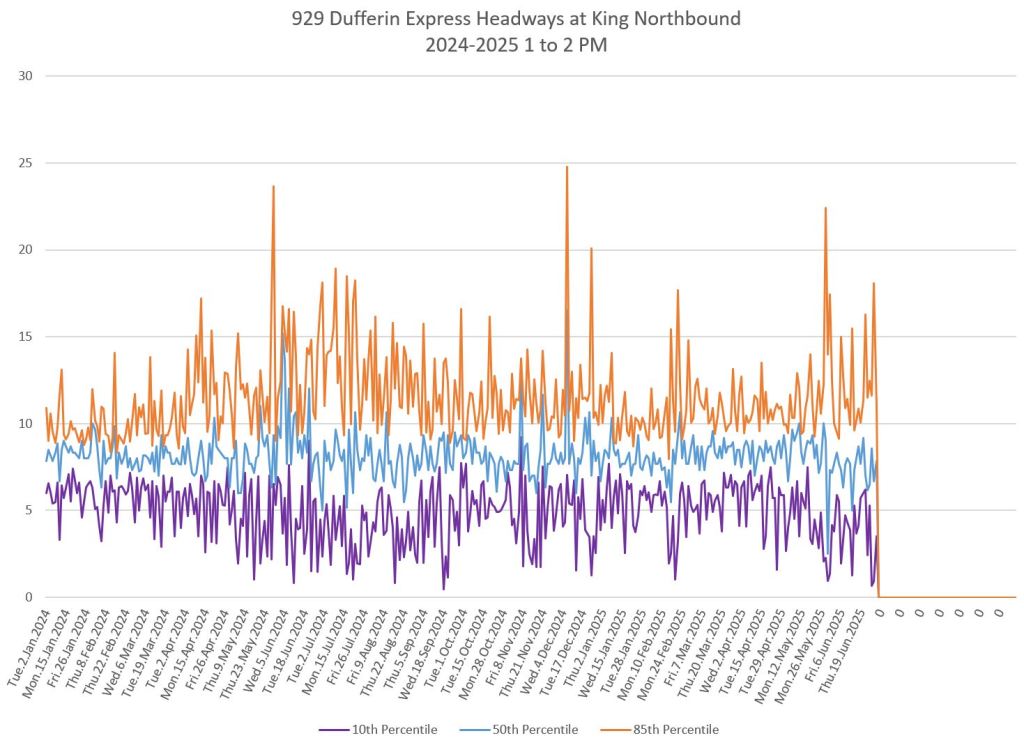
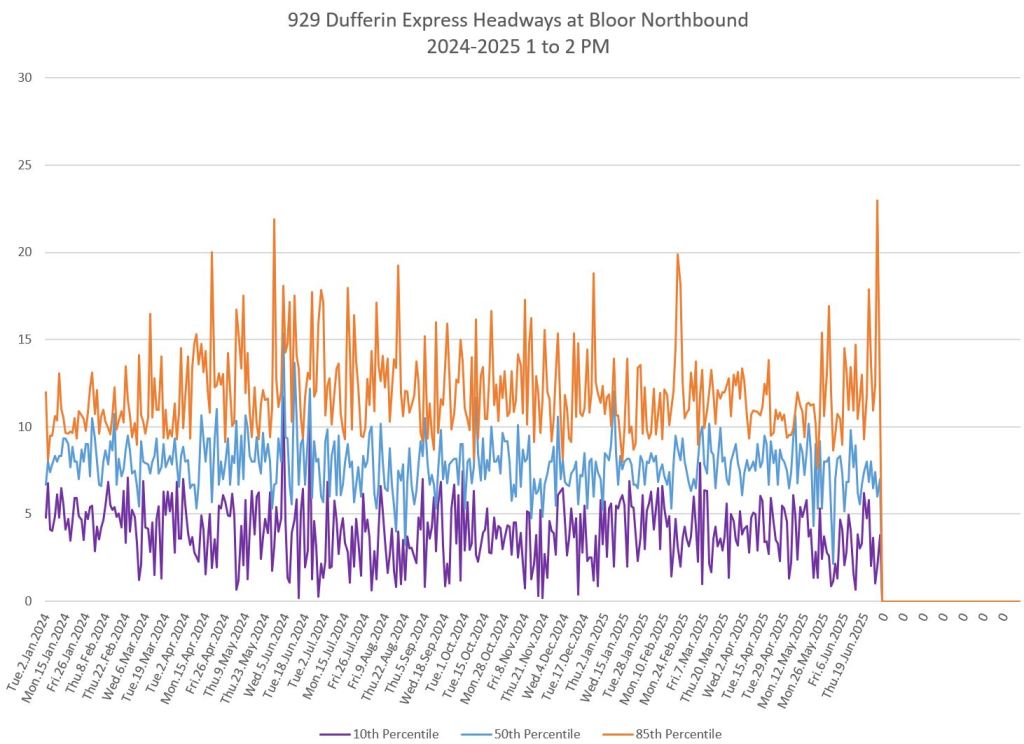
PM Peak
Early Evening
Southbound from Wilson Station to Exhibition
AM Peak
Midday
PM Peak
Early Evening


More great analysis from Steve. If you can’t measure it, you can’t manage it. And if you don’t want to manage it, find a way to not measure it, but claim you did.
LikeLike
The graphs for the 24 and 924 generally match my experience. In particular they are surprisingly reliable and predictable leaving Vic Park station in the morning. Because of the effect of the 24B (as you mention), the 10th percentile is a little deceiving; the fact that 85th percentile is very close to the 10-minute headway of the main branch is a better indicator.
Service does tend to bunch up a little the farther north you go. Partly traffic. Partly passenger loading especially between Eglinton and Rowena. Partly the 24B playing leapfrog with every other 24A. Partly the effect of the express interacting with the local differently the farther north you go. You see bunching but it’s not as egregious as I’ve seen on other routes.
I haven’t noticed many (any?) measures to manage headways mid-route, the focus seems to be on managing departures at the terminals, which seems to be done pretty well usually. (Those extra-padded layover times help.)
I remember maybe 15 years or so ago when there actually did seem to be more active mid-route management of headways. If you were traveling on the shoulders of the peaks when traffic was lighter but they were still running the peak schedules, the bus would crawl along, would sit and sit at stops, would intentionally miss lights, etc. to try and (er) “keep up” with an overly generous schedule. Is that better? I guess the answer is that it depends on how far you’re traveling and how far from the departing terminal you’re boarding.
LikeLike