This article began as a Twitter/X thread responding to a post from Mayor Olivia Chow.
From the better way to the *best* way. This budget will restore 97% of pandemic-era TTC service cuts and get the city back on track.
There is a big problem with this claim, and I fear riders will be disappointed by what they actually see. Here is my consolidated thread.
It pains me to write this, but this post by Mayor Chow is simply not true. Either her spin doctors cannot read a budget, or she has been bamboozled by TTC’s misleading use of “restoring” service.
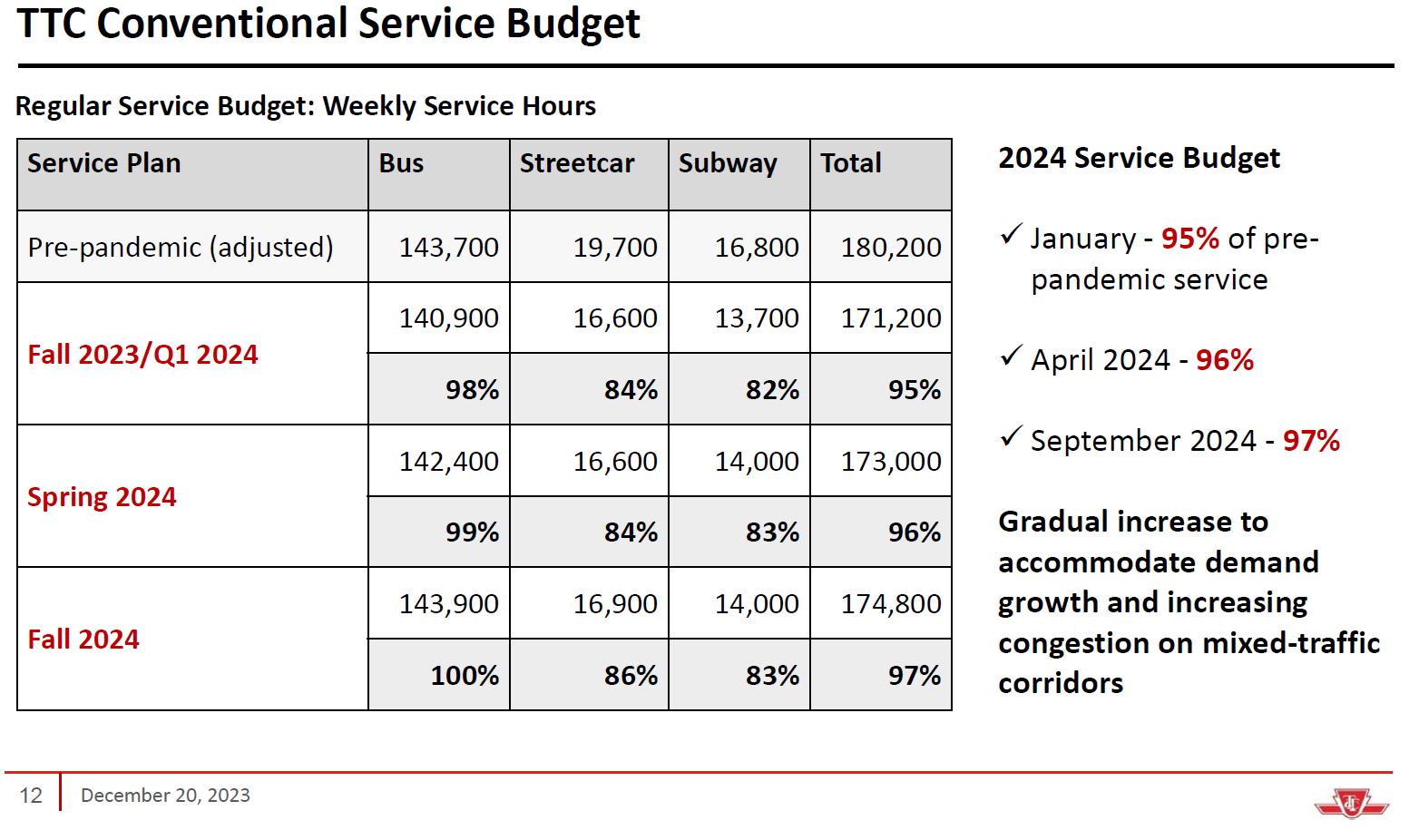
This chart is right out of the TTC budget and shows the planned service restoration by mode. Note that only the bus network gets back to 100%.
Because the values are based on vehicle and train hours, and buses (with relatively small capacity per vehicle) account for most of the hours, the total gets to 97% while leaving streetcars and the subway far behind.
But 97% is not really 97% as seen by riders. Many routes run more slowly than they did in 2019, and so it takes more hours to provide the same frequency and capacity of service.
For added clarity, “100%” of service hours will *not* reverse all pandemic era cuts because some hours go to routes running over 100% while others stay below that level. But spin doctors don’t do pesky details like that.
On top of that, crowding standards brought in by management without advance approval in 2023 mean that off peak service can be more crowded before triggering service improvements. These might be reversed in 2025 but only if there is budget headroom.
Talk about prepandemic service levels forgets that there were major problems with overcrowding and inadequate service back in 2019. Actual planned service in 2020 was higher than 2019, but was cut due to covid.
The shift in commute patterns means that total ridership is less than 2019 levels, but it is concentrated on a shorter work week. Off peak riding is already at or above former levels.
The TTC does not break out service frequency and capacity as metrics, but using vehicle hours hides deeper cuts in these areas.
The February 18 schedule changes include cuts on many routes which are described as “adjustments” on the TTC’s website. A few of these are erroneously called “improvements”.
One reason for the February cuts is that service in January was actually *over* budget and the cuts back that out.
The TTC has no public measurement of crowding conditions and service quality including gaps and bunching. That 97% number will be broadcast far and wide, but will hide many problems.
Service Budgets
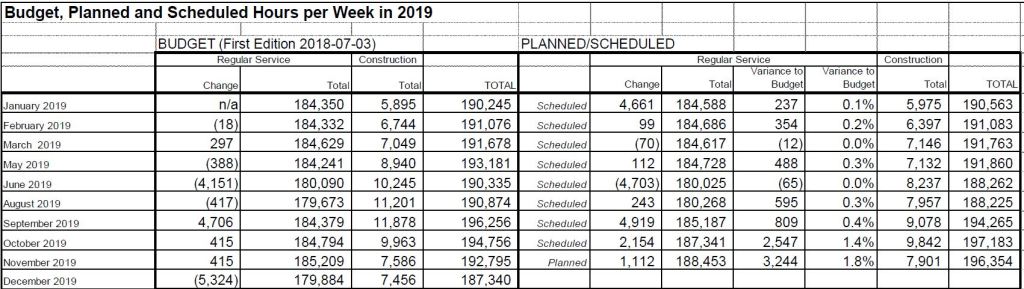
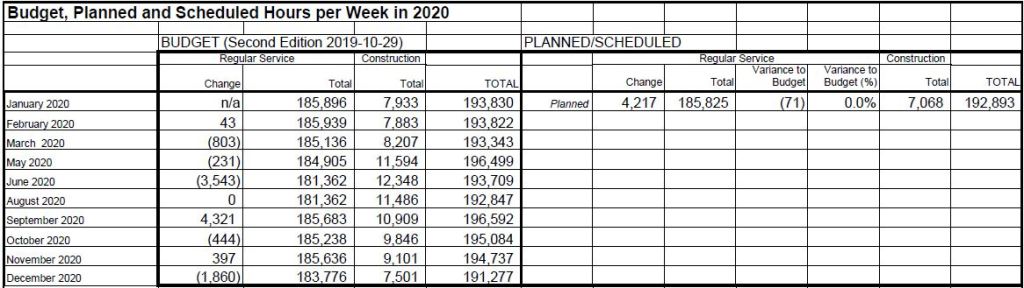
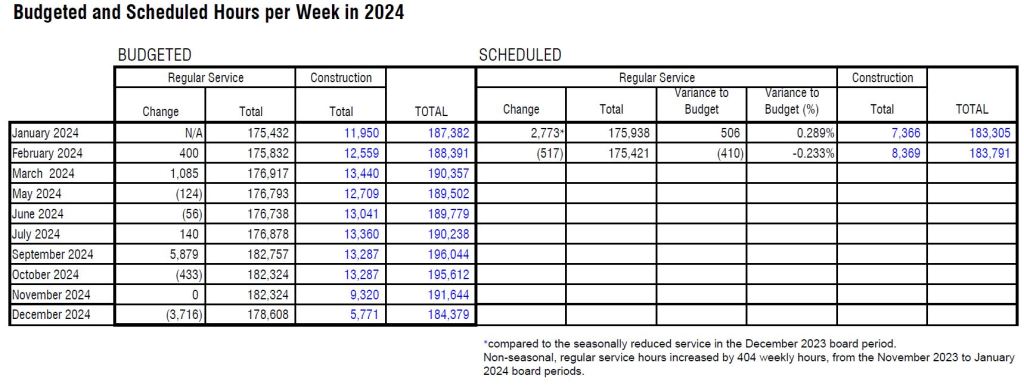
For comparison, here are the 2019, 2020 (pre-covid) and 2024 service budgets. The important column is the third from the left, “Regular Service Total”.
For a comparison of January 2024 service levels to January 2020, see this article:
There is work to be done, and a vital first step is to understand just what is needed and what is possible. The TTC Board plans a strategy session in March, and their Budget Committee will probably start meeting in June-July.
Soon I will publish an article about a Ridership Growth Strategy for 2024 that will set the stage for the kind of debate that should be on the agenda.
Can we hope that these meetings will not be consumed by self-serving management dog-and-pony shows, but rather will be an open discussion of the state of and options for our transit system.

 Steve Munro