
The streetcar museum formally known as the Halton County Radial Railway will celebrate its 70th birthday on Saturday, September 21.
A week later, the TTC will hold an open house at its Hillcrest complex on September 28 to mark the centenary of this site.
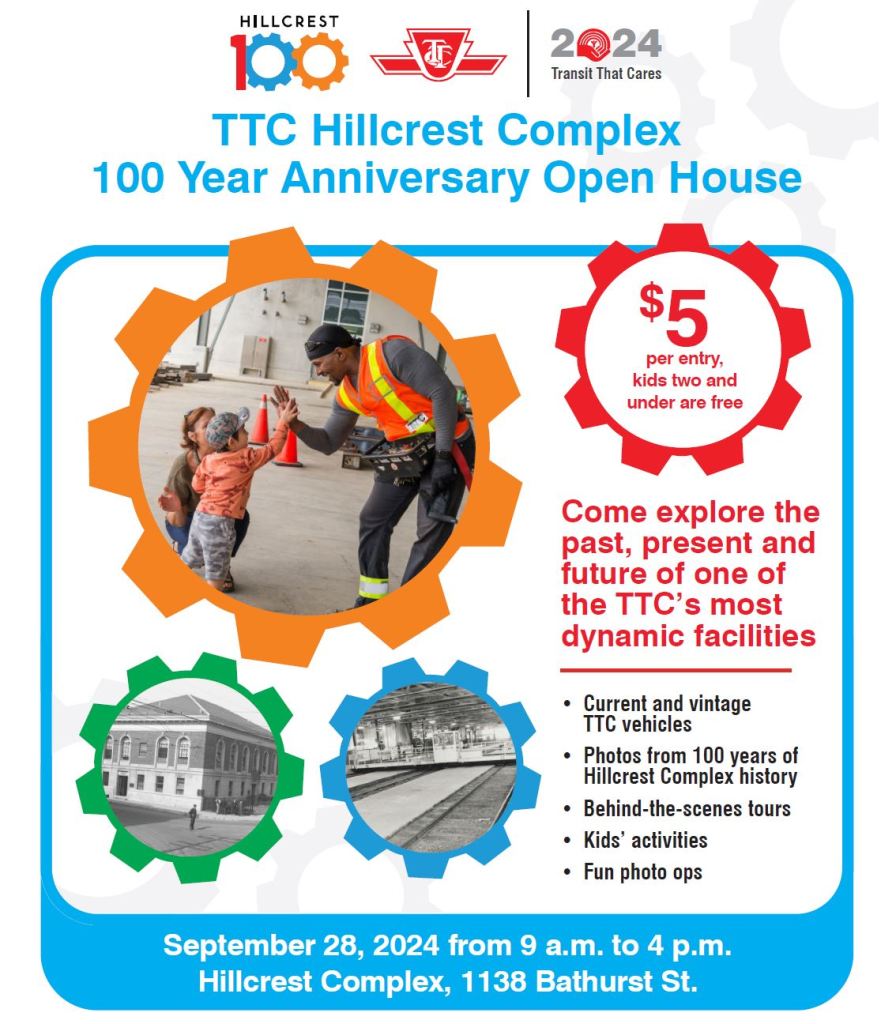
Attractions include:
Streetcar Way (the TTC’s newest facility at Hillcrest Complex)
- Rail bending demo
- Streetcar maintenance vehicles
- Tool cribs
- Video timelapse of rail replacement
Harvey Shops (one of the original buildings to the complex, est. 1924)
- Vehicle parts repairs
- Welding shop/demo
- Carpentry shop/CRC machine demo
- Upholstery section
- Body repair
- Paint Shop
- Transfer table
Repair (Frog) Shop (one of the original buildings to the complex, est. 1924)
- Sign shop demonstration
- Repair shop display
Other attractions around the yard
- Ride a Peter Witt streetcar (contemporary with the foundation of Hillcrest)
- BBQ
- Face painting
- Current/vintage TTC vehicles
- Kids’ activities
- TTC Talent Management, Service Planning and Community Relations pop-ups
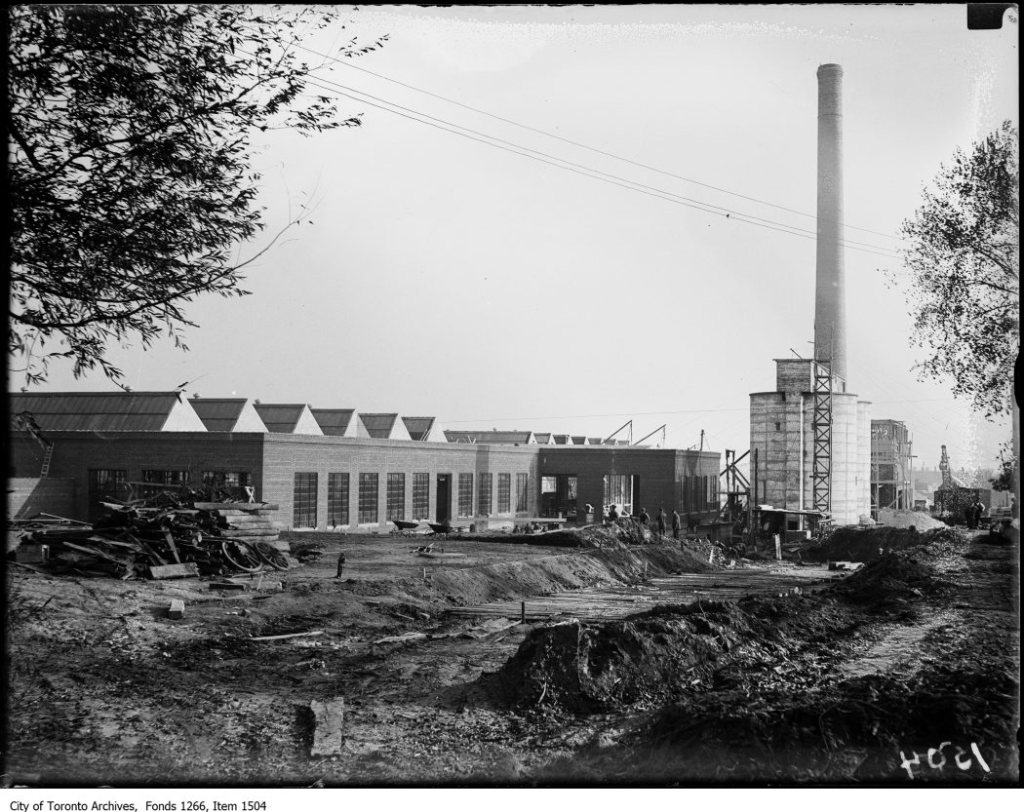
The Hillcrest site was originally a race track. Here are a few photos from the City of Toronto Archives.



The transfer table is used to shuttle vehicles from the entrance tracks to individual bays for repair work. With the shift to larger streetcars, this table is no longer big enough, and it will be removed as part of a pending renovation of the shops for the Flexity cars. Trackage will be added allowing cars to enter individual tracks and run through the building as they do at other carhouses. Hillcrest will be home to 25 Flexitys when this work completes.
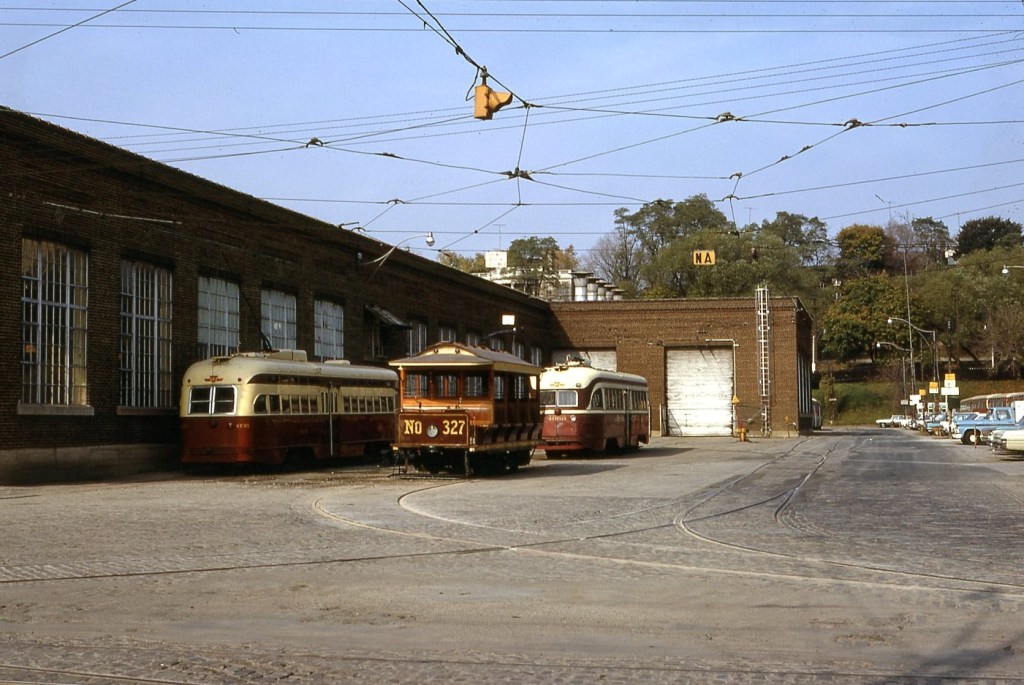
Here is car 327, now part of the HCRY collection, at Hillcrest in October 1968. (All photos by the author.)




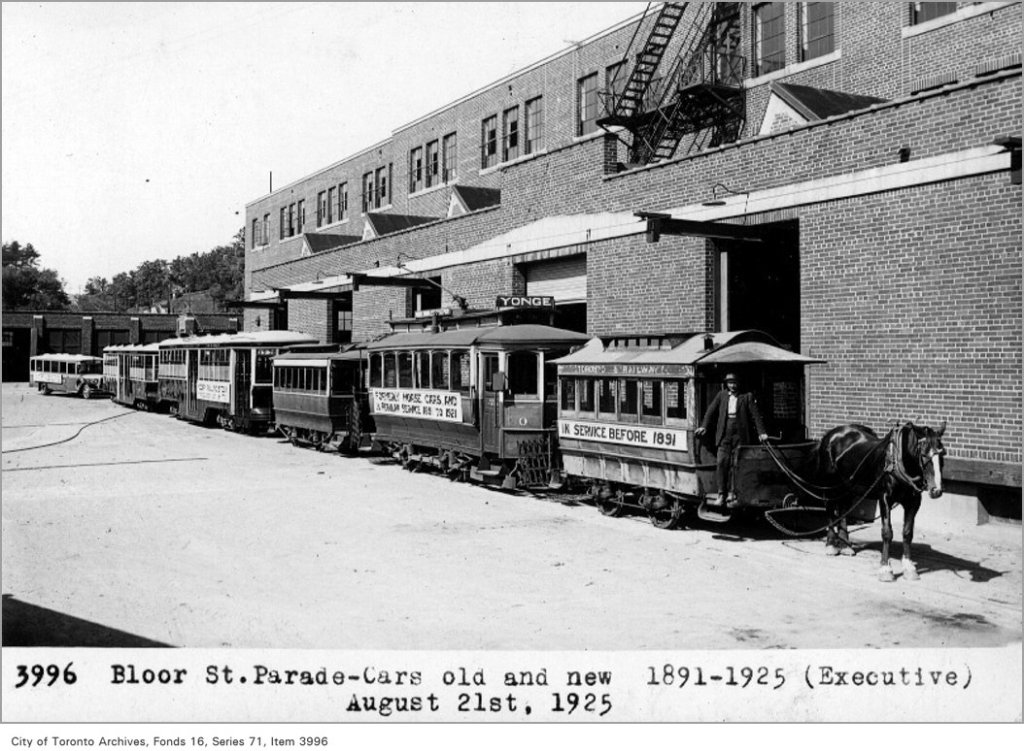
Back in August 1925, the TTC mounted a parade of historic and brand new vehicles to mark its reconstruction of the former Toronto Railway Company.
 Steve Munro
Great photos. Hillcrest performed work on subway cars? (looks like a G2 in one photo) How was that done? I have to assume they were trucked/towed there.
Steve: It was a mock up for a possible new car, I believe.
LikeLiked by 1 person
The Halton County Radial Railway land that used to be a part of the Toronto Suburban Railway in Nassagaweya Township. That radial railway started around St. Clair and Keele and followed the current hydro corridor north parallel to St. Clair towards Guelph.
The Hillcrest complex was a horse racing track between 1912 and 1922. Guess the automobile put an end to that horse endeavour.
LikeLike
I did a co-op placement at the TTC and was lucky enough to get a tour of Hillcrest Shops about a decade and a half ago.
Unless my eyes were deceiving me, the transfer table had standard and TTC gauge *tandem track* at the time. I can’t find any online photos to verify my claim, however!
Steve: Here is a photo of 4400 in Hillcrest taken from the Transfer Table in 2012. You can see the track on the deck in the foreground.
LikeLike
Will TTC 2252 be uses as a shuttle that day?
Steve: I don’t know, but doubt it for reasons of accessibility.
LikeLike
Re the Bloor St. Parade Cars. If I’m not mistaken, the parade itself took place on Bloor. I seem to recall seeing a photo of the parade at Bloor and Parliament.
David Cavlovic
LikeLike
At the Hillcrest open house, I asked a TTC employee how the TTC would handle the heritage fleet once the overhead is no longer compatable for trolley poles. He said the heritage fleet would be sent to a museum. Have you heard anything about this?
Steve: No, I haven’t heard that, but am not surprised.
LikeLike
On the heritage fleet, I recall seeing them rented for use right up to about 2010 in many historic-period movies filmed in Toronto, and given Toronto as a destination for TV and movie production it made sense for the TTC to maintain them, but I suspect now that the cost of creating very realistic CGI has dropped, and ease of creating it has increased, productions don’t need to rent them and dress them up anymore and that’s a lost income stream that supported them.
LikeLike