
In a previous article, I reviewed the transition from streetcar to bus operation on 510 Spadina in mid-June. Since then, the route saw other changes:
- Beginning on July 8, TTC suspended service south from Front Street between 3 and 7pm on weekdays due to congestion and very extended travel times on the southbound approach to the Gardiner Expressway. See 510 Spadina Bus Modified Diversion Tracking.
- From July 15 to 21, the north end of the route diverted to St. George Station during road construction in the Spadina/Bloor intersection. See Spadina Replacement Bus Shifts to St. George Station.
- On July 29, implementation of a reserved bus and cycling lane began south from Richmond to Lake Shore. See Reserved Bus Lanes for Spadina?
The reserved lane has greatly reduced delays at the south end of the route, albeit at the expense of road capacity.
This article presents travel times over various segments of Spadina from Bloor Street to Queens Quay during July 2024 to show the effect of the changing route configuration.
A key factor evident in the tracking data is that congestion occurs outside of the peak periods, and not necessarily in the same way each day. It can be tempting to cherry pick the afternoon peak as a worst case target, but that does not solve all problems. The extent of congestion also varies, and transit priority must be on a sufficient scale to deal with the bad days, not simply to improve conditions a bit over a short distance.
What is quite clear is that the City and TTC reaction to congestion problems gave the impression of surprise rather than preparedness, and that weeks of delays for riders could have been avoided or at least reduced in severity at both ends of the route.
Bloor to Harbord
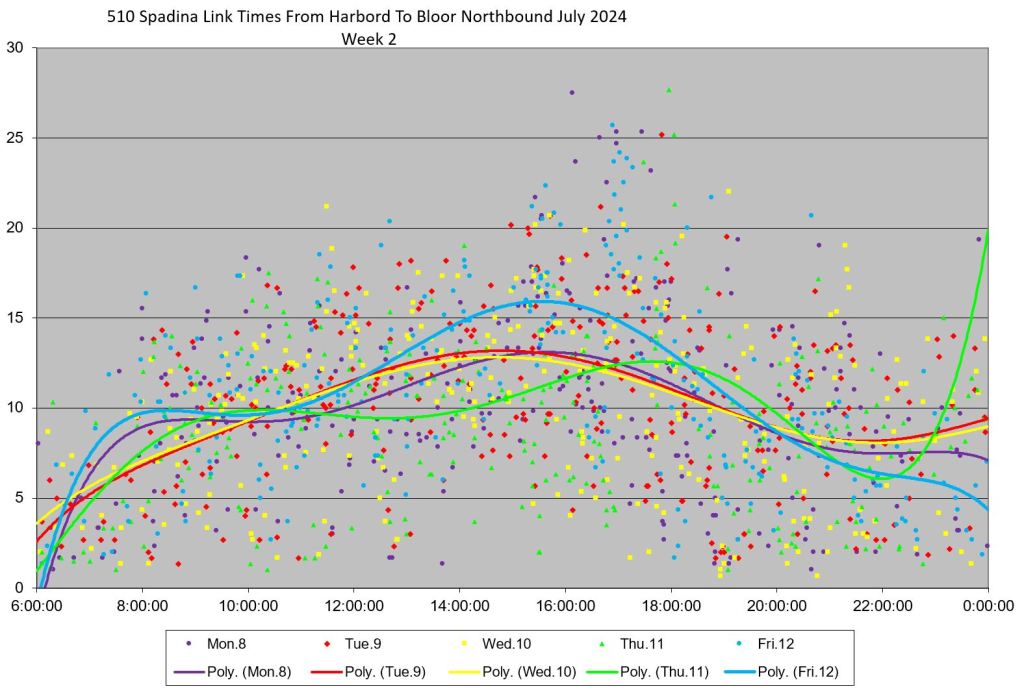
Congestion at the south end of the line garnered much attention, but the north end was also a problem.
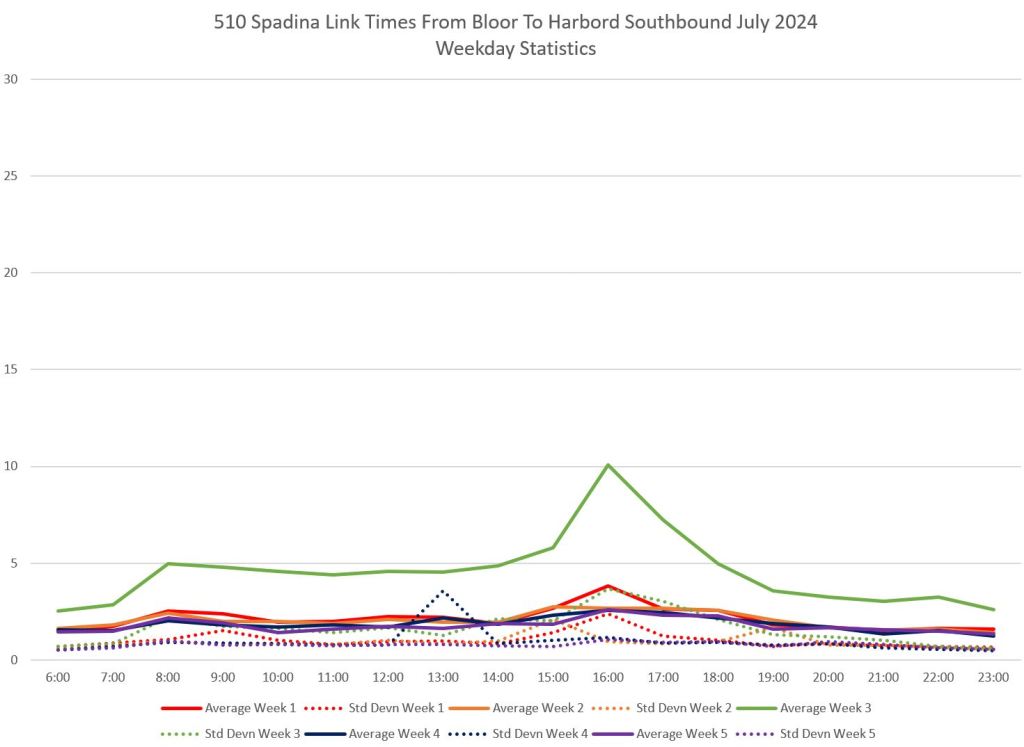
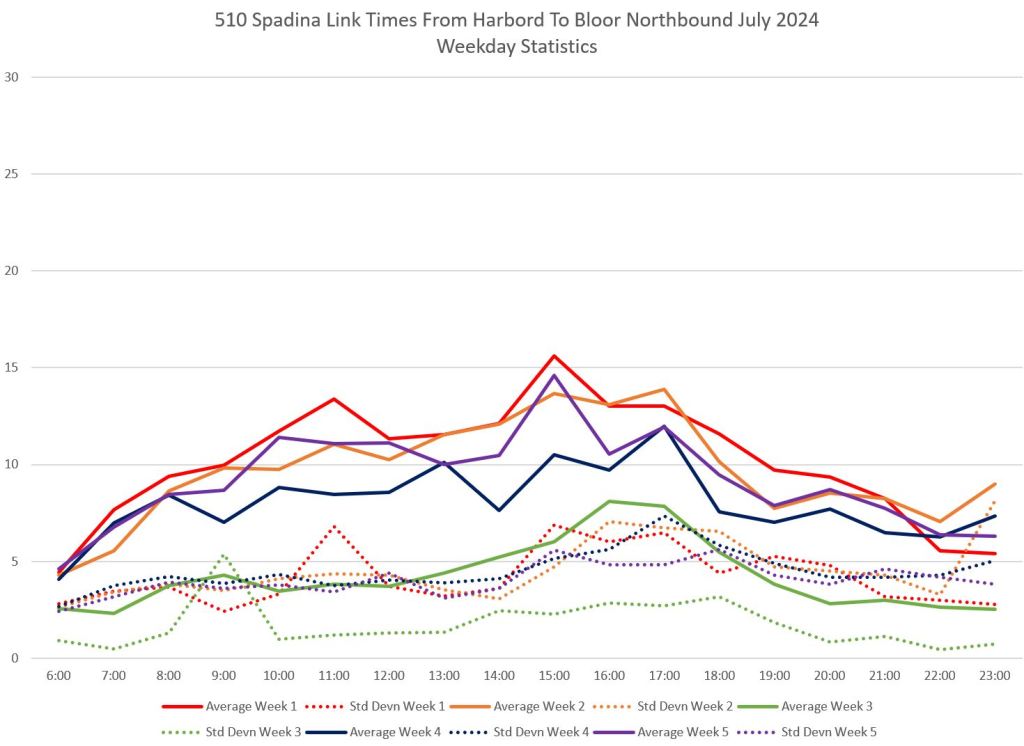
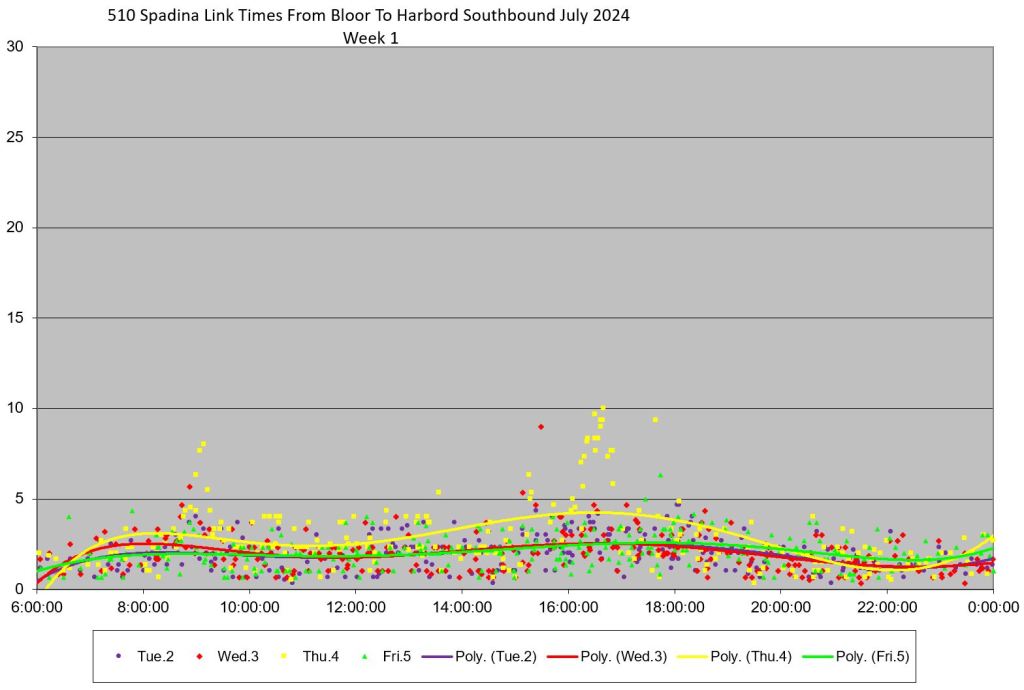
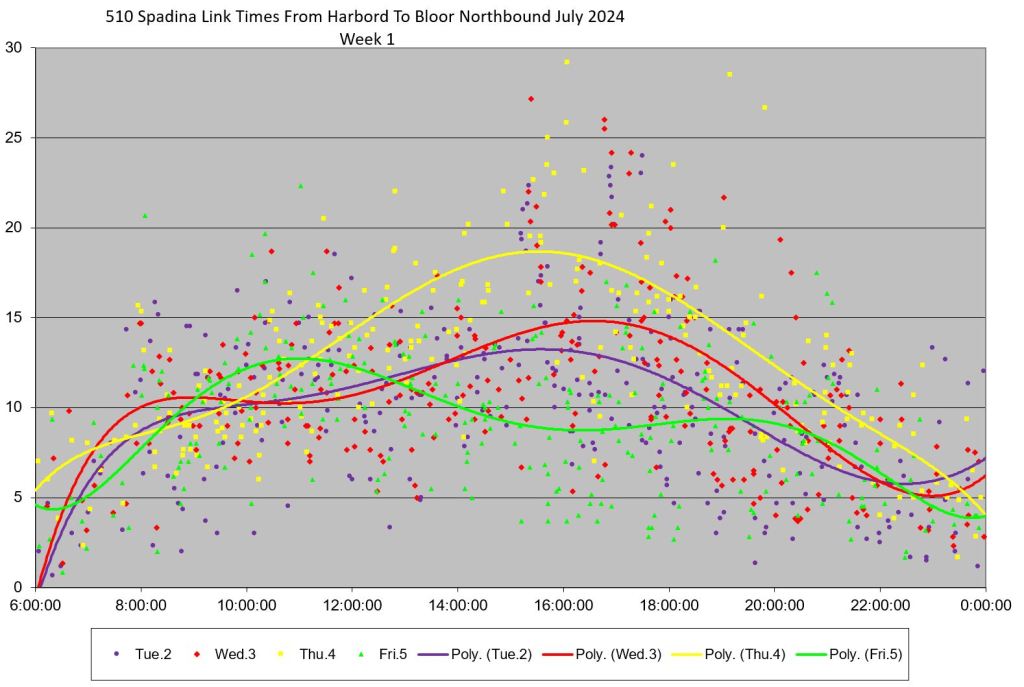
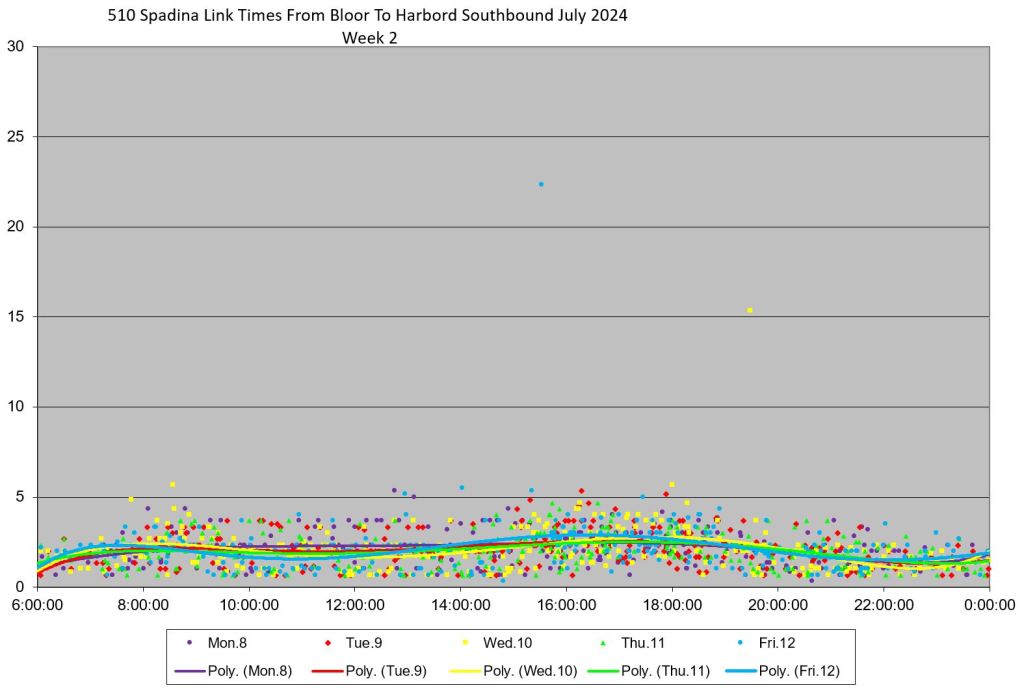
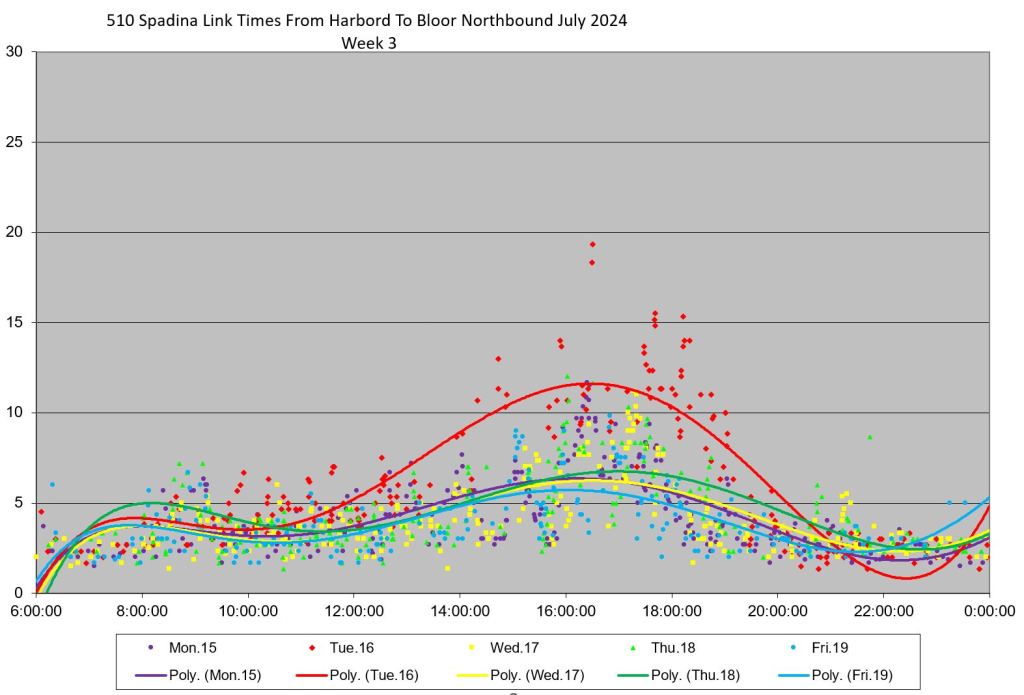
Reconstruction of Bloor Street for bike lanes added to road congestion on Spadina approaching Bloor, and the intersection closed completely for the third week of July. This was compounded by a backlog of buses waiting to enter Spadina Station. Travel times ranged up to half an hour with averages in the 10-15 minute range. This was a day-long problem even on weekends.
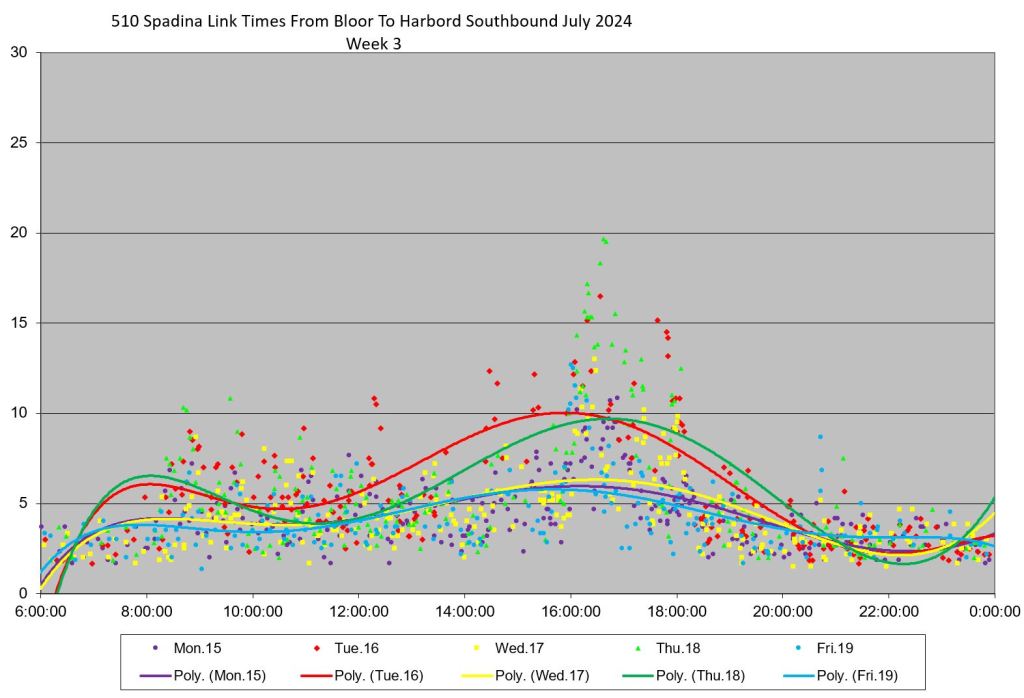
Southbound trips were much quicker, with longer times only in Week 3 when the route was lengthened to St. George Station. Note also the single line for July 20 and 21 in the weekend charts that lies well below the averages for other Saturdays and Sundays.
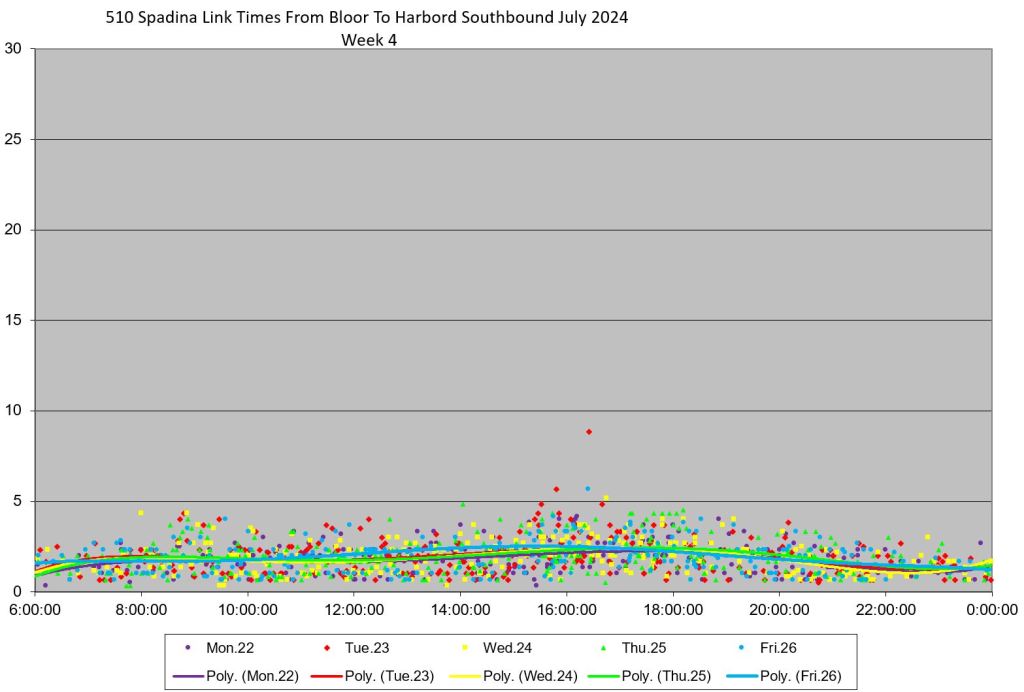
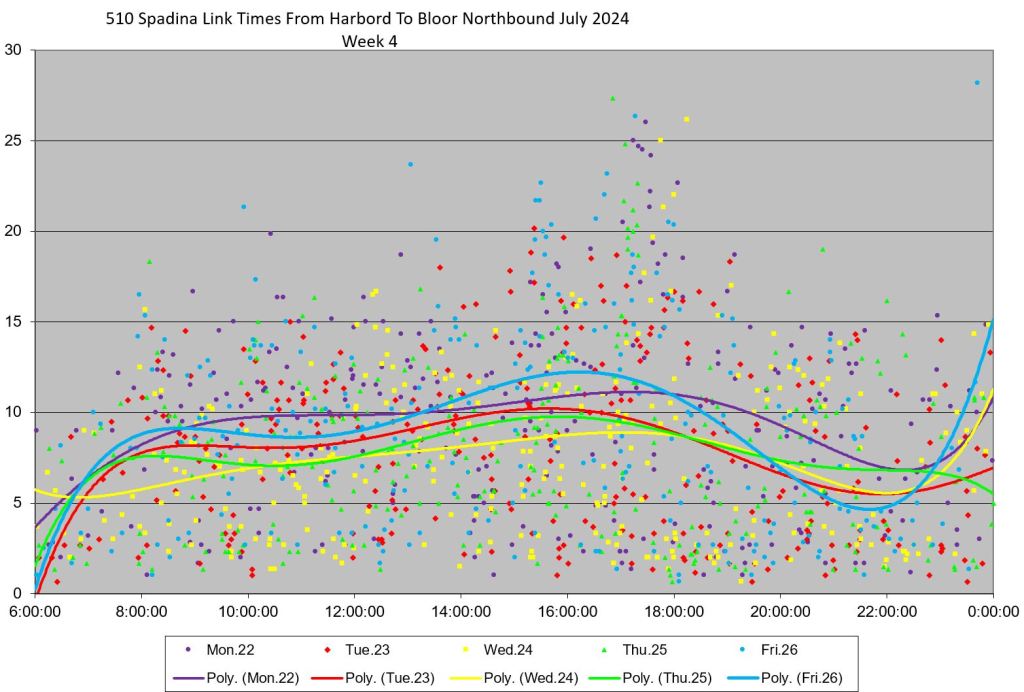
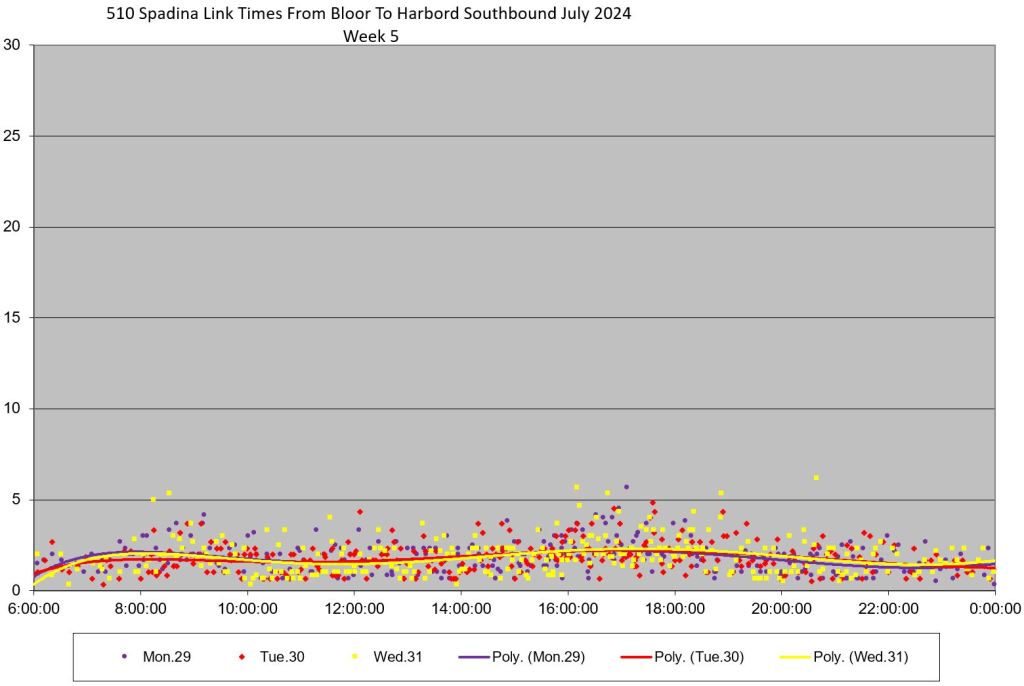
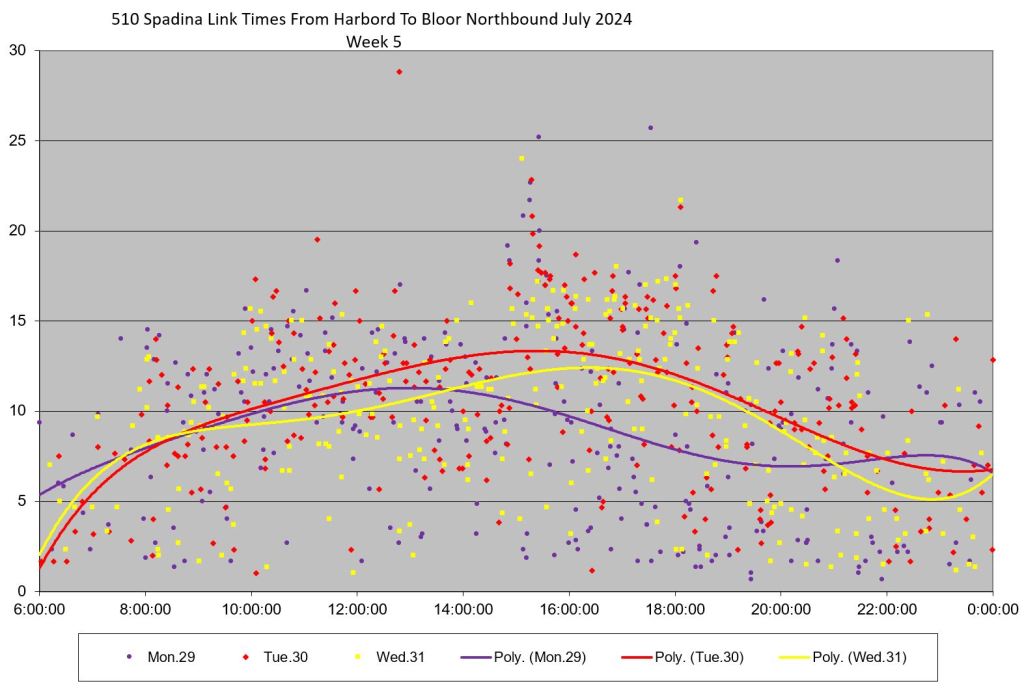
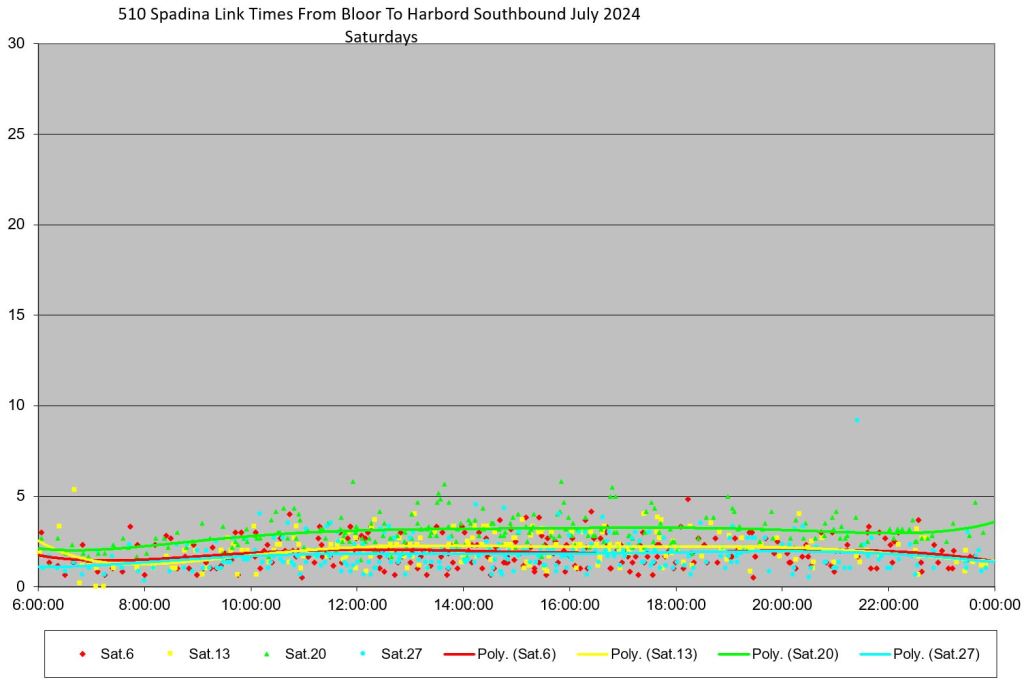
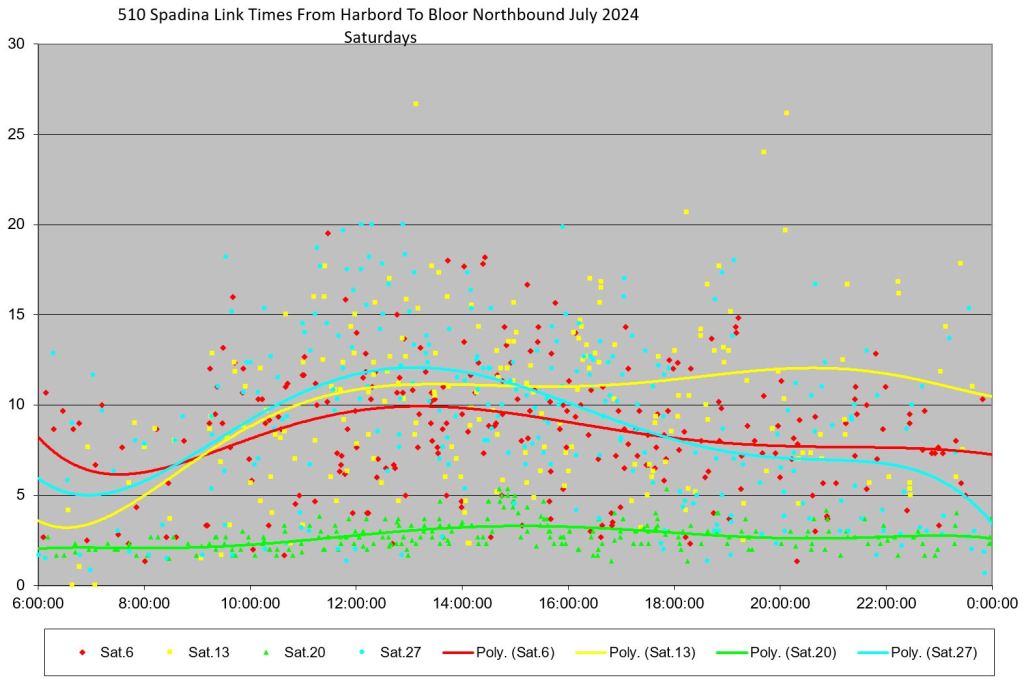
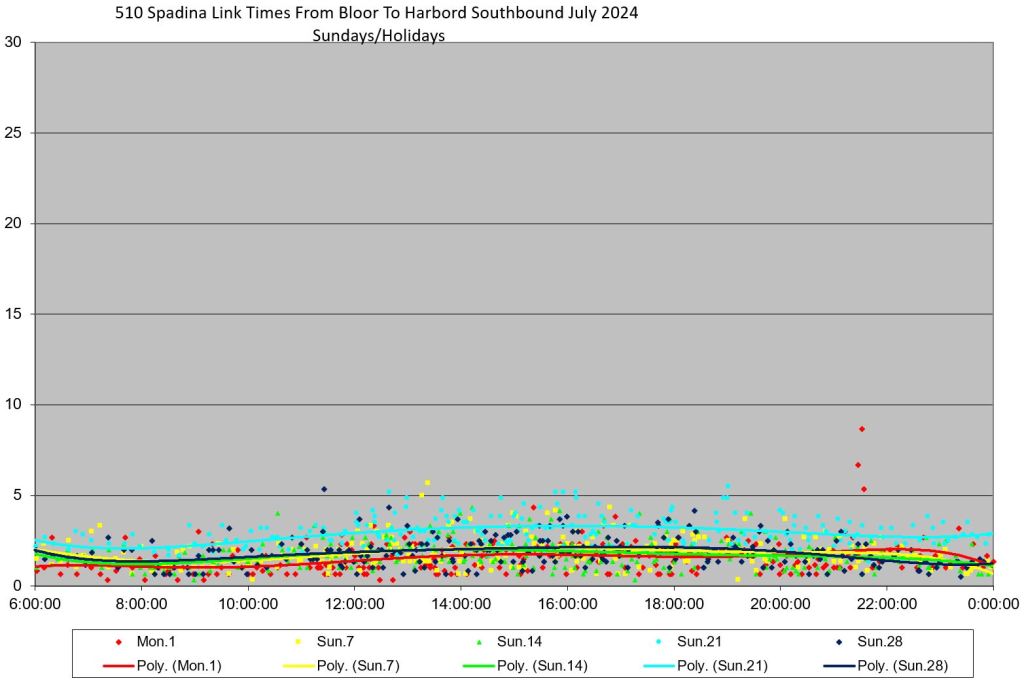
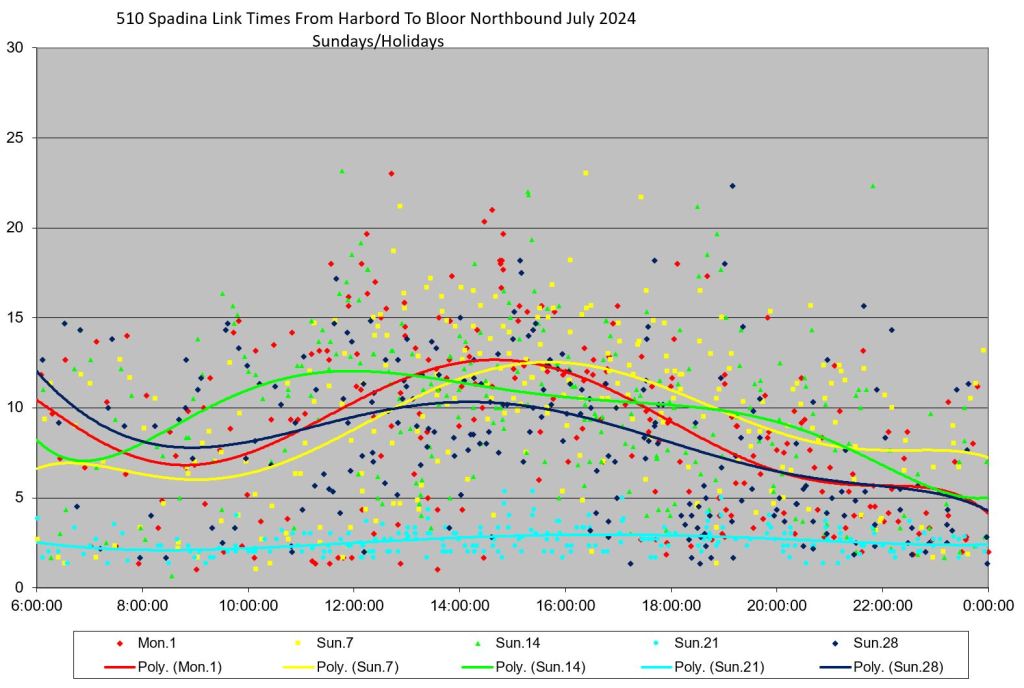
Harbord to College
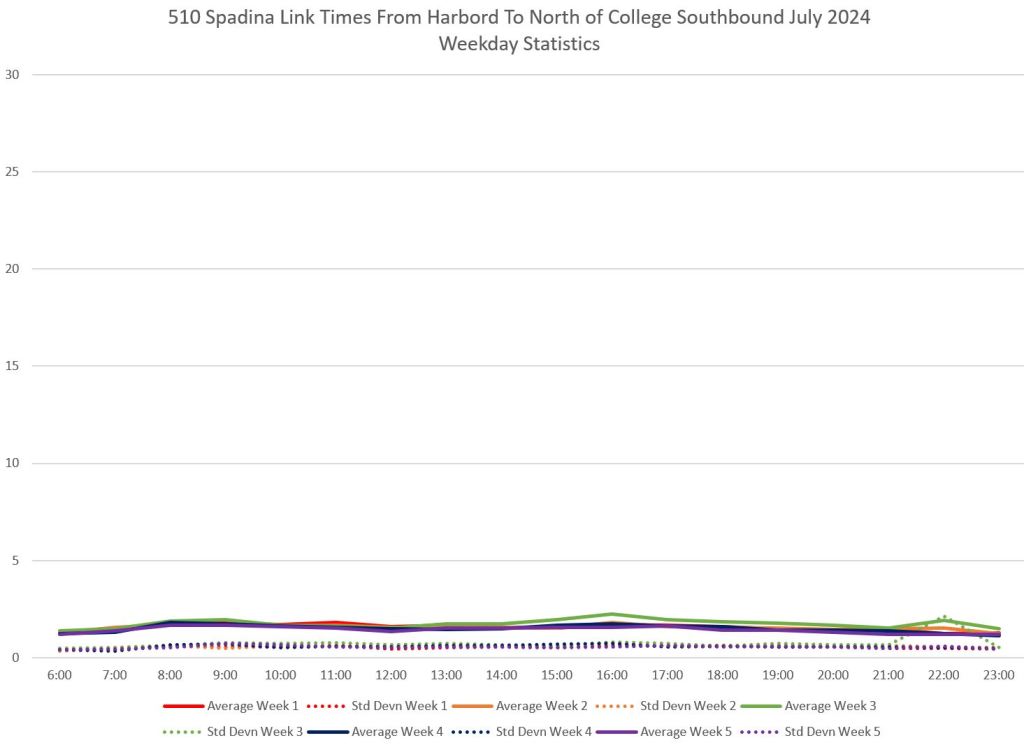
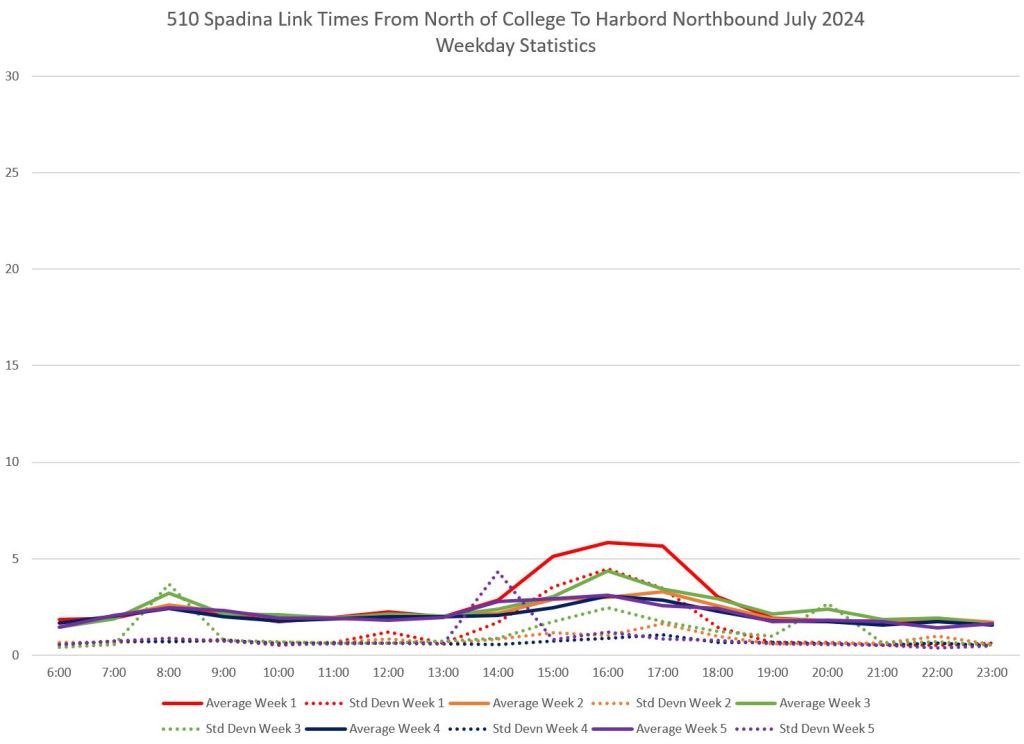
The segment from Harbord to College has no congestion and trip times are small in both directions. Week 1 northbound has some spillover effect from congestion north of Harbord.
College to Richmond
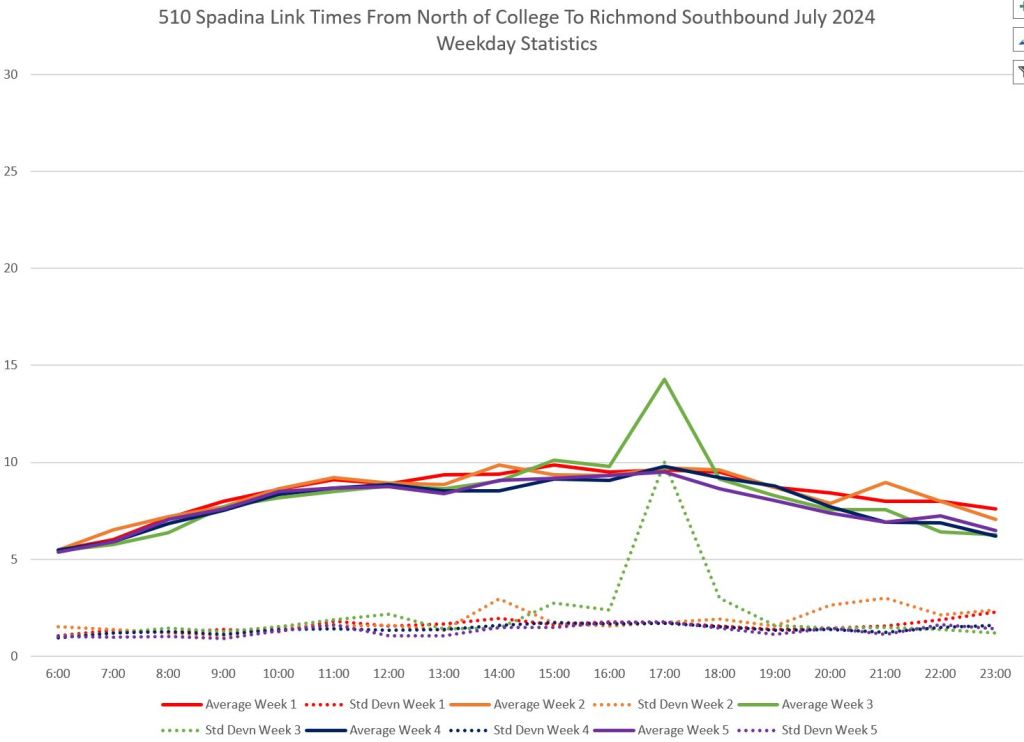
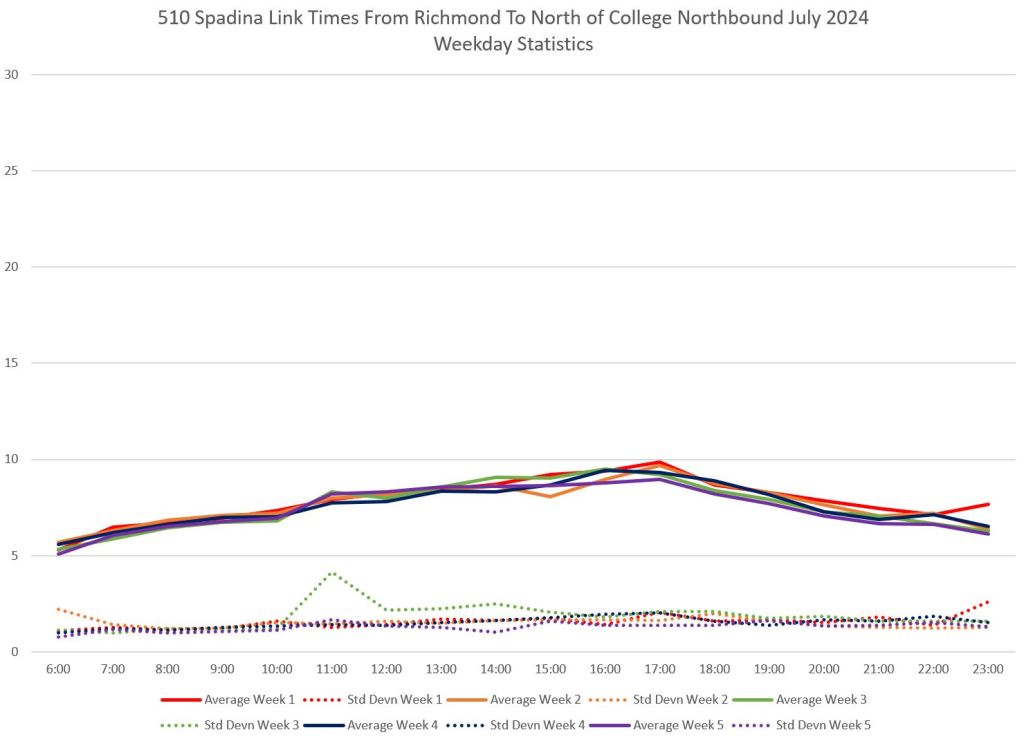
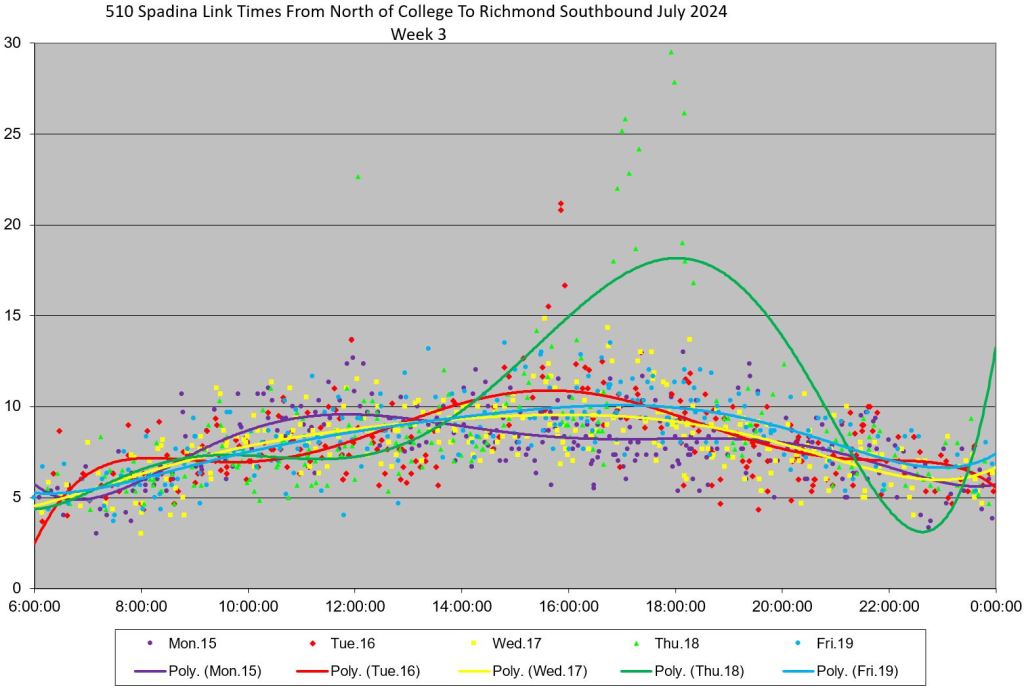
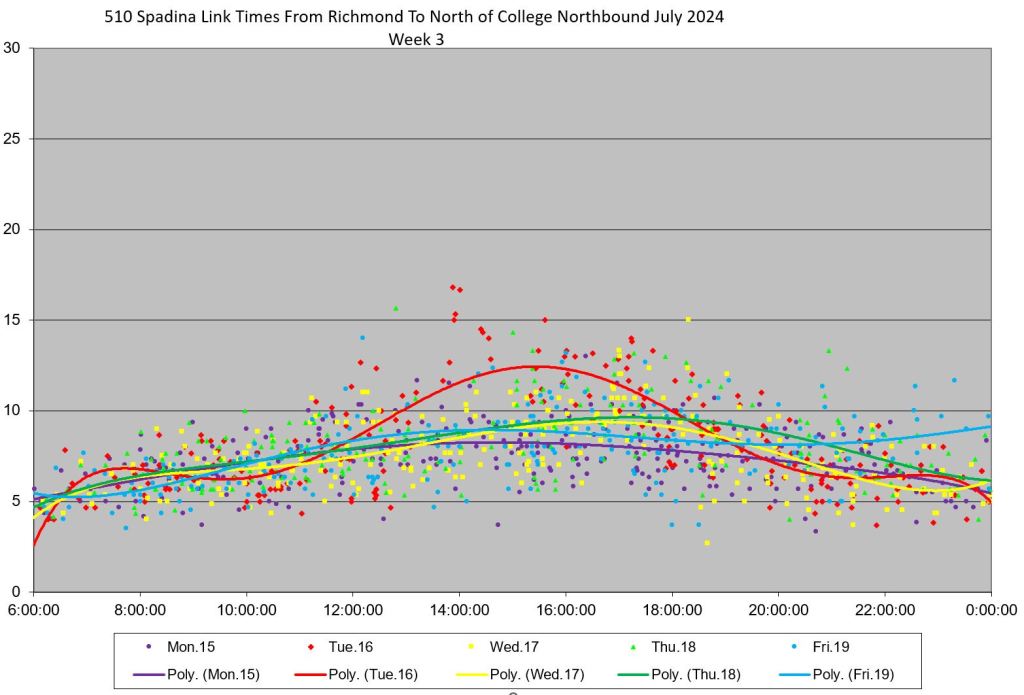
Travel times from College to Richmond were consistent in both directions across the month except in Week 3. The spike in the southbound weekly average (green, left chart below) was caused by the congestion backlog from the Gardiner Expressway backing up to beyond Queen Street mainly on Thursday, July 18, but also on other days (see detailed charts later in the article). Note that July 16 was the day of the major storm and flooding.
Richmond to Front
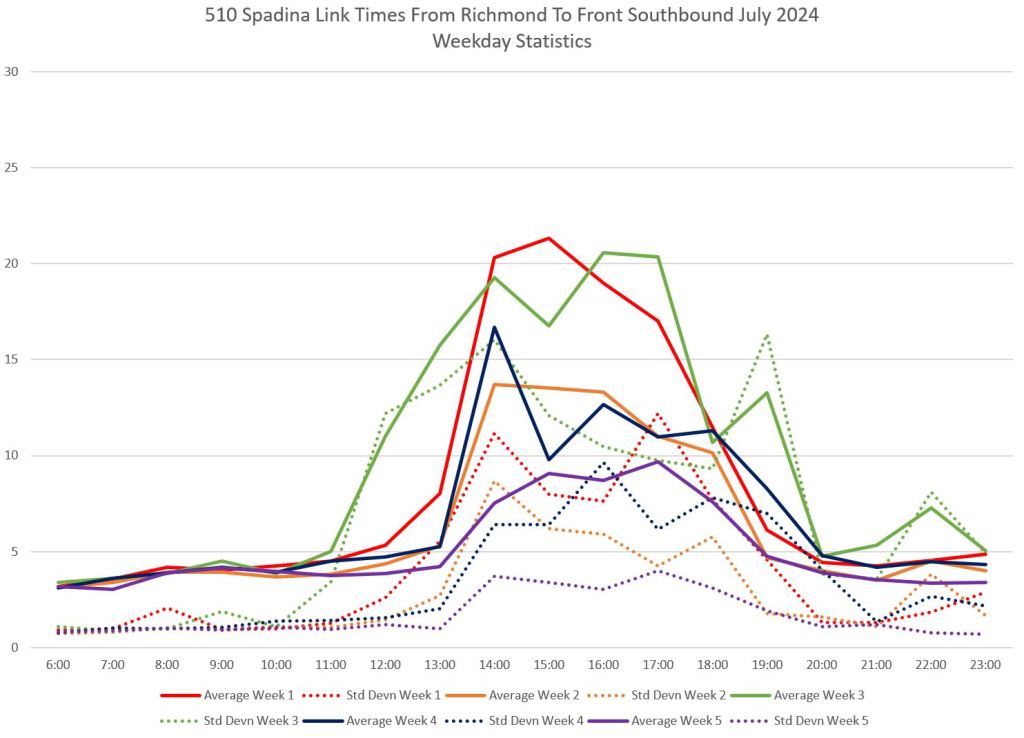
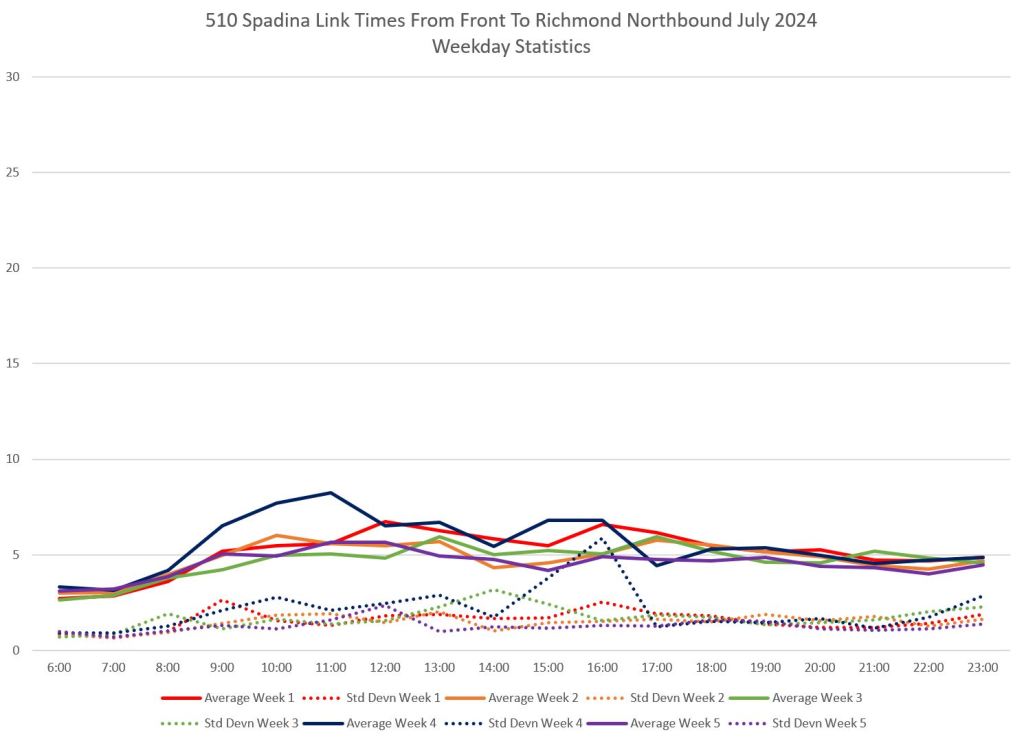
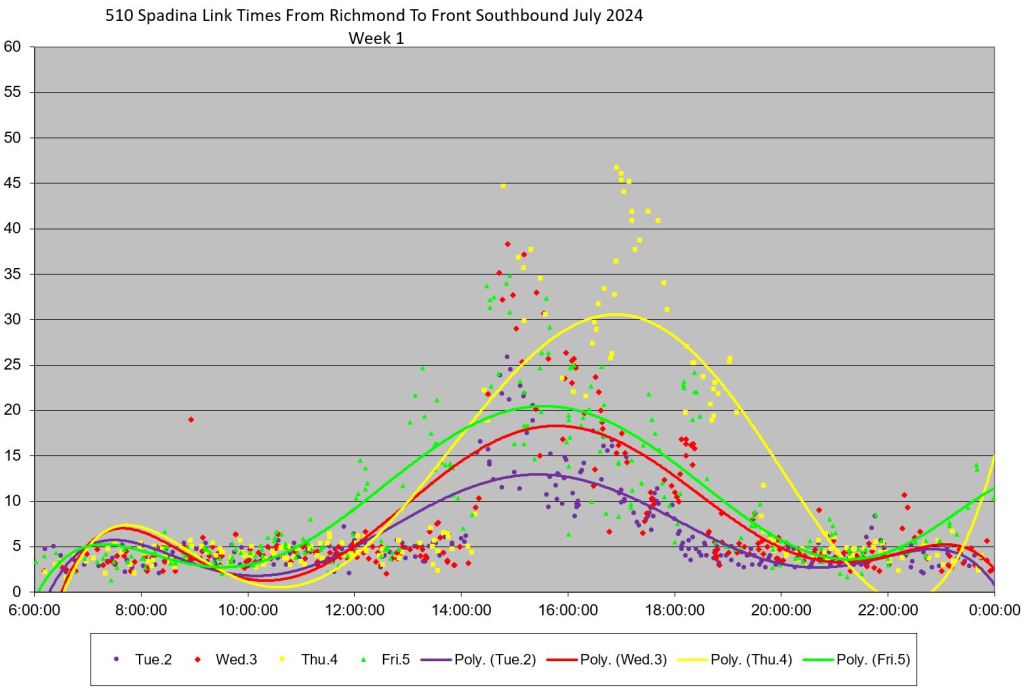
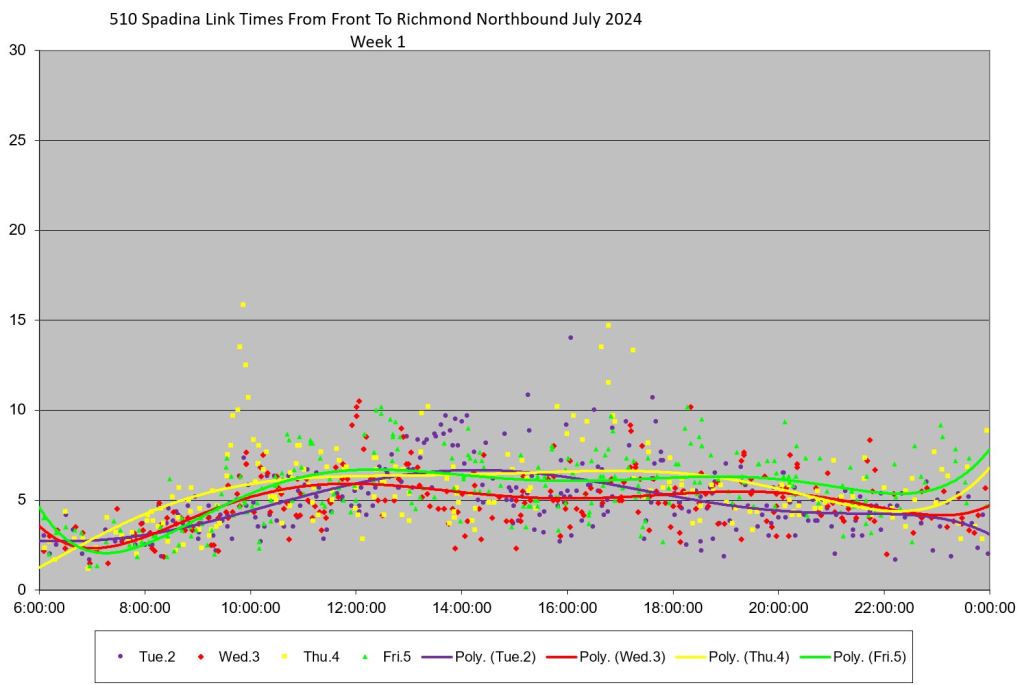
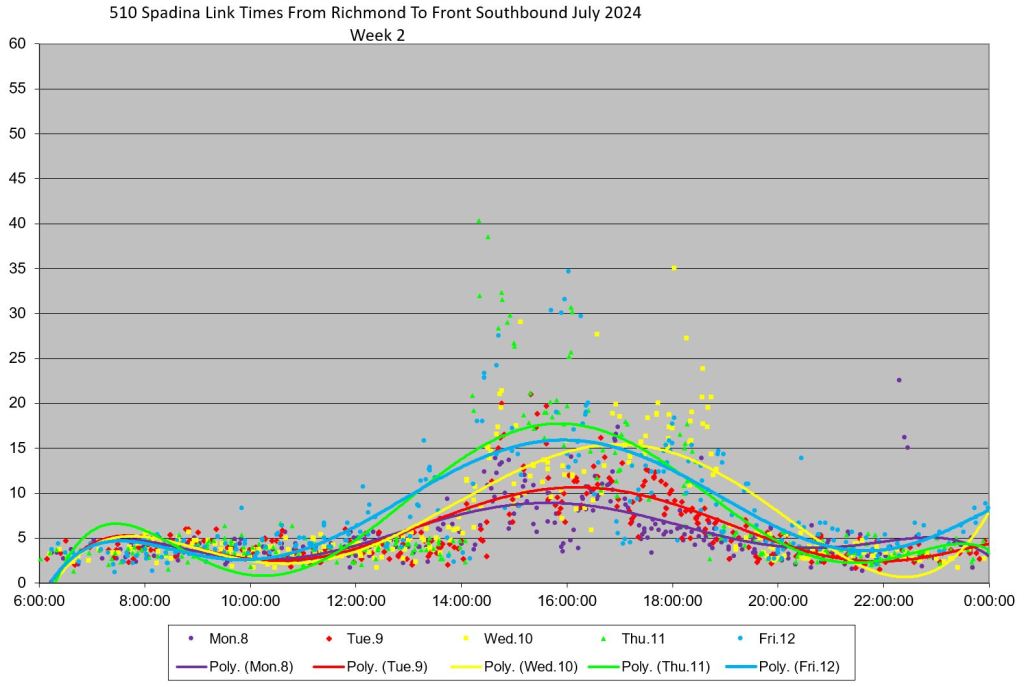
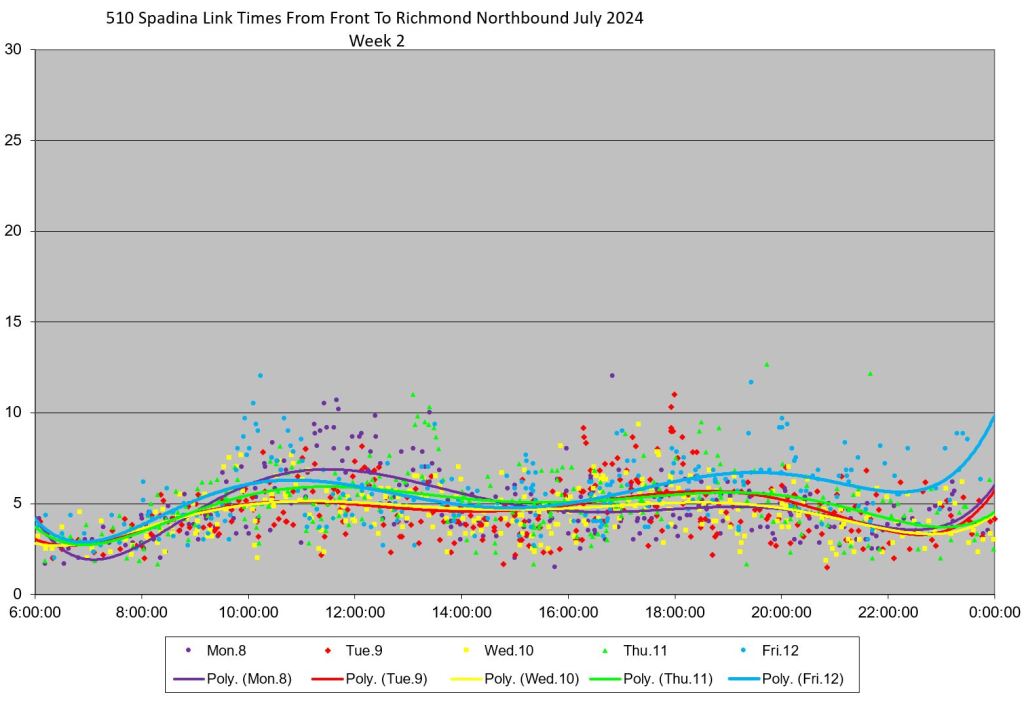
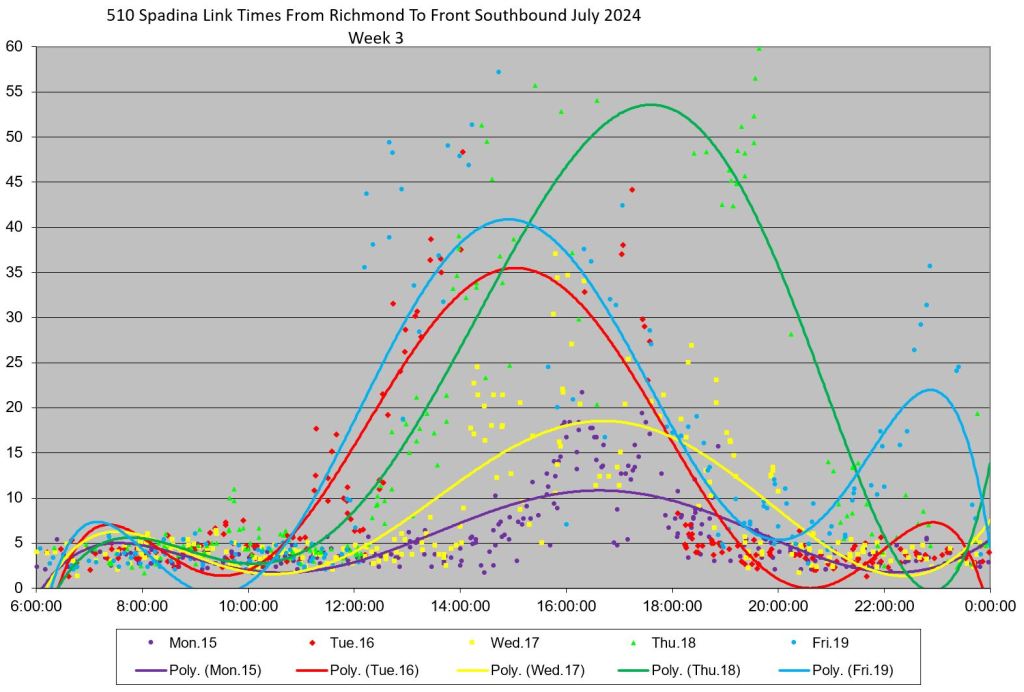
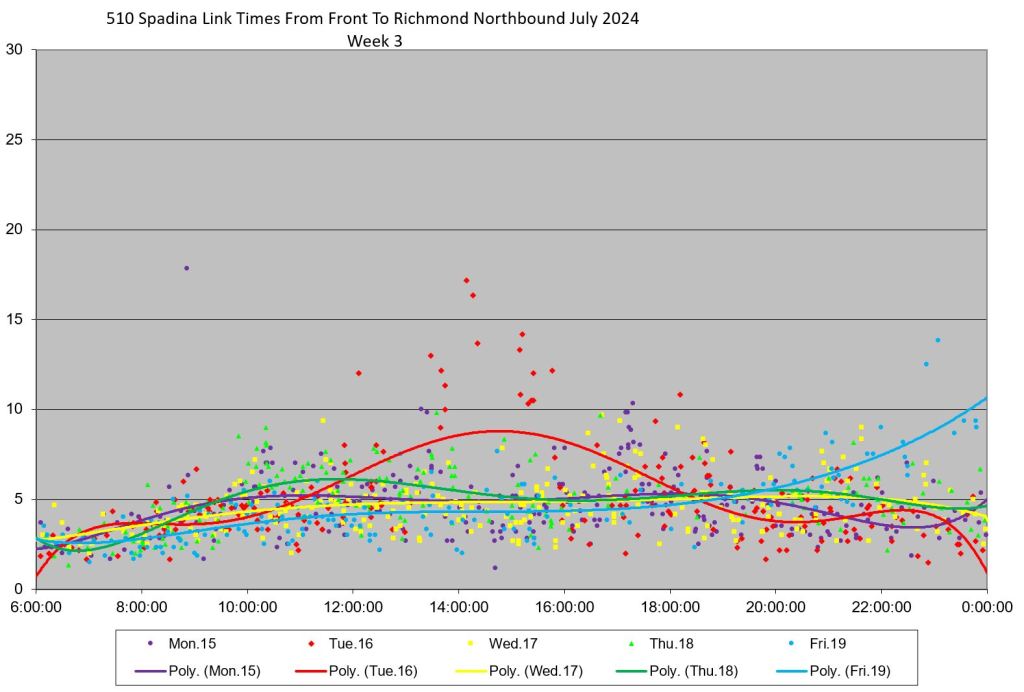
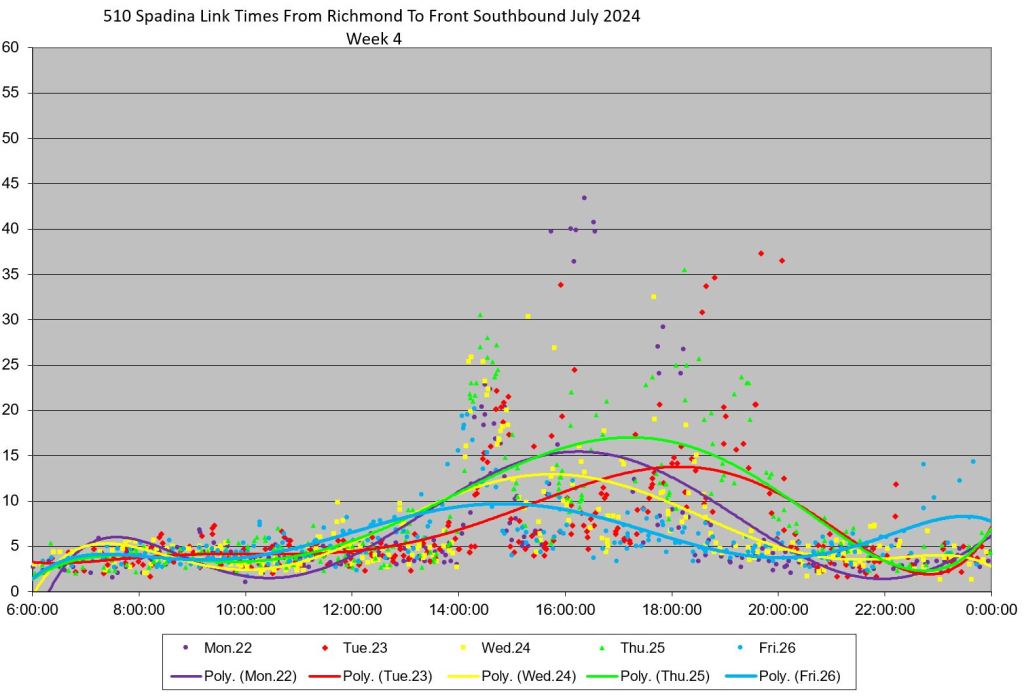
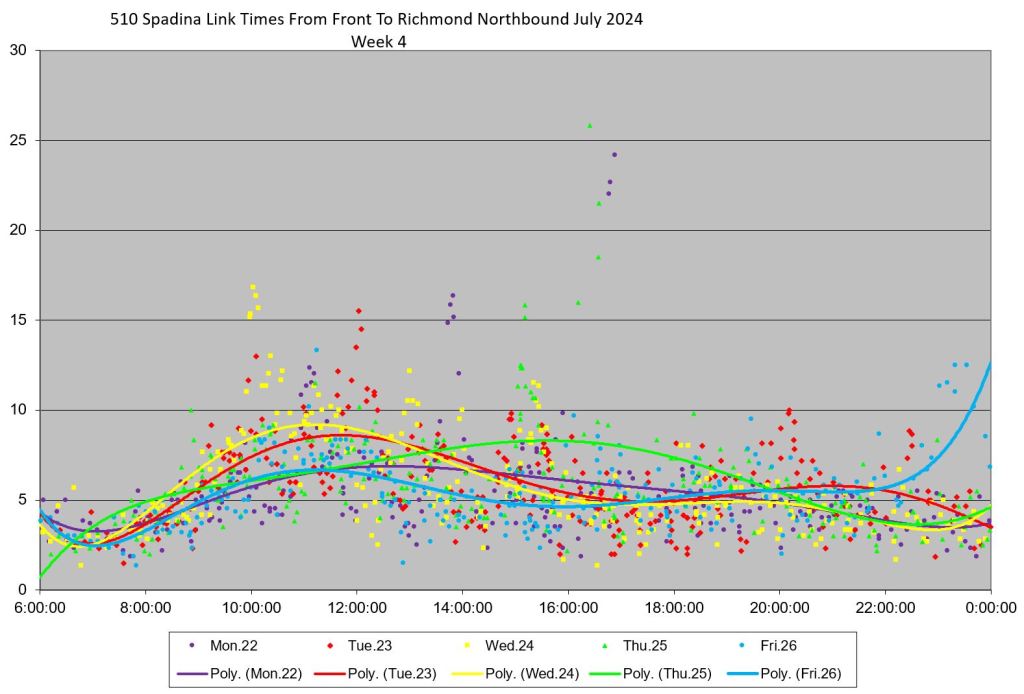
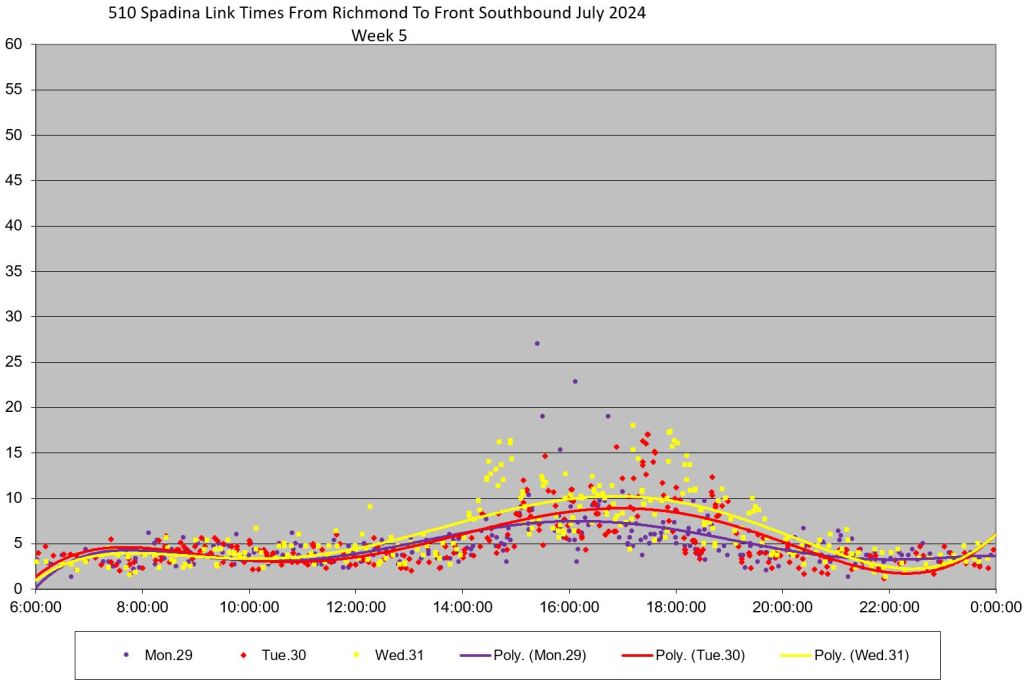
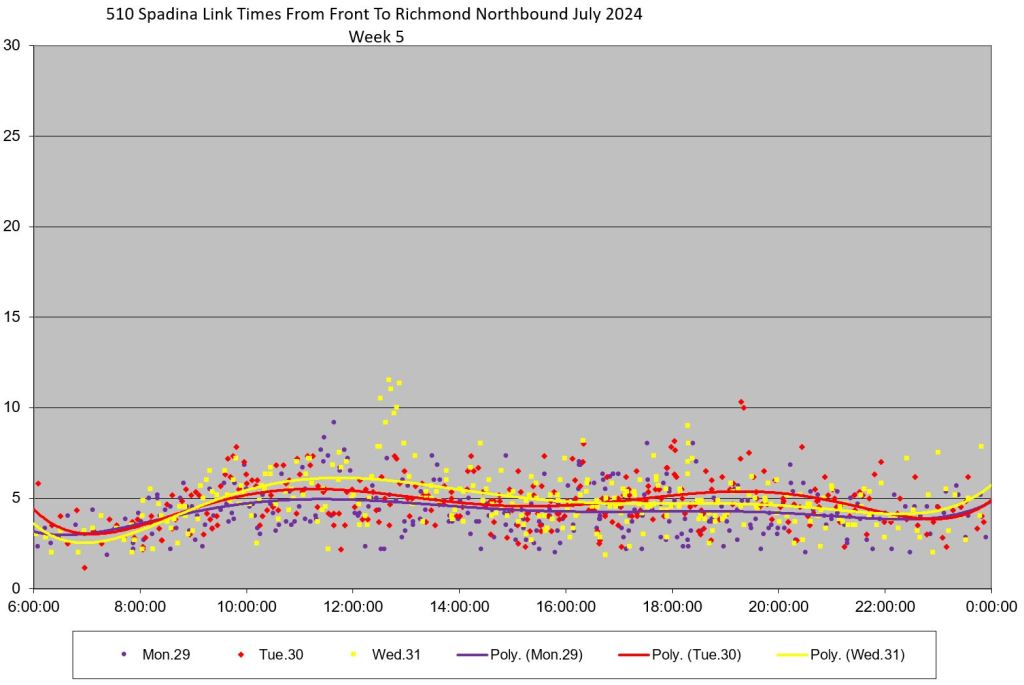
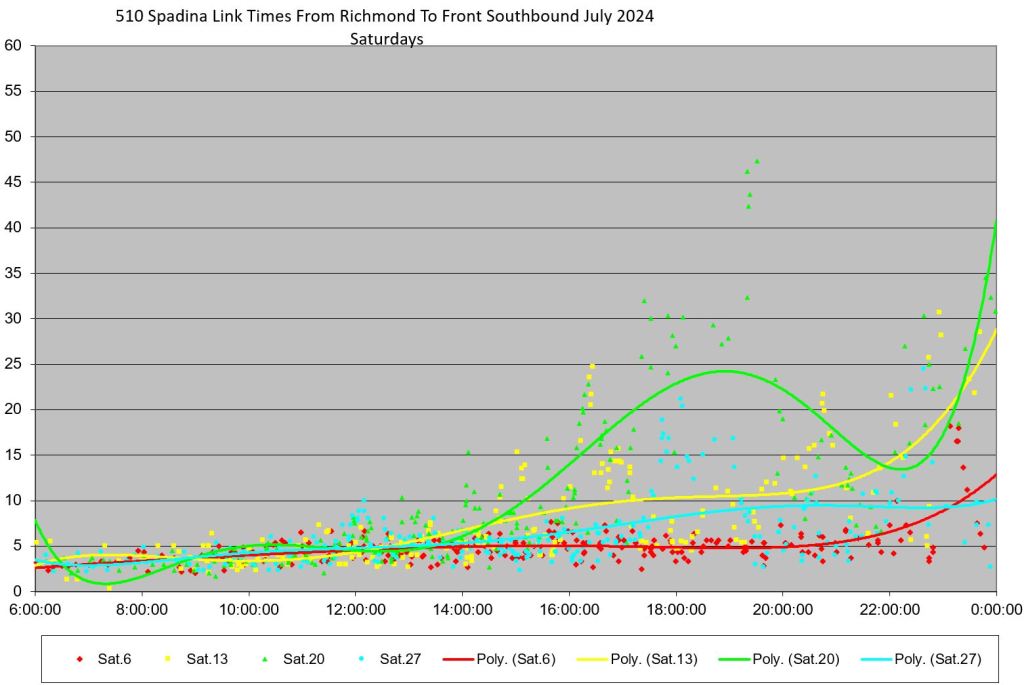
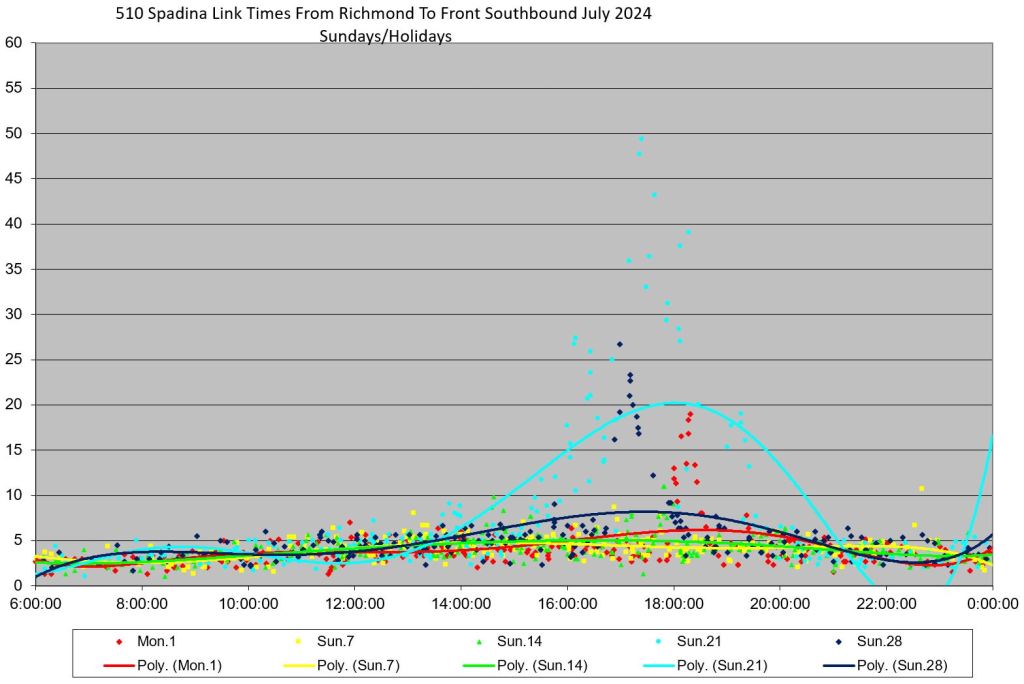
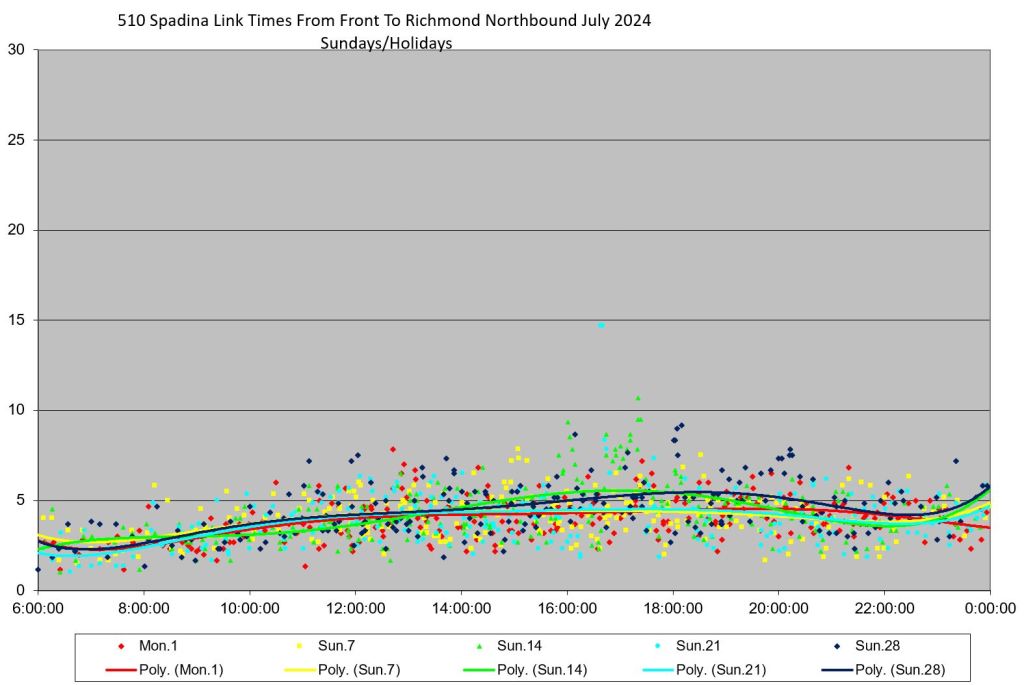
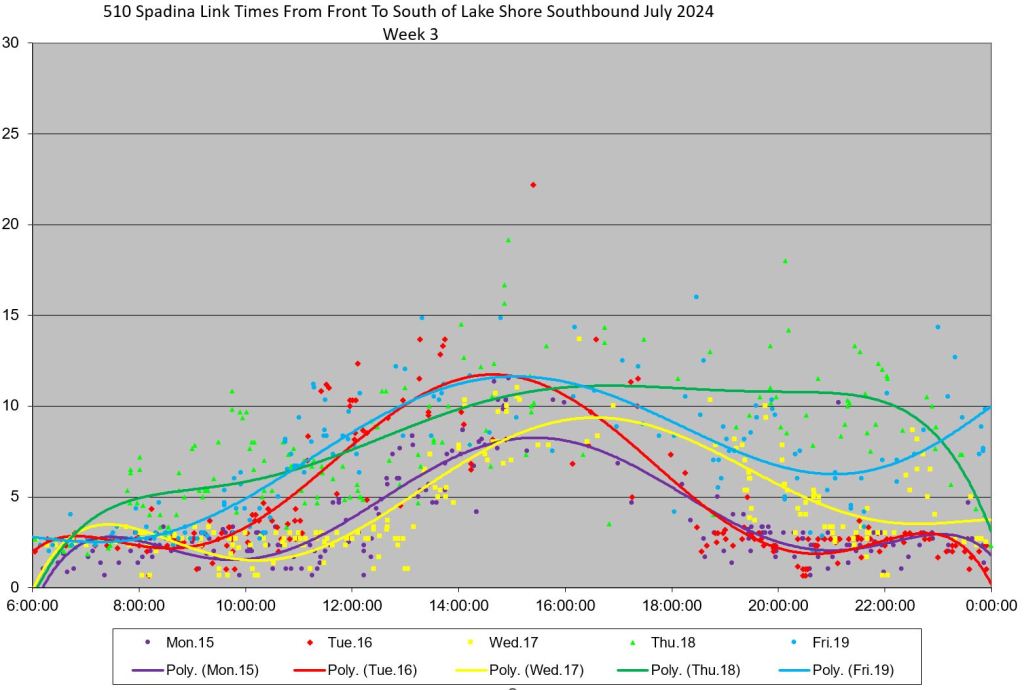
Southbound travel times from Richmond to Front were high through the early afternoon and evening until Week 5 when the reserved transit lane was implemented. The short turn via Front and Blue Jays Way had some benefit, but congestion routinely spread north of Front delaying the buses.
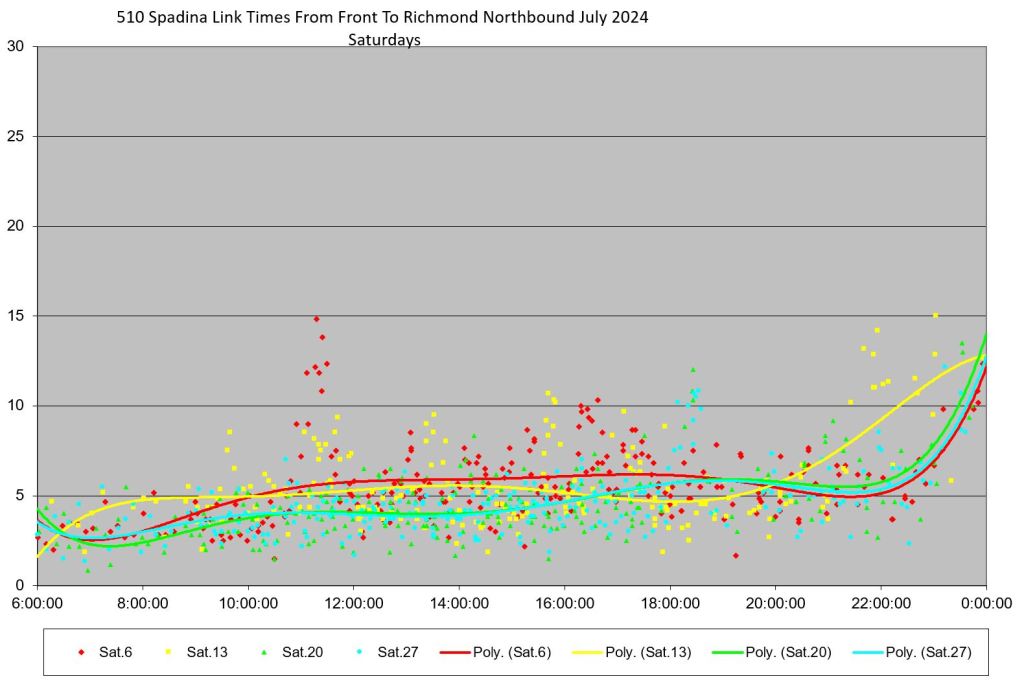
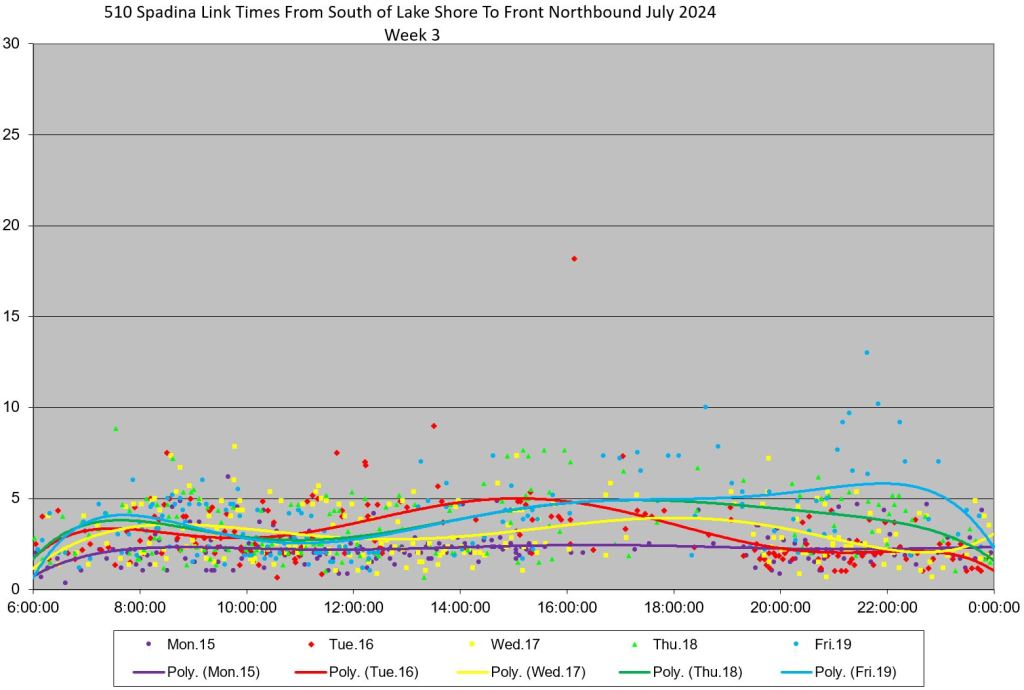
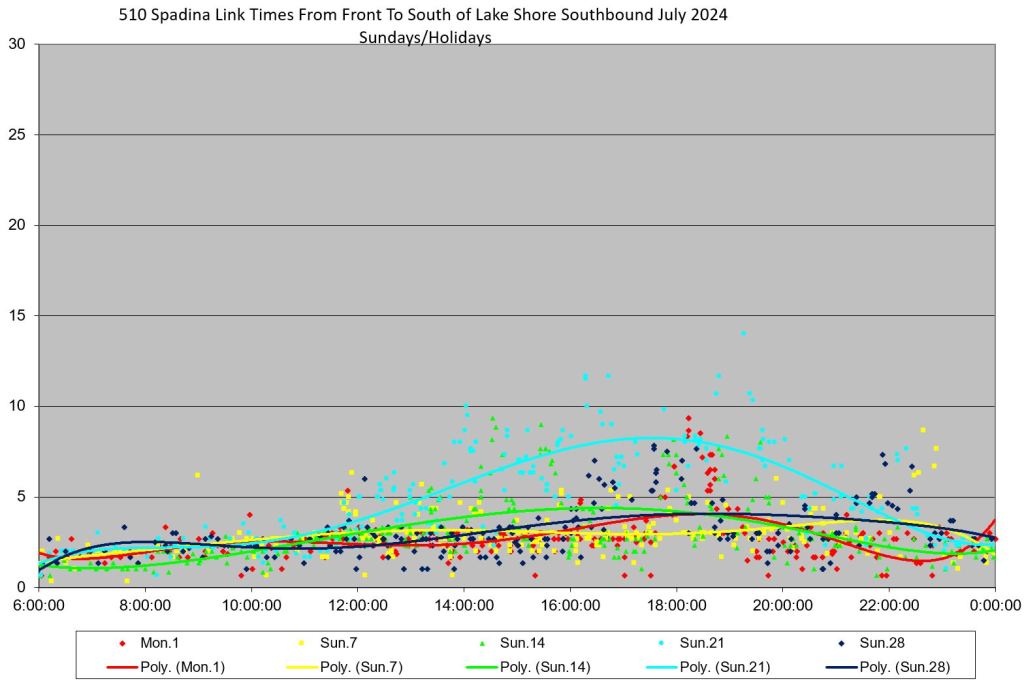
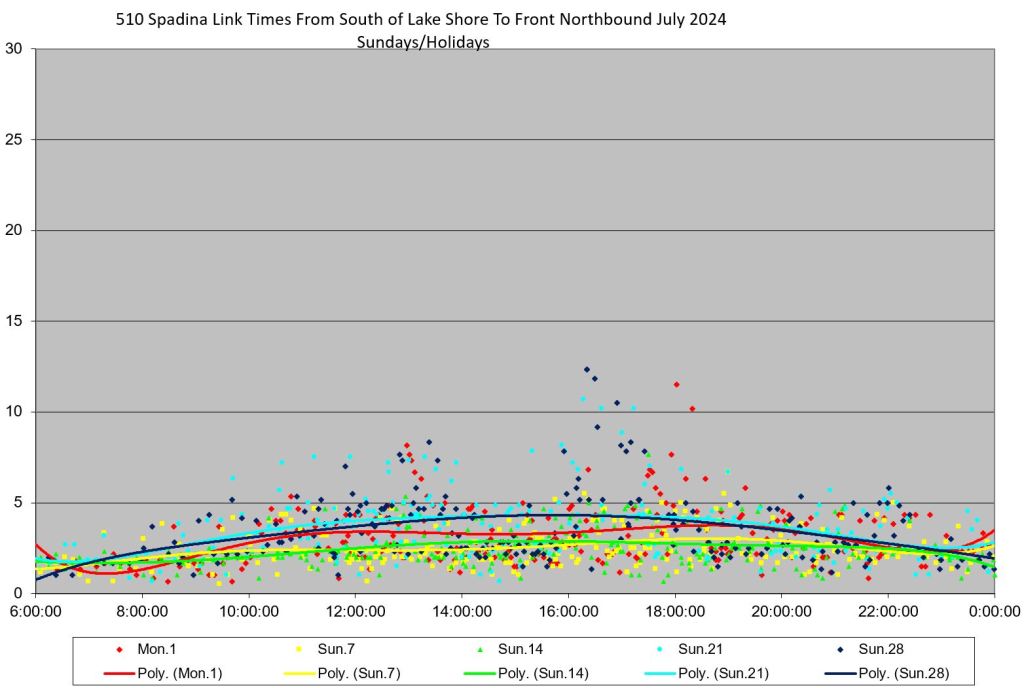
Congestion problems also appeared on weekends when all vehicles ran through to Queens Quay, and northbound congestion affected service on Saturdays.
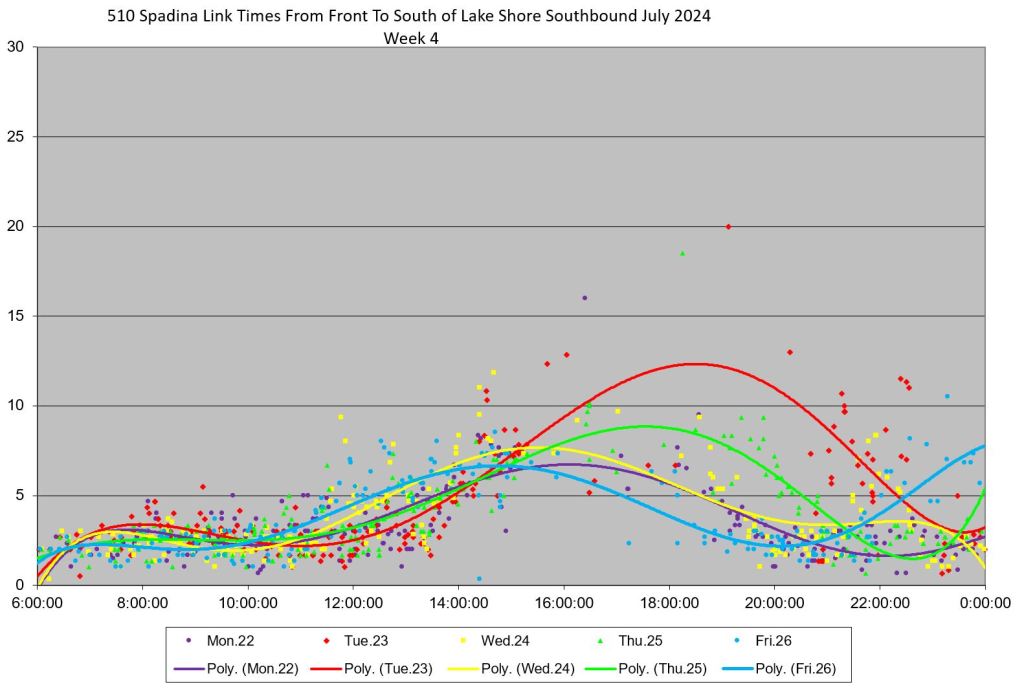
An important point in these charts is that the period of extensive southbound delay was longer than the 3-7pm window for the Front Street short turn, and the congestion extended well north of Front making a more extensive transit priority lane essential to well north of King Street.
Note that the scale for the southbound charts has a maximum value of 60 minutes so that the data points will fit. Northbound charts use a 30 minute maximum.
Front to Lake Shore
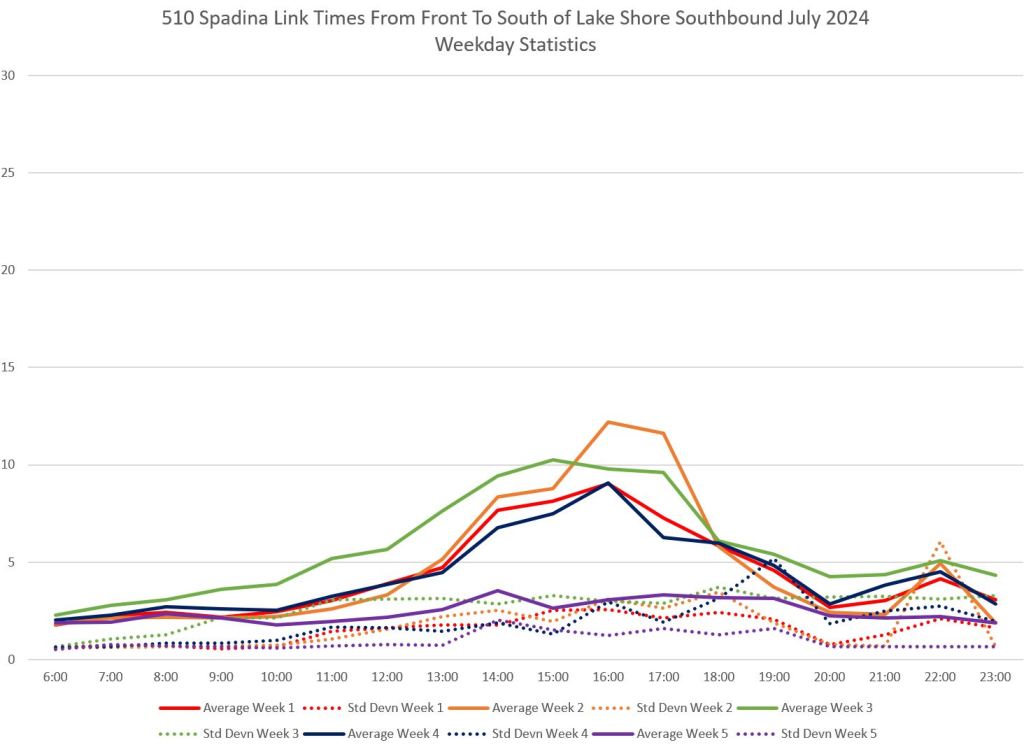
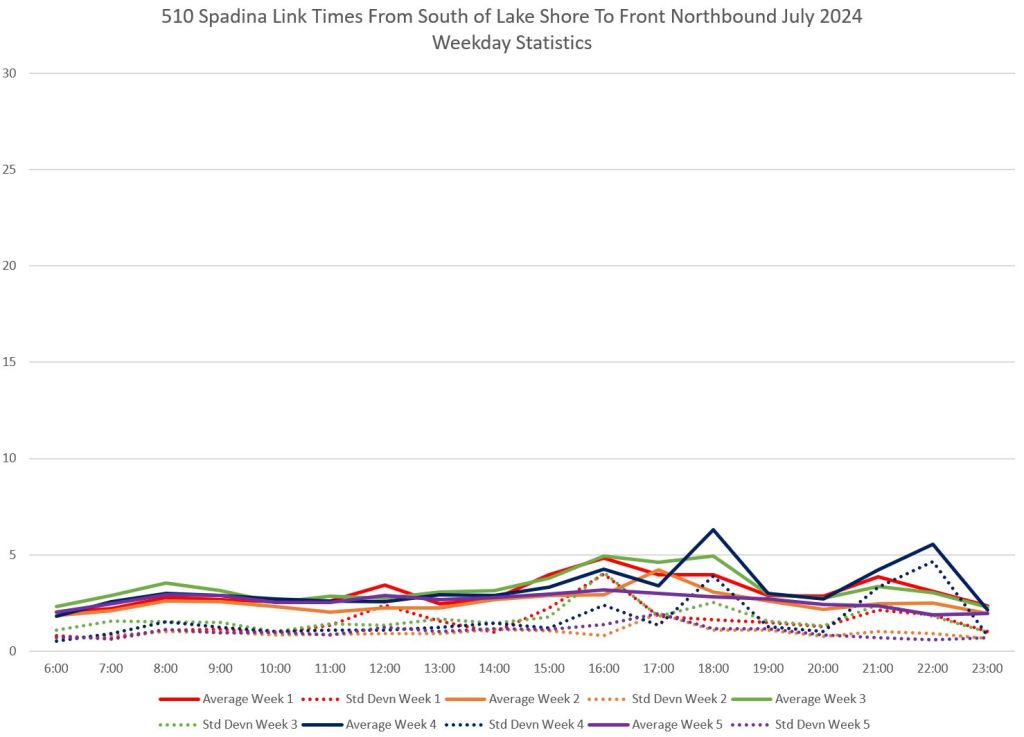
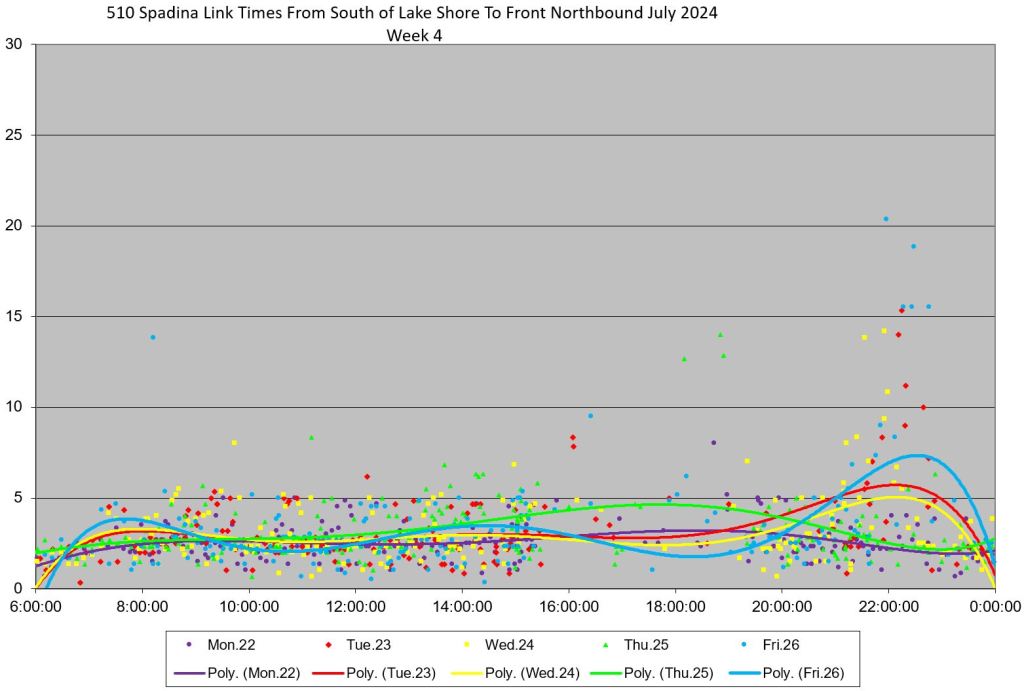
Travel times southbound from Front to Lake Shore are high except in Week 5 when the reserved lane was in effect. Although most trips short turned at Front in Weeks 2-4 (note the absence of data points between 3-7pm), those trips that did run through were delayed.
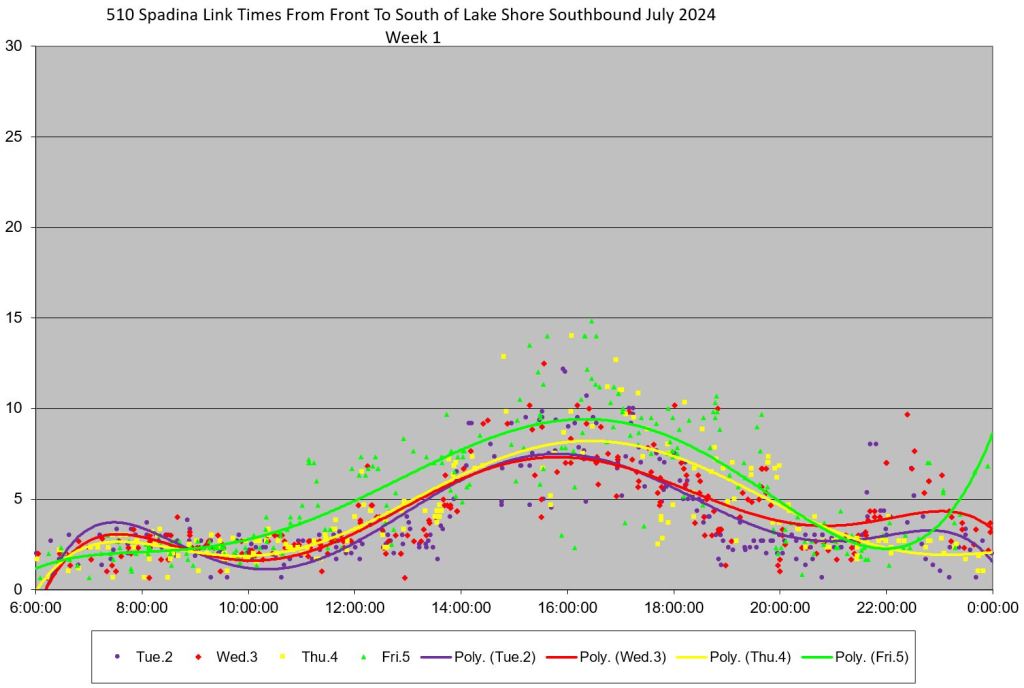
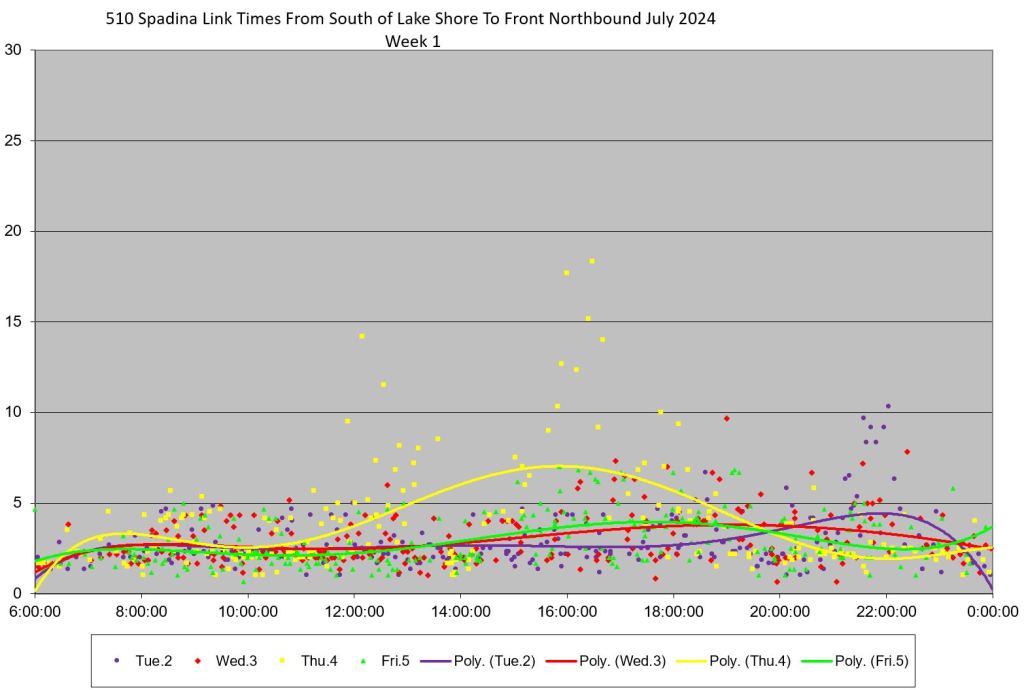
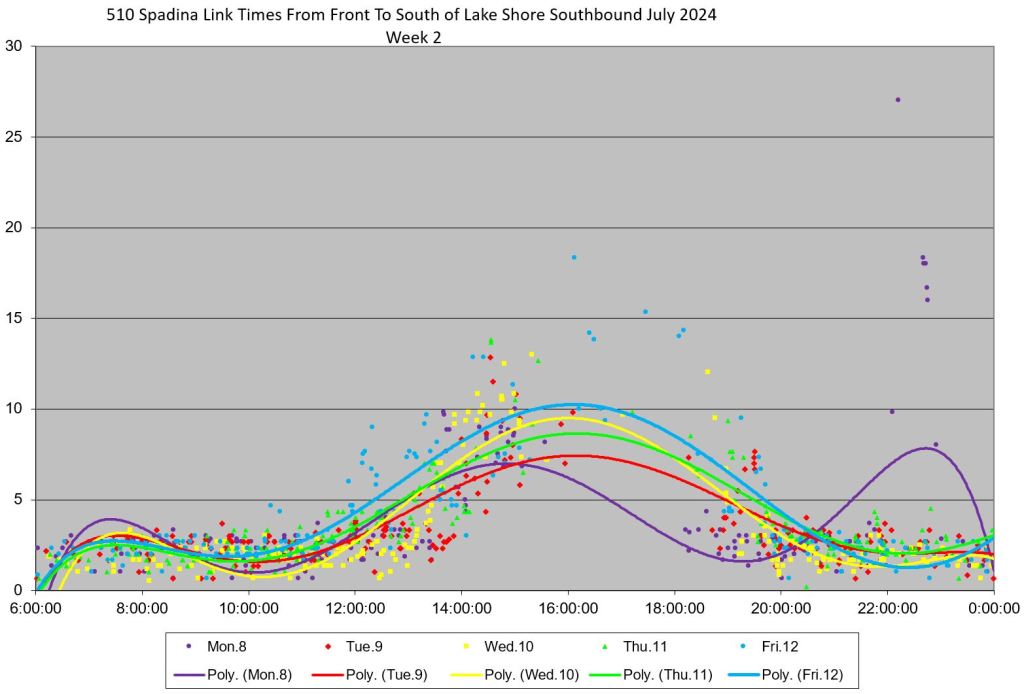
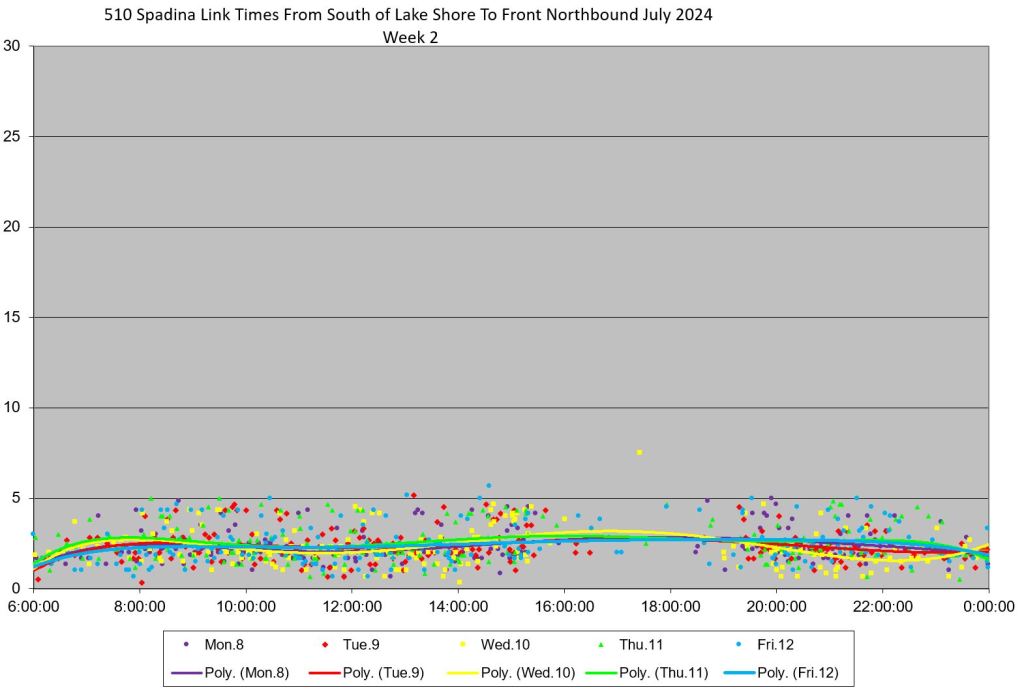
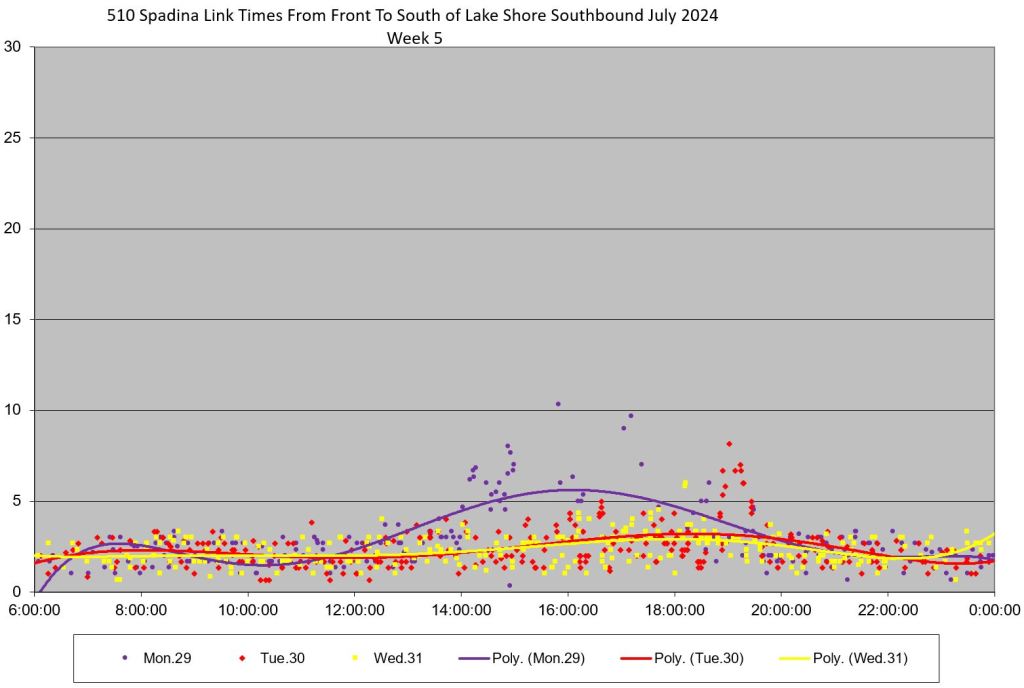
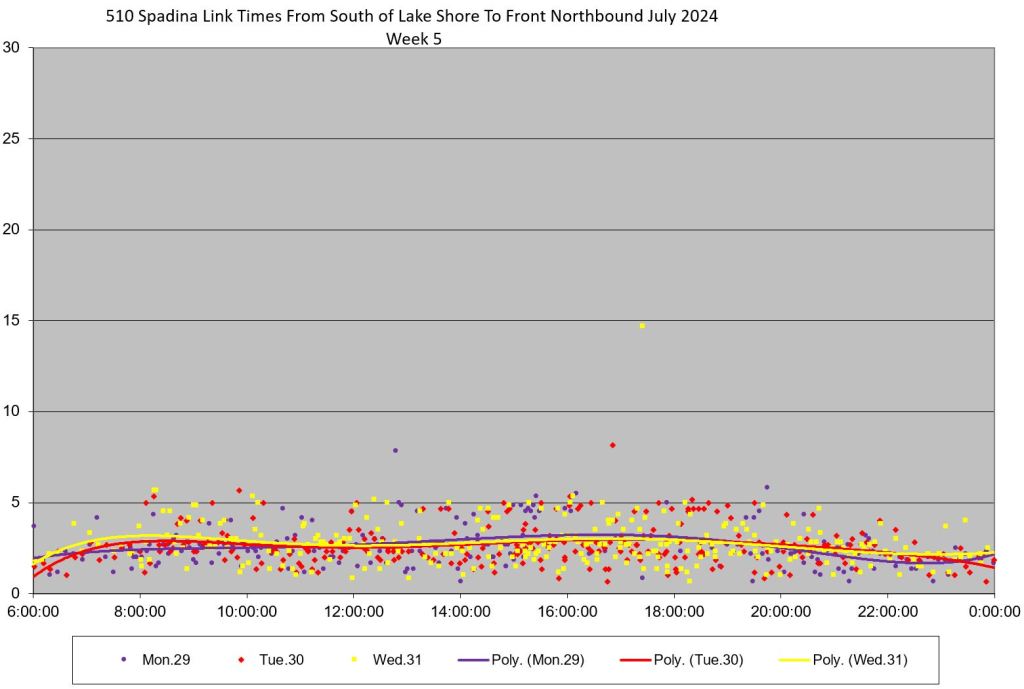
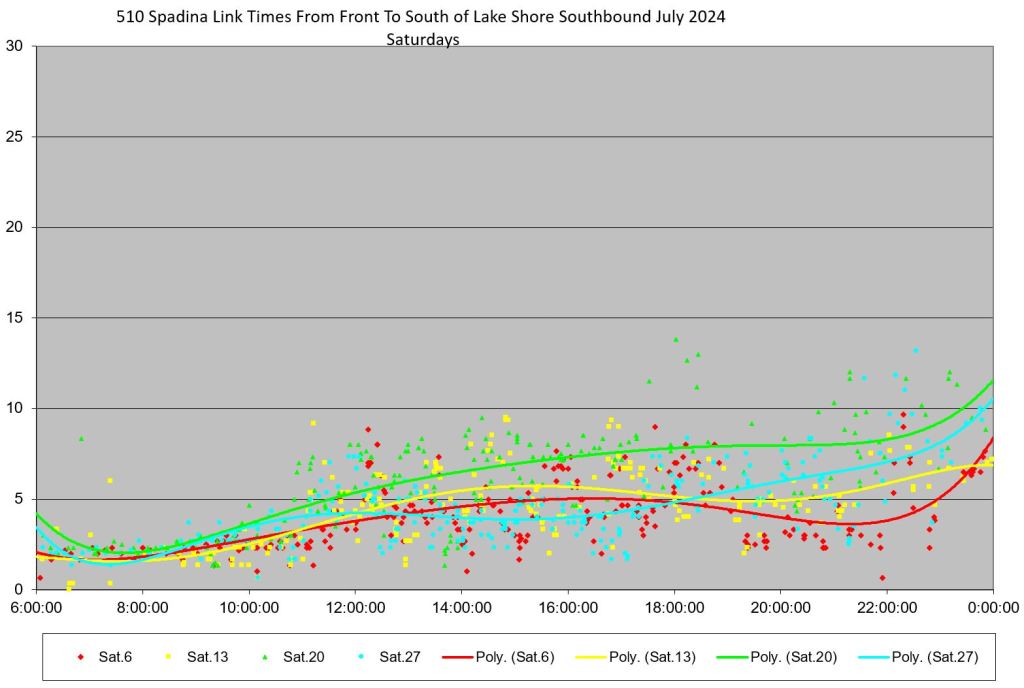
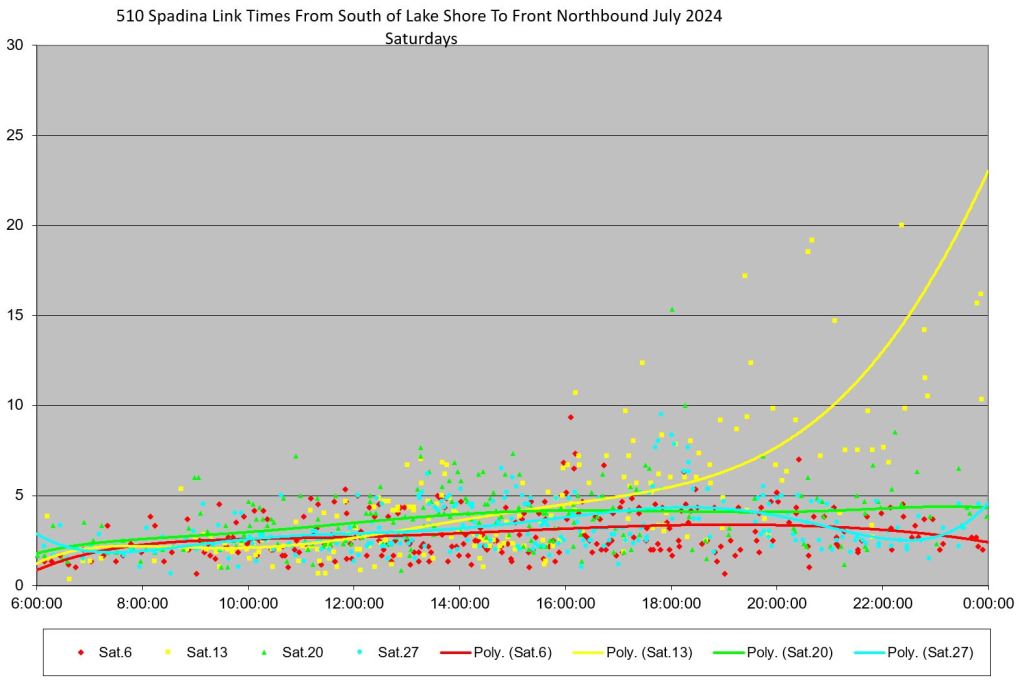
Service Charts
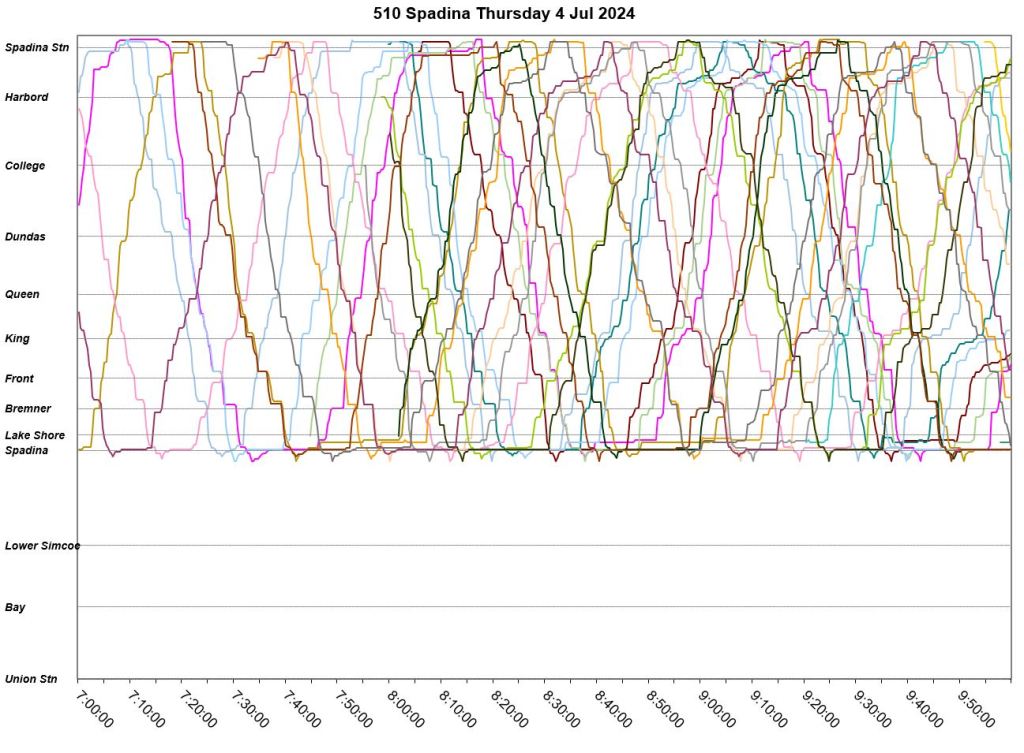
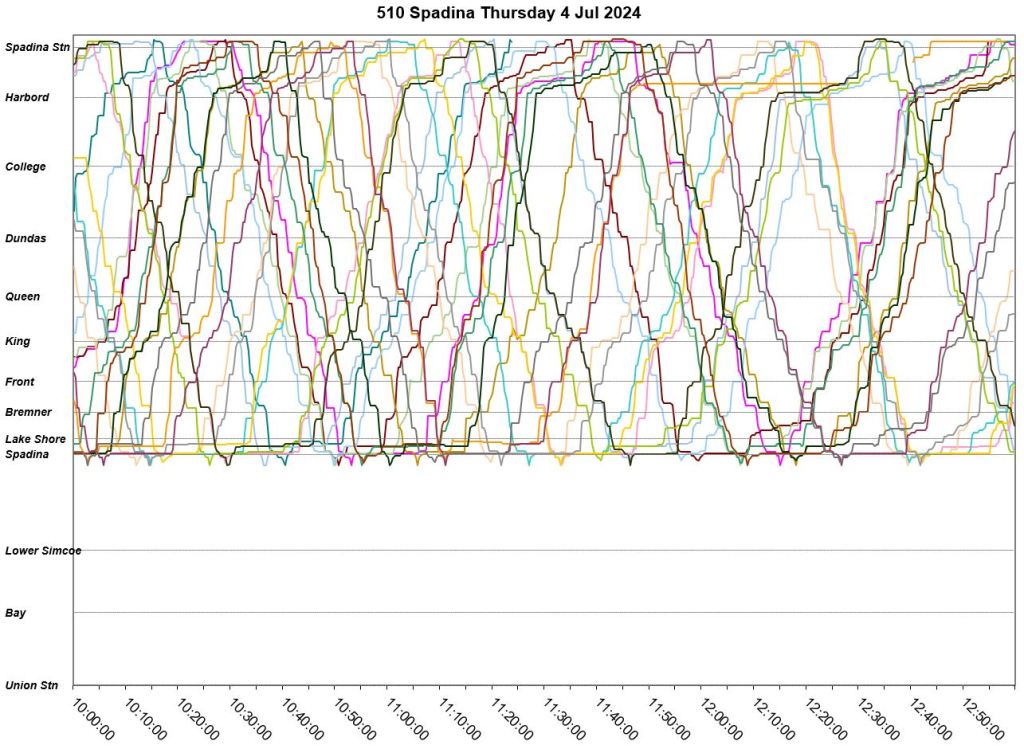
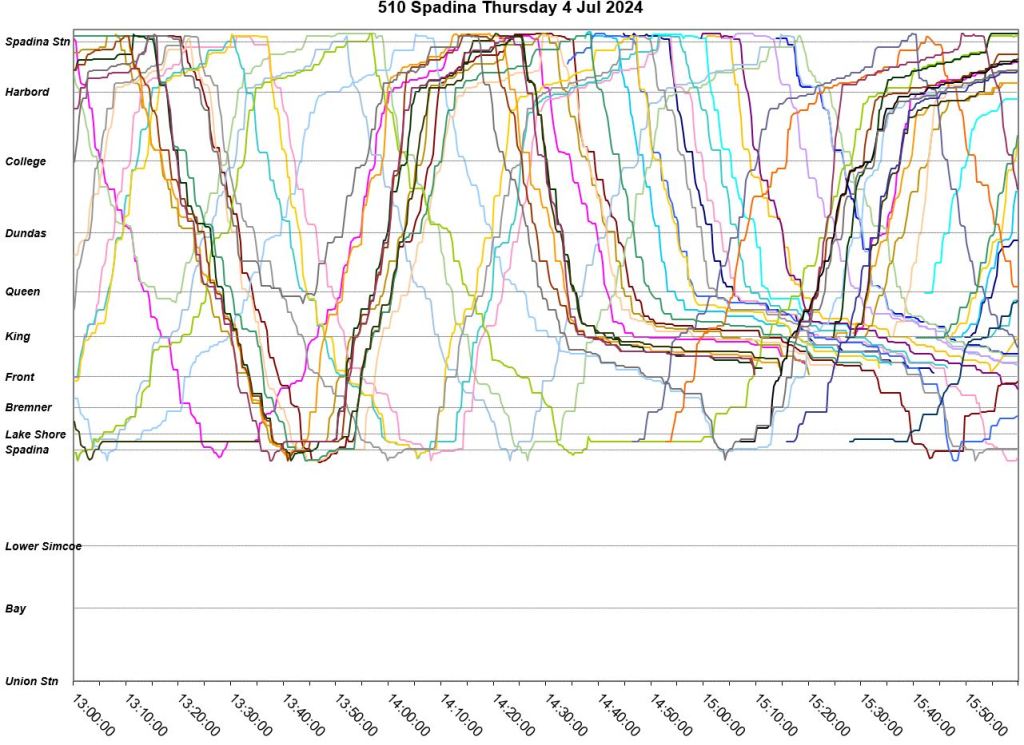
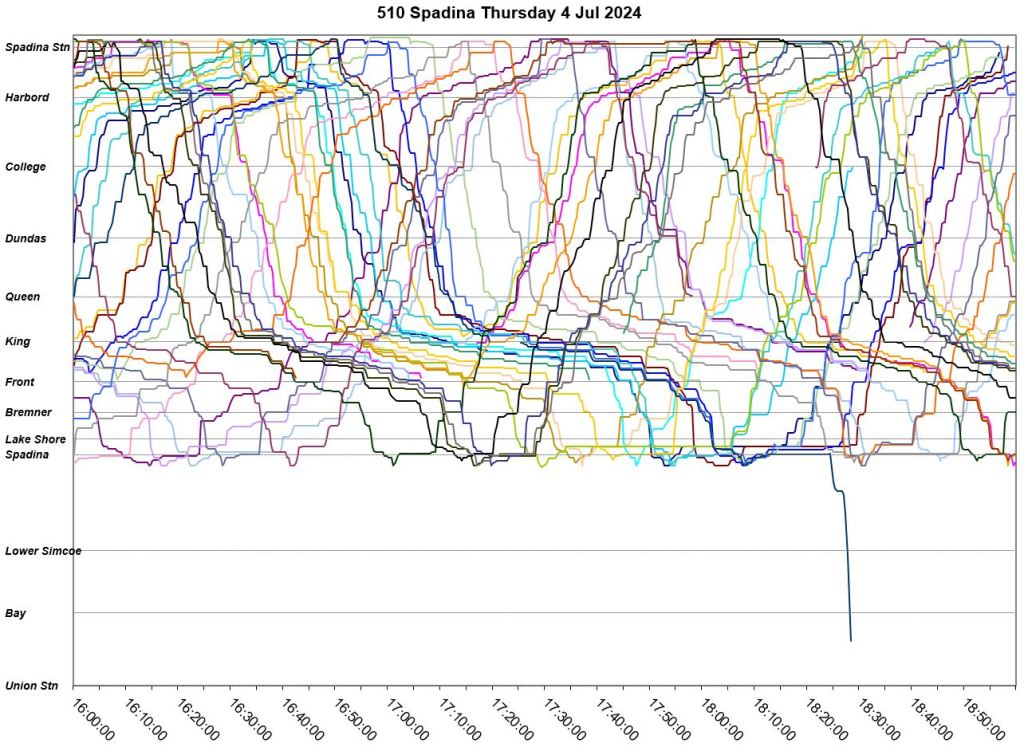
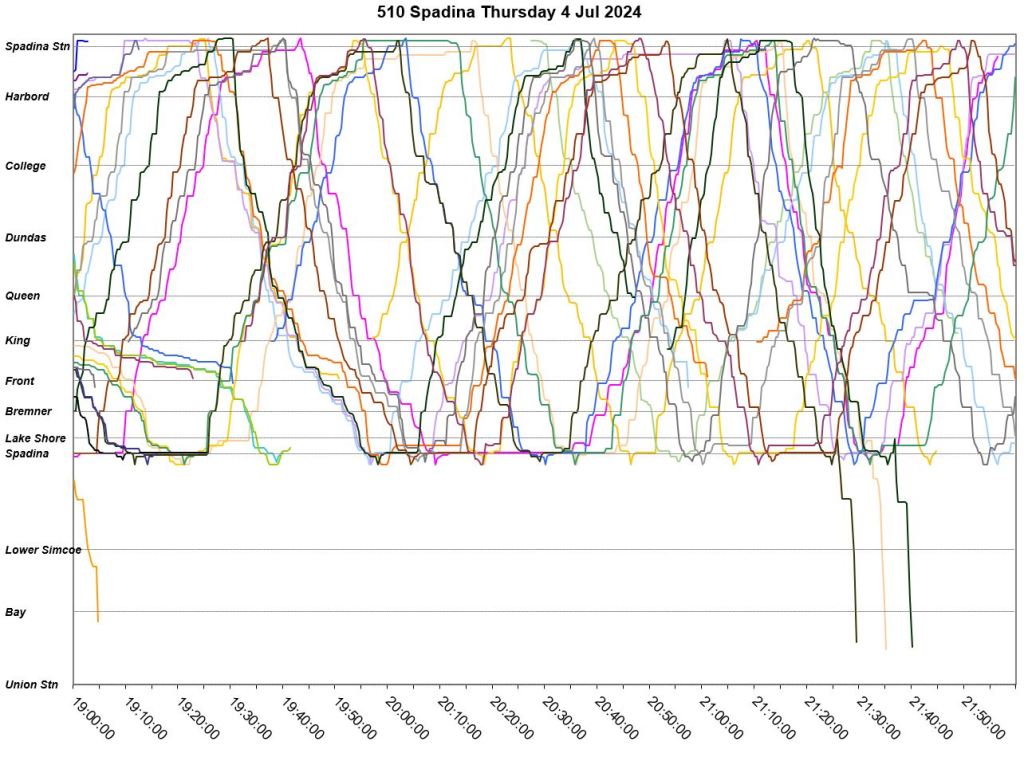
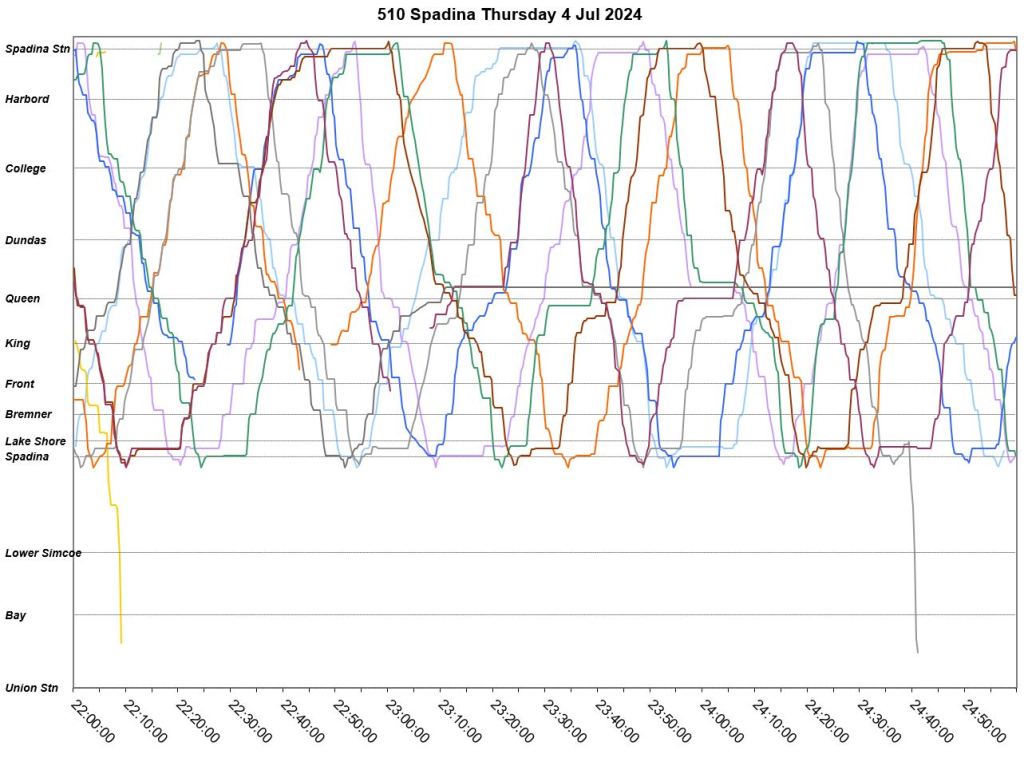
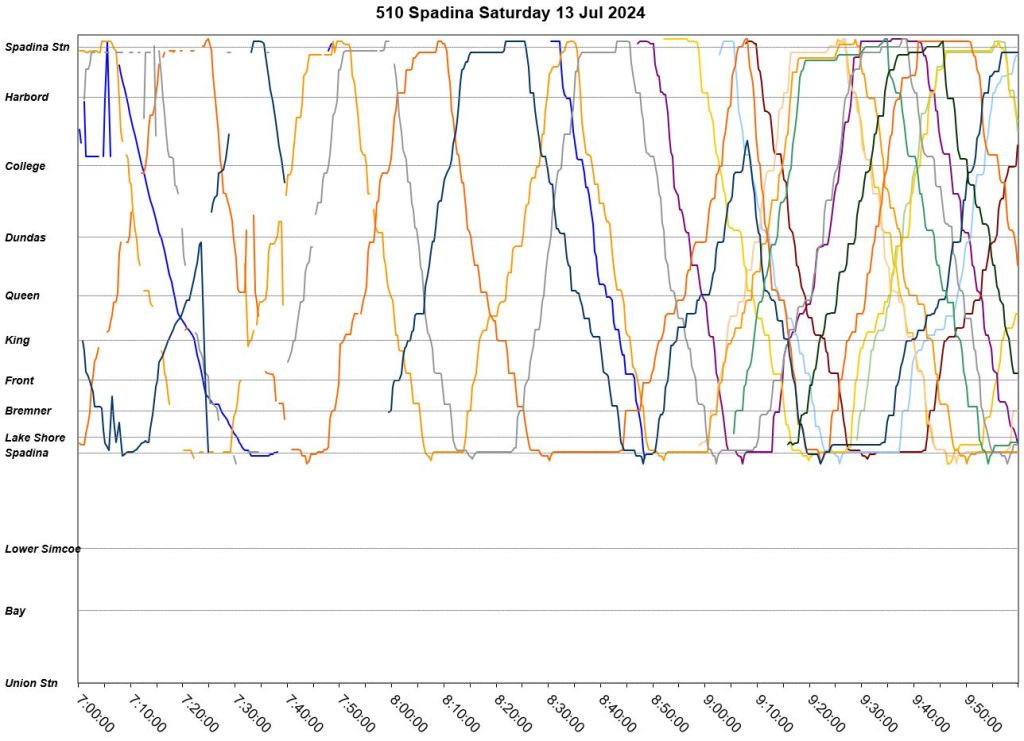
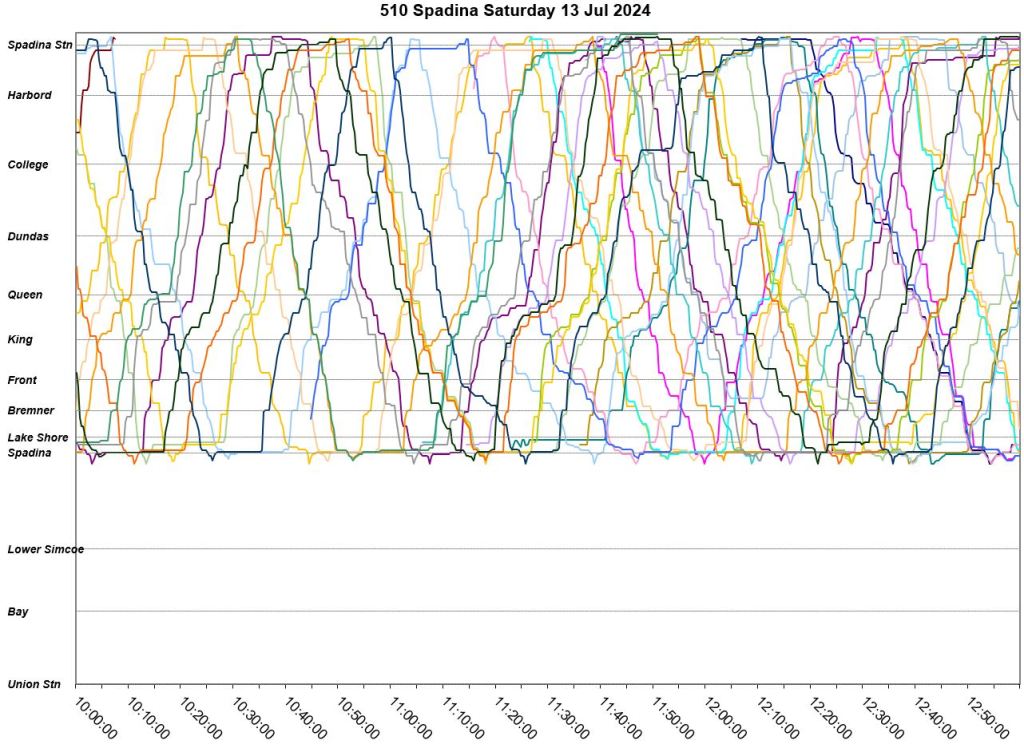
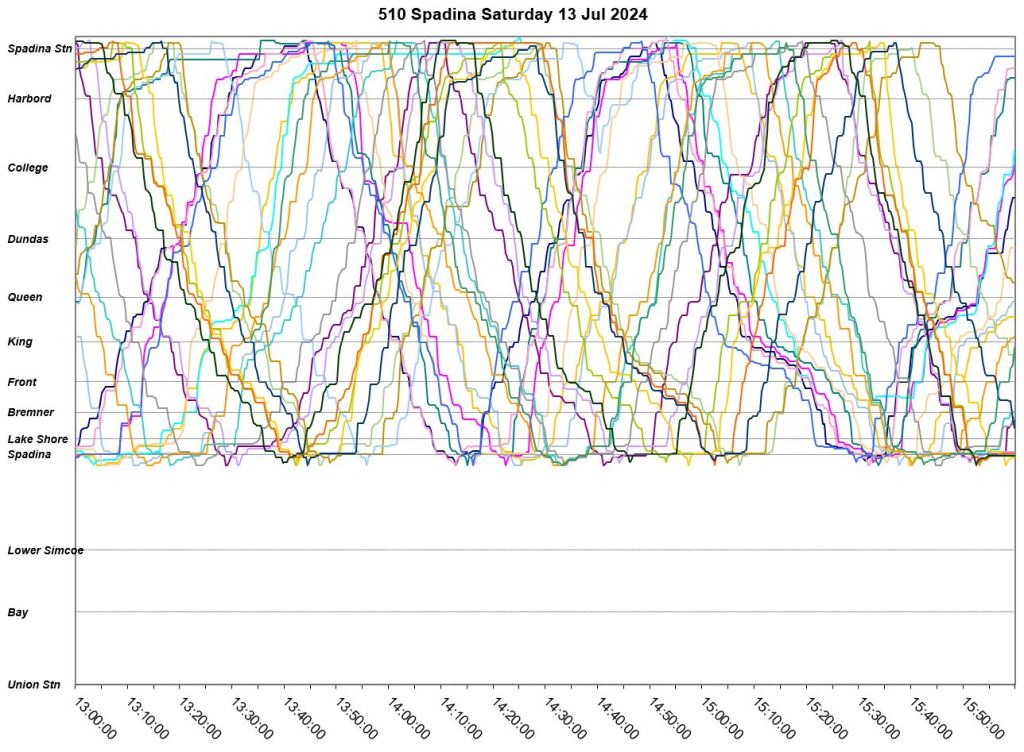
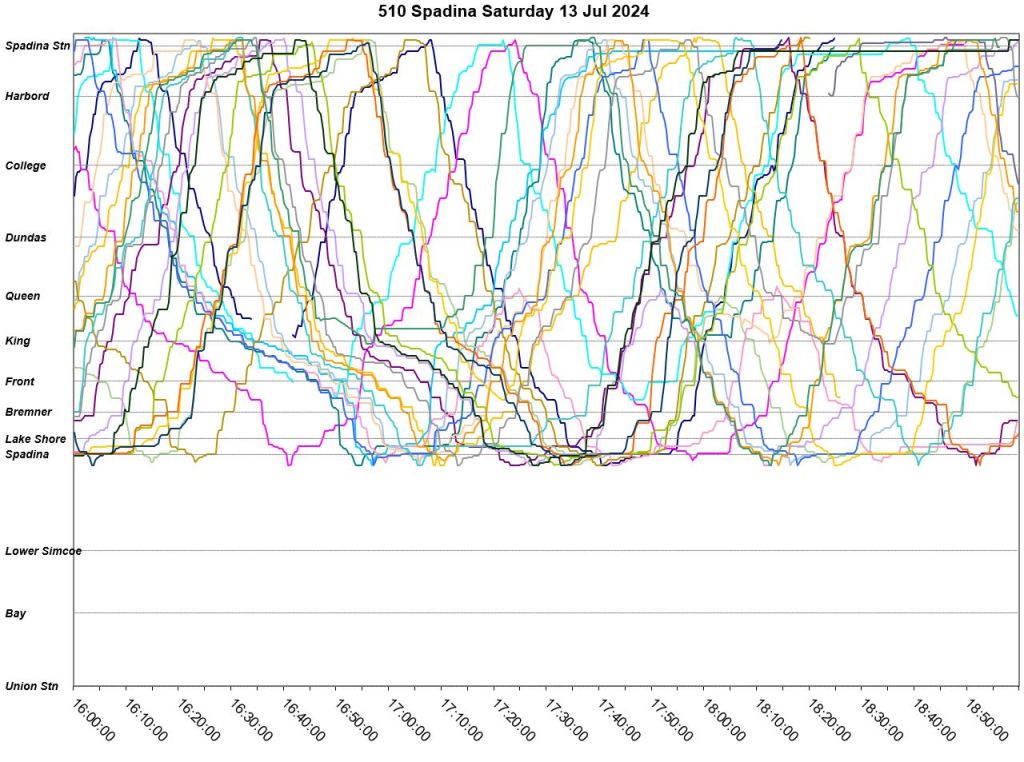
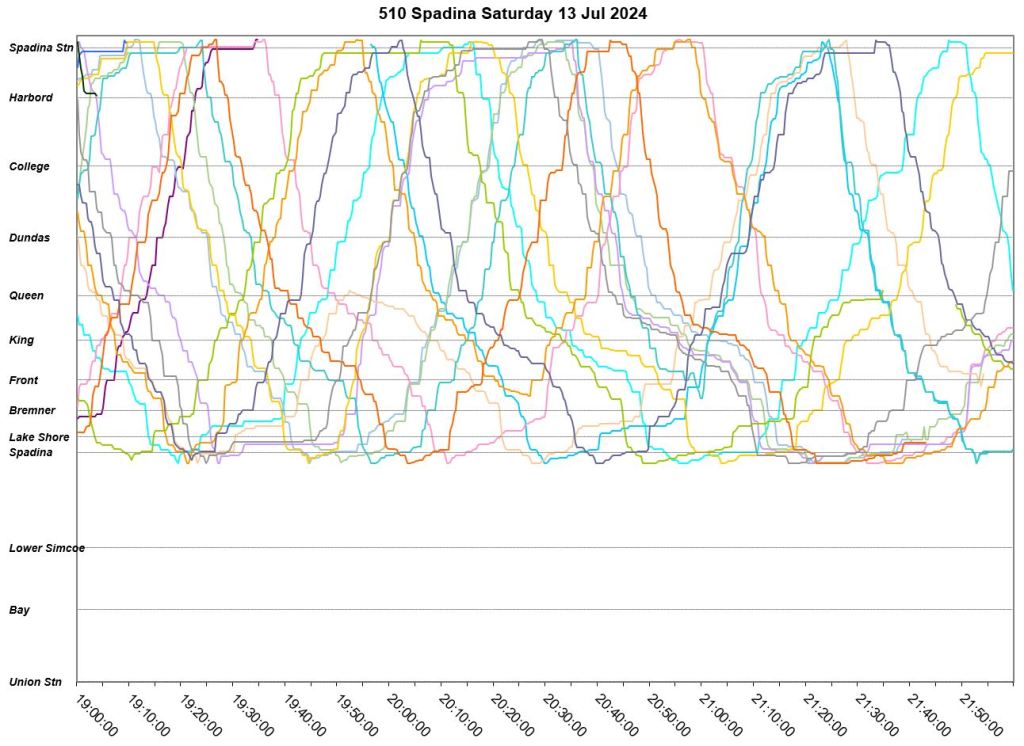
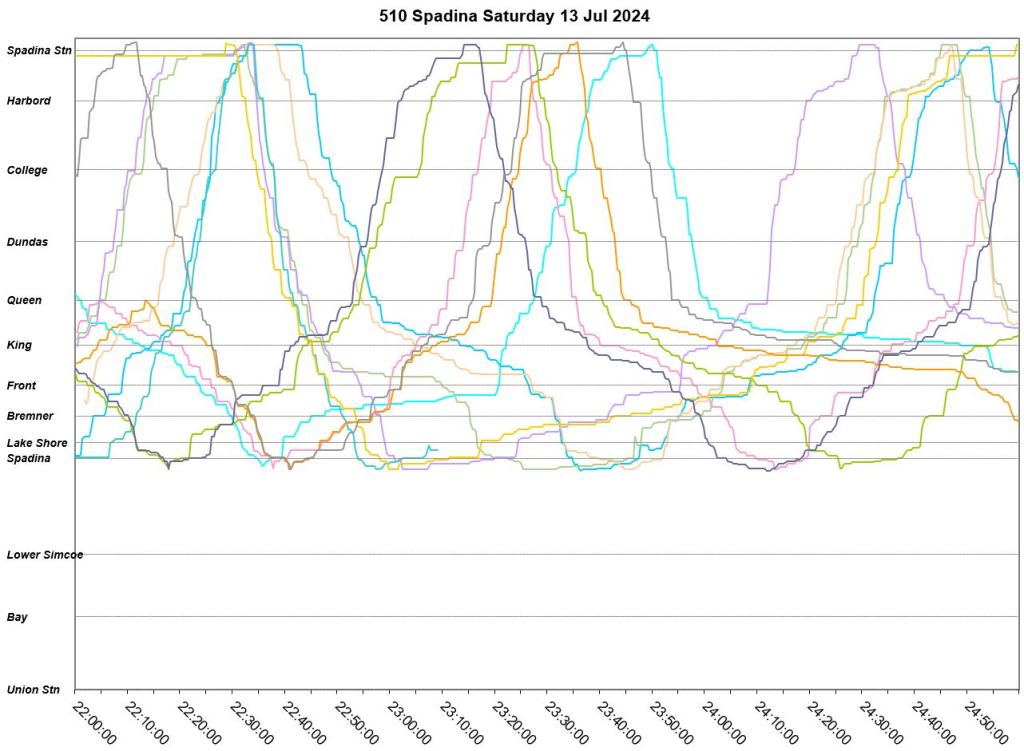
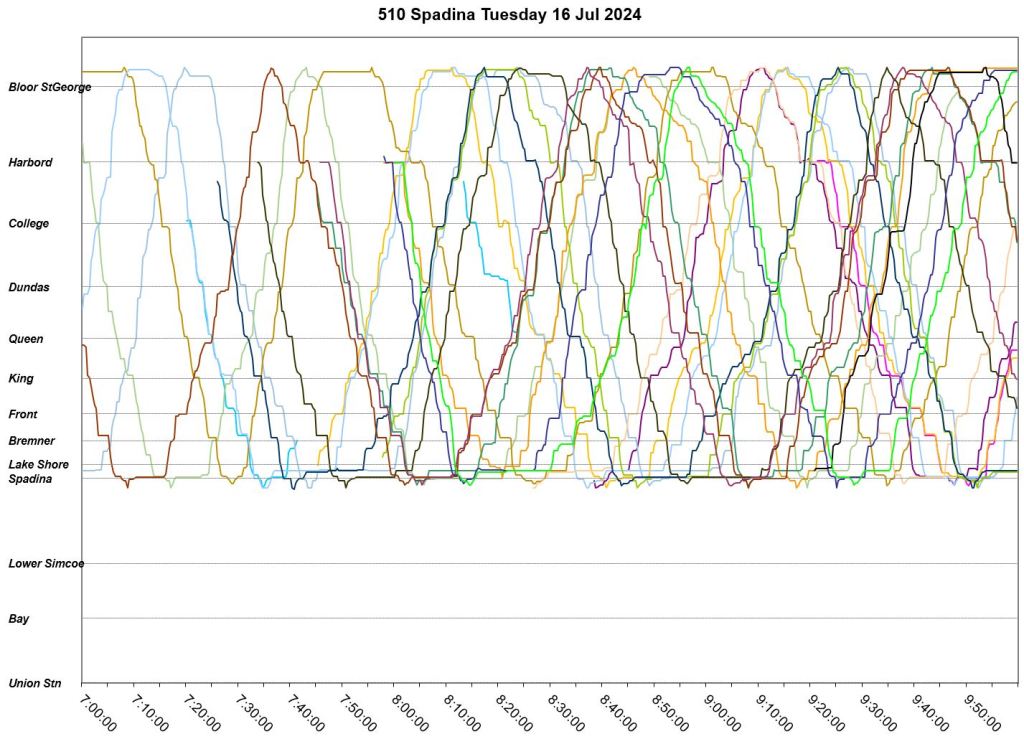
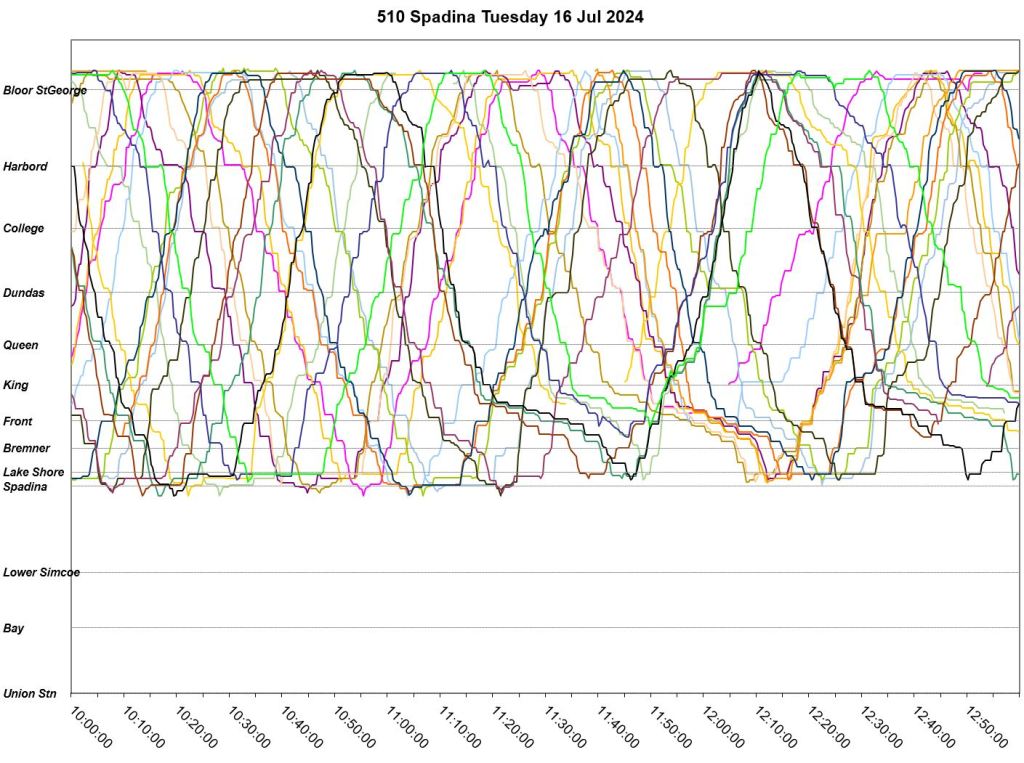
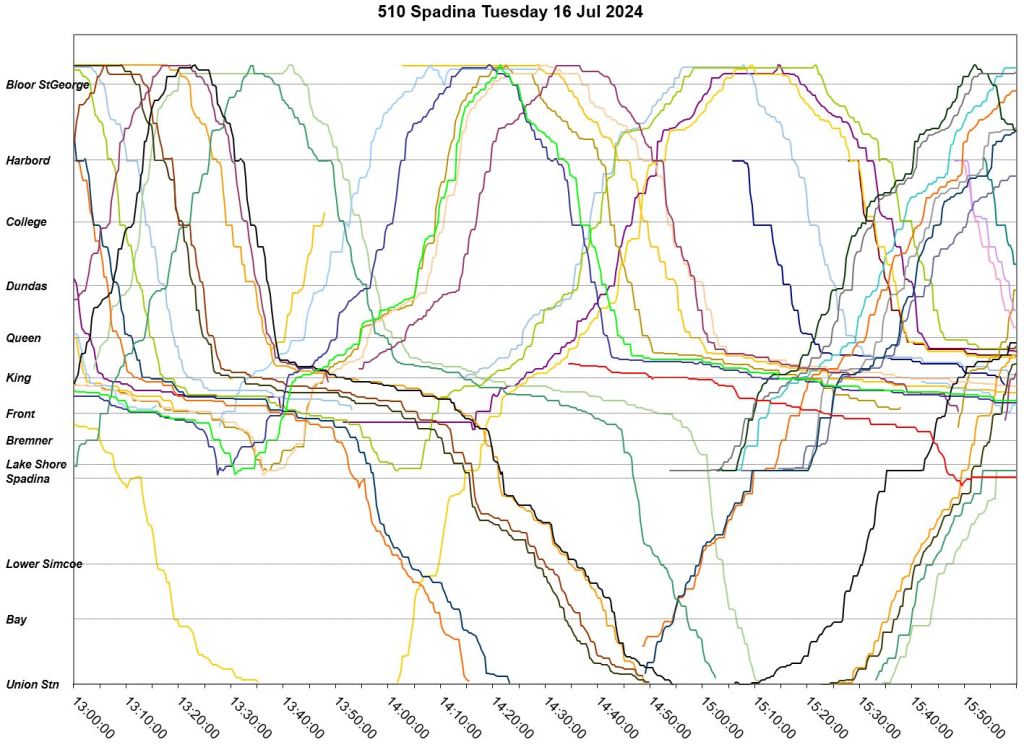
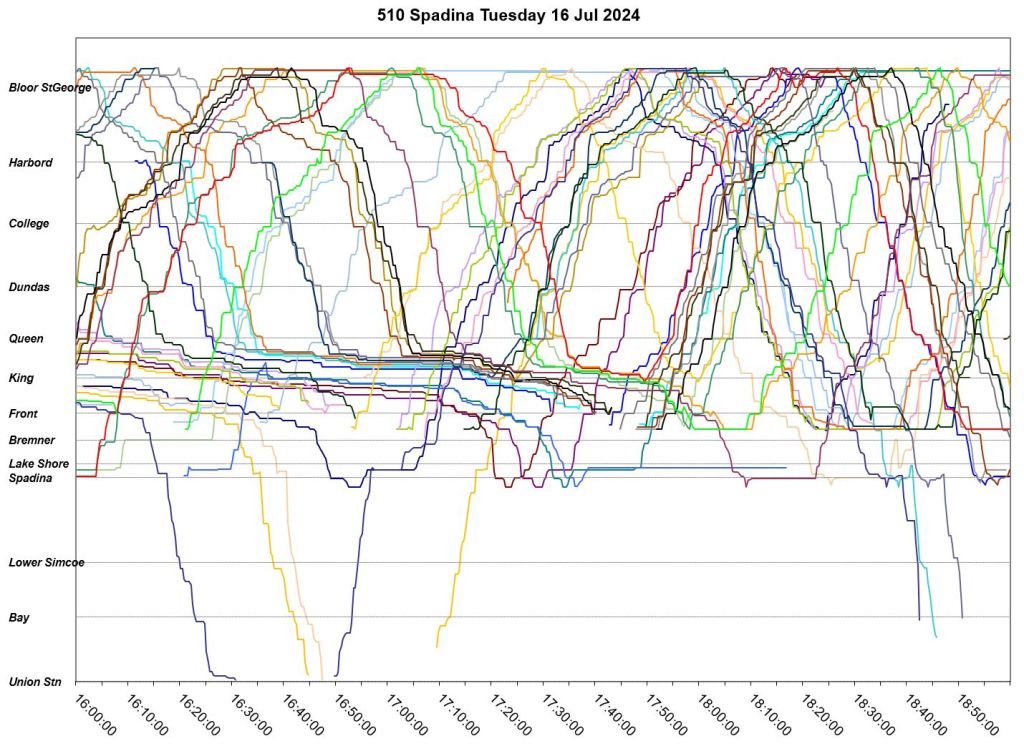
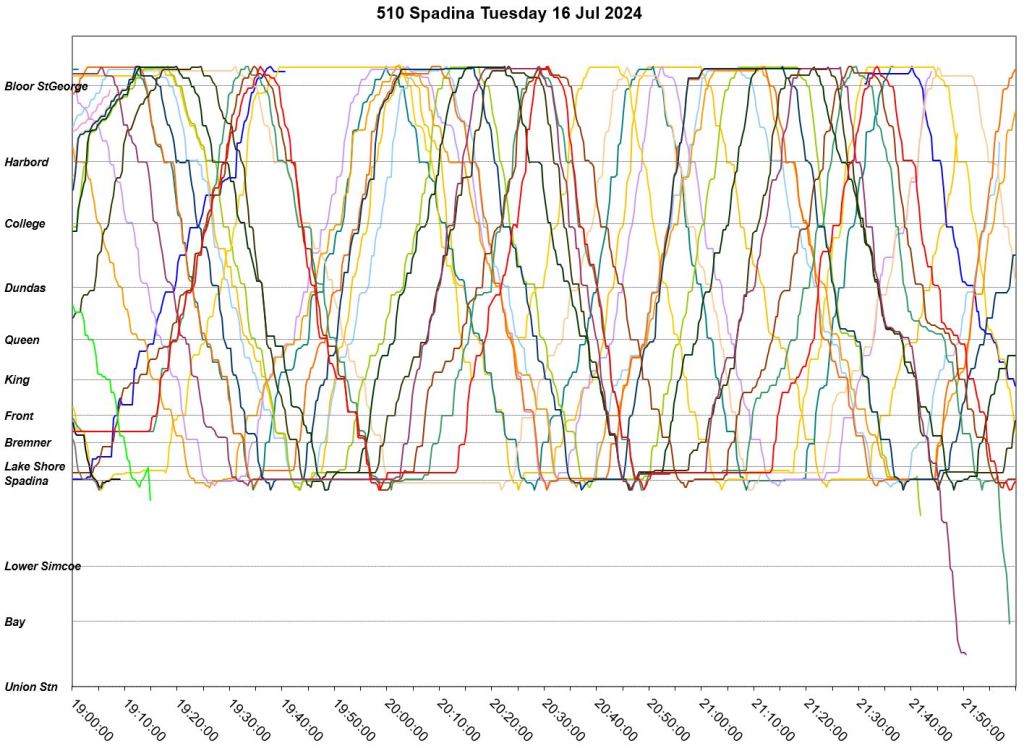
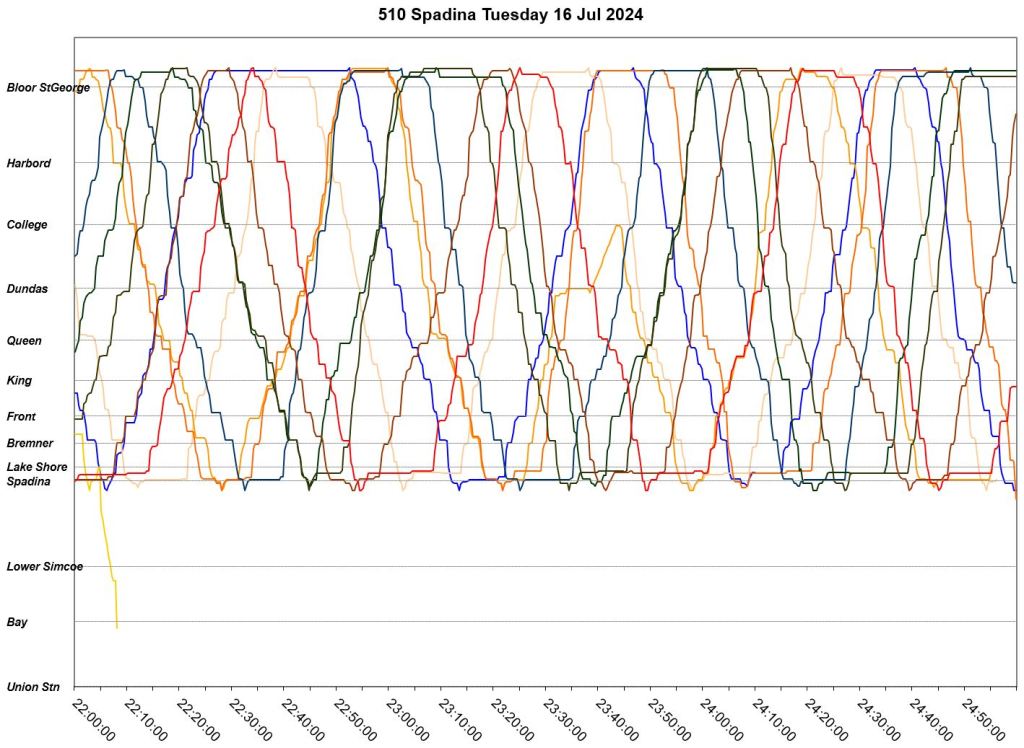
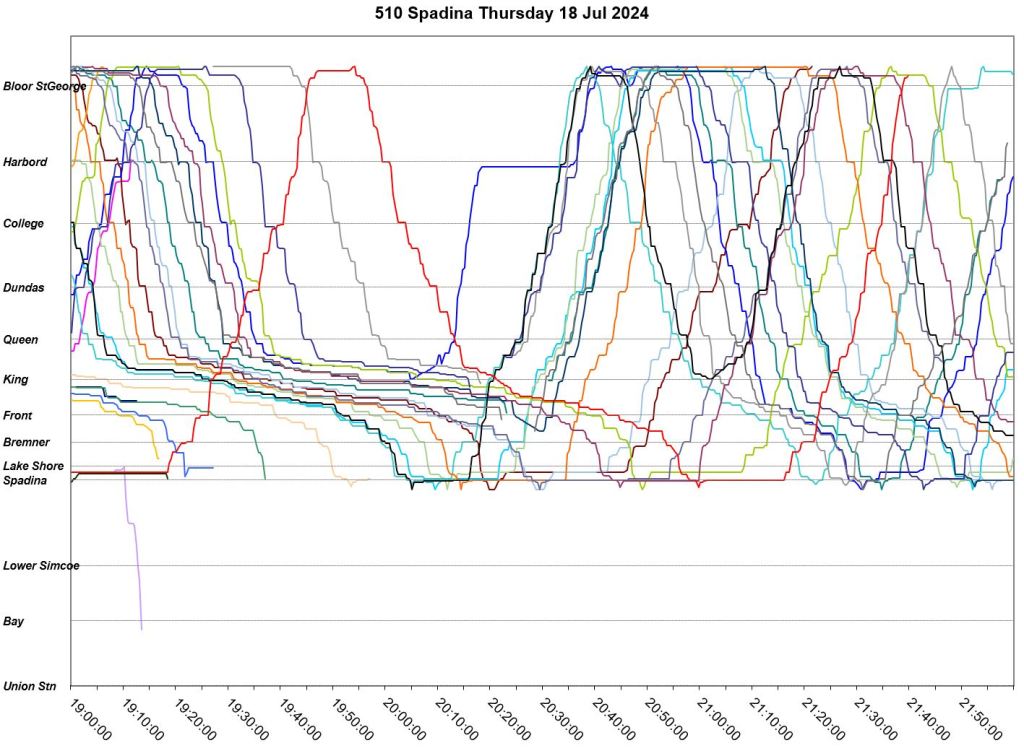
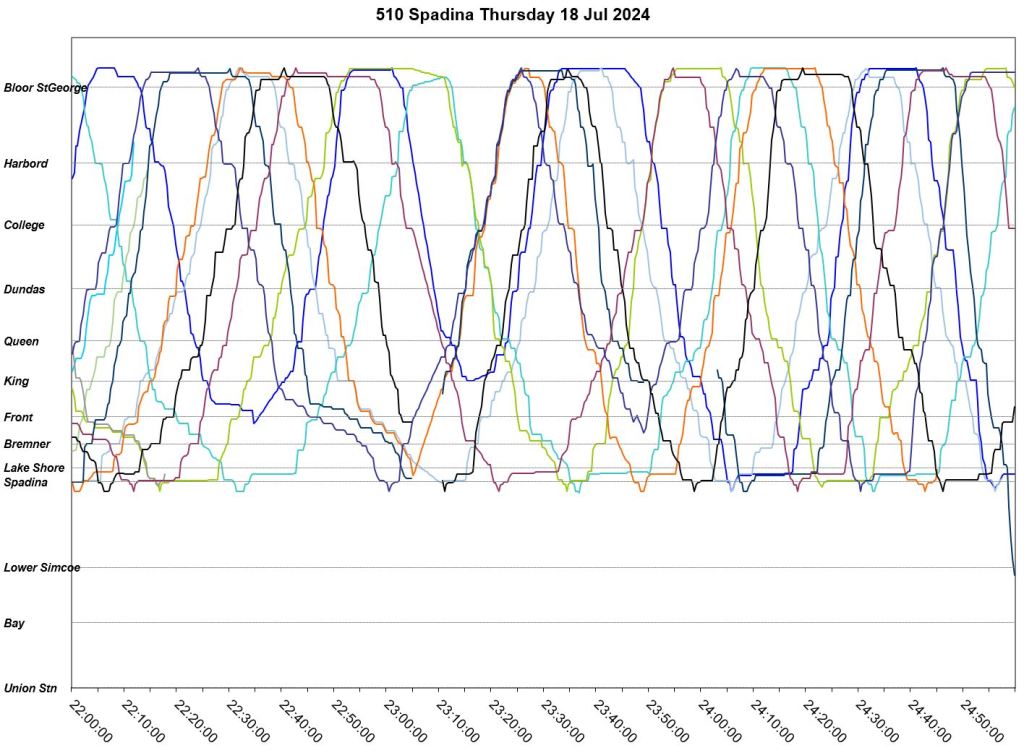
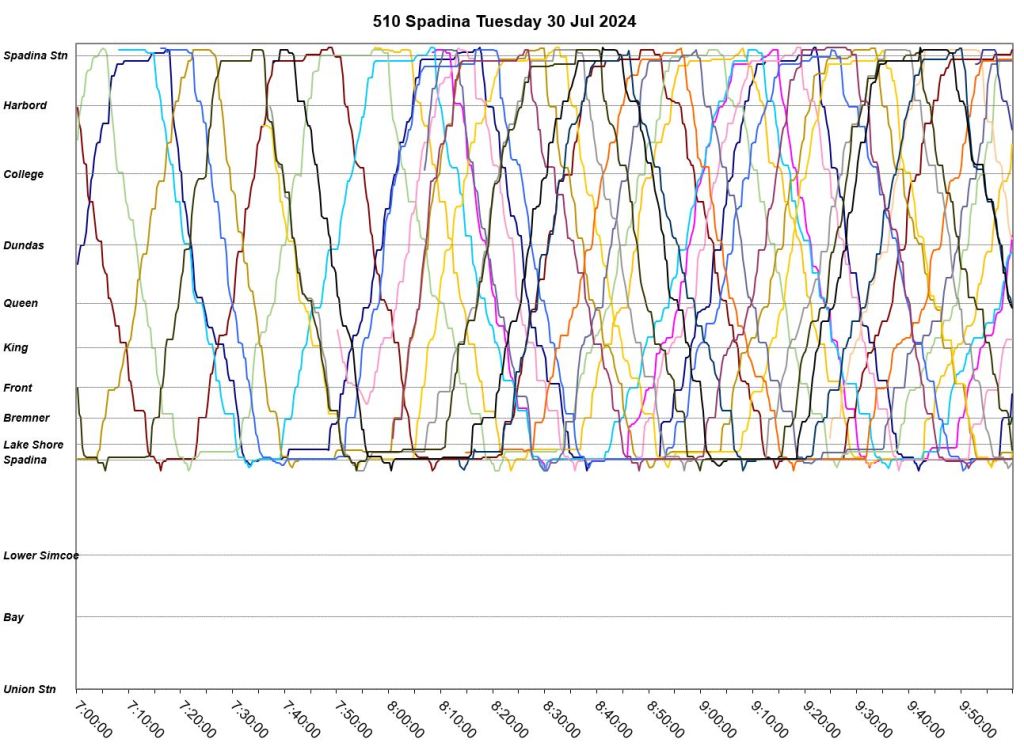
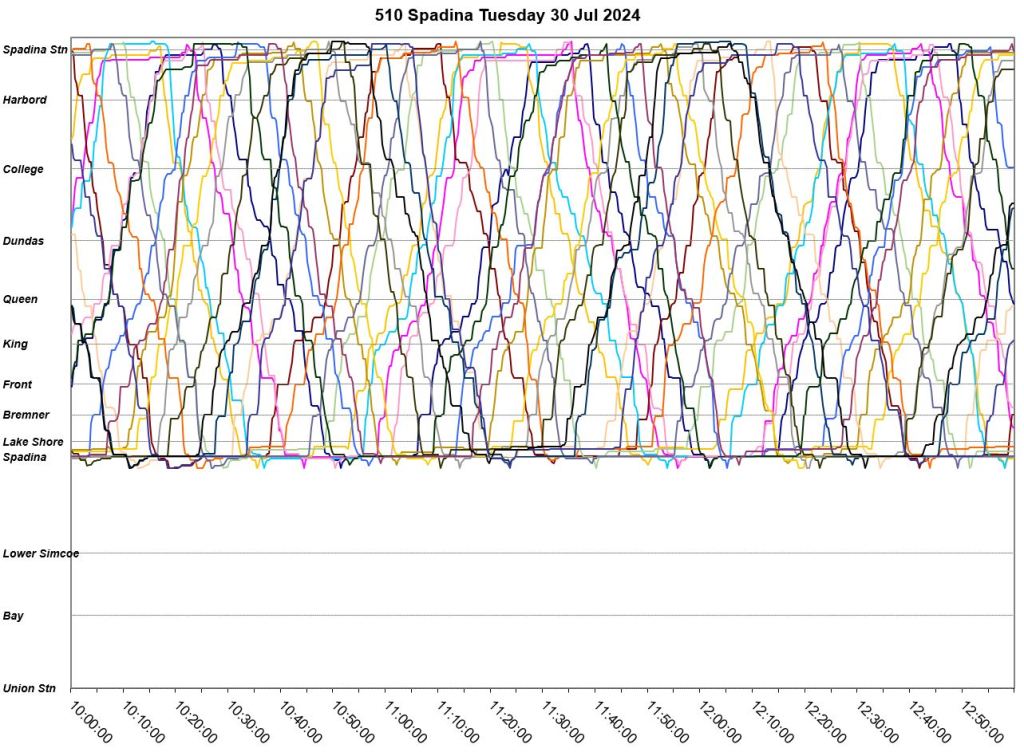
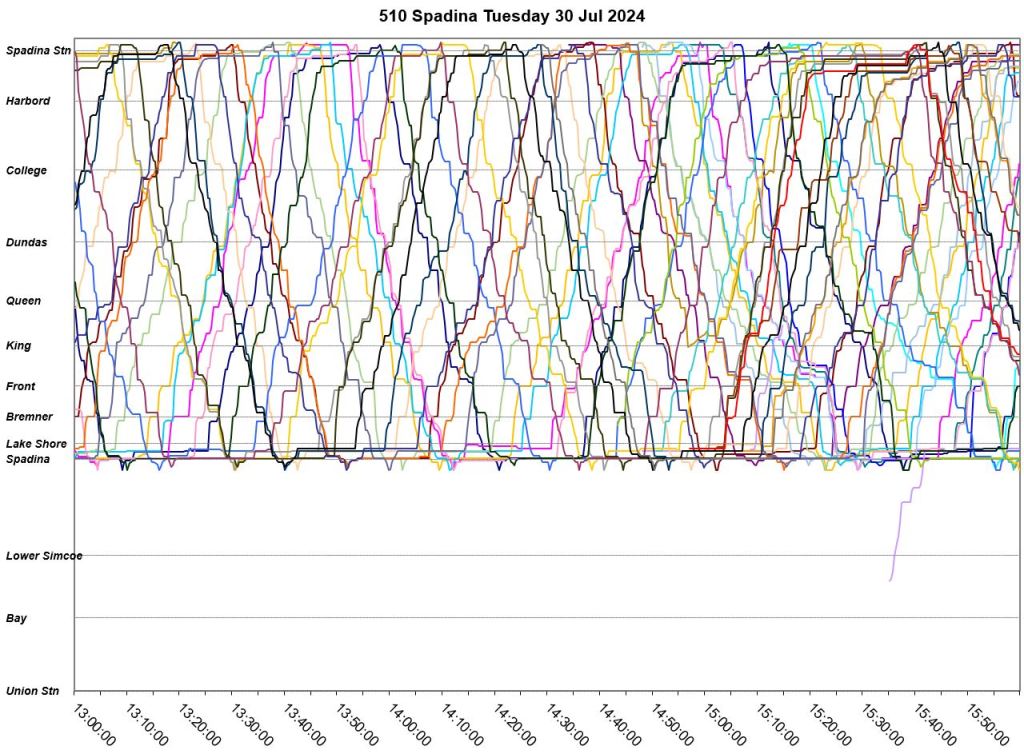
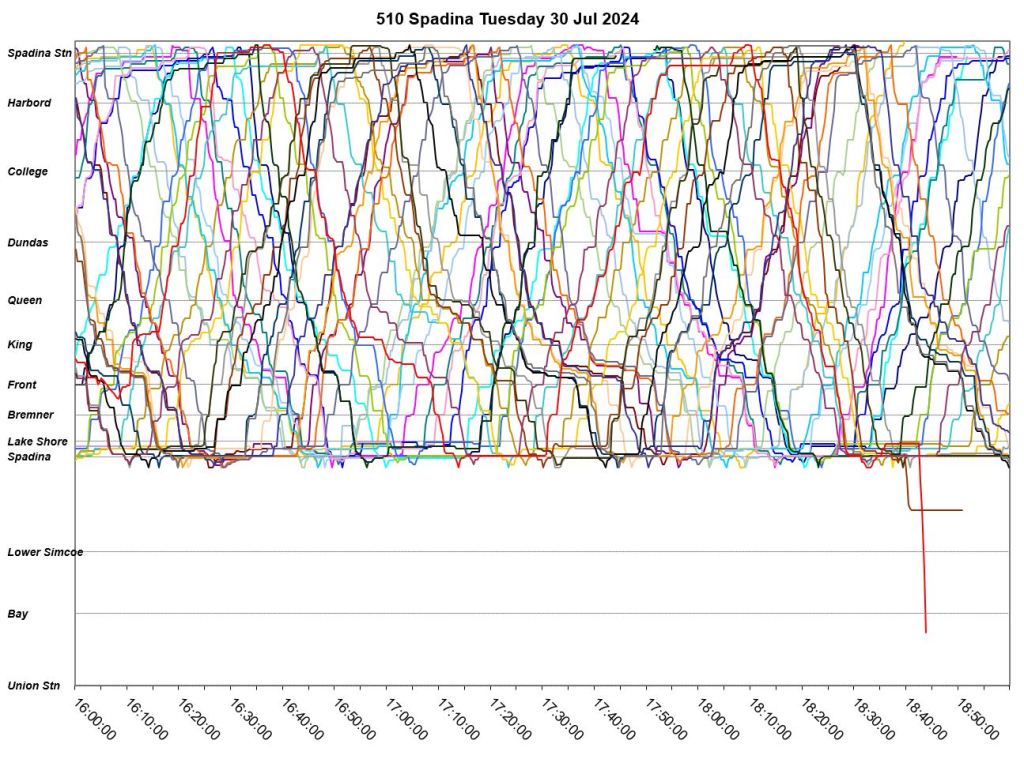
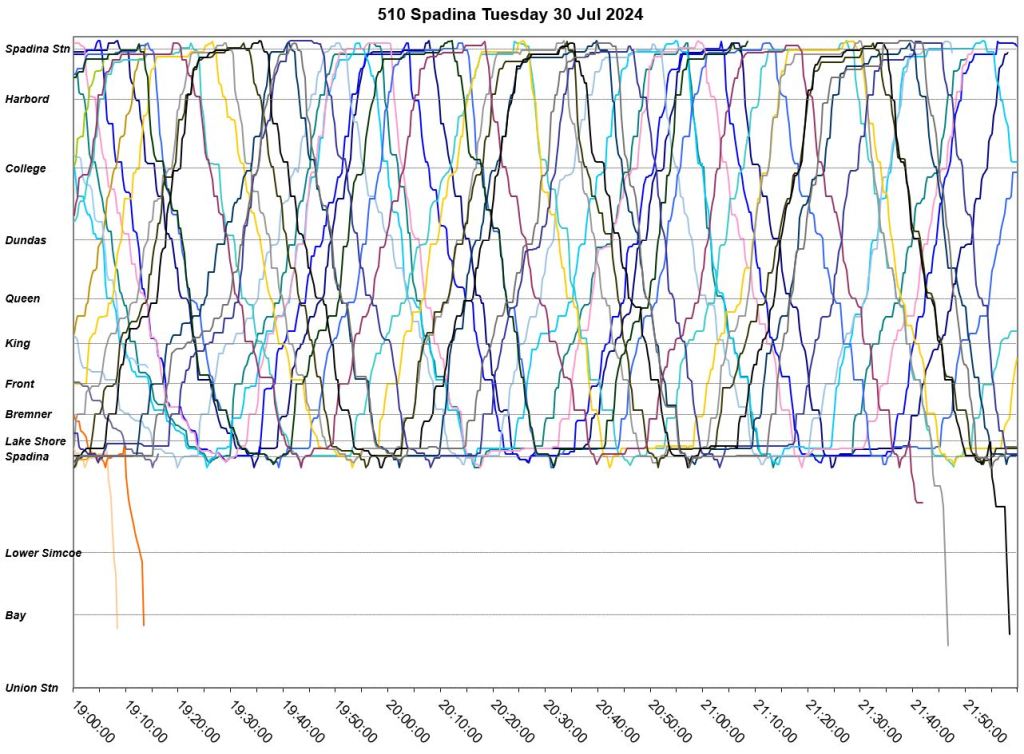
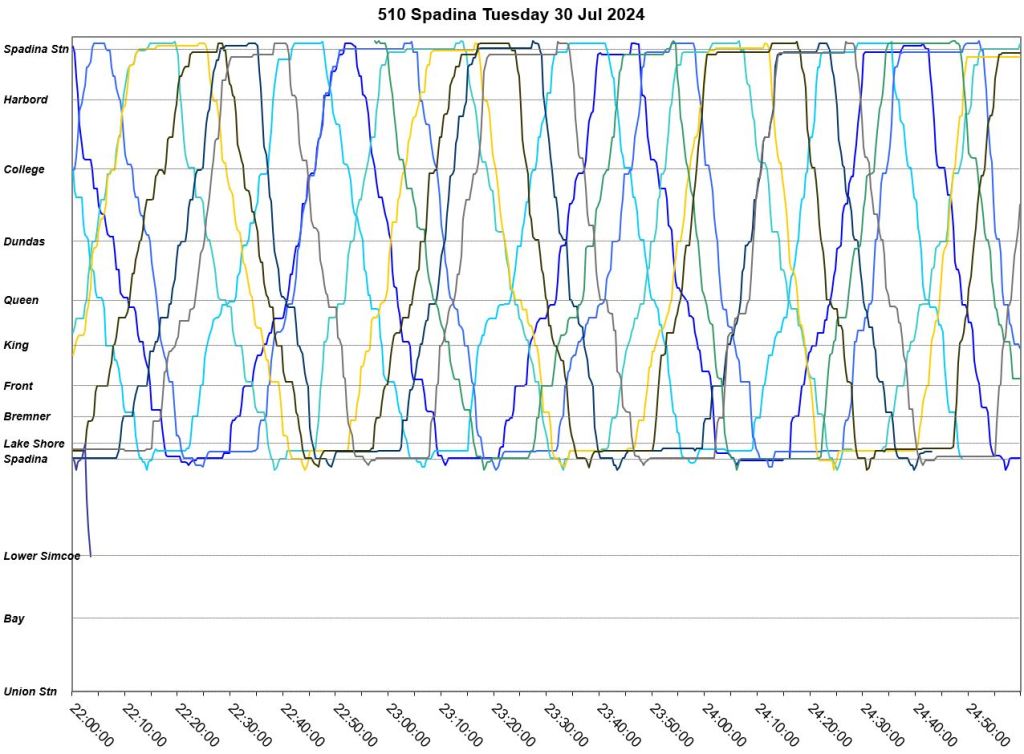
Each set of charts below tracks the movement of buses on 510 Spadina from 7am until 1am on the following day.
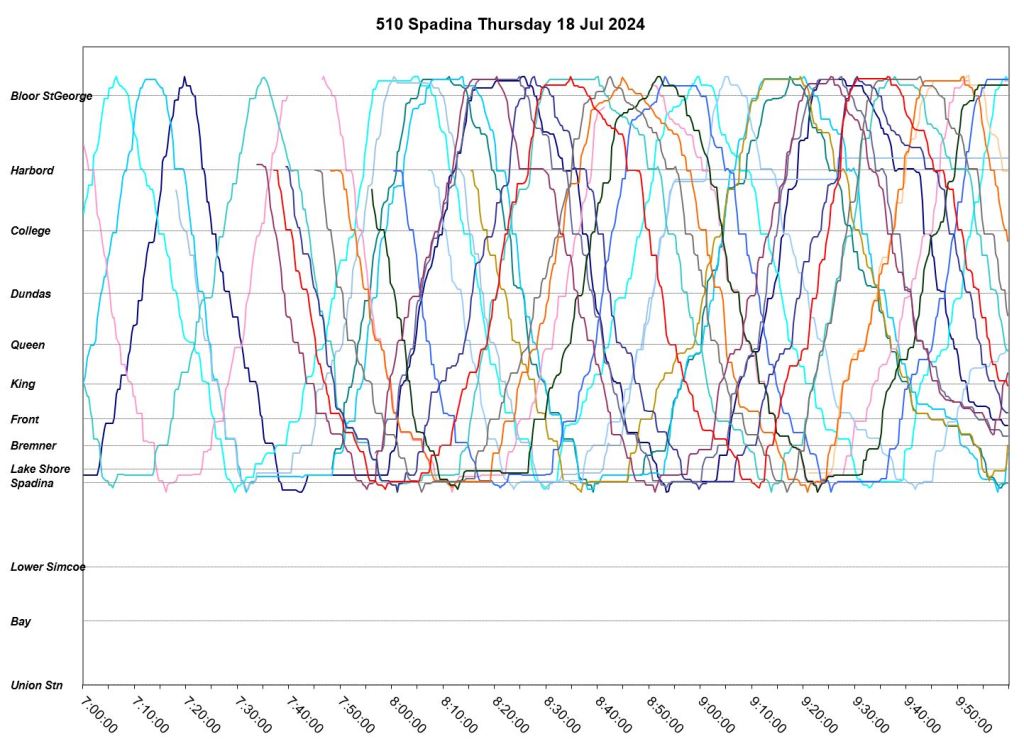
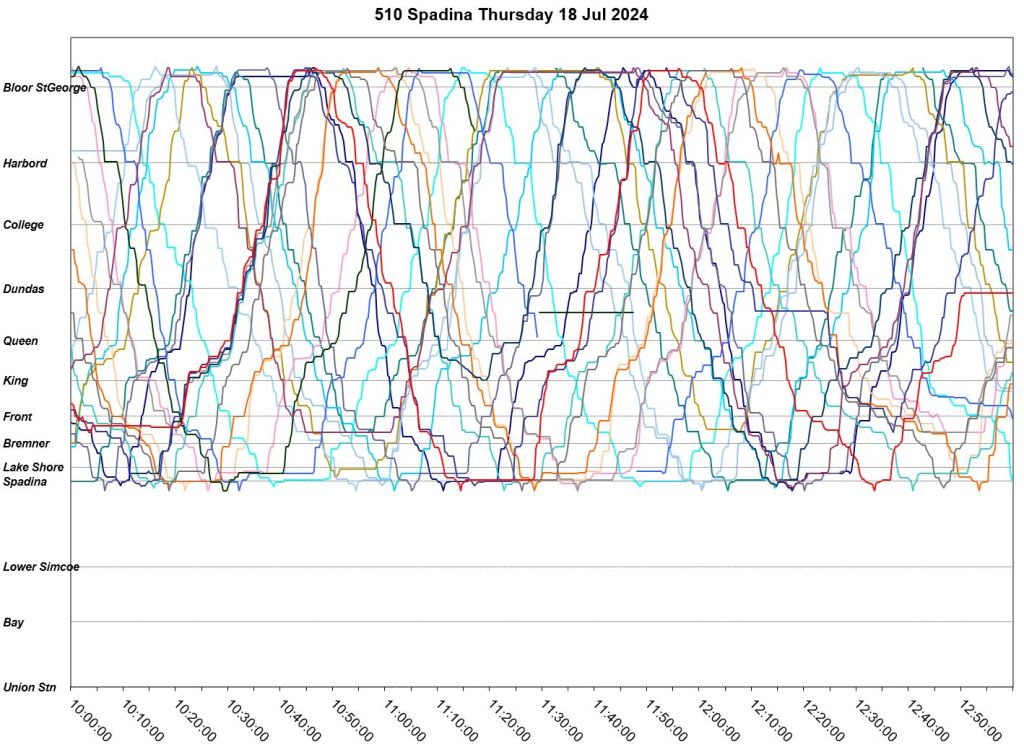
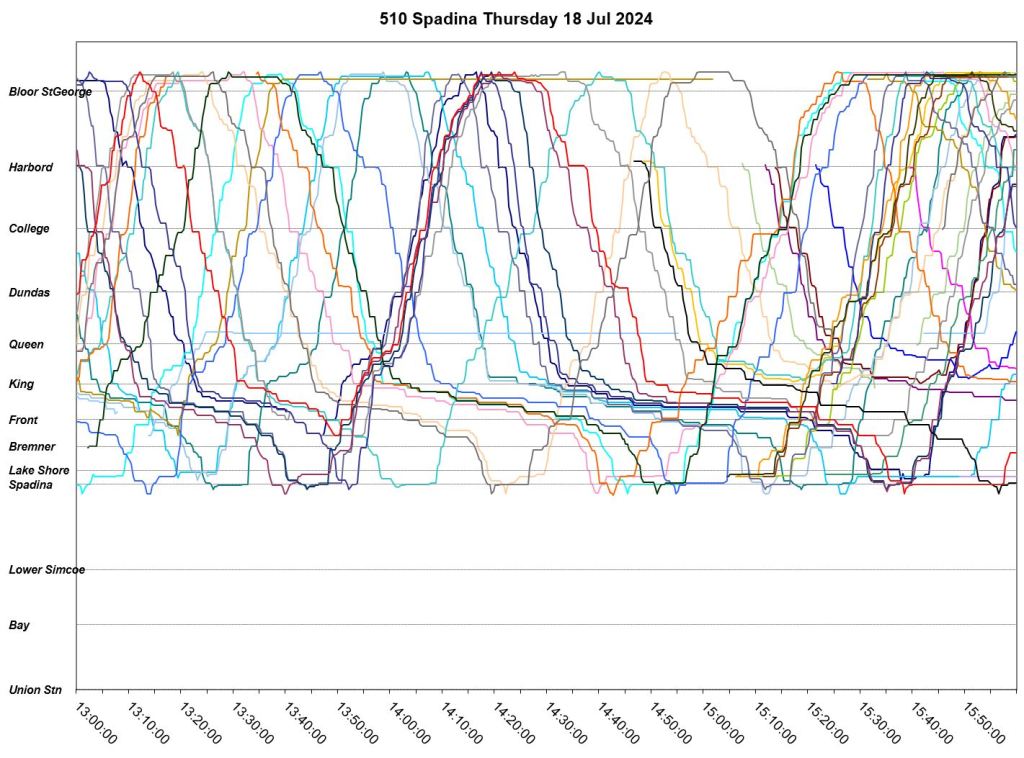
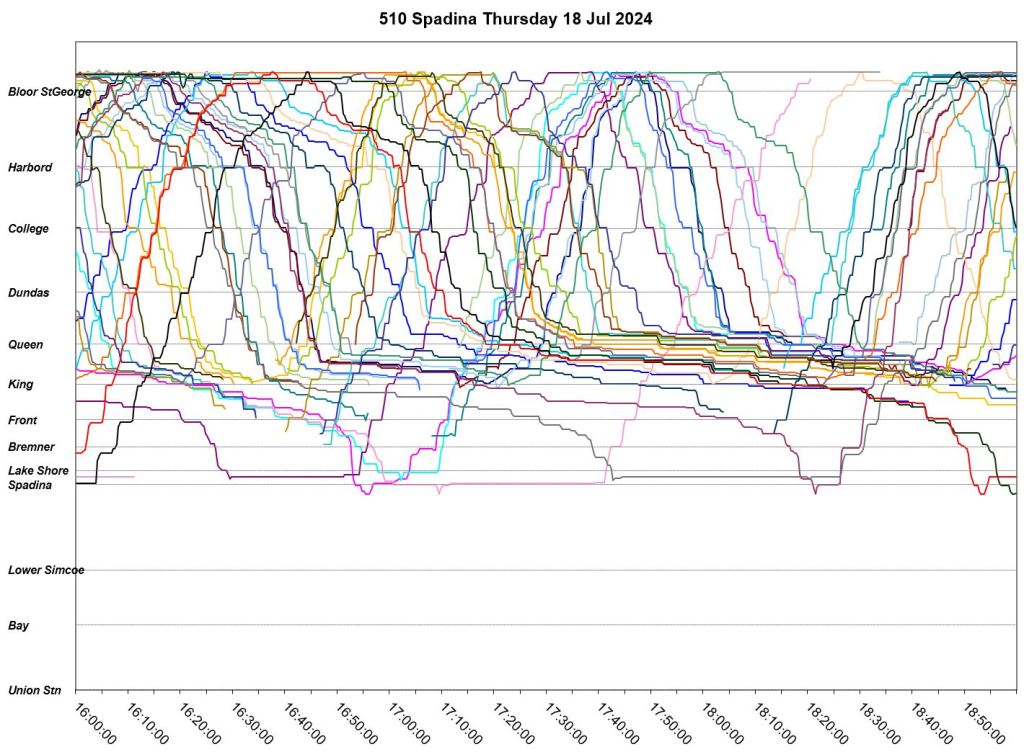
The slope of the lines is proportional to vehicle speed, and when the lines veer off more horizontally than vertically, congestion is very bad. Compare the charts for morning periods with those for afternoon and early evening to see differences in vehicle speed caused by congestion.
The space between the lines is the headway between vehicles. Some large gaps persist with few short turns to restore service.
Thursday, July 4
On July 4, the north end service is still running to Spadina Station, albeit with congestion extending south to and occasionally beyond Harbord. Extended travel times are visible from 8am onward, worsening through the day to their height after 4pm, and then gradually diminishing in the evening.
Southbound congestion begins to build at about 2:30pm, and this lasts until after 7pm.
Wide gaps in service in both directions are obvious in the charts from midday onward.
Saturday, July 13
The service chart for early morning on July 13 is fragmented because of a diversion, but there was no eAlert issued to indicate what might have been happening. This situation ended after 8am.
Congestion is evident at various times and locations:
- Northbound to Queen at 11am
- Northbound to Bloor for much of the daytime and early evening
- Southbound between Queen and Lake Shore from 3pm onward with severe congestion in the late evening
Note that because of the time used up by congestion, many trips have only short layovers at terminals (horizontal lines showing no movement).
Tuesday, July 16
July 16 saw heavy rain and massive flooding in many parts of the city. At this point, north end service was running to St. George Station and there is little delay between Harbord and Bloor. The south end saw extensive congestion south from Queen in the afternoon and early evening, and some trips were extended to Union Station. There were very wide gaps in service through the afternoon.
Thursday, July 18
On July 18, the northern terminus is still at St. George, and there was severe congestion backing up beyond Queen Street at times at the south end. This produced wide service gaps including one in the early evening where selective short-turns could have improved service, but hardly any occurred.
Tuesday, July 30
By July 30, the reserved lane is in place at the south end of the route, and construction delays at the north end have vanished. There are some congestion delays southbound to Front after 5pm, but nothing on the scale seen in prior weeks.
Buses generally get time for layovers at both terminals to the point that traffic backs up from Spadina Station through the afternoon.
The service is reliable with few congestion delays through the day.
 Steve Munro
It’s incredible how poorly our city is operating when it comes to both transit and driving routes. They’re failing all over the place. I liked what you said, (but damn, I can’t copy and paste). The City and TTC were surprised not prepared for the colossal disaster that Spadina became. Add that to the colossal mess getting on the Gardiner at Jarvis Street. So what ramp on to the Gardiner from the downtown core (or the Beach plus Leslieville now that our ramp has been removed and all of us forced to go into the city core and get on at Jarvis)? I guess that leaves one on ramp at what, York?
When I read that article by Brad Bradford saying the City should consider not doing construction on parallel routes it struck me like a work of brilliance from someone on City Council. Like I’d never heard a word of such basic brilliance before?! ALL the friggin parallel routes are messed up! And now they are adding Eastern/Adelaide and soon Richmond Street bridges to the list! So that’s Lakeshore, Eastern/Adelaide and Richmond. That’s all 3! So then go north to Queen, Dundas and Gerrard and you have those bridges messed by the new Metrolinx rail. Basically the entire east end south of Danforth has access denied! Ha! That’s a computer term from movies I watch.
Maybe this is fit for publication. Just say “woman from Leslieville bitches again, even thought the subject is all the way over on Spadina!!!” Maybe not fit for publication?!! 😉
I’m so glad it’s the weekend! And I’m so glad I’m bicycling to work now. I really miss my crew at my other job. But I had to leave it. I couldn’t cope with the commute anymore. And I miss friends and events on the west side. Getting there, even for 7 pm is such a challenge. I heard if one lives in the west and the other the east it’s now called a long distance relationship.
Happy weekend!!!!!
LikeLike
Shouldn’t the TTC be doing this “service analysis” on each and every route? Is it done by one person or spread across many departments, divisions, or garage/carhouse at the TTC? Shouldn’t this be mentioned in the Chief Executive Officer’s Report with routes that have an “abnormal standard”, unless everything is working as expected and there is nothing report?
Steve: The CEO’s Report should include a table, if only as an appendix, of routes that perform poorly. However, the first problem is that the metrics the TTC uses are worthless because they report averages over a month, and do not pinpoint problem routes, locations and times. The result is that what the Board and Council see are “sunny days” reports that give no indication of what riders actually experience.
One (of many) jobs for a new CEO is to tear the existing metrics into teensy weensy pieces and start over with reporting that riders can believe, and that can be used to show the pols where real efforts both in improved TTC management and targeted transit priority will make a difference.
LikeLike
The charts for Thursday July 18 is astounding and indicate management simply gave up on service that day, even though as you said note they could have abandoned much of the line south of Queen and at least focus on providing proper service from there north to Bloor, or even created a long but still faster detour, like west on Queen to Bathurst, south on Bathurst to Front, and north at Front on Spadina, which would still be faster than letting buses sit on the bridge over the railway corridor moving only a few inches per minute. This was a situation where there was a crisis of service which should go right up the chain to get executive approval to “just do it” but they are paralyzed to respond to immediate problems. Even with union rules or whatever, they still have flexibility, but they won’t even use that without hours or even days of indecision.
LikeLiked by 1 person